

P0106 on 2011-2017 Chrysler 200 2.4L: MAP Sensor Causes and Fixes
On a 2011-2017 Chrysler 200 with the 2.4L engine, code P0106 is almost always caused by a faulty Manifold Absolute Pressure (MAP) sensor. This is a very common failure point for the 2.4L Tigershark engine family. Replacing the sensor is a common, DIY-friendly fix, with the part costing between $30 and $95. Before replacing, check for oil contamination on the sensor tip, a known issue.
- P0106 on this Chrysler 200 almost always points to a bad MAP sensor.
- Before buying parts, use a scan tool to compare MAP and BARO readings with the key on and engine off. If they don't match, the sensor is bad.
- The correct MAP sensor for the 2015-2017 2.4L Tigershark is likely Mopar part #68199324AB.
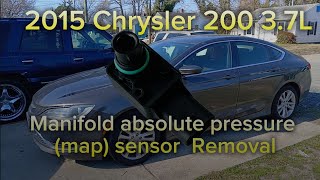
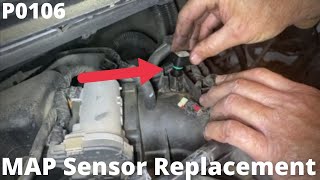
- The sensor is on the back of the intake manifold and uses a twist-lock fitting. Rotate it about 90 degrees to remove; do not pry it.
- While less likely, check for obvious vacuum leaks from cracked hoses, as this can also trigger the code.
What's Unique About the 2011-2017 Chrysler 200
The 2011-2017 Chrysler 200 spans two generations with different 2.4L engines. The 2015-2017 models use the 2.4L Tigershark MultiAir engine, which is a 'speed-density' system that completely relies on the MAP sensor for air-fuel calculations, making it very sensitive to sensor performance. While vacuum leaks can cause this code on any vehicle, the most frequent failure on this platform is the MAP sensor itself, often due to electronic failure or contamination from oil vapor. The sensor is located in a tight spot on the rear of the intake manifold, and its replacement is a well-documented fix across many forums and repair guides for vehicles with this engine family, including the Dodge Dart and Jeep Cherokee.
Generation note: The 2011-2017 year range covers two generations of the Chrysler 200: the first (JS) from 2011-2014 with the 2.4L 'World' engine, and the second (UF) from 2015-2017 with the 2.4L 'Tigershark' MultiAir engine. While the root cause is typically the MAP sensor for both, the part number and exact location may differ. This guide focuses primarily on the Tigershark engine, which is known to be particularly dependent on this sensor and shares this issue with platform mates like the Dodge Dart and Jeep Cherokee. The earlier 'World' engine can also suffer from this code, but it is more famously associated with the Tigershark. The MAP sensor on the 2011-2014 2.4L is located at the front left side of the intake manifold.
Symptoms You May Notice
- Check Engine Light is on
- Rough or unstable idle
- Hesitation, stumbling, or bucking during acceleration
- Engine stalling, sometimes while driving
- Reduced fuel economy
- Black smoke from the exhaust
- Difficulty starting the engine
- Engine may start and then immediately die
- Replacing spark plugs or ignition coils to fix a rough idle without first diagnosing the P0106 code.
- Replacing the throttle body when it only needs to be cleaned.
- Assuming a new MAP sensor is faulty if the code returns, without checking for underlying vacuum leaks or wiring issues.
Most Likely Causes
- Faulty Manifold Absolute Pressure (MAP) Sensor 🔴 High Probability → Shop Manifold Absolute Pressure Sensor This is a very common failure point on the 2.4L MultiAir engine platform due to internal electronic failure or contamination from oil vapor in the PCV system. The sensor's critical role in this MAF-less engine makes any performance deviation immediately noticeable. Owners on forums frequently report finding an oily residue on the sensor upon removal.
How to confirm: With the Key On, Engine Off (KOEO), use a scan tool to view live data. Compare the MAP sensor pressure reading to the Barometric Pressure (BARO) reading. They should be nearly identical. If they differ significantly, the MAP sensor is faulty. At idle, voltage should drop to 1.0-2.0V. Visually inspect the sensor tip for oil fouling after removal.
Typical fix: Replace the MAP sensor. It is located on the rear of the intake manifold and secured with a twist-lock mechanism, not bolts. Access may be easier from underneath the vehicle.
Est. part cost: $30-$95 - Vacuum Leak 🟡 Medium Probability
How to confirm: Visually inspect all vacuum hoses connected to the intake manifold for cracks, splits, or loose connections. A professional smoke test is the most effective way to find hard-to-see leaks in the intake system, such as from a failed intake manifold gasket.
Typical fix: Repair or replace the leaking vacuum hose, intake manifold gasket, or other faulty component.
Est. part cost: $5-$150 - MAP Sensor Wiring or Connector Issue ⚪ Low Probability → Shop Manifold Absolute Pressure Sensor The wiring harness is located in a tight, hot area at the back of the engine, making it susceptible to heat damage or being dislodged during other maintenance. On some platform mates, the harness can detach from its clip and rub against moving parts.
How to confirm: Visually inspect the MAP sensor's electrical connector and wiring harness for any signs of damage, such as frayed wires, corrosion, or a loose connection. Use a multimeter to test for 5V reference, ground, and a proper signal voltage at the connector.
Typical fix: Repair the damaged wiring or clean/replace the connector.
Est. part cost: $10-$50
Rare But Worth Checking
- Clogged Catalytic Converter: A severely restricted exhaust can create backpressure that affects intake manifold pressure. This is usually accompanied by a major loss of power at higher RPMs and potentially a P0420 code.
- Faulty Powertrain Control Module (PCM): This is extremely rare. The PCM should only be considered after all other possibilities (sensor, wiring, vacuum leaks) have been exhaustively ruled out. Sometimes a PCM software update is required per a TSB to fix logic errors related to MAP sensor readings.
Diagnosis Steps
- Connect an OBD-II scanner to confirm the P0106 code and check for any other stored codes.
- Using the scanner's live data function, turn the ignition to 'Key On, Engine Off' (KOEO). Compare the MAP sensor reading to the Barometric Pressure (BARO) reading. They should be within a very small margin of each other. If not, the sensor is likely bad.
- Start the engine and observe the MAP sensor reading at idle (it should be low, around 1.0-2.0 volts or 10-12 inHg) and then snap the throttle (it should quickly rise towards the BARO reading). A slow or non-responsive sensor is faulty.
- Visually inspect the MAP sensor connector and its wiring for any signs of damage, corrosion, or loose connections.
- Remove the MAP sensor (twist-lock, no bolts) and inspect the tip for oil residue or contamination, a common issue on this engine.
- Thoroughly inspect all vacuum lines and the intake air snorkel for any cracks, breaks, or loose fittings.
- If a vacuum leak is suspected but not visible, perform a smoke test to pinpoint the source of the leak.
- If the sensor and vacuum system are confirmed to be good, check for a severely clogged engine air filter or a restriction in the exhaust system (like a clogged catalytic converter).
- Check for any available Powertrain Control Module (PCM) software updates with a dealer, as some TSBs address MAP sensor logic.
- If all else fails, the issue may lie with the PCM, but this is highly unlikely and should be diagnosed by a professional.
Parts You'll Likely Need
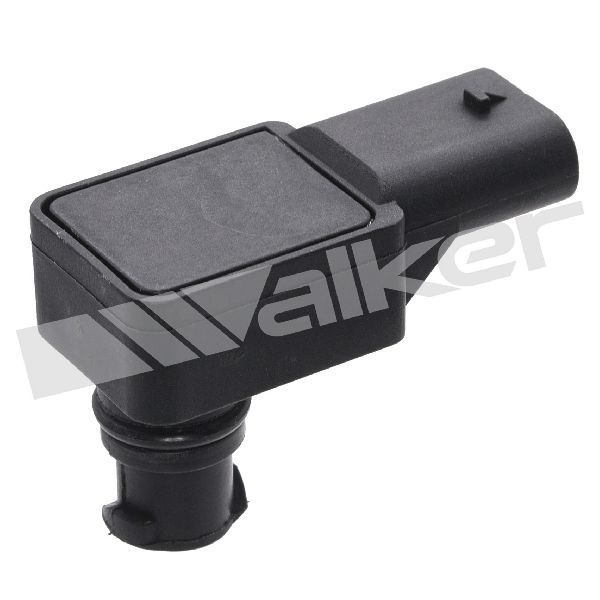
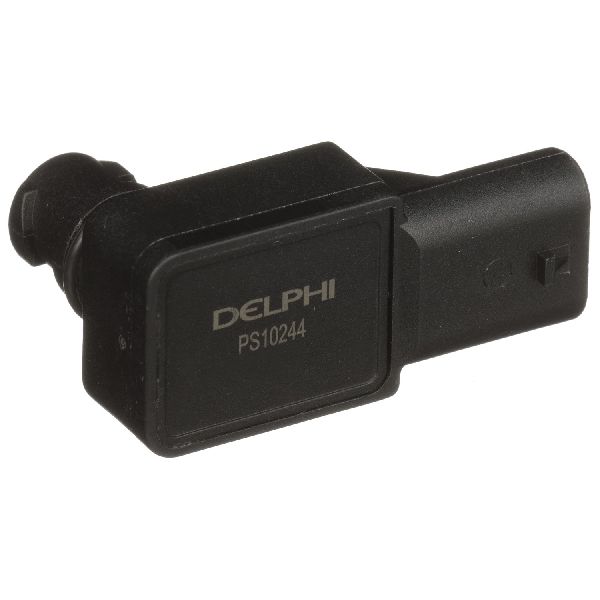
- Manifold Absolute Pressure (MAP) Sensor
(OEM #68199324AB)— This is the most common failure point for code P0106 on the 2.4L Tigershark engine. It is used across many Chrysler vehicles with this engine.
Trusted brands: Mopar, Bosch, Standard Motor Products (SMP), Delphi, NGK/NTK
OEM price range: $70-$95
Aftermarket price range: $30-$60
Related Codes That Often Appear With This One
- P0107 — This code for 'MAP Sensor Circuit Low' can appear if the sensor is failing and providing erratic readings that sometimes drop too low.
- P0108 — This code for 'MAP Sensor Circuit High' can appear for the same reason as P0107, indicating an intermittent or failing sensor.
- P0171 — This code for 'System Too Lean' can be triggered if there is a significant vacuum leak, which is also a potential cause of P0106.
- P0069 — This code for 'Manifold Absolute Pressure - Barometric Pressure Correlation' directly points to a disagreement between the MAP sensor and the BARO sensor reading, often caused by a faulty MAP sensor.
Technical Service Bulletins (TSBs) & Recalls
- TSB 18-061-16: Relates to a PCM software update for intake pressure correlation faults on the 2.4L engine family, which could be related to P0106 issues. This TSB specifically mentions other DTCs but addresses overall powertrain diagnostic enhancements.
- TSB 09-006-20 REV. B: Details the official dealer procedure for performing an engine oil consumption test on the 2.4L Tigershark engine, which is relevant due to oil vapor fouling the MAP sensor.
Platform-Specific Known Issues
- The 2.4L Tigershark engine is known for potential oil consumption issues (see TSB 09-006-20 REV. B). While not a direct cause, excessive oil vapor from the PCV system can contaminate and foul the MAP sensor over time, leading to failure.
- The MAP sensor on the 2.4L engine is located on the rear of the intake manifold in a tight space, often requiring access from underneath the vehicle. It uses a twist-lock design; do not try to pry it out as this can damage the plastic intake manifold.
Mechanic-Grade Diagnostic Values
- MAP Sensor 5-Volt Reference Wire — expected: 4.5 - 5.0 Volts DC with Key On, Engine Off (KOEO).. Failure: Voltage significantly lower than 4.5V or 0V indicates a PCM or wiring issue.
- MAP Sensor Ground Circuit — expected: Less than 100 millivolts (0.1V) when testing voltage drop, or near 0 ohms resistance to chassis ground.. Failure: Voltage higher than 0.1V or resistance greater than 1.0 Ohm indicates a poor ground connection.
- MAP Sensor Signal Voltage (Key On, Engine Off) — expected: ~4.5 - 5.0 Volts, should be nearly identical to the BARO reading on a scan tool.. Failure: A voltage that is significantly different from the BARO reading, or is stuck low, points to a faulty MAP sensor.
- MAP Sensor Signal Voltage (Engine at Idle) — expected: 1.0 - 2.0 Volts. A commonly cited good range is 1.0V to 1.8V.. Failure: Voltage that remains high (near the 4.5V KOEO reading) or is erratic confirms the sensor is not reading engine vacuum correctly.
Scan Tool Commands That Help
- wiTECH or equivalent professional scanner: Live Data Graphing & Wiggle Test — To diagnose a suspected intermittent fault in the wiring. Graph the MAP sensor voltage while physically wiggling the sensor connector and its wiring harness. Any sharp drops or spikes in the voltage graph during the wiggle test point directly to a wiring or connector issue, rather than a faulty sensor.
Wiring & Ground Locations
- MAP Sensor Connector (2.4L Tigershark, 2015-2017) — On the MAP sensor, located on the rear of the intake manifold, often accessed from underneath the vehicle on the passenger side.. This is the primary connection point. For manual testing, the typical 3-pin Chrysler pinout is: Pin 1 - Sensor Ground, Pin 2 - MAP Signal, Pin 3 - 5V Supply. Verifying voltage and ground at these pins is the definitive test of the circuit.
- MAP Sensor Connector (2.4L World, 2011-2014) — Located at the front on the left side of the intake manifold.. The location is different and more accessible on the first-generation Chrysler 200. Damage or corrosion at this connector will cause the P0106 code.
- Engine to Chassis Ground Strap — Typically located under the front driver's side of the vehicle, connecting the frame rail to the engine/transmission area.. A corroded or loose main engine ground can cause floating or incorrect readings from multiple engine sensors that share a ground path, including the MAP sensor, leading to a P0106 code.
Real Owner Repair Stories
- Aggregated from forums for Dodge Dart with the same 2.4L MultiAir engine. (Dodge Dart 2.4L MultiAir) — Sputtering on acceleration, P0106 code.
❌ Tried (didn't work) Replacing the MAP sensor multiple times.
✅ What actually fixed it The root cause was a failing PCV system that was sucking oil into the intake manifold and repeatedly fouling the new MAP sensors. Replacing the PCV valve and cleaning the intake resolved the recurring P0106 code. - YouTube channel 'Electrical Car Repair LIVE' (2015 Dodge Dart with 2.4L MultiAir engine) — Check Engine Light with codes P0108 and P1185.
❌ Tried (didn't work) The video proceeds directly to diagnosis without mentioning prior failed attempts.
✅ What actually fixed it Replacing the Manifold Absolute Pressure (MAP) sensor. After the sensor was replaced and codes were cleared, the check engine light remained off, confirming the fix.
"I Checked Everything" — The Actual Cause
- In cases involving the 2.4L MultiAir engine family, a smoke test for vacuum leaks may come back clean, but the P0106 code can still be caused by an internal vacuum leak through a torn diaphragm in the PCV valve. This allows unmetered air and oil vapor into the intake, fouling the MAP sensor but is not detectable by an external smoke test.
OEM Part Supersession History
5149092AA→5033310AB— Standard part revision for the earlier 2.4L 'World' engine.
Heads up: This part is for the 2011-2014 models and should not be used on the 2015+ Tigershark engine.68199324AA→68199324AB— Standard part revision by the manufacturer, likely for improved reliability.
Heads up: This is the correct part for the 2015-2017 2.4L Tigershark engine. Using older stock or incorrect superseded parts can lead to continued issues.
Model Year Variations Within This Range
- 2011-2014 (First Generation - JS Body): Uses the 2.4L 'World' engine. The MAP sensor is located on the front left side of the intake manifold, making it more accessible than on later models. The correct part number is different from the Tigershark engine.
- 2015-2017 (Second Generation - UF Body): Uses the 2.4L 'Tigershark' MultiAir engine. The MAP sensor is located on the rear of the intake manifold, requiring access from underneath the vehicle. This engine is particularly known for oil vapor contamination fouling the sensor.
Diagnostic Flowchart
Other Known Issues on This Vehicle
Issues unrelated to this code that are worth knowing about as an owner of this generation:
- Excessive Engine Oil Consumption 🔴 High — Widespread on 2015-2017 models with the 2.4L Tigershark engine. Owners report consuming a quart of oil every 1,000-2,000 miles. Caused by a piston ring design defect. (Ref: TSB 09-006-20 REV. B details the official consumption test. A class-action lawsuit was filed, and a warranty extension (XB1) was issued for some vehicles.)
- ZF 9-Speed Transmission Faults 🔴 High — Very common on 2015-2017 models. Issues include harsh/erratic shifting, lurching, and sudden shifts to neutral. Problems were most pronounced on early 2015 models. (Ref: Multiple software updates (e.g., TSB 21-021-15) were released to improve shift quality. A recall (15V-090) was issued for some 2015 models for a park lock issue. An extended warranty was offered as part of a lawsuit settlement.)
- MultiAir Actuator ('Brick') Failure 🟠 Medium — Can occur on the 2.4L Tigershark, often exacerbated by low oil levels from the known consumption issue. Failure leads to rough running, misfires, and various 'P106x' codes.
- Random Deployment of Active Head Restraints 🟡 Low — Reported on some 2011-2017 models where the plastic bracket inside the headrest fails, causing it to deploy without an impact.
- Totally Integrated Power Module (TIPM) Issues 🟠 Medium — More common on the first generation (2011-2014), this can cause a wide range of difficult-to-diagnose electrical problems, including fuel pump and airbag faults.
Used vs. New Parts: Buying Guide for This Vehicle
When a used part is the smart pick: For this specific repair, buying a used MAP sensor is NOT recommended. It is a relatively low-cost electronic part that is a known common failure point. The risk of getting a part that is already failing or has a short remaining lifespan is very high. A new sensor from a reputable brand provides much greater peace of mind for a small additional cost.
Donor-vehicle mileage cap: roughly under 10000 miles for the part to have meaningful remaining life.
What to inspect on the donor part:
- Not applicable, as a used sensor is not recommended.
OEM-only on this vehicle (don't cheap out):
- While not strictly 'OEM-only', using a quality Mopar or reputable aftermarket brand (Bosch, Delphi, NTK) for the MAP sensor is highly advised. Avoid unbranded, no-name parts as their accuracy and longevity are questionable.
Aftermarket brands forum-validated for this vehicle:
- Bosch
- Delphi
- Standard Motor Products (SMP)
- NGK/NTK
Brands owners have reported issues with on this vehicle:
- Unbranded, 'white-box' parts from online marketplaces with no warranty or brand reputation.
Real Owner Stories
Aggregated from forums and TSBs cited above. Mileages and costs reflect what owners reported in those sources.
Chrysler 200 2.4L MultiAir
Symptoms: The car experienced bucking and stalling. It would frequently start and then immediately die.
What fixed it: Replacement of the MAP sensor after finding an oily residue on the old sensor tip.
Source hint: Chrysler Sebring / 200 Convertible Club (https://www.sebringclub.net/board/viewtopic.php?f=16&t=27800)
Related OBD-II Codes
Frequently Asked Questions
Does TSB 18-061-16 apply to my Chrysler 200 with the 2.4L engine?
I found oil on my MAP sensor; is this related to the 2.4L Tigershark oil consumption TSB?
Can I just pry the MAP sensor off the intake manifold of my 2015 Chrysler 200?
Is there a warranty extension for the oil issues causing my MAP sensor to fail?
Where is the MAP sensor located on the 2.4L MultiAir engine?
Could my P0106 code be caused by the ZF 9-speed transmission issues?
Helpful Videos

We Have This Part in Stock


The information in this article is provided for general reference and educational purposes only. Vehicle specifications, procedures, and part compatibility can vary by production date, trim level, and region. Always consult your vehicle's factory service manual and verify part numbers before purchasing or performing repairs. Safety-critical components such as airbags, seat belts, and braking systems should be installed by a qualified professional.
- Chrysler 200:
- 🧭 Diagnostic Flowchart
- 🎬 Helpful Videos
- 🛍️ Shop This Part
- What's Unique About the 2011-2017 Chrysler 200
- Symptoms You May Notice
- Most Likely Causes
- Rare But Worth Checking
- Diagnosis Steps
- Parts You'll Likely Need
- Related Codes That Often Appear With This One
- Technical Service Bulletins (TSBs) & Recalls
- Platform-Specific Known Issues
- Mechanic-Grade Diagnostic Values
- Scan Tool Commands That Help
- Wiring & Ground Locations
- Real Owner Repair Stories
- "I Checked Everything" — The Actual Cause
- OEM Part Supersession History
- Model Year Variations Within This Range
- Other Known Issues on This Vehicle
- Used vs. New Parts: Buying Guide for This Vehicle
- Real Owner Stories
- Chrysler 200 2.4L MultiAir
- Related OBD-II Codes
- Frequently Asked Questions
- 🎟️ Get 5% Off