

P0106 on 2005-2010 Chrysler 300: MAP Sensor Causes and Fixes
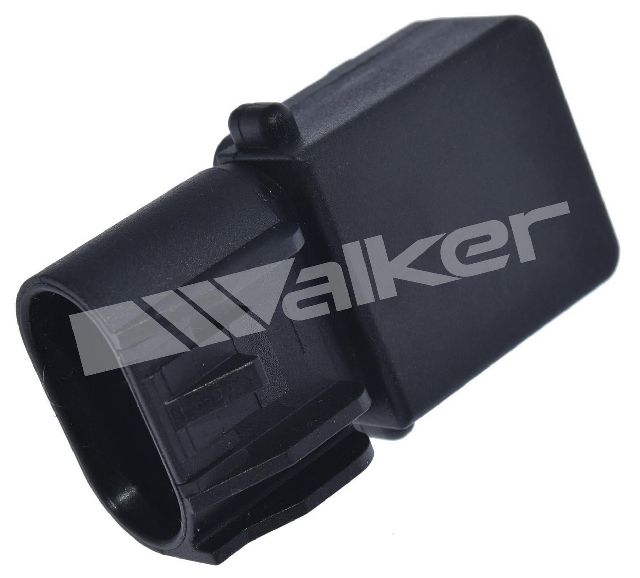
On a 2005-2010 Chrysler 300, code P0106 almost always points to a faulty Manifold Absolute Pressure (MAP) sensor. It's a very common failure and an easy 15-minute DIY fix. An aftermarket sensor costs around $20-$40, while an OEM Mopar part is about $100. Before replacing, quickly check for vacuum leaks and a dirty throttle body, which are less common but possible causes.
- P0106 on a 2005-2010 Chrysler 300 is most likely a bad MAP sensor.
- Before replacing the sensor, perform a quick visual check for cracked vacuum hoses and inspect the throttle body for heavy carbon buildup.
- The replacement is a very simple DIY job that takes less than 15 minutes and requires no special tools.
- Using an OEM Mopar MAP sensor (Part No. 56041018AD) is strongly recommended for reliability.
What's Unique About the 2005-2010 Chrysler 300
For the first-generation Chrysler 300 (and its LX platform siblings like the Dodge Magnum and Charger), the MAP sensor is a well-known and frequent failure point across all available engines (2.7L, 3.5L, 5.7L, and 6.1L). The issue is not typically complex; it's usually the sensor itself that has failed due to age and heat cycles. Unlike some vehicles where this code might point to complex software issues or hard-to-find electrical faults, on this platform, the diagnosis is straightforward and usually leads back to the sensor or a simple vacuum leak. The replacement is exceptionally easy, making it a common and highly successful DIY repair for owners.
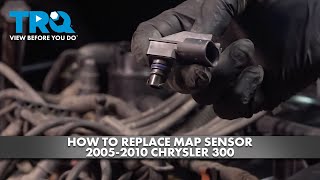
🎬 Watch: A quick walkthrough on replacing the MAP sensor.Symptoms You May Notice
- Check Engine Light illuminated
- Rough, surging, or unstable idle
- Hesitation or lack of power during acceleration
- Poor fuel economy
- Engine stalling, especially when coming to a stop or at idle
- Black smoke from the exhaust
- Difficulty starting the engine
- Replacing the MAP sensor when the actual problem is a dirty throttle body, especially after a battery replacement or disconnection.
- Replacing the MAP sensor when the issue is a small, hard-to-see vacuum leak from a cracked PCV hose.
- Replacing O2 sensors when the rich condition (black smoke) is actually caused by the faulty MAP sensor data.
Most Likely Causes
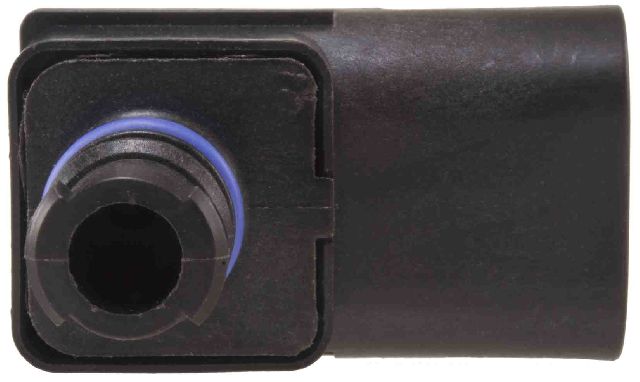
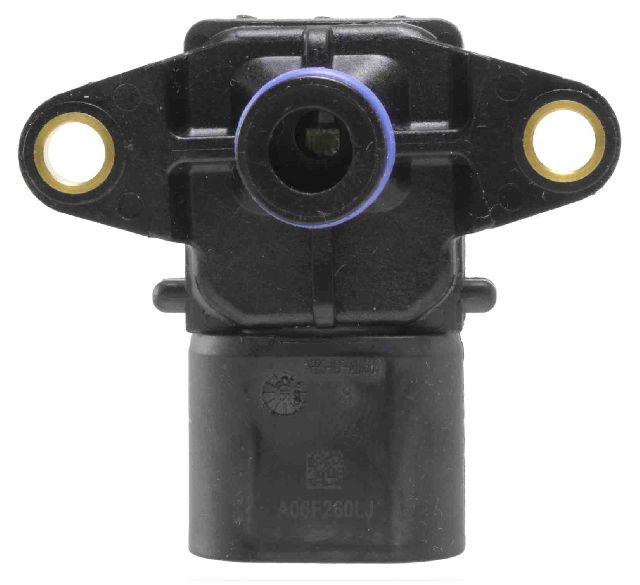
- Faulty Manifold Absolute Pressure (MAP) Sensor 🔴 High Probability → Shop Manifold Absolute Pressure Sensor The MAP sensor is a very common failure item on this platform due to age and heat cycles. It is the most cited fix in owner forums for the P0106 code.
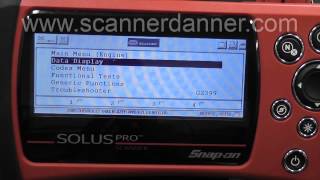
How to confirm: After visually inspecting for vacuum leaks and wiring issues, replacing the sensor is the most common and effective diagnostic step. A scan tool can monitor MAP sensor voltage for erratic readings that don't correspond to engine load. With the key on and engine off, the MAP sensor reading should be very close to the BARO reading on a scan tool; a significant difference points to a bad sensor.
Typical fix: Replace the MAP sensor. It is a twist-in sensor located on the intake manifold. No special tools are required.
Est. part cost: $20-$100 - Vacuum Leak 🟡 Medium Probability Aging rubber vacuum hoses and plastic fittings can crack, causing unmetered air to enter the intake manifold, which confuses the MAP sensor. The PCV hose is a common culprit.
How to confirm: Visually inspect all vacuum lines connected to the intake manifold for cracks or disconnection. You can also spray brake cleaner or a propane torch (unlit) around suspected areas while the engine is idling; a change in engine RPM indicates a leak. Pay close attention to the PCV valve and its connecting hose.
Typical fix: Replace the cracked or broken vacuum hose or intake gasket.
Est. part cost: $5-$50 - Dirty Electronic Throttle Body ⚪ Low Probability → Shop Fuel Injection Throttle Body Over time, carbon can build up around the throttle plate, restricting airflow at idle. This forces the PCM to open the throttle more than expected, creating a conflict with the MAP sensor reading that can falsely trigger a P0106 code. This is sometimes reported after a battery has been disconnected, as the PCM loses its learned idle position.
How to confirm: Remove the air intake tube from the throttle body and inspect for a thick ring of black carbon buildup around the throttle plate and bore.
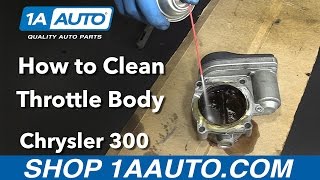
Typical fix: Clean the throttle body bore and plate with a dedicated throttle body cleaner and a soft cloth. After cleaning, perform an idle relearn procedure. 🎬 See how to properly clean your throttle body.
Est. part cost: $10-$15 - Damaged Wiring or Connector ⚪ Low Probability The wiring harness connector to the MAP sensor can become brittle or contaminated with oil or water over time, leading to a poor connection.
How to confirm: Visually inspect the MAP sensor's electrical connector and wiring harness for any signs of damage, corrosion, or loose pins. Use a multimeter to check for the correct 5-volt reference, ground, and signal wire integrity at the connector.
Typical fix: Repair the damaged wire or replace the connector pigtail.
Est. part cost: $15-$30
Rare But Worth Checking
- Clogged Catalytic Converter: A severely clogged exhaust can create backpressure that affects manifold pressure readings. This is usually accompanied by other codes and a significant loss of power, especially at high RPM.
- Faulty Powertrain Control Module (PCM): This is extremely rare. The PCM should only be considered after all other possibilities, including the sensor, wiring, and vacuum leaks, have been exhaustively ruled out.
- Engine Mechanical Issues: Very rare for this code, but low engine compression from issues like a jumped timing chain or worn piston rings can cause erratic manifold vacuum, potentially triggering a P0106. This would be accompanied by severe performance problems.
Diagnosis Steps
- Read the code with an OBD-II scanner to confirm P0106 is present. Note any other codes.
- With the key on and engine off, use a scan tool to compare the MAP sensor pressure reading with the Barometric Pressure (BARO) reading. They should be nearly identical. If not, the MAP sensor is likely faulty.
- Visually inspect the engine bay for any obvious vacuum leaks, such as cracked, disconnected, or brittle hoses connected to the intake manifold. Pay special attention to the PCV hose.
- Inspect the MAP sensor's electrical connector for a secure fit, corrosion, or damaged wires. Check for 5V reference and good ground with a multimeter.
- Remove the air intake duct and inspect the throttle body for heavy carbon buildup. If dirty, clean it thoroughly with throttle body cleaner and perform an idle relearn procedure (letting the car idle for 10 minutes).
- If the above checks do not reveal an issue, the most probable cause is the MAP sensor itself. Locate the sensor on the intake manifold. On V6 engines, it's typically on top; on V8 HEMI engines, it's on the rear.
- Disconnect the electrical connector, rotate the sensor counter-clockwise to unlock it, and pull it out of the manifold.
- Install the new sensor, ensuring the O-ring is seated correctly. Rotate it clockwise to lock it in place and reconnect the electrical connector.
- Clear the trouble code with the OBD-II scanner and take the vehicle for a test drive to ensure the code does not return.
Parts You'll Likely Need
- Manifold Absolute Pressure (MAP) Sensor
(OEM #56041018AD)— This is the most common failure part for code P0106 on this vehicle. The OEM part is highly recommended over aftermarket options, which have a reputation for being unreliable.
Trusted brands: Mopar (OEM), NGK/NTK, Standard Motor Products, Bosch
OEM price range: $90-$110
Aftermarket price range: $20-$45
Related Codes That Often Appear With This One
- P0107 — Indicates MAP sensor circuit voltage is too low, often pointing to the same root causes (bad sensor, wiring).
- P0108 — Indicates MAP sensor circuit voltage is too high, also pointing to the same root causes.
- P0171/P0174 — System Too Lean codes can be triggered by a vacuum leak, which is also a common cause for P0106.
- P0300-P0308 — Misfire codes can occur because the incorrect MAP sensor reading leads to an improper air-fuel mixture, causing combustion instability.
Technical Service Bulletins (TSBs) & Recalls
- While no TSB is specifically for P0106 on the Chrysler 300, Volkswagen/Audi issued TSB V011317 for a similar issue where an overly sensitive PCM monitoring strategy would incorrectly trigger the code. The fix was a software update. This highlights that in some rare cases, the issue can be software-related, though it's not a known problem for this Chrysler platform.
Platform-Specific Known Issues
- Throttle Body Relearn After Battery Disconnect: → Shop Fuel Injection Throttle Body Some owners report the P0106 code appearing for the first time immediately after replacing a dead battery or disconnecting it for service. This can cause the PCM to lose its learned idle parameters, creating a mismatch between expected and actual MAP readings. Cleaning the throttle body and performing an idle relearn procedure often resolves this specific scenario.
Mechanic-Grade Diagnostic Values
- MAP Sensor 5V Reference — expected: ~5.0 volts. Failure: Voltage significantly lower than 5.0V indicates a problem with the PCM or wiring.
- MAP Sensor Ground Circuit — expected: Less than 0.1 volts (100 millivolts). Failure: Voltage higher than 0.1V indicates a poor ground connection, which can skew sensor readings.
- MAP Sensor Signal Voltage (Key On, Engine Off) — expected: ~4.5 volts at sea level (decreases with altitude). Failure: A reading significantly different from the BARO sensor's equivalent voltage suggests a faulty MAP sensor.
- MAP Sensor Signal Voltage (Engine Idling) — expected: 1.0 to 2.0 volts. Failure: Voltage that is too high at idle can indicate a vacuum leak or a faulty sensor. Voltage that doesn't change from the KOEO reading indicates a dead sensor.
- MAP Sensor Signal Voltage (Throttle Snap) — expected: Should quickly rise from idle voltage to above 3.5 volts.. Failure: A slow or non-existent response indicates a failing or clogged sensor.
Scan Tool Commands That Help
- Manual Procedure / Scan Tool: Throttle Body Relearn / Idle Relearn — This procedure is critical after cleaning the throttle body, replacing it, or disconnecting the vehicle's battery. It allows the PCM to relearn the throttle plate's closed position, which can otherwise cause conflicts with MAP sensor readings and trigger a P0106. A manual procedure exists, but a scan tool may be required for a guaranteed reset.
Wiring & Ground Locations
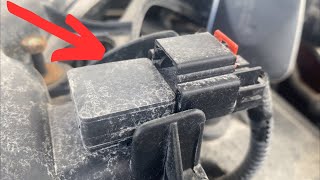
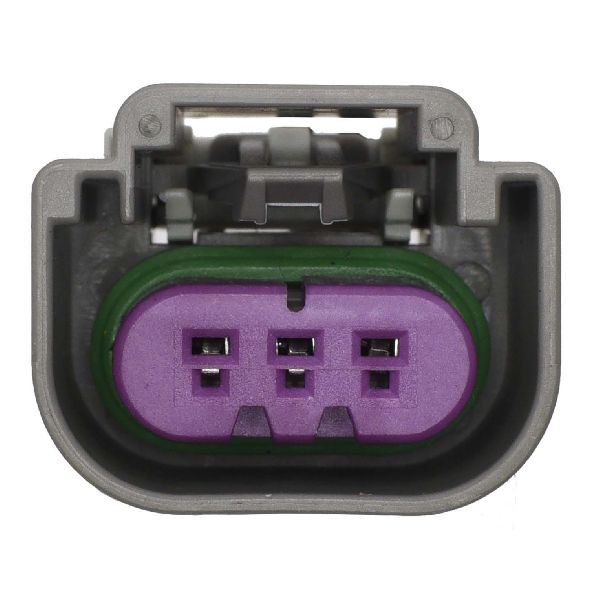
- MAP Sensor Connector — On the MAP sensor itself, located on the intake manifold (top for V6, rear for V8). It is a 3-pin oval connector.. The connector provides the 5V reference, ground, and signal path. A damaged connector, spread pins, or corrosion here is a direct cause of faulty signals.
- Underhood Fuse Box (Front IPM) — In the engine bay, on the passenger side.. This box contains fuses and relays that power the PCM and engine sensors. A loss of power here can cause P0106. Specifically check Fuses 31, 34, 35, 37 and the ASD (Auto Shutdown) Relay #63.
- Trunk Fuse Box (Rear PDC) — In the trunk, behind the battery.. This box also contains critical relays for engine management. Check Relay 29, which can be related to the MAP sensor circuit power.
- MAP Sensor Ground — The ground for the MAP sensor is not a direct chassis ground; it is a sensor ground provided by the Powertrain Control Module (PCM).. A fault in the PCM or the wiring harness between the PCM and sensor can cause a bad ground, leading to incorrect sensor readings even if the sensor itself is good.
Real Owner Repair Stories
- Ortiz Performance article (Chrysler/Dodge vehicle with a new engine tune) — Check Engine Light with code P0106, clunking when going into gear, general drivability issues immediately after loading a custom tune.
❌ Tried (didn't work) Assuming the MAP sensor itself is bad without considering the new software.
✅ What actually fixed it The issue was a mismatch between the tune file and the physical MAP sensor. The tune was written expecting a different MAP sensor (e.g., for a supercharger). The fix was to either install the correct MAP sensor to match the tune or to contact the tuner to get a revised file for the stock sensor. - Common forum reports and mechanic knowledge (2005-2010 Chrysler 300, any engine) — P0106 code appears immediately after replacing the battery or having it disconnected for service. Engine may have a slightly unstable idle.
❌ Tried (didn't work) Immediately replacing the MAP sensor, assuming it failed coincidentally.
✅ What actually fixed it The PCM lost its learned throttle body idle values. Performing a throttle body relearn procedure resolved the code. The manual method is: Turn ignition to ON (no start), wait for chimes to stop, slowly press the accelerator pedal to the floor, slowly release it, turn ignition OFF, then start the engine and let it idle for 5-10 minutes.
OEM Part Supersession History
56041018AC→56041018AD— Not officially stated, but typically for improved reliability, sealing, or a change in manufacturer for the component.
Diagnostic Flowchart
Other Known Issues on This Vehicle
Issues unrelated to this code that are worth knowing about as an owner of this generation:
- Shifter Stuck in Park ('Pink Thingy' Failure) 🔴 High — Extremely common on 2005-2007 models. A small plastic tab on the shift interlock lever breaks, immobilizing the vehicle.
- Front Suspension Clunk/Rattle 🟠 Medium — Very common. Often caused by worn sway bar bushings or end links. The bushings can slide out of their brackets, causing a metal-on-metal noise over bumps. (Ref: While not for this specific issue, TSB 02-005-14 addresses a rattle from front struts on later models.)
- 3.5L V6 Engine Oil Consumption 🟠 Medium — Frequently reported by owners. Many engines consume 1-2 quarts of oil between changes (every 1000-3000 miles).
- 5.7L HEMI MDS Solenoid Failure 🟠 Medium — A known failure point as the vehicles age. Can cause misfires, rough idle, and a check engine light.
- Takata Airbag Inflator Recalls 🔴 High — Widespread across this generation. The driver and/or passenger frontal airbag inflators may rupture upon deployment. (Ref: Multiple NHTSA recalls, including 19V018000 and 16V352000.)
- 2.7L V6 Engine Oil Sludge 🔴 High — A notorious problem for the 2.7L engine, often leading to catastrophic engine failure if not managed.
Used vs. New Parts: Buying Guide for This Vehicle
When a used part is the smart pick: For this specific repair, a used part from a junkyard is NOT recommended. The MAP sensor is a known common failure item and is relatively inexpensive to buy new. The risk of getting a part that is already failing or will fail shortly is very high.
OEM-only on this vehicle (don't cheap out):
- While not strictly 'OEM-only', using the Mopar part (56041018AD) provides the highest confidence in compatibility and longevity. If avoiding the dealer, stick to reputable OEM-equivalent brands.
Aftermarket brands forum-validated for this vehicle:
- NGK / NTK
- Delphi
- Standard Motor Products (SMP)
- Bosch
Brands owners have reported issues with on this vehicle:
- Unbranded, 'white-box' sensors from online marketplaces should be avoided due to high reports of premature failure or being out-of-spec from the factory.
Real Owner Stories
Aggregated from forums and TSBs cited above. Mileages and costs reflect what owners reported in those sources.
2005-2010 Chrysler 300
Symptoms: Stalling and rough idle issues accompanied by a P0106 code.
What fixed it: Replacing the MAP sensor, which is the overwhelming consensus for a fix on this platform.
Source hint: 300CForums.com thread titled 'P0106 Code Help'
2005-2010 Chrysler 300
Symptoms: The P0106 code appeared immediately after replacing a dead battery or disconnecting it for service.
What fixed it: Cleaning the throttle body bore and plate followed by an idle relearn procedure.
Source hint: vehicle_specific_issues: Throttle Body Relearn After Battery Disconnect
Related OBD-II Codes
Frequently Asked Questions
I just replaced my battery and now my Chrysler 300 is throwing a P0106 code. Is the sensor already bad?
Where is the MAP sensor located on my 2005-2010 Chrysler 300?
Is there a TSB for the P0106 code on the Chrysler 300 platform?
Can a vacuum leak cause P0106 on this car, and where should I look?
Do I need special tools to replace the MAP sensor on my 300C?
Helpful Videos
We Have This Part in Stock


The information in this article is provided for general reference and educational purposes only. Vehicle specifications, procedures, and part compatibility can vary by production date, trim level, and region. Always consult your vehicle's factory service manual and verify part numbers before purchasing or performing repairs. Safety-critical components such as airbags, seat belts, and braking systems should be installed by a qualified professional.
- Chrysler 300:
- 🧭 Diagnostic Flowchart
- 🎬 Helpful Videos
- 🛍️ Shop This Part
- What's Unique About the 2005-2010 Chrysler 300
- Symptoms You May Notice
- Most Likely Causes
- Rare But Worth Checking
- Diagnosis Steps
- Parts You'll Likely Need
- Related Codes That Often Appear With This One
- Technical Service Bulletins (TSBs) & Recalls
- Platform-Specific Known Issues
- Mechanic-Grade Diagnostic Values
- Scan Tool Commands That Help
- Wiring & Ground Locations
- Real Owner Repair Stories
- OEM Part Supersession History
- Other Known Issues on This Vehicle
- Used vs. New Parts: Buying Guide for This Vehicle
- Real Owner Stories
- 2005-2010 Chrysler 300
- 2005-2010 Chrysler 300
- Related OBD-II Codes
- Frequently Asked Questions
- 🎟️ Get 5% Off