

P0106 on 2015-2023 Dodge Challenger 6.2L/6.4L HEMI: MAP Sensor Causes and Fixes
On a 2015-2023 Challenger with a 6.2L or 6.4L HEMI, code P0106 is almost always caused by a faulty Manifold Absolute Pressure (MAP) sensor. It's an inexpensive part (around $50-$70 OEM) and is extremely easy to replace yourself in under 10 minutes.
- P0106 on a 6.2L or 6.4L HEMI Challenger almost always means you need a new MAP sensor.
- The repair is extremely simple and can be done in less than 10 minutes with basic hand tools, making it a great DIY fix.
- The correct OEM part number is 68271094AB, which replaces 68271094AA.
- Before replacing, ensure the sensor's electrical connector is secure and its wiring is not damaged.
- Driving with this code can cause poor performance, bad fuel economy, and potential stalling, so it's best to address it promptly.
What's Unique About the 2015-2023 Dodge Challenger
For the 6.2L and 6.4L HEMI engines in the Challenger, the P0106 code is straightforward and very commonly points directly to the MAP sensor itself. Unlike some other vehicles where this code can be triggered by complex software issues or vacuum leaks, on this platform, a simple sensor failure is the most probable culprit. The sensor is conveniently located at the rear of the intake manifold, making it exceptionally easy to access and replace, a common topic of discussion in owner forums.
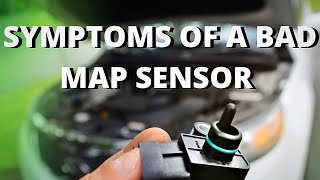
Symptoms You May Notice
- Check Engine Light (MIL) illuminated
- Electronic Throttle Control warning light may appear
- Rough or unstable idle
- Hesitation or sluggishness during acceleration
- Noticeable loss of engine power
- Decreased fuel economy
- Black smoke from the exhaust in some cases
- Engine stalling, especially when coming to a stop
- Replacing the Mass Air Flow (MAF) sensor. The HEMI engine does not use a MAF sensor; it uses a Speed-Density system that relies on the MAP sensor. Some owners confuse the MAP sensor with the Intake Air Temperature (IAT) sensor.
Most Likely Causes
- Faulty Manifold Absolute Pressure (MAP) Sensor 🔴 High Probability → Shop Manifold Absolute Pressure Sensor The sensor is a common failure point due to normal wear and tear from heat cycles and potential contamination over time. Forum discussions for high-performance Dodge models frequently cite this sensor failing and resolving the P0106 code upon replacement.
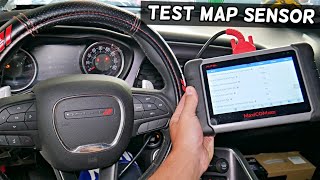
How to confirm: After confirming no visible wiring damage, the most practical test is replacing the sensor, as it's inexpensive and easy. A more advanced method involves using a multimeter to check for a consistent 5V reference signal and a fluctuating signal voltage (1-4.5V) as engine load changes. With a scan tool, 🎬 Watch: How to test the MAP sensor on a Challenger voltage at idle should be 1.0-2.0V.
Typical fix: Replace the MAP sensor. It is held in by a single bolt and has one electrical connector. The job typically takes less than 10 minutes. 🎬 Watch: MAP sensor location and replacement walkthrough
Est. part cost: $45-$75 - Vacuum Leak ⚪ Low Probability Hoses and gaskets can degrade over time, but this is less common than direct sensor failure for this code on this platform. A leak would allow unmetered air into the intake manifold, causing the MAP sensor readings to be out of range with what the PCM expects based on throttle position.
How to confirm: Visually inspect all vacuum hoses connected to the intake manifold for cracks, loose fittings, or breaks. A smoke test can be performed to find leaks that are not visible.
Typical fix: Replace the cracked or leaking vacuum hose or intake gasket.
Est. part cost: $10-$50 - Damaged Wiring or Connector ⚪ Low Probability
How to confirm: Visually inspect the MAP sensor's wiring harness and connector for any signs of fraying, corrosion, or loose pins. Ensure the connector is securely plugged in. Check for a stable 5-volt reference signal and a good ground at the connector with a multimeter.
Typical fix: Repair the damaged section of wire or replace the connector pigtail.
Est. part cost: $15-$45
Rare But Worth Checking
- Clogged Catalytic Converter: A severely clogged catalytic converter can create excessive backpressure, affecting manifold pressure readings. This is usually accompanied by other codes and more severe performance loss.
- Faulty Powertrain Control Module (PCM): This is extremely rare. All other possibilities, especially the MAP sensor itself, should be exhausted before considering the PCM as the cause. Sometimes a PCM software update may be required to address false codes, though this is not widely reported for P0106 on this platform.
- Throttle Body Issue: → Shop Fuel Injection Throttle Body In some cases, particularly after a battery disconnect, the throttle body's learned idle position can be lost. A dirty throttle body can prevent it from relearning the correct position, leading to erratic MAP sensor readings and a P0106 code. Cleaning the throttle body and performing an idle relearn procedure can resolve this.
Diagnosis Steps
- Read the code with an OBD-II scanner to confirm P0106 is present.
- Visually inspect the MAP sensor's electrical connector and wiring for any obvious damage, corrosion, or loose connections. The sensor is located on the rear of the intake manifold.
- Inspect the vacuum hoses around the intake manifold for any cracks, splits, or loose connections.
- Given the high failure rate and low cost, the most common and efficient next step is to replace the MAP sensor.
- Clear the trouble code using the OBD-II scanner.
- Start the engine and test drive the vehicle to see if the Check Engine Light and symptoms return. The light should stay off if the sensor was the issue.
- If the code returns, perform a more in-depth diagnosis, such as testing the sensor circuit for the correct voltage or performing a smoke test to find a hidden vacuum leak.
Parts You'll Likely Need
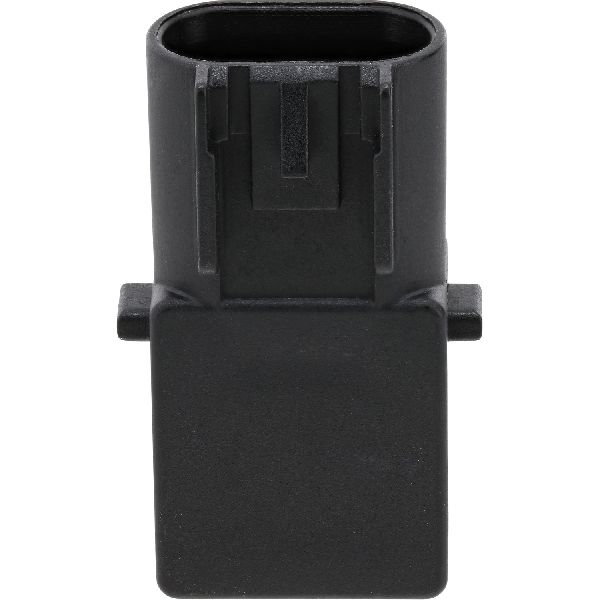
- Manifold Absolute Pressure (MAP) Sensor
(OEM #68271094AB)— This is the most frequent cause of code P0106 on this specific engine and vehicle combination.
Trusted brands: Mopar
OEM price range: $48-$75
Aftermarket price range: $25-$50
Related Codes That Often Appear With This One
- P0107 — This code indicates 'MAP/BARO Circuit Low Input,' pointing directly to a problem with the same sensor or its circuit, such as a short to ground.
- P0108 — This code indicates 'MAP/BARO Circuit High Input,' also pointing directly to a problem with the same sensor or its circuit, such as a short to power.
Platform-Specific Known Issues
- Owner Experience: Simple DIY Fix: A 2019 Charger Hellcat owner reported receiving code P0106 along with the Electronic Throttle Control light after full-throttle acceleration. Suspecting the MAP sensor, they purchased an OEM replacement for about $60 and replaced it in five minutes with a single bolt and connector. This cleared the MIL and resolved the issue, highlighting how owners often prefer this quick DIY fix to a dealer visit, even under warranty.
Mechanic-Grade Diagnostic Values
- MAP Sensor Signal Voltage (Key On, Engine Off) — expected: ~4.5 - 5.0 Volts (at sea level, should match BARO reading). Failure: Voltage is significantly different from BARO reading, or is stuck near 0V.
- MAP Sensor Signal Voltage (Engine at Idle) — expected: 1.0 - 2.0 Volts. Failure: Voltage remains high (above 2.0V) and does not drop when the engine is running, or does not respond to throttle changes.
- MAP Sensor 5V Reference Wire (at sensor connector) — expected: ~5.0 Volts (with ignition on, engine off). Failure: Voltage is significantly lower than 5.0V, indicating a wiring or PCM issue.
- MAP Sensor Ground Circuit Voltage Drop — expected: < 0.1 Volts (100 millivolts). Failure: A higher reading indicates high resistance in the ground circuit.
Scan Tool Commands That Help
- Manual Procedure or Pro-level Scan Tool: Throttle Body Relearn/Calibration — Use after cleaning the throttle body, replacing it, or after a battery disconnect. An un-learned throttle position can cause erratic idle and incorrect MAP readings, triggering a P0106. The manual procedure involves a sequence of key-on, pedal press, and key-off steps.
Wiring & Ground Locations
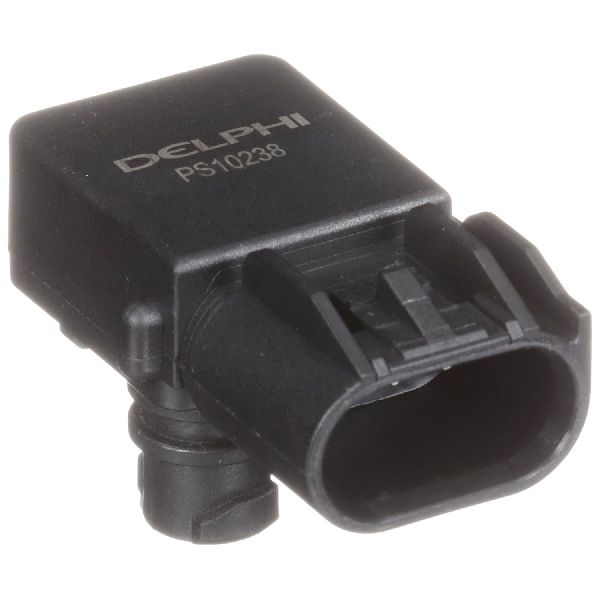
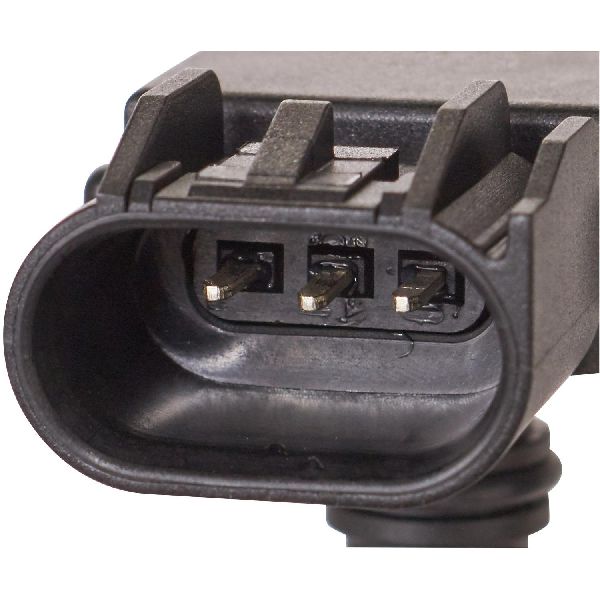
- MAP Sensor Connector — On the MAP sensor itself, located at the rear of the intake manifold.. The 3-wire connector provides the sensor with a 5V reference, a ground, and sends the signal back to the PCM. Corrosion or loose pins on any of these three wires can cause the P0106 code.
- PCM C2 Harness Connector — The second large connector on the Powertrain Control Module (PCM).. This is the termination point for the MAP sensor wiring. A voltage drop test between the sensor connector and this connector can identify high resistance or an open in the wiring harness.
Real Owner Repair Stories
- Reddit user in r/MechanicAdvice (Hyundai (procedure is applicable to many modern vehicles, including Dodge)) — P0106 code appeared immediately after the battery died and was replaced. Car was idling very hard and stalling.
❌ Tried (didn't work) Replacing the MAP sensor did not fix the code.
✅ What actually fixed it The issue was a lost idle position after the battery disconnect. The final fix was to thoroughly clean the throttle body and then perform a throttle relearn procedure by letting the vehicle idle for 10 minutes without touching the accelerator. - Ortiz Performance (Tuning Company) (General performance cars, applicable to Challenger) — P0106 code, car clunking into gear, general drivability issues immediately after installing an aftermarket tune and a new MAP sensor (e.g., a 3-bar sensor for forced induction).
❌ Tried (didn't work) Assuming the new sensor is faulty.
✅ What actually fixed it The issue was a mismatch between the installed sensor and the tune file. The fix was to verify the correct tune was loaded for the specific MAP sensor being used. Swapping back to the OEM sensor and re-loading the stock tune also resolved the issue, proving it was a tune/sensor mismatch.
OEM Part Supersession History
68271094AA→68271094AB— Standard part revision by the manufacturer, likely for improved reliability or a minor design change.
Heads up: None. The new part number 68271094AB is a direct replacement for 68271094AA.
Diagnostic Flowchart
Other Known Issues on This Vehicle
Issues unrelated to this code that are worth knowing about as an owner of this generation:
- HEMI Lifter/Camshaft Failure ('HEMI Tick') 🔴 High → Shop Engine Camshaft — Affects an estimated 5% of 2009+ 5.7L and 6.4L HEMI engines, typically appearing at higher mileage (average ~118k miles). Caused by failed lifter roller bearings, which can destroy the camshaft. (Ref: No recall, but STAR Case Report S1709000010 was issued acknowledging the issue. Class action lawsuits are ongoing.)
- Uconnect 8.4" Screen Delamination 🟠 Medium — Very common on 2017 and newer models. The adhesive behind the screen fails, causing bubbles and 'ghost touches' that make the infotainment system unusable. Typically occurs 1-3 years into ownership, often outside of the basic warranty. (Ref: No recall, but it is a widely known issue. Replacement at a dealer is expensive ($1500+), but aftermarket screen replacements are a popular, cheaper fix.)
- Active Exhaust Valve Squeak/Rattle 🟡 Low — Extremely common on 6.2L/6.4L models, especially 2015-2018. The valve springs in the exhaust tips dry out, causing a loud squeak or rattle on cold starts and low-speed acceleration. (Ref: TSB 18-045-16 and 18-035-15 Rev B address active exhaust performance codes but not the noise directly. The common fix is lubricating the springs, which is often temporary, or installing a delete module.)
Used vs. New Parts: Buying Guide for This Vehicle
When a used part is the smart pick: For this repair, using a used MAP sensor is not recommended. The part is inexpensive to buy new, and failure is often due to age and heat cycles, meaning a used part has a high risk of premature failure.
What to inspect on the donor part:
- Not applicable as used part is not recommended.
OEM-only on this vehicle (don't cheap out):
- While not strictly 'OEM-only', using the Mopar sensor (68271094AB) is highly recommended for guaranteed compatibility and reliability. The cost difference is often minimal.
Aftermarket brands forum-validated for this vehicle:
- NTK
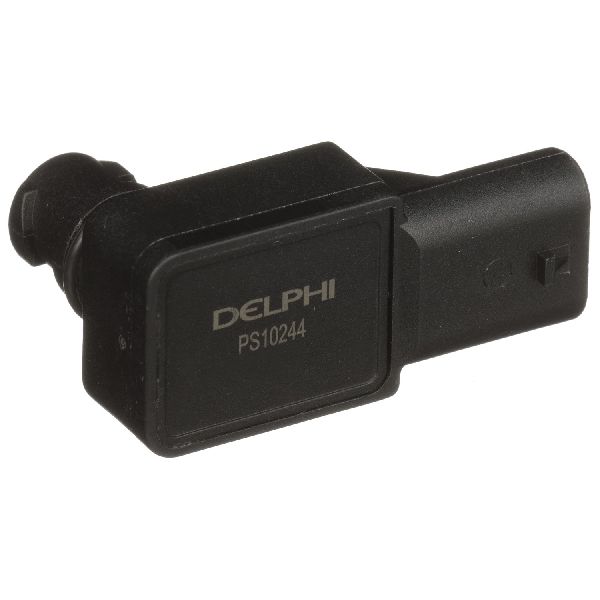
- Delphi
- Standard Motor Products (SMP)
Brands owners have reported issues with on this vehicle:
- Unnamed, no-brand 'white box' parts from online marketplaces should be avoided as they can provide inaccurate readings or fail quickly.
Real Owner Stories
Aggregated from forums and TSBs cited above. Mileages and costs reflect what owners reported in those sources.
2019 Dodge Charger 6.2L
Symptoms: At full throttle, the electronic throttle control error message appeared, and the engine MIL (Check Engine Light) illuminated. The car did not appear to be in limp mode.
What fixed it: Replaced the Bank 1 MAP sensor located on the right-hand side of the intake manifold. The job required one bolt and one connector.
Cost: $60-$70
Source hint: SRT Hellcat Forum - 'P0106 Code' (May 2020)
Related OBD-II Codes
Frequently Asked Questions
Where is the MAP sensor located on my 6.2L or 6.4L HEMI V8?
Can a cold air intake cause the P0106 code on my Challenger?
Is the P0106 code related to the 'HEMI Tick' or lifter failure?
Why did my Electronic Throttle Control (ETC) light come on with P0106?
Is there a TSB for the active exhaust rattle I hear while diagnosing this code?
How long does it take to replace the MAP sensor on a 6.4L or 6.2L HEMI?
Helpful Videos

We Have This Part in Stock


The information in this article is provided for general reference and educational purposes only. Vehicle specifications, procedures, and part compatibility can vary by production date, trim level, and region. Always consult your vehicle's factory service manual and verify part numbers before purchasing or performing repairs. Safety-critical components such as airbags, seat belts, and braking systems should be installed by a qualified professional.
- Dodge Challenger:
- 🧭 Diagnostic Flowchart
- 🎬 Helpful Videos
- 🛍️ Shop This Part
- What's Unique About the 2015-2023 Dodge Challenger
- Symptoms You May Notice
- Most Likely Causes
- Rare But Worth Checking
- Diagnosis Steps
- Parts You'll Likely Need
- Related Codes That Often Appear With This One
- Platform-Specific Known Issues
- Mechanic-Grade Diagnostic Values
- Scan Tool Commands That Help
- Wiring & Ground Locations
- Real Owner Repair Stories
- OEM Part Supersession History
- Other Known Issues on This Vehicle
- Used vs. New Parts: Buying Guide for This Vehicle
- Real Owner Stories
- 2019 Dodge Charger 6.2L
- Related OBD-II Codes
- Frequently Asked Questions
- 🎟️ Get 5% Off