

P0106 on 2011-2024 Dodge Durango 3.6L V6: Causes and Fixes for MAP Sensor Performance
On a 2011-2024 Dodge Durango with the 3.6L V6, code P0106 is most often caused by a faulty Manifold Absolute Pressure (MAP) sensor. Replacing the sensor is a simple, 15-minute DIY job, with the part costing between $25 and $75 for an aftermarket replacement. Oil contamination from the PCV system is a known contributor to sensor failure on this platform.
- P0106 on your Durango 3.6L almost always means you need a new MAP sensor.
- This is a great DIY repair for beginners. It takes about 15 minutes, requires no special tools, and the sensor is easy to access on the back of the engine.
- Symptoms like a rough idle, poor gas mileage, and hesitation are common. Check the old sensor for oil fouling when you remove it.
- The issue is shared across many vehicles with the 3.6L Pentastar engine, including the Jeep Grand Cherokee and Ram 1500.
What's Unique About the 2011-2024 Dodge Durango
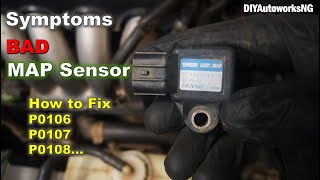
For the 3.6L Pentastar V6 engine in the Durango and its platform mates, the P0106 code is a very common and straightforward issue, almost always pointing to the MAP sensor itself. Unlike some vehicles where vacuum leaks are the primary culprit, on this platform, the sensor is the most frequent point of failure. A known issue with the 3.6L Pentastar's PCV system design can lead to oil vapors being drawn into the intake manifold, which can foul the MAP sensor and cause the P0106 code. The sensor is conveniently located on the rear of the intake manifold and uses a simple twist-lock fitting, making replacement exceptionally easy compared to other vehicles 🎬 Watch: See the MAP sensor location and replacement steps where it might be bolted down in a hard-to-reach spot.
Symptoms You May Notice
- Check Engine Light is on
- Rough or unstable idle
- Hesitation or stumbling during acceleration
- Reduced fuel economy
- Engine stalling, especially at idle or when coming to a stop
- Black smoke from the exhaust, indicating a rich fuel condition
- Engine feels sluggish or lacks power
- Replacing the throttle body when the issue is a simple MAP sensor or vacuum leak.
- Replacing spark plugs or ignition coils, as a rough idle can be mistaken for an ignition problem.
- Replacing oxygen sensors due to a rich or lean condition reported by the ECU, when the root cause is incorrect data from the MAP sensor.
Most Likely Causes
- Faulty Manifold Absolute Pressure (MAP) Sensor 🔴 High Probability → Shop Manifold Absolute Pressure Sensor The sensor's internal electronics can fail due to heat cycles and exposure to oil vapors from the PCV system. The design of the 3.6L Pentastar engine's PCV system makes it susceptible to drawing oil into the intake, which can coat the sensor's diaphragm and cause inaccurate readings.
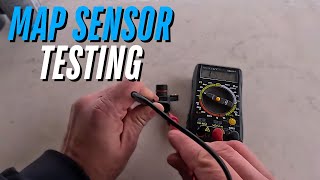
How to confirm: With the key on and engine off, use a scan tool to compare the MAP sensor reading to the Barometric Pressure (BARO) reading; they should be nearly identical. You can also remove the sensor (it twists and pulls out) and visually inspect it for oil fouling. A scan tool can also be used to monitor live MAP sensor data; erratic or stuck readings with changing engine RPM would confirm a bad sensor. 🎬 Watch: How to test your MAP sensor with a multimeter At idle, the voltage should be between 1.0V and 2.0V.
Typical fix: Replace the MAP sensor. On the 3.6L V6, it is located on the rear of the intake manifold, accessible after removing the engine cover. It twists counter-clockwise to unlock and pull out. Some owners install an oil catch can to reduce the amount of oil vapor reaching the sensor.
Est. part cost: $25-$75 - Vacuum Leak 🟡 Medium Probability Intake manifold gaskets, PCV hoses, and other vacuum lines can become brittle and crack over time, allowing unmetered air to enter the engine.
How to confirm: Perform a visual inspection of all vacuum hoses connected to the intake manifold for cracks or loose fittings. A smoke test is the most effective method to find small, hard-to-see leaks.
Typical fix: Replace the cracked hose or leaking gasket.
Est. part cost: $10-$100 - Wiring or Connector Issue ⚪ Low Probability The wiring harness to the MAP sensor can be damaged during other engine repairs, or the connector terminals can become corroded or loose due to heat and vibration.
How to confirm: Visually inspect the MAP sensor connector and wiring for any signs of damage, corrosion, or loose pins. Use a multimeter to check for the correct reference voltage (typically 5V), ground, and signal wire integrity at the connector.
Typical fix: Repair the damaged wire or clean/replace the connector pigtail.
Est. part cost: $5-$30
Rare But Worth Checking
- Clogged Catalytic Converter: A severely restricted exhaust can cause abnormal pressure readings in the intake manifold. This is usually accompanied by other codes and a significant loss of power, especially at higher RPMs.
- Faulty Powertrain Control Module (PCM): This is extremely rare. Before condemning the PCM, all other possibilities (sensor, wiring, vacuum leaks) must be exhaustively ruled out. Sometimes, a PCM software update is required to correct how it interprets sensor data.
Diagnosis Steps
- Read Codes: Use an OBD-II scanner to confirm P0106 is present and check for any other related codes.
- Visual Inspection: Remove the plastic engine cover. Inspect the area around the intake manifold for obvious vacuum leaks, such as cracked, disconnected, or collapsed hoses.
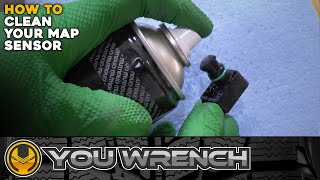
- Inspect the MAP Sensor and Connector: Locate the MAP sensor on the rear of the intake manifold. Check its electrical connector for a secure fit, and inspect the pins for corrosion or damage. Remove the sensor and check its port for oil contamination, 🎬 Watch: How to clean a fouled MAP sensor to fix codes a common issue on the 3.6L Pentastar.
- Check Live Data: With a capable scanner and the key on, engine off (KOEO), compare the MAP sensor reading to the BARO reading. They should be very close. Start the engine and monitor the MAP sensor voltage/pressure reading at idle and while revving the engine. The reading should be smooth and change instantly with RPM. Erratic or stuck values point to a bad sensor.
- Check for Vacuum: With the engine running, you can sometimes hear a hissing sound near a vacuum leak. A smoke test is the most reliable way to pinpoint a leak if one is suspected.
- Test Wiring: If the sensor and vacuum systems seem okay, disconnect the sensor and test the wiring with a multimeter. With the key on, engine off, you should find a 5-volt reference, a good ground, and a signal wire at the connector.
- Replace the MAP Sensor: Given the high failure rate, low cost, and oil fouling issues on this engine, if initial visual checks don't reveal a problem, replacing the MAP sensor is a common and effective next step.
Parts You'll Likely Need
- Manifold Absolute Pressure (MAP) Sensor
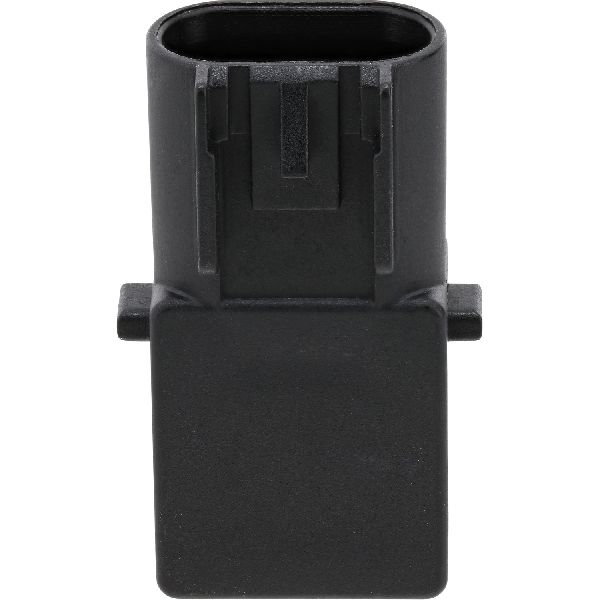
(OEM #68199324AB)— This is the most common failure point for code P0106 on this specific engine, often due to internal failure or oil contamination.
Trusted brands: Mopar, Standard Motor Products, Delphi, NGK, Walker
OEM price range: $60-$95
Aftermarket price range: $25-$75
Related Codes That Often Appear With This One
- P0107 — This code indicates 'MAP Sensor Circuit Low Input,' which can be triggered by the same failing sensor or wiring short that causes the P0106 performance code.
- P0108 — This code indicates 'MAP Sensor Circuit High Input,' which is another facet of a failing sensor or wiring issue that can lead to the P0106 code.
- P0105 — Indicates 'MAP Circuit Malfunction,' often appearing alongside P0106 as a general indicator of a problem within the MAP sensor circuit.
Technical Service Bulletins (TSBs) & Recalls
- No specific TSBs were found directly addressing P0106 on the Dodge Durango 3.6L. Failures are typically attributed to common part wear and oil contamination rather than a specific, widespread defect requiring a TSB.
Platform-Specific Known Issues
- Oil Contamination via PCV System: The 3.6L Pentastar V6 is known for its PCV system design, which can allow oil vapor to be sucked into the intake manifold. This oil can coat the MAP sensor, leading to inaccurate readings and triggering a P0106 code. Some owners proactively install an oil catch can to mitigate this issue.
Mechanic-Grade Diagnostic Values
- MAP Sensor 5V Reference Supply — expected: 4.5 to 5.0 Volts DC. Failure: Voltage significantly below 4.5V indicates a wiring or PCM issue.
- MAP Sensor Signal Voltage (KOEO) — expected: ~4.5 - 4.8 V at sea level (should match BARO reading). Failure: A low, zero, or stuck high voltage reading points to a sensor or wiring fault.
- MAP Sensor Signal Voltage (Engine Idling) — expected: Should drop to between 1.0 and 2.0 Volts DC.. Failure: Voltage remains high (near KOEO reading) and does not drop when the engine starts, indicating the sensor is not reading vacuum.
- Fuel Pressure (3.6L Engine) — expected: 400 kPa +/- 14 kPa (58 psi +/- 2 psi). Failure: Pressure outside this range could indicate a fuel delivery problem that might indirectly affect manifold pressure readings, though it's not a primary cause for P0106.
Scan Tool Commands That Help
- wiTECH (Dealer Tool) or equivalent: ETC Throttle Follower Test — While not a direct MAP test, a service manual for a related code (P2172) on the same platform uses this to verify throttle position sensor operation, which the PCM compares against the MAP sensor. If TP sensor values are incorrect during this test, it could cause the PCM to misinterpret the MAP signal and set a P0106.
Wiring & Ground Locations
- MAP Sensor Connector — On the MAP sensor, located at the rear of the upper intake manifold.. This 3-pin connector provides power, ground, and signal return for the sensor. A generic pinout is Pin A: Ground, Pin B: Signal, Pin C: +5V Supply. Verifying voltage and ground here is a key diagnostic step.
- G904 / G905 — Lower left side of the engine.. These are primary engine ground points shown in wiring diagrams for the Durango. A poor engine ground can cause floating or incorrect readings on various sensors, including the MAP sensor, that use the block as a ground reference.
- G907a (3.6L) — Lower right front of the engine compartment.. This is another critical engine ground point for the 3.6L engine. Ensuring it is clean and tight can prevent intermittent electrical issues that could trigger a P0106.
Real Owner Repair Stories
- Durango SRT Forum user (2019 Charger Hellcat (shares sensor architecture)) — Check engine light and electronic throttle control error message at full throttle, P0106 code stored.
❌ Tried (didn't work) Visual inspection of a recently installed cold air intake showed no issues.
✅ What actually fixed it Replaced the MAP sensor. The fix took about five minutes with one bolt and one connector. The check engine light cleared on its own after starting the car with the new sensor.
OEM Part Supersession History
5033310AC→5149091AA, then 68199324AA, then 68199324AB— Standard part evolution for improved reliability or manufacturing changes.
Heads up: All previous part numbers are superseded by 68199324AB. When replacing, use the latest part number to ensure compatibility and the most recent design.
Model Year Variations Within This Range
- 2016-2024: Around 2016, the 3.6L Pentastar engine received a significant upgrade (Pentastar Upgrade or 'PU'). While the fundamental cause of P0106 (MAP sensor failure) remains the same, the engine wiring harness and some component locations may have minor differences. However, the MAP sensor itself remains in a similar, accessible location on the intake manifold.
Diagnostic Flowchart
Real Owner Stories
Aggregated from forums and TSBs cited above. Mileages and costs reflect what owners reported in those sources.
Dodge Durango (Related Trim)
Symptoms: Triggered a P0106 code with no other major drivability issues noted.
What fixed it: Replaced the MAP sensor, describing it as a quick, five-minute fix that completely resolved the issue.
Source hint: Durango SRT Forum
Jeep Grand Cherokee (WK2) 3.6L V6
Symptoms: Experienced P0106 symptoms including rough idle and hesitation, accompanied by visible oil fouling on the sensor.
What fixed it: Installed a new MAP sensor to correct the oil-fouled readings.
Source hint: jeepgarage.org
Dodge Grand Caravan / Chrysler Town & Country 3.6L V6 — ~135000 miles
Symptoms: Check engine light illuminated with P0106 and related codes due to sensor failure.
What fixed it: Replaced the MAP sensor, which is noted to have a high failure rate in this mileage window on the 3.6L platform.
Source hint: Platform mate repair databases / owner reports
Dodge 3.6L V6 (Custom Tuned)
Symptoms: P0106 code appeared immediately after flashing the PCM with a new calibration.
What fixed it: Corrected the custom engine tune configuration to match the installed MAP sensor data parameters.
Source hint: ortizperformance.com
Related OBD-II Codes
Frequently Asked Questions
Is there a specific TSB or recall for the P0106 code on my 2011-2024 Dodge Durango 3.6L?
Why does the MAP sensor fail so frequently on the 3.6L Pentastar engine?
How can I prevent oil from fouling the MAP sensor on my Durango?
Where is the MAP sensor located on the Durango 3.6L V6, and is it hard to replace?
I just installed a custom engine tune on my Durango and got a P0106 code. What happened?
Can I just clean the MAP sensor instead of replacing it?
Helpful Videos
We Have This Part in Stock


The information in this article is provided for general reference and educational purposes only. Vehicle specifications, procedures, and part compatibility can vary by production date, trim level, and region. Always consult your vehicle's factory service manual and verify part numbers before purchasing or performing repairs. Safety-critical components such as airbags, seat belts, and braking systems should be installed by a qualified professional.
- Dodge Durango:
- 🧭 Diagnostic Flowchart
- 🎬 Helpful Videos
- 🛍️ Shop This Part
- What's Unique About the 2011-2024 Dodge Durango
- Symptoms You May Notice
- Most Likely Causes
- Rare But Worth Checking
- Diagnosis Steps
- Parts You'll Likely Need
- Related Codes That Often Appear With This One
- Technical Service Bulletins (TSBs) & Recalls
- Platform-Specific Known Issues
- Mechanic-Grade Diagnostic Values
- Scan Tool Commands That Help
- Wiring & Ground Locations
- Real Owner Repair Stories
- OEM Part Supersession History
- Model Year Variations Within This Range
- Real Owner Stories
- Dodge Durango (Related Trim)
- Jeep Grand Cherokee (WK2) 3.6L V6
- Dodge Grand Caravan / Chrysler Town & Country 3.6L V6 — ~135000 miles
- Dodge 3.6L V6 (Custom Tuned)
- Related OBD-II Codes
- Frequently Asked Questions
- 🎟️ Get 5% Off