

P0106 on 2011-2019 Dodge Journey 3.6L: MAP Sensor Causes and Fixes
On a 2011-2019 Dodge Journey with the 3.6L V6, the P0106 code is almost always caused by a faulty Manifold Absolute Pressure (MAP) sensor. It's an easy 15-minute DIY fix, and a new sensor costs between $25 for an aftermarket part and $75 for an OEM Mopar part. The failure is commonly due to oil contamination from the PCV system, a known issue on the Pentastar engine.
- For a P0106 code on a 2011-2019 Dodge Journey 3.6L, the first and most likely part to fail is the MAP sensor, often due to oil contamination.
- Replacement is a very simple DIY task that requires no special tools and can be completed in under 15 minutes.
- The OEM part number for the MAP sensor is 05149174AB, which is shared across many Chrysler, Dodge, and Jeep vehicles.
- Before replacing the sensor, pull the old one out and inspect it for oil residue, which is a strong confirmation of the common failure mode on this engine.
- While less likely, vacuum leaks and wiring issues should be considered if a new MAP sensor does not resolve the code.
What's Unique About the 2009-2019 Dodge Journey
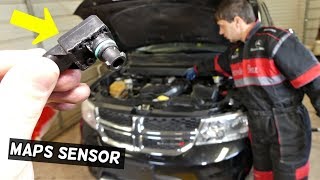
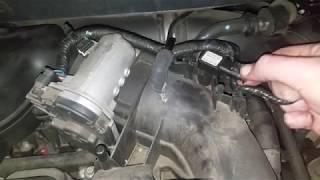
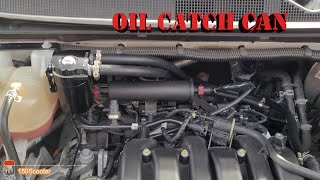
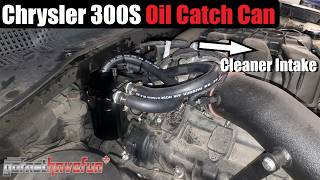
The 3.6L Pentastar V6 engine, used in the Dodge Journey from 2011-2019, has a known tendency for the MAP sensor to fail. The Positive Crankcase Ventilation (PCV) system can allow oil vapors to be drawn into the intake manifold, which then contaminates and fouls the MAP sensor's delicate sensing element, causing it to send incorrect readings. This oil fouling is the most widely reported cause for P0106 on this platform. Unlike in many other vehicles where a P0106 code often points to vacuum leaks, on the Journey 3.6L, the sensor itself is the most common point of failure. Fortunately, the sensor is located directly on top of the intake manifold, making it exceptionally easy to replace with a simple twist-lock mechanism. 🎬 Watch: This quick walkthrough shows how to replace the sensor. Some owners proactively install an aftermarket oil catch can to reduce the amount of oil vapor reaching the sensor.
Generation note: The specified range of 2009-2019 covers two generations of the Dodge Journey. However, the 3.6L Pentastar V6 engine was only introduced in the 2011 model year, which coincided with a major facelift. This guide is specifically for the 2011-2019 Dodge Journey models equipped with the 3.6L V6 engine.
Symptoms You May Notice
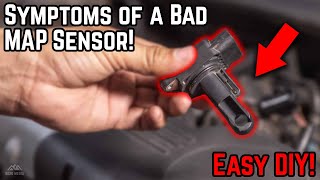
- Check Engine Light illuminated
- Rough, unstable, or shaking idle
- Poor fuel economy
- Hesitation or sluggishness during acceleration
- Loss of engine power
- Engine stalling, especially when coming to a stop
- Black smoke from the exhaust (in some cases)
- Erratic engine RPMs at idle
- Replacing the throttle body. While throttle issues can cause performance problems, the P0106 code specifically points to a pressure reading discrepancy, which is almost always the MAP sensor or a vacuum leak.
- Assuming a vacuum leak is the primary cause. On the 3.6L Pentastar, the MAP sensor itself is a much more frequent failure point than vacuum leaks.
Most Likely Causes
- Faulty or Oil-Fouled Manifold Absolute Pressure (MAP) Sensor 🔴 High Probability → Shop Manifold Absolute Pressure Sensor The 3.6L Pentastar's PCV system design can lead to oil vapors contaminating the sensor element, causing it to fail prematurely. This is a widely documented issue across all vehicles with this engine.
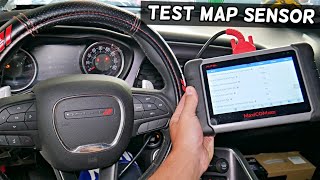
How to confirm: Visually inspect the old sensor for oil fouling upon removal; it will often be wet with oil. A more technical check is to use a scan tool with the key on, engine off. The MAP sensor reading should be nearly identical to the BARO (barometric pressure) reading. Given the low cost and high probability, direct replacement is the most common diagnostic step.
Typical fix: Replace the MAP sensor. It is located on top of the intake manifold and is held in by a twist-lock mechanism. Cleaning with dedicated MAF/MAP sensor cleaner can be a temporary fix, but replacement is recommended for reliability.
Est. part cost: $25-$75 - Vacuum Leak 🟡 Medium Probability Vacuum hoses and intake gaskets can become brittle and crack over time due to heat and age, which is common to all vehicles.
How to confirm: With the engine running, carefully spray a flammable fluid like brake cleaner or use a dedicated smoke machine around the intake manifold gaskets and vacuum hoses. If the engine RPM changes, a leak is present. A vacuum leak often triggers lean codes (P0171/P0174) in addition to P0106.
Typical fix: Replace the leaking vacuum hose or intake manifold gasket.
Est. part cost: $10-$150 - Damaged Wiring or Connector ⚪ Low Probability On some 3.6L Pentastar applications, the engine wiring harness can chafe against the back of the cylinder head, potentially causing an intermittent short in the MAP sensor circuit. This is more common on Jeep Wranglers but is a possibility.
How to confirm: Visually inspect the MAP sensor's electrical connector and wiring harness for breaks, corrosion, or loose pins. Check for a stable 5-volt reference and ground at the connector with a multimeter. Wiggle the harness while monitoring live data to see if the reading fluctuates.
Typical fix: Repair the damaged wiring or replace the connector pigtail.
Est. part cost: $15-$50
Rare But Worth Checking
- Clogged Catalytic Converter: A severely restricted exhaust can cause excessive backpressure, affecting the MAP sensor reading. This is usually accompanied by other codes (like P0420) and more severe performance loss, often a near-total lack of power at higher RPMs.
- Faulty Powertrain Control Module (PCM): This is extremely rare. All other possibilities, especially the MAP sensor itself and vacuum leaks, should be exhausted before considering the PCM.
- Internal Engine Mechanical Problems: A severe internal issue, like a broken valve spring or jumped timing, can cause erratic manifold pressure, leading to a P0106 code. This would be accompanied by significant engine noise, misfire codes (e.g., P030x), and poor performance.
Diagnosis Steps
- Read the fault codes with an OBD-II scanner to confirm P0106 is present and note any other codes.
- Visually inspect the air intake tube and all vacuum hoses connected to the intake manifold for cracks, disconnections, or obvious damage.
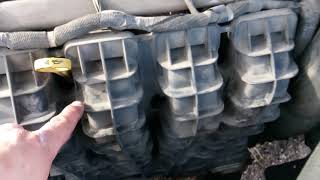
- Locate the MAP sensor on top of the intake manifold, under the plastic engine cover.
- Inspect the sensor's electrical connector for a secure fit and look for any damaged wires. Check the red locking tab on the connector.
- Given the high failure rate and oil fouling issue on this engine, the most efficient next step is to remove and inspect the MAP sensor.
- To remove, pull up the red locking tab on the connector and unplug it. Twist the sensor counter-clockwise (about 90 degrees) and pull it straight out of the manifold.
- Inspect the tip of the sensor for oil residue. If it is oily, this strongly confirms the common failure mode. You can attempt to clean it with dedicated MAP/MAF sensor cleaner as a temporary measure.
- For a permanent fix, replace the sensor. Lubricate the O-ring on the new sensor with a small amount of clean engine oil, insert it, and twist it clockwise to lock it in place. Reconnect the electrical connector and push the red tab down.
- Clear the code with the scanner and perform a test drive. If the code does not return, the problem is solved.
- If the code returns, perform a vacuum leak test using a smoke machine or by carefully spraying carb cleaner around the intake manifold gaskets while monitoring engine RPMs for any changes.
- If no vacuum leak is found, check the wiring harness for damage, particularly where it may rub against other components.
Parts You'll Likely Need
- Manifold Absolute Pressure (MAP) Sensor
(OEM #05149174AB)— This is the most frequent cause of code P0106 on the 3.6L Pentastar engine due to a design that allows oil vapor to contaminate the sensor.
Trusted brands: Mopar, Delphi, NGK/NTK, Bosch, Standard Motor Products
OEM price range: $50-$75
Aftermarket price range: $25-$50
Related Codes That Often Appear With This One
- P0107 — This code indicates 'MAP/BARO Sensor Circuit Low Input', which can be triggered by the same failing sensor that causes the P0106 performance code.
- P0108 — This code indicates 'MAP/BARO Sensor Circuit High Input', which can also be caused by a faulty MAP sensor sending erratic signals.
- P0105 — Indicates 'MAP/BARO Sensor Circuit Malfunction', another code pointing directly to the same sensor circuit.
Technical Service Bulletins (TSBs) & Recalls
- No specific TSBs were found that directly address the P0106 code on the Dodge Journey 3.6L. Failures are generally attributed to the common oil contamination issue rather than a defect requiring a specific bulletin.
Platform-Specific Known Issues
- The PCV system on the 3.6L Pentastar engine can cause oil fouling on the MAP sensor, leading to premature failure and the P0106 code.
- Some owners install an aftermarket oil catch can as a preventative measure to trap oil vapor before it reaches the intake manifold and contaminates the sensor.
Mechanic-Grade Diagnostic Values
- MAP Sensor Signal Voltage (Key On, Engine Off) — expected: ~4.5 V. Failure: Voltage is significantly lower or does not match barometric pressure reading on a scan tool.
- MAP Sensor Signal Voltage (Engine at Idle) — expected: 1.0 V to 2.0 V. Failure: Voltage remains high (near 4.5V) or is erratic. A stuck high reading strongly indicates a failed sensor.
- MAP Sensor Signal Voltage (Throttle Snap) — expected: Voltage should sweep from <2.0V at idle to >3.5V at wide open throttle.. Failure: Voltage does not change, or changes sluggishly, when the throttle is snapped open.
- MAP Sensor 5V Reference Circuit (at connector) — expected: 4.5 V to 5.0 V DC. Failure: Voltage is low or absent, indicating a problem with the PCM or wiring, not the sensor.
- MAP Sensor Ground Circuit (at connector) — expected: < 0.1 V (100 mV). Failure: Voltage is higher than 0.1V, indicating a poor ground connection which can corrupt the sensor's signal.
Scan Tool Commands That Help
- wiTECH (Dealer Tool): PCM Reprogramming / Flash ECU — For early model years (2011-2013), a software update may be required to fix overly sensitive diagnostic logic that falsely triggers MAP sensor codes like P0106 or the related P0108.
- Professional Scan Tool: Live Data Graphing (MAP Sensor Voltage/Pressure) — To confirm a failed sensor. A healthy sensor's voltage will drop instantly from ~4.5V to ~1.5V upon engine start. A bad sensor's voltage may remain stuck high, not change with RPM, or be highly erratic.
Wiring & Ground Locations
- Main Engine Ground — On the engine block, between the large wire harness and the vacuum pump. The main battery negative cable connects to this stud.. A poor main engine ground can cause fluctuating sensor readings and various electrical faults, including an erroneous P0106 code.
- G903 — Top of the transmission housing on 3.6L models.. This is a key ground point for powertrain components. Corrosion or a loose connection here can affect sensor ground references.
- MAP Sensor Connector (3-Pin) — On top of the intake manifold, connected to the MAP sensor.. The pins correspond to the 5V reference, signal, and ground circuits. Knowing the pinout is essential for electrical testing. The circuit IDs are (K856) 5V Supply, (K900) Sensor Ground, and (K1) MAP Signal.
Real Owner Repair Stories
- Reddit user, r/MechanicAdvice (Hyundai (similar MAP sensor logic)) — P0106 code, incredibly rough idle, and stalling immediately after the battery died and was replaced.
❌ Tried (didn't work) Replacing the MAP sensor did not fix the code.
✅ What actually fixed it The root cause was the PCM losing its learned idle position. The fix was to disconnect the battery, thoroughly clean the throttle body with cleaner, reinstall all intake components, reconnect the battery, and then let the vehicle idle for 10 minutes without touching the accelerator to allow the PCM to perform an idle relearn procedure. - Mechanic post on BobIsTheOilGuy.com (2015 Dodge Challenger 3.6L Pentastar, 98k miles) — Audible 'huffing' through the air filter, P0300 (Random Misfire) and P0303 (Cylinder 3 Misfire). Vacuum gauge bounced rapidly between 17 inHg and 2 psi.
✅ What actually fixed it The cause was a broken #3 intake valve spring. The mechanic noted that he *expected* to see a P0106 code due to the erratic manifold pressure, illustrating how a severe internal mechanical failure can be the true root cause for this code, even if it's accompanied by misfire codes.
"I Checked Everything" — The Actual Cause
- A common scenario that will pass a smoke test is when the P0106 code appears immediately following a battery replacement or disconnection. The actual cause is not a vacuum leak, but rather the Powertrain Control Module (PCM) losing its learned idle values for the electronic throttle body. If the throttle plate has minor carbon buildup, the PCM can no longer compensate for the slightly altered airflow at idle, leading to an irrational MAP sensor reading compared to the throttle position. The fix is to clean the throttle body and perform an idle relearn procedure.
OEM Part Supersession History
5149174AA→05149174AB— Standard part revision and improvement by the manufacturer.05149174AB→68371847AB— Standard part revision and improvement by the manufacturer.
Heads up: All part numbers in this chain are considered interchangeable for the specified vehicle application.
Model Year Variations Within This Range
- 2011-2013: These early model years with the 3.6L Pentastar engine may have overly sensitive PCM software logic. For related MAP sensor circuit codes like P0108, Chrysler issued TSBs recommending a PCM software update as the primary fix, not sensor replacement. This pattern suggests that a P0106 on these years should first be investigated for a potential software update before replacing parts.
Diagnostic Flowchart
Other Known Issues on This Vehicle
Issues unrelated to this code that are worth knowing about as an owner of this generation:
- Leaking Oil Filter Housing/Cooler Assembly 🔴 High — Extremely common. The plastic housing is prone to cracking and warping from heat cycles, causing significant oil and/or coolant leaks into the engine valley.
- Rocker Arm / Lifter Failure ('Pentastar Tick') 🔴 High — Very common, particularly in earlier models (2011-2014) but can occur at any mileage. Caused by premature failure of rocker arm needle bearings, leading to a distinct ticking noise and potential camshaft damage if ignored. (Ref: Subject of class-action lawsuits. TSB 09-002-14 addresses a related but different cylinder head issue.)
- 62TE Automatic Transmission Problems 🟠 Medium — Common, especially over 80,000 miles. Issues include harsh shifting, shuddering, and solenoid pack failure. Fluid contamination is a primary cause of failure.
- Left Cylinder Head Failure (Early Models) 🔴 High — Primarily affected 2011-2013 models. Caused excessive valve guide wear, leading to misfires (P0302, P0304, P0306) and requiring cylinder head replacement. (Ref: Chrysler Extended Warranty X56 (now expired); TSB 09-002-14.)
- Premature Brake Wear 🟡 Low — Frequently reported by owners. Many experience the need for repeated replacement of pads and rotors more often than expected.
- Electrical and TIPM Issues 🟠 Medium — Common complaints include issues with the keyless entry system, dead batteries, and other random electrical failures often traced back to the Totally Integrated Power Module (TIPM).
Used vs. New Parts: Buying Guide for This Vehicle
When a used part is the smart pick: For this repair, a used MAP sensor from a junkyard is NOT recommended. The part is an inexpensive electronic sensor, and the primary failure mode on the 3.6L Pentastar is oil contamination. A used part has unknown history and may have been subjected to the same contamination, offering poor reliability for minimal cost savings.
OEM-only on this vehicle (don't cheap out):
- While not strictly required, using an OEM Mopar sensor is highly recommended for mission-critical electronic components like the MAP sensor to ensure accurate readings and prevent compatibility issues.
Aftermarket brands forum-validated for this vehicle:
- Delphi
- NGK/NTK
- Bosch
- Standard Motor Products (SMP)
Brands owners have reported issues with on this vehicle:
- Generic, unbranded, or 'white-box' parts from online marketplaces should be avoided. While extremely cheap, they often use lower-quality components that can provide inaccurate data, leading to persistent performance issues or the code returning.
Real Owner Stories
Aggregated from forums and TSBs cited above. Mileages and costs reflect what owners reported in those sources.
2011-2019 Dodge Journey 3.6L V6
Symptoms: Rough idle and hesitation while driving.
What fixed it: Replacing the oil-fouled MAP sensor.
Source hint: dodgejourneyforum.com: Multiple threads corroborate that the MAP sensor is the primary cause and an easy fix.
2011-2014 Chrysler 3.6L Pentastar V6
Symptoms: Erratic manifold pressure and a distinct ticking noise from the valvetrain.
What fixed it: The owner noted that mechanical failures like a broken valve spring can trigger the P0106 code due to erratic pressure.
Source hint: bobistheoilguy.com: A mechanic's post on a 3.6L Pentastar with a broken valve spring
Related OBD-II Codes
Frequently Asked Questions
Is there a specific TSB for the P0106 code on my Dodge Journey 3.6L?
Why does my Pentastar 3.6L engine keep fouling the MAP sensor?
Can I just clean the MAP sensor on my Journey instead of replacing it?
Where is the MAP sensor located on the 2009-2019 Dodge Journey 3.6L?
Is there a way to prevent the P0106 code from returning after I fix it?
Could a ticking sound in my engine be related to the P0106 code?
Helpful Videos

We Have This Part in Stock


The information in this article is provided for general reference and educational purposes only. Vehicle specifications, procedures, and part compatibility can vary by production date, trim level, and region. Always consult your vehicle's factory service manual and verify part numbers before purchasing or performing repairs. Safety-critical components such as airbags, seat belts, and braking systems should be installed by a qualified professional.
- Dodge Journey:
- 🧭 Diagnostic Flowchart
- 🎬 Helpful Videos
- 🛍️ Shop This Part
- What's Unique About the 2009-2019 Dodge Journey
- Symptoms You May Notice
- Most Likely Causes
- Rare But Worth Checking
- Diagnosis Steps
- Parts You'll Likely Need
- Related Codes That Often Appear With This One
- Technical Service Bulletins (TSBs) & Recalls
- Platform-Specific Known Issues
- Mechanic-Grade Diagnostic Values
- Scan Tool Commands That Help
- Wiring & Ground Locations
- Real Owner Repair Stories
- "I Checked Everything" — The Actual Cause
- OEM Part Supersession History
- Model Year Variations Within This Range
- Other Known Issues on This Vehicle
- Used vs. New Parts: Buying Guide for This Vehicle
- Real Owner Stories
- 2011-2019 Dodge Journey 3.6L V6
- 2011-2014 Chrysler 3.6L Pentastar V6
- Related OBD-II Codes
- Frequently Asked Questions
- 🎟️ Get 5% Off