

P0106 on 2005-2007 Ford Freestyle 3.0L: MAP Sensor Causes, Fixes, and TSB
On a 2005-2007 Ford Freestyle, code P0106 is often caused by moisture freezing in the MAP sensor line during cold weather, as noted in Ford TSB 08-9-7. Before replacing the sensor, check for this issue, otherwise inspect for vacuum leaks or a faulty MAP sensor. A failing throttle body can also present with similar symptoms and related codes.
- If you get code P0106 on your Freestyle, first consider if the problem happens in freezing weather. If so, the issue is likely moisture in the MAP sensor line, as described in TSB 08-9-7.
- Before buying a new MAP sensor, always inspect for simple fixes like cracked vacuum hoses or a loose gas cap.
- The fix for the TSB issue involves clearing the line and a software update from a dealer or equipped independent shop.
- If the issue is not weather-related, the most likely causes are a bad MAP sensor or a vacuum leak.
What's Unique About the 2005-2007 Ford Freestyle
For the 2005-2007 Ford Freestyle and its platform mates (Ford Five Hundred, Mercury Montego), this code is specifically addressed by Ford Technical Service Bulletin (TSB) 08-9-7. The TSB notes that P0106 can be triggered intermittently when temperatures drop below freezing due to moisture collecting and freezing in the MAP sensor's vacuum line. This is a well-documented platform issue, and the official fix involves a PCM software update and a minor modification to the vacuum line, not necessarily a sensor replacement. This makes diagnosing the code on a Freestyle different from a simple sensor fault.
Symptoms You May Notice
- Check Engine Light is on
- Rough or unstable idle
- Hesitation or stumbling during acceleration
- Reduced fuel economy
- Engine stalling, especially at idle
- Black smoke from the exhaust
- Hard starting
- Engine surging or lunging
- Immediately replacing the MAP sensor without checking for vacuum leaks or the specific issue described in TSB 08-9-7, especially if the problem occurs in cold weather.
- Replacing the MAP sensor when the root cause is a faulty or dirty electronic throttle body causing related drivability issues.
Most Likely Causes
- Moisture in MAP Sensor Line (per TSB 08-9-7) 🔴 High Probability → Shop Manifold Absolute Pressure Sensor A design susceptibility, possibly related to the PCV system, allows moisture to collect in the MAP sensor's vacuum line. This moisture can freeze in cold weather and block the line, causing erratic pressure readings that the PCM flags as a performance error.
How to confirm: Check if the problem occurs primarily in ambient temperatures below freezing (32°F or 0°C). A technician can confirm by checking for moisture or ice in the line after disconnecting it.
Typical fix: The official fix per TSB 08-9-7 involves three steps: 1. Reprogramming the PCM with an updated calibration. 2. Disconnecting the MAP line and blowing it out with compressed air to remove moisture. 3. Re-inserting the black plastic vacuum line 1/4-inch deeper into the elbow connector at the intake manifold to minimize future moisture entry.
Est. part cost: $0 (if only performing line clearing) - Faulty Manifold Absolute Pressure (MAP) Sensor 🟡 Medium Probability → Shop Manifold Absolute Pressure Sensor
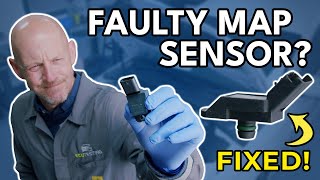
How to confirm: After ruling out vacuum leaks and the TSB, test the sensor's voltage output 🎬 See this guide on testing MAP sensor circuits and symptoms using a multimeter or an OBD-II scanner with live data. With the key on and engine off, the voltage should reflect barometric pressure. At idle, it should be around 1-1.5 volts, increasing smoothly to ~4.5 volts at wide-open throttle. If readings are stuck or erratic, the sensor is likely bad.
Typical fix: Replace the MAP sensor. It is typically mounted on the intake manifold.
Est. part cost: $40-$100 - Vacuum Leak 🟡 Medium Probability Rubber and plastic vacuum hoses, including the PCV hose and intake manifold gaskets, can become brittle and crack over time with age and heat cycles. A manufacturer report for a different model (NHTSA ODI #10967364) noted that plastic tubing can fail by "disintegrating" in the vicinity of engine components, leading to this code.
How to confirm: Visually inspect all vacuum hoses connected to the intake manifold for cracks, breaks, or loose connections. Listen for a hissing sound with the engine running. A smoke test is the most effective way to find hidden leaks.
Typical fix: Replace the cracked or broken vacuum hose(s) or intake manifold gaskets.
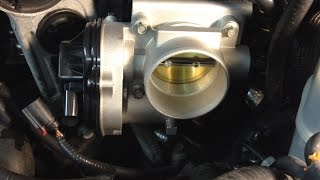
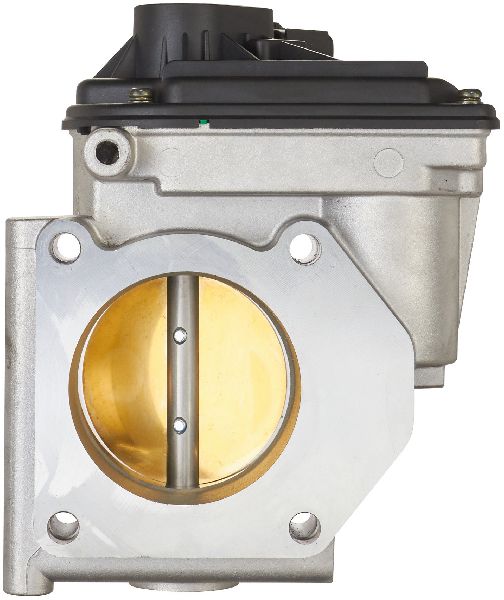
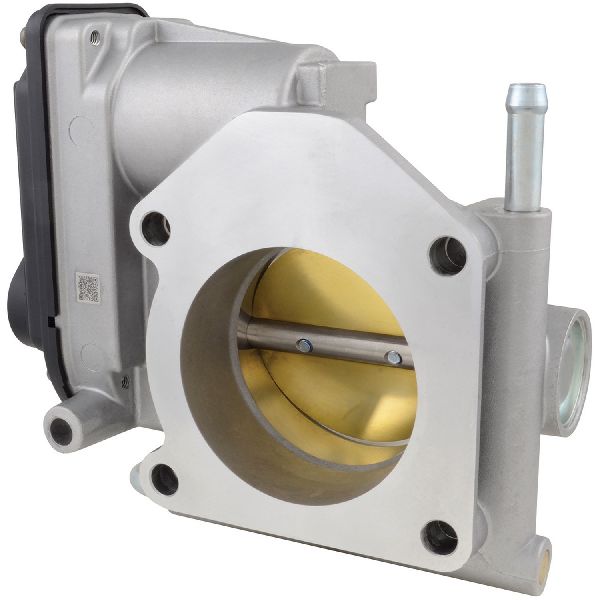
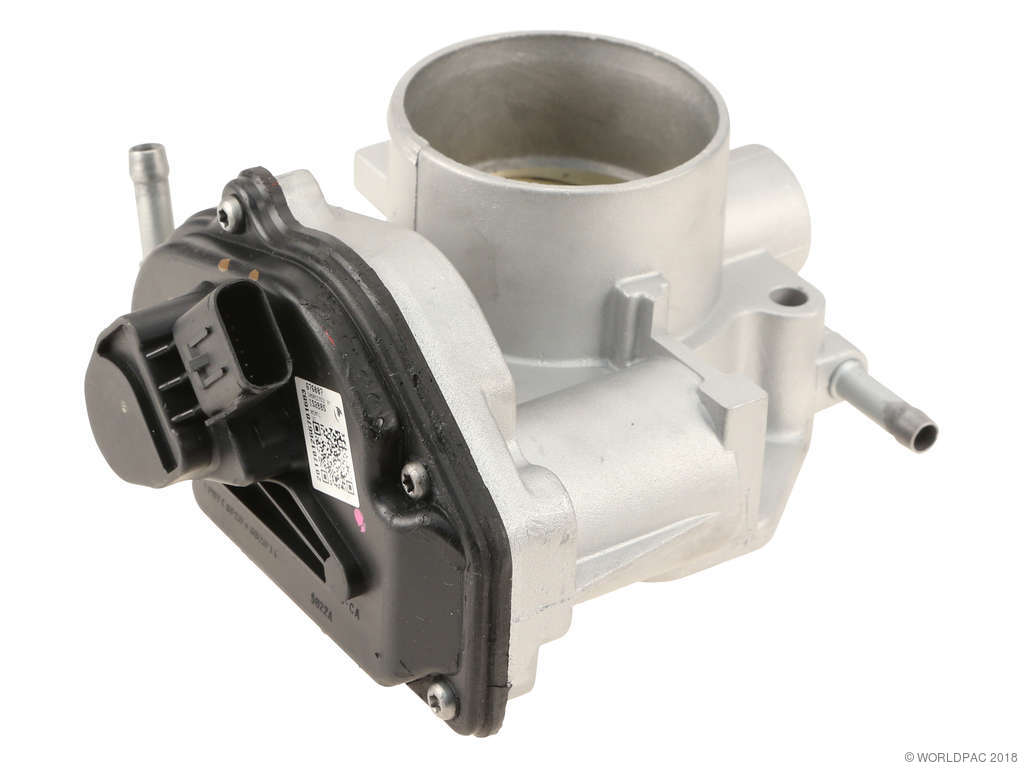
Est. part cost: $5-$50 - Dirty or Faulty Electronic Throttle Body (ETB) 🟡 Medium Probability → Shop Fuel Injection Throttle Body The ETB on this platform is a known failure point. Carbon buildup or electronic failure can cause erratic behavior and may trigger codes P2111 and P2112, which are often seen with P0106 according to TSB 08-9-7.
How to confirm: Inspect the throttle plate for heavy carbon deposits. Check for other throttle-related DTCs. A dealership can check if Customer Satisfaction Program 13N03 (extended warranty for the ETB) is applicable.
Typical fix: Clean the throttle body with a dedicated cleaner or replace the entire electronic throttle body assembly 🎬 Watch: How to replace a surging electronic throttle body if it has failed electronically.
Est. part cost: $10 (cleaner) - $300+ (replacement) - Wiring or Connector Issue ⚪ Low Probability An owner report for a different Ford model (NHTSA ODI #11123158) noted that even after replacing the MAP sensor, the vehicle continued to stall, which pointed to a fault in the wiring harness.
How to confirm: Inspect the MAP sensor's electrical connector for corrosion, moisture, or bent/broken pins. Trace the wiring harness for any signs of damage, chafing, or breaks.
Typical fix: Clean the connector with electrical contact cleaner or repair/replace the damaged section of the wiring harness.
Est. part cost: $5-$30
Rare But Worth Checking
- Clogged Catalytic Converter: A severely clogged catalytic converter can create backpressure that affects intake manifold pressure, potentially triggering a P0106 code. This is usually accompanied by other codes and a significant loss of power.
- Faulty Powertrain Control Module (PCM): This is very rare. The PCM should only be considered after all other possible causes have been exhaustively ruled out.
Diagnosis Steps
- Connect an OBD-II scanner and confirm P0106 is present. Check for any other codes, especially P0109, P2111, P2112, or P2072, and review freeze-frame data to see the conditions when the code was set.
- Note the weather conditions. Does the code appear primarily when it's cold outside (below 32°F / 0°C)? If yes, TSB 08-9-7 is highly suspect.
- Perform a thorough visual inspection of the engine bay. Look for any cracked, disconnected, or brittle vacuum hoses, especially the line to the MAP sensor and the PCV system hoses.
- Inspect the MAP sensor's electrical connector and wiring for any signs of damage, corrosion, or looseness.
- If TSB conditions apply, the recommended procedure is to have a dealer or qualified shop perform the TSB, which includes clearing the MAP line of moisture and reprogramming the PCM.
- If TSB conditions do not apply, use an OBD-II scanner to monitor live MAP sensor data. The Key-On, Engine-Off (KOEO) reading should be close to the BARO reading. At idle, voltage should be low (~1.0-1.5V). Open the throttle abruptly; the voltage should jump to ~4.5V and then decrease smoothly.
- If the sensor readings are erratic, do not change with throttle input, or are stuck high/low, and you have ruled out vacuum leaks, the MAP sensor is likely faulty.
- Inspect the electronic throttle body for heavy carbon buildup around the throttle plate, as this is a common issue and can cause similar symptoms.
- If a vacuum leak is suspected but not visible, perform a smoke test to pinpoint the source of the leak.
- After repair (e.g., replacing sensor, fixing leak, performing TSB), clear the trouble codes and perform a test drive to ensure the fix was successful.
Parts You'll Likely Need
- Manifold Absolute Pressure (MAP) Sensor
(OEM #3F2Z9F792CA)— This is the sensor that measures manifold pressure. It can fail internally or provide incorrect data to the PCM. It is the most commonly replaced part for this code when the TSB or vacuum leaks are not the cause.
Trusted brands: Motorcraft, Bosch, Delphi, Standard Motor Products (SMP)
OEM price range: $70-$120
Aftermarket price range: $40-$80 - Vacuum Hoses — Cracked or leaking vacuum hoses are a common cause of incorrect manifold pressure readings, leading to a P0106 code.
OEM price range: $10-$30
Aftermarket price range: $5-$20 - Electronic Throttle Body
(OEM #5F9Z-9E926-AA)— A known high-failure item on this platform. A malfunctioning throttle body can cause erratic idle, stalling, and set related codes (P2111, P2112) that may appear with P0106.
Trusted brands: Motorcraft
OEM price range: $200-$350
Aftermarket price range: $70-$150
Related Codes That Often Appear With This One
- P0109 — This code for 'Manifold Absolute Pressure/Barometric Pressure Sensor Circuit Intermittent' is often cited alongside P0106 in Ford TSB 08-9-7, indicating a related intermittent fault in the same circuit caused by the same moisture issue.
- P2111, P2112, P2072 — TSB 08-9-7 notes that these codes related to the throttle body ('Throttle Actuator Control System - Stuck Open/Closed') and intake manifold runner control can also be present along with P0106 due to the same underlying moisture issue affecting multiple sensors or systems.
Technical Service Bulletins (TSBs) & Recalls
- TSB 08-9-7: MIL ON with DTCs P0106
- TSB 13-9-8 and TSB 13-5-29: As noted in NHTSA ODI #10787972, these bulletins address issues where vehicles experience hesitation, loss of idle RPM, and difficulty starting due to DTCs P0106 and P0236.
Platform-Specific Known Issues
- TSB 08-9-7: Addresses an issue where P0106 is set in below-freezing temperatures due to moisture freezing in the MAP sensor line. The fix requires a PCM reprogram and clearing the line.
- Electronic Throttle Body Failure: This platform is known for faulty throttle bodies that cause stalling and 'limp mode'. Ford issued Customer Satisfaction Program 13N03 extending the warranty on this part, as many owners experienced failures.
Mechanic-Grade Diagnostic Values
- MAP Sensor 5V Reference — expected: 4.5V - 5.2V DC with key on, engine off, measured at the sensor connector.. Failure: Voltage below 4.5V or absent indicates a problem with the PCM or wiring harness, not the sensor itself.
- MAP Sensor Signal Voltage at Idle — expected: Approximately 1.0V - 1.8V DC with the engine warm and idling.. Failure: A voltage stuck high (e.g., near 4.5V) at idle indicates a faulty sensor or a complete loss of vacuum to the sensor.
- MAP Sensor Ground Circuit Check — expected: 10V - 12V DC when measuring between the sensor's ground pin and the battery's positive (+) terminal.. Failure: No voltage indicates an open in the ground circuit, which is provided by the PCM.
Hidden / Shadow Codes Worth Checking
- Mode 6 Data: While not a specific shadow code, advanced scan tools like FORScan can access Mode 6 test results. This can reveal underlying issues, such as misfire counts per cylinder that are not yet high enough to trigger a dedicated misfire DTC but could be contributing to the irrational MAP sensor readings. (see via Use a scan tool with Mode 6 capabilities, such as FORScan or a professional-grade scanner.)
Scan Tool Commands That Help
- Ford IDS / FORScan / Pro-level Scanner: Live Data Datalogger — Use this to record the MAP sensor PID (voltage or pressure), Throttle Position Sensor (TPS) PID, and RPMs during a test drive. Graphing these values helps verify if the MAP sensor signal is responding logically to changes in throttle and engine load, which is crucial for diagnosing intermittent performance issues.
Wiring & Ground Locations
- MAP Sensor Connector — On the MAP sensor itself, which is mounted to the intake manifold, often as part of an assembly with the EGR valve on the 3.0L Duratec.. This 3-pin connector provides the sensor with power, ground, and a path for the signal to the PCM. Corrosion or damage here is a direct cause of failure. The pins are typically: Pin 1 (5V Reference), Pin 2 (Signal), Pin 3 (Ground/Signal Return).
- PCM Ground — The MAP sensor's ground circuit is not a chassis ground; it is a dedicated 'Signal Return' wire that runs directly back to the Powertrain Control Module (PCM).. If the ground test fails, the fault is in the wiring harness between the sensor and the PCM, or within the PCM itself. Do not try to fix it by running a new wire to the chassis, as this can damage the PCM.
Real Owner Repair Stories
- YouTube channel 'FordTechMakuloco' (2006 Ford Freestyle 3.0L V6) — Running rough, misfire codes present along with P0106.
❌ Tried (didn't work) The video directly diagnoses the issue without showing failed attempts.
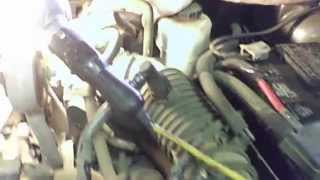
✅ What actually fixed it The mechanic observed the MAP sensor signal voltage was stuck at 4.44V at all times (KOEO and idle). This indicated a failed sensor. Replacing the MAP sensor (which was part of an assembly with the EGR valve) resolved the issue, with the new sensor showing a correct idle voltage of approximately 1.0V. - NHTSA ODI #10353500 — An owner reported the check engine light was on and the vehicle was running very rough. Diagnostic codes P0106 and P0109 were found. After following vehicle forums, the owner attempted to resolve the issue using throttle-body cleaner.
- NHTSA ODI #11417750 — An owner of a different Ford model reported having the MAP sensor replaced twice for a P0106 error, but the vehicle continued to have identical issues to those described in a manufacturer recall.
"I Checked Everything" — The Actual Cause
- The most common scenario for this vehicle is described in TSB 08-9-7. A smoke test for vacuum leaks may come back clean, but the P0106 code is still set intermittently in cold weather. The actual cause is moisture collecting and freezing inside the MAP sensor's vacuum hose, creating a blockage rather than a leak. The fix is to clear the line of ice/water and perform the TSB procedure.
OEM Part Supersession History
5F9Z-9E926-AA (Throttle Body)→5F9Z-9E926-B, then 6F9Z-9E926-A— Standard part evolution, likely for improved reliability or manufacturing changes.
Heads up: The superseding parts should be direct replacements. However, always verify with the dealer using the vehicle's VIN.
Model Year Variations Within This Range
- 2005-2007: There are no significant documented variations within the 2005-2007 model years for the 3.0L V6 that would alter the diagnosis of P0106. The major powertrain change occurred in 2008 when the model was renamed Taurus X and received a 3.5L engine and a 6-speed automatic transmission.
Diagnostic Flowchart
Other Known Issues on This Vehicle
Issues unrelated to this code that are worth knowing about as an owner of this generation:
- CVT Transmission Failure 🔴 High — A widely reported issue that can occur at various mileages, often requiring complete replacement or rebuild costing thousands of dollars.
- Electronic Throttle Body (ETB) Malfunction 🔴 High → Shop Fuel Injection Throttle Body — Very common. Can cause sudden deceleration, stalling, or entering 'limp mode', which is a significant safety concern. Ford initiated a Customer Satisfaction Program (13N03) to extend the warranty on the ETB to 10 years/150,000 miles. (Ref: TSB 05-10-14, Customer Satisfaction Program 13N03)
- Internal Water Pump Failure 🔴 High — The water pump is located internally and is driven by the timing chain. When it fails, it can leak coolant directly into the engine oil, leading to catastrophic engine damage if not caught immediately.
- Subframe / Crossmember Rust 🟠 Medium — Prevalent in regions that use road salt. The front subframe can corrode to the point of structural failure, affecting steering control. While other Ford models had recalls for this, the Freestyle did not, but the issue is reported by owners.
- Ticking Noise from Valvetrain 🟡 Low — A ticking noise from the cylinder head may not be a failing lifter, but rather a misaligned camshaft bearing cap, as addressed in a TSB. (Ref: TSB 08-3-10)
Used vs. New Parts: Buying Guide for This Vehicle
When a used part is the smart pick: A used Electronic Throttle Body (ETB) from a reputable salvage yard can be a good value, as this part is a known failure item and new OEM units are costly. Given it's an electronic part, ensure there is a warranty or return policy.
Donor-vehicle mileage cap: roughly under 100000 miles for the part to have meaningful remaining life.
What to inspect on the donor part:
- Inspect the throttle plate for excessive carbon buildup.
- Check the electrical connector for any bent pins, corrosion, or physical damage.
- Source the part from a vehicle that was not involved in a severe front-end collision.
OEM-only on this vehicle (don't cheap out):
- While not strictly required, using a Motorcraft (OEM) MAP sensor is often recommended for best performance and longevity, as cheap aftermarket sensors can have poor accuracy and a short lifespan.
Aftermarket brands forum-validated for this vehicle:
- Dorman is a well-regarded aftermarket brand for the Electronic Throttle Body, and their OE FIX versions sometimes incorporate design improvements like enhanced seals to prevent moisture and oil contamination that caused the original to fail.
Brands owners have reported issues with on this vehicle:
- Be cautious with unbranded, 'white-box' electronic sensors and throttle bodies from online marketplaces, as their quality control and accuracy can be highly variable.
Real Owner Stories
Aggregated from forums and TSBs cited above. Mileages and costs reflect what owners reported in those sources.
2006 Ford Freestyle 3.0L V6
Symptoms: The owner experienced a P0106 code specifically during cold weather conditions.
What fixed it: Following TSB 08-9-7 to address moisture in the MAP sensor line rather than replacing the sensor itself.
Source hint: fordforums.com - 'P0106 code, need help'
2005-2007 Ford Freestyle 3.0L V6
Symptoms: Multiple owners reported symptoms of lunging and stalling, often associated with throttle body failures.
What fixed it: Replacement of the Electronic Throttle Body (ETB) under Customer Satisfaction Program 13N03.
Source hint: Edmunds.com Car Forums - 'All Ford Freestyle Owners'
Related OBD-II Codes
Frequently Asked Questions
My 2006 Ford Freestyle stalls and lunges in cold weather; is there a specific TSB for this?
Is there an extended warranty for the throttle body issues on my 2005-2007 Freestyle?
How do I fix the moisture issue in the MAP sensor line mentioned in TSB 08-9-7?
Can a dirty throttle body cause a P0106 code on the Duratec 3.0L V6?
Does the Mercury Montego or Ford Five Hundred have these same P0106 issues?
Helpful Videos
We Have This Part in Stock


The information in this article is provided for general reference and educational purposes only. Vehicle specifications, procedures, and part compatibility can vary by production date, trim level, and region. Always consult your vehicle's factory service manual and verify part numbers before purchasing or performing repairs. Safety-critical components such as airbags, seat belts, and braking systems should be installed by a qualified professional.
- Ford Freestyle:
- 🧭 Diagnostic Flowchart
- 🎬 Helpful Videos
- 🛍️ Shop This Part
- What's Unique About the 2005-2007 Ford Freestyle
- Symptoms You May Notice
- Most Likely Causes
- Rare But Worth Checking
- Diagnosis Steps
- Parts You'll Likely Need
- Related Codes That Often Appear With This One
- Technical Service Bulletins (TSBs) & Recalls
- Platform-Specific Known Issues
- Mechanic-Grade Diagnostic Values
- Hidden / Shadow Codes Worth Checking
- Scan Tool Commands That Help
- Wiring & Ground Locations
- Real Owner Repair Stories
- "I Checked Everything" — The Actual Cause
- OEM Part Supersession History
- Model Year Variations Within This Range
- Other Known Issues on This Vehicle
- Used vs. New Parts: Buying Guide for This Vehicle
- Real Owner Stories
- 2006 Ford Freestyle 3.0L V6
- 2005-2007 Ford Freestyle 3.0L V6
- Related OBD-II Codes
- Frequently Asked Questions
- 🎟️ Get 5% Off