

P0106 on 2015-2019 GMC Canyon: MAP Sensor Issues, Causes, and Fixes
On 2015-2019 GMC Canyon models, especially 2015-2017 trucks with the 2.5L engine, code P0106 is frequently caused by loose intake manifold bolts creating a vacuum leak. Before replacing the MAP sensor, check for this specific issue as noted in GM Technical Service Bulletin #PIP5529B, which advises re-torquing the bolts with threadlocker.
- Before buying any parts, check the intake manifold bolts for tightness, especially on 2015-2017 models, as this is a known issue covered by a TSB.
- If multiple codes are present alongside P0106 (like P0171 or P0068), a vacuum leak is the most probable cause, not a bad sensor.
- A dirty throttle body is another common cause on GM vehicles that can falsely trigger this code; inspect and clean it before replacing sensors.
- If the MAP sensor does need replacement, it is an easy and accessible DIY job on all Canyon engines.
What's Unique About the 2015-2019 Gmc CANYON
For the second-generation GMC Canyon (and its sibling, the Chevy Colorado), P0106 is often not a simple case of a bad sensor. General Motors issued a Technical Service Bulletin (TSB #PIP5529B) that specifically identifies loose intake manifold bolts as a primary cause on 2015-2017 models with the 2.5L LCV engine. This condition creates a significant vacuum leak that the ECM interprets as a MAP sensor fault, often accompanied by a host of other codes like P0068, P0101, and P0171. Technicians are advised to check and re-torque these bolts with threadlocker before performing more extensive diagnostics. This makes checking the intake manifold a critical, vehicle-specific first step that is not common for this code on other vehicles.
Diagnostic Flowchart
Tap your situation to follow the diagnostic path that matches what you're seeing on this vehicle.
Symptoms You May Notice
- Check Engine Light illuminated
- Rough or unstable idle
- Engine hesitation or stumbling during acceleration
- Reduced engine power
- Decreased fuel economy
- Engine stalling, especially when coming to a stop
- Black smoke from the exhaust
- Erratic acceleration
- Immediately replacing the MAP sensor without checking for loose intake manifold bolts (per TSB #PIP5529B) or other vacuum leaks first. The TSB for this platform strongly suggests a vacuum leak is a more likely root cause, especially when other codes are present.
Most Likely Causes
- Loose Intake Manifold Bolts 🔴 High Probability → Shop Engine Intake Manifold Specifically cited for 2015-2017 models with the 2.5L LCV engine in GM TSB #PIP5529B. The bolts can loosen over time, causing a vacuum leak at the intake manifold gasket.
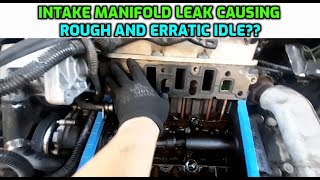
How to confirm: Physically check the intake manifold bolts for looseness. 🎬 Watch: How a manifold leak causes rough idle issues. A smoke test performed at the intake manifold will show smoke escaping from the gasket area if a leak is present. The presence of multiple codes like P0068, P0101, P0171, and P0506 strongly points to this issue.
Typical fix: Per TSB #PIP5529B, the fix is to remove one bolt at a time, apply medium-strength threadlocker, and torque all bolts to the proper specification in the correct sequence. The gasket is typically not replaced unless testing shows it's damaged after the bolts are torqued. GM allocates 0.4 hours for this repair under warranty.
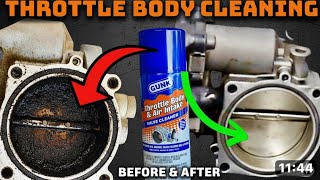
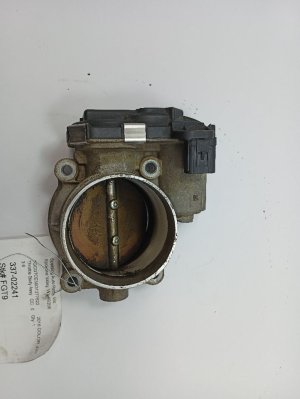
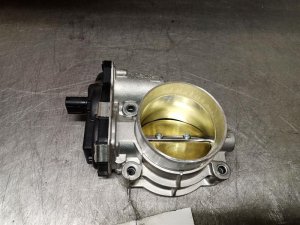
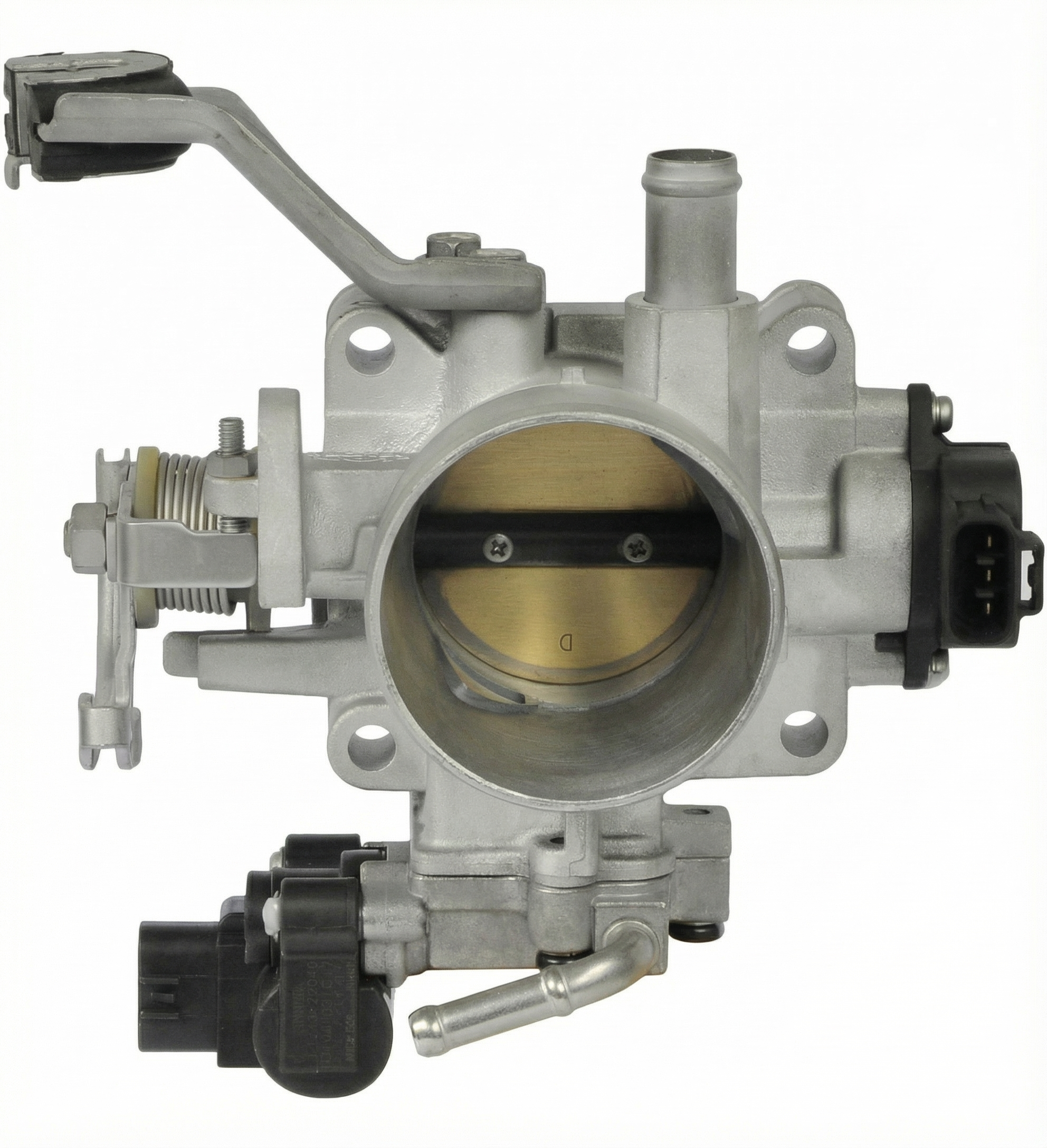
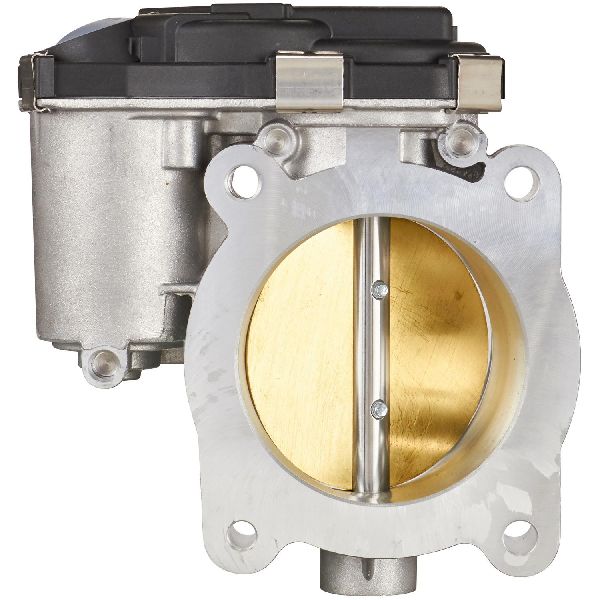
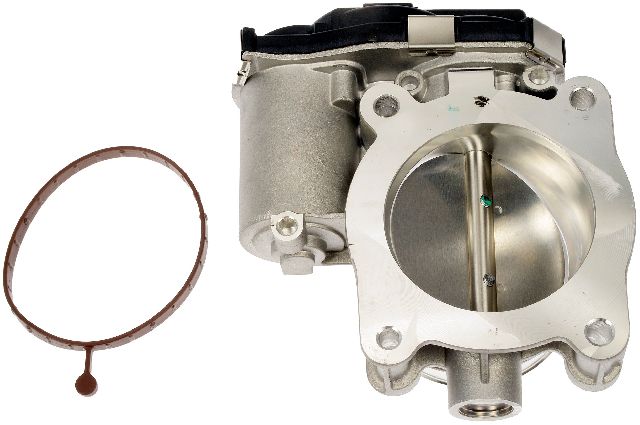
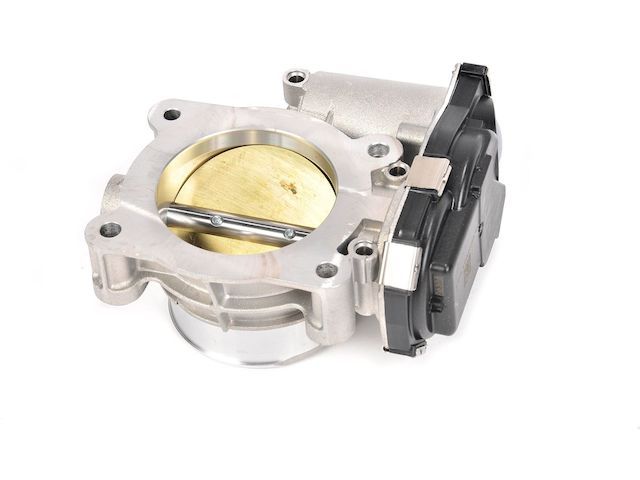
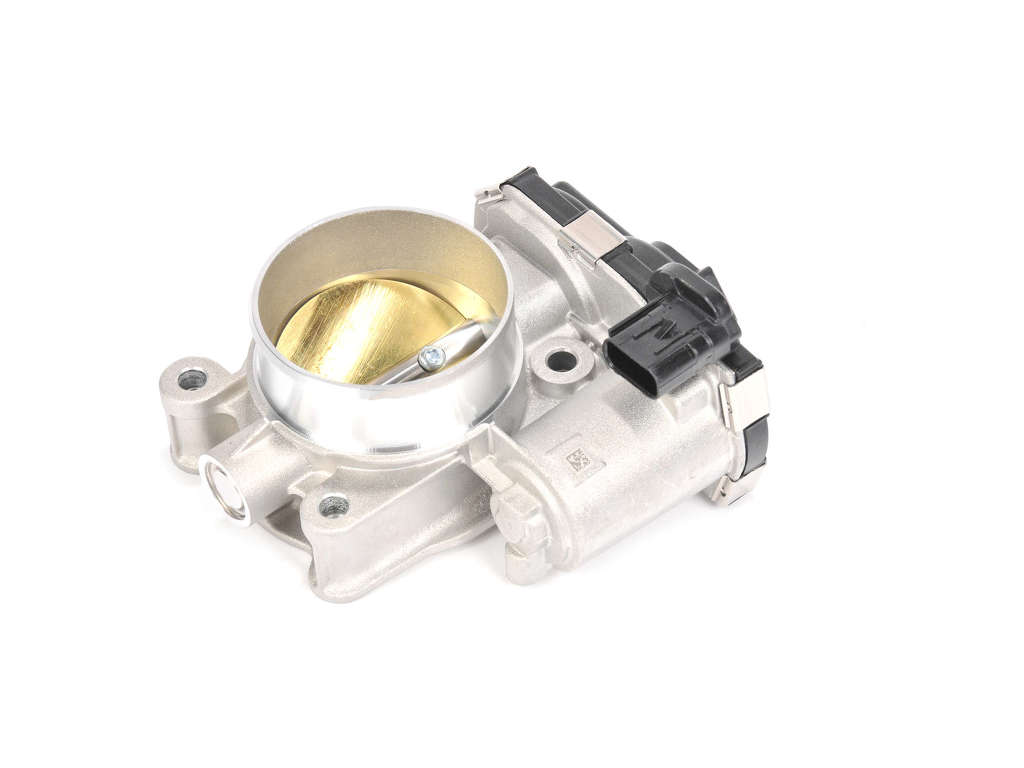
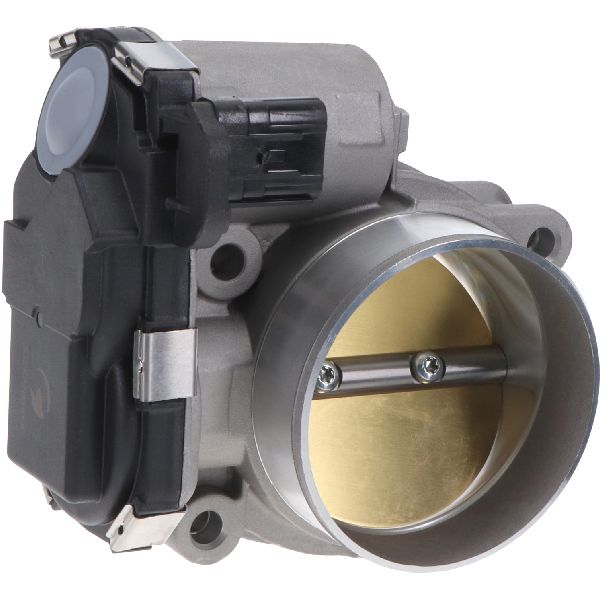
Est. part cost: $5-$15 (for threadlocker) - Dirty Throttle Body 🟡 Medium Probability → Shop Fuel Injection Throttle Body Carbon can build up in the throttle body bore, restricting airflow at idle. This forces the ECM to open the throttle plate wider to maintain idle speed. The ECM sees the higher throttle angle, expects a different MAP reading, and triggers a 'false' P0106. This is frequently reported by owners after a battery has died or been disconnected, as the ECM loses its learned idle values.
How to confirm: Remove the air intake tube and visually inspect the throttle body plate and bore for black carbon deposits.
Typical fix: Clean the throttle body thoroughly with a dedicated throttle body cleaner and a soft brush or rag. A throttle relearn procedure is often required afterward, which may involve letting the vehicle idle for several minutes after reconnecting the battery. 🎬 See this step-by-step guide for cleaning your throttle body.
Est. part cost: $10-$20 (for cleaner) - Faulty Manifold Absolute Pressure (MAP) Sensor 🟡 Medium Probability → Shop Manifold Absolute Pressure Sensor Sensors can fail electronically or become contaminated over time. While a common cause in general, it should be considered only after checking for the more common vacuum leaks and throttle body issues on this platform.
How to confirm: With a scan tool, check if the MAP sensor reading at key-on, engine-off matches the barometric pressure (BARO) reading. They should be nearly identical. You can also test the sensor's voltage output with a multimeter to see if it responds correctly to vacuum applied with a hand pump.
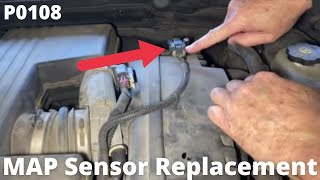
Typical fix: Replace the MAP sensor. It is typically held by a single Torx bolt (T25 or T30) and is easily accessible on the intake manifold on all engines. 🎬 Watch: How to replace the MAP sensor on your truck.
Est. part cost: $30-$95 - Vacuum Leak (Other) ⚪ Low Probability
How to confirm: Visually inspect all vacuum hoses, especially the PCV hose, for cracks, brittleness, or disconnection. A smoke test is the most effective way to find small, hard-to-see leaks.
Typical fix: Replace the cracked or leaking vacuum hose or gasket.
Est. part cost: $10-$50
Rare But Worth Checking
- Wiring Harness Issue: A damaged wire or corroded connector for the MAP sensor can cause an intermittent or incorrect signal. This should be checked if a new sensor doesn't fix the issue and no vacuum leaks are found.
- Clogged Catalytic Converter: A restricted exhaust can cause excess backpressure, which can affect the pressure readings in the intake manifold and trigger a P0106 code, usually along with other exhaust-related codes.
- Internal Engine Mechanical Problem: In very rare cases, a mechanical issue like incorrect valve timing or a worn camshaft lobe can affect engine vacuum and cause a P0106 code. This would typically be accompanied by other severe symptoms like misfires or noises.
Diagnosis Steps
- Scan for Codes: Use an OBD-II scanner to confirm P0106 and check for any other codes. The presence of codes like P0068, P0171, or P0101 strongly points towards a vacuum leak as described in TSB #PIP5529B.
- Inspect Intake Manifold Bolts (2.5L Engine): Following TSB #PIP5529B, the first mechanical check on 2015-2017 2.5L engines should be to verify the tightness of the intake manifold bolts.
- Perform a Smoke Test: If bolts are tight or the vehicle is not a 2.5L, perform a smoke test to check for vacuum leaks from other sources like cracked hoses (PCV) or gaskets.
- Inspect the Throttle Body: Remove the intake duct and inspect the throttle body for heavy carbon buildup. Clean if necessary, especially if the battery was recently disconnected or replaced.
- Test the MAP Sensor: If no vacuum leaks are found, test the MAP sensor. Compare its reading to the BARO reading with the key on and engine off. Test its voltage response to vacuum with a hand pump.
- Inspect Wiring: Check the MAP sensor's connector and wiring for any signs of damage, corrosion, or loose connections.
- Replace the MAP Sensor: If the sensor fails testing, replace it with a quality OEM or aftermarket part.
Parts You'll Likely Need
- Manifold Absolute Pressure (MAP) Sensor
(OEM #12650600)— This is the sensor that reports the pressure reading. It may fail, but should only be replaced after ruling out vacuum leaks. This part number is confirmed to fit 2017-2021 models.
Trusted brands: ACDelco, Delphi, Bosch
OEM price range: $40-$60
Aftermarket price range: $25-$50 - Throttle Body Cleaner — A dirty throttle body is a common cause of a false P0106 code on GM vehicles, especially after a battery disconnect.
Trusted brands: CRC, Permatex, ACDelco
Aftermarket price range: $10-$20 - Threadlocker (Medium Strength) — Required for the TSB #PIP5529B repair procedure to prevent the intake manifold bolts from loosening again.
Trusted brands: Loctite, Permatex
Aftermarket price range: $5-$15
Related Codes That Often Appear With This One
- P0068 — MAP/MAF - Throttle Position Correlation. This code is often seen with P0106 because a vacuum leak (like from loose intake bolts) causes the MAP sensor readings to not correlate with what the MAF and throttle position sensors are reporting. It is explicitly listed in TSB #PIP5529B.
- P0171 — System Too Lean (Bank 1). A vacuum leak introduces unmetered air into the engine, causing a lean condition that the oxygen sensors detect. This is also listed in TSB #PIP5529B.
- P0101 — Mass Air Flow (MAF) Sensor Performance. The unmetered air from a vacuum leak causes a discrepancy between the air measured by the MAF sensor and the actual air entering the cylinders. Listed in TSB #PIP5529B.
- P0506 — Idle Air Control System RPM Lower Than Expected. A vacuum leak can disrupt the engine's ability to control its idle speed correctly. Listed in TSB #PIP5529B.
Technical Service Bulletins (TSBs) & Recalls
- PIP5529B: Stall Hesitation P0068 P0101 P0106 P0131 P0137 P0171 P0324 P0326 P0331 P0506 CV LKW LTG Loose Intake Manifold Bolts.
- 19NA127: Check Engine Light Illuminated with DTC’s P0106, P0046, P20EE, P249D, and/or P249E Set.
Platform-Specific Known Issues
- TSB #PIP5529B: Addresses a condition on 2015-2017 models with the 2.5L LCV engine where loose intake manifold bolts can cause P0106 along with a cluster of other codes (P0068, P0101, P0171, P0506). The fix is to apply medium-strength threadlocker to the bolts and re-torque them to specification.
- TSB #19NA127: This bulletin is relevant for the 2.8L Duramax diesel engine. It notes that P0106 can appear in conjunction with diesel-specific emissions codes like P20EE, P249D, and P249E. This indicates the MAP sensor fault may be a consequence of an issue within the diesel exhaust aftertreatment system.
Mechanic-Grade Diagnostic Values
- MAP Sensor 5V Reference Wire — expected: 4.8V - 5.2V DC with key on, engine off.. Failure: Voltage significantly outside this range points to a problem with the ECM or the wiring harness.
- MAP Sensor Signal Voltage (Key On, Engine Off) — expected: ~4.5V - 5.0V at sea level. Should be nearly identical to the BARO sensor reading.. Failure: A reading significantly lower than the BARO reading, or one that is stuck low (e.g., under 2.0V), suggests a faulty sensor or a wiring issue.
- MAP Sensor Signal Voltage (Engine at Warm Idle) — expected: ~1.0V - 1.5V for a naturally aspirated engine.. Failure: Voltage significantly higher than 1.5V (e.g., over 2.5V) at a stable idle strongly suggests a vacuum leak or poor engine vacuum from a mechanical issue.
- MAP Sensor Ground Circuit — expected: Near 0V when back-probing the ground wire. Alternatively, a voltage drop test from the negative battery terminal to the ground pin should show less than 0.1V.. Failure: Voltage significantly above 0V indicates a poor ground connection, which can skew sensor readings.
Scan Tool Commands That Help
- Manual Procedure: Idle Relearn Procedure — This is often necessary after cleaning the throttle body or disconnecting the vehicle's battery. The ECM loses its learned idle position and must recalibrate to the clean throttle plate. A common procedure is to reconnect the battery, start the vehicle without touching the accelerator, and let it idle for at least 10 minutes to relearn.
Wiring & Ground Locations
- MAP Sensor Connector — On the intake manifold, location varies slightly by engine (2.5L, 3.6L, 2.8L).. This 3-wire connector is the primary interface for the sensor. Testing for voltage and ground at its pins is a key diagnostic step. The typical pinout is Pin A/1 for Ground, Pin B/2 for Signal, and Pin C/3 for 5V Reference, though this should always be confirmed with a vehicle-specific diagram.
- G101 — Typically located on the lower front of the engine block.. This is a primary ground point for the Engine Control Module (ECM). A loose or corroded G101 can create an unstable ground reference for the entire engine management system, leading to erratic sensor readings and multiple fault codes, including P0106.
Real Owner Repair Stories
- Reddit user, r/MechanicAdvice (General GM vehicle, applicable to Canyon) — Check Engine Light with code P0106 immediately after disconnecting or replacing the battery.
❌ Tried (didn't work) Clearing the code with a scanner (code returned immediately)., Replacing the MAP sensor.
✅ What actually fixed it The root cause was the ECM losing its learned idle position for the throttle body. The fix was to disconnect the battery again, thoroughly clean the carbon buildup from the throttle body, reconnect everything, and then perform an idle relearn by starting the engine and letting it idle untouched for 10 minutes. - Multiple owner forums (e.g., coloradofans.com) (2015-2017 GMC Canyon / Chevy Colorado with 2.5L engine) — P0106 accompanied by other codes like P0068, P0101, P0171. Rough idle and hesitation.
❌ Tried (didn't work) Replacing the MAP sensor., Cleaning the throttle body., Searching for obvious vacuum hose leaks.
✅ What actually fixed it The issue was confirmed to be loose intake manifold bolts, as described in TSB #PIP5529B. The fix was to remove each bolt one by one, apply medium-strength threadlocker, and torque them to the manufacturer's specification. This resolved the vacuum leak and all associated codes.
"I Checked Everything" — The Actual Cause
- A scenario directly related to TSB #PIP5529B can lead to a 'clean' smoke test. The vacuum leak caused by loose intake manifold bolts can be intermittent, appearing only under specific conditions like engine vibration or thermal expansion/contraction. A static smoke test performed on a cold engine may not reveal the leak, leading a technician to incorrectly rule out a vacuum leak as the cause. The actual problem (the loose bolts) remains hidden until they are physically checked for torque.
- In a rare case reported on a different vehicle but with the same code, a P0106 was caused by an internal engine mechanical failure (a hung-open intake valve). This created erratic pressure in the intake manifold that the ECM interpreted as a MAP sensor performance issue. A smoke test would be clean because there was no external leak; the problem was the engine's inability to produce steady vacuum.
OEM Part Supersession History
12650600→Unknown— N/A
Heads up: Part number 12650600 is listed for many 2016+ GM vehicles, including the Canyon. Some parts vendors note that this specific part may require programming or special setup procedures after installation. Another commonly cited part number for the 2.5L and 3.6L engines is 12711681. Always verify the correct part number for your specific vehicle's VIN before purchasing.
Model Year Variations Within This Range
- 2015-2017 (2.5L LCV Engine): These model years are specifically called out in TSB #PIP5529B for having issues with intake manifold bolts loosening over time, causing a vacuum leak that triggers P0106. Later models may have had a design or assembly process change to mitigate this.
- All years with 2.8L Duramax Diesel: Per TSB #19NA127, a P0106 code on the diesel engine may be set in conjunction with diesel-specific emission codes (P20EE, P249D, P249E). This points the diagnosis towards the diesel aftertreatment system rather than a simple vacuum leak or sensor failure.
- 2017-2019 (3.6L V6 Engine): In 2017, the 3.6L V6 engine was updated from the LFX to the LGZ. While both can experience P0106, the physical location of components and specific torque values may differ slightly. However, the primary causes (sensor, wiring, vacuum leak, dirty throttle body) remain the same.
Helpful Videos
Used OEM Parts in Stock
New Aftermarket Parts Available


The information in this article is provided for general reference and educational purposes only. Vehicle specifications, procedures, and part compatibility can vary by production date, trim level, and region. Always consult your vehicle's factory service manual and verify part numbers before purchasing or performing repairs. Safety-critical components such as airbags, seat belts, and braking systems should be installed by a qualified professional.
- Gmc CANYON:
- 🧭 Diagnostic Flowchart
- 🎬 Helpful Videos
- 🛍️ Shop This Part
- What's Unique About the 2015-2019 Gmc CANYON
- Symptoms You May Notice
- Most Likely Causes
- Rare But Worth Checking
- Diagnosis Steps
- Parts You'll Likely Need
- Related Codes That Often Appear With This One
- Technical Service Bulletins (TSBs) & Recalls
- Platform-Specific Known Issues
- Mechanic-Grade Diagnostic Values
- Scan Tool Commands That Help
- Wiring & Ground Locations
- Real Owner Repair Stories
- "I Checked Everything" — The Actual Cause
- OEM Part Supersession History
- Model Year Variations Within This Range
- 🎟️ Get 5% Off