

P0106 on 2007-2014 GMC Sierra 1500: MAP Sensor, Vacuum Leaks, and Fixes
P0106 on a 2007-2014 GMC Sierra 1500 usually points to a faulty Manifold Absolute Pressure (MAP) sensor or a vacuum leak. On 2007 models, it can be caused by intake icing, while 2014 models may have a broken valve spring, as noted in GM Technical Service Bulletins. A dirty throttle body can also cause this code by altering airflow at idle.
- P0106 on a 2007-2014 Sierra indicates a problem with the MAP sensor's performance, most often due to a faulty sensor or a vacuum leak.
- Always check for vacuum leaks from cracked hoses or a bad intake manifold gasket before replacing parts.
- Be aware of the specific TSBs for this truck: intake icing on 2007 models and potential broken valve springs on 2014 models.
- A simple check with a scan tool (comparing MAP to BARO with the engine off) can quickly help diagnose the sensor.
- Replacing the MAP sensor is a straightforward DIY job for most owners and is a very common fix for this code.
What's Unique About the 2007-2014 Gmc SIERRA 1500
The 2007-2014 Sierra 1500 spans two distinct generations, the GMT900 (2007-2013) and the K2XX (2014), each with unique, documented issues causing a P0106 code. For early GMT900 trucks, GM identified a problem with ice forming in the intake manifold in cold weather, leading to a special service bulletin (PI1257) to relocate the MAP sensor. For the first-year K2XX trucks (2014), a different bulletin (PIP5423B) points to broken valve springs as a potential cause, a serious mechanical failure. In some cases with a broken spring, exhaust gases can be forced back into the intake, melting the plastic intake manifold runners.
Diagnostic Flowchart
Tap your situation to follow the diagnostic path that matches what you're seeing on this vehicle.
Generation note: This range covers the GMT900 (2007-2013) and the K2XX (2014) generations. TSB #PI1257 specifically addresses a cold-weather icing issue on 2007 models. TSB #PIP5423B points to potential broken valve springs on 2014 models with the 4.3L, 5.3L, and 6.2L engines. While causes can be similar, these generation-specific TSBs are critical for diagnosis.
Symptoms You May Notice
- Check Engine Light is on
- Rough or unstable idle
- Hesitation or stumbling during acceleration
- Reduced engine power
- Poor fuel economy
- Engine stalling, especially when coming to a stop
- Black smoke from the exhaust
- Hard starting
- Replacing the throttle body when the issue is a simple vacuum leak.
- Replacing the MAP sensor without checking for the TSB-related issues like intake icing or a broken valve spring on applicable model years.
- Replacing the MAP sensor when the throttle body is simply dirty and needs cleaning.
Most Likely Causes
- Faulty Manifold Absolute Pressure (MAP) Sensor 🔴 High Probability → Shop Manifold Absolute Pressure Sensor The sensor can fail internally from age, heat cycles, or contamination from oil vapor. It is a common replacement part for these trucks.
How to confirm: With the engine off, use a scan tool to check if the MAP sensor reading matches the Barometric Pressure (BARO) reading. They should be nearly identical. At idle, the reading should be low (high vacuum). You can also test the sensor's voltage output; it should be between 1V and 2V at idle and change smoothly as you apply throttle.
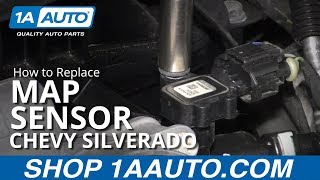
Typical fix: Replace the MAP sensor. It is located on the top of the intake manifold and is held in by a small bolt or clip, making for a quick replacement.
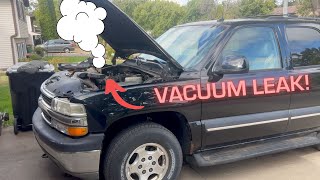
Est. part cost: $30-$80 - Vacuum Leak 🟡 Medium Probability The plastic intake manifold gaskets are a known failure point on 1999-2015 GM trucks, allowing unmetered air to enter the engine. Vacuum hoses, particularly the PCV hose and brake booster line, can also become brittle and crack over time.
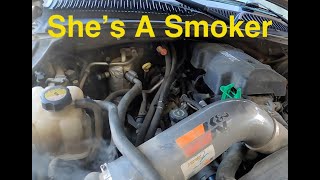
How to confirm: Visually inspect all vacuum lines connected to the intake manifold for cracks or disconnections. Listen for a hissing sound at idle. A smoke test is the most effective way to find hard-to-see leaks, such as a leaking intake manifold gasket.
Typical fix: Replace the cracked vacuum hose or faulty intake manifold gasket. Fel-Pro makes an updated intake gasket (MS 98016 T) with a metal carrier to prevent future failures.
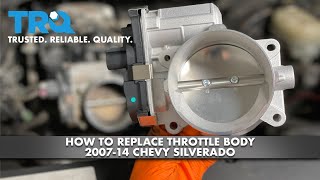
Est. part cost: $5-$150 - Dirty Throttle Body 🟡 Medium Probability → Shop Fuel Injection Throttle Body Carbon buildup around the throttle plate can restrict the amount of air entering the engine at idle. The ECM tries to compensate but the resulting airflow doesn't match what's expected for the given MAP sensor reading, triggering a P0106.
How to confirm: Remove the air intake tube and visually inspect the throttle body bore and plate for black carbon deposits. The engine may idle lower than specified.
Typical fix: Clean the throttle body using a dedicated throttle body cleaner and a soft cloth or brush. Be careful not to damage the electronic components. A throttle position relearn procedure may be necessary after cleaning.
Est. part cost: $5-$15 (for cleaner) - Intake Manifold Icing (2007 models) ⚪ Low Probability → Shop Engine Intake Manifold Per TSB #PI1257, early models in this generation were prone to ice buildup in the intake manifold during cold weather (below 0°F / -18°C), which obstructs the MAP sensor port or PCV passages.
How to confirm: This issue primarily occurs in freezing temperatures. The code may appear after a drive and disappear after the engine warms up and melts the ice. Inspection may require removing the throttle body or MAP sensor to look for signs of moisture or ice.
Typical fix: GM released a redesigned upper intake manifold with a relocated MAP sensor to prevent this issue. Installing this updated part is the permanent solution.
Est. part cost: $200-$400 - Damaged Wiring or Connector ⚪ Low Probability
How to confirm: Inspect the MAP sensor's 3-wire electrical connector for corrosion or loose pins. Check the wiring harness for any signs of fraying, melting, or breaks, especially where it might rub against the cylinder head or brackets.
Typical fix: Repair the damaged section of wire or replace the connector pigtail.
Est. part cost: $15-$40
Rare But Worth Checking
- Broken Valve Spring (2014 models): → Shop Engine Valve Spring According to TSB #PIP5423B, a broken valve spring can cause this code, often accompanied by P0506 (Idle Air Control System RPM Lower Than Expected). This is a serious mechanical issue that will cause a rough idle, misfires, and low compression on the affected cylinder. In severe cases, exhaust gas reversion can melt the plastic intake manifold runner for that cylinder.
- Restricted Exhaust System: A clogged catalytic converter can create backpressure that affects manifold pressure readings. This would typically be accompanied by a significant loss of power, especially at higher RPMs, and potentially other codes like P0420 or P0430.
Diagnosis Steps
- Read all stored DTCs with an OBD-II scanner. Note any other codes present, especially P0506 or misfire codes.
- With the Key On, Engine Off (KOEO), compare the MAP sensor reading to the BARO reading on the scan tool. They should be nearly identical.
- Start the engine and observe the MAP sensor reading at idle. It should be significantly lower than the BARO reading (e.g., 1-1.5V).
- Inspect the air filter and intake tube for blockages or restrictions.
- Visually inspect all vacuum hoses connected to the intake manifold for cracks, disconnections, or deterioration. Pay close attention to the PCV system.
- Inspect the MAP sensor electrical connector and wiring for damage, corrosion, or loose connections.
- If a vacuum leak is suspected, perform a smoke test to pinpoint the source. This is the most reliable way to check the intake manifold gaskets.
- Inspect and clean the throttle body if carbon buildup is present.
- If the vehicle is a 2007 model and driven in a cold climate, investigate for signs of moisture or icing in the intake per TSB #PI1257.
- If the vehicle is a 2014 model and also has a P0506, remove the valve covers and inspect for a broken valve spring per TSB #PIP5423B.
- If all else tests normal, the MAP sensor itself is the most likely culprit.
Parts You'll Likely Need
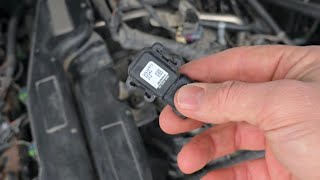
- Manifold Absolute Pressure (MAP) Sensor
(OEM #12644228)— This is the most common component to fail, causing incorrect pressure readings to be sent to the ECM.
Trusted brands: ACDelco, Delphi, Bosch, NGK
OEM price range: $60-$100
Aftermarket price range: $30-$80 - Intake Manifold Gasket Set — A failed intake manifold gasket is a common source of vacuum leaks on these engines, which directly causes the P0106 code. The original plastic carrier gaskets are prone to cracking.
Trusted brands: ACDelco, Fel-Pro (MS 96419 or MS 98016 T are common examples)
OEM price range: $80-$150
Aftermarket price range: $40-$90
Related Codes That Often Appear With This One
- P0506 — As mentioned in TSB #PIP5423B, this code for low idle speed can appear with P0106 if a broken valve spring is the cause on 2014 models.
- P0171 / P0174 — If a vacuum leak is the root cause of P0106, the engine will run lean, often triggering these codes for 'System Too Lean'.
- P0300-P0308 — A broken valve spring will cause a misfire on a specific cylinder, triggering a code like P0301, P0302, etc. A large vacuum leak can sometimes cause a general random misfire code (P0300).
Technical Service Bulletins (TSBs) & Recalls
- PIP5423B: Mentions DTC P0106 can be caused by a broken valve spring on 2014 models with 4.3L, 5.3L, or 6.2L engines.
Platform-Specific Known Issues
- TSB #PI1257: On 2007 models, ice can build up in the intake manifold during cold weather, causing the MAP sensor to read incorrectly. The official fix is to install a redesigned intake manifold that relocates the sensor.
- TSB #PIP5423B: On 2014 models, this code may be set in conjunction with P0506 due to a broken valve spring. This requires inspection of the valvetrain. A technician on a forum noted this failure can lead to exhaust gas melting the plastic intake runner if not addressed.
Mechanic-Grade Diagnostic Values
- MAP Sensor Signal Voltage (KOEO) — expected: ~4.5-4.9 Volts. Failure: Voltage significantly lower than 4.5V, or 0V.
- MAP Sensor Signal Voltage (Engine at Idle) — expected: ~1.0-2.0 Volts. Failure: Voltage remains high (near KOEO value) or is erratic.
- MAP Sensor Signal Voltage (Sharp Acceleration) — expected: Should rise sharply to ~4.0-4.5 Volts. Failure: Voltage does not respond, or responds slowly/erratically to throttle changes.
- MAP Sensor 5V Reference Supply — expected: ~5.0 Volts. Failure: Voltage is significantly lower than 5V or absent.
- MAP Sensor Retaining Bolt Torque (2014+ K2XX models) — expected: 40 inch-pounds. Failure: N/A - This is an installation specification.
Wiring & Ground Locations
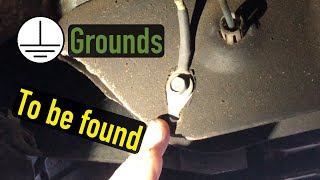
- G102 — Located at the left rear of the engine.. This ground is for the 8 ignition coils. A poor ground here can affect ignition performance, which could indirectly influence manifold pressure and engine stability.
- G103 — Located on the front of the passenger side (right) cylinder head.. This is a primary engine ground. A video guide for GMT900 trucks shows this as a key grounding point on the engine block. A poor connection here can cause erratic sensor behavior.
- G104 — Located on the left rear corner of the engine, mounted to the left cylinder head.. This ground point is shared by multiple systems including the Vehicle Control Module (VCM/ECM) on some models. A faulty G104 ground can directly impact the ECM's ability to read sensors correctly.
- MAP Sensor Connector — On the MAP sensor, which is on top of the intake manifold.. The 3-wire connector provides the sensor with a 5V reference, a ground, and returns the signal voltage to the ECM. Corrosion or damage to these pins is a direct cause of MAP sensor codes.
Real Owner Repair Stories
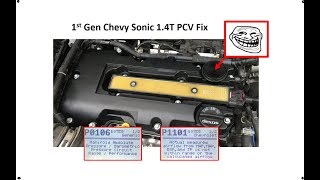
- Multiple YouTube repair videos (Garage King, FerKurl, gouldaero) (2011-2016 Chevrolet Cruze / Sonic 1.4L Turbo (Similar PCV design principles may apply to other GM engines)) — Rough idle, whistling noise from engine, Check Engine Light with codes P0106 and P0171.
❌ Tried (didn't work) In many cases, owners might first suspect the MAP sensor itself due to the P0106 code.
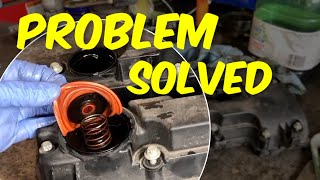
✅ What actually fixed it The PCV valve, which is integrated into the valve cover, had failed (often a ruptured diaphragm). This created a significant unmetered vacuum leak. The entire valve cover had to be replaced to fix the issue. - Reddit user in r/Cartalk (2014 Chevrolet Silverado 1500) — P0106 code, sluggish performance.
❌ Tried (didn't work) Replaced MAP sensor, Replaced throttle body, Replaced air intake
✅ What actually fixed it The user's post was a request for help and did not have a final resolution, but it highlights a common scenario where replacing multiple parts does not solve the problem, pointing towards a more complex issue like a vacuum leak, wiring problem, or the TSB-related valve spring issue.
"I Checked Everything" — The Actual Cause
- In some GM vehicles, a P0106 code can be caused by a failed PCV diaphragm inside the valve cover. A standard smoke test of the intake manifold and vacuum lines may not reveal this leak, as the leak is internal to the crankcase ventilation system. The definitive symptom is often a strong vacuum or whistling sound at the oil cap when the engine is running.
OEM Part Supersession History
12644228→12711681— Standard part evolution and potential design improvements.
Heads up: The new part number (12711681) is the direct replacement for the old one (12644228) and should be fully compatible.
Model Year Variations Within This Range
- 2014: The 2014 model year marks the introduction of the K2XX platform with new EcoTec3 engines. These engines are specifically cited in TSB #PIP5423B for potentially having broken valve springs that cause P0106, an issue not documented for the earlier GMT900 generation.
- 2007: TSB #PI1257 specifically targets early models of the GMT900 generation for intake manifold icing in cold climates, a design issue that was addressed with a revised intake manifold part.
Helpful Videos


We Have This Part in Stock

The information in this article is provided for general reference and educational purposes only. Vehicle specifications, procedures, and part compatibility can vary by production date, trim level, and region. Always consult your vehicle's factory service manual and verify part numbers before purchasing or performing repairs. Safety-critical components such as airbags, seat belts, and braking systems should be installed by a qualified professional.
- Gmc SIERRA 1500:
- 🧭 Diagnostic Flowchart
- 🎬 Helpful Videos
- 🛍️ Shop This Part
- What's Unique About the 2007-2014 Gmc SIERRA 1500
- Symptoms You May Notice
- Most Likely Causes
- Rare But Worth Checking
- Diagnosis Steps
- Parts You'll Likely Need
- Related Codes That Often Appear With This One
- Technical Service Bulletins (TSBs) & Recalls
- Platform-Specific Known Issues
- Mechanic-Grade Diagnostic Values
- Wiring & Ground Locations
- Real Owner Repair Stories
- "I Checked Everything" — The Actual Cause
- OEM Part Supersession History
- Model Year Variations Within This Range
- 🎟️ Get 5% Off