

P0106 on 2014-2019 GMC Sierra 5.3L: Faulty MAP Sensor or Broken Valve Spring?
On a 2014-2019 Sierra 5.3L, P0106 is often a simple bad MAP sensor (~$45), but it can also be a serious broken valve spring. If you hear engine ticking or have misfire codes (P0300), suspect a valve spring and seek professional diagnosis to avoid engine damage.
- P0106 on a 2014-2019 Sierra 5.3L has two very different primary causes: a simple bad MAP sensor or a serious broken valve spring.
- The presence of a ticking engine noise or additional codes P0300 (misfire) and P0506 (low idle) are strong indicators of a mechanical valve spring failure.
- Do not automatically replace the MAP sensor. A wrong diagnosis can waste money and, more importantly, lead to catastrophic engine damage if you continue driving with a broken valve spring.
- If a broken valve spring is suspected, the vehicle should be diagnosed by a professional immediately.
What's Unique About the 2014-2019 GMC Sierra
While P0106 on many vehicles points to a simple sensor or vacuum leak, on this generation of GMC Sierra with the 5.3L L83 engine, it's a dual-threat code. It can be a simple, faulty MAP sensor, but it is also a well-documented symptom of a much more severe mechanical failure: a broken engine valve spring. General Motors has issued multiple Technical Service Bulletins (TSBs) acknowledging that a broken spring can cause erratic pressure in the intake manifold, which the MAP sensor correctly reports as an illogical reading, triggering the code. Therefore, unlike on other vehicles, this code requires careful diagnosis to rule out serious mechanical engine damage before replacing any parts.
Generation note: This range covers the third generation (K2XX, 2014-2018) and the start of the fourth generation (T1XX, 2019). The 2019 model year was a split, with the older body style sold as the 'Sierra 1500 Limited'. The primary causes of P0106, particularly the MAP sensor and valve spring issues, are relevant to the L83 engine used across these years and in many other GM trucks and SUVs.
Symptoms You May Notice
- Rough or unstable idle.
- Engine shaking or stumbling, especially at low RPM.
- Hesitation or poor acceleration.
- Engine stalling.
- Reduced fuel economy.
- Audible ticking, chirping, or tapping noise from the engine.
- Black smoke from the exhaust.
- Vibration or issues with exhaust brake performance (noted in TSB Bulletin #21-NA-214).
- Replacing the MAP sensor without further diagnosis. Many owners and even shops replace the sensor only to find the problem persists because the true cause was a broken valve spring.
Most Likely Causes
- Broken Engine Valve Spring 🔴 High Probability → Shop Engine Valve Spring This is a documented weakness in the valvetrain of Gen V GM engines, including the 5.3L L83. Multiple TSBs (#PIP5423B, #PIP5752M) confirm this link, sometimes due to bad batches of springs from suppliers.
How to confirm: Listen for a distinct ticking noise from the engine. Check for accompanying codes like P0300 (Random Misfire) or P0506 (Low Idle). A user on gm-trucks.com confirmed their P0106 was a broken spring on cylinder #5 after noticing a misfire. The definitive check requires removing the valve covers to visually inspect the springs for breakage.
Typical fix: Replace the broken valve spring. TSBs suggest that depending on the build date and engine, technicians may be instructed to replace only the single broken spring or all springs on both cylinder heads as a preventative measure. Also inspect for collateral damage like a melted intake manifold runner.
Est. part cost: $5-$20 for a single OEM spring, $80-$200 for a full set of OEM or upgraded aftermarket springs. - Faulty Manifold Absolute Pressure (MAP) Sensor 🔴 High Probability → Shop Manifold Absolute Pressure Sensor The sensor itself can fail due to heat cycles and contamination. GM has issued service updates and TSBs (like #N212330660) for faulty MAP sensors on related models, indicating potential quality control issues. In freezing weather, ice can form on the sensor, causing a temporary P0106 code.
How to confirm: With a scan tool, check the MAP sensor reading with the Key On, Engine Off (KOEO). It should be close to the Barometric Pressure (BARO) reading. With the engine running, the reading should change instantly with throttle snaps. If the reading is stuck or irrational, the sensor is likely bad.
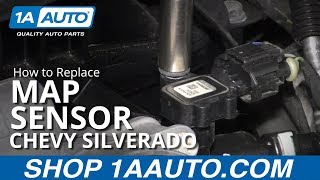
Typical fix: Replace the MAP sensor. It is located on top of the intake manifold and is easily accessible, held by a single bolt. 🎬 Watch: Step-by-step guide to replacing the MAP sensor. GM service information warns against cleaning the sensor.
Est. part cost: $30-$60 - Vacuum Leak ⚪ Low Probability
How to confirm: Perform a smoke test on the intake system to find leaks from gaskets, the PCV system, or vacuum hoses. A cracked intake manifold can also be a cause. A broken valve spring can sometimes cause a secondary failure, melting the plastic intake runner and creating a large vacuum leak.
Typical fix: Replace the leaking hose or gasket. The intake manifold gaskets are a common source.
Est. part cost: $20-$100
Rare But Worth Checking
- Damaged Wiring or Connector: Corrosion or physical damage to the MAP sensor's wiring harness or connector can cause an erratic signal. Always inspect the wiring before replacing the sensor.
- Clogged Catalytic Converter: A severe exhaust restriction can increase backpressure and affect the intake manifold pressure, potentially triggering P0106. This is usually accompanied by a severe loss of power and other exhaust-related codes.
Diagnosis Steps
- Read all stored fault codes with an OBD-II scanner. Pay close attention if P0300 or P0506 are present alongside P0106, as this combination is a strong indicator of a broken valve spring per multiple GM TSBs.
- With the engine running, listen carefully for any ticking, tapping, or popping sounds from the top of the engine, which would indicate a valvetrain problem.
- If no other codes or noises are present, perform a visual inspection of the MAP sensor, its connector, and its wiring for any signs of damage or corrosion.
- Inspect the air intake system, including the air filter and ducting, for any blockages or leaks.
- With a scan tool, monitor the MAP sensor data. With the Key On, Engine Off, the MAP reading should be nearly identical to the BARO reading. Start the engine; the MAP reading should drop at idle and respond instantly to throttle changes.
- If MAP sensor data is irrational or stuck, and no mechanical symptoms are present, replacing the MAP sensor is a logical step.
- If ticking noises or codes P0300/P0506 are present, the diagnosis must proceed to a mechanical inspection. Remove the valve covers and visually inspect all valve springs for breakage. This is the definitive test for the most serious cause of this code. Also inspect the intake manifold runner for the corresponding cylinder for signs of melting.
Parts You'll Likely Need
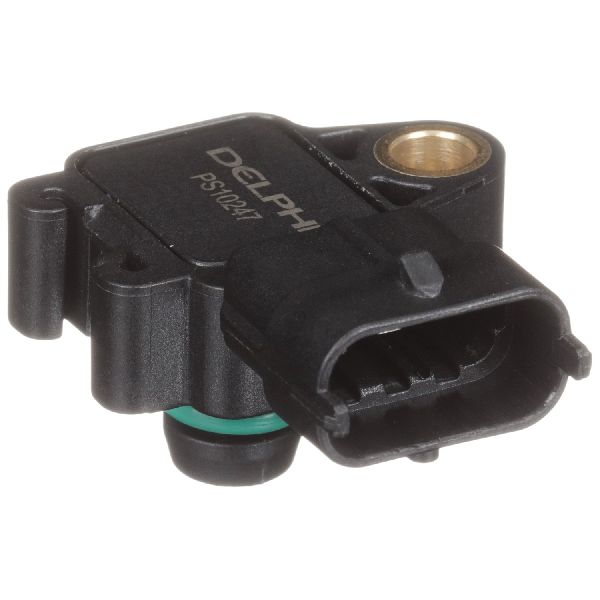
- Manifold Absolute Pressure (MAP) Sensor
(OEM #12644228)— This is one of the two most common failures for P0106. The sensor can fail electronically, providing incorrect data to the ECM.
Trusted brands: ACDelco, Bosch, Delphi
OEM price range: $40-$60
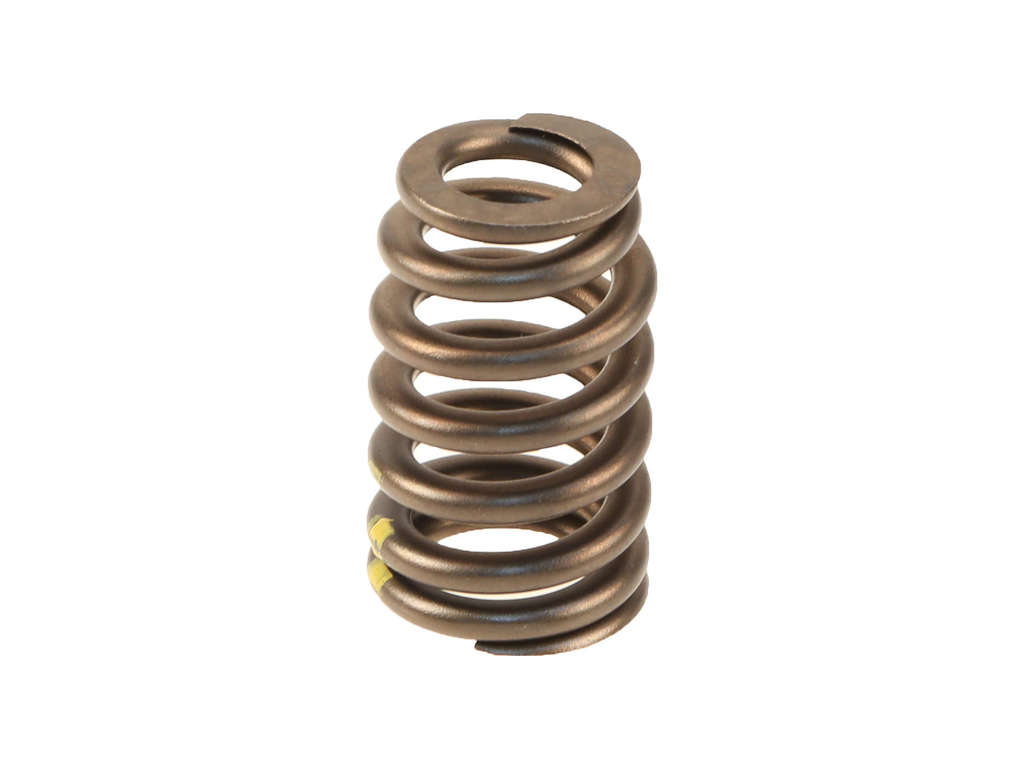
Aftermarket price range: $25-$50 - Engine Valve Spring
(OEM #12706568 (replaces 12589774))— A known failure point on this engine that directly causes P0106 by creating erratic pressure pulses in the intake manifold.
Trusted brands: ACDelco (OEM), Melling, Brian Tooley Racing (BTR), Michigan Motorsports
OEM price range: $10-$20 (each)
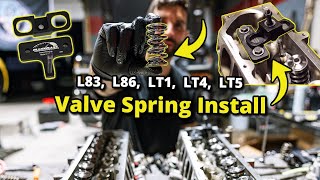
Aftermarket price range: $5-$15 (each), or full performance sets for $90+ 🎬 See how to properly install new valve springs.
Related Codes That Often Appear With This One
- P0300 — A broken valve spring prevents the cylinder's valves from seating correctly, causing a loss of compression and leading to a random misfire. The presence of P0300 with P0106 strongly points to a mechanical engine problem, as cited in TSBs PIP5752M and 19-NA-219.
- P0506 — The erratic vacuum and instability caused by a broken valve spring or a large vacuum leak can cause the engine's idle speed to drop below the target RPM. TSBs PIP5423B and PIP5752M explicitly link this code with P0106 as a primary indicator of a valve spring issue. 🎬 Watch this video to help diagnose rough idle and misfires.
Technical Service Bulletins (TSBs) & Recalls
- PIP5423B: Explicitly states that DTCs P0106 and/or P0506 can be caused by a broken valve spring on 2014-2019 models with 4.3L, 5.3L, or 6.2L engines. Instructs technicians to remove the valve cover and inspect.
- PIP5752M: A manufacturer service bulletin notes that a vehicle may have a concern of service engine light, misfire, and engine noise with possible DTCs P0300, P0106, and P0506, indicating a possible valve spring concern.
- 19-NA-219: A general diagnostic bulletin for engine noises and misfires (P0300) that lists broken valve springs as a primary potential cause requiring inspection.
- 20-NA-043: Notes that P0106 can be set by ice forming on the MAP sensor during extended drives in freezing temperatures, a much less severe cause.
- TSB Bulletin #21-NA-214: Notes that technicians may find DTC P0106 alongside other codes in relation to vibration or exhaust brake performance issues.
- TSB Bulletin #N212330660: Describes a condition where the SES lamp illuminates and DTCs P0106 and P0108 may be present, requiring dealers to replace the MAP sensor.
Platform-Specific Known Issues
- Known Valve Spring Failures: As documented in TSBs PIP5423B and PIP5752M, the 5.3L L83 engine is susceptible to broken valve springs, which directly trigger code P0106, often accompanied by P0300 and P0506. This has been acknowledged by GM for years and across multiple engine platforms.
- Melted Intake Manifold: In some cases of a broken exhaust valve spring, hot exhaust gas can revert into the plastic intake manifold, melting the runner for that cylinder and creating a massive vacuum leak, further complicating the diagnosis.
Mechanic-Grade Diagnostic Values
- MAP Sensor 5-Volt Reference — expected: 4.8-5.2 Volts DC. Failure: Voltage outside this range indicates a wiring issue or a fault in the ECM's 5V reference circuit.
- MAP Sensor Low Reference Circuit Resistance — expected: Less than 5.0 ohms. Failure: Resistance greater than 5.0 ohms between the low reference circuit terminal at the connector and a good ground indicates an open or high resistance in the ground circuit.
- MAP Sensor Signal Voltage (KOEO) — expected: Should correlate to barometric pressure (approx. 4.5V at sea level, decreasing with altitude).. Failure: A reading that is stuck high (5V) or low (0V), or does not match the BARO reading on a scan tool, indicates a faulty sensor or wiring.
- MAP Sensor Signal Voltage (Engine Idling) — expected: 1.0 - 1.5 Volts DC (high vacuum). Failure: Voltage significantly higher than 1.5V at idle can indicate a vacuum leak, a mechanical issue (like a broken valve spring causing low vacuum), or a faulty sensor.
Scan Tool Commands That Help
- GDS2 / Tech2: MAP Sensor Data / BARO Sensor Data Comparison — Used during initial diagnosis with Key On, Engine Off (KOEO). The MAP and BARO readings should be nearly identical. A significant difference points to a skewed or faulty MAP sensor.
- Snap-On or equivalent professional scanner: Code Tips / Troubleshooter — Some advanced scan tools include a 'troubleshooter' or 'code tips' feature that may link P0106 to non-obvious causes. For example, on some GM vehicles, it notes that excessive carbon buildup in the throttle body can cause a false P0106 code.
Wiring & Ground Locations
- MAP Sensor Connector — On top of the intake manifold, near the throttle body.. This 3-pin connector provides the 5V reference, ground, and signal return for the MAP sensor. Corrosion, damage, or a loose connection here is a primary point of failure for the circuit.
- MAP Sensor Connector Pinout (L83) — At the sensor connector and ECM Connector X2.. Pin 1: 5-Volt Reference (GY/RD wire, to ECM X2 Pin 44). Pin 2: Low Reference/Ground (BK/L-GN wire, to ECM X2 Pin 63). Pin 3: Signal (L-GN/WH wire, to ECM X2 Pin 43). Knowing the pinout is essential for testing voltage and continuity directly at the source.
- G103 / G104 — On the front of each cylinder head. A primary ground for the ECM and other engine components.. A loose or corroded ground connection at the cylinder head can cause erratic sensor readings across the engine, including the MAP sensor, as it can disrupt the sensor's low reference circuit provided by the ECM.
Real Owner Repair Stories
- gm-trucks.com user 'JONBLARC7' (GMC Sierra with 6.2L (similar L86 architecture)) — Truck stumbled, sputtered, and was shaking like an 'old steam engine tractor'. Threw code P0106.
❌ Tried (didn't work) Replaced MAP sensor, but the new sensor fit loosely and did not resolve the issue.
✅ What actually fixed it Pulled the driver's side valve cover and found a broken valve spring. The final fix was replacing the broken spring for $5.50 and using a valve spring compressor tool. - Chevrolet Forum user 'Gumby22' (2015 Silverado 1500 5.3L) — Hard start, rough running, would not run for more than 5-10 seconds. Only code present was P0106.
❌ Tried (didn't work) Identified and replaced a broken exhaust valve spring on cylinder #5. After reassembly, the truck still would not start and run correctly.
✅ What actually fixed it A smoke test revealed a massive leak from the intake manifold. The broken exhaust valve spring had allowed hot gas to flow back into the intake, melting the plastic runner for cylinder #5. Replacing the entire intake manifold resolved the no-start condition caused by the massive vacuum leak.
OEM Part Supersession History
12644228→12711681— Standard part evolution, likely for improved reliability or manufacturing process change.
Heads up: The new part number (12711681) is the current OEM replacement for 12644228 and should be fully compatible.
Diagnostic Flowchart
Other Known Issues on This Vehicle
Issues unrelated to this code that are worth knowing about as an owner of this generation:
- AFM/DFM Lifter Failure 🔴 High — Widespread issue, can occur at various mileages, often cited after 50,000 miles. Subject of class-action lawsuits. (Ref: Multiple TSBs exist, including 15-06-01-002H and others, addressing diagnosis and repair of collapsed/stuck AFM lifters causing misfires (P0300).)
- 8-Speed (8L90/8L45) Transmission Shudder 🟠 Medium — Very common on 2015-2019 models, typically appearing between 40-70 mph, feels like driving over rumble strips. (Ref: TSB 18-NA-355 recommends a specific transmission fluid flush with Mobil 1 Synthetic LV ATF HP (blue label) to correct the issue.)
- Cracked Radiator / Coolant Leak 🟠 Medium — Common on 2014-2015 models, but can affect up to 2018. Stress fractures develop on the radiator end tanks, causing coolant leaks. (Ref: TSB 15829 provided special coverage for 2014 models. Other bulletins like P11513A exist for later years.)
- Direct Injection Carbon Buildup 🟡 Low — An inherent characteristic of direct-injected engines like the L83. Over time, carbon deposits can build on intake valves, potentially affecting airflow and performance at higher mileage.
- A/C Condenser Failure 🟠 Medium — A very common complaint where the A/C condenser develops leaks, leading to loss of cooling function. Often requires replacement. (Ref: Multiple TSBs address this, and GM has had special coverage programs for certain model years.)
Used vs. New Parts: Buying Guide for This Vehicle
When a used part is the smart pick: For this repair, using used parts is generally not recommended for the primary failure components. However, if collateral damage occurred, a used valve cover or a complete used intake manifold from a low-mileage donor could be a cost-effective option, provided they are thoroughly inspected.
Donor-vehicle mileage cap: roughly under 75000 miles for the part to have meaningful remaining life.
What to inspect on the donor part:
- For an intake manifold, inspect all runners for signs of heat damage, melting, or warping, especially near the cylinder head mounting face.
- Check for cracks or damage around mounting points and sensor ports.
- Ensure all threaded inserts are intact and not stripped.
- Verify the donor vehicle was not involved in a fire or severe front-end collision.
OEM-only on this vehicle (don't cheap out):
- Manifold Absolute Pressure (MAP) Sensor: Due to the sensor's sensitivity and critical function, and the relatively low cost of a new OEM part, using a used sensor is a significant risk for little reward. Aftermarket sensors can also have quality control issues, making OEM (ACDelco) the safest choice.
Aftermarket brands forum-validated for this vehicle:
- Valve Springs: For performance or durability upgrades, brands like Brian Tooley Racing (BTR) and Melling are well-regarded in the GM truck community as providing stronger-than-stock options.
Brands owners have reported issues with on this vehicle:
- Unbranded / 'White Box' MAP Sensors: Avoid the cheapest available MAP sensors from online marketplaces, as their calibration and durability are often questionable and can cause persistent or new diagnostic codes.
Real Owner Stories
Aggregated from forums and TSBs cited above. Mileages and costs reflect what owners reported in those sources.
2019 GMC Sierra 5.3L L83
Symptoms: The engine was rough, shaking, and 'dead in the parking lot' with a P0106 code present.
What fixed it: Replacement of a broken valve spring on cylinder #5.
Source hint: gm-trucks.com thread titled 'Need help dead in the parking lot P0106 code'
Documented NHTSA Reports
An owner reported in NHTSA ODI #11702112 that their vehicle began to make noise and, upon scanning, showed codes P0106 and P0506, which was later diagnosed as a misfire on multiple cylinders at 69,801 miles. Another report, NHTSA ODI #10151176, describes a recurring issue where the engine light illuminates with codes P0106, P0300, and P0506 appearing together.
Related OBD-II Codes
Frequently Asked Questions
Can a broken valve spring really cause a P0106 MAP sensor code on my 2014-2019 GMC Sierra?
My Sierra is shaking at idle and showing P0106 and P0300. What should I check first?
Is it true that freezing weather can cause a P0106 code on these trucks?
Should I clean my MAP sensor to try and fix the P0106 code?
What is the estimated cost to fix a broken valve spring on an L83 engine?
Can a P0106 code be related to a melted intake manifold?
Helpful Videos

We Have This Part in Stock


The information in this article is provided for general reference and educational purposes only. Vehicle specifications, procedures, and part compatibility can vary by production date, trim level, and region. Always consult your vehicle's factory service manual and verify part numbers before purchasing or performing repairs. Safety-critical components such as airbags, seat belts, and braking systems should be installed by a qualified professional.
- GMC Sierra:
- 🧭 Diagnostic Flowchart
- 🎬 Helpful Videos
- 🛍️ Shop This Part
- What's Unique About the 2014-2019 GMC Sierra
- Symptoms You May Notice
- Most Likely Causes
- Rare But Worth Checking
- Diagnosis Steps
- Parts You'll Likely Need
- Related Codes That Often Appear With This One
- Technical Service Bulletins (TSBs) & Recalls
- Platform-Specific Known Issues
- Mechanic-Grade Diagnostic Values
- Scan Tool Commands That Help
- Wiring & Ground Locations
- Real Owner Repair Stories
- OEM Part Supersession History
- Other Known Issues on This Vehicle
- Used vs. New Parts: Buying Guide for This Vehicle
- Real Owner Stories
- 2019 GMC Sierra 5.3L L83
- Documented NHTSA Reports
- Related OBD-II Codes
- Frequently Asked Questions
- 🎟️ Get 5% Off