

P0106 on 2007-2010 GMC Sierra 2500: MAP Sensor & Engine Fixes
On a 2007-2010 Sierra 2500, P0106 usually points to a faulty Manifold Absolute Pressure (MAP) sensor, often caused by a design flaw leading to ice buildup in cold weather. A replacement sensor is inexpensive ($20-$70), but the code can also warn of a more severe mechanical issue like a broken valve spring, particularly on 6.0L gas engines. If you hear a ticking noise, investigate immediately.
- P0106 on a 2007-2010 Sierra 2500 is a MAP sensor performance code, not necessarily a failed sensor.
- In cold climates, the primary suspect is ice formation near the sensor, a known issue addressed by GM TSBs.
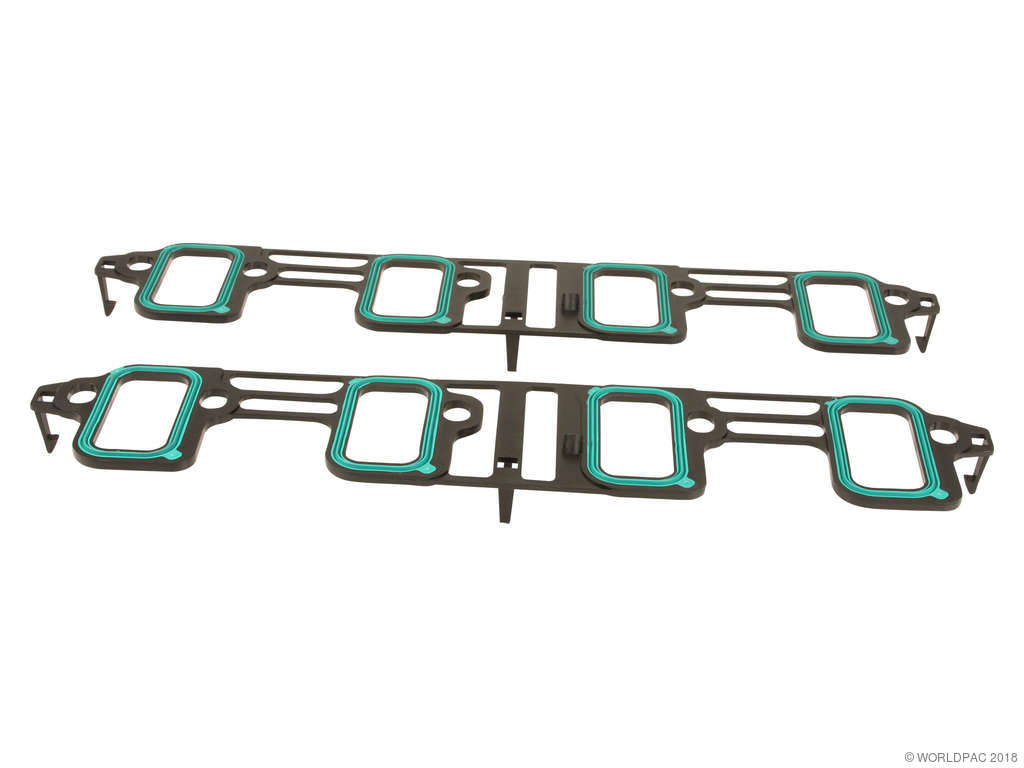
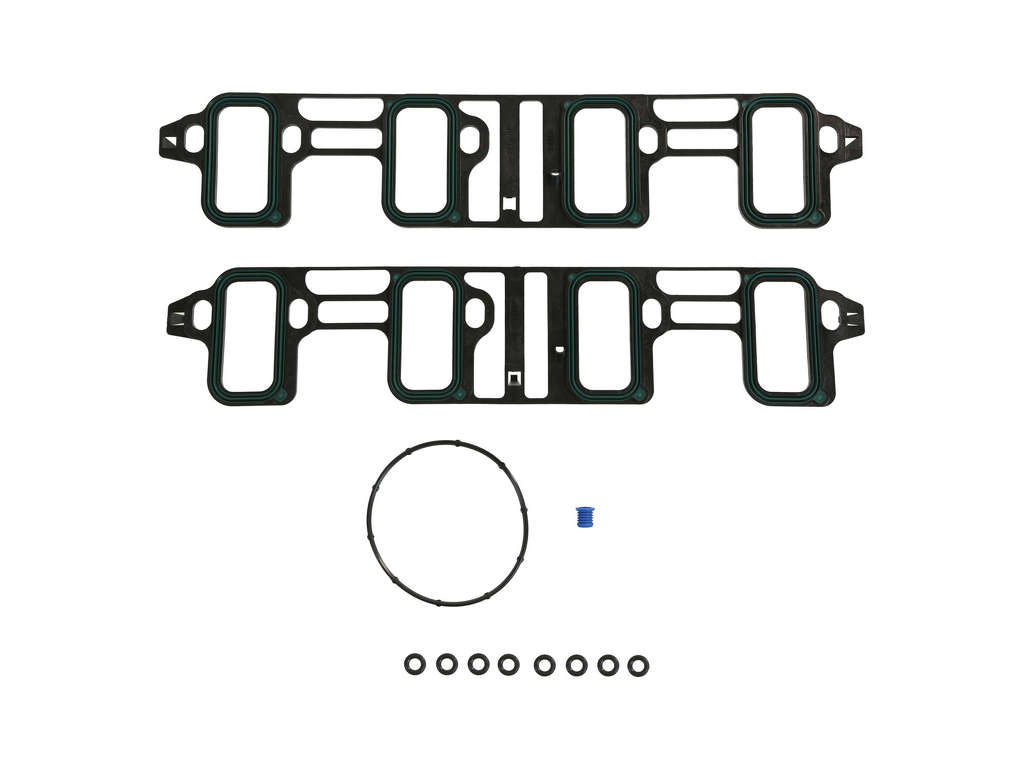
- Always check for vacuum leaks, especially from intake manifold gaskets on gas engines and cracked PCV hoses.
- Be aware that this code can indicate a serious mechanical problem like a broken valve spring, especially if accompanied by a ticking noise or code P0506.
- Replacing the MAP sensor is a simple and inexpensive first step if a visual inspection or vacuum leak test doesn't reveal an obvious cause.
What's Unique About the 2007-2010 Gmc SIERRA 2500
For this generation of GMC Sierra, P0106 is frequently not just a simple sensor failure. A key issue, especially on the 6.6L Duramax diesel and noted in TSB #PI1257 and #PIP4307H, is a design that allows condensation and ice to form in the intake tract, directly affecting the MAP sensor's reading in freezing temperatures. More critically, TSB #PIP5423 warns that P0106, especially when paired with P0506 (Idle RPM Lower Than Expected), can be a symptom of a broken valve spring on the V8 gas engines, a serious mechanical engine problem. Forum discussions confirm this is a known failure on the 6.0L V8, requiring immediate attention.
Diagnostic Flowchart
Tap your situation to follow the diagnostic path that matches what you're seeing on this vehicle.
Generation note: The 2007 model year was a transition. This guide primarily covers the GMT900 platform (mid-2007-2010), but the 'Classic' GMT800 models from early 2007 may also experience similar issues, particularly the MAP sensor icing on Duramax engines noted in TSB #PIP4307H.
Symptoms You May Notice
- Check Engine Light is on
- Rough or unstable idle
- Hesitation or stumbling during acceleration
- Reduced engine power, sometimes with a 'Reduced Power' message on the dash
- Poor fuel economy
- Engine stalling, especially when coming to a stop
- Black smoke from the exhaust
- Distinct ticking, tapping, or 'old steam engine tractor' sound from the engine (strong indicator of a broken valve spring)
- Replacing the Mass Air Flow (MAF) sensor. While both measure air, P0106 is specific to the MAP sensor's performance.
- Replacing the throttle body without first diagnosing the MAP sensor and checking for vacuum leaks or a dirty throttle plate.
Most Likely Causes
- Faulty or Dirty MAP Sensor 🔴 High Probability → Shop Manifold Absolute Pressure Sensor Sensors can fail internally over time due to heat cycles. On Duramax models, EGR soot can clog the sensor ports. On gas models with oiled air filters (like K&N), oil mist can contaminate the sensor element, causing incorrect readings.
How to confirm: With a scan tool, check the MAP sensor reading with the Key On, Engine Off (KOEO). It should be close to the Barometric Pressure (BARO) reading, typically 3.5-4.5V. At idle, it should show a strong vacuum (low pressure), around 1.0-2.0V. If readings are stuck, slow, or illogical, the sensor is likely bad. Visually inspect the sensor tip for oil or soot contamination.
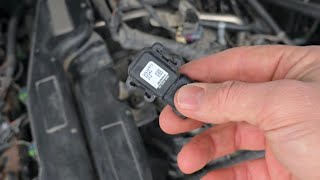
Typical fix: Replace the MAP sensor. 🎬 Watch: Step-by-step MAP sensor replacement for your Sierra. Cleaning with a dedicated MAF/MAP sensor cleaner can sometimes work as a temporary fix, but replacement is often necessary.
Est. part cost: $20 - $70 - Ice Buildup on MAP Sensor (Cold Climates) 🟡 Medium Probability → Shop Manifold Absolute Pressure Sensor A known issue on 6.6L Duramax engines in cold climates, as documented in TSBs #PI1257 and #PIP4307H. Condensation in the intake manifold freezes on or in the sensor port during a cold soak at or below freezing temperatures, causing erratic readings and a P0106 code upon startup.
How to confirm: This issue typically only occurs in freezing temperatures and may resolve on its own as the engine bay warms up. Inspect the sensor and its port for signs of moisture or ice after a cold soak.
Typical fix: The original fix involved fabricating a 'snorkel' or extension for the MAP sensor using a small piece of flared brake line to move the sensing point away from the wall where ice forms, as detailed in TSB #PIP4307H. 🎬 See this clever DIY fix for Duramax MAP sensor icing. For later models, GM recommends installing a winter front grille cover to maintain higher underhood temperatures.
Est. part cost: $10 - $100 (for materials or a winter front) - Vacuum Leak 🟡 Medium Probability The original plastic-carrier intake manifold gaskets on the V8 gas engines are a very common failure point, becoming brittle and cracking over time. Vacuum hoses, especially the PCV hose running to the intake and the brake booster hose, can also crack.
How to confirm: Listen for a hissing sound at idle. A smoke test is the most effective method to pinpoint the source of an air leak. Spraying brake cleaner or starter fluid around suspected areas can also work; a change in engine idle indicates a leak.
Typical fix: Replace the leaking gasket or hose. The intake manifold gaskets are a more involved repair.
Est. part cost: $10 - $150
Rare But Worth Checking
- Broken Valve Spring: → Shop Engine Valve Spring While less common, this is a severe mechanical failure cited specifically by GM in TSB #PIP5423 for causing P0106, often with P0506. A broken spring on a gas V8 causes erratic engine vacuum, which the MAP sensor detects. This requires immediate attention to prevent a valve from dropping into the cylinder, causing catastrophic engine damage.
- Damaged Wiring or Connector: Corrosion, especially from road salt, or damage to the MAP sensor wiring harness can cause an intermittent or lost signal. Visually inspect the 3-wire connector and wiring for any signs of damage, looseness, or corrosion. Check for a stable 5V reference signal and good ground at the connector.
- Dirty or Clogged Throttle Body: → Shop Fuel Injection Throttle Body On electronic throttle control vehicles, carbon buildup around the throttle plate can restrict airflow at idle. This can cause the ECM's calculated airflow model (based on throttle position and RPM) to disagree with the MAP sensor's reading, falsely triggering a P0106 code. Cleaning the throttle body can resolve the issue. 🎬 Watch how a dirty throttle body triggers the P0106 code.
- Clogged Catalytic Converter: A severely restricted exhaust can increase pressure in the intake manifold at certain times, causing the MAP sensor readings to be out of the expected range. This is usually accompanied by other symptoms like a major loss of power, especially at higher RPMs.
Diagnosis Steps
- Read Codes & Listen: Use an OBD-II scanner to confirm P0106 and check for any other stored codes, especially P0506 or P0300. Listen for any ticking or tapping from the engine.
- Check Live Data: Monitor the MAP sensor voltage/pressure. With Key On, Engine Off (KOEO), it should match the BARO reading (approx. 3.5-4.5V). Start the engine; at idle, the reading should drop to 1.0-2.0V to indicate vacuum. Rev the engine; the voltage should rise smoothly. If it's stuck or erratic, the sensor or its circuit is faulty.
- Inspect the Sensor & Port: Remove the MAP sensor (typically one 8mm bolt). Inspect it and its port for oil contamination, moisture, ice (in cold weather), or carbon buildup.
- Inspect for Vacuum Leaks: Visually inspect all vacuum hoses connected to the intake manifold, especially the PCV and brake booster lines. A smoke test is the most reliable way to find leaks from cracked hoses or failed intake manifold gaskets.
- Check Wiring: Inspect the MAP sensor connector and harness for damage or corrosion. With the key on, use a multimeter to verify the 5-volt reference wire and the ground wire at the connector are good.
- Investigate Mechanical Issues (Crucial Step): If codes P0506/P0300 are present or you hear a ticking noise, suspect a broken valve spring. A relative compression test can help identify a weak cylinder. The definitive check is to remove the valve covers for a visual inspection of the valve springs.
Parts You'll Likely Need
- Manifold Absolute Pressure (MAP) Sensor
(OEM #ACDelco 213-796 (GM 12644228))— This is the most frequent cause, either from internal failure or contamination. It is the primary component monitored by this code.
Trusted brands: ACDelco, Delphi, Bosch, NTK
OEM price range: $40-$70
Aftermarket price range: $20-$50 - Intake Manifold Gaskets
(OEM #Fel-Pro MS96424 (for 6.0L V8))— On gas V8 engines, these gaskets are a very common source of vacuum leaks that trigger P0106. The original plastic design becomes brittle.
Trusted brands: Fel-Pro, ACDelco
OEM price range: $50-$90
Aftermarket price range: $20-$40
Related Codes That Often Appear With This One
- P0506 — Idle Air Control System RPM Lower Than Expected. TSB #PIP5423 specifically notes that P0106 and P0506 together strongly suggest a broken valve spring on the gas V8 engines.
- P0108 — MAP Sensor Circuit High Input. This code can appear with P0106 if the sensor is failing or experiencing intermittent connection issues, as noted in TSB #N212330660.
- P0300 — Random/Multiple Cylinder Misfire. A significant vacuum leak or a broken valve spring will cause both misfires and an illogical MAP sensor reading. If you have P0106 and P0300, a broken valve spring is highly suspect.
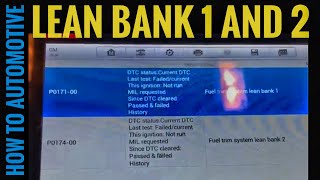
- P0171 / P0174 — System Too Lean. These codes are classic signs of a vacuum leak, which is a primary cause of P0106. The unmetered air leans out the fuel mixture and also causes the MAP reading to be higher (less vacuum) than expected at idle.
Technical Service Bulletins (TSBs) & Recalls
- N212330660: Mentions replacing the MAP sensor for P0106 and P0108.
- 21-NA-214: Lists P0106 in a group of codes related to vibration and exhaust brake issues on Duramax models.
- PIP5344: Associates P0106 with reduced power messages and other electrical DTCs.
- PIP5423: Warns that P0106 combined with P0506 can be caused by a broken valve spring on gas engines.
- PI1257: Describes a fix for MAP sensor icing by installing a redesigned upper intake manifold.
- PIP4307H: Details a procedure for modifying the MAP sensor inlet on Duramax engines to prevent ice formation.
Platform-Specific Known Issues
- TSB #PI1257 specifically addresses a design flaw where ice can build up in the upper intake manifold, causing P0106. The fix involves a redesigned manifold to relocate the MAP sensor.
- TSB #PIP5423 identifies that a broken valve spring can cause P0106 and P0506, a serious mechanical issue that requires immediate attention on V8 gas engines.
- TSB #PIP4307H details a DIY-style procedure for modifying the MAP sensor inlet on Duramax engines to prevent ice formation. This involves fabricating a small metal tube extension to move the sensor's opening away from the intake wall.
Mechanic-Grade Diagnostic Values
- MAP Sensor Signal Voltage (Key On, Engine Off) — expected: ~4.5V (should match BARO reading). Failure: Voltage significantly different from BARO or stuck low.
- MAP Sensor Signal Voltage (Engine at Idle) — expected: 1.0V - 2.0V. Failure: Voltage is high (closer to KOEO reading) or does not drop when the engine starts.
- MAP Sensor 5-Volt Reference — expected: ~5.0V. Failure: Voltage is significantly lower than 5V or absent, indicating a wiring or ECM issue.
- MAP Sensor Ground Circuit — expected: < 100mV. Failure: High voltage reading indicates a poor ground connection.
Scan Tool Commands That Help
- Tech2 / GDS2: MAP Sensor Data Display — To compare the live MAP sensor reading (in kPa or Volts) against the Barometric (BARO) sensor reading with Key On, Engine Off. They should be nearly identical. This is the first step to check if the sensor is rational.
- Tech2 / GDS2: Freeze Frame / Failure Records — To view the exact engine operating conditions (RPM, load, temperature, etc.) at the moment the P0106 code was set. This can provide crucial clues, such as whether the failure occurred during a cold start or under heavy load.
Wiring & Ground Locations
- MAP Sensor Connector — On top of the intake manifold, near the front of the engine for both gas and diesel models.. This 3-pin connector provides power, ground, and signal for the MAP sensor. Corrosion or a loose connection here is a common cause of intermittent P0106 codes. The pinout is generally: Pin 1: 5-volt reference, Pin 2: Low reference (ground), Pin 3: Signal out.
- G103 — Located at the left rear of the engine compartment on the cowl, above the brake booster.. This is a major ground point that serves multiple components, including the BCM and Data Link Connector (DLC). While not the primary sensor ground, a poor connection here can cause widespread electrical issues and communication problems that could indirectly affect sensor readings or diagnostics.
- ECM Ground — Part of the main negative battery cable harness, connected to the left front of the engine block.. This is the primary ground for the Engine Control Module. A loose or corroded connection here can cause erratic ECM behavior and a host of nonsensical sensor codes, including P0106. Verifying this ground is tight and clean is a critical step in diagnosing any electrical fault.
Real Owner Repair Stories
- YouTube user @GarageGuy22 (GMC Sierra 2500 HD with 6.6L Duramax (year not specified, but LMM era)) — Check Engine Light with code P0106.
✅ What actually fixed it The owner suspected that oil from his K&N air filter had contaminated the sensor. He removed the MAP sensor (held by two T20 Torx screws), cleaned it thoroughly with CRC Mass Air Flow Sensor Cleaner, let it dry, and reinstalled it. After clearing the code with a Bluetooth scanner, the Check Engine Light stayed off, resolving the issue.
OEM Part Supersession History
12644228→12711681— Standard part evolution, likely for improved durability or material changes.
Heads up: The new part number (12711681) is the direct replacement for the old one (12644228) and should be fully compatible.
Model Year Variations Within This Range
- 2007: TSB #PI1257 specifically calls out 2007 models for a potential MAP sensor icing issue and provides a procedure to install a newly designed upper intake manifold with a relocated sensor to prevent it. This indicates an early design flaw that was addressed.
Helpful Videos
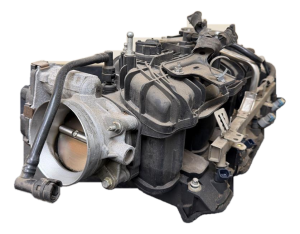
Used OEM Parts in Stock
New Aftermarket Parts Available



The information in this article is provided for general reference and educational purposes only. Vehicle specifications, procedures, and part compatibility can vary by production date, trim level, and region. Always consult your vehicle's factory service manual and verify part numbers before purchasing or performing repairs. Safety-critical components such as airbags, seat belts, and braking systems should be installed by a qualified professional.
- Gmc SIERRA 2500:
- 🧭 Diagnostic Flowchart
- 🎬 Helpful Videos
- 🛍️ Shop This Part
- What's Unique About the 2007-2010 Gmc SIERRA 2500
- Symptoms You May Notice
- Most Likely Causes
- Rare But Worth Checking
- Diagnosis Steps
- Parts You'll Likely Need
- Related Codes That Often Appear With This One
- Technical Service Bulletins (TSBs) & Recalls
- Platform-Specific Known Issues
- Mechanic-Grade Diagnostic Values
- Scan Tool Commands That Help
- Wiring & Ground Locations
- Real Owner Repair Stories
- OEM Part Supersession History
- Model Year Variations Within This Range
- 🎟️ Get 5% Off