

P0106 on 2007-2014 GMC Yukon: MAP Sensor & Vacuum Leak Guide
On a 2007-2014 GMC Yukon, code P0106 is most often caused by a faulty Manifold Absolute Pressure (MAP) sensor or a vacuum leak, commonly from aged intake manifold gaskets. Replacing the MAP sensor is a common, affordable fix. However, be aware of GM Technical Service Bulletins that link this code to more severe issues like intake icing or broken valve springs.
- P0106 on a 2007-2014 Yukon points to a problem with the MAP sensor's signal, not matching what the engine computer expects.
- The most likely causes are a failed MAP sensor or a vacuum leak from deteriorated intake manifold gaskets.
- Before replacing parts, use a scan tool to watch the MAP sensor's live data to see if it responds correctly to throttle changes.
- If a vacuum leak is suspected, a smoke test is the most reliable way to confirm its location.
- This is a common and relatively straightforward code to diagnose and fix for a DIYer with basic tools.
What's Unique About the 2007-2014 GMC Yukon
For the GMT900 platform (2007-2014), the V8 engines are well-known for intake manifold gasket leaks as they age. These leaks introduce unmetered air, which directly conflicts with what the MAP sensor expects to see, making it a very common trigger for a P0106 code. Furthermore, GM has issued specific Technical Service Bulletins (TSBs) for this platform that relate to the P0106 code. TSB PI1257 addresses a condition where ice can form on the MAP sensor in cold climates, causing erroneous readings. More critically, TSB PIP5423B warns that a P0106 code, especially when paired with a P0506 (Idle Air Control System RPM Lower Than Expected), can be a symptom of a broken valve spring, a much more serious mechanical failure. Manufacturer service bulletin #PIP5752M further reinforces this, noting that a vehicle may present with a service engine light, misfire, and engine noise alongside DTCs P0300, P0106, and P0506 due to a possible valve spring concern.
Generation note: The 2007-2014 GMC Yukon belongs entirely to the third generation (GMT900 platform). The information provided is consistent across this generation.
Symptoms You May Notice
- Check Engine Light is on.
- Engine runs rough or idles poorly.
- Hesitation or lack of power during acceleration.
- Reduced fuel economy.
- Engine may stall, especially when coming to a stop.
- Black smoke from the exhaust.
- Hard starting.
- Reduced power message (as noted in TSB #PIP5344).
- Replacing the Mass Airflow (MAF) sensor. While both sensors measure air, the P0106 code is specific to the MAP sensor's performance, not the MAF sensor.
Most Likely Causes
- Faulty Manifold Absolute Pressure (MAP) Sensor 🔴 High Probability → Shop Manifold Absolute Pressure Sensor The MAP sensor is mounted directly on the hot intake manifold and is subject to heat cycles and oil vapor contamination, which can cause it to fail over time. It is a very common replacement part for these trucks.
How to confirm: With a scan tool, monitor the MAP sensor voltage. With Key On, Engine Off (KOEO), it should read ~4.5-4.9 Volts, matching the BARO sensor reading. At a warm idle, it should drop to ~1.0-2.0 Volts. If the voltage is stuck, erratic, or responds slowly to throttle snaps, the sensor is likely bad.
Typical fix: Replace the MAP sensor. It is located on top of the intake manifold, held by a single bolt, and has one electrical connector. 🎬 Watch: How to locate and replace your Yukon's MAP sensor.
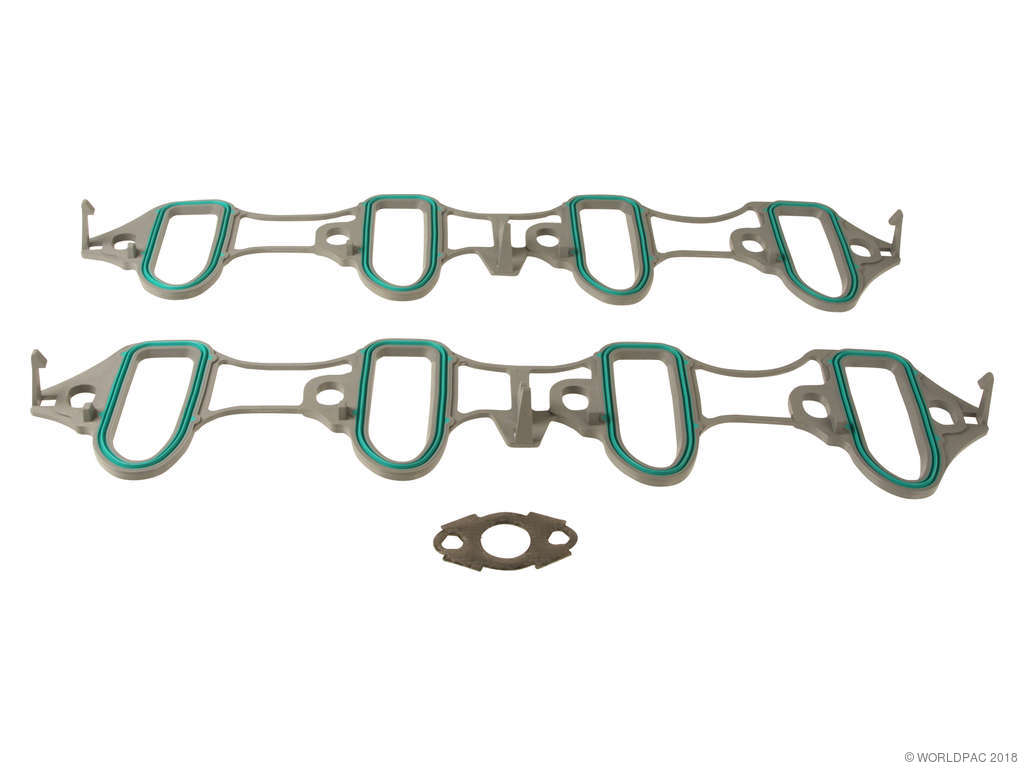
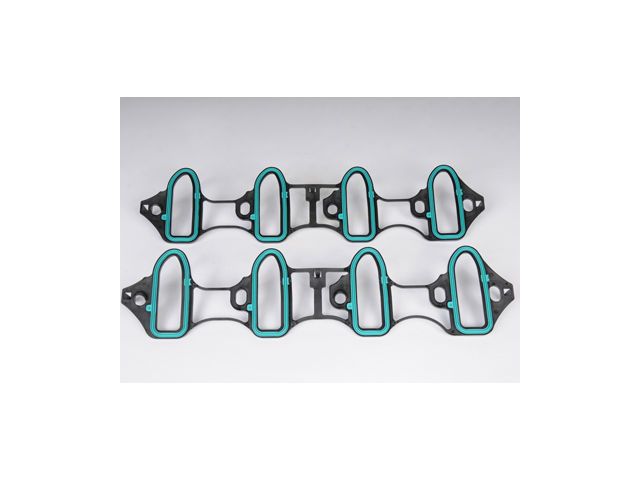
Est. part cost: $30-$80 - Vacuum Leak (Intake Manifold Gaskets, PCV Hoses) 🟡 Medium Probability The original plastic-carrier intake manifold gaskets on the 4.8L, 5.3L, and 6.0L V8 engines are a known failure point. They become hard and brittle, allowing unmetered air to enter the intake. PCV hoses and the brake booster line can also crack.
How to confirm: Perform a smoke test on the intake system. Smoke will visibly escape from the source of the leak, most commonly around the edges of the intake manifold where it meets the cylinder heads. You may also hear a hissing sound at idle.
Typical fix: Replace the leaking vacuum hose or replace the intake manifold gaskets. An updated metal-carrier gasket like Fel-Pro MS 98016 T is recommended to prevent future failures.
Est. part cost: $25-$90 for gaskets - Dirty or Clogged Throttle Body ⚪ Low Probability → Shop Fuel Injection Throttle Body The PCV (Positive Crankcase Ventilation) system routes oil vapor into the intake, which builds up as carbon on the throttle plate. This can restrict airflow at idle, causing the actual airflow to not match what the ECM expects based on the MAP reading, triggering the code.
How to confirm: Remove the air intake tube and visually inspect the throttle body and plate for a thick layer of black carbon buildup.
Typical fix: Clean the throttle body thoroughly with a dedicated throttle body cleaner and a soft brush, then perform a throttle position relearn procedure if necessary.
Est. part cost: $5-$15 for cleaner - Damaged Wiring or Connector ⚪ Low Probability Engine heat and vibration can cause wiring to become brittle or pins in the MAP sensor connector to loosen over time. Rodents can also chew on the wiring harness. TSB #PIP5344 notes that P0106 can occur alongside various accelerator pedal and sensor circuit codes (P0697, P2122, P2123) due to electrical concerns.
How to confirm: Visually inspect the MAP sensor's 3-wire electrical connector and harness for any signs of corrosion, breaks, or loose pins. Wiggle the connector with the engine running to see if it affects the MAP sensor reading on a scan tool.
Typical fix: Repair the damaged section of wire or replace the connector pigtail.
Est. part cost: $10-$30 - Failed PCV Diaphragm in Valve Cover ⚪ Low Probability → Shop Engine Valve Cover On some GM vehicles, the PCV valve is integrated into the valve cover. The internal diaphragm can tear, creating a significant internal vacuum leak that is not always detectable with a standard intake smoke test.
How to confirm: With the engine running, try to remove the oil fill cap. If there is a strong vacuum holding the cap down, or if you hear a loud whistling or sucking sound from the oil cap area, the PCV diaphragm has likely failed.
Typical fix: Replace the entire valve cover that contains the faulty PCV system.
Est. part cost: $60-$150
Rare But Worth Checking
- Broken Valve Spring: → Shop Engine Valve Spring A critical issue highlighted in TSB #PIP5423B and TSB #PIP5752M. A broken valve spring will prevent a valve from seating properly, causing erratic pressure pulses in the intake manifold that trigger P0106. This is often accompanied by P0300 (misfire) and P0506 (low idle) and may produce a ticking noise.
- Clogged Catalytic Converter: A severely restricted exhaust can cause excessive backpressure, leading to abnormal intake manifold pressure readings. This is usually accompanied by other codes and a significant loss of power, especially at higher RPMs. One forum user with P0106 and P0300 found a failed cat to be the cause.
- Faulty Powertrain Control Module (PCM): This is extremely rare. The PCM should only be considered after all other possibilities, including sensors, wiring, and mechanical issues, have been exhaustively ruled out.
Diagnosis Steps
- Check for other stored DTCs. Codes like P0506, P0300, P0107, or P0108 are critical clues. TSB #PIP5787A notes that technicians may find P0106 alongside P0108 and P00C7 during inspection.
- With a scan tool, observe live data from the MAP sensor with the Key On, Engine Off (KOEO). The reading should be close to the Barometric Pressure (BARO) reading and correspond to your altitude.
- Start the engine. At idle, the MAP sensor reading should drop to around 1.0-2.0 volts (indicating high vacuum).
- While monitoring the live data, snap the throttle open and closed. The MAP sensor voltage/pressure reading should respond instantly, rising sharply to ~4.0-4.5 Volts and then dropping smoothly.
- Visually inspect all vacuum hoses connected to the intake manifold for cracks, breaks, or loose connections, paying close attention to the PCV hoses and brake booster line.
- Listen for hissing sounds around the intake manifold at idle. For a definitive test, perform a smoke test to find the source of any vacuum leaks.
- Inspect the MAP sensor connector and wiring for damage, corrosion, or looseness.
- With the engine running, check for strong vacuum at the oil fill cap to diagnose a potential failed PCV diaphragm inside the valve cover.
- If misfire codes (P0300) are present or a ticking noise is heard, remove the valve covers to visually inspect for a broken valve spring as per TSB #PIP5423B and TSB #PIP5752M.
- If no vacuum leaks or mechanical issues are found and the wiring is intact, the MAP sensor itself is the most likely culprit. 🎬 See this complete guide for changing the MAP sensor.
Parts You'll Likely Need
- Manifold Absolute Pressure (MAP) Sensor
(OEM #12644228 (superseded by 12711681))— This is the most common part to fail, causing erratic or out-of-range signals that trigger the P0106 code. Part number 12591290 may also be applicable.
Trusted brands: ACDelco, Delphi, Bosch
OEM price range: $50-$95
Aftermarket price range: $30-$60 - Intake Manifold Gasket Set — These gaskets are a frequent source of vacuum leaks on this platform, which directly causes the P0106 code. The original plastic design is prone to cracking.
Trusted brands: ACDelco, Fel-Pro (e.g., MS 98016 T)
OEM price range: $40-$90
Aftermarket price range: $25-$70
Related Codes That Often Appear With This One
- P0506 — This code for 'Idle RPM Lower Than Expected' is specifically mentioned in TSB #PIP5423B and TSB #PIP5752M alongside P0106 as a strong indicator of a broken valve spring.
- P0300 — A 'Random/Multiple Cylinder Misfire' code can be caused by the incorrect air/fuel mixture from bad MAP data or a vacuum leak. It is also a key symptom of a broken valve spring when seen with P0106.
- P0107 — This code indicates 'MAP Sensor Circuit Low Voltage'. It can appear with P0106 if the sensor has an internal electrical failure or a wiring issue, as noted in TSB #PIP5344.
- P0108 — This code means 'MAP Sensor Circuit High Voltage'. It can be triggered with P0106 if there's a wiring problem or an internal sensor fault, a combination mentioned in TSB #PIP5787A.
Technical Service Bulletins (TSBs) & Recalls
- TSB #PI1257: Notes that ice buildup in the intake manifold near the MAP sensor can cause P0106 in cold weather. The official fix may involve a redesigned upper intake manifold.
- TSB #PIP5423B: A critical bulletin that links P0106, especially with P0506, to a potential broken valve spring. It advises technicians to remove the valve cover for inspection.
- TSB #PIP5752M: Communicates that a vehicle may have a service engine light, misfire, and engine noise with DTCs P0300, P0106, and P0506, indicating a possible valve spring concern.
- TSB #PIP5787A: Reports that some customers may comment on an illuminated SES lamp where technicians may notice DTCs P0106, P0108, and/or P00C7.
- TSB #PIP5344: Discusses vehicles with a Service Engine Soon lamp or reduced power message where technicians may find DTCs P0106, P0107, P0697, and various pedal position codes.
- TSB 20-NA-043: While for newer models, it describes the same MAP sensor icing phenomenon, suggesting a winter grille cover can help prevent recurrence if the sensor is found clean and dry.
Platform-Specific Known Issues
- In some GM trucks operating in freezing temperatures, ice can form on the MAP sensor during long
Mechanic-Grade Diagnostic Values
- MAP Sensor Voltage (Key On, Engine Off) — expected: ~4.5 - 4.9 Volts, should match BARO reading. Failure: Voltage is significantly different from BARO, or is stuck at 0V or 5V.
- MAP Sensor Voltage (Warm Idle) — expected: 1.0 - 2.0 Volts. Failure: Voltage is high (above 2.5V) or does not drop from the KOEO reading.
- MAP Sensor Voltage (Wide Open Throttle Snap) — expected: Should rise sharply to ~4.0 - 4.5 Volts. Failure: Voltage responds slowly, does not reach near 4.5V, or reading is erratic.
- MAP Sensor Connector - 5V Reference Wire — expected: ~5.0 Volts (with connector unplugged, key on). Failure: No voltage or low voltage indicates a problem with the ECM or wiring.
- MAP Sensor Connector - Ground Wire — expected: Good ground continuity (low resistance to chassis ground). Failure: High resistance indicates a corroded or broken ground connection.
Scan Tool Commands That Help
- Tech2 / GDS2: Graph MAP Sensor vs. Throttle Position vs. Engine RPM — This is the primary diagnostic function. It allows a technician to see if the MAP sensor's reported pressure changes rationally and instantly in response to throttle inputs and engine speed changes, as described in the service manual logic. An irrational signal that doesn't correlate with TP and RPM changes confirms the fault condition for P0106.
Wiring & Ground Locations
- MAP Sensor Connector — On top of the intake manifold, typically towards the rear.. This 3-pin connector provides power, ground, and signal return for the MAP sensor. Pin A is typically ground, Pin B is the signal, and Pin C is the 5V reference. Corrosion or loose pins here are a direct cause of sensor signal faults.
- G103 / G104 — G103 is on the front of the right cylinder head. G104 is on the rear of the left cylinder head.. These are primary engine block grounds. The MAP sensor's low reference (ground) circuit ultimately connects back to the ECM, which relies on these main engine grounds. A corroded or loose G103 or G104 can create a floating ground, causing erratic voltage readings for multiple sensors, including the MAP.
- ECM/PCM Connector (e.g., X1) — Located in the engine compartment, typically on the driver's side near the firewall or fuse block.. This is where the MAP sensor harness terminates. Testing for voltage and continuity at the ECM pins (e.g., Pin 59 for MAP signal on some models) can determine if a wiring fault exists between the sensor and the control module.
Real Owner Repair Stories
- GM Forum user (General GM vehicle, symptoms align with Yukon) — Persistent P0106 code, rough running.
❌ Tried (didn't work) Replaced PCV valve and O-rings, Replaced MAP sensor, Checked for vacuum leaks with carb cleaner (none found)
✅ What actually fixed it The user cleaned the Mass Airflow (MAF) sensor and cleaned the electrical connectors for both the MAP and MAF sensors. After cleaning the MAF, the code did not return, indicating that although the code was for the MAP sensor, the root cause was related to the MAF sensor providing conflicting airflow information to the ECM.
"I Checked Everything" — The Actual Cause
- On GMT900 trucks, a common scenario is passing a smoke test but still having the P0106 code due to a failed PCV system diaphragm integrated into the driver's side valve cover. This creates a large internal vacuum leak that a standard smoke test of the intake manifold may not reveal. The definitive test is a strong vacuum felt when trying to remove the oil fill cap with the engine running.
OEM Part Supersession History
12591290→12644228, which is now superseded by 12711681— Updates to sensor design for improved accuracy and durability.
Heads up: While physically interchangeable, using older part numbers when a newer one is specified may lead to premature failure or slightly different signal characteristics. It is always recommended to use the latest superseded part number.Driver's side valve cover (various)→12570427 (for '07-'08), 12642655 (for '09+)— The updated valve covers feature a redesigned internal baffle and PCV orifice location to combat high oil consumption, which can foul sensors and trigger codes like P0106.
Model Year Variations Within This Range
- 2007-2008 vs 2009-2014: The design of the driver's side valve cover and its integrated PCV system was updated around 2009 to address oil consumption issues. The original design had a PCV baffle that was more prone to sucking oil into the intake, which could contaminate the MAP sensor and throttle body. While both can cause P0106, the specific updated part number for the valve cover differs between these year groups.
Diagnostic Flowchart
Real Owner Stories
Aggregated from forums and TSBs cited above. Mileages and costs reflect what owners reported in those sources.
GMC Yukon
Symptoms: Experienced a rough idle, black smoke from the exhaust, and both P0101 and P0106 codes.
What fixed it: The owner initially replaced both sensors with no luck; other forum members advised that the next diagnostic steps should be checking for an intake manifold leak or cleaning a dirty throttle body.
Source hint: TahoeYukonForum.com - 'P0101 and P0106 Codes'
2016 Yukon Denali
Symptoms: Triggered a P0106 code combined with a misfire code (P0300). The owner initially suspected a clogged catalytic converter.
What fixed it: The final fix was replacing a broken valve spring, which corroborates the warnings in TSB #PIP5423B.
Source hint: TahoeYukonForum.com - '2016 Yukon Denali P0300 & P0106'
GMT900 Platform Trucks (Tahoe/Yukon/Silverado/Sierra)
Symptoms: Check engine light with code P0106.
What fixed it: Many owners successfully fixed the code by either replacing a faulty MAP sensor or replacing leaking intake manifold gaskets.
Source hint: GM-Trucks.com Forum
Related OBD-II Codes
Frequently Asked Questions
Does TSB #PIP5423B apply to my 2007-2014 Yukon if I have code P0106?
Why does my Yukon trigger a P0106 code only during freezing weather?
Are the original intake manifold gaskets a known issue on the 4.8L, 5.3L, and 6.0L V8 engines?
I have a strong vacuum holding down my oil fill cap while the engine is running. What does this mean?
What should the MAP sensor voltage read on my scan tool to confirm it is working?
Helpful Videos
Used OEM Parts in Stock
New Aftermarket Parts Available



The information in this article is provided for general reference and educational purposes only. Vehicle specifications, procedures, and part compatibility can vary by production date, trim level, and region. Always consult your vehicle's factory service manual and verify part numbers before purchasing or performing repairs. Safety-critical components such as airbags, seat belts, and braking systems should be installed by a qualified professional.
- GMC Yukon:
- 🧭 Diagnostic Flowchart
- 🎬 Helpful Videos
- 🛍️ Shop This Part
- What's Unique About the 2007-2014 GMC Yukon
- Symptoms You May Notice
- Most Likely Causes
- Rare But Worth Checking
- Diagnosis Steps
- Parts You'll Likely Need
- Related Codes That Often Appear With This One
- Technical Service Bulletins (TSBs) & Recalls
- Platform-Specific Known Issues
- Mechanic-Grade Diagnostic Values
- Scan Tool Commands That Help
- Wiring & Ground Locations
- Real Owner Repair Stories
- "I Checked Everything" — The Actual Cause
- OEM Part Supersession History
- Model Year Variations Within This Range
- Real Owner Stories
- GMC Yukon
- 2016 Yukon Denali
- GMT900 Platform Trucks (Tahoe/Yukon/Silverado/Sierra)
- Related OBD-II Codes
- Frequently Asked Questions
- 🎟️ Get 5% Off