

P0106 on 2007-2016 Honda CR-V: MAP Sensor Performance Causes and Fixes
On a 2007-2016 Honda CR-V, code P0106 is most often caused by a faulty Manifold Absolute Pressure (MAP) sensor. Replacing the sensor is a common fix and is relatively inexpensive, typically costing between $40 and $100 for an OEM-quality part. Before replacing, it's wise to check for simple issues like cracked vacuum hoses or the need for an idle relearn procedure if the battery was recently disconnected.
- P0106 on your CR-V means the MAP sensor signal is out of its expected range.
- The most likely cause is a faulty MAP sensor, which is a common failure item on these vehicles.
- If the code appeared after a battery change, perform an Idle Relearn Procedure before buying parts.
- Before replacing the sensor, perform a quick visual check for cracked vacuum hoses or loose wiring.
- Confirm the diagnosis by comparing MAP and BARO readings on a scan tool with the key on and engine off.
- This is a DIY-friendly repair; the MAP sensor is easily accessible on the intake manifold and held by one bolt. Many owners recommend using a genuine Honda or Denso part for reliability.
What's Unique About the 2007-2016 Honda CR-V
For this generation of Honda CR-V (and related Honda models with the K24 engine), the P0106 code is very frequently traced back to the MAP sensor itself simply failing over time. While vacuum leaks are always a possibility on any vehicle, many owners and technicians report that on these specific Honda K-series engines, the sensor is a primary point of failure. Another common Honda-specific trigger for this code is a lost idle learn parameter after the battery has been disconnected or replaced, which can cause the engine's idle characteristics to mismatch the PCM's expectations. The diagnostic process should still be followed, but there is a high probability that the sensor or a simple relearn procedure is the root cause.
Generation note: This guide covers the third generation (2007-2011) and the fourth generation (2012-2016) Honda CR-V. While the engines (K24Z variants) are similar, the exact part number for the MAP sensor may differ slightly by year, though 37830-RNA-A01 is widely used across many Honda models in this era. The causes, symptoms, and diagnostic procedures for P0106 are largely identical across both generations within this year range.
Symptoms You May Notice
- Check Engine Light is on
- Rough or fluctuating idle
- Hesitation or stumbling during acceleration
- Reduced engine power
- Decreased fuel economy
- Black smoke from the exhaust, indicating a rich fuel mixture
- Difficulty starting the engine
- Engine stalling, especially at idle
- Replacing the throttle body when the issue is a simple vacuum leak or faulty MAP sensor.
- Replacing fuel system components like fuel injectors or the fuel pump before properly diagnosing the MAP sensor circuit.
- Replacing the MAP sensor when an idle relearn procedure was all that was needed after a battery change.
Most Likely Causes
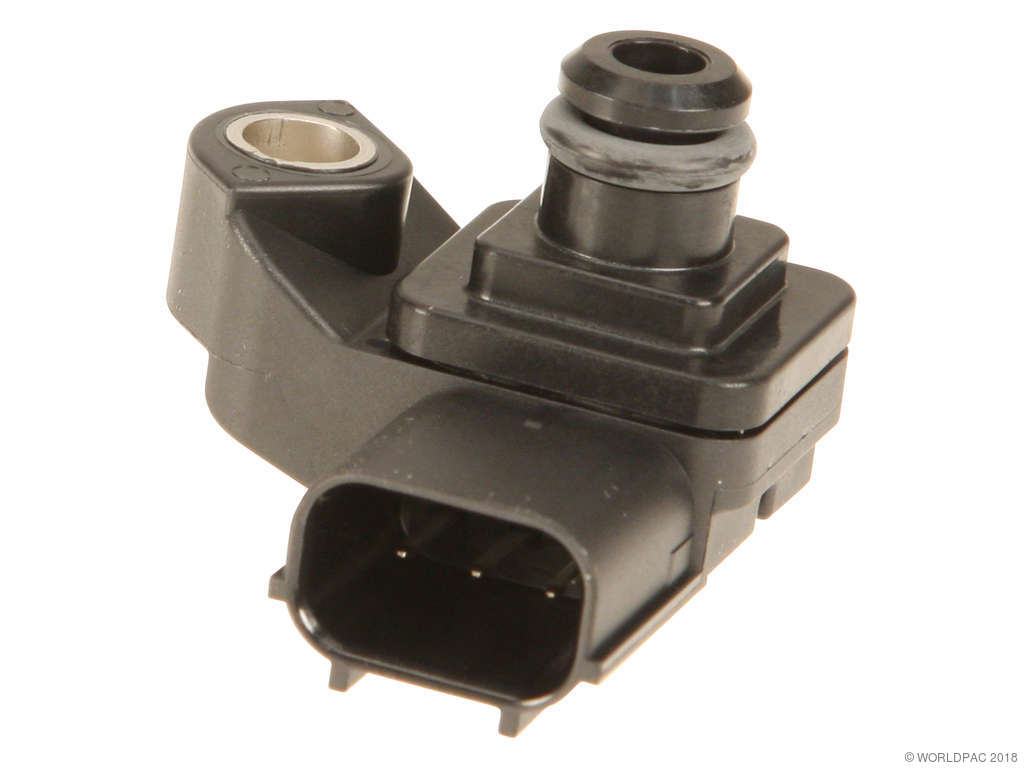
- Faulty Manifold Absolute Pressure (MAP) Sensor 🔴 High Probability → Shop Manifold Absolute Pressure Sensor The MAP sensor is a known failure point on this platform, often due to age and heat cycles. It is one of the most cited fixes in owner forums for the P0106 code.
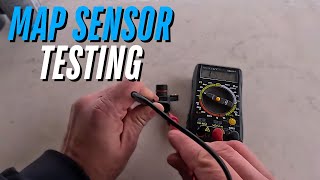
How to confirm: With the key on and engine off, use a scan tool to compare the MAP sensor reading to the BARO (Barometric Pressure) reading. They should be nearly identical. Start the engine; the reading should drop to a stable, low value at idle. If the readings are stuck or erratic, the sensor is likely faulty. You can also test the sensor's voltage output with a multimeter while applying vacuum with a hand pump to see if it responds correctly.
Typical fix: Replace the MAP sensor. It is typically a single-bolt installation on the intake manifold or throttle body, making it a very accessible DIY repair.
Est. part cost: $40-$100 - Intake System Vacuum Leak 🟡 Medium Probability Vacuum hoses, the PCV hose, and intake gaskets can become brittle and crack over time, leading to unmetered air entering the engine and confusing the MAP sensor.
How to confirm: Perform a smoke test on the intake system to visually identify any leaks from hoses, the intake manifold gasket, or the throttle body. A visual inspection of all vacuum lines for cracks or disconnections is also a good first step. Pay close attention to the PCV valve and its hose.
Typical fix: Replace the leaking hose or gasket.
Est. part cost: $10-$50 - ECU Idle Learn Procedure Needed 🟡 Medium Probability On many Hondas, disconnecting the battery or cleaning the throttle body can wipe the ECU's learned idle values. When the engine restarts, the actual airflow at idle doesn't match the ECU's base map, triggering a P0106 code.
How to confirm: This is a likely cause if the P0106 code appeared immediately after the battery was replaced or disconnected for any reason.
Typical fix: Perform the idle relearn procedure. This typically involves warming the engine to operating temperature, turning off all accessories, and letting the engine idle in Park or Neutral for 5-10 minutes until the cooling fans cycle on and off twice.
Est. part cost: $0 - Wiring or Connector Issue ⚪ Low Probability
How to confirm: Visually inspect the MAP sensor's wiring harness and connector for any signs of damage, corrosion, or loose pins. Check for a stable 5-volt reference signal and a good ground at the connector using a multimeter with the key on.
Typical fix: Repair the damaged wire or clean/replace the connector.
Est. part cost: $5-$25 - Dirty or Clogged MAP Sensor Port ⚪ Low Probability → Shop Manifold Absolute Pressure Sensor Carbon buildup from the PCV system can sometimes obstruct the small port on the intake manifold where the sensor reads pressure.
How to confirm: Remove the MAP sensor and inspect the port on the intake manifold where it mounts. Check for carbon buildup or other debris that could be blocking the sensor from getting an accurate pressure reading.
Typical fix: Carefully clean the port using appropriate tools and carburetor cleaner. Do not spray cleaner directly into the sensor itself.
Est. part cost: $0-$10
Rare But Worth Checking
- Clogged Catalytic Converter: A severely clogged catalytic converter can create excessive backpressure, which can affect intake manifold pressure and potentially trigger a P0106 code. This is usually accompanied by other codes and severe loss of power.
- Faulty Powertrain Control Module (PCM): This is extremely rare. The PCM should only be considered as the cause after all other possibilities, including the sensor, wiring, and vacuum leaks, have been exhaustively ruled out.
- Environmental Icing: In rare cases, driving for extended periods in below-freezing temperatures can cause ice to form on the MAP sensor, leading to a temporary P0106 code. The issue typically resolves itself after the engine warms up and melts the ice. This has been noted in TSBs for other manufacturers.
Diagnosis Steps
- Read the trouble codes with an OBD-II scanner and note any other codes present. Prioritize troubleshooting other MAP, A/F sensor, or VTEC system codes first if they are present.
- Check if the battery was recently disconnected. If so, perform the Idle Relearn Procedure first, clear the codes, and see if the problem returns.
- Inspect all vacuum hoses connected to the intake manifold for cracks, breaks, or loose connections. Pay special attention to the PCV hose.
- Visually inspect the MAP sensor's electrical connector and wiring for any signs of damage, corrosion, or a loose connection.
- With the Key On, Engine Off (KOEO), use a scan tool to view live data. Compare the MAP sensor pressure reading with the Barometric Pressure (BARO) reading. They should be very close. At sea level, this is around 101 kPa (14.7 psi).
- Start the engine and observe the MAP sensor reading at idle. It should drop significantly (to a low pressure/high vacuum reading) and be stable.
- If the sensor readings are illogical or stuck, remove the sensor and inspect its port for any blockage or contamination.
- If the sensor and port are clean, test the wiring. With the sensor disconnected and KOEO, verify a 5-volt reference signal and a good ground at the connector with a multimeter.
- If wiring is good and the idle relearn did not work, the MAP sensor itself is the most likely culprit. Replace the MAP sensor.
- If the problem persists after replacing the sensor, perform a smoke test to find any hard-to-see vacuum leaks.
Parts You'll Likely Need
- Manifold Absolute Pressure (MAP) Sensor
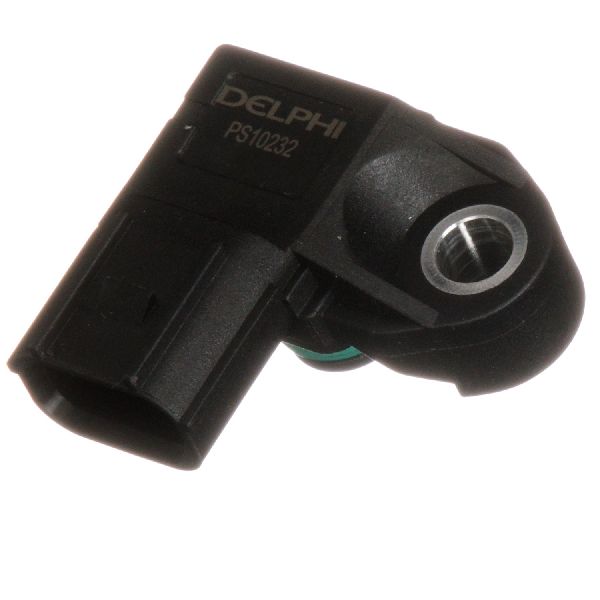
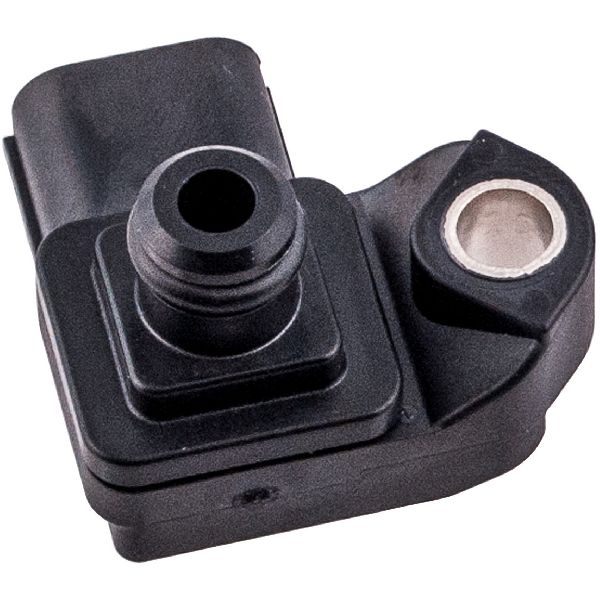
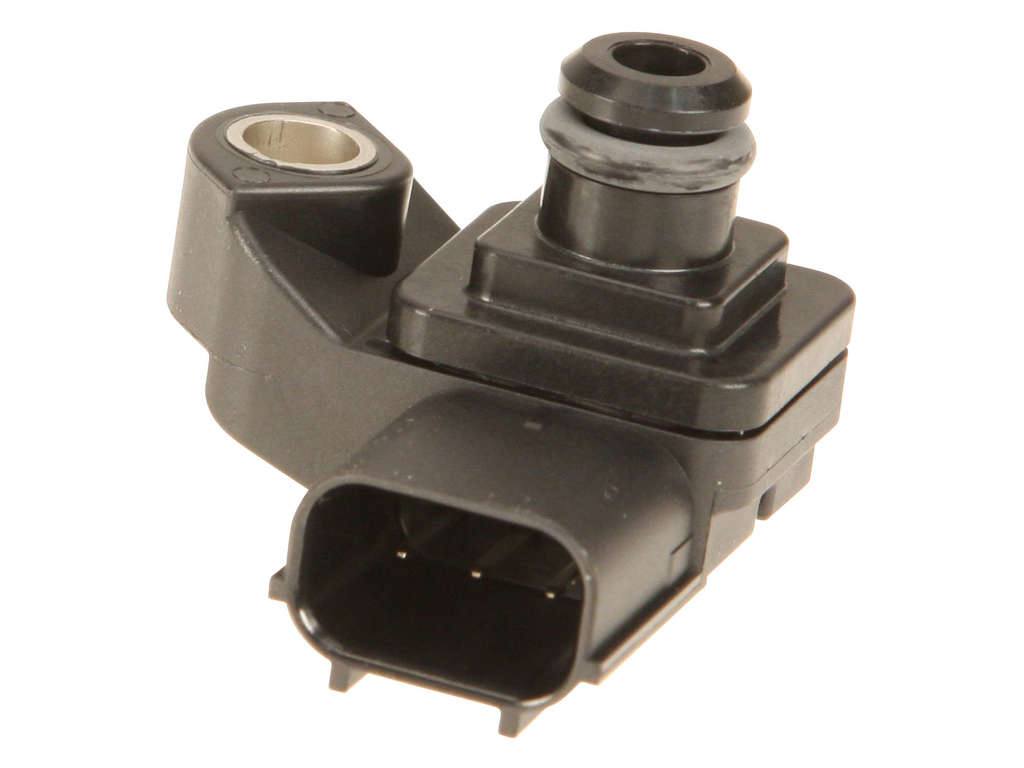
(OEM #37830-RNA-A01)— This is the most common part to fail and cause a P0106 code on this specific vehicle. This part number is widely used across many Honda models from this era, including the CR-V.
Trusted brands: Denso (OEM Manufacturer), Honda (Genuine), Bosch, Standard Motor Products
OEM price range: $70-$100
Aftermarket price range: $40-$80
Related Codes That Often Appear With This One
- P0171 — This 'System Too Lean' code can appear with P0106 if a vacuum leak is the root cause for both issues, as the unmetered air leans out the air-fuel mixture.
- P0300-P0304 — Misfire codes can be triggered because the incorrect MAP sensor reading leads to a wrong air-fuel mixture, causing the engine to misfire.
- P1129 — A Honda-specific code for 'MAP Sensor Higher Than Expected' that can appear alongside P0106, often pointing directly at a faulty MAP sensor or a significant vacuum leak.
- P0107 — This code for 'MAP Sensor Circuit Low Voltage' can be triggered if the sensor fails electrically or there is a wiring issue causing a low voltage signal.
- P0108 — This code for 'MAP Sensor Circuit High Voltage' points to an electrical failure in the sensor or circuit, causing an abnormally high voltage signal.
Platform-Specific Known Issues
- Owner Experience: Aftermarket vs OEM Sensor: A thread on CRVOwnersClub.com titled 'P0106 and rough idle finally fixed' details an owner's journey. After replacing the MAP sensor with a cheap aftermarket part, the problem persisted. The issue was only resolved after installing a genuine Honda (Denso) sensor. This highlights a common theme on Honda forums where cheap, unbranded sensors are often unreliable and do not fix the P0106 code, making OEM or OEM-supplier parts the recommended choice.
Mechanic-Grade Diagnostic Values
- MAP Sensor Reference Voltage — expected: 4.5V to 5.0V DC. Failure: No voltage or significantly lower voltage points to a wiring or PCM issue.
- MAP Sensor Ground Circuit Resistance — expected: Near 0 Ohms. Failure: Any significant resistance indicates a poor ground connection, which can cause erratic sensor readings.
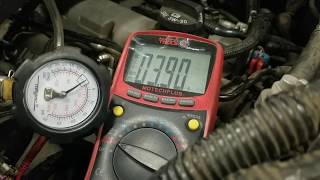
- MAP Sensor Signal Voltage (Key On, Engine Off) — expected: ~3.0V to 3.9V. Failure: A reading far outside this range, like ~0.37V, suggests a faulty sensor or wiring short.
- MAP Sensor Signal Voltage (Engine at Idle) — expected: 0.4V to 1.5V. Failure: Voltage that doesn't drop from the KOEO reading, or is unstable, points to a faulty sensor or a vacuum leak.
- MAP Sensor Live Data (Scan Tool, at Idle) — expected: 15-25 kPa. Failure: A reading that is stuck high (near atmospheric pressure) or doesn't change with engine RPM indicates a problem.
Scan Tool Commands That Help
- Honda HDS (Honda Diagnostic System) or compatible advanced scanner: ETCS TEST > TP POSITION CHECK — Use this function to clear the throttle position learned value from the PCM. This is critical after cleaning or replacing the throttle body, as a mismatched learned value can trigger a P0106 even if the MAP sensor is good. After clearing, an idle relearn procedure must be performed.
- Honda HDS (Honda Diagnostic System): Reset ECM/PCM — This function performs a factory reset of the Engine Control Module. It should be used after replacing major components or after clearing the TP learned value to ensure the system starts fresh before the idle relearn procedure.
Wiring & Ground Locations
- G101 — On the thermostat housing, specifically on the water pipe side of the housing.. G101 is the main power and logic ground for the ECU/PCM. A poor connection here due to corrosion or looseness can cause erratic voltage and unstable sensor readings for multiple engine sensors, including the MAP sensor, leading to a P0106 code.
- MAP Sensor Connector (3-Pin) — Plugged directly into the MAP sensor, which is mounted on the intake manifold, often near the throttle body.. This is the primary test point. For 2002-2004 models (and likely similar for later years), the wires are: YEL/RED (5V Reference), GRN/WHT (Ground), and RED/GRN (Signal). For 2011-2016 models, the wires may be Gray (VCC1/5V), Pink (Signal), and Green (Ground). Always verify with a vehicle-specific diagram.
Real Owner Repair Stories
- Reddit user in r/MechanicAdvice (Hyundai (similar logic applies to Honda)) — P0106 code appeared after the battery died. Engine was idling incredibly hard and stalling.
❌ Tried (didn't work) Replacing the MAP sensor., Clearing the DTC with a scanner.
✅ What actually fixed it The user was advised that the root cause was a lost idle position calibration from the battery disconnect. The fix was to thoroughly clean the throttle body, then perform a specific 10-minute idle relearn procedure without touching the accelerator. - Honda-Tech forum user (Honda Civic with D16 engine swap) — P0106 code, hunting idle between 1k-2.5k RPM, very rough idle.
❌ Tried (didn't work) Checking for vacuum leaks with starter fluid., Replacing the intake manifold gasket.
✅ What actually fixed it The user diagnosed the issue by back-probing the ECU. They found the MAP sensor signal wire was only reading 0.371V with KOEO, far below the expected ~2.5V. This pointed directly to an electrical fault (bad sensor or wiring) rather than a vacuum leak, despite the symptoms. The resolution was to correct the electrical fault.
OEM Part Supersession History
37830-PNC-003→37830-RNA-A01— Updated design/consolidation of part numbers across multiple Honda platforms.
Heads up: While 37830-RNA-A01 is the correct part for the 2007-2016 CR-V, it's important to verify by VIN. The Denso equivalent part number is often cited as 079800-7590.
Model Year Variations Within This Range
- 2012-2016 (Fourth Generation): The fourth-generation CR-V uses a K24Z7 engine, a slight revision of the third-generation's K24Z6. While the MAP sensor and its function are fundamentally the same, wiring colors at the PCM and sensor connectors may differ. For example, troubleshooting guides for 2011-2016 models reference a Gray, Pink, and Green wire at the MAP sensor, while earlier guides for the K-series mention Yellow/Red, Green/White, and Red/Green. Always use a wiring diagram specific to the vehicle's year.
Diagnostic Flowchart
Other Known Issues on This Vehicle
Issues unrelated to this code that are worth knowing about as an owner of this generation:
- VTC Actuator Rattle on Cold Start 🟠 Medium — Very common, especially in 2012-2014 models. Causes a 1-2 second metallic rattle at startup in temperatures below 40°F. (Ref: Honda TSB 09-010 and TSB 16-012 address this issue.)
- A/C Compressor Failure 🔴 High — Common failure on 3rd gen (2007-2011) models, often referred to as the 'black death' as the failing compressor contaminates the entire A/C system.
- Excessive Oil Consumption 🟠 Medium — Some K24 engines, particularly around 2010-2014, can consume oil due to sticking piston rings. Owners report needing to add oil between changes. (Ref: Honda addressed this with TSB 12-089 for some models, involving a software update and potentially piston ring replacement.)
- Malfunctioning Door Lock Actuators 🟡 Low — Widespread on the 3rd gen (2007-2011). Actuators fail, causing doors to not lock or unlock with the remote or switch.
- Vibration at Idle (2015-2016 models) 🟡 Low — Common complaint on the 2015-2016 models with the CVT and direct-injected 'Earth Dreams' engine. A noticeable vibration is felt in the cabin when the vehicle is stopped and in gear. (Ref: Honda released software updates (TSB 15-086) to help mitigate the issue, but it's often considered a characteristic of the vehicle.)
- Parasitic Battery Drain 🟠 Medium — Reported on 4th gen (2012-2016) models where the battery dies after the vehicle sits for a few days. A faulty A/C relay is a commonly cited cause.
Used vs. New Parts: Buying Guide for This Vehicle
When a used part is the smart pick: A used OEM MAP sensor from a low-mileage donor vehicle can be a cost-effective and reliable option, as genuine Honda/Denso sensors are known for their quality. Given the low failure rate of other components related to this code, sourcing a used sensor is a viable strategy if on a tight budget.
Donor-vehicle mileage cap: roughly under 80000 miles for the part to have meaningful remaining life.
What to inspect on the donor part:
- Check for a clean connector with no corrosion on the pins.
- Ensure the plastic housing is not cracked or showing signs of heat damage.
- Verify the O-ring is present and pliable, not flattened or brittle.
- If possible, ask for the VIN of the donor car to confirm compatibility and mileage.
OEM-only on this vehicle (don't cheap out):
- Manifold Absolute Pressure (MAP) Sensor
Aftermarket brands forum-validated for this vehicle:
- Denso (This is the Original Equipment Manufacturer for Honda)
- Bosch
- Standard Motor Products (SMP)
Brands owners have reported issues with on this vehicle:
- Unbranded, low-cost sensors from online marketplaces like eBay or Amazon. Forum discussions frequently report that these parts either do not work out of the box or fail quickly, causing the P0106 code to return.
Real Owner Stories
Aggregated from forums and TSBs cited above. Mileages and costs reflect what owners reported in those sources.
2012 Honda CR-V
Symptoms: Rough idle and P0106 code.
What fixed it: Replacing the MAP sensor with a genuine Honda (Denso) part after a cheap aftermarket sensor failed to fix the problem.
Source hint: crvownersclub.com thread titled 'P0106 and rough idle finally fixed'
2012 Honda CR-V
Symptoms: P0106 code appeared immediately after a battery change.
What fixed it: Performing the idle relearn procedure.
Source hint: Reddit r/CRV discussion on 'P0106'
Related OBD-II Codes
Frequently Asked Questions
I just replaced my battery and now my CR-V has a P0106 code. Do I need a new sensor?
Should I buy a cheap MAP sensor online to fix this code?
Can a dirty throttle body cause a P0106 on my 2007-2016 CR-V?
Is there a specific TSB for the startup rattle I'm hearing along with my engine issues?
Where is the MAP sensor located on the CR-V's K24 engine?
Helpful Videos
We Have This Part in Stock


The information in this article is provided for general reference and educational purposes only. Vehicle specifications, procedures, and part compatibility can vary by production date, trim level, and region. Always consult your vehicle's factory service manual and verify part numbers before purchasing or performing repairs. Safety-critical components such as airbags, seat belts, and braking systems should be installed by a qualified professional.
- Honda CR-V:
- 🧭 Diagnostic Flowchart
- 🎬 Helpful Videos
- 🛍️ Shop This Part
- What's Unique About the 2007-2016 Honda CR-V
- Symptoms You May Notice
- Most Likely Causes
- Rare But Worth Checking
- Diagnosis Steps
- Parts You'll Likely Need
- Related Codes That Often Appear With This One
- Platform-Specific Known Issues
- Mechanic-Grade Diagnostic Values
- Scan Tool Commands That Help
- Wiring & Ground Locations
- Real Owner Repair Stories
- OEM Part Supersession History
- Model Year Variations Within This Range
- Other Known Issues on This Vehicle
- Used vs. New Parts: Buying Guide for This Vehicle
- Real Owner Stories
- 2012 Honda CR-V
- 2012 Honda CR-V
- Related OBD-II Codes
- Frequently Asked Questions
- 🎟️ Get 5% Off