

P0106 on 2010-2019 Hyundai Sonata: MAP Sensor Causes and Fixes
On a 2010-2019 Hyundai Sonata, code P0106 is most often caused by a faulty Manifold Absolute Pressure (MAP) sensor. For 2011-2012 models, a software update may be required per a TSB. Replacing the sensor is a simple DIY task costing between $25 and $75 for an aftermarket part. Before replacing, check for vacuum leaks, especially the PCV hose, and consider cleaning the throttle body, particularly if the code appeared after a battery change.
- For 2011-2012 Sonatas, check for the software update TSB before buying any parts.
- The most likely fix is replacing the MAP sensor, a simple 15-minute DIY job.
- Always check for simple issues like cracked vacuum hoses or a loose gas cap before replacing sensors.
- If the code appeared right after a battery change, try clearing it and driving the car to see if the ECU relearns and the code stays off.
- Verify the correct OEM part number for the MAP sensor using your VIN, as multiple versions exist.
What's Unique About the 2010-2019 Hyundai Sonata
For the 2010-2019 Sonata, which covers the YF and LF generations, the P0106 code is a frequent issue. A key factor for the early YF generation (specifically 2011-2012 models with the 2.4L engine) is a Technical Service Bulletin (TSB 12-FL-004) indicating the original engine software was too sensitive and could trigger the code incorrectly; the fix is an ECU update, not a new sensor. Across both generations, the most common cause remains a failing MAP sensor, which is an easy and affordable DIY replacement for most owners. The issue is also widely reported on its platform-mate, the Kia Optima.
Generation note: This guide covers the YF (2010-2014) and LF (2015-2019) generations of the Hyundai Sonata. A notable TSB regarding a software update for P0106 applies specifically to 2011-2012 models with the 2.4L engine. While the MAP sensor is the primary cause across both generations, always verify part numbers as they can differ based on the specific engine (2.4L GDI vs. 2.0T) and year.
Symptoms You May Notice
- Check Engine Light is on
- Rough or unstable idle
- Hesitation or stumbling during acceleration
- Reduced engine power or 'limp mode'
- Poor fuel economy
- Black smoke from the exhaust
- Engine may stall, especially at idle
- Difficulty starting the engine
- Replacing the MAP sensor without checking for a required software update on 2011-2012 models.
- Replacing the MAP sensor when the actual problem is a simple vacuum leak from a cracked PCV hose.
- Replacing the MAP sensor after a battery change when the root cause is a dirty throttle body that needs cleaning.
Most Likely Causes
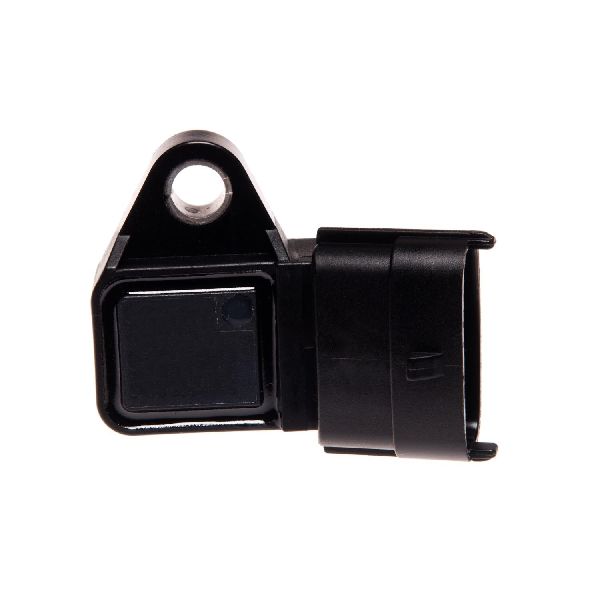
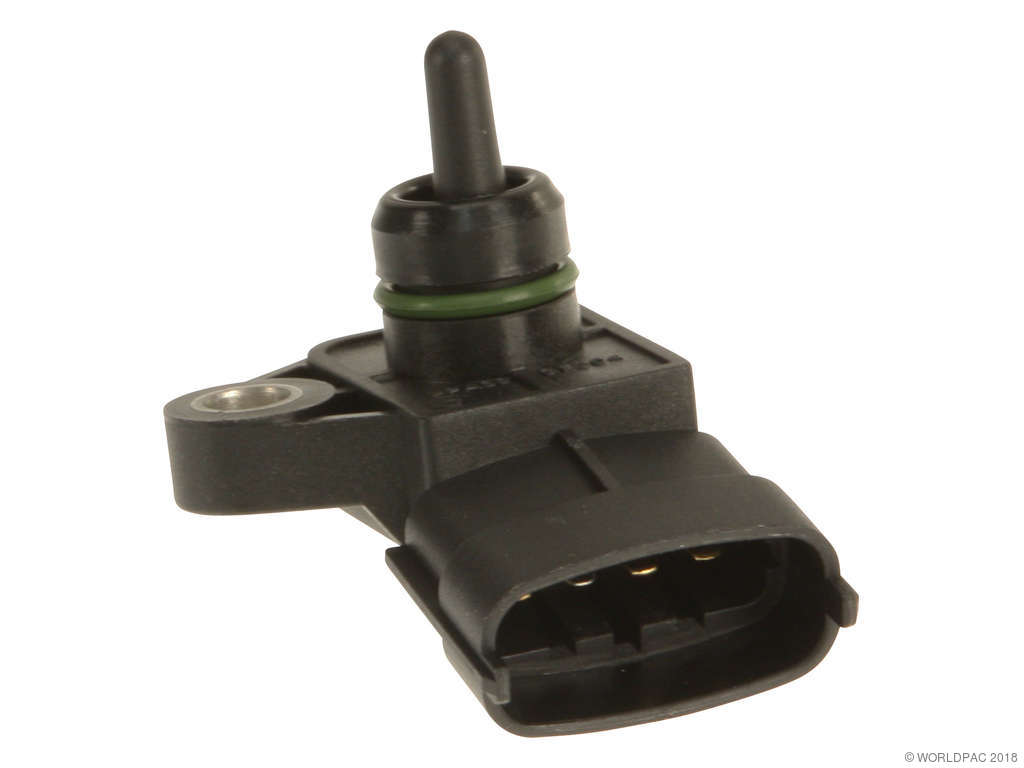
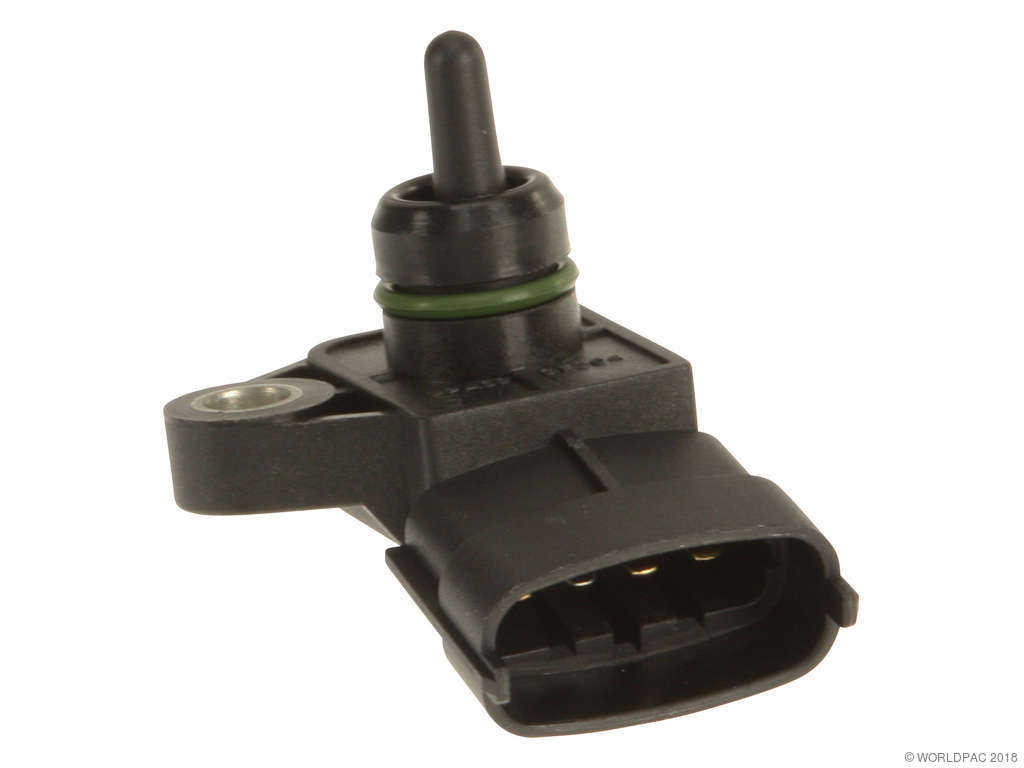
- Faulty Manifold Absolute Pressure (MAP) Sensor 🔴 High Probability → Shop Manifold Absolute Pressure Sensor The MAP sensor is a common failure point on many modern vehicles, including the Sonata and its platform mates. Over time, heat, vibration, and contamination from the PCV system can cause it to fail or lose accuracy.
How to confirm: After checking for vacuum leaks and wiring issues, replacing the sensor is the most straightforward diagnostic step. You can also test the sensor's voltage output with a multimeter to see if it's within the specification outlined in the service manual. A visual inspection may not reveal a fault.
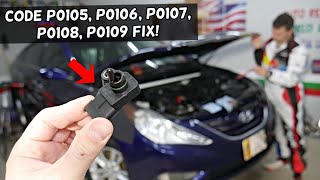
Typical fix: Replace the MAP sensor. It is typically located on the intake manifold and secured with a single 10mm bolt, making it a quick replacement. 🎬 Watch: How to replace the MAP sensor on 2011-2014 models.
Est. part cost: $25-$75 - Vacuum Leak 🟡 Medium Probability Rubber and plastic hoses become brittle and crack over time due to engine heat and age. A common culprit on the 2.4L GDI engine is the PCV (Positive Crankcase Ventilation) hose that connects to the intake manifold. A cracked intake air hose or a bad intake manifold gasket can also cause this code.
How to confirm: Visually inspect all vacuum hoses connected to the intake manifold for cracks or disconnections, paying close attention to the PCV hose. A smoke test is the most effective method, where smoke is fed into the intake system to reveal the location of any hard-to-see leaks.
Typical fix: Replace the cracked or broken vacuum hose or intake manifold gasket.
Est. part cost: $10-$50 - Dirty Throttle Body ⚪ Low Probability → Shop Fuel Injection Throttle Body Carbon and oil deposits from the PCV system can build up in the throttle body over time. This is especially relevant if the P0106 code appears after a battery disconnect, as the ECU loses its learned idle values and can't compensate for the restricted airflow from the dirty throttle body.
How to confirm: Remove the air intake hose from the throttle body and inspect the throttle plate and bore for black carbon buildup. The engine may idle roughly or stall after a battery replacement if this is the cause.
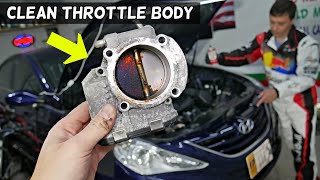
Typical fix: Clean the throttle body bore and plate with a dedicated throttle body cleaner and a soft cloth or brush. This often resolves the issue without needing to replace any parts. 🎬 See this walkthrough on how to clean your throttle body.
Est. part cost: $5-$15 - Damaged MAP Sensor Wiring or Connector ⚪ Low Probability → Shop Manifold Absolute Pressure Sensor
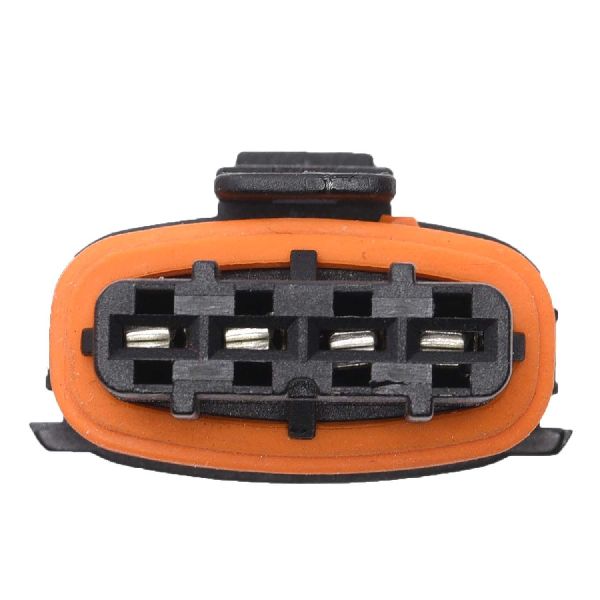
How to confirm: Visually inspect the wiring harness leading to the MAP sensor for any signs of fraying, melting, or corrosion. Ensure the connector is securely plugged in and the locking tab isn't broken. Use a multimeter to check for 5V reference, ground, and signal voltage at the connector.
Typical fix: Repair the damaged section of wire or replace the connector pigtail.
Est. part cost: $15-$40
Rare But Worth Checking
- ECU Software Update Needed: A Technical Service Bulletin (TSB 12-FL-004, superseding V011423) was issued for 2011-2012 Sonatas with the 2.4L engine because the original software was too sensitive. The fix is a dealer-installed software update, not a hardware replacement. Always check for TSBs before replacing parts.
- Issue After Battery Replacement: Many owners report this code appearing immediately after replacing a dead battery or disconnecting it. This happens because the ECU's learned idle and fuel trim values are lost. The problem is often compounded by a dirty throttle body. The code may clear after a drive cycle, but if it persists with rough idle, cleaning the throttle body is a common fix.
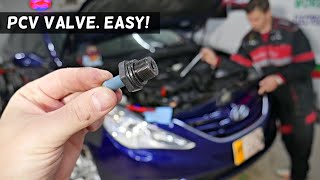
- Faulty or Leaking PCV Valve: A PCV valve that is stuck open can create a significant, unmetered vacuum leak, causing the MAP sensor readings to be out of range. This is often overlooked but can be the root cause of the P0106 code. 🎬 Watch: How to locate and replace the PCV valve.
- Clogged Catalytic Converter: A severely restricted exhaust can cause abnormal pressure in the intake manifold, triggering a P0106 code. This is rare and would typically be accompanied by other codes (like P0420) and a significant loss of power.
Diagnosis Steps
- Check for Technical Service Bulletins (TSBs): For 2011-2012 models, first check if TSB 12-FL-004 applies to your vehicle's VIN. A software update may be the only fix needed.
- Inspect for Vacuum Leaks: Visually inspect all vacuum lines, especially the PCV hose running to the intake manifold, for obvious cracks, loose fittings, or breaks. Also check the main air intake boot between the air filter box and throttle body.
- Inspect the MAP Sensor Connector and Wiring: Ensure the MAP sensor is plugged in securely. Check the wires for any signs of damage, such as melting or chafing.
- Clean the Throttle Body: Especially if the code appeared after a battery disconnect, remove the intake boot and clean the throttle plate and bore with throttle body cleaner to remove carbon buildup.
- Perform a Smoke Test: If no visual vacuum leaks are found, perform a smoke test to definitively identify any hard-to-see leaks in the intake system, including the intake manifold gasket or PCV system.
- Replace the MAP Sensor: If all other steps do not resolve the issue, the MAP sensor itself is likely faulty. It is held on by a single 10mm bolt and is easy to replace.
- Advanced Diagnostics: If the code persists after replacing the sensor, a more complex issue like a clogged catalytic converter or a faulty PCM could be the cause, which may require professional diagnosis.
Parts You'll Likely Need
- Manifold Absolute Pressure (MAP) Sensor
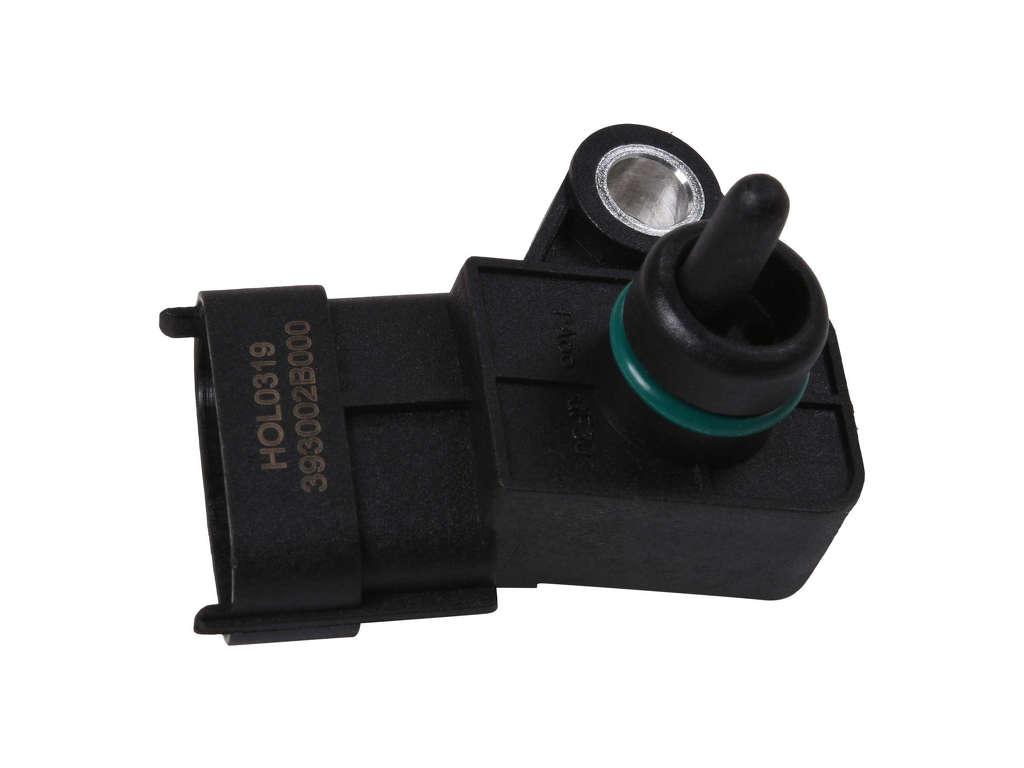
(OEM #39300-2B000, 39300-2G000)— This is the most common component to fail and trigger a P0106 code. Part number 39300-2B000 is widely used across many Hyundai/Kia 1.6L, 2.0L, and 2.4L engines. Part number 39300-2G000 is also listed for some Sonata models, particularly with the 2.0T engine, and is sometimes referred to as a Boost Pressure Sensor. Always verify the correct part for your specific vehicle's year and engine with the VIN.
Trusted brands: Hyundai (OEM), NGK, Standard Motor Products (SMP), Delphi, Hella
OEM price range: $80-$140
Aftermarket price range: $25-$75
Related Codes That Often Appear With This One
- P0105, P0107, P0108, P0109 — These are all related to the MAP sensor circuit, indicating different types of electrical faults (general circuit malfunction, low input, high input, intermittent).
- P2110 — This code indicates the throttle actuator control system is in a forced limited RPM mode ('limp mode'). It can be triggered alongside P0106 if the PCM detects a severe engine performance issue. NHTSA ODI #11322200 notes an instance where P0106 appeared simultaneously with P2110 and P0605.
Technical Service Bulletins (TSBs) & Recalls
- 12-FL-004 / NHTSA ID 10055057: Addresses an overly sensitive monitoring strategy for the MAP sensor on 2011-2012 models with the 2.4L engine, causing P0106 to be set incorrectly. The fix is an ECM software update.
Platform-Specific Known Issues
- TSB 12-FL-004 (NHTSA ID 10055057): For some 2011-2012 Sonatas with the 2.4L engine, the ECM logic was overly sensitive and could incorrectly store DTC P0106. The bulletin advises against replacing the MAP sensor or throttle body and instead directs technicians to perform an ECM software update.
- Forum Experience: P0106 After Battery Replacement: A recurring topic on forums like hyundai-forums.com and Reddit is the appearance of P0106 immediately after battery replacement. One user on Re
Mechanic-Grade Diagnostic Values
- MAP Sensor Reference Voltage — expected: ~5.0V. Failure: Significantly lower or no voltage indicates a problem with the PCM or wiring.
- MAP Sensor Signal Voltage (KOEO) — expected: 4.0V - 5.0V. Failure: A reading outside this range with the engine off suggests a faulty sensor.
- MAP Sensor Signal Voltage (at idle) — expected: 1.0V - 2.1V. Failure: Voltage does not drop from the KOEO reading, or is outside this range, indicating the sensor is not reading vacuum correctly.
- MAP Sensor Live Data (Scan Tool) — expected: At KOEO, the MAP reading should be nearly identical to the Barometric Pressure (BARO) reading. At idle, it should drop significantly. When the throttle is snapped, it should rise quickly and then fall.. Failure: Spikes, intermittent readings, or a reading that doesn't change with engine load/vacuum suggests a faulty sensor.
Scan Tool Commands That Help
- Hyundai GDS (Global Diagnostic System): Resetting Adaptive Values — After replacing a MAP sensor or cleaning the throttle body, this function in the 'Vehicle S/W Management' or 'Special Function' menu resets the ECU's learned values, which can help resolve idle or performance issues related to the new/cleaner components.
- Hyundai GDS (Global Diagnostic System): Actuation Test (e.g., ETC motor) — While not directly for the MAP sensor, using actuation tests for related components like the Electronic Throttle Control (ETC) motor while monitoring MAP sensor live data can help confirm if the sensor is responding correctly to changes in the system.
Wiring & Ground Locations
- MAP Sensor Connector (2009-2010 Sonata 2.4L) — On the MAP sensor, located on the intake manifold.. For testing, the signal wire is typically Blue/Orange. Knowing the correct wire is crucial for accurate voltage testing with a multimeter.
- MAP Sensor Connector (2011-2012 Sonata 2.4L) — On the MAP sensor, located on the intake manifold near the throttle body.. For testing, the signal wire is typically Blue. The 5V power supply is Pink/Black. This allows for precise testing of power, ground, and signal integrity at the sensor.
- MAP Sensor Connector (4-wire type) — On the MAP sensor, which on some models integrates the Intake Air Temperature (IAT) sensor.. On a 4-pin connector, Pin 1 is often the MAP signal, Pin 2 is 5V power, Pin 3 is the IAT signal, and Pin 4 is shared ground. Incorrectly probing the IAT signal (Pin 3) instead of the MAP signal (Pin 1) will lead to a misdiagnosis.
- PCM Location — Typically located on the left side of the engine compartment.. In rare cases of persistent P0106 codes with a known-good sensor and wiring, diagnostics may need to proceed to the PCM connector to check for signal continuity from the sensor.
Real Owner Repair Stories
- Reddit user in r/MechanicAdvice (2012 Hyundai Sonata) — Permanent P0106 code that would not clear.
❌ Tried (didn't work) Replacing the MAP sensor, Cleaning the throttle body
✅ What actually fixed it The user tested the signal wire (Blue/Orange) at the connector and got no reading. Replacing the wiring harness resolved the problem. - YouTube video by 'Easy Fix at Home' (2011-2014 Hyundai Sonata) — P0106 code and check engine light.
❌ Tried (didn't work) Initially considered replacing the sensor.
✅ What actually fixed it The owner removed and cleaned the existing MAP sensor. After cleaning and reinstalling, they drove over 300 miles without the check engine light returning, indicating the sensor was merely dirty, not failed. - NHTSA ODI #11132907 — An owner reported that after reconnecting the battery following vehicle service, the check engine light triggered with a P0106 code, although the engine continued to run normally.
- NHTSA ODI #10778116 — One owner documented a P0106 code specifically identifying the MAP sensor as the culprit, occurring alongside other issues like a clicking sound and wobbling when turning.
OEM Part Supersession History
39300-2G000→39300-84400— Part update or manufacturer change.
Heads up: 39300-2G000 is often listed for the 2.0T engine and called a 'Boost Pressure Sensor'. While functionally similar to a MAP sensor, it's calibrated for a turbocharged application. Using a standard MAP sensor on a turbo engine or vice-versa can cause performance issues even if it physically fits.39300-2B000→39300-2B100— Part revision.
Heads up: 39300-2B100 is listed as a compatible replacement for 39300-2B000. These are generally interchangeable for the naturally aspirated engines they are specified for.
Model Year Variations Within This Range
- 2010-2014 (YF Generation): The MAP sensor is located on the intake manifold, often in a tight space near the throttle body. The wiring harness connector can be difficult to access and release without a small tool.
- 2015-2019 (LF Generation): On the LF generation 2.4L engine, the MAP sensor is more accessibly located on the top of the intake manifold surge tank, making inspection and replacement slightly easier than on the earlier YF models.
Diagnostic Flowchart
Real Owner Stories
Aggregated from forums and TSBs cited above. Mileages and costs reflect what owners reported in those sources.
2011 Hyundai Sonata 2.0T
Symptoms: Experienced engine hesitation accompanied by the P0106 code.
What fixed it: Successfully fixed the code by replacing the MAP sensor.
Source hint: hyundai-forums.com - '2011 Sonata 2.0T Hesitation and P0106 code'
2010 Hyundai Sonata 2.4L
Symptoms: The P0106 code permanently remained and always came back after starting the car, despite the owner replacing the MAP sensor and verifying the wiring read properly.
What fixed it: Mechanic diagnosed the vehicle as needing a new ECU, though the owner suspected the issue was tied to a recent battery replacement.
Source hint: r/MechanicAdvice - 'Permanent P0106 Code Not Clearing - Hyundai Sonata'
Hyundai Sonata (Year Unspecified)
Symptoms: The car kept kicking out the P0106 code even after the owner replaced the MAP sensor following a dead battery.
What fixed it: Performed a throttle body cleaning to fix the issue, as the dead battery caused the ECU to lose its learned idle values.
Source hint: r/MechanicAdvice - 'Car keeps kicking out P0106 code - even after replacing the MAP sensor...'
2009 Hyundai Sonata
Symptoms: The P0106 code appeared immediately after replacing the vehicle's battery.
What fixed it: Attempted to fix the issue by installing a new MAP sensor.
Source hint: r/MechanicAdvice - '2009 Hyundai Sonata P0106 code after replacing battery.'
Documented NHTSA Reports
NHTSA ODI #11322200
Symptoms: An owner reported that the check engine light came on with codes P0106, P0605, and P2110 appearing simultaneously.
NHTSA ODI #11132907
Symptoms: After reconnecting the battery following vehicle service, the check engine light triggered with a P0106 code (Manifold Absolute Pressure/Barometric Pressure Circuit Range/Performance), though the engine continued to run normally.
NHTSA ODI #10778116
Symptoms: A report filed by an owner noted the P0106 code specifically identifying the MAP sensor, occurring alongside other vehicle issues including a clicking sound and wobbling when turning.
Related OBD-II Codes
Frequently Asked Questions
Does TSB 12-FL-004 apply to my Hyundai Sonata?
Why did the P0106 code appear on my Sonata right after replacing the battery?
Where is the MAP sensor located on the Sonata, and is it hard to replace?
Can a cracked hose cause the P0106 code on the 2.4L GDI engine?
I replaced the MAP sensor on my 2010 Sonata but the P0106 code came back. What else could it be?
Helpful Videos
We Have This Part in Stock


The information in this article is provided for general reference and educational purposes only. Vehicle specifications, procedures, and part compatibility can vary by production date, trim level, and region. Always consult your vehicle's factory service manual and verify part numbers before purchasing or performing repairs. Safety-critical components such as airbags, seat belts, and braking systems should be installed by a qualified professional.
- Hyundai Sonata:
- 🧭 Diagnostic Flowchart
- 🎬 Helpful Videos
- 🛍️ Shop This Part
- What's Unique About the 2010-2019 Hyundai Sonata
- Symptoms You May Notice
- Most Likely Causes
- Rare But Worth Checking
- Diagnosis Steps
- Parts You'll Likely Need
- Related Codes That Often Appear With This One
- Technical Service Bulletins (TSBs) & Recalls
- Platform-Specific Known Issues
- Mechanic-Grade Diagnostic Values
- Scan Tool Commands That Help
- Wiring & Ground Locations
- Real Owner Repair Stories
- OEM Part Supersession History
- Model Year Variations Within This Range
- Real Owner Stories
- 2011 Hyundai Sonata 2.0T
- 2010 Hyundai Sonata 2.4L
- Hyundai Sonata (Year Unspecified)
- 2009 Hyundai Sonata
- Documented NHTSA Reports
- NHTSA ODI #11322200
- NHTSA ODI #11132907
- NHTSA ODI #10778116
- Related OBD-II Codes
- Frequently Asked Questions
- 🎟️ Get 5% Off