

P0106 on 2017-2018 Infiniti Q60 3.0T: Causes for MAP Sensor and Turbo-Related Faults
On the 2017-2018 Q60 3.0T, code P0106 often points to more than a simple sensor failure. While a faulty MAP sensor is possible, it is critical to check for oil contamination in the intake system, which could be a sign of premature turbocharger failure as documented in Infiniti Technical Service Bulletins. Infiniti has extended the warranty on these turbos to 10 years/120,000 miles due to this known issue.
- For a 2017-2018 Infiniti Q60 3.0T, P0106 requires immediate and careful diagnosis.
- The most critical first step is to inspect the MAP sensor and intake for engine oil, as this points to a known turbocharger issue.
- Do not simply replace the MAP sensor without investigating the root cause; you could be ignoring a much larger problem.
- This code is often seen with MAF sensor codes P0101 and P010B; an ECM update may be a possible fix if no physical faults are found.
What's Unique About the 2017-2018 Infiniti Q60

For the Infiniti Q60 with the 3.0L twin-turbo V6 (VR30DDTT), code P0106 is uniquely and strongly tied to potential turbocharger issues. Infiniti has issued Technical Service Bulletins (TSBs) acknowledging that premature turbocharger bearing wear can cause oil to leak into the intake system. This oil contaminates the two MAP sensors, leading to the P0106 code, but more importantly, it signals a severe underlying problem with the turbos themselves. Therefore, diagnosis on this platform must go beyond simply checking the sensor and should immediately include an inspection for oil in the intake tract.
Diagnostic Flowchart

Tap your situation to follow the diagnostic path that matches what you're seeing on this vehicle.
Symptoms You May Notice

- Check Engine Light is on
- Poor or hesitant acceleration
- Rough idle or unstable engine speed
- Excessive white or blue smoke from the exhaust, especially when warm
- Decreased fuel economy
- Turbocharger whine or rattle, particularly on startup 🎬 Watch: How to identify and repair turbocharger wastegate issues.
- Replacing the MAP sensor without checking for oil contamination. If oil from a failing turbo is the root cause, a new sensor will soon fail or the code will return.
- Ignoring the code because the car seems to run fine. This can lead to a delay in diagnosing failing turbos, potentially causing more damage or missing the warranty window.
Most Likely Causes

- Failing Turbocharger / Oil Contamination 🔴 High Probability → Shop Turbocharger Infiniti TSBs #P4A05 and #P4A06 directly link P0106 to excessive oil in the intake system from premature turbocharger bearing wear on this specific engine. Infiniti extended the warranty to 10 years or 120,000 miles 🎬 See a breakdown of common issues with Infiniti twin turbos. for this exact issue.
How to confirm: Remove the MAP sensors (one on each side of the upper plenum) and inspect them and the intake ports for engine oil residue. Excessive blue/white smoke from the exhaust is another key indicator. A dealership must perform a diagnostic to confirm for warranty purposes.
Typical fix: If significant oil is found, the affected turbocharger(s) must be replaced. This is a major repair, often covered under Infiniti's extended warranty. After replacement, the intercoolers and intake tract must be thoroughly cleaned of residual oil to prevent the code from returning.
Est. part cost: $1500-$4000+ - Faulty Manifold Absolute Pressure (MAP) Sensor 🟡 Medium Probability → Shop Manifold Absolute Pressure Sensor The VR30DDTT engine has two MAP sensors that are highly susceptible to oil contamination from the known turbo issues. Even without turbo failure, they can fail electronically over time.
How to confirm: After confirming no oil contamination or vacuum leaks, test the sensor's voltage with a scan tool. The voltage should change smoothly with engine RPM and load. If it's stuck or erratic, the sensor is likely bad. Often, cleaning an oil-fouled sensor with MAF/MAP sensor cleaner is a temporary fix that confirms the issue.
Typical fix: Replace the faulty MAP sensor(s). They are located on the upper intake plenum and held in by a single bolt.
Est. part cost: $100-$250 - Vacuum Leak 🟡 Medium Probability Turbocharged engines have complex intake plumbing with many connections (charge pipes, intercoolers, gaskets) that can loosen or crack over time, creating leaks that throw off pressure readings.
How to confirm: Perform a smoke test on the intake system to visually identify any leaks from hoses, gaskets, or intercooler connections. A visual inspection of all accessible clamps and hoses is a good first step.
Typical fix: Repair or replace the leaking hose, clamp, or gasket.
Est. part cost: $10-$150 - Needs ECM Software Update ⚪ Low Probability TSB #ITB17-017a notes that P0106 (along with P0101 and P010B) can be triggered without any drivability issues, and the fix is to reprogram the ECM. This is often the first step a dealer will take if no mechanical faults are found.
How to confirm: An Infiniti dealership or a qualified shop with access to Infiniti's technical information can check if the vehicle's ECM software is outdated by comparing it to the latest version listed in the TSB.
Typical fix: Reprogram the ECM to the latest version. This requires specialized tools like Infiniti's CONSULT-III plus.
Est. part cost: $0-$200 (Labor cost)
Rare But Worth Checking
- Clogged Catalytic Converter: A clogged catalytic converter can create excessive backpressure, which may affect manifold pressure readings and trigger a P0106 code. This is usually accompanied by other codes and a significant loss of power.
- Wiring Issue: Damage or corrosion to the wiring or connector for one of the MAP sensors can cause an erratic signal. A visual inspection and continuity test of the harness may be needed.
Diagnosis Steps
- Read all stored fault codes with an OBD-II scanner.
- Inspect the engine air filters to ensure they are clean.
- Remove the plastic engine cover. Locate the two MAP sensors on the upper intake plenum, one on the driver's side and one on the passenger's side.
- Carefully remove both MAP sensors (each held by one 10mm bolt) and inspect their tips and the intake ports for any signs of engine oil. This is the most critical step for this vehicle.
- If oil is present, the vehicle should be taken to an Infiniti dealer for diagnosis under the turbocharger extended warranty. Document your findings with photos.
- If no oil is found, inspect all vacuum lines and intake hoses (charge pipes) between the throttle bodies, intercoolers, and intake manifold for cracks, loose connections, or damage.
- If no leaks are visible, perform a smoke test to find hidden vacuum leaks.
- If no leaks are found, use a scan tool to monitor the MAP sensor voltage/pressure readings with the key on, engine off, and then while the engine is running and revving. The readings should be logical and change smoothly.
- If a sensor reading is stuck or erratic, replace the faulty MAP sensor.
- Check with an Infiniti dealer for any open recalls or applicable TSBs, such as the ECM reprogram mentioned in ITB17-017a.
Parts You'll Likely Need
- Manifold Absolute Pressure (MAP) Sensor
(OEM #22365-1KC0C)— This sensor is a common failure point and is also susceptible to contamination from oil, which is a known issue on this platform. The engine uses two of these.
Trusted brands: Hitachi (OEM), Bosch, Standard Motor Products
OEM price range: $160-$250
Aftermarket price range: $80-$150 - Turbocharger Assembly
(OEM #Right: 14411-5CA7A, Left: 14411-5CA7C (part numbers have been superseded multiple times, verify with VIN))— A known issue documented in TSB P4A05/P4A06 is premature turbo bearing failure causing oil leaks into the intake, which triggers code P0106. Replacement may be covered under an extended warranty.
Trusted brands: Garrett (OEM supplier), Infiniti (OEM)
OEM price range: $1500-$2500 per turbo
Aftermarket price range: $980-$1800 per turbo
Related Codes That Often Appear With This One
- P0101 — Mass Airflow (MAF) Sensor Circuit Range/Performance. TSB ITB17-017a explicitly groups P0106 with P0101 and P010B as codes that can appear together and may be resolved with an ECM update.
- P010B — Mass Airflow (MAF) Sensor 'B' Circuit Range/Performance. This engine has two MAF sensors, one for each turbo/cylinder bank. This code is also mentioned in TSB ITB17-017a.
Technical Service Bulletins (TSBs) & Recalls

- P4A05 / P4A06: Confirms P0106 can be caused by excessive oil in the intake system from a failing turbocharger and details the associated 10yr/120k mile warranty extension.
- ITB17-017a: Notes that P0106, P0101, and P010B may be fixed with an ECM software update if no mechanical faults are present.
Platform-Specific Known Issues
- Infiniti issued TSBs #P4A05 and #P4A06, which led to a warranty extension for turbochargers on 2016-2018 Q50 and 2017-2018 Q60 models to 10 years or 120,000 miles. The bulletin confirms that premature bearing wear can cause oil leaks, leading to excessive smoke and DTC P0106.
- TSB #ITB17-017a addresses an issue where P0106, P0101, and P010B can be stored in the ECM without any drivability problems. The recommended fix is to reprogram the ECM with updated software, which requires a dealer's CONSULT tool.
Mechanic-Grade Diagnostic Values
- MAP Sensor Reference Voltage — expected: ~5V DC. Failure: Voltage is significantly lower or absent, indicating a wiring or ECM power supply issue.
- MAP Sensor Signal Voltage (Key On, Engine Off) — expected: ~4.5V - 5V DC (at sea level, representing atmospheric pressure). Failure: Voltage is significantly different, stuck, or does not match the reference voltage reading.
- MAP Sensor Signal Voltage (Engine Idling) — expected: ~1.0V - 2.0V DC (due to engine vacuum). Failure: Voltage does not drop significantly from the KOEO reading, or is erratic.
- MAP Sensor Ground Circuit Voltage Drop — expected: < 100mV (0.10V) DC. Failure: Voltage higher than 100mV indicates a poor ground connection, which can skew sensor readings.
Scan Tool Commands That Help
- Infiniti CONSULT-III plus: ECM Reprogramming — Used to apply the software update specified in TSB ITB17-017a when P0106 is present without other mechanical faults. This function flashes the ECM with a new file.
- Infiniti CONSULT-III plus: Idle Air Volume Learning (IAVL) — This procedure must be performed after ECM reprogramming or throttle body service to allow the ECU to relearn the correct idle parameters. TSB ITB17-017a specifies this is required after the update.
Wiring & Ground Locations
- MAP Sensor Connector (Typical 3-Pin) — On the MAP sensor body, connecting to the engine harness.. Knowing the pinout is essential for testing. A typical configuration is Pin 1: 5V Reference, Pin 2: Ground, Pin 3: Signal. However, wire colors can vary, so a vehicle-specific diagram is best.
Real Owner Repair Stories
- Reddit user Nonplussed1 on r/q50 (2018 Infiniti Q50, 94,000 miles) — Check Engine Light with P0106 code.
❌ Tried (didn't work) Initial dealer diagnosis said turbos were fine., After turbo replacement, code returned in 2 weeks because oil residue was not fully cleaned., Reprogramming computer and cleaning MAP sensor (temporary fix)., Replacing the MAP sensor again., Replacing both MAF sensors.
✅ What actually fixed it The ultimate resolution required multiple steps: 1) Replacement of both turbos due to oil leakage. 2) A second visit to steam clean the intake housing and intercoolers of all residual oil that fouled the new sensors. 3) Replacement of both intercoolers was also eventually required. This highlights the critical need for thorough cleaning after turbo replacement. - YouTube user Max Dia (2016 Infiniti Q50 Red Sport) — Check Engine Light with P0106 code.
❌ Tried (didn't work) Cleaning the MAP sensor with a cloth did not immediately clear the code.
✅ What actually fixed it The user first found oil on the MAP sensor. After cleaning it and driving, the code cleared itself the next day, suggesting the issue was temporary contamination. The user noted that if the code returned, replacing the sensor or checking for a vacuum leak would be the next steps. This shows that minor oil fouling can sometimes be resolved by cleaning.
OEM Part Supersession History
22365-1KC0A→22365-1KC0C— Standard part revision by the manufacturer.
Heads up: The new part number (22365-1KC0C) is the correct replacement for the original.
Model Year Variations Within This Range
- 2017 vs 2018: For 2018, Infiniti renamed the trim levels to Pure, Luxe, Sport, and Red Sport 400. There were also minor wheel size changes on some trims. However, the core 3.0L twin-turbo V6 engine, MAP sensors, and the underlying turbo-related issues that can cause P0106 remained the same between the 2017 and 2018 model years.
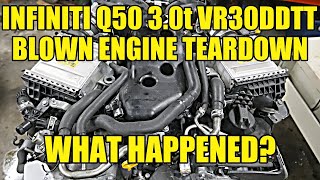
Helpful Videos

Used OEM Parts in Stock
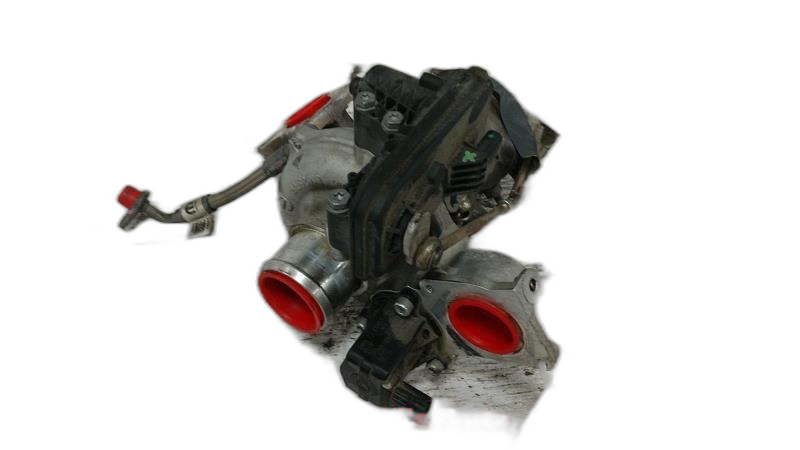
New Aftermarket Parts Available




The information in this article is provided for general reference and educational purposes only. Vehicle specifications, procedures, and part compatibility can vary by production date, trim level, and region. Always consult your vehicle's factory service manual and verify part numbers before purchasing or performing repairs. Safety-critical components such as airbags, seat belts, and braking systems should be installed by a qualified professional.
- Infiniti Q60:
- 🧭 Diagnostic Flowchart
- 🎬 Helpful Videos
- 🛍️ Shop This Part
- What's Unique About the 2017-2018 Infiniti Q60
- Symptoms You May Notice
- Most Likely Causes
- Rare But Worth Checking
- Diagnosis Steps
- Parts You'll Likely Need
- Related Codes That Often Appear With This One
- Technical Service Bulletins (TSBs) & Recalls
- Platform-Specific Known Issues
- Mechanic-Grade Diagnostic Values
- Scan Tool Commands That Help
- Wiring & Ground Locations
- Real Owner Repair Stories
- OEM Part Supersession History
- Model Year Variations Within This Range
- 🎟️ Get 5% Off