

P0106 on 2020 Jeep Wrangler: MAP Sensor Performance Causes and Fixes
P0106 on a 2020 Jeep Wrangler most often indicates a faulty Manifold Absolute Pressure (MAP) sensor or a vacuum leak. A new sensor costs between $26 and $143, and it's a repair most DIYers can handle. Before replacing parts, check for oil contamination on the sensor and ensure the battery system is healthy, as these are known JL issues.
- P0106 means the MAP sensor's signal is out of the expected range, not necessarily that the sensor is completely dead.
- Before replacing the MAP sensor, always check for vacuum leaks and inspect the sensor for oil contamination, a known issue on the 3.6L engine.
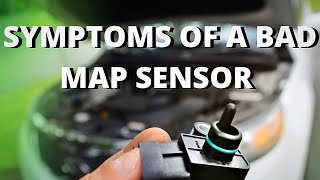
- Symptoms typically include rough idle, poor acceleration, and a drop in fuel economy.
- The location and part number of the MAP sensor differ between the 3.6L V6 and 2.0L Turbo engines on the 2020 Wrangler.
- On the JL platform, always verify the health of both 12V batteries, as a failing auxiliary battery can cause a cascade of random error codes.
What's Unique About the 2020-2020 Jeep WRANGLER
On the 2020 Jeep Wrangler (JL generation), the MAP sensor's location and type depend on the engine. The 3.6L V6 has a standard MAP sensor on the intake manifold, while the 2.0L Turbo engine uses a combined Temperature/MAP (T/MAP) sensor that can be more difficult to access. A notable issue on the 3.6L Pentastar is the PCV system can vent oil vapor into the intake, potentially contaminating the MAP sensor and causing erratic readings. Furthermore, the JL platform's dual-battery system (for Engine Stop/Start) is a known weak point that can cause a cascade of seemingly unrelated electrical faults and codes when the auxiliary battery fails.
Diagnostic Flowchart
Tap your situation to follow the diagnostic path that matches what you're seeing on this vehicle.
Symptoms You May Notice
- Check Engine Light is on
- Rough or erratic idle
- Poor acceleration or hesitation
- Decreased fuel economy
- Engine stalling, especially when coming to a stop
- Black smoke from the exhaust
- Engine feels sluggish or lacks power
- Replacing oxygen (O2) sensors because of a rich or lean running condition, when the root cause is the MAP sensor providing bad data.
- Replacing the throttle body when the issue is a simple vacuum leak or a faulty MAP sensor.
- Immediately blaming the MAP sensor without checking for oil contamination from the PCV system or for vacuum leaks first.
Most Likely Causes
- Faulty Manifold Absolute Pressure (MAP) Sensor 🔴 High Probability → Shop Manifold Absolute Pressure Sensor Sensors can fail over time due to heat cycles and contamination. On the 3.6L Pentastar engine, oil vapor from the PCV system can coat the sensor, leading to inaccurate readings. This is a widely discussed issue in owner forums.
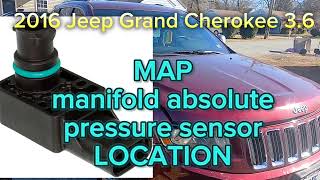
How to confirm: With the key on and engine off, use a scan tool to compare the MAP sensor reading to the BARO (barometric pressure) reading. They should be nearly identical. You can also remove 🎬 See how to diagnose and fix P0106 performance codes the sensor (it twists and pulls out on the 3.6L) and inspect it for oil fouling.
Typical fix: Replace the MAP sensor. On the 3.6L, it's a simple twist-lock part on the intake manifold. 🎬 Watch this step-by-step MAP sensor replacement for the 3.6L For the 2.0L, the T/MAP sensor may require more disassembly to access. Cleaning a lightly contaminated sensor with dedicated electronics cleaner may be a temporary fix, but replacement is recommended for reliability.
Est. part cost: $26-$143 - Vacuum Leak 🟡 Medium Probability Rubber vacuum hoses can crack, and intake gaskets can fail over time, allowing unmetered air to enter the engine, which confuses the MAP sensor.
How to confirm: Visually inspect all vacuum lines connected to the intake manifold for cracks or loose connections. A smoke test is the most effective way to find hard-to-see leaks.
Typical fix: Replace the cracked hose or leaking gasket.
Est. part cost: $5-$50 - Wiring or Connector Issue ⚪ Low Probability Engine vibration and heat can damage wiring or cause corrosion in the electrical connector for the MAP sensor. The red locking tab on the connector can become brittle.
How to confirm: Inspect the MAP sensor's connector for corrosion, moisture, or damage. Wiggle the harness while monitoring live data on a scan tool to see if the reading fluctuates. Check for continuity and proper voltage (typically a 5-volt reference) at the connector using a multimeter.
Typical fix: Clean the connector contacts or repair the damaged section of the wiring harness.
Est. part cost: $10-$100 - Failing 12V Auxiliary Battery ⚪ Low Probability The Jeep Wrangler JL platform is known for having issues with its dual-battery system. A failing auxiliary battery can cause low voltage conditions that lead to a variety of random, seemingly unrelated trouble codes, including sensor performance codes like P0106.
How to confirm: Test both the main and auxiliary 12V batteries. Many forum users report that a cluster of random codes is often the first sign of a failing battery.
Typical fix: Replace the failing auxiliary battery and/or main battery. In some cases, a "Z-fuse array" connected to the fuse box may also need replacement.
Est. part cost: $100-$400
Rare But Worth Checking
- Clogged Catalytic Converter: A severely clogged catalytic converter can create excessive backpressure in the exhaust, which can affect intake manifold pressure and trigger a P0106 code. This is usually accompanied by other codes and a severe lack of engine power.
- Faulty Powertrain Control Module (PCM): This is extremely rare. The PCM should only be considered as the culprit after all other possibilities (sensor, wiring, vacuum leaks, battery health) have been exhaustively ruled out.
- MAP Sensor Icing: → Shop Manifold Absolute Pressure Sensor In very cold climates, ice can form on the MAP sensor during long drives, causing temporary erratic readings and setting a P0106 code. A TSB for some GM vehicles with similar engines notes this possibility. The issue often resolves itself after the engine warms up and melts the ice, but the code will remain stored.
Diagnosis Steps
- Read the fault codes with an OBD-II scanner and confirm P0106 is present. Note any other codes, as a cluster of codes could point to a battery issue.
- Visually inspect the MAP sensor's electrical connector and wiring harness for any obvious damage, looseness, or corrosion.
- Remove the MAP sensor and inspect the tip for oil residue or carbon buildup, a common issue on the 3.6L engine.
- Thoroughly inspect all vacuum hoses connected to the intake manifold for cracks, brittleness, or disconnections.
- With the key on but the engine off, use a scan tool to view live data. The MAP sensor reading should be close to the barometric pressure (BARO) reading.
- Start the engine and observe the MAP sensor reading at idle (it should be low) and then snap the throttle (it should quickly rise towards the BARO reading).
- If a vacuum leak is suspected, perform a smoke test to pinpoint the source of the leak.
- Test the health of both the main and auxiliary 12V batteries, as low voltage is a known cause of multiple error codes on the JL platform.
- If wiring and batteries are good and no vacuum leaks are found, the MAP sensor itself is the most likely cause of the problem.
Parts You'll Likely Need
- Manifold Absolute Pressure (MAP) Sensor (3.6L V6)
(OEM #68371847AB (supersedes 5149174AA, 5149174AB, 68371847AA))— This is the most common failure point for a P0106 code on the 3.6L engine, often due to internal failure or oil contamination.
Trusted brands: Mopar, Bosch, Delphi, NTK
OEM price range: $60-$95
Aftermarket price range: $25-$60 - Temperature/Manifold Absolute Pressure (T/MAP) Sensor (2.0L Turbo)
(OEM #68364659AB (supersedes 68364659AA, 68428449AA))— This combined sensor provides the pressure reading for the 2.0L turbo engine. Failure or performance degradation will trigger P0106.
Trusted brands: Mopar, Bosch
OEM price range: $45-$80
Aftermarket price range: $30-$65
Related Codes That Often Appear With This One
- P0107 - Manifold Absolute Pressure/Barometric Pressure Circuit Low Input
- P0108 - Manifold Absolute Pressure/Barometric Pressure Circuit High Input
Technical Service Bulletins (TSBs) & Recalls
- 18-049-21: A TSB from Jeep for the 2020 model year with the 3.0L V6 Turbo Diesel engine lists P0106-00 - Manifold Absolute Pressure Sensor Performance as one of several codes that may be addressed by a PCM software update. While for a different engine, it shows this code is on FCA's radar for software-related fixes.
Platform-Specific Known Issues
- On the 2.0L Turbo engine, the MAP sensor is a combined temperature/pressure sensor (T/MAP) that can be more difficult to access, sometimes requiring removal of other components like the throttle body to reach it.
- The 3.6L V6 engine's PCV system design can lead to oil being drawn into the intake manifold, which can foul the MAP sensor and cause P0106. Some owners install an oil catch can to mitigate this.
- The dual-battery system in JL Wranglers is a known failure point. A dying auxiliary battery can cause widespread, intermittent electrical issues and trigger a host of DTCs, including P0106, before any obvious starting problems occur.
Mechanic-Grade Diagnostic Values
- MAP Sensor Reference Voltage — expected: 4.5 to 5.0 Volts DC. Failure: No voltage or significantly lower voltage indicates a wiring or PCM issue.
- MAP Sensor Ground Circuit — expected: Less than 100 millivolts (0.1V). Failure: Higher voltage indicates a poor ground connection, which can skew sensor readings.
- MAP Sensor Signal Voltage (Key On, Engine Off) — expected: 4.0 to 5.0 Volts. Failure: Voltage significantly lower than the reference voltage suggests a faulty sensor.
- MAP Sensor Signal Voltage (Engine at Idle) — expected: 1.0 to 2.1 Volts. Failure: Voltage that is too high (closer to KOEO reading) or does not drop when the engine starts indicates a vacuum leak or a faulty sensor.
- Manifold Absolute Pressure (Scan Tool, at Idle) — expected: Approx. 40 kPa or 6 PSI (should be a strong vacuum). Failure: A high pressure reading at idle (e.g., 85 kPa or higher) suggests a significant vacuum leak or a mechanical engine issue preventing proper vacuum from being created.
Scan Tool Commands That Help
- OBD-II Scan Tool (e.g., wiTECH, Autel, etc.): Live Data Graphing: MAP vs. BARO vs. RPM vs. Throttle Position — This is the primary diagnostic method. At KOEO, MAP and BARO should match. When starting the engine, MAP should drop sharply. When snapping the throttle, MAP should rise sharply toward the BARO value and then drop quickly as the throttle closes. Spikes, dropouts, or a lazy response on the graph indicate a problem with the sensor or its circuit.
Wiring & Ground Locations
- MAP Sensor (3.6L) — At the back of the intake manifold on the driver's side.. This is the primary component for the code. Its location makes it susceptible to heat and oil contamination from the PCV system.
- G902A / G901A — Main ground points located near the battery on the passenger side of the engine bay.. The PCM and its sensor network rely on clean, solid ground connections. A corroded or loose main ground can cause floating voltages and erratic sensor readings across the system.
- G903A / G901C — Ground points located on the transmission housing.. These are primary grounds for the powertrain harness. A fault here could directly impact the MAP sensor's ground reference provided by the PCM.
- Driver's Side Ground Stud — A ground stud is located on the driver's side of the engine bay, near the brake booster.. Provides another key grounding point for various engine bay components and harnesses. Verifying all engine bay grounds are clean and tight is a critical step in diagnosing electrical faults like P0106.
Real Owner Repair Stories
- GM Forum user (2013 Chevy Malibu 2.4L (similar engine logic)) — Hesitation, rough idle, stalling, Service ESP message, codes P0106 and P2227.
❌ Tried (didn't work) Replaced MAP sensor, Replaced intake manifold gaskets, Replaced throttle body gasket, Replaced air filter, Replaced MAF sensor, Replaced spark plugs
✅ What actually fixed it The final problem was a clogged catalytic converter and dirty O2 sensors. Adding three canisters of catalytic converter cleaner to a full tank of fuel and driving on the highway resolved the issue. - Ross-Tech Forums user (Volkswagen (specific model not mentioned)) — P0106 code and transmission going into limp mode.
❌ Tried (didn't work) Replaced N80 (purge) valve, Checked all vacuum hoses
✅ What actually fixed it Replacing the 5-year-old, weak battery. The user noted that even though running voltage seemed normal, the old battery was causing codes to be thrown. - Sea-Doo Forum user (Sea-Doo with Rotax 4-tec engine (similar MAP logic)) — P0106 code, rough idle, high idle on startup.
❌ Tried (didn't work) Replaced leaking intercooler, Replaced MAP sensor, Cleaned and inspected intake manifold
✅ What actually fixed it The issue was resolved by replacing a faulty throttle body. Even a second, used throttle body was also faulty before a known-good one fixed the problem.
"I Checked Everything" — The Actual Cause
- In one documented case on a different vehicle, after replacing multiple sensors and gaskets with no success, the P0106 was finally traced to a clogged catalytic converter. The excessive exhaust backpressure altered the intake manifold pressure enough to make the MAP sensor readings seem irrational to the PCM.
- A weak battery was found to be the root cause in another instance. Despite checking for vacuum leaks and replacing other components, the persistent P0106 code was only resolved after a new battery was installed, highlighting the sensitivity of modern vehicle electronics to stable voltage.
When the Usual Fixes Don't Work
- While the most common cause for P0106 is a faulty MAP sensor, there are numerous owner-documented cases where replacing the sensor did not fix the issue. In these instances, the problem was often found further down the diagnostic chain. One owner chased the code by replacing nearly every related sensor and gasket, only to find the true cause was a clogged catalytic converter creating abnormal intake pressure. Another owner found that a failing battery was causing the voltage-sensitive electronics to throw the P0106 code, and the problem vanished with a new battery. In a third case, after replacing the MAP sensor and checking for leaks, the final culprit was a defective throttle body, which was providing an incorrect throttle angle to the PCM, making the MAP sensor's plausible readings appear irrational. These stories highlight the importance of not stopping diagnosis at the most obvious part, and considering the entire system that the MAP sensor interacts with, including electrical supply and exhaust flow.
Helpful Videos


Used OEM Parts in Stock
New Aftermarket Parts Available


The information in this article is provided for general reference and educational purposes only. Vehicle specifications, procedures, and part compatibility can vary by production date, trim level, and region. Always consult your vehicle's factory service manual and verify part numbers before purchasing or performing repairs. Safety-critical components such as airbags, seat belts, and braking systems should be installed by a qualified professional.
- Jeep WRANGLER:
- 🧭 Diagnostic Flowchart
- 🎬 Helpful Videos
- 🛍️ Shop This Part
- What's Unique About the 2020-2020 Jeep WRANGLER
- Symptoms You May Notice
- Most Likely Causes
- Rare But Worth Checking
- Diagnosis Steps
- Parts You'll Likely Need
- Related Codes That Often Appear With This One
- Technical Service Bulletins (TSBs) & Recalls
- Platform-Specific Known Issues
- Mechanic-Grade Diagnostic Values
- Scan Tool Commands That Help
- Wiring & Ground Locations
- Real Owner Repair Stories
- "I Checked Everything" — The Actual Cause
- When the Usual Fixes Don't Work
- 🎟️ Get 5% Off