

P0106 on 2013-2018 Kia Cerato: MAP Sensor Range/Performance Causes and Fixes
On a 2013-2018 Kia Cerato, code P0106 is most often caused by a dirty electronic throttle body, not a faulty MAP sensor. Before replacing any parts, the first step should be to thoroughly clean the throttle body and perform an idle relearn procedure. This is a well-documented issue on this platform and its Hyundai counterparts.
- Start your diagnosis by cleaning the throttle body; it's the most likely fix and the cheapest.
- Do not immediately replace the MAP sensor, as it is often misdiagnosed.
- A 'Range/Performance' code often points to a mechanical issue (like airflow restriction or a vacuum leak) affecting the sensor's reading, not necessarily a faulty sensor.
- An idle relearn procedure after cleaning the throttle body or disconnecting the battery is essential to prevent the code from returning.
- Symptoms like rough idle, hesitation, and poor MPG are common and should not be ignored.
What's Unique About the 2013-2018 Kia Cerato
On many modern Kia and Hyundai vehicles, including the Cerato (and its North American counterpart, the Forte), the P0106 code is frequently triggered by a dirty electronic throttle body. Over time, carbon builds up around the throttle plate, restricting airflow at idle. The ECM compensates by opening the throttle slightly to maintain the target idle speed. However, this new, slightly open throttle angle doesn't match the expected (and still low) manifold pressure reading from the MAP sensor. The ECM sees this discrepancy between throttle angle and manifold pressure and incorrectly flags the MAP sensor's reading as a 'Range/Performance' issue. Technicians and owners often find that cleaning the throttle body and performing an idle relearn procedure resolves the code without needing to replace the MAP sensor itself.
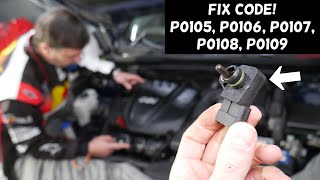
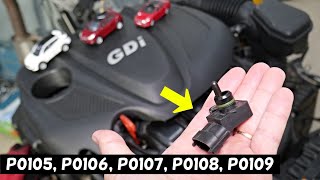
🎬 Watch: A real-world diagnosis of P0106 on a Kia Cerato.Symptoms You May Notice
- Check Engine Light is on
- Rough or unstable idle, especially with A/C on
- Engine may hesitate or stumble on acceleration
- Poor fuel economy
- Engine stalling, especially when coming to a stop
- Black smoke from the exhaust in some cases
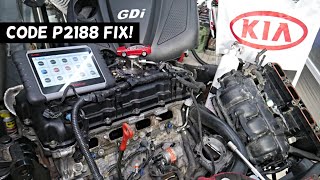
- In rare cases with an accompanying P2188 code, the engine may continue to run for a few seconds after the ignition is turned off, often caused by a faulty purge control solenoid valve. 🎬 Watch: How to fix a P2188 rich at idle condition.
- Replacing the MAP sensor before checking for and cleaning a dirty throttle body. This is the most common misdiagnosis for this code on Kia vehicles.
Most Likely Causes
- Dirty Electronic Throttle Body 🔴 High Probability → Shop Fuel Injection Throttle Body Carbon buildup is common on direct-injected and port-injected engines over time, affecting the sensitive correlation between throttle angle and manifold pressure at idle. This is a widely reported issue for this code on Kia/Hyundai vehicles.
How to confirm: Visually inspect the throttle body bore and plate for a layer of black carbon. With the engine running, use a scan tool to observe the throttle position percentage at idle. If it's higher than a few percent, it's a strong indicator that the ECM is holding it open to compensate for blockage. A technician in one video noted a change from 4.5% to 8% TPS reading at idle after cleaning.
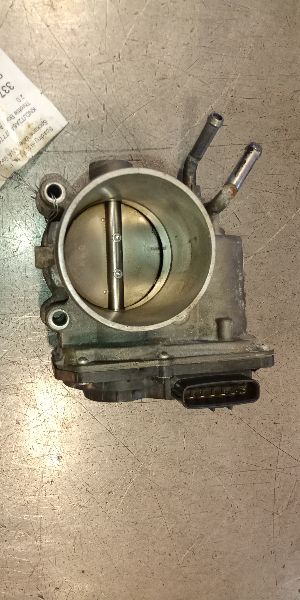
Typical fix: Remove the throttle body, clean it thoroughly on both sides with a dedicated throttle body cleaner and a soft brush, and reinstall. An idle air volume learning procedure is required afterward. This can sometimes be done by disconnecting the battery for 30+ minutes and then letting the car idle for 10-15 minutes without touching the accelerator.
Est. part cost: $5-$15 for cleaner - Faulty Manifold Absolute Pressure (MAP) Sensor 🟡 Medium Probability → Shop Manifold Absolute Pressure Sensor
How to confirm: With a scan tool, check the MAP sensor reading with the Key On, Engine Off (KOEO). It should read close to the current barometric pressure, around 4.5V. With the engine idling, the reading should be a low voltage/pressure (around 1.0V to 1.5V). As you open the throttle, the voltage/pressure should increase smoothly. If readings are erratic or do not change, the sensor is likely faulty.
Typical fix: Replace the MAP sensor. It is typically held by a single bolt and an electrical connector, located on the intake manifold.
Est. part cost: $40-$120 - Vacuum Leak ⚪ Low Probability Vacuum hoses can become brittle and crack with age and heat cycles. A common, but often overlooked, source can be a stuck-open Purge Control Solenoid Valve (PCSV), which creates a vacuum leak from the fuel tank.
How to confirm: Visually inspect all vacuum lines connected to the intake manifold for cracks or loose fittings. A smoke test is the most effective way to find a leak by forcing smoke into the intake system and watching for where it escapes. If a faulty PCSV is suspected, it can be tested for operation.
Typical fix: Replace the cracked hose, leaking gasket, or faulty PCSV.
Est. part cost: $5-$70
Rare But Worth Checking
- Clogged Catalytic Converter: A restricted exhaust can cause abnormal pressure readings in the intake manifold, which can sometimes trigger a P0106 code.
- Faulty Powertrain Control Module (PCM): This is very rare and should only be considered after all other possibilities have been exhaustively ruled out.
- Wiring Harness Issue: A damaged wire or corroded connector for the MAP sensor can cause intermittent signal problems. Check for chafing, breaks, or corrosion in the harness between the sensor and the ECM.
- Internal Engine Problems: In very rare instances, an internal mechanical issue like a valve not seating correctly can cause an internal vacuum problem, leading to a P0106 code that a smoke test would not find.
Diagnosis Steps
- Scan for any other stored trouble codes. Address those first if they are present, especially P2188 or P0068.
- Visually inspect the air intake tube and all vacuum hoses connected to the intake manifold for any obvious cracks, disconnections, or damage.
- Remove the air intake hose from the throttle body and inspect the throttle plate and bore for carbon buildup. This is a very common cause.
- If carbon is present, clean the throttle body thoroughly with appropriate cleaner and a soft brush. Reassemble.
- Perform an idle relearn procedure. Disconnect the negative battery terminal for at least 30 minutes. Reconnect, start the engine, and let it idle for 10-15 minutes without touching the accelerator pedal to allow the ECU to learn the new clean-throttle idle position.
- If the code returns, use a scan tool to monitor live data. With the Key On, Engine Off (KOEO), verify the MAP sensor reading matches the Barometric Pressure (BARO) reading.
- Start the engine. At idle, the MAP sensor reading should be low (e.g., 1.0-1.5 volts). Quickly snap the throttle open; the voltage should jump to over 4.0 volts and then return to idle values smoothly.
- If the sensor readings are illogical or do not change with engine load, inspect the MAP sensor's wiring for damage and test for proper voltage, ground, and signal at the connector.
- If wiring is good and the sensor's output is still incorrect, replace the MAP sensor.
- If the problem persists, perform a smoke test to definitively rule out any hard-to-see vacuum leaks, and consider testing the purge control solenoid valve.
Parts You'll Likely Need
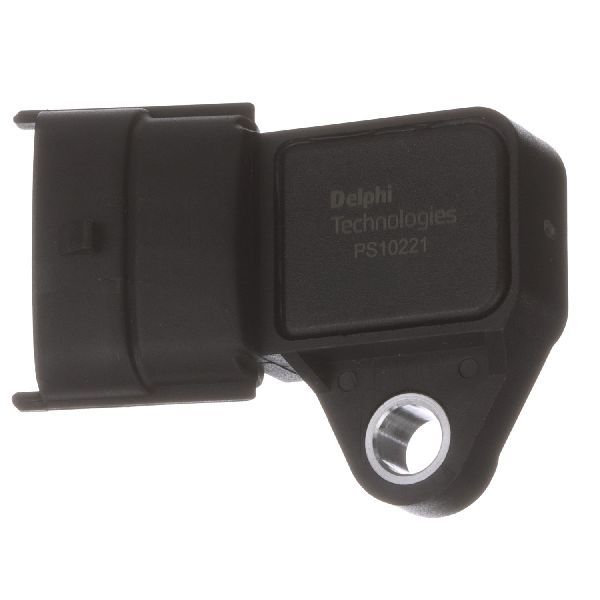
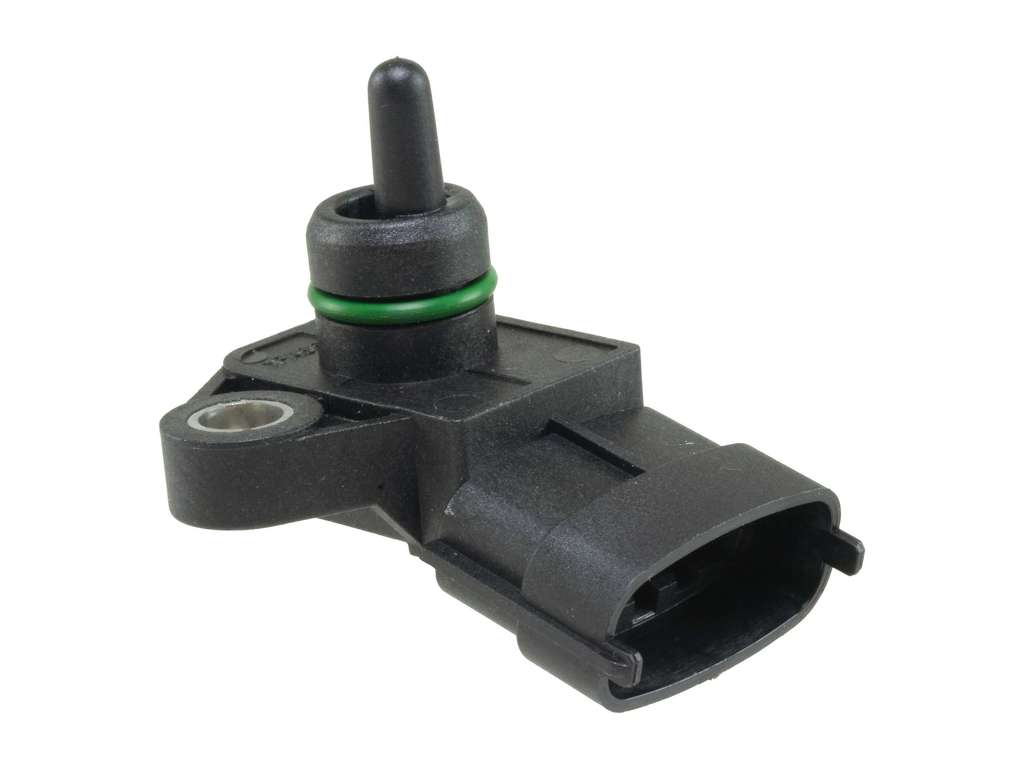
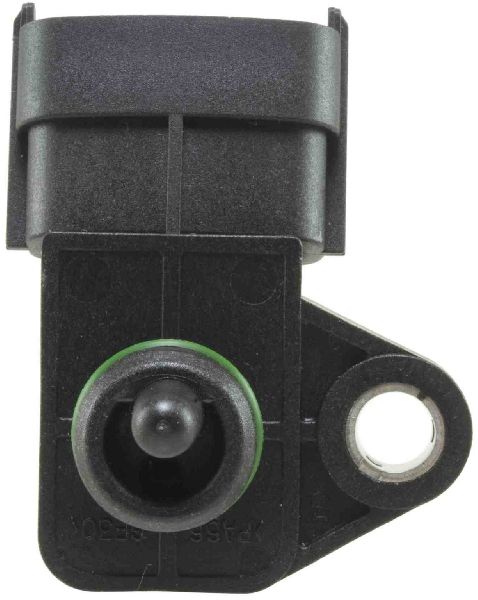
- Manifold Absolute Pressure (MAP) Sensor
(OEM #39300-2B000)— This is the second most likely part to fail after confirming the throttle body is clean. It provides the direct pressure reading to the ECM. This part number is widely used across many Kia and Hyundai models.
Trusted brands: Bosch, Delphi, Standard Motor Products, Genuine Kia
OEM price range: $80-$150
Aftermarket price range: $40-$120 - Throttle Body Cleaner — A dirty throttle body is the most common cause of P0106 on this vehicle.
Trusted brands: CRC, Permatex, Gumout
Aftermarket price range: $5-$15 - Throttle Body Gasket
(OEM #35101-2B150 (example, verify by VIN))— It is best practice to replace the gasket when removing the throttle body for cleaning to prevent vacuum leaks.
Trusted brands: Genuine Kia, Fel-Pro
OEM price range: $5-$15
Aftermarket price range: $3-$10
Related Codes That Often Appear With This One
- P2188 — This code indicates 'System Too Rich at Idle'. A dirty throttle body, faulty MAP sensor, or a stuck-open purge valve can cause incorrect fuel delivery calculations, leading to a rich condition at idle.
- P0068 — This code for 'MAP/MAF - Throttle Position Correlation' is often a companion code, especially on newer models, sometimes pointing to a needed ECU software update per a TSB.
Technical Service Bulletins (TSBs) & Recalls
- While no specific TSB for the 2013-2018 Cerato/Forte was found for P0106 alone, a TSB for the later 2019-2020 Forte (TSB_FUE047) addresses P0106, P0101, and P0068 with an ECU software update, indicating a history of software sensitivity in the platform. This bulletin specifically notes that vehicles equipped with the NU 2.0L MPI Atkinson engine may exhibit a MIL with these specific codes.
Platform-Specific Known Issues
- Idle Relearn is Critical: After cleaning the throttle body or disconnecting the battery, the ECU's learned idle strategy is lost. A P0106 code can be triggered simply because the ECU has not relearned the new airflow characteristics at idle. Performing a proper idle relearn is a critical final step.
- Purge Control Solenoid Valve (PCSV) Failure: In some cases, particularly when P0106 is paired with P2188 (System Too Rich at Idle), the cause has been identified as a faulty PCSV that is stuck open. This creates a vacuum leak that the ECM cannot account for, leading to the MAP sensor correlation error.
Mechanic-Grade Diagnostic Values
- MAP Sensor Signal Voltage (Key On, Engine Off) — expected: ~4.5 Volts DC (at sea level). Failure: Voltage is significantly different from the Barometric Pressure (BARO) sensor reading or is stuck low.
- MAP Sensor Signal Voltage (Warm Engine at Idle) — expected: 1.0V to 1.5V DC. Failure: Voltage is stuck high (closer to 5V), is erratic, or does not respond when the throttle is snapped open.
- MAP Sensor Signal Wire Resistance — expected: < 0.5 Ohms. Failure: A reading of O.L. (Over Limit) indicates an open circuit, while a reading greater than 0.5 Ohms indicates high resistance that can corrupt the signal.
Wiring & Ground Locations
- GC402 — On the left rear of the engine compartment.. This is a main ground point for the engine control system. A corroded or loose connection here can cause erratic voltage and signal fluctuations from various sensors, including the MAP sensor, leading to a P0106 code.
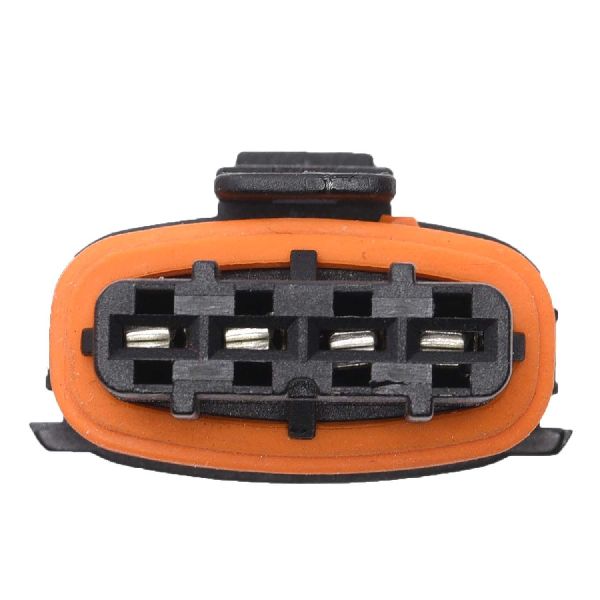
- MAP Sensor Connector — On the MAP sensor itself, which is mounted on the plastic intake manifold.. The 3-pin connector provides the sensor with 5V reference, ground, and the signal return to the ECU. Corrosion, damage, or a loose connection on these pins can directly cause P0106. On some models, the wire colors are Gray (5V ref), Orange/Black (ground), and Light Green (signal).
Real Owner Repair Stories
- The Automotive Technician (YouTube Channel) (Kia Cerato (Forte) with 2.0L engine) — Check Engine Light with code P0106.
❌ Tried (didn't work) The video specifically warns against the common misdiagnosis of immediately replacing the MAP sensor or chasing circuit faults.
✅ What actually fixed it The root cause was a dirty throttle body. Carbon buildup caused the throttle plate angle at idle to be incorrect for the airflow measured by the MAP sensor, creating a 'Range/Performance' error. The fix was to clean the throttle body thoroughly. - YouTube Mechanic Video (Hindi/Urdu) (2015 Kia Cerato (Forte)) — Check Engine Light with codes P0106 and P2188 (System Too Rich at Idle). The engine also continued to run for a few seconds after the ignition was turned off.
❌ Tried (didn't work) The video implies that mechanics often misdiagnose this combination of codes.
✅ What actually fixed it The problem was a faulty Purge Control Solenoid Valve (PCSV). The valve was stuck open, creating a constant vacuum leak from the evaporative emissions system, which led to both the MAP correlation fault and the rich idle condition. - Reddit user in /r/MechanicAdvice (Vehicle that had its battery die and was replaced.) — Check Engine Light with P0106, extremely rough idle, and stalling immediately after the new battery was installed.
❌ Tried (didn't work) Clearing the code., Disconnecting the battery again for a short period.
✅ What actually fixed it The confirmed fix was performing a throttle body cleaning and an idle relearn procedure. The loss of power from the battery replacement erased the ECU's learned idle position, and existing carbon buildup prevented it from relearning the correct idle parameters, triggering the P0106 code.
"I Checked Everything" — The Actual Cause
- A common scenario for P0106 on this vehicle is passing a smoke test (no vacuum leaks found) and having the MAP sensor test good, only for the code to persist. The actual cause is frequently a dirty throttle body. The carbon buildup restricts airflow in a way that doesn't create a traditional vacuum leak but causes the ECU to see a mismatch between the expected and actual MAP sensor readings for a given throttle angle, triggering the 'performance' code.
OEM Part Supersession History
39300-2B000→39300-2B100— Part revision or manufacturer change.
Heads up: The two part numbers are listed as interchangeable in aftermarket catalogs, suggesting they are compatible replacements for each other.
Diagnostic Flowchart
Other Known Issues on This Vehicle
Issues unrelated to this code that are worth knowing about as an owner of this generation:
- Connecting Rod Bearing Failure (Nu 2.0L GDI Engine) 🔴 High — Affects a significant number of 2012-2015 models. Failure can be premature, sometimes under 50,000 miles. Led to recalls and class-action lawsuits. (Ref: NHTSA Recall Campaign (e.g., 20V750000) and extended warranty programs (15yr/150k miles) for affected VINs.)
- Excessive Oil Consumption 🟠 Medium — Often linked to premature piston ring wear or the same issues causing bearing failure. Can become noticeable after 60,000 miles. (Ref: Related to engine recalls and warranty extensions for short block replacement.)
- Faulty Steering Coupler 🟡 Low — A very common issue where the flexible rubber coupler in the electronic power steering column disintegrates, causing a clicking or clunking noise when turning the steering wheel. Typically occurs after 50,000 miles. (Ref: Covered under an extended warranty (TSB CHA-073) in many cases. The part is inexpensive but labor can be significant.)
- Engine Stalling and Rough Idle 🟠 Medium — Can be caused by a variety of issues including ignition coil failure, fuel system problems, or the widespread engine defects.
- Transmission Issues (DCT) 🟠 Medium — Models equipped with the Dual-Clutch Transmission (DCT) can experience shuddering, hesitation, and overheating in low-speed, stop-and-go traffic. (Ref: Various software updates and component replacements have been issued to address drivability complaints.)
Used vs. New Parts: Buying Guide for This Vehicle
When a used part is the smart pick: For this repair, a used OEM MAP sensor from a low-mileage donor vehicle is a reasonable choice, as they are generally reliable electronic components. Given the primary cause is often a dirty throttle body, replacing the sensor is a secondary step, making a low-cost used part a practical diagnostic tool. A used throttle body is also a viable option if the original is damaged, provided it is thoroughly cleaned before installation.
Donor-vehicle mileage cap: roughly under 80000 miles for the part to have meaningful remaining life.
What to inspect on the donor part:
- For a MAP sensor, ensure the plastic housing is free of cracks and the connector pins are clean and straight.
- Check that the O-ring is present and pliable, though replacing it is always good practice.
- For a throttle body, inspect for any scoring or damage to the throttle bore and ensure the plate moves freely.
Aftermarket brands forum-validated for this vehicle:
- Delphi
- NGK (NTK)
- Standard Motor Products (SMP)
- Walker Products
Brands owners have reported issues with on this vehicle:
- Unbranded, no-name sensors from online marketplaces should be avoided, as their quality control and accuracy can be highly inconsistent, potentially causing new diagnostic issues.
Real Owner Stories
Aggregated from forums and TSBs cited above. Mileages and costs reflect what owners reported in those sources.
2013 Hyundai Elantra (Platform Mate)
Symptoms: The owner experienced a P0106 code immediately after cleaning the throttle body.
What fixed it: Resetting adaptation values with a scan tool to complete the idle relearn procedure.
Source hint: BobIsTheOilGuy.com - '2013 Elantra - Cleaned Throttle Body - P0106'
2013 Hyundai Elantra GT (Platform Mate) — 110000 miles
Symptoms: Intermittent P0106 code with fluctuating RPMs.
What fixed it: Cleaning the throttle body and performing an idle relearn.
Source hint: Reddit r/MechanicAdvice - 'Code p0106 keeps coming on and going off'
Hyundai (Platform Mate)
Symptoms: The car began throwing a P0106 code following a battery death.
What fixed it: Cleaning the throttle body and performing a 10-minute idle relearn.
Source hint: Reddit r/MechanicAdvice - 'Car keeps kicking out P0106 code...'
2014 Kia Optima (Related Model)
Symptoms: After an oil change and spark plug replacement, the car would not drive and triggered code P0106. The owner reported that the dealer could not immediately determine the issue (NHTSA ODI #11649485).
What fixed it: Diagnostic pending at Nalley Kia.
Related OBD-II Codes
Frequently Asked Questions
I have a 2013-2018 Kia Cerato; is there a TSB for the P0106 code?
Why does my Cerato stall when I come to a stop or turn on the A/C?
Can I fix the P0106 code on my Kia by just cleaning the throttle body?
My car stays running for a few seconds after I turn the key off. Is this related to P0106?
Is the P0106 code related to the engine recall on the 2.0L Nu engine?
How much does it cost to fix P0106 on a Kia Cerato?
Helpful Videos

Used OEM Parts in Stock
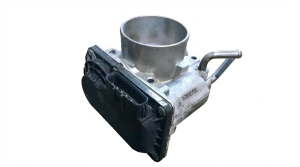
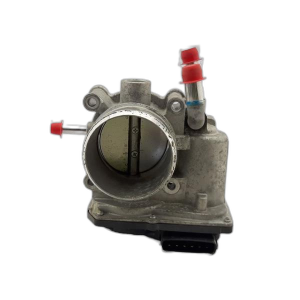
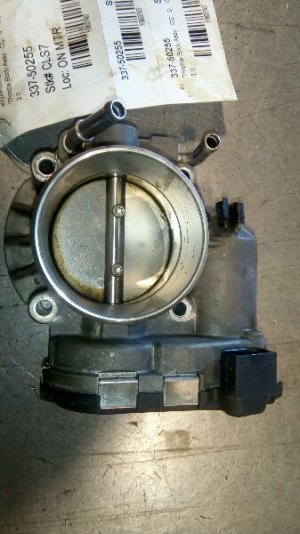
New Aftermarket Parts Available

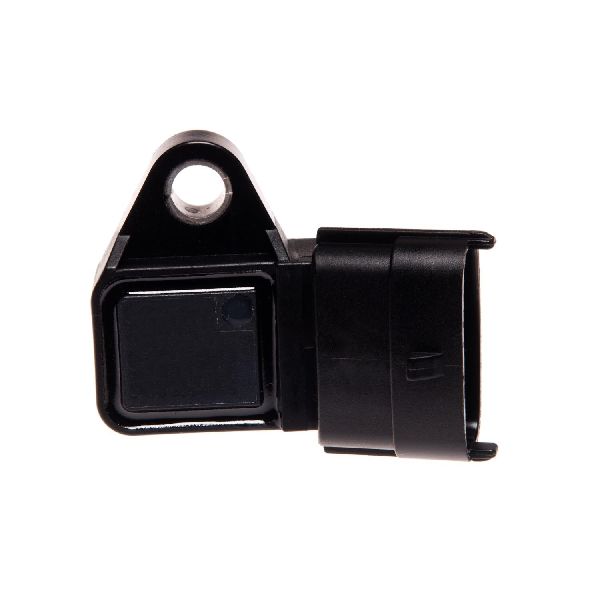

The information in this article is provided for general reference and educational purposes only. Vehicle specifications, procedures, and part compatibility can vary by production date, trim level, and region. Always consult your vehicle's factory service manual and verify part numbers before purchasing or performing repairs. Safety-critical components such as airbags, seat belts, and braking systems should be installed by a qualified professional.
- Kia Cerato:
- 🧭 Diagnostic Flowchart
- 🎬 Helpful Videos
- 🛍️ Shop This Part
- What's Unique About the 2013-2018 Kia Cerato
- Symptoms You May Notice
- Most Likely Causes
- Rare But Worth Checking
- Diagnosis Steps
- Parts You'll Likely Need
- Related Codes That Often Appear With This One
- Technical Service Bulletins (TSBs) & Recalls
- Platform-Specific Known Issues
- Mechanic-Grade Diagnostic Values
- Wiring & Ground Locations
- Real Owner Repair Stories
- "I Checked Everything" — The Actual Cause
- OEM Part Supersession History
- Other Known Issues on This Vehicle
- Used vs. New Parts: Buying Guide for This Vehicle
- Real Owner Stories
- 2013 Hyundai Elantra (Platform Mate)
- 2013 Hyundai Elantra GT (Platform Mate) — 110000 miles
- Hyundai (Platform Mate)
- 2014 Kia Optima (Related Model)
- Related OBD-II Codes
- Frequently Asked Questions
- 🎟️ Get 5% Off