

P0106 on 2004-2006 Mazda 3: MAP Sensor Causes, Symptoms, and Fixes
On a 2004-2006 Mazda 3, code P0106 is most often caused by a faulty Manifold Absolute Pressure (MAP) sensor. A Mazda Technical Service Bulletin (TSB) noted corrosion issues with the original sensor. Replacing the MAP sensor is the most common fix, costing around $40-$100 for an aftermarket part. Before replacing, check for cracked vacuum hoses and clogged manifold ports, which are also common culprits.
- For a 2004-2006 Mazda 3, P0106 is very likely a bad MAP sensor due to a known corrosion issue mentioned in a TSB.
- Before replacing the sensor, always perform a quick visual check of the vacuum hoses for obvious cracks or disconnections, as this is another common and cheaper fix.
- Check for a clogged vacuum port on the intake manifold, which can be cleaned out with a small pick or wire.
- The MAP sensor on this car is also called the 'EGR Boost Sensor' and is integral to the emissions system, so issues can sometimes be related to the EGR solenoid or associated codes like P0401.
What's Unique About the 2004-2006 Mazda 3
For the first-generation Mazda 3, this code is frequently linked to the MAP sensor itself. Mazda issued a Technical Service Bulletin (TSB) for 2004-2006 4-cylinder models, including the Mazda 3, Mazda 5, and Mazda 6, acknowledging that corrosion at the MAP sensor could cause a malfunction and trigger the P0106 code. The recommended fix was to replace the sensor with an updated part. This makes a faulty sensor a much higher probability on this platform compared to generic causes like vacuum leaks, although those should still be checked as they are also common.
Symptoms You May Notice
- Check Engine Light is on
- Rough or erratic idle, sometimes surging or dropping low
- Engine stalling, especially at idle or when coming to a stop
- Hesitation or lack of power during acceleration
- Poor fuel economy
- Black smoke from the exhaust, indicating a rich fuel mixture
- Difficulty starting the engine
- Engine misfires at highway speeds
- Replacing the Mass Airflow (MAF) sensor. The P0106 code is for the MAP (pressure) sensor, not the MAF (airflow) sensor.
- Replacing the EGR valve without checking the MAP sensor, vacuum lines, or solenoid first. The code often points to the sensor circuit that *monitors* the EGR, not the valve itself.
Most Likely Causes
- Faulty Manifold Absolute Pressure (MAP) Sensor 🔴 High Probability → Shop Manifold Absolute Pressure Sensor A Mazda TSB specifically identified corrosion as a common failure point for the original MAP sensor on this model, recommending replacement with an updated part. The sensor can also become contaminated with oil or carbon buildup.
How to confirm: After checking for vacuum leaks and wiring issues, test the sensor's voltage output. With the key on and engine off (KOEO), the signal voltage should be around 4.0-4.9V. At idle, it should drop to 1.0-2.0V. If the voltage is stuck, erratic, or doesn't change when applying vacuum with a hand pump, the sensor is bad.
Typical fix: Replace the MAP sensor. It is typically located on a bracket in the rear passenger-side corner of the engine bay. Cleaning the sensor with electrical parts cleaner is sometimes effective if the issue is contamination, but replacement is often necessary due to the corrosion issue.
Est. part cost: $40 - $100 - Vacuum Leak 🟡 Medium Probability The vacuum hoses connected to the MAP sensor and its associated EGR boost solenoid can become brittle, cracked, or clogged with carbon over time. A leak in the intake manifold gasket has also been reported by owners as a cause.
How to confirm: Visually inspect all vacuum lines connected to the MAP sensor, EGR boost solenoid, and intake manifold for cracks or disconnections. Listen for a hissing sound at idle. A smoke test is the most definitive way to find small leaks. You can also spray brake cleaner around suspected areas; a change in engine idle indicates a leak.
Typical fix: Replace the damaged or clogged vacuum hose(s) or the intake manifold gasket.
Est. part cost: $5 - $30 - Clogged Intake Manifold Port ⚪ Low Probability → Shop Engine Intake Manifold The small port on the intake manifold that supplies vacuum to the MAP sensor system can become clogged with carbon deposits, especially on cars that use the MAP sensor to monitor EGR function.
How to confirm: Disconnect the vacuum line from the intake manifold port and check for strong vacuum with the engine running. If vacuum is weak or absent, the port is likely clogged.
Typical fix: Carefully clean the port using a small drill bit (turned by hand), a pick, or a stiff wire to remove the carbon blockage.
Est. part cost: $0 - Wiring or Connector Issue ⚪ Low Probability The wiring harness near the engine can become brittle from heat, and the connector pins for the MAP sensor can corrode or become loose.
How to confirm: Inspect the MAP sensor's 3-wire electrical connector for corrosion, moisture, or loose pins. Check for a stable 5V reference signal and a good ground at the connector with a multimeter. Wiggle the harness while monitoring sensor voltage to check for intermittent opens or shorts.
Typical fix: Clean the connector terminals with electrical contact cleaner or repair the damaged section of the wiring harness.
Est. part cost: $10 - $50
Rare But Worth Checking
- Faulty EGR Boost Sensor Solenoid: The MAP sensor on this vehicle is used to monitor EGR system performance. The solenoid that controls vacuum to the sensor can fail, causing a P0106 code even if the sensor itself is good. It can be tested by applying power and ground with jumper wires to see if it 'clicks' and allows vacuum to pass through.
- Dirty or Faulty Throttle Body: → Shop Fuel Injection Throttle Body A throttle body heavily coated in carbon can restrict airflow, creating a higher-than-normal vacuum reading that mismatches the throttle position, potentially triggering a P0106 code even with a good MAP sensor.
- Faulty Powertrain Control Module (PCM): This is extremely rare. All other possibilities, including wiring, sensors, and vacuum systems, must be exhaustively ruled out before considering the PCM as the cause.
Diagnosis Steps
- Retrieve the P0106 code with an OBD-II scanner and check for any other stored codes, like P0401.
- Perform a thorough visual inspection. Locate the MAP sensor and its associated solenoid, usually on a bracket in the right rear of the engine compartment.
- Check all vacuum hoses connected to the sensor, solenoid, and intake manifold for cracks, brittleness, or loose connections. Pay close attention to the small rubber lines.
- With the engine running at idle, disconnect the vacuum line at the intake manifold port that feeds the sensor system. Check for strong vacuum. If it's weak or absent, the port is likely clogged with carbon and needs to be cleaned out with a small pick or drill bit (by hand).
- Inspect the electrical connector on the MAP sensor for corrosion, moisture, or damaged pins. Ensure it is seated firmly.
- Use a scan tool to view live data. With the Key On, Engine Off (KOEO), the MAP sensor reading should be close to the BARO (barometric pressure) reading. At idle, it should drop significantly (e.g., to around 1-2 volts or 15-20 inHg).
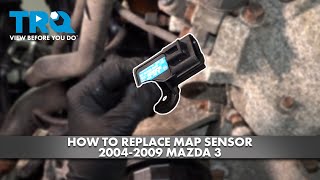
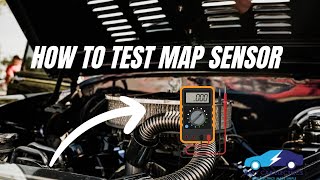
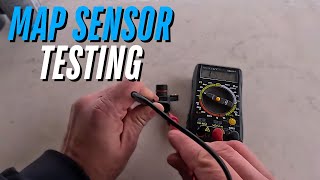
- For advanced diagnosis, use a multimeter to test the sensor. Backprobe the signal wire. 🎬 See how to test the sensor using a multimeter or scanner. You should see ~4.5V at KOEO, which drops to ~1-2V at idle. If the voltage is out of range or doesn't change, the sensor is the primary suspect, especially given the known TSB.
- After any repair, clear the code with the scanner, let the ECU relearn by idling for several minutes, and perform a test drive to confirm the fix.
Parts You'll Likely Need
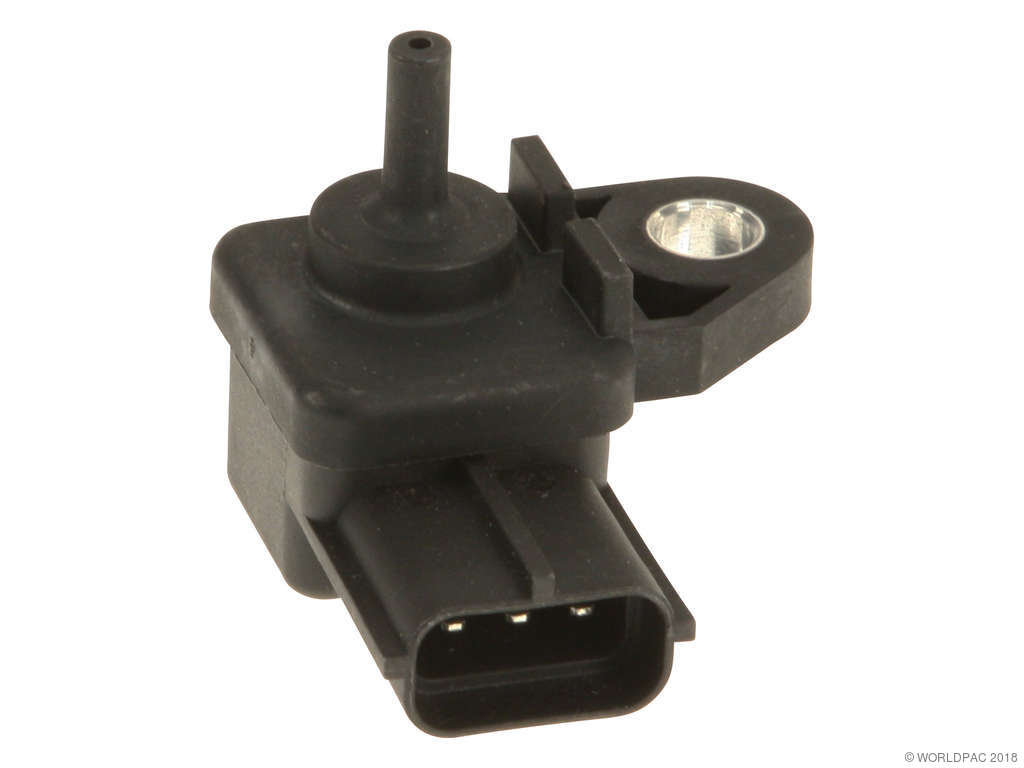
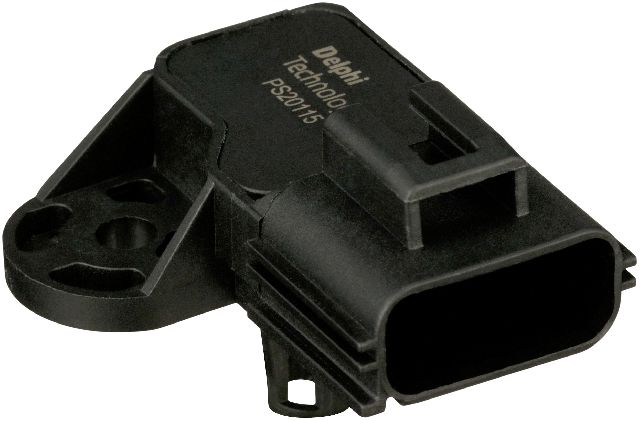
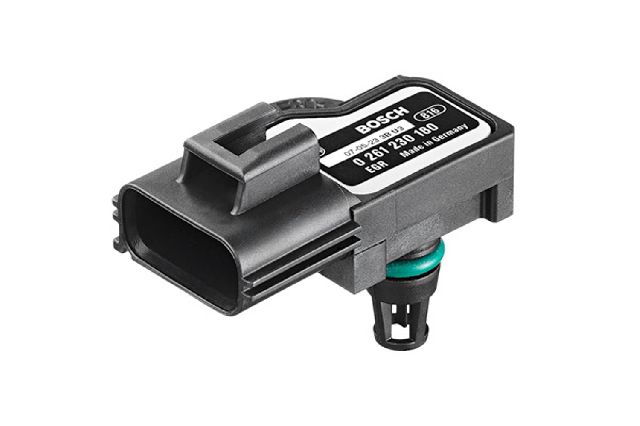
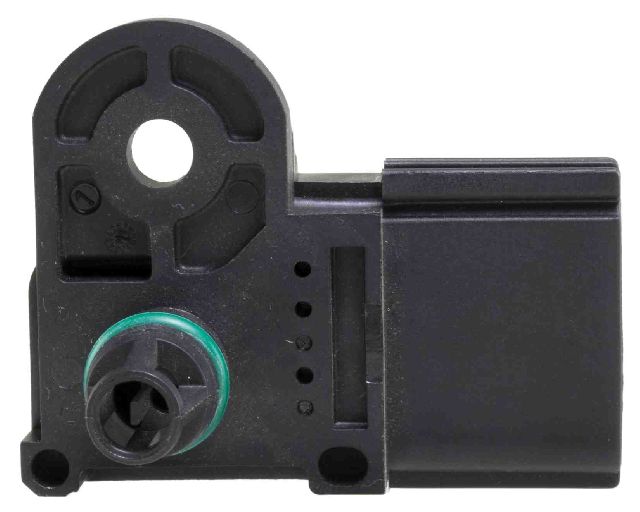
- Manifold Absolute Pressure (MAP) Sensor
(OEM #BP4W-18-211)— This is the most common failure part for a P0106 code on this vehicle, as documented by a Mazda TSB for corrosion issues.
Trusted brands: Denso, Bosch, Standard Motor Products (AS149), Hitachi (PRS0015), SKP (SKAS149)
OEM price range: $120-$180
Aftermarket price range: $35-$100
Related Codes That Often Appear With This One
- P0401 (Exhaust Gas Recirculation Flow Insufficient Detected): This can appear alongside P0106 because the MAP sensor is used to check EGR operation. A clogged EGR port or faulty component in the system can trigger both codes.
Technical Service Bulletins (TSBs) & Recalls
- A TSB is cited by Samarins.com for 2004-2006 Mazda 3, 2006 Mazda 5, 2006 MX-5, and 2003-2006 Mazda 6 4-cylinder models, indicating corrosion at the MAP sensor can cause code P0106. The fix is to replace the sensor.
Platform-Specific Known Issues
- A Mazda Technical Service Bulletin (TSB) was issued for 2004-2006 Mazda 3 models (as well as the Mazda 5, 6, and MX-5) with the 4-cylinder engine regarding code P0106. The bulletin points to corrosion at the MAP sensor as the cause and advises replacement with an updated part.
Mechanic-Grade Diagnostic Values
- MAP Sensor Signal Voltage (KOEO) — expected: 4.0V - 4.9V. Failure: Voltage outside this range indicates a sensor or wiring issue.
- MAP Sensor Signal Voltage (Hot Idle) — expected: 1.0V - 2.0V. Failure: Voltage significantly higher or lower suggests a vacuum leak, clogged port, or faulty sensor.
- MAP Sensor 5V Reference Wire — expected: 4.8V - 5.2V (Constant). Failure: No voltage or fluctuating voltage points to a PCM or wiring fault.
- MAP Sensor Ground Wire Resistance — expected: < 0.10 Ohms to chassis ground. Failure: Higher resistance indicates a poor ground, which can cause incorrect sensor readings.
- MAP Sensor Frequency (KOEO, at sea level) — expected: ~150-160 Hz (Varies by specific sensor brand). Failure: A significantly different reading, like 86 Hz, can indicate a faulty sensor even if voltage seems to respond.
- MAP Sensor Frequency (at ~20 inHg vacuum) — expected: ~90-100 Hz (Varies by specific sensor brand). Failure: Frequency does not drop with applied vacuum, indicating a failed sensor.
Scan Tool Commands That Help
- Mazda IDS (or equivalent professional scanner): Live Data Monitoring (MAP PID) — Use this to compare the MAP sensor reading (in kPa or inHg) with the Barometric Pressure (BARO) sensor reading at KOEO. They should be nearly identical. At idle, the MAP reading should drop significantly. This is a primary check before any physical inspection.
- Mazda IDS (or equivalent professional scanner): EGR Valve Command — Since the MAP sensor monitors EGR function on this car, you can command the EGR valve open while monitoring MAP sensor voltage. A functioning system will show a corresponding change in MAP readings. If the MAP reading doesn't change, it points to a clog in the EGR system or a faulty MAP/solenoid circuit.
Wiring & Ground Locations
- MAP Sensor Connector — On the MAP sensor itself, located on a bracket in the rear passenger-side of the engine bay, often below the intake manifold runner.. This 3 or 4-pin connector is a common point of failure due to corrosion or loose pins, directly causing P0106. Aftermarket pigtails like Dorman 645-787 or Standard Motor Products S2894 are available for repair.
- PCM Connector (MAP Sensor Pins) — The Powertrain Control Module is located in the engine bay. Specific pin numbers vary by year and engine, but a wiring diagram is required to test for continuity between the MAP sensor connector and the PCM pins for the 5V reference, signal, and ground wires.. To rule out a wiring break between the sensor and the computer. If voltage is good at the PCM but not at the sensor, there is a break in the wire. If voltage is bad at the PCM, the PCM itself may be the issue.
Real Owner Repair Stories
- Miata Turbo Forum user 'falcon punch' (1999 Mazda Miata (shares a similar EGR/MAP monitoring system)) — Persistent P0106 code after an engine swap.
❌ Tried (didn't work) Checking all vacuum line routing., Cleaning the intake plenum and throttle body., Cleaning electrical connectors for the EGR valve, boost solenoid, and Baro sensor., Temporarily removing the vent cap/filter from the EGR boost solenoid.
✅ What actually fixed it The user did not post a final resolution, but another user strongly suggested cleaning or replacing the EGR boost solenoid itself, as this was a common failure point causing the P0106 code on that platform when the sensor and wiring checked out. - YouTube video by 'WrenchTheory501' (2005 Mazda 3) — Check Engine Light with code P0106.
❌ Tried (didn't work) Initial diagnosis pointed directly to the sensor.
✅ What actually fixed it Replacing the MAP sensor. The video provides a detailed walkthrough showing the sensor's difficult-to-reach location and the T25 Torx screw holding it in place.
"I Checked Everything" — The Actual Cause
- In many cases on Mazda platforms that use the MAP sensor to monitor the EGR system (like the Protege, Miata, and early 3), a smoke test will show no vacuum leaks, yet the P0106 code persists. The actual cause is often a tiny, clogged filter on the EGR boost sensor solenoid or a clogged vacuum port on the intake manifold that a smoke test cannot reveal. The solenoid fails to vent properly, trapping vacuum and making the PCM believe the MAP sensor reading is irrational.
OEM Part Supersession History
BP4W-18-211→BP4W-18-211A (or later revisions)— The original sensor was prone to internal corrosion, as noted in a Mazda TSB. The updated part has improved sealing or materials to prevent this failure mode.
Heads up: While older parts may physically fit, they are prone to the original corrosion issue and should be avoided. Always use the latest revision available from Mazda or a quality aftermarket equivalent.
Model Year Variations Within This Range
- 2004-2005 vs 2006: While the P0106 issue is common across the 2004-2006 range, the 2006 model received some minor updates as part of a mid-cycle refresh. This included changes to the A/C system's thermal expansion valve and interior trim pieces like an auxiliary audio port. While the core engine and MAP sensor system remained the same, it's possible there were minor wiring harness or PCM software updates. However, no sources indicate these changes directly affected the cause or diagnosis of P0106.
Diagnostic Flowchart
Real Owner Stories
Aggregated from forums and TSBs cited above. Mileages and costs reflect what owners reported in those sources.
2005 Mazda 3 s 2.3 liter — 122000 miles
Symptoms: Check engine light and battery light came on after a clutch replacement. The car drove perfectly fine but had a rare, slight idle bounce. Codes P0106 and P0421 were retrieved.
What fixed it: The owner was seeking diagnostic advice; a specific fix was not detailed in the initial report.
Source hint: Reddit r/MechanicAdvice owner report
Mazda 4-cylinder (MZR)
Symptoms: P0106 code triggered by a grime-caked MAP sensor.
What fixed it: Cleaning the Mitsubishi-manufactured MAP sensor was noted as the common first step, though the user acknowledged replacement is sometimes necessary.
Source hint: Reddit r/MechanicAdvice thread titled 'P0106_p0302_mazda'
2000 and later Mazda MPV / Mazda 3
Symptoms: P0106 code caused by issues in the vacuum system relating to the MAP/BARO sensor and EGR boost solenoid.
What fixed it: Diagnosing the vacuum system step-by-step and addressing clogged vacuum ports.
Source hint: Mazda Forum post by 'babyhuey' titled 'P0106 on 2000 and later MPV'
Related OBD-II Codes
Frequently Asked Questions
Is there a TSB for code P0106 on the 2004-2006 Mazda 3?
Where is the MAP sensor located on the 2004-2006 Mazda 3?
Can I just clean the MAP sensor instead of replacing it?
How do I test the MAP sensor voltage on my Mazda 3?
What else should I check if the MAP sensor and vacuum hoses are fine?
Helpful Videos
We Have This Part in Stock


The information in this article is provided for general reference and educational purposes only. Vehicle specifications, procedures, and part compatibility can vary by production date, trim level, and region. Always consult your vehicle's factory service manual and verify part numbers before purchasing or performing repairs. Safety-critical components such as airbags, seat belts, and braking systems should be installed by a qualified professional.
- Mazda 3:
- 🧭 Diagnostic Flowchart
- 🎬 Helpful Videos
- 🛍️ Shop This Part
- What's Unique About the 2004-2006 Mazda 3
- Symptoms You May Notice
- Most Likely Causes
- Rare But Worth Checking
- Diagnosis Steps
- Parts You'll Likely Need
- Related Codes That Often Appear With This One
- Technical Service Bulletins (TSBs) & Recalls
- Platform-Specific Known Issues
- Mechanic-Grade Diagnostic Values
- Scan Tool Commands That Help
- Wiring & Ground Locations
- Real Owner Repair Stories
- "I Checked Everything" — The Actual Cause
- OEM Part Supersession History
- Model Year Variations Within This Range
- Real Owner Stories
- 2005 Mazda 3 s 2.3 liter — 122000 miles
- Mazda 4-cylinder (MZR)
- 2000 and later Mazda MPV / Mazda 3
- Related OBD-II Codes
- Frequently Asked Questions
- 🎟️ Get 5% Off