

P0106 on 1999-2003 Mazda Protege: BARO Circuit Causes and Fixes
On a 1999-2003 Mazda Protege, code P0106 is most often caused by a clogged vacuum port on the intake manifold or a cracked vacuum hose leading to the EGR boost sensor and solenoid. Cleaning the port and replacing the hoses is a common, low-cost fix, often costing under $20 for parts. This should be the first diagnostic step before replacing any sensors.
- Do not immediately replace the MAP sensor. The problem is most likely in the vacuum system.
- The highest probability cause is a clogged vacuum port on the intake manifold where the hose for the EGR boost solenoid connects.
- Thoroughly inspect all small vacuum hoses on the passenger-side firewall for cracks; they are a frequent point of failure.
- Testing the solenoid with a 12V source is a quick way to rule it out before moving to more complex diagnostics.
- This code is specifically for a BARO/MAP sensor check related to the EGR system, not a general MAP sensor performance issue.
What's Unique About the 1999-2003 Mazda Protege
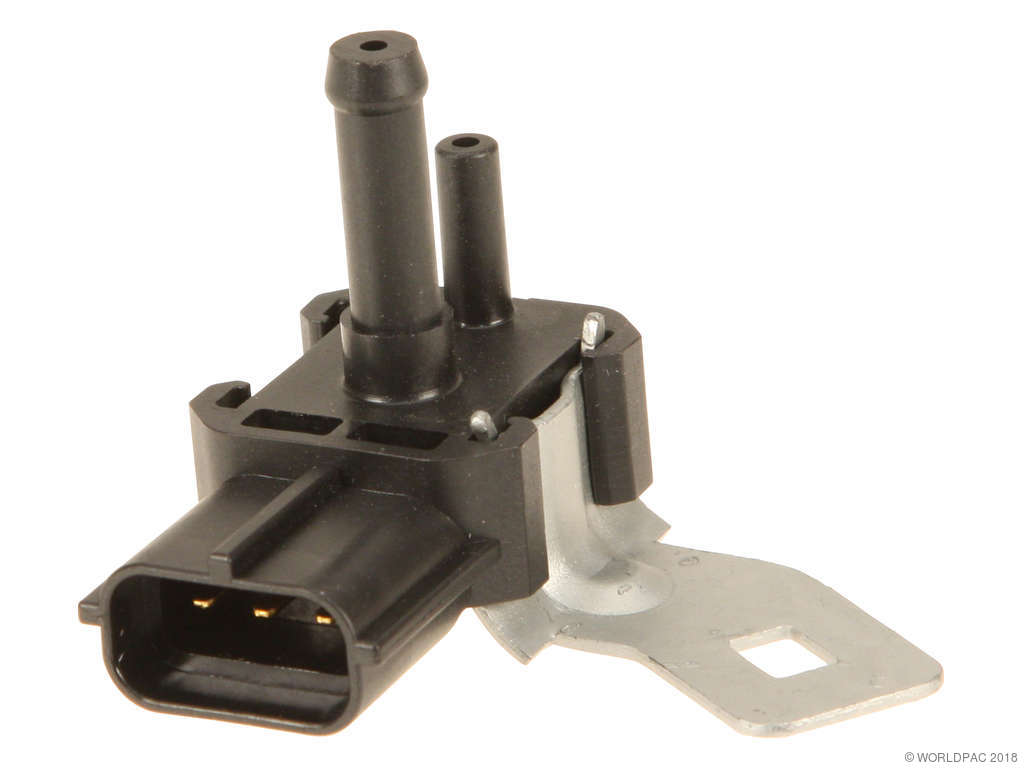
Unlike many vehicles where P0106 is a straightforward MAP sensor failure, on the 3rd generation Protege, the code is specifically tied to a diagnostic routine for the EGR system. The MAP sensor is repurposed as an "EGR Boost Sensor" for this check. The most frequent point of failure is not the sensor itself, but the vacuum supply to it, either from a small, easily clogged port on the intake manifold or brittle vacuum lines that crack with age. This makes checking the vacuum system the critical first step before replacing any electronic parts.
Symptoms You May Notice
- Rough or lumpy idle
- Hesitation or stumbling during acceleration
- Engine stalling at stop lights
- Poor fuel economy
- Black smoke from the exhaust
- Check Engine Light is on
- Difficulty starting the engine
- Replacing the MAP sensor first without testing the vacuum supply. The most common issue is a lack of vacuum due to a clogged port or leaking hose, not a failed sensor.
- Confusing the Mass Air Flow (MAF) sensor on the air intake tube with the Manifold Absolute Pressure (MAP) sensor on the firewall. They are different sensors with different functions.
Most Likely Causes
- Clogged vacuum port on intake manifold 🔴 High Probability → Shop Engine Intake Manifold The vacuum port for the EGR boost solenoid is small and located near the EGR valve, making it highly susceptible to clogging with carbon deposits over time. This is a very common failure point noted repeatedly in owner forums.
How to confirm: Disconnect the main vacuum hose from the EGR boost solenoid with the engine idling. Use a vacuum gauge to check for strong vacuum (approx. 20 inHg). If vacuum is weak or absent, the port is clogged. You can also visually inspect the port after removing the throttle body.
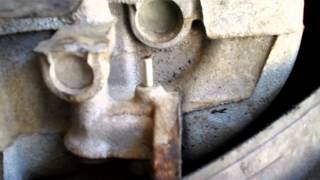
Typical fix: Remove the throttle body for access and use a small drill bit (turned by hand, not in a drill), a pick, and carburetor cleaner to carefully clean out the carbon from the port in the intake manifold. Some owners have had success using a piece of oil pressure gauge tubing attached to a can of cleaner to direct the spray.
Est. part cost: $5-$15 for cleaner and gaskets - Cracked, brittle, or leaking vacuum hoses 🔴 High Probability → Shop Vacuum Hose The rubber vacuum hoses in the engine bay become hard and brittle with age and constant heat cycles, leading to cracks and vacuum leaks that are sometimes not visible without bending the hose.
How to confirm: Visually inspect the vacuum lines running from the intake manifold to the EGR boost solenoid, and from the solenoid to the EGR boost sensor. Bend the hoses to reveal hidden cracks. A smoke test is the most definitive way to find leaks if they are not obvious.
Typical fix: Replace all related vacuum hoses with new ones. This is inexpensive and recommended as preventative maintenance. Take photos of the routing before disassembly.
Est. part cost: $5-$20 - Faulty EGR Boost Sensor Solenoid 🟡 Medium Probability
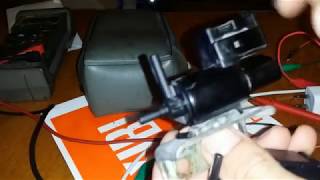
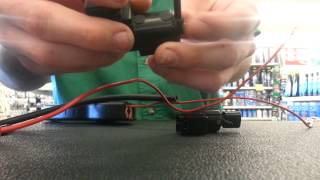
How to confirm: With the engine off, apply 12V power and a ground to the two pins on the solenoid. It should make an audible 'click'. You can also test if it holds vacuum when de-energized and passes vacuum when energized by blowing through the ports. A faulty solenoid may not click. 🎬 Watch: How to test your EGR solenoid for a click
Typical fix: Replace the EGR boost solenoid. It is mounted on the same bracket as the MAP sensor on the passenger-side firewall.
Est. part cost: $40-$100 - Faulty EGR Boost Sensor (MAP Sensor) ⚪ Low Probability
How to confirm: With the key on and engine off, backprobe the sensor connector. You should find a 5V reference wire, a ground wire, and a signal wire. With a vacuum pump applied to the sensor, the signal voltage should drop smoothly from its atmospheric reading (approx. 4.5V) towards 1.0-1.5V at idle vacuum. If the voltage doesn't change or is erratic, the sensor is likely bad.
Typical fix: Replace the MAP sensor. It is often recommended to try cleaning the sensor port with electrical contact cleaner first, though this is less likely to be the root cause than the vacuum supply issues.
Est. part cost: $50-$150
Rare But Worth Checking
- Leaking intake manifold gasket: → Shop Engine Intake Manifold A significant vacuum leak from a bad intake manifold gasket can disrupt the pressure readings enough to trigger this code. This was noted in a forum post as a possible cause.
- Faulty Powertrain Control Module (PCM): This is extremely rare and should only be considered after all other possibilities, including wiring faults, have been exhaustively ruled out.
- Loose or corroded electrical connectors: A user on Mazdas247.com chased the P0106 code after replacing many parts, only to find the ultimate fix was to bend the pins in the wiring harness connectors for a tighter fit, resolving an intermittent connection.
Diagnosis Steps
- Read the code with an OBD-II scanner and check for any other stored codes, especially P0171, P0401, or P1487.
- Visually inspect all vacuum hoses connected to the EGR boost sensor and solenoid on the passenger-side firewall. Bend them to check for hidden cracks. Pay close attention to the hose from the intake manifold.
- With the engine at idle, disconnect the vacuum hose coming from the intake manifold to the EGR boost solenoid. Test for strong, steady vacuum with a gauge. Expect around 18-21 inHg.
- If vacuum is weak or absent, the port on the intake manifold is clogged. Turn off the engine, remove the throttle body for access, and clean the port thoroughly using a pick, small drill bit (by hand), and carburetor cleaner.
- If vacuum is strong, reconnect the hose and test the solenoid. Disconnect the electrical connector and apply 12V power to the two pins. The solenoid should 'click' audibly. Test that it passes vacuum only when energized. 🎬 Watch this guide on testing Mazda vacuum solenoids
- If the solenoid works, test the sensor itself. Use a multimeter to verify 5V reference and good ground at the connector with the key on. Then, with the sensor plugged in, backprobe the signal wire. Use a hand vacuum pump to apply vacuum to the sensor and verify the voltage signal changes smoothly from ~4.5V (no vacuum) toward ~1.5V (idle vacuum).
- If the sensor does not respond to vacuum, replace the EGR Boost Sensor (MAP sensor).
- If all components test good, check for wiring damage between the components and the PCM. Check for loose or corroded pins in the connectors.
Parts You'll Likely Need
- Vacuum Hose — The original rubber hoses become brittle and are the most common failure point leading to this code. Often sold by the foot from auto parts stores.
OEM price range: $5-$20
Aftermarket price range: $5-$15 - EGR Boost Sensor Solenoid
(OEM #KL01-18-741)— This solenoid controls the vacuum applied to the sensor during the PCM's diagnostic test and can fail electrically or mechanically. The OEM part is also used on the Mazda 626, RX-8, and Millenia.
Trusted brands: Dorman, Standard Motor Products (e.g., VS55), Kasruing
OEM price range: $90-$130
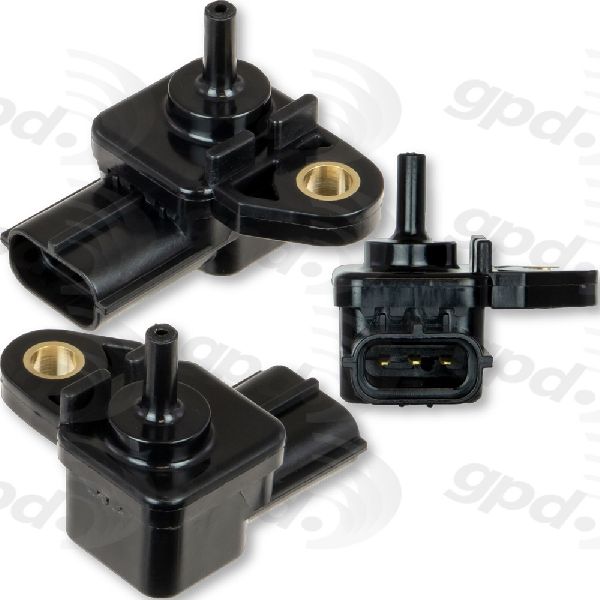
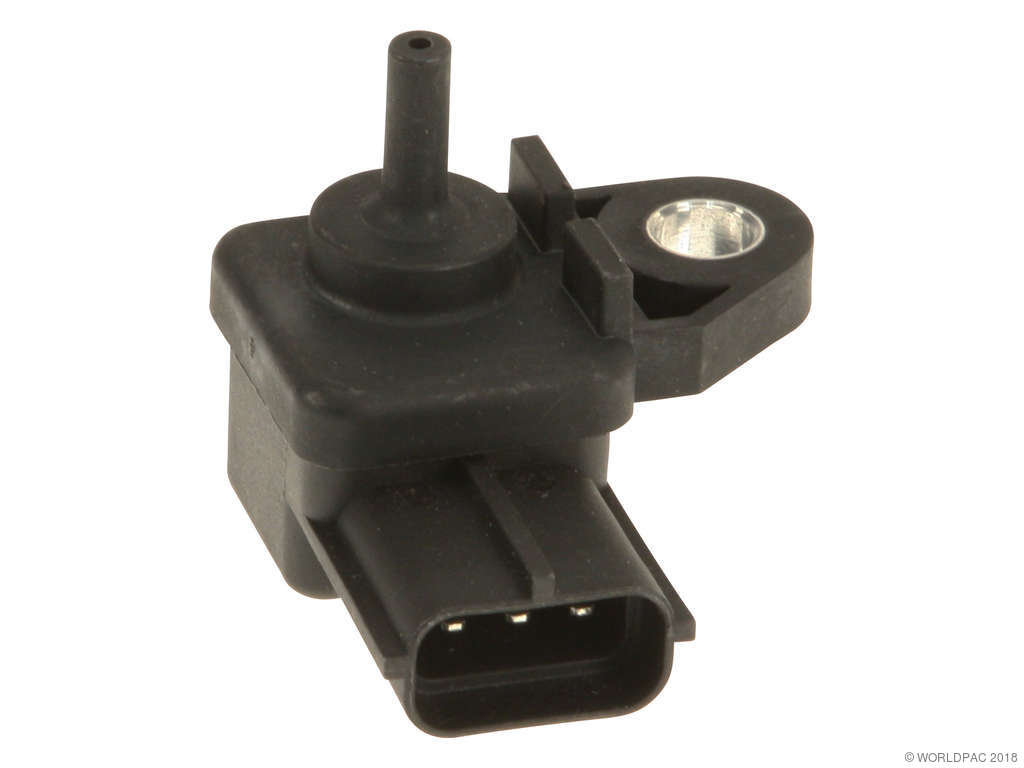
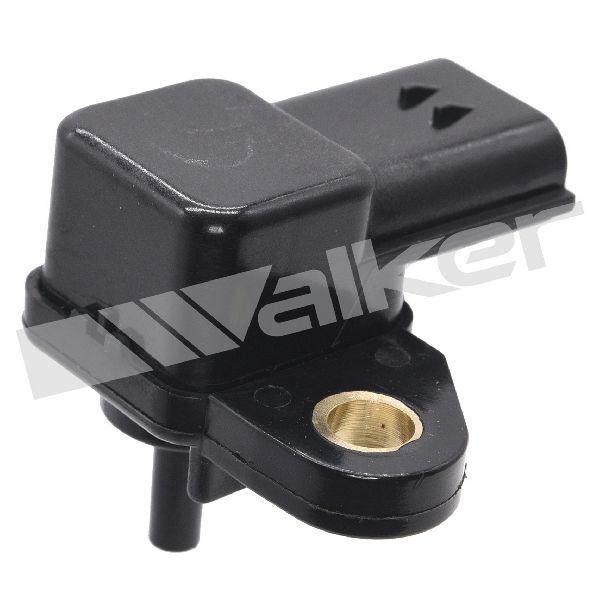
Aftermarket price range: $30-$80 - EGR Boost Sensor (MAP Sensor)
(OEM #Z501-18-211)— While less common than vacuum issues, the sensor itself can fail and stop responding to pressure changes. The part is sometimes labeled as a 'Hitachi Boost Sensor'.
Trusted brands: NGK, Hitachi, Spectra Premium, Autopart Premium
OEM price range: $100-$180
Aftermarket price range: $50-$120
Related Codes That Often Appear With This One
- P0171 — A System Too Lean (Bank 1) code can be caused by the same vacuum leaks (cracked hoses, intake gasket) that trigger P0106.
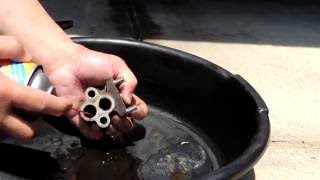
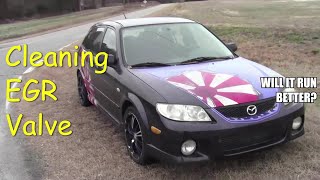
- P0401 — An Exhaust Gas Recirculation (EGR) Flow Insufficient code can be related, as the P0106 test is designed to monitor the EGR system's effect on manifold pressure. A clogged EGR port can cause both codes. 🎬 See how to clean a clogged EGR valve and ports
- P1487 — This Mazda-specific code for 'EGR Boost Sensor Solenoid Valve Circuit Malfunction' points directly to an electrical fault with the same solenoid involved in the P0106 test. If P1487 is present, diagnose it first.
- P0300/P030x — Random or specific cylinder misfire codes can occur due to the rough running conditions caused by the vacuum leaks or incorrect air/fuel mixture associated with P0106.
Technical Service Bulletins (TSBs) & Recalls
- While no TSB was found specifically for the 1999-2003 Protege and P0106, a TSB for later model Mazdas (2003-2006 Mazda 6, 2004-2006 Mazda 3) mentions corrosion at the MAP sensor causing P0106 and recommends replacement with an updated part. This suggests a history of MAP sensor issues in Mazda vehicles of this era.
- A Volkswagen TSB (V011423) for P0106 on 2011-2014 models notes that the monitoring strategy for the MAP sensor was too sensitive and required a software update. This is not applicable to the Protege but shows how P0106 can sometimes be a software issue.
Platform-Specific Known Issues
- A user on Mazdas247.net reported a very difficult-to-diagnose case where, after replacing the MAP, EGR solenoid, EGR valve, and head gasket, the P0106 code persisted. The final solution was discovered to be loose electrical pins in the wiring harness connectors, which required manually bending them for a tighter fit.
Mechanic-Grade Diagnostic Values
- MAP Sensor Signal Voltage (KOEO) — expected: ~4.5 Volts. Failure: Significantly lower or no voltage.
- MAP Sensor Signal Voltage at Idle — expected: 1.0 - 1.5 Volts. Failure: Voltage remains high (near 4.5V) or does not drop significantly when the engine is started.
- MAP Sensor Signal Voltage during Solenoid Test (Idle) — expected: ~1.1 Volts. Failure: Voltage does not drop to this level when the solenoid is manually activated, indicating a bad sensor or solenoid.
- EGR Boost Sensor Solenoid Coil Resistance — expected: ~37 Ohms. Failure: A reading of 0 ohms (short circuit) or infinite/mega-ohms (open circuit) indicates a failed solenoid.
- Scan Tool BARO PID (at sea level) — expected: 99 - 103 kPa or 29 - 30 inHg. Failure: Reading is significantly different from the local atmospheric pressure, suggesting a faulty sensor.
Scan Tool Commands That Help
- Manual / Power Probe: Manually Energize EGR Boost Solenoid — This is a manual bidirectional test to confirm the solenoid clicks and passes vacuum when 12V is applied. It verifies the solenoid's mechanical function, which is a critical step if vacuum is present at the solenoid's input but not at its output to the MAP sensor.
Wiring & Ground Locations
- Engine Bay Ground Path — A key ground path runs from the body on the passenger side near the power steering reservoir, to a motor mount stud, to a valve cover bolt on the rear passenger side, to the intake manifold, and finally to the negative battery terminal area.. The MAP sensor and its associated solenoid rely on a clean ground path to the PCM. Corrosion or looseness at any of these points can introduce electrical noise or voltage drops, causing erratic sensor readings and triggering P0106.
- MAP Sensor PCM Pin — The BARO/MAP sensor signal is an input to the PCM. While the exact pin number varies by year and engine, it is identified in service data as the 'BARO' input.. When diagnosing a persistent P0106 with a known-good sensor, checking for continuity and voltage directly at the PCM pin for the MAP sensor signal is the definitive way to rule out a wiring harness break or short.
Real Owner Repair Stories
- Mazdas247.com user 'Scottyk7' (2001 Mazda Protege LX 1.6L) — Persistent P0106 Check Engine Light.
❌ Tried (didn't work) Replacing MAP sensor, Replacing EGR Solenoid, Replacing EGR Valve, Replacing Head Gasket, Replacing Valve Stem Seals, Replacing vacuum lines, Cleaning MAF, IACV, TPS, and intake, Performing a smoke test (no leaks found), Checking wiring continuity to PCM
✅ What actually fixed it The user bent the metal pins inside the wiring harness connectors for the EGR system components to ensure a tighter physical and electrical connection. This resolved a suspected intermittent open circuit that was not detectable with a standard continuity test. - Mazda forum user 'eNSGriffin2917' (2000 Mazda Protege with 146,000 miles) — P0106 code appeared after fixing an EGR flow code.
❌ Tried (didn't work) Cleaning the EGR valve, boost sensor, and solenoid., Attempting to clean the manifold vacuum port with a small nail, which only hit the top of the hardened carbon blockage.
✅ What actually fixed it The user realized there was no vacuum reaching the solenoid. They had to use a small drill bit (turned by hand) to drill through the deeply clogged carbon port in the intake manifold to restore vacuum flow.
"I Checked Everything" — The Actual Cause
- In one documented case, a vehicle owner performed a smoke test which revealed no vacuum leaks, and continuity tests on the wiring also passed. The P0106 code persisted after replacing multiple components. The root cause was ultimately found to be loose-fitting pins within the electrical connectors for the MAP/EGR system. The intermittent connection was not poor enough to fail a static continuity test but would briefly lose contact during driving, triggering the code. The fix was to manually bend the pins to create a tighter connection.
OEM Part Supersession History
Z501-18-211→Z501-18-211— No supersession found, but there is a model year discrepancy.
Heads up: The OEM part number Z501-18-211 is primarily listed for the 1995-1997 Protege (previous generation). While it is listed as the correct part in Pass 2, technicians should be aware of this discrepancy and double-check fitment for the 1999-2003 models, as there may be a different part number for the BJ generation that is more appropriate.
Model Year Variations Within This Range
- 1999-2000: The top-line engine was a 1.8L four-cylinder (FP-DE). These models featured a different front fascia and interior trim compared to later years.
- 2001-2003: A significant refresh occurred in 2001. The 1.8L engine was replaced with a more powerful 130-hp 2.0L four-cylinder (FS-DE). The vehicle received a facelift with a new front bumper, grille, and headlights. While the P0106 diagnostic procedure is similar, parts associated with the intake manifold may differ between the 1.8L and 2.0L engines.
Diagnostic Flowchart
Used vs. New Parts: Buying Guide for This Vehicle
When a used part is the smart pick: For the EGR Boost Sensor (MAP) and the EGR Boost Solenoid. Forum users have reported success using parts from a junkyard/salvage yard for as little as $5, making it a very cost-effective diagnostic step if you suspect a faulty electronic component after verifying the vacuum system is clear.
Donor-vehicle mileage cap: roughly under 150000 miles for the part to have meaningful remaining life.
What to inspect on the donor part:
- Inspect the plastic vacuum nipples on the sensor and solenoid for any cracks or brittleness.
- Check the electrical connector housings for cracks or damage.
- If possible, choose a donor vehicle that appears to have been well-maintained or has lower mileage.
- Avoid parts from vehicles with obvious signs of engine fire or major front-end damage near the component location.
Aftermarket brands forum-validated for this vehicle:
- NGK / NTK (for MAP Sensor)
- Standard Motor Products (for MAP Sensor and Solenoid)
- Dorman (for Solenoid)
Real Owner Stories
Aggregated from forums and TSBs cited above. Mileages and costs reflect what owners reported in those sources.
Mazda Protege (year not specified)
Symptoms: A persistent P0106 code that would not go away even after replacing the MAP sensor, EGR solenoid, EGR valve, and head gasket.
What fixed it: The final solution was discovered to be loose electrical pins in the wiring harness connectors, which required manually bending them for a tighter fit.
Source hint: Mazdas247 (mazdas247.com): A detailed thread titled "P0106 Won't Go Away"
2002 Protege
Symptoms: Owner reported a P0106 code.
What fixed it: The suggested first step to resolve the issue was to clean the MAP/barometric sensor.
Source hint: Reddit (r/MechanicAdvice): A post about a 2002 Protege with P0106
Related OBD-II Codes
Frequently Asked Questions
Where are the MAP sensor and EGR solenoid located on my 1999-2003 Protege?
What is the most common cause of code P0106 on this specific vehicle?
How can I check if the intake manifold vacuum port is clogged without taking everything apart?
I've cleaned the port and checked the hoses, but the P0106 code persists. What's next?
Are there any official Mazda recalls or TSBs for P0106 on the Protege?
My Protege is hesitating during acceleration and getting poor gas mileage. Is this related to P0106?
Helpful Videos
We Have This Part in Stock


The information in this article is provided for general reference and educational purposes only. Vehicle specifications, procedures, and part compatibility can vary by production date, trim level, and region. Always consult your vehicle's factory service manual and verify part numbers before purchasing or performing repairs. Safety-critical components such as airbags, seat belts, and braking systems should be installed by a qualified professional.
- Mazda Protege:
- 🧭 Diagnostic Flowchart
- 🎬 Helpful Videos
- 🛍️ Shop This Part
- What's Unique About the 1999-2003 Mazda Protege
- Symptoms You May Notice
- Most Likely Causes
- Rare But Worth Checking
- Diagnosis Steps
- Parts You'll Likely Need
- Related Codes That Often Appear With This One
- Technical Service Bulletins (TSBs) & Recalls
- Platform-Specific Known Issues
- Mechanic-Grade Diagnostic Values
- Scan Tool Commands That Help
- Wiring & Ground Locations
- Real Owner Repair Stories
- "I Checked Everything" — The Actual Cause
- OEM Part Supersession History
- Model Year Variations Within This Range
- Used vs. New Parts: Buying Guide for This Vehicle
- Real Owner Stories
- Mazda Protege (year not specified)
- 2002 Protege
- Related OBD-II Codes
- Frequently Asked Questions
- 🎟️ Get 5% Off