

P0106 on 2003-2009 Mercedes-Benz E-Class: MAP Sensor and Vacuum Hose Guide
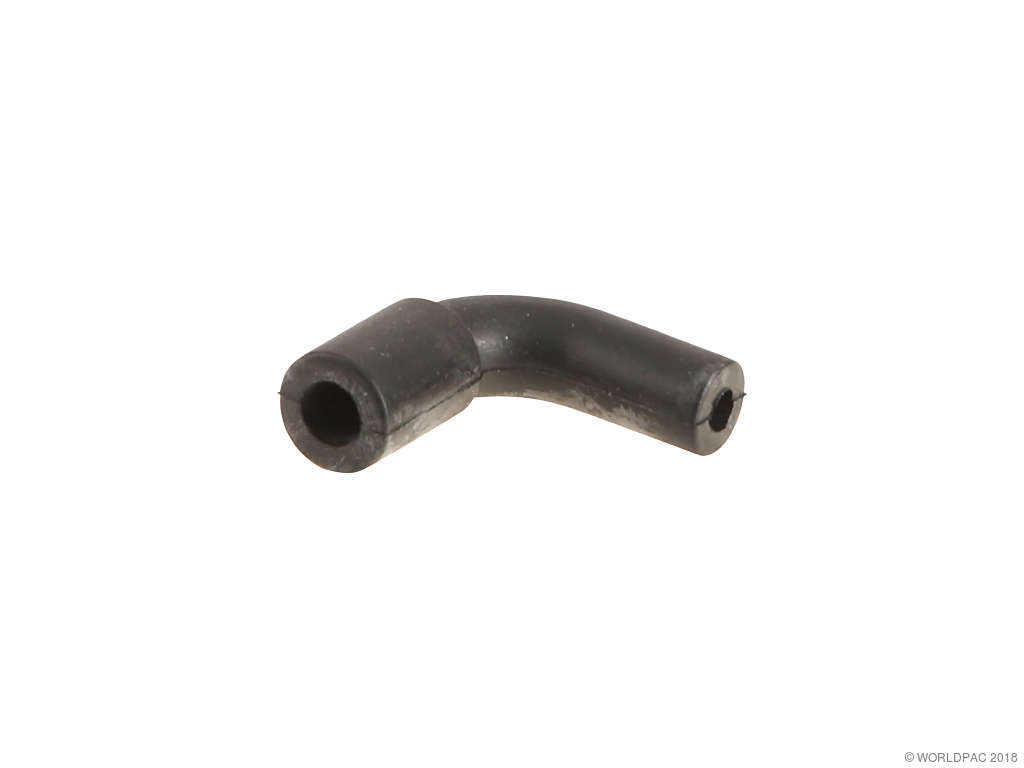
On a 2003-2009 (W211) E-Class, code P0106 is most often caused by a cracked, brittle, or disconnected vacuum hose attached to the MAP sensor. Before replacing the sensor itself, inspect this hose. A new hose is a very inexpensive fix, while a new sensor costs between $25 and $100.
- P0106 on a W211 E-Class is most likely caused by a simple, inexpensive vacuum hose failure.
- Always inspect the small rubber hose connected to the MAP sensor for cracks or a loose connection before buying any parts.
- The MAP sensor is easily accessible at the front of the engine on M112/M113 models, making this a very DIY-friendly diagnosis and repair.
- If the hose is cracked at the very end, you can often trim it and reconnect it as a quick fix.
- Symptoms include rough idle, poor acceleration, and the Check Engine Light.
What's Unique About the 2003-2009 Mercedes-Benz E-Class
For the W211 E-Class, particularly models with M112 (V6) and M113 (V8) engines, the MAP sensor is not typically mounted directly to the intake manifold. Instead, it's located remotely at the front of the engine and connected via a small rubber vacuum hose. This rubber hose is notoriously prone to becoming brittle, cracking, and splitting due to the high heat under the hood. As a result, a vacuum leak at the sensor connection is a far more common cause for P0106 on this specific platform than the sensor itself failing.
Symptoms You May Notice
- Check Engine Light is on
- Rough or unsteady idle
- Hesitation or poor acceleration
- Increased fuel consumption
- Engine stalling
- Black smoke from the exhaust
- Replacing the MAP sensor without first checking the small vacuum hose connected to it. The hose is the most frequent point of failure on this vehicle.
Most Likely Causes
- Cracked or Disconnected MAP Sensor Vacuum Hose 🔴 High Probability → Shop Vacuum Hose The rubber hose is exposed to significant engine heat, causing it to become brittle and fail over time. This is a very common failure point on W211 models with M112 and M113 engines.
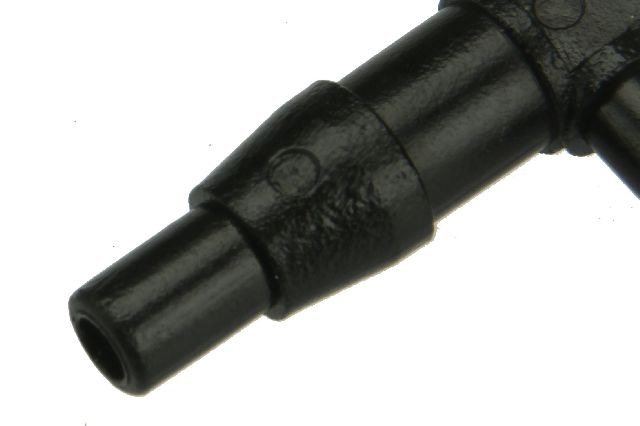
How to confirm: Visually inspect the small rubber hose connected to the back of the MAP sensor. It is often hidden. Check for cracks, splits, or if it has completely disconnected from the sensor's nipple. The hose often breaks right at the connection point.
Typical fix: Trim the damaged end of the hose and reconnect it if there is enough slack. If the hose is too brittle or short, replace the entire vacuum line. Many owners use generic 3.5mm ID vacuum hose as a replacement.
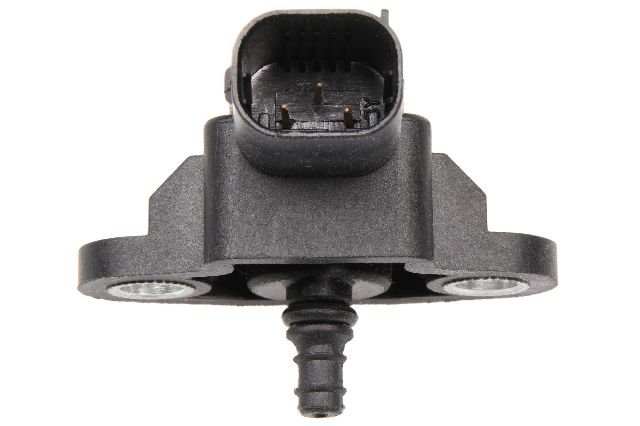
Est. part cost: $5-$20 - Faulty Manifold Absolute Pressure (MAP) Sensor 🟡 Medium Probability → Shop Manifold Absolute Pressure Sensor
How to confirm: If the vacuum hose and its connection are intact, the sensor itself may be faulty. This can be tested with a multimeter to check for correct voltage output or by substituting it with a known good sensor. However, this should only be done after confirming the hose is in perfect condition.
Typical fix: Replace the MAP sensor. It is typically held in place by a single E8 external Torx bolt.
Est. part cost: $25-$100 - Vacuum Leak Elsewhere in the Intake System ⚪ Low Probability
How to confirm: Perform a smoke test on the intake system to identify any leaks from gaskets, seals, or other hoses that are not immediately visible.
Typical fix: Repair the source of the vacuum leak, which could involve replacing gaskets or hoses.
Est. part cost: $10-$200
Rare But Worth Checking
- Clogged Air Filter: A severely clogged engine air filter can restrict airflow enough to cause an implausible pressure reading in the manifold.
- Wiring Issue: Damage to the MAP sensor's wiring harness or a corroded electrical connector can disrupt the signal to the ECU.
- Faulty Powertrain Control Module (PCM): This is extremely rare, and all other possibilities should be exhausted before considering a faulty ECU.
Diagnosis Steps
- Retrieve the P0106 code using an OBD-II scanner to confirm it is the primary issue.
- Open the hood and remove the front engine cover by pulling it up and off.
- Locate the MAP sensor. On M112 and M113 engines, it is mounted on a bracket at the front of the engine, often near the secondary air pump, and held by a single E8 external Torx bolt. On later M272/M273 engines, it is often on the rear of the intake manifold.
- Carefully inspect the small rubber vacuum hose attached to the back of the sensor. A flashlight is helpful as it can be hidden. Look for any cracks, splits, or brittleness. Check if it has come loose from the sensor's plastic nipple.
- If the hose is cracked at the end, try trimming off the damaged portion (about 1 cm) and securely reconnecting it to the sensor.
- If the hose is too degraded, replace it. The original part number is often 117-997-09-82, which corresponds to a 3.5mm inner diameter hose. Trace it back to its connection on the intake manifold and replace the full length.
- If the hose is intact and secure, inspect the MAP sensor's electrical connector for corrosion or damage.
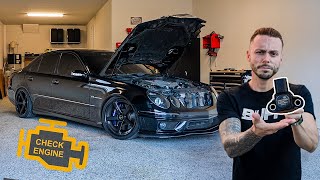
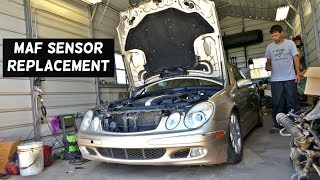
- If no visible issues are found with the hose or connector, consider replacing the MAP sensor. It is secured by one E8 bolt. 🎬 Watch: A complete walkthrough of the MAP sensor replacement process.
- After the repair, clear the trouble code with the scanner and perform a test drive to ensure the code does not return. Note that the Check Engine Light may not turn off immediately after clearing; a short drive cycle may be required for the ECU to re-validate the sensor data.
Parts You'll Likely Need
- MAP Sensor Vacuum Hose
(OEM #117-997-09-82 (or generic 3.5mm ID vacuum hose))— This is the most common failure point for this code on the W211 platform due to heat degradation.
Trusted brands: Mercedes-Benz OE, Cohline, CRP
OEM price range: $10-$30
Aftermarket price range: $5-$15 - Manifold Absolute Pressure (MAP) Sensor
(OEM #A0041533228 (superseded by A0051535028, A0061539828))— If the vacuum hose is not the issue, the sensor itself may have failed.
Trusted brands: Bosch, Hella
OEM price range: $60-$120
Aftermarket price range: $25-$75
Related Codes That Often Appear With This One
- P0171 — System Too Lean (Bank 1) - An unmetered air leak from the MAP sensor hose or other vacuum leak can cause a lean condition.
- P0174 — System Too Lean (Bank 2) - Similar to P0171, this indicates a lean condition on the opposite engine bank, often caused by the same vacuum leak.
- P2279 — Intake Air System Leak - This code directly points to an unmetered air leak, which is the root cause of the P0106 when the MAP sensor hose fails.
Platform-Specific Known Issues
- Engine-Specific MAP Sensor Location: → Shop Manifold Absolute Pressure Sensor On earlier W211 models with the M112 (E320) and M113 (E500, E55) engines, 🎬 See this quick DIY fix for the E55 AMG MAP sensor. the MAP sensor is located at the front of the engine on a bracket, connected by the failure-prone vacuum hose. On later models with M272 (E350) and M273 (E550) engines, the sensor is often mounted directly on the back of the intake manifold, though it can still have a short, brittle hose causing the same P0106 and P2279 codes.
Mechanic-Grade Diagnostic Values
- MAP Sensor 5V Reference Wire Voltage — expected: Approximately 5.0 Volts. Failure: Significantly lower or no voltage indicates a wiring or ECU problem.
- MAP Sensor Ground Wire Voltage — expected: Less than 100 millivolts (0.1V). Failure: Higher voltage indicates a poor ground connection, which can skew sensor readings.
- MAP Sensor Signal Wire Voltage (KOEO) — expected: Approximately 4.5 - 5.0 Volts (at atmospheric pressure). Failure: Voltage significantly lower than ~4.5V with the engine off points to a faulty sensor or wiring issue.
- MAP Sensor Signal Wire Voltage (Engine at Idle) — expected: 1.0 to 2.0 Volts. Failure: Voltage that remains high (near KOEO levels) or is erratic at idle suggests a vacuum leak (like the common hose failure) or a bad sensor.
- MAP Sensor Signal Wire Voltage (Manual Vacuum Test) — expected: Voltage should drop smoothly as vacuum is applied. Example: ~1.1V at 21 inHg of vacuum.. Failure: Voltage does not change or changes erratically as vacuum is applied, indicating a failed sensor.
Scan Tool Commands That Help
- OBD-II Scanner: Clear Fault Codes & Check Readiness Monitors — After the physical repair (hose or sensor replacement), clear the P0106 code. It is critical to then perform a drive cycle to allow the ECU's internal self-tests (readiness monitors) to run and confirm the fix. The Check Engine Light may not extinguish until this drive cycle is completed.
Wiring & Ground Locations
- MAP Sensor Signal Pin at ECU (M113 Engine) — On the ME-SFI control module (ECU), it is located at Socket 3, Pin 10. The wire color is typically Red-Grey.. This allows a technician to test the signal directly at the ECU, bypassing all vehicle wiring to determine if a fault is in the harness (open/short) or if the signal is valid all the way to the computer.
- Main Engine Ground — The main engine-to-chassis ground strap is typically located on the passenger side of the engine block, connecting to the chassis rail. The ECU has its own ground pins, often terminating at a ground distribution block in the engine bay (e.g., W11/2).. A poor main engine or ECU ground can cause floating voltages and reference issues for all sensors, including the MAP sensor, leading to incorrect readings and a P0106 code.
Real Owner Repair Stories
- YouTube user 'Samcrac Fan' (2004 Mercedes-Benz E500 (W211)) — Check Engine Light with code P0106.
❌ Tried (didn't work) Replacing the MAP sensor., Clearing the fault code with an OBD-II scanner immediately after replacement (the Check Engine Light remained on).
✅ What actually fixed it Driving the car for a short period after replacing the sensor and clearing the code. The ECU required a drive cycle to re-validate the sensor's performance, after which the Check Engine Light turned off on its own.
"I Checked Everything" — The Actual Cause
- In a documented case on an E55 AMG (M113 engine), the owner experienced an intermittent P0106 code specifically during steady freeway cruising. A smoke test of the intake system showed no leaks. Despite the clean smoke test, replacing the MAP sensor made a significant improvement, indicating the sensor itself was failing electronically under specific load/vibration conditions, a fault that a static smoke test cannot detect.
When the Usual Fixes Don't Work
- While the cracked vacuum hose is the most common fix, it is not the only one. In some cases, even after replacing the hose, the code may persist. One owner of a 2004 E500 replaced the MAP sensor, cleared the code, and found the light was still on. The final step to extinguish the light was to perform a drive cycle, allowing the ECU to confirm the repair was successful. In another case involving an E55, a smoke test found no leaks, yet the P0106 code persisted intermittently; replacing the sensor itself was the solution, pointing to an electronic failure rather than a physical leak.
OEM Part Supersession History
A0041533228→A0051535028, then A0061539828— Part revision and improvement by the manufacturer.
Heads up: These part numbers are generally cross-compatible for the specified applications. Always verify with VIN.
Diagnostic Flowchart
Used vs. New Parts: Buying Guide for This Vehicle
When a used part is the smart pick: A used OEM (Bosch) MAP sensor from a low-mileage wrecked vehicle can be a cost-effective and reliable alternative to a new, unbranded aftermarket sensor. However, for the vacuum hose, buying new is always the correct choice as it is a cheap wear-and-tear item.
Donor-vehicle mileage cap: roughly under 80000 miles for the part to have meaningful remaining life.
What to inspect on the donor part:
- Ensure the donor vehicle was not in a front-end collision that could have damaged the sensor.
- Inspect the electrical connector pins for any signs of corrosion or damage.
- Check the plastic housing for cracks or heat stress.
OEM-only on this vehicle (don't cheap out):
- While not strictly 'OEM-only', using an OEM Bosch MAP sensor is strongly recommended. Cheap, no-name aftermarket sensors are known to be unreliable, causing performance issues or failing prematurely.
Aftermarket brands forum-validated for this vehicle:
- Bosch (The Original Equipment Manufacturer)
- Hella
Brands owners have reported issues with on this vehicle:
- Unbranded 'white-box' sensors from online marketplaces (e.g., eBay, Amazon) that lack a reputable brand name.
Real Owner Stories
Aggregated from forums and TSBs cited above. Mileages and costs reflect what owners reported in those sources.
2003 Mercedes E320
Symptoms: The Check Engine Light was on, prompting a scan that revealed code P0106.
What fixed it: The video creator identified a cracked vacuum hose connected to the MAP sensor and suggested that replacing this inexpensive hose is the correct fix, which should be done before replacing the sensor itself.
Source hint: YouTube comment on 'Auto Repair Guys' video 'MERCEDES P0106 MAP SENSOR REMOVAL REPLACEMENT'
Mercedes-Benz with M273 engine
Symptoms: The owner had two codes stored: P0106 and P2279 (Intake Air System Leak).
What fixed it: The issue was resolved by replacing the vacuum hose leading to the MAP sensor, which was described as 'falling apart from 15 years of sitting atop a hot engine.' A generic segment of vacuum hose was used for the repair.
Source hint: MBWorld.org thread titled 'P0106 and P2279 codes on M273 engine'
C55 AMG (M113 engine)
Symptoms: The car had a Check Engine Light on and a rough idle.
What fixed it: The owner first replaced the MAP sensor, but the code and symptoms remained. The actual solution was replacing the 'worn out' vacuum hose that connects to the sensor.
Source hint: MBWorld.org thread titled 'HELP! Code P0106. Replaced MAP sensor. Check engine still on!'
Chrysler Crossfire (M112 engine)
Symptoms: The owner struggled with a persistent P0106 code for months following a water pump replacement.
What fixed it: The problem was finally solved by discovering that the 'hidden' vacuum line behind the MAP sensor had become brittle and broken.
Source hint: CrossfireForum.org thread titled 'error p0106'
Related OBD-II Codes
Frequently Asked Questions
I replaced the MAP sensor on my E-Class for code P0106, but the Check Engine Light is still on. What did I miss?
Where is the MAP sensor located on my 2005 E320?
What is the part number for the MAP sensor vacuum hose that commonly fails?
Do I need a special tool to remove the MAP sensor?
Is the P0106 vacuum hose issue common on other Mercedes models?
I fixed the vacuum hose and cleared the code, but the light is still on. What's next?
Helpful Videos

We Have This Part in Stock


The information in this article is provided for general reference and educational purposes only. Vehicle specifications, procedures, and part compatibility can vary by production date, trim level, and region. Always consult your vehicle's factory service manual and verify part numbers before purchasing or performing repairs. Safety-critical components such as airbags, seat belts, and braking systems should be installed by a qualified professional.
- Mercedes-Benz E-Class:
- 🧭 Diagnostic Flowchart
- 🎬 Helpful Videos
- 🛍️ Shop This Part
- What's Unique About the 2003-2009 Mercedes-Benz E-Class
- Symptoms You May Notice
- Most Likely Causes
- Rare But Worth Checking
- Diagnosis Steps
- Parts You'll Likely Need
- Related Codes That Often Appear With This One
- Platform-Specific Known Issues
- Mechanic-Grade Diagnostic Values
- Scan Tool Commands That Help
- Wiring & Ground Locations
- Real Owner Repair Stories
- "I Checked Everything" — The Actual Cause
- When the Usual Fixes Don't Work
- OEM Part Supersession History
- Used vs. New Parts: Buying Guide for This Vehicle
- Real Owner Stories
- 2003 Mercedes E320
- Mercedes-Benz with M273 engine
- C55 AMG (M113 engine)
- Chrysler Crossfire (M112 engine)
- Related OBD-II Codes
- Frequently Asked Questions
- 🎟️ Get 5% Off