

P0106 on 1999-2004 Oldsmobile Alero: MAP Sensor Performance, Causes, and Fixes
On a 1999-2004 Oldsmobile Alero, code P0106 is most often caused by a faulty Manifold Absolute Pressure (MAP) sensor. Replacing the sensor is a simple, low-cost repair, typically under $60 for an aftermarket part. Before replacing, check for cracked vacuum hoses, as they are another common cause.
- Code P0106 on a 1999-2004 Alero almost always points to a problem with the Manifold Absolute Pressure (MAP) sensor system.
- The most likely fix is replacing the MAP sensor itself, which is an inexpensive part and easy to replace for a DIYer.
- Before replacing the sensor, always perform a quick visual inspection of all vacuum hoses for obvious cracks or breaks, as this is another common cause.
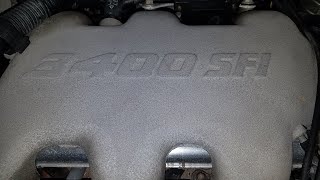
- If you have the 3.4L V6 engine, be aware that this code can be a symptom of failing intake manifold gaskets, a more significant repair.
- Ignoring this code will lead to poor engine performance, bad fuel mileage, and could eventually damage your catalytic converter.
What's Unique About the 1999-2004 Oldsmobile Alero
The Oldsmobile Alero, like its platform mates the Pontiac Grand Am and Chevrolet Malibu, uses a MAP sensor-based system for engine management and does not have a Mass Airflow (MAF) sensor. This simplifies diagnosis, as issues are almost always related to the MAP sensor itself, its wiring, or a vacuum leak. On the 3.4L V6 engine specifically, this code can sometimes be an early sign of failing lower intake manifold gaskets, a notorious issue for this engine family that can create a vacuum leak.
Symptoms You May Notice
- Check Engine Light is on
- Rough or unstable idle, sometimes stalling
- Poor fuel economy
- Lack of power and hesitation during acceleration
- Black smoke from the exhaust (indicating a rich fuel mixture)
- Difficulty starting the engine
- Engine backfire
- Replacing spark plugs or ignition coils without proper diagnosis. While these can cause misfires, they do not directly cause a P0106 code.
- Replacing the throttle body. A dirty throttle body can cause idle issues, but it is not a primary cause of a MAP sensor performance code. However, on some GM vehicles, a very dirty throttle body can cause a false P0106.
Most Likely Causes
- Faulty Manifold Absolute Pressure (MAP) Sensor 🔴 High Probability → Shop Manifold Absolute Pressure Sensor The MAP sensor is a common failure point on many vehicles of this age, and due to its critical function, any electronic failure will immediately trigger a code. It is a relatively inexpensive plastic and silicon part exposed to constant temperature and pressure changes.
How to confirm: With the engine off and key on, check for a 5-volt reference signal and a good ground at the sensor's electrical connector. Use a vacuum pump and multimeter to verify the sensor's signal voltage changes smoothly as vacuum is applied and released. If the signal is stuck, erratic, or doesn't respond correctly, the sensor is bad.
Typical fix: Replace the MAP sensor. It is typically located on the intake manifold and held by a single bolt or clip, making for a quick replacement. 🎬 See this walkthrough for replacing the sensor on a GM 3.4L.
Est. part cost: $25-$70 - Vacuum Leak 🟡 Medium Probability The rubber and plastic vacuum hoses and intake gaskets become brittle and crack over time due to heat and age, leading to leaks.
How to confirm: Visually inspect all vacuum hoses connected to the intake manifold for cracks, breaks, or loose connections. A common failure point is the short hose connecting the MAP sensor to the manifold. A smoke test is the most effective way to find hard-to-see leaks 🎬 Watch: How to perform a quick smoke test for vacuum leaks. from gaskets or hoses. You can also spray carburetor cleaner around suspected leak points with the engine idling; a change in engine RPM indicates a leak.
Typical fix: Replace the cracked hose or faulty gasket. On the 3.4L V6, this could mean replacing the lower intake manifold gaskets, which is a more involved job.
Est. part cost: $5-$150 - Wiring or Connector Issue ⚪ Low Probability
How to confirm: Visually inspect the wiring harness and connector for the MAP sensor. Look for any frayed wires, corrosion in the connector pins, or a loose connection. Wiggle the harness with the engine running to see if it causes a change in idle.
Typical fix: Repair the damaged section of wire or clean/replace the connector pigtail.
Est. part cost: $10-$30
Rare But Worth Checking
- Clogged Catalytic Converter: A severely clogged catalytic converter can create backpressure in the exhaust, which can affect intake manifold pressure and trick the computer into setting a P0106 code. This is usually accompanied by a severe loss of power, especially at high RPMs, and may be seen with code P0420.
- Faulty Powertrain Control Module (PCM): This is extremely rare. The PCM should only be considered a potential cause after all other possibilities (sensor, wiring, vacuum leaks) have been thoroughly ruled out.
- Icing on MAP Sensor: → Shop Manifold Absolute Pressure Sensor In freezing temperatures, ice can form on the MAP sensor during long drives, causing a temporary P0106 code. GM issued a TSB (20-NA-043) for this issue on newer trucks, but the principle could apply. The code may clear on its own after the engine warms up and melts the ice.
Diagnosis Steps
- Retrieve all stored DTCs with an OBD-II scanner. Note any other codes that are present, especially P0107, P0108, P0171, or P0300.
- Visually inspect the MAP sensor, its connector, and wiring for any obvious damage, corrosion, or loose connections.
- Inspect all vacuum hoses connected to the intake manifold for cracks, brittleness, or loose connections. Pay close attention to the hose leading to the MAP sensor, if applicable.
- With the engine running, listen for hissing sounds that would indicate a vacuum leak. You can also carefully spray carb cleaner around the intake manifold gasket and vacuum lines; a change in idle speed indicates a leak.
- If a scan tool is available, monitor the MAP sensor data (in kPa or Volts) at idle and while snapping the throttle open. The pressure reading should change smoothly and quickly with throttle changes.
- If no vacuum leaks are found, test the sensor's circuit. With the key on and engine off, disconnect the sensor and use a multimeter to verify a 5-volt reference signal and a good ground at the connector.
- If the circuit is good, the MAP sensor itself is the most likely cause of the problem.
- After repairs, clear the codes and perform a test drive to ensure the issue is resolved.
Parts You'll Likely Need
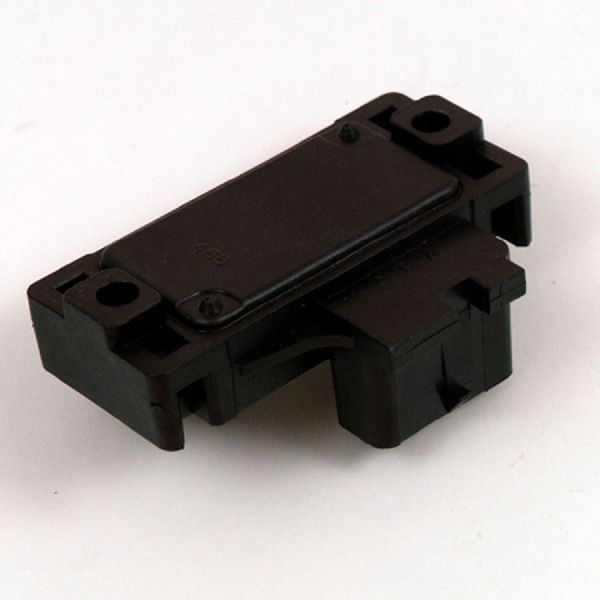
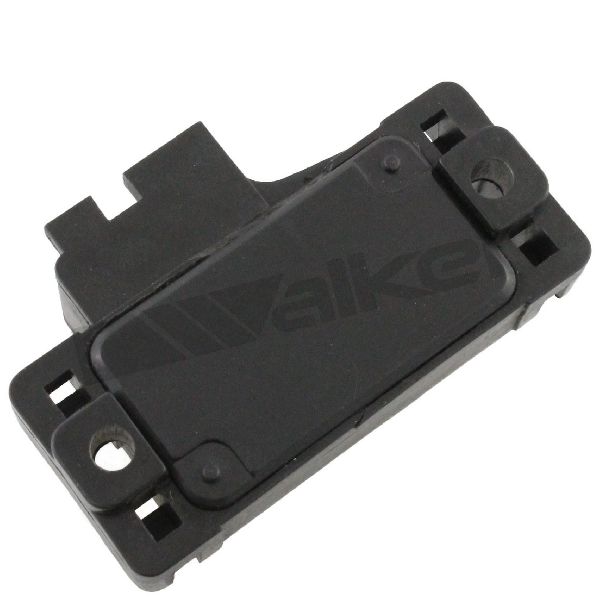
- Manifold Absolute Pressure (MAP) Sensor
(OEM #ACDelco 213-1545)— This is the most common component to fail and directly cause a P0106 code.
Trusted brands: ACDelco, Delphi, Bosch
OEM price range: $60-$80
Aftermarket price range: $25-$60 - Vacuum Hose — Deteriorated rubber hoses are a frequent source of vacuum leaks that can trigger this code.
OEM price range: $10-$20
Aftermarket price range: $5-$15 - Lower Intake Manifold Gasket Set (3.4L V6) — If a vacuum leak is traced to the intake manifold on the 3.4L V6, these gaskets are required. The Fel-Pro 'problem solver' gaskets are a popular, more durable replacement.
Trusted brands: Fel-Pro, ACDelco
OEM price range: $70-$100
Aftermarket price range: $40-$80
Related Codes That Often Appear With This One
- P0107 — Indicates MAP sensor circuit low voltage, which can occur if the sensor or wiring has an intermittent short or failure.
- P0108 — Indicates MAP sensor circuit high voltage, often pointing to a bad sensor or a significant vacuum leak.
- P0171 — Indicates 'System Too Lean.' This often accompanies P0106 when a vacuum leak is the root cause, as unmetered air is entering the engine.
- P0172 — Indicates 'System Too Rich.' A faulty MAP sensor can report low vacuum (high pressure), causing the PCM to inject too much fuel.
- P0300 — Indicates a random/multiple cylinder misfire. A very rich fuel mixture or a large vacuum leak caused by the MAP sensor issue can lead to unstable combustion.
Technical Service Bulletins (TSBs) & Recalls
- While no TSB specifically for the Alero and P0106 was found, GM TSB 20-NA-043 for newer trucks describes a condition where ice can form on the MAP sensor in freezing temperatures, causing a P0106 code. This highlights a potential environmental cause.
Platform-Specific Known Issues
- On the 3.4L V6 engine, this code can be an indicator of failing lower intake manifold gaskets, which is a well-known problem for this engine family. The original gaskets used a plastic carrier that would degrade from exposure to Dex-Cool antifreeze, causing coolant to leak into the oil and/or creating a vacuum leak. Symptoms include coolant loss, milky oil, and engine overheating, which may or may not appear before the P0106 code. Many owners recommend using the upgraded metal-frame Fel-Pro gaskets for a permanent fix.
Mechanic-Grade Diagnostic Values
- MAP Sensor Voltage (Key On, Engine Off) — expected: 4.0V - 5.0V. Failure: Voltage significantly lower than 4.0V indicates a sensor or wiring issue.
- MAP Sensor Live Data (Key On, Engine Off) — expected: Should match local Barometric Pressure (BARO), approx. 101 kPa at sea level.. Failure: A reading significantly different from BARO suggests a faulty sensor.
- MAP Sensor Voltage (Engine at Hot Idle) — expected: 0.5V - 2.1V. Failure: Voltage remaining high (above 2.5V) at idle suggests a major vacuum leak, a clogged sensor port, or a failed sensor.
- MAP Sensor Live Data (Engine at Hot Idle) — expected: 30 - 40 kPa. Failure: A reading that stays high (near BARO) at idle points to a vacuum leak or faulty sensor.
- 5-Volt Reference at Connector — expected: Approximately 5.0V at Pin C (Gray wire) with key on, sensor disconnected.. Failure: No voltage or low voltage indicates a wiring issue or a problem with the PCM.
Wiring & Ground Locations
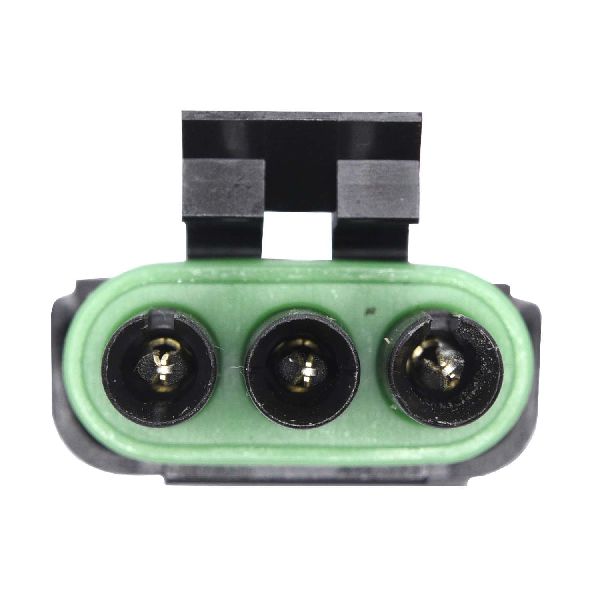
- MAP Sensor Connector — On the MAP sensor itself, which is mounted on or near the intake manifold, often close to the throttle body.. This is the primary test point. Pin A (Black wire) is Sensor Ground. Pin B (Light Green wire) is the Signal to the PCM. Pin C (Gray wire) is the 5V Reference from the PCM.
- G102 / G103 — Main engine-to-chassis grounds. G102 is often on the left (driver's) side of the engine block, while G103 can be on the lower front or right rear of the block.. The PCM and all its sensors rely on a clean ground path. A corroded or loose G102 or G103 can create a floating ground, causing erratic voltage readings from the MAP sensor and triggering a false P0106 code even if the sensor is good.
Real Owner Repair Stories
- Synthesized from multiple Alero/Grand Am forum discussions (2001 Oldsmobile Alero, 3.4L V6) — Check engine light on, rough idle, car hesitates and sometimes stalls when coming to a stop.
❌ Tried (didn't work) Replacing spark plugs and wires., Cleaning the throttle body.
✅ What actually fixed it The owner first inspected the small vacuum hose going to the MAP sensor and found it was soft but not cracked. They replaced the MAP sensor with a new aftermarket unit (Delphi brand), which resolved the idle and stalling issues and the P0106 code did not return after clearing. - Synthesized from GM 3.4L V6 forum discussions (2002 Pontiac Grand Am (platform mate), 3.4L V6) — Persistent P0106 and P0172 (System Too Rich) codes, poor fuel economy, and black smoke from exhaust on acceleration.
❌ Tried (didn't work) Replacing the MAP sensor twice (once with a cheap brand, then with an ACDelco)., Performing a smoke test which showed no obvious vacuum leaks.
✅ What actually fixed it Despite a clean smoke test, the owner was advised the lower intake manifold gaskets were a likely cause. Upon disassembly, the gaskets were found to be degraded and leaking internally in a way that the smoke test didn't reveal. Replacing the gaskets with the updated Fel-Pro metal-frame set (MS 98014 T) permanently fixed the codes and running issues.
"I Checked Everything" — The Actual Cause
- On the 3.4L V6, the lower intake manifold gaskets can fail in a way that creates an intermittent or internal vacuum leak that a smoke test might not easily detect. If the MAP sensor has been replaced and the code persists despite a 'clean' smoke test, these gaskets remain a primary suspect.
OEM Part Supersession History
16137039, 16254719→ACDelco 213-1545 (also cross-references to GM 16249939)— Part consolidation and design updates over the years.
Heads up: While many aftermarket sensors fit, some ultra-low-cost brands have been reported to fail quickly or have mounting holes that do not align perfectly with the OEM bolts.
Model Year Variations Within This Range
- 1999-2001: These years could have the 2.4L LD9 engine. The P0106 diagnosis is more straightforward, focusing on the MAP sensor, its vacuum line, and wiring, as this engine is not known for the intake gasket failures seen on the 3.4L V6.
- 2002-2004: These years could have the 2.2L Ecotec engine. Similar to the 2.4L, diagnosis focuses on the sensor and vacuum system. The MAP sensor location may differ slightly from the V6.
- 1999-2004 (3.4L V6 only): This engine has a high probability of the P0106 code being related to failing lower intake manifold gaskets, a known factory defect. This should be considered a strong possibility if a new MAP sensor doesn't fix the issue.
Diagnostic Flowchart
Other Known Issues on This Vehicle
Issues unrelated to this code that are worth knowing about as an owner of this generation:
- Failing Passlock Security System 🔴 High — Extremely common across all years. Causes a no-start or start-and-stall condition with a flashing security light. (Ref: No official recall, but numerous owner-developed bypass methods exist.)
- Failing Lower Intake Manifold (LIM) Gaskets (3.4L V6) 🔴 High → Shop Engine Intake Manifold — A very well-known and widespread issue on the 3.4L V6, typically occurring after 80,000 miles. Leads to coolant mixing with engine oil.
- Faulty Multifunction / Turn Signal Switch 🟠 Medium — Common failure causing intermittent or non-working turn signals, wipers, or high beams. (Ref: Recall NHTSA 03V-327 (GM #03043) was issued for 2000-2001 models, but the issue was a faulty HAZARD switch causing turn signal failure, not the multifunction switch itself.)
- Faulty Ignition Switch 🔴 High — The switch can move out of the 'run' position, causing the engine to shut off while driving. (Ref: Part of the major GM ignition switch recall (GM Recall #14299).)
- Broken Front Window Regulator Clips 🟡 Low — A common annoyance where the plastic sash brackets break, causing the window to come off its track.
- Failing A/C Blower Motor Resistor 🟡 Low — Frequent failure leading to the blower motor only working on the highest setting or not at all.
Used vs. New Parts: Buying Guide for This Vehicle
When a used part is the smart pick: A used MAP sensor from a junkyard is a viable, low-cost option for this repair, as they are generally reliable electronic components. Given the simplicity of the part, failure is often immediate rather than a slow degradation, so a working used part is likely to have significant life left. It is a good choice for a budget-conscious DIY repair.
Donor-vehicle mileage cap: roughly under 120000 miles for the part to have meaningful remaining life.
What to inspect on the donor part:
- Ensure the plastic housing is not cracked or physically damaged.
- Check that the connector pins are clean, straight, and free of corrosion.
- Inspect the vacuum port to ensure it is clear of debris or oil.
- If possible, pull from a vehicle that appears to have been well-maintained or has lower mileage.
OEM-only on this vehicle (don't cheap out):
- There are no strict OEM-only parts for this specific repair, but using high-quality gaskets is critical if replacing the intake manifold gaskets.
Aftermarket brands forum-validated for this vehicle:
- MAP Sensors: ACDelco (OEM), Delphi, Standard Motor Products (SMP), Bosch.
- Intake Manifold Gaskets (3.4L V6): Fel-Pro (specifically the metal-framed MS 98014 T 'Problem Solver' set is highly recommended over OEM-style replacements).
Brands owners have reported issues with on this vehicle:
- Unbranded, 'white-box' sensors from online marketplaces should be avoided as their quality control is questionable.
- Store brands like AutoZone's 'Valucraft' have received negative reviews for premature failure and poor fitment on similar GM applications.
Real Owner Stories
Aggregated from forums and TSBs cited above. Mileages and costs reflect what owners reported in those sources.
2002 Oldsmobile Alero 3.4L V6 — ~85000 miles
Symptoms: White smoke from the exhaust and symptoms indicating coolant burn, which can be related to intake gasket failure.
What fixed it: Replacement of the lower intake manifold gaskets due to degradation from Dex-Cool antifreeze.
Source hint: Aleromod.com: Alero Problems Thread
1999-2004 Oldsmobile Alero 3.4L V6 — ~80000 miles
Symptoms: Coolant mixing with engine oil and potential vacuum leaks triggering engine codes.
What fixed it: Installation of upgraded metal-frame Fel-Pro gaskets to replace the failing plastic-carrier original gaskets.
Source hint: vehicle_specific_issues
Related OBD-II Codes
Frequently Asked Questions
Could the P0106 code on my 3.4L V6 Alero be related to the common coolant leak issue?
Is there a specific TSB for the Oldsmobile Alero regarding P0106 in cold weather?
I have a P0106 and my Alero is stalling and showing a flashing security light; are these related?
What is the recommended replacement part for the intake gasket if that is causing my P0106?
Can I use a MAP sensor from a Pontiac Grand Am to fix my Alero's P0106?
Is there a recall for the P0106 code or the MAP sensor on the 1999-2004 Alero?
Helpful Videos
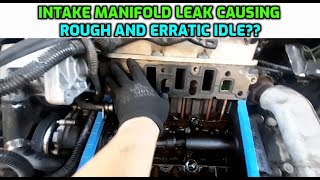
We Have This Part in Stock


The information in this article is provided for general reference and educational purposes only. Vehicle specifications, procedures, and part compatibility can vary by production date, trim level, and region. Always consult your vehicle's factory service manual and verify part numbers before purchasing or performing repairs. Safety-critical components such as airbags, seat belts, and braking systems should be installed by a qualified professional.
- Oldsmobile Alero:
- 🧭 Diagnostic Flowchart
- 🎬 Helpful Videos
- 🛍️ Shop This Part
- What's Unique About the 1999-2004 Oldsmobile Alero
- Symptoms You May Notice
- Most Likely Causes
- Rare But Worth Checking
- Diagnosis Steps
- Parts You'll Likely Need
- Related Codes That Often Appear With This One
- Technical Service Bulletins (TSBs) & Recalls
- Platform-Specific Known Issues
- Mechanic-Grade Diagnostic Values
- Wiring & Ground Locations
- Real Owner Repair Stories
- "I Checked Everything" — The Actual Cause
- OEM Part Supersession History
- Model Year Variations Within This Range
- Other Known Issues on This Vehicle
- Used vs. New Parts: Buying Guide for This Vehicle
- Real Owner Stories
- 2002 Oldsmobile Alero 3.4L V6 — ~85000 miles
- 1999-2004 Oldsmobile Alero 3.4L V6 — ~80000 miles
- Related OBD-II Codes
- Frequently Asked Questions
- 🎟️ Get 5% Off