

P0106 on 2011-2018 Porsche Cayenne: MAP Sensor Range/Performance Causes and Fixes
Code P0106 on a 2011-2018 Porsche Cayenne typically indicates a faulty Manifold Absolute Pressure (MAP) sensor or a vacuum leak in the intake system. The V8 and Turbo models have two pressure sensors; P0106 refers to the one on the intake manifold itself. A new OEM Bosch sensor is affordable, but a smoke test to rule out common vacuum leaks (PCV hoses, intake gaskets) is a critical first step before replacing parts.
- P0106 on a 2011-2018 Cayenne means the MAP sensor signal is illogical.
- The two most likely causes are a faulty MAP sensor or a vacuum leak in the intake system.
- Always perform a smoke test to rule out vacuum leaks before replacing the MAP sensor.
- The MAP sensor is located on the intake manifold and is relatively easy to replace as a DIY job.
- Driving with this code can cause poor performance and fuel economy, and should be addressed promptly to avoid potential damage to other components.
What's Unique About the 2011-2018 Porsche Cayenne
On the 2011-2018 Porsche Cayenne (958 generation), the intake and vacuum systems can be complex, especially on the V6, V8, and Turbo models. These engines often have two pressure sensors that can be confused: one on the intake manifold itself (the true MAP sensor for this code) and another on the air intake Y-pipe before the throttle body (a boost pressure sensor). The P0106 code specifically relates to the performance of the manifold pressure reading. 🎬 Watch: Understanding P0106 causes and how to fix them. While the most common causes are simple (a bad sensor or a vacuum leak), the number of hoses, complex PCV systems, and gaskets provides more potential failure points for leaks compared to simpler, naturally-aspirated engines.
Generation note: This range covers the entire second generation (958) of the Porsche Cayenne, including the 2011-2014 (958.1) and the 2015-2018 facelift (958.2). The meaning of P0106 is consistent across all models, but the exact location of the MAP sensor and vacuum lines may vary slightly between the Base (VR6), Diesel, S (V8), GTS, and Turbo engine variants.
Symptoms You May Notice
- Check Engine Light is on
- Rough or unstable idle
- Hesitation or poor acceleration
- Reduced engine power or limp mode
- Increased fuel consumption
- Engine stalling, especially at stops
- Black smoke from the exhaust, indicating a rich fuel mixture
- Engine backfiring
- Replacing the throttle body when it only needs to be cleaned. 🎬 See this walkthrough on cleaning your Cayenne's throttle body.
- Replacing oxygen sensors in response to fuel trim issues that are actually caused by the P0106 fault.
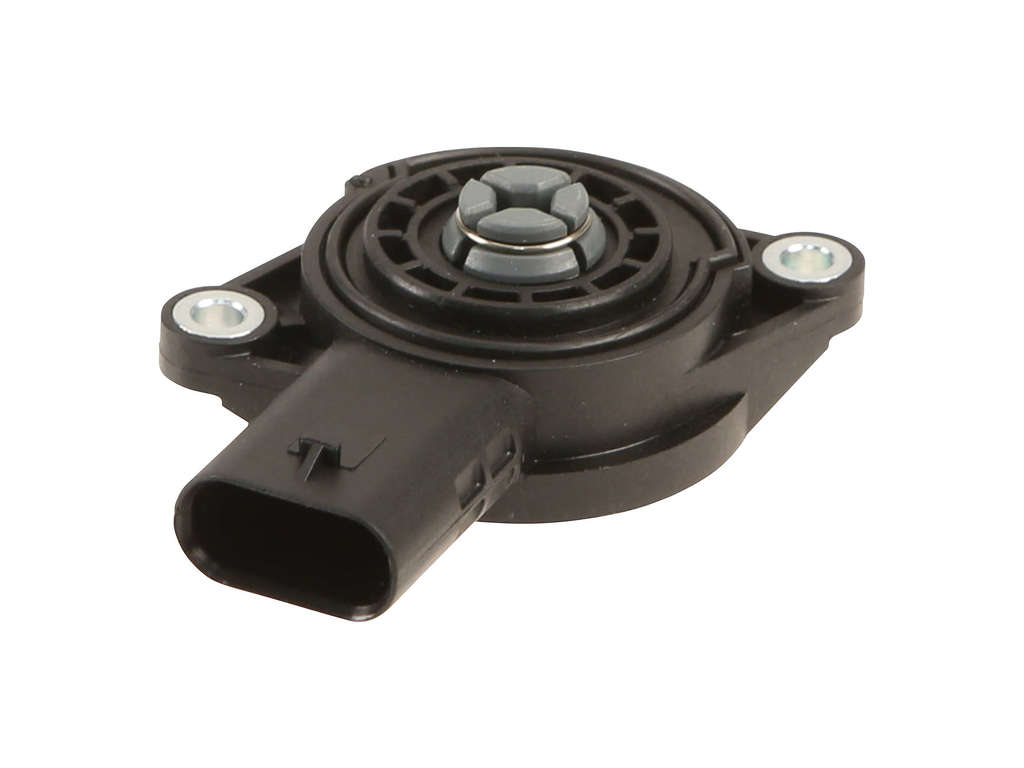
- Confusing the MAP sensor on the intake manifold with the boost pressure sensor on the intake Y-pipe on Turbo/S models.
Most Likely Causes
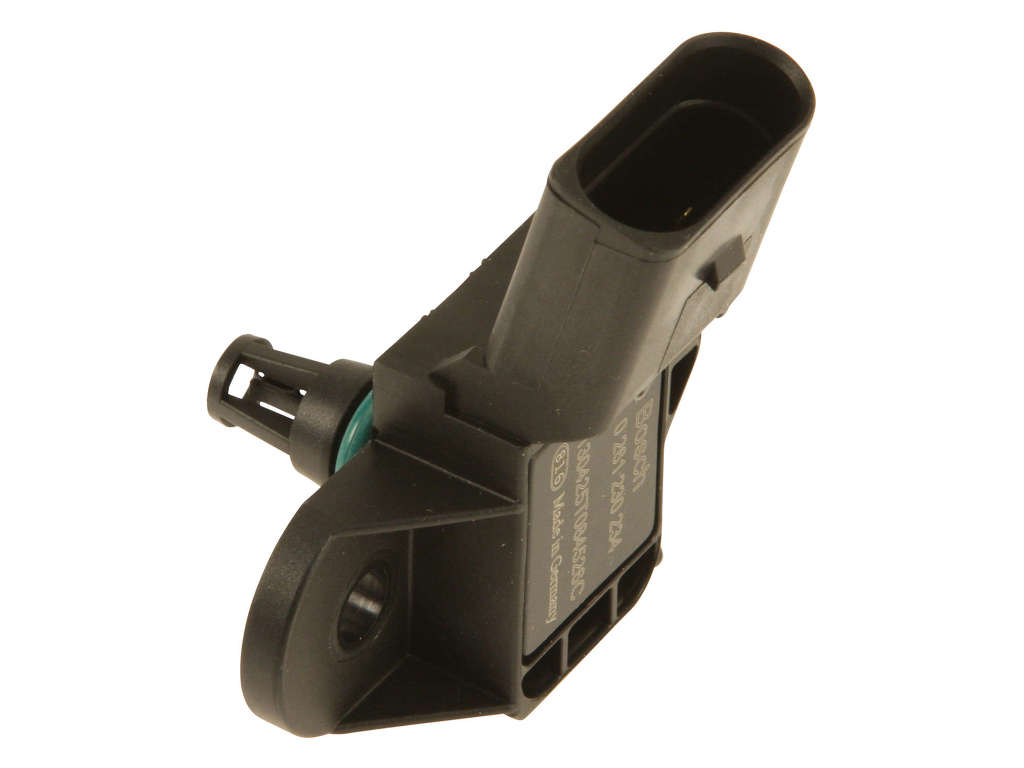
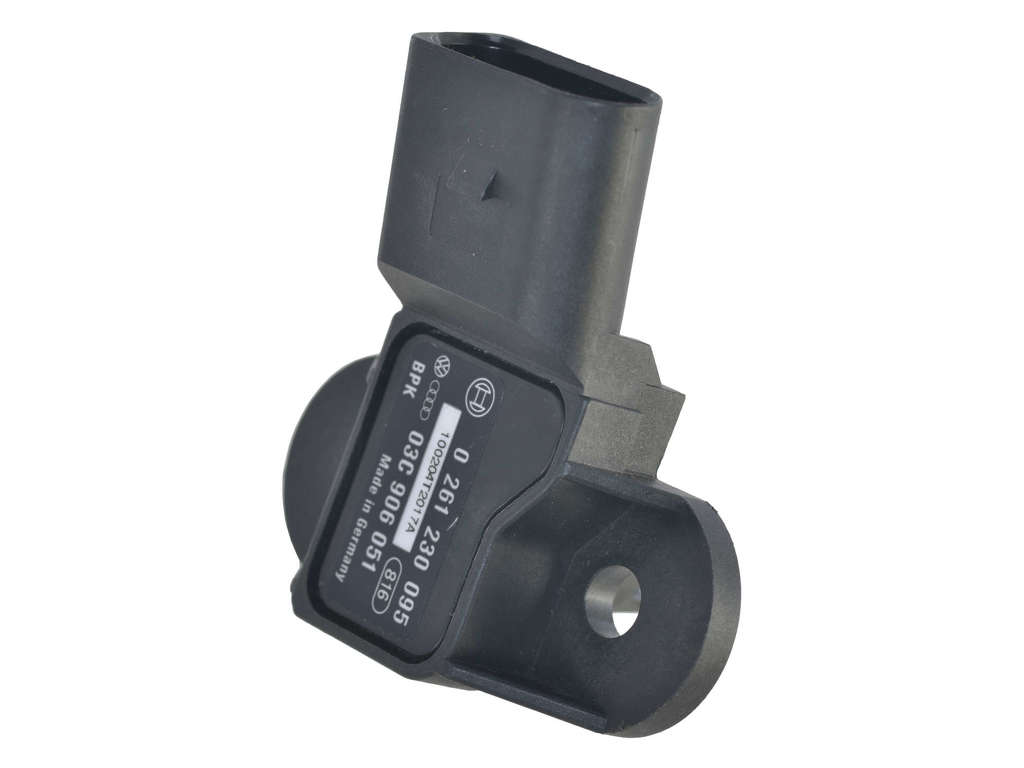
- Faulty Manifold Absolute Pressure (MAP) Sensor 🔴 High Probability → Shop Manifold Absolute Pressure Sensor The OEM sensor is a Bosch part known to fail over time across many vehicle brands, including Porsche. It is exposed to constant pressure and temperature changes within the intake manifold.
How to confirm: Using an OBD-II scanner, monitor the MAP sensor's live data. With the key on and engine off, the reading should be close to the local barometric pressure. At idle, it should show a strong vacuum. If the voltage is stuck, erratic, or doesn't change with engine RPM, the sensor is likely bad. The sensor is located on the intake manifold and can be replaced by removing a single T20 Torx screw. 🎬 Watch: How to replace the intake manifold pressure sensor.
Typical fix: Replace the MAP sensor. The Bosch OEM part is widely available.
Est. part cost: $40-$90 - Vacuum Leak 🔴 High Probability The 958 engines have numerous vacuum hoses, PCV (crankcase ventilation) lines, and intake gaskets that can become brittle and crack from heat and age, leading to unmetered air entering the intake manifold. The plastic crankcase breather hoses are a known failure point.
How to confirm: Perform a smoke test. This involves introducing low-pressure smoke into the intake system (with the engine off) and looking for where it escapes from cracked hoses, bad gaskets, or loose connections. A hissing sound near the rear of the intake manifold at idle is a strong indicator.
Typical fix: Replace the cracked hose, faulty gasket, or leaking component. This can range from a simple hose swap to replacing the intake manifold gaskets, which is more involved.
Est. part cost: $10-$250 - Damaged Wiring or Loose Connector ⚪ Low Probability
How to confirm: Visually inspect the MAP sensor's wiring harness and connector for any signs of damage, corrosion, or looseness. Use a multimeter to check for the correct reference voltage (usually 5V) and ground at the connector. Porsche issued a technical bulletin (SY2314) for some 2015 models where vibrations could damage connector contacts, requiring an updated adapter cable.
Typical fix: Repair the damaged wire or clean/replace the connector. In cases covered by the TSB, an adapter cable is installed.
Est. part cost: $5-$75 - Clogged or Dirty Air Filter ⚪ Low Probability
How to confirm: Visually inspect the engine air filter. If it is excessively dirty or clogged, it can restrict airflow and cause an abnormal pressure reading in the manifold.
Typical fix: Replace the engine air filter.
Est. part cost: $30-$80
Rare But Worth Checking
- Clogged Catalytic Converter: A severely clogged catalytic converter can create excessive exhaust backpressure, which can affect the pressure readings in the intake manifold and trigger a P0106 code. This would likely be accompanied by other exhaust-related codes and severe loss of power.
- Faulty Powertrain Control Module (PCM/DME): This is extremely rare, but a failing engine computer can cause false trouble codes. All other possibilities should be exhausted before considering the PCM as the cause.
- Faulty PCV / Oil Separator: On platform-mate vehicles like the Audi Q7, a failed PCV (Positive Crankcase Ventilation) oil separator has been known to cause a P0106 code by creating incorrect crankcase and intake manifold pressures. A sign of this can be excessive vacuum at the oil cap when the engine is running.
Diagnosis Steps
- Use an OBD-II scanner to confirm the P0106 code and check for any other related codes. Note any pending or stored codes.
- Perform a thorough visual inspection of the engine bay. Look for any obvious disconnected, cracked, or broken vacuum hoses and intake tubing, paying close attention to the PCV system.
- Inspect the MAP sensor's electrical connector and wiring for damage or corrosion. Ensure it is securely connected.
- With a scan tool, observe the live data from the MAP sensor. Check the reading with the Key On, Engine Off (KOEO) and compare it to the barometric pressure reading. The values should be nearly identical.
- Start the engine and observe the MAP sensor reading at idle. It should drop to indicate a vacuum (typically 17-22 inHg). Briefly rev the engine; the reading should change instantly with RPMs.
- If the sensor data seems stuck, slow to respond, or doesn't make sense for the engine condition, the sensor is likely faulty.
- If the sensor data seems plausible but the code persists, perform a smoke test on the intake system to check for vacuum leaks, which are a very common cause.
- If no leaks are found and the sensor appears to function, test the sensor's wiring for the 5-volt reference signal, ground, and signal wire continuity back to the DME using a multimeter.
- If all tests pass, the issue could be a rare intermittent problem or, in very unlikely cases, a fault with the DME itself.
Parts You'll Likely Need
- Manifold Absolute Pressure (MAP) Sensor
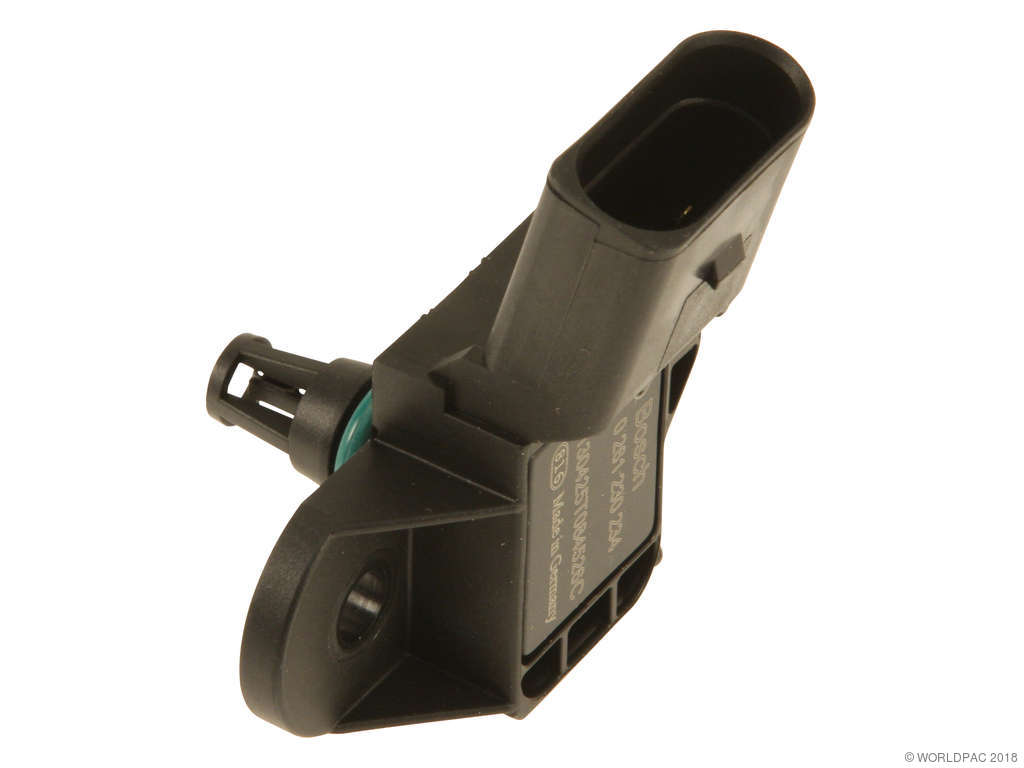
(OEM #94860618000, 0261230247, 0261230237)— This sensor is the most common part to fail, causing irrational or out-of-range performance readings. Part number can vary by engine type.
Trusted brands: Bosch
OEM price range: $80-$120
Aftermarket price range: $40-$70 - Vacuum Hose / PCV Hose — Rubber and plastic hoses become brittle over time, leading to cracks and vacuum leaks that are a primary cause of this code. The crankcase breather hoses are particularly susceptible.
OEM price range: $20-$150
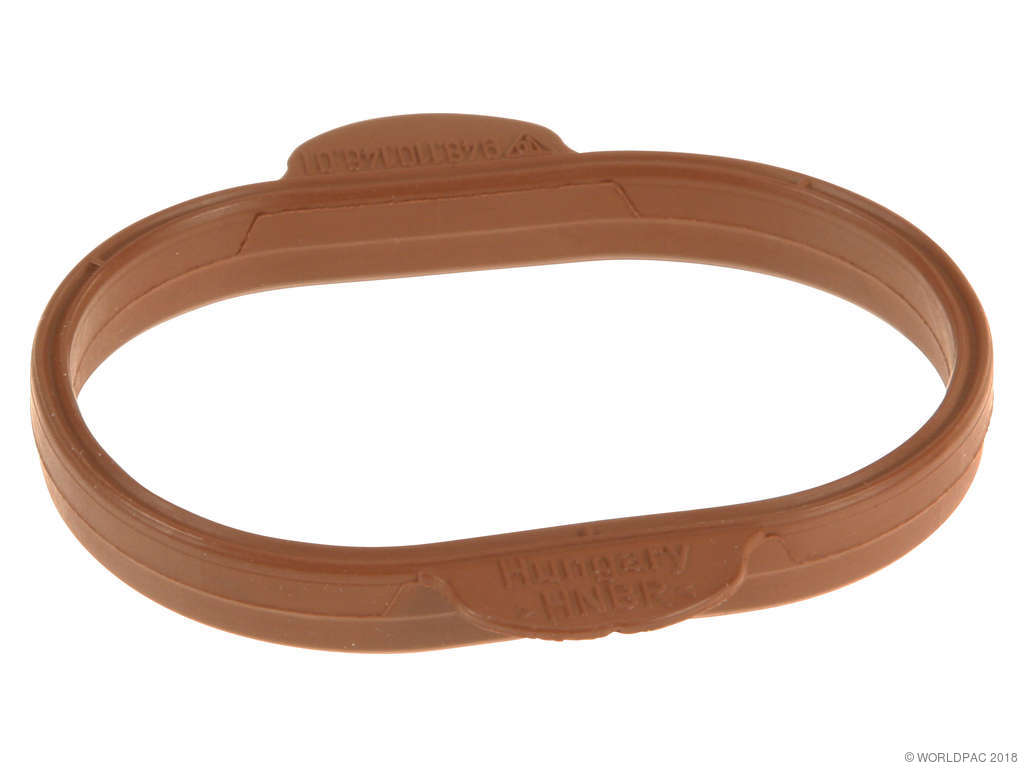
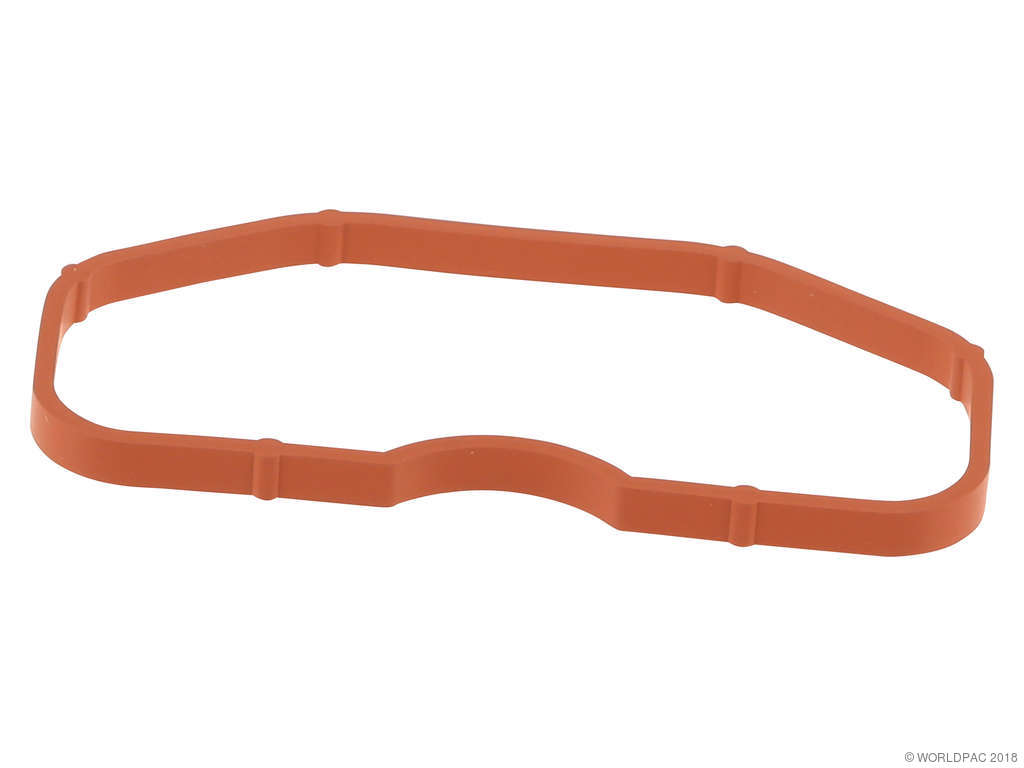
Aftermarket price range: $10-$70 - Intake Manifold Gasket Set — If a vacuum leak is traced to the intake manifold gaskets, they will need to be replaced. This is a more labor-intensive job.
Trusted brands: Victor Reinz, Elring
OEM price range: $50-$100
Aftermarket price range: $30-$60
Related Codes That Often Appear With This One
- P0171 / P0174 — These codes indicate a "System Too Lean" condition, which is a common result of a vacuum leak that also causes P0106.
- P0107 — This code indicates "MAP Circuit Low Input". It can appear with P0106 if the sensor's readings are erratic, fluctuating between a normal range and an abnormally low one.
- P0068 — This code for "MAP/MAF - Throttle Position Correlation" can be triggered alongside P0106 because the DME is seeing a conflict between the airflow reported by the MAP sensor and the angle of the throttle plate.
- P0238 — On turbocharged platform mates (VW/Audi), this code for "Turbocharger Boost Sensor A Circuit High" is often seen with P0106 when the MAP/boost sensor fails.
Technical Service Bulletins (TSBs) & Recalls
- { "id": "SY2314 / 23/14", "description": "For some 2015 models, addresses vehicle jerking by replacing or adding an adapter cable to the MAP sensor connector to prevent damage from vibrations." }
Platform-Specific Known Issues
- On V8 and Turbo models, there are two pressure sensors in the intake tract. P0106 is related to the sensor on the intake manifold itself, not the one on the Y-pipe before the throttle body.
Mechanic-Grade Diagnostic Values
- MAP Sensor Signal Voltage (Key On, Engine Off) — expected: ~4.5 V (Should correspond to local atmospheric pressure). Failure: Voltage is significantly different from expected barometric pressure reading, or is stuck low (<0.5V).
- MAP Sensor Signal Voltage (Warm Idle) — expected: ~1.4 V to 1.8 V. Failure: Voltage is stuck high, does not drop to indicate vacuum, or is erratic.
- MAP Sensor Connector - 5V Reference — expected: Approximately 5.0 V (measured at the connector with sensor unplugged, key on). Failure: No voltage or significantly low voltage, indicating a wiring or DME issue.
- MAP Sensor Ground Circuit Resistance — expected: < 0.5 Ohms (measured from ground pin at connector to chassis ground). Failure: High resistance or an open circuit (O.L.) reading indicates a bad ground connection.
Scan Tool Commands That Help
- Porsche PIWIS, Schwaben, or equivalent advanced scanner: Throttle Body Adaptation / Relearn — This function is critical after cleaning or replacing the throttle body. If the P0106 code appeared after a battery disconnect or throttle body service, running this procedure allows the DME to relearn the closed position of the clean throttle plate, which can resolve implausible signal errors.
Wiring & Ground Locations
- Engine-to-Chassis Ground Strap (Upper) — In the engine bay, a braided strap connecting the engine block to the passenger side (LHD) strut tower area.. A corroded or loose main ground can cause floating voltages and erratic sensor readings throughout the engine management system, including the MAP sensor.
- Engine-to-Chassis Ground Strap (Lower) — Underneath the vehicle, connecting the bottom of the engine to the frame in the front right corner.. This is a primary ground path. Corrosion from road spray is common. High resistance here can lead to widespread, difficult-to-diagnose electrical issues and fault codes.
- Main Vehicle Ground Point — Under the carpet in front of the driver's seat. There is often a small access door in the carpet.. This is a central grounding location for many interior and body modules. While less likely to directly cause P0106, ensuring it's clean is good practice for any electrical diagnosis.
- MAP Sensor Connector — On the intake manifold, typically on the driver's side (LHD) for V8 models, secured by a T20 Torx screw.. This is the direct connection point for the sensor. The connector and its wiring are the first places to check for the 5V reference, ground, and signal integrity.
Real Owner Repair Stories
- Reddit user and forum posts (Various models, including Hyundai and Porsche) — P0106 code, rough idle, and stalling immediately after the vehicle's battery died and was replaced.
❌ Tried (didn't work) Clearing the code, which would return immediately.
✅ What actually fixed it The loss of battery power caused the DME to lose its throttle body idle adaptation. A thorough cleaning of the throttle body followed by an idle relearn procedure (letting the vehicle idle for 10-20 minutes, or using a scan tool function) resolved the P0106 code. - Ross-Tech Forums (VW/Audi) (VW/Audi (platform-mate)) — P0106 code under gentle acceleration, MAP sensor fouled with oil.
❌ Tried (didn't work) Replacing N80 valve (temporary fix)., Replacing PCV diaphragm without cleaning intake (code returned).
✅ What actually fixed it The root cause was a faulty PCV system causing excessive crankcase vacuum and pushing oil into the intake manifold. The final fix required replacing the faulty PCV component AND thoroughly cleaning the oil fouling from the MAP sensor and throttle body.
"I Checked Everything" — The Actual Cause
- A common scenario for P0106 is when a smoke test reveals no vacuum leaks, but the code persists. The cause is often oil contamination from a failing Air-Oil Separator (AOS) or PCV system. This oil coats the MAP sensor's sensing element and the throttle body plate, causing implausible readings that don't correlate with throttle position. A smoke test will not detect this internal contamination. The fix is to address the AOS/PCV issue and then thoroughly clean the MAP sensor and throttle body.
When the Usual Fixes Don't Work
- While replacing the MAP sensor is a common and often correct first step, many owners have found the code returns. In these cases, the root cause was not the sensor itself but another system causing the sensor to report irrational data. The most frequent examples are a dirty throttle body disrupting airflow correlation, or a failed PCV/AOS system contaminating the sensor with oil. A P0106 that persists after sensor replacement strongly points towards cleaning the throttle body (and performing a relearn) or investigating the crankcase ventilation system.
OEM Part Supersession History
94860618000 (Porsche)→0261230247 (Bosch)— This is the OEM cross-reference. Porsche packages the Bosch sensor in a Porsche box at a higher price. Buying the Bosch part is a direct, more affordable replacement.
Heads up: The part number 0261230237 is also associated with this sensor but 0261230247 is the most commonly cited and correct OEM equivalent for this specific Porsche part number.
Model Year Variations Within This Range
- 2011-2014 (958.1) vs 2015-2018 (958.2): The 958.2 is a facelift with updated styling, steering wheel, and a newer PCM infotainment system in later years. Critically, the Cayenne S and GTS models switched from a naturally-aspirated 4.8L V8 in the 958.1 to a 3.6L twin-turbo V6 in the 958.2. While the P0106 code's meaning is the same, the physical layout of vacuum lines and components will differ between these engine types.
Diagnostic Flowchart
Other Known Issues on This Vehicle
Issues unrelated to this code that are worth knowing about as an owner of this generation:
- Transfer Case Failure 🔴 High — Very common on 2011-2018 models, often appearing between 30,000-80,000 miles. Symptoms include shuddering or jerking during low-speed acceleration/turns. (Ref: Porsche extended the warranty on this component for many vehicles due to the high failure rate.)
- Camshaft Adjuster Bolt Failure 🔴 High → Shop Engine Camshaft — Affects early 958.1 V8 models (mostly 2011-2012). Bolts can shear, causing sudden engine failure. (Ref: NHTSA Recall 17V368000 / Porsche Campaign AH08.)
- Coolant Pipe Adhesive Failure / Leaks 🔴 High — Common across V8 and V6 models. Glued-in coolant pipes can fail, causing major coolant loss. Plastic pipes and O-rings under the intake manifold also degrade, causing slow leaks.
- Air Suspension Failure 🟠 Medium — Common on higher-mileage vehicles. Air struts can leak or the compressor can fail, causing the vehicle to sag or ride harshly.
- Valve Cover Gasket / Spark Plug Tube Seal Leaks 🟡 Low → Shop Engine Valve Cover — Common as vehicles age (70,000+ miles). Gaskets become brittle, causing oil to leak onto exhaust manifolds (smell) or into spark plug wells (misfires).
Used vs. New Parts: Buying Guide for This Vehicle
When a used part is the smart pick: For this repair, using a second-hand part is generally not recommended for the sensor itself, as it is an electronic wear item and a new OEM Bosch part is relatively inexpensive. A used intake manifold or vacuum lines from a low-mileage donor could be a cost-effective choice if the original parts are physically cracked or damaged.
Donor-vehicle mileage cap: roughly under 60000 miles for the part to have meaningful remaining life.
What to inspect on the donor part:
- For hoses/plastics: Check for flexibility and absence of cracking or brittleness.
- For manifolds: Ensure no visible cracks, especially around mounting points and gasket surfaces.
- Verify the donor vehicle was not involved in a front-end collision that could have stressed plastic components.
OEM-only on this vehicle (don't cheap out):
- Powertrain Control Module (DME)
Aftermarket brands forum-validated for this vehicle:
- Bosch (for the MAP sensor, as they are the Original Equipment Manufacturer)
Brands owners have reported issues with on this vehicle:
- Unnamed, 'white-box' electronic sensors. Failure rates are high, and incorrect readings can cause poor performance even if they don't immediately set a code.
Real Owner Stories
Aggregated from forums and TSBs cited above. Mileages and costs reflect what owners reported in those sources.
2013 Cayenne GTS V8
Symptoms: Intermittently getting a P0106 while troubleshooting a P0069 code (Barometric Pressure Correlation).
What fixed it: The owner was using an iCarsoft scanner to track 'Permanent' and 'Pending' codes related to Manifold Absolute Pressure/Barometric Pressure correlation.
Source hint: Rennlist owner report in article context
2011 Cayenne S V8
Symptoms: Multiple warning lights including PSM, ABS, and Check Engine followed by the engine stalling.
What fixed it: Repair involved the AH08 recall for camshaft adjuster bolts which can shear on early 958.1 V8 models.
Source hint: 6speedonline.com forum citation
2015 Cayenne
Symptoms: Vehicle jerking while driving.
What fixed it: Replacing or adding an adapter cable to the MAP sensor connector to prevent damage from vibrations per TSB SY2314.
Source hint: TSB SY2314 / 23/14
Related OBD-II Codes
Frequently Asked Questions
I have a 2015 Cayenne and it's jerking; is there a specific fix for the MAP sensor wiring?
My 2011 Cayenne S V8 is stalling and showing PSM/ABS lights. Could this be related to P0106?
Does my Cayenne V8 Turbo have more than one pressure sensor?
Can a vacuum leak cause P0106 on the 958 platform?
What part should I buy to replace the MAP sensor, and is it expensive?
Helpful Videos

Used OEM Parts in Stock
New Aftermarket Parts Available

The information in this article is provided for general reference and educational purposes only. Vehicle specifications, procedures, and part compatibility can vary by production date, trim level, and region. Always consult your vehicle's factory service manual and verify part numbers before purchasing or performing repairs. Safety-critical components such as airbags, seat belts, and braking systems should be installed by a qualified professional.
- Porsche Cayenne:
- 🧭 Diagnostic Flowchart
- 🎬 Helpful Videos
- 🛍️ Shop This Part
- What's Unique About the 2011-2018 Porsche Cayenne
- Symptoms You May Notice
- Most Likely Causes
- Rare But Worth Checking
- Diagnosis Steps
- Parts You'll Likely Need
- Related Codes That Often Appear With This One
- Technical Service Bulletins (TSBs) & Recalls
- Platform-Specific Known Issues
- Mechanic-Grade Diagnostic Values
- Scan Tool Commands That Help
- Wiring & Ground Locations
- Real Owner Repair Stories
- "I Checked Everything" — The Actual Cause
- When the Usual Fixes Don't Work
- OEM Part Supersession History
- Model Year Variations Within This Range
- Other Known Issues on This Vehicle
- Used vs. New Parts: Buying Guide for This Vehicle
- Real Owner Stories
- 2013 Cayenne GTS V8
- 2011 Cayenne S V8
- 2015 Cayenne
- Related OBD-II Codes
- Frequently Asked Questions
- 🎟️ Get 5% Off