

P0106 on 2011 Saab 9-5: MAP Sensor Performance Causes and Fixes
For a 2011 Saab 9-5, code P0106 is most often caused by an air leak in the intake system or a faulty Manifold Absolute Pressure (MAP) sensor. The turbocharged engines are prone to leaks in the charge air cooler (intercooler) hoses. Inspect all intake hoses and charge air cooler connections for cracks or loose clamps before replacing the sensor. A replacement MAP sensor costs between $30-$90 for an aftermarket part or $100-$250 for an OEM part.
- Code P0106 on a 2011 Saab 9-5 points to a MAP sensor signal that doesn't match what the engine computer expects.
- The most common cause is an air leak. Before buying parts, carefully inspect all intake hoses and the charge air cooler connections for cracks or loose clamps.
- A smoke test is the most reliable way to find hard-to-see air leaks.
- If no leaks are found, the MAP sensor is the next likely part to fail. Ensure you purchase the correct sensor for your engine (2.0L Turbo or 2.8L V6).
- This is a DIY-friendly repair if it's just the sensor, but diagnosing an intermittent air leak can be time-consuming.
What's Unique About the 2011-2011 Saab 9-5
The 2011 Saab 9-5 (known as the NG9-5 or platform 9650) was developed under General Motors ownership and shares its core architecture (GM Epsilon II) and engines with vehicles like the Buick Regal/LaCrosse and Opel/Vauxhall Insignia. The 2.0L Turbo is a GM LHU Ecotec engine, and the 2.8L Turbo is a GM A28NER V6. This GM connection is critical, as diagnostic procedures and parts are often shared. The Saab Workshop Information System (WIS) specifically notes that air leaks are a key concern, emphasizing the special high-torque clamps on the charge air cooler (CAC) ductwork that must be correctly installed to prevent this code. Issues found on platform mates, like loose intake manifold bolts on the 2.0L Turbo Buick Regal (GM TSB #PIP5529B), can also be relevant to the Saab 9-5.
Symptoms You May Notice
- Check Engine Light is on
- Rough or unstable idle
- Hesitation or stumbling during acceleration
- Reduced engine power and performance
- Decreased fuel economy
- Black smoke from the exhaust in some cases
- Engine speed drops slower than normal when releasing the accelerator
- Hissing sound from the engine bay if a large vacuum leak is present
- Replacing the Mass Airflow (MAF) sensor. This vehicle uses both a MAF and a MAP sensor. While they work together, P0106 specifically points to a problem with the MAP sensor's performance or a pressure leak within the manifold, not unmetered air measured by the MAF.
- Replacing the MAP sensor without checking for intake leaks first. Air leaks are a very common cause of this code on these turbocharged engines and should be ruled out before spending money on parts.
Most Likely Causes
- Air leak in the intake system 🔴 High Probability The turbocharged engines have a complex network of pressurized hoses and a charge air cooler (intercooler). The official Saab service manual specifically warns that loose or improperly installed clamps on this ductwork are a likely cause of leaks that trigger P0106. Split or cracked intercooler hoses are a known failure point.
How to confirm: Perform a visual inspection of all intake hoses from the air filter to the throttle body, paying close attention to the connections at the turbocharger and intercooler. A hissing sound may be audible. A smoke test is the most effective method to pinpoint the exact location of a leak. A solution of soapy water sprayed on suspected leak areas can also reveal leaks by forming bubbles.
Typical fix: Tighten loose clamps or replace cracked, split, or deteriorated hoses. Ensure the special high-torque clamps for the charge air cooler are used and tightened to specification if they were disturbed. In a forum post, one owner found the cause to be a loose clamp on the turbo blow-off valve hose.
Est. part cost: $5-$150 (for clamps or a new intake hose section) - Faulty Manifold Absolute Pressure (MAP) Sensor 🟡 Medium Probability → Shop Manifold Absolute Pressure Sensor The MAP sensor is a critical electronic component that can fail over time due to heat cycles and contamination from engine oil vapor. On some GM vehicles with similar engines, a dirty throttle body can cause a false MAP sensor code.
How to confirm: With a scan tool, compare the MAP sensor reading to the BARO reading with the key on, engine off; they should be nearly identical at a given altitude. With the engine running, check that the sensor's voltage or pressure reading changes smoothly as you apply and release the throttle. The Saab WIS details a specific test using a hand-held vacuum pump to verify the sensor's response against expected voltage changes. Cleaning a dirty sensor with dedicated MAF/MAP sensor cleaner is a valid first step.
Typical fix: First, try cleaning the sensor. If the issue persists, replace the MAP sensor. It is typically mounted directly on the intake manifold and secured by one or two small bolts.
Est. part cost: $30-$250 - Damaged wiring or poor connection at MAP sensor ⚪ Low Probability → Shop Manifold Absolute Pressure Sensor
How to confirm: Visually inspect the MAP sensor's electrical connector and wiring for any signs of corrosion, damage, or loose pins. Use a multimeter to check for the correct 5V reference signal (between 4.8-5.2V), a good ground (less than 5Ω to ground), and a fluctuating signal voltage on the appropriate wires at the connector.
Typical fix: Clean the connector terminals or repair the damaged section of the wiring harness. Replace the connector pigtail if it is severely damaged.
Est. part cost: $10-$50
Rare But Worth Checking
- Clogged or contaminated BARO sensor port on the ECM: The barometric pressure sensor is integrated into the Engine Control Module (ECM). The Saab service manual notes that debris or contamination blocking the small port on the ECM housing can cause incorrect BARO readings, leading to a P0106 code.
- Incorrect engine mechanical timing: The Saab WIS mentions that if intake valve timing is off, air can be forced back into the intake manifold during the compression stroke, causing an incorrect pressure reading that can trigger P0106. This is a serious mechanical issue that would likely be accompanied by other symptoms and codes.
- Restricted air filter or exhaust: A severely clogged engine air filter or a blocked catalytic converter can alter intake manifold pressure enough to conflict with the ECM's expected model, potentially setting this code.
- Dirty Throttle Body: → Shop Fuel Injection Throttle Body On GM vehicles, excessive carbon buildup on the throttle body and plate can restrict airflow at idle, causing the ECM to receive an unexpected MAP sensor reading and trigger a P0106 code, even though the sensor itself is working correctly.
Diagnosis Steps
- Read the code and check for any other stored DTCs. Address other codes, especially for sensors like the throttle position sensor, first.
- With a scan tool, view live data. With the Key On, Engine Off, compare the MAP sensor pressure reading to the Barometric Pressure (BARO) reading. They should be very close (within a few kPa). Note the altitude as this affects the reading.
- Start the engine and observe the MAP sensor reading at idle (it should be low, indicating high vacuum, typically 20-48 kPa) and when snapping the throttle (it should rise quickly towards the BARO value).
- Thoroughly inspect the entire air intake system for leaks. Check all hoses, ducts, and gaskets between the air filter housing and the engine, including all connections to the turbocharger and the charge air cooler (intercooler). Listen for hissing sounds.
- If a leak is suspected but not visible, perform a smoke test to pressurize the intake system and reveal the source of the leak.
- Inspect the throttle body for significant carbon buildup. A dirty throttle body can cause false P0106 codes on GM platforms.
- If no leaks are found, inspect the MAP sensor's electrical connector for corrosion or damage. Test the wiring for a 5-volt reference (4.8-5.2V), good ground, and a valid signal wire.
- If wiring is good and no leaks are present, consider cleaning the MAP sensor with appropriate sensor cleaner before replacing it.
- If cleaning does not resolve the issue, the MAP sensor itself is the most likely cause. Replace the MAP sensor.
- After repair, clear the DTC and perform a test drive to ensure the fault does not return. An idle relearn procedure may be necessary if the throttle body was cleaned.
Parts You'll Likely Need
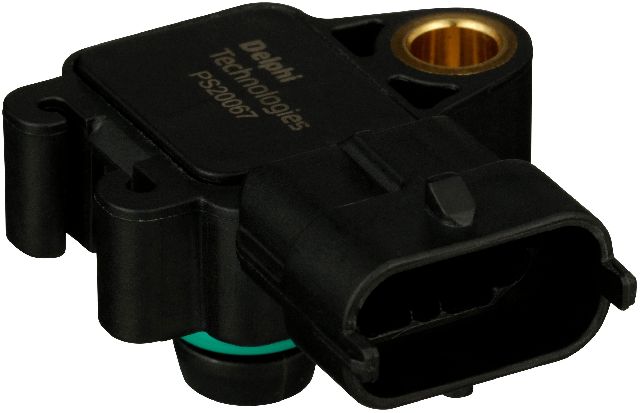
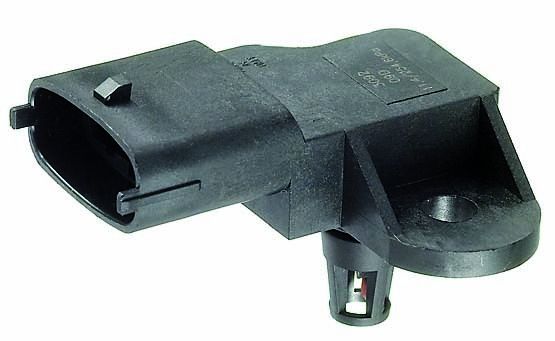
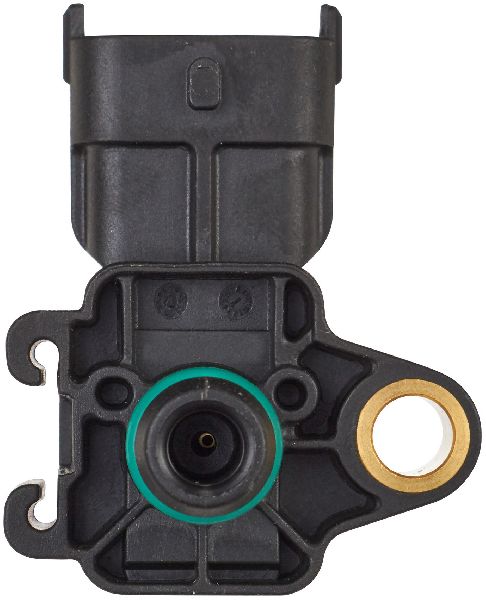
- Manifold Absolute Pressure (MAP) Sensor (for 2.8L V6)
(OEM #12787705)— This is the sensor that directly measures manifold pressure. If it fails its internal diagnostics or provides an erratic signal, it will trigger P0106. This part number is listed for the 2.8L V6 engine in the 2011 9-5.
Trusted brands: Genuine Saab, ACDelco, Bosch, TRISCAN
OEM price range: $150-$250
Aftermarket price range: $40-$90 - Manifold Absolute Pressure (MAP) Sensor (for 2.0L I4)
(OEM #55563262)— This sensor measures manifold pressure for the 2.0L LHU engine. It can fail due to contamination or age, leading to incorrect performance readings.
Trusted brands: ACDelco, Bosch, Standard Motor Products
OEM price range: $100-$180
Aftermarket price range: $30-$80
Related Codes That Often Appear With This One
- P0171 — If the P0106 is caused by a vacuum leak, the engine will run lean (too much air), which can trigger a P0171 (System Too Lean) code.
- P0300 — A lean air/fuel mixture or incorrect sensor readings caused by a vacuum leak or faulty MAP sensor can lead to engine misfires, triggering a P0300 (Random/Multiple Cylinder Misfire Detected) code.
- P0107 / P0108 — These codes indicate MAP sensor circuit low or high input, respectively. They point more directly to an electrical fault or a completely failed sensor, while P0106 indicates a performance/range issue that could be mechanical (leak) or electrical.
Mechanic-Grade Diagnostic Values
- MAP Sensor 5V Reference Voltage — expected: 4.8-5.2 V (at sensor connector terminal 1 to ground, ignition ON). Failure: Voltage outside this range indicates a wiring issue or a fault in the ECM (K20).
- MAP Sensor Low Reference (Ground) Circuit Resistance — expected: Less than 5 Ω (at sensor connector terminal 2 to chassis ground, ignition OFF). Failure: Resistance higher than 5 Ω indicates an open or high resistance in the ground circuit.
- MAP Sensor Reading at Idle (Scan Tool) — expected: 20-48 kPa (varies with altitude). Failure: A reading significantly higher than this at idle (e.g., close to BARO) suggests a large vacuum leak or a faulty sensor.
- MAP Sensor vs. Boost Pressure Sensor (Scan Tool) — expected: Readings should be within 20 kPa of each other during a wide-open throttle acceleration through the 1-2 shift.. Failure: A discrepancy larger than 20 kPa points to a fault with one of the sensors or a pressure leak between their measurement points.
- MAP Sensor Signal Voltage (with vacuum pump) — expected: Voltage should vary smoothly between 0-5 V as vacuum is applied and released.. Failure: Spikes, dropouts, or no change in voltage indicates a faulty MAP sensor.
Scan Tool Commands That Help
- Tech2 / GDS2: MAP Sensor Data Display — Used to monitor live MAP sensor pressure (in kPa) and compare it against the BARO reading with Key On, Engine Off (they should be nearly identical) and to observe its response at idle and during throttle snaps.
- Tech2 / GDS2: Boost Pressure Sensor Data Display — Used in conjunction with the MAP sensor display. During a test drive, comparing the MAP and Boost sensor readings can help determine if one is reading incorrectly, as they should track each other closely under boost.
Wiring & Ground Locations
- B74 MAP Sensor Connector (2.0L) — Typically mounted on the intake manifold.. This is the direct connection point for the sensor. Pin 1 is the 5V reference, Pin 2 is the low reference (ground), and Pin 3 is the signal wire. All voltage and resistance tests start here.
- G107 — In the engine compartment, forward of the battery.. This is a primary engine ground point. A poor connection here can cause erratic behavior from various engine sensors, including the MAP sensor, by creating an unstable ground reference for the ECM.
- G109 — In the engine compartment, on the left strut tower.. Another key engine compartment ground. The ECM and its associated sensors rely on clean ground paths. Corrosion or looseness at G109 can introduce electrical noise and sensor performance issues.
- G111 — In the engine compartment, rearward of the battery.. This ground point serves multiple components in the engine bay. A fault here could lead to intermittent and hard-to-diagnose electrical problems, potentially affecting the 5V reference or signal integrity for the MAP sensor circuit.
- K20 Engine Control Module (ECM) — Located in the right rear of the engine compartment.. The ECM supplies the 5V reference and ground to the MAP sensor and interprets its signal. All sensor wiring terminates here. A blocked BARO port on the ECM itself is a rare but possible cause of P0106.
Real Owner Repair Stories
- Reddit user in r/saab (2003 Saab 9-5 Aero (similar Trionic 7 system)) — Persistent P0106 code that would not clear.
❌ Tried (didn't work) Replaced all vacuum lines, Cleaned the throttle body, Replaced the MAP sensor
✅ What actually fixed it A loose hose clamp on the turbo blow-off valve hose. The clamp felt snug but was not tight enough to prevent a leak under certain conditions.
"I Checked Everything" — The Actual Cause
- A vacuum leak inside the brake booster can cause a P0106 code. This type of leak may not be found with a smoke test of the intake manifold alone, as the leak is internal to the booster and affects manifold vacuum via the booster's vacuum hose.
OEM Part Supersession History
12787705→N/A— This part for the 2.8L V6 is listed as discontinued by some suppliers.
Heads up: While listed as discontinued by some aftermarket suppliers, it may still be available as Genuine Saab or from specialty parts stores. Ensure any replacement is specified for the 2.8L turbo engine.
Diagnostic Flowchart
Real Owner Stories
Aggregated from forums and TSBs cited above. Mileages and costs reflect what owners reported in those sources.
Saab 9-5
Symptoms: Experienced rough starting and poor engine running conditions.
What fixed it: Replaced the MAP sensor, which resulted in a smoother start and better running engine.
Source hint: Saab Tech Talk forum thread titled 'Saab Tech Talk - PO106'
2003 Saab 9-5 Aero
Symptoms: Persistent P0106 code that did not resolve after replacing vacuum lines and the MAP sensor.
What fixed it: Tightened a loose hose clamp on the turbo blow-off valve that was not visually obvious.
Source hint: Reddit r/saab thread titled '2003 9-5 aero p0106'
2011-2017 Buick Regal 2.0L Turbo (Platform Mate)
Symptoms: Triggered a P0106 code due to unmetered air entering the engine.
What fixed it: Tightened loose intake manifold bolts as directed by the manufacturer bulletin.
Source hint: GM TSB #PIP5529B
Related OBD-II Codes
Frequently Asked Questions
Is there a specific TSB for the 2011 Saab 9-5 regarding the P0106 code?
Why is my turbocharged Saab 9-5 particularly prone to intake leaks causing a P0106?
Can a dirty throttle body cause a P0106 on my 2011 Saab 9-5?
I hear a hissing sound from the engine bay of my 9-5 along with the P0106 code. What does this mean?
How can I test the MAP sensor on my Saab 9-5 before buying a replacement?
Where should I look for hidden leaks if the main intake hoses look fine?
We Have This Part in Stock


The information in this article is provided for general reference and educational purposes only. Vehicle specifications, procedures, and part compatibility can vary by production date, trim level, and region. Always consult your vehicle's factory service manual and verify part numbers before purchasing or performing repairs. Safety-critical components such as airbags, seat belts, and braking systems should be installed by a qualified professional.
- Saab 9-5:
- 🧭 Diagnostic Flowchart
- 🛍️ Shop This Part
- What's Unique About the 2011-2011 Saab 9-5
- Symptoms You May Notice
- Most Likely Causes
- Rare But Worth Checking
- Diagnosis Steps
- Parts You'll Likely Need
- Related Codes That Often Appear With This One
- Mechanic-Grade Diagnostic Values
- Scan Tool Commands That Help
- Wiring & Ground Locations
- Real Owner Repair Stories
- "I Checked Everything" — The Actual Cause
- OEM Part Supersession History
- Real Owner Stories
- Saab 9-5
- 2003 Saab 9-5 Aero
- 2011-2017 Buick Regal 2.0L Turbo (Platform Mate)
- Related OBD-II Codes
- Frequently Asked Questions
- 🎟️ Get 5% Off