

P0106 on 2008-2013 Subaru Forester 2.0L Diesel: MAP Sensor Causes and Fixes
On the Subaru EE20 diesel engine, code P0106 is almost always caused by heavy soot buildup clogging the Manifold Absolute Pressure (MAP) sensor. The fix is to remove and clean the sensor and the intake manifold port, not just replace the sensor. This is a common issue for this specific diesel engine.
- Before buying a new MAP sensor for a P0106 code on a Subaru EE20 diesel, always remove and thoroughly clean both the sensor and its port in the intake manifold.
- Use only MAF or electrical parts cleaner; avoid harsh chemicals like brake cleaner that can damage the sensor.
- The root cause is a design characteristic of the engine's EGR and PCV systems, making this a common and recurring maintenance item.
- If cleaning doesn't work, verify wiring and check for intake leaks before condemning the sensor.
What's Unique About the 2008-2013 Subaru Forester
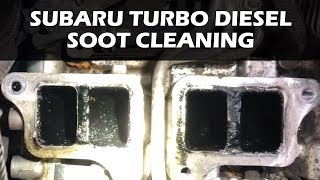
Unlike gasoline engines where this code often points to vacuum leaks or a faulty sensor, the Subaru EE20 2.0L diesel engine has a specific vulnerability. The combination of Exhaust Gas Recirculation (EGR) and crankcase ventilation systems can lead to a thick, oily soot buildup inside the intake manifold. This soot physically clogs the small port for the MAP sensor, insulating it from the actual manifold pressure and causing it to send incorrect readings. The sensor itself is often not faulty, but simply unable to function because it is completely encased in soot. This issue is exacerbated by short-trip driving patterns which don't allow the engine to get hot enough to burn off these deposits.
Symptoms You May Notice
- Check Engine Light is on
- Reduced engine power and poor acceleration (limp mode)
- Rough or unstable idle
- Hesitation during throttle input
- Decreased fuel efficiency
- Black smoke from the exhaust
- Engine stalling, especially at idle
- Surging idle where RPM bounces up and down
- Replacing the MAP sensor without first cleaning it and the intake port. Many owners will buy a new sensor, only to have the code return because the root cause—soot blockage—was not addressed.
- Confusing a MAP sensor issue with a DPF (Diesel Particulate Filter) problem. While DPF issues are also common on the EE20, they typically present with a dedicated DPF warning light and codes like P2463 or P242F, not P0106 directly. However, an unresolved intake pressure issue can lead to DPF problems.
Most Likely Causes
- Clogged MAP Sensor and/or Intake Manifold Port 🔴 High Probability → Shop Engine Intake Manifold The EE20 diesel engine's EGR and crankcase ventilation systems combine to create significant oily soot deposits in the intake tract, which directly clog the MAP sensor's sensing element and port. This is a widely documented issue in owner forums 🎬 Watch: See how soot builds up on the Subaru diesel. for the EE20 engine.
How to confirm: Remove the MAP sensor from the intake manifold. Visually inspect the sensor tip and the port it sits in for a thick, black, tar-like substance. If it's heavily coated, this is the likely cause. The sensor port can be completely blocked.
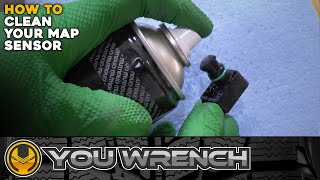
Typical fix: Carefully remove the MAP sensor. Clean the sensor element using a dedicated Mass Air Flow (MAF) or Electrical Parts cleaner spray; do not scrub or touch the delicate internal parts. 🎬 Watch: Step-by-step guide to cleaning your MAP sensor safely. Thoroughly clean the soot out of the sensor's port in the intake manifold using picks and rags, being careful not to drop debris inside. Reinstall the sensor and clear the code.
Est. part cost: $10-$20 for a can of MAF sensor cleaner. - Faulty MAP Sensor ⚪ Low Probability → Shop Manifold Absolute Pressure Sensor While the sensor itself is generally reliable on Subarus, it can fail electrically over time. However, this should only be considered after confirming the sensor and its port are perfectly clean. Many owners mistakenly replace the sensor when cleaning was all that was needed.
How to confirm: After cleaning the sensor and port, if the code returns, test the sensor's voltage output with a multimeter. The signal voltage should change smoothly with engine vacuum/pressure. Compare readings to the manufacturer's specifications. With the key on and engine off, the MAP reading should match the barometric pressure reading on a scan tool.
Typical fix: Replace the MAP sensor. Ensure the new sensor's O-ring is properly seated. The OEM part number for some models in this range is 22627-AA430.
Est. part cost: $50-$150 - Intake Air System Leak ⚪ Low Probability Less common on this diesel platform for this specific code compared to soot, but still possible. Hoses for the intercooler or intake can crack or come loose, creating a pressure discrepancy. A split intercooler pipe is a known issue on the EE20 engine.
How to confirm: Visually inspect all intake and vacuum hoses for cracks, loose connections, or damage, particularly the large-diameter hoses going to and from the intercooler. A smoke test can definitively identify hard-to-see leaks. Spraying brake cleaner near suspected leak areas while the engine is running and listening for a change in engine RPM can also help pinpoint a leak.
Typical fix: Replace the cracked hose or tighten the loose clamp.
Est. part cost: $20-$100 depending on the hose.
Rare But Worth Checking
- Wiring or Connector Issue: The wiring harness or connector for the MAP sensor could be damaged, corroded, or have a loose connection. This would cause an erratic signal even with a good sensor. Inspect the connector pins for corrosion and ensure a snug fit.
- Ice Formation on Sensor: In very cold climates, driving for extended periods can cause ice to form on the sensor, leading to a temporary P0106 code. A GM TSB for a similar diesel engine notes this issue. The problem often resolves itself after the engine warms up.
- Clogged Air Filter: A severely clogged engine air filter can restrict airflow to the point that it causes the MAP sensor to read outside of its expected range, triggering a P0106 code.
Diagnosis Steps
- Read the code with an OBD-II scanner to confirm P0106 is present.
- Locate the MAP sensor. On the EE20 engine, it is typically mounted on the intake manifold, easily accessible.
- Disconnect the electrical connector and remove the one or two bolts (often 10mm) holding the sensor in place.
- Carefully remove the sensor and inspect it and its mounting port for heavy soot buildup. Expect to find a thick, tar-like substance.
- If soot is present, clean the sensor's tip using only MAF sensor cleaner or electrical contact cleaner. Do not use brake cleaner or physically touch the sensing elements. Allow it to air dry completely for 15-20 minutes.
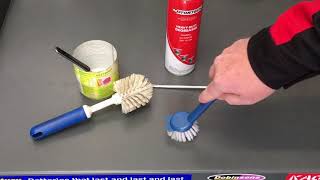
- Carefully clean the soot from the intake manifold port. A small pick, bottle brush, and rags can be used, being careful not to drop debris into the manifold. A vacuum can help extract loose particles.
- Reinstall the clean, dry sensor with its O-ring. Ensure the connector is securely fastened.
- Inspect all accessible intake hoses and vacuum lines for cracks or loose connections, paying close attention to intercooler piping.
- Clear the trouble code with the scanner. Perform an Idle Relearn Procedure. Start the engine and let it idle for 10 minutes for the ECU to relearn. Perform a test drive to see if the code returns.
- If the code returns, use a multimeter to test the sensor's wiring for proper voltage (typically a 5V reference, ground, and a signal wire) and check the signal wire's output while the engine is running.
Parts You'll Likely Need
- Manifold Absolute Pressure (MAP) Sensor
(OEM #22627-AA430)— This is the sensor that triggers the code. While it's most often just clogged with soot on the EE20 diesel, it can fail electrically and require replacement. The Denso part number is 079800-915#. Other Subaru MAP sensor part numbers exist for different models, so verifying the correct part for the specific vehicle is crucial.
Trusted brands: Denso, Bosch, FACET, Tridon
OEM price range: $100-$200
Aftermarket price range: $40-$120 - MAF Sensor Cleaner — This is the correct chemical to safely clean the soot off the delicate MAP sensor without leaving a residue or damaging the electronics. Electrical contact cleaner is also a safe alternative.
Trusted brands: CRC, Liqui Moly, WD-40 Specialist
Aftermarket price range: $10-$20
Technical Service Bulletins (TSBs) & Recalls
- While no specific TSB for P0106 on the EE20 was found, Subaru has issued service bulletins like 09-79-21R for other engines (e.g., FA/FB series) that detail procedures for cleaning carbon deposits from intake components to address various driveability issues, which supports the underlying cause of the P0106 code on the EE20.
Platform-Specific Known Issues
- The primary vehicle-specific issue is the severe soot buildup in the intake manifold from the EGR and crankcase ventilation systems, which is a well-documented characteristic of the EE20 diesel engine and the number one cause of P0106 on this platform.
- Owner Experience on subaruforester.org: A user on the subaruforester.org forum described a recurring P0106 code on their diesel Forester. After replacing the sensor didn't fix the issue, they discovered the port in the manifold was completely blocked with carbon. Cleaning the port resolved the problem permanently, highlighting the importance of cleaning beyond just the sensor itself.
Mechanic-Grade Diagnostic Values
- MAP Sensor 5V Reference Voltage — expected: ~5.0 Volts. Failure: Voltage significantly lower or higher than 5V indicates a wiring or ECU problem.
- MAP Sensor Signal Voltage (Key On, Engine Off) — expected: ~4.5 - 5.0 Volts. Failure: A low voltage reading suggests a faulty sensor or a wiring short.
- MAP Sensor Signal Voltage (Engine Idling, Warmed Up) — expected: ~1.0 - 2.0 Volts. Failure: Voltage remaining high (near 4.5V) indicates the sensor is not reading engine vacuum, likely due to a clog or internal failure. Voltage should decrease as vacuum increases.
Scan Tool Commands That Help
- Generic OBD-II Scanner or Subaru Select Monitor (SSM): Idle Relearn Procedure (Manual Process) — This is mandatory after disconnecting the battery or cleaning/servicing any part of the intake system, including the MAP sensor. Failing to do this can cause a rough or unstable idle even after the P0106 fix. The procedure involves a sequence of timed key-on, idle, and key-off steps to allow the ECU to recalibrate the throttle and idle settings.
- Subaru Select Monitor (SSM) or advanced scan tool (e.g., Gscan): DPF and Oil Dilution Reset — While not directly for P0106, these resets are critical for the EE20 engine's health. If P0106 was caused by excessive soot, the DPF may also be affected. After an oil change (which may be required due to fuel dilution from regeneration issues), the oil dilution counter in the ECU must be reset to prevent erroneous warnings.
Wiring & Ground Locations
- MAP Sensor Connector — On the intake manifold, connected to the MAP sensor.. The sensor has a 3-pin connector that provides its power, ground, and signal path to the ECU. A visual inspection for corrosion on the pins or damage to the harness is crucial. The pins are typically: Pin 1 - Signal, Pin 2 - Ground, Pin 3 - 5V Reference. Pinouts should be confirmed with a vehicle-specific wiring diagram, but testing can identify each wire's function.
Real Owner Repair Stories
- Commonly reported scenario on forums like subaruforester.org (Subaru Forester with EE20 Diesel Engine) — Check Engine Light with code P0106, limp mode, poor power, and rough idle.
❌ Tried (didn't work) Replacing the MAP sensor with a new one without cleaning the intake manifold.
✅ What actually fixed it The code returned shortly after replacing the sensor. The final fix was removing the new sensor and using a small pick and MAF cleaner to thoroughly clean a thick layer of carbon 'cake' out of the sensor's port in the intake manifold. The original sensor was often not faulty and worked fine once cleaned and reinstalled in the clean port. - Technician report on ds-automotives.co.uk (2013 Subaru XV 2.0L Diesel (EE20), 60k miles) — Flashing DPF light, oil dilution code, P2463 (Soot Accumulation). While not P0106, it demonstrates a related intake pressure problem.
❌ Tried (didn't work) Forced DPF regeneration., Off-car DPF cleaning and resetting adaptations.
✅ What actually fixed it The initial cause of excessive soot was a split intercooler pipe under the intercooler on the passenger side. After replacing the pipe, the DPF still wouldn't regenerate correctly and soot load would not drop below 60%. The ultimate final fix was a dealer software update for the ECU, which corrected a fault where the engine was regenerating too frequently and inefficiently.
OEM Part Supersession History
22627-AA430→N/A— This appears to be the stable part number for the specified vehicle range.
Heads up: Be cautious of similar part numbers like 22627AA470 or 22627AA350, which fit other Subaru models but may not be correct for the EE20 diesel. Always verify by VIN.
Model Year Variations Within This Range
- 2008-2013: The EE20 engine evolved to meet stricter emissions standards, resulting in Euro 4, Euro 5, and Euro 6 versions. Early models (approx. 2008-2009) are typically Euro 4, while later models moved to Euro 5. These versions have differences in their EGR, DPF, and common rail injection systems (e.g., Euro 4 uses Denso G2, Euro 6 uses G4). While the P0106 cause (soot) is common to all, diagnostics for related DPF or EGR issues may differ, and ECU software updates may be specific to certain versions.
Diagnostic Flowchart
Other Known Issues on This Vehicle
Issues unrelated to this code that are worth knowing about as an owner of this generation:
- Crankshaft Failure 🔴 High — Most common on early Euro 4 engines (approx. 2008-2011). Failures can occur between 50,000 to 80,000 miles. Later Euro 5/6 engines had revisions to address this, but the reputation remains.
- Diesel Particulate Filter (DPF) Clogging 🟠 Medium — Very common, especially for vehicles used primarily for short trips. The DPF requires regular, long-distance driving at highway speeds to perform its regeneration cycle and burn off soot.
- Injector Replacement Complexity 🟠 Medium — On Euro 4/5 versions of the EE20, replacing the fuel injectors is a very labor-intensive job that often requires removing the engine from the vehicle.
- Dual-Mass Flywheel (DMF) Failure 🟠 Medium — The DMF on manual transmission models is a known weak point that can fail, causing vibrations and requiring expensive replacement.
Used vs. New Parts: Buying Guide for This Vehicle
When a used part is the smart pick: For this specific repair, a used part is not recommended. The primary fix (cleaning) costs almost nothing, and if the sensor has failed electrically, a used one carries a high risk of being equally old or non-functional.
What to inspect on the donor part:
- Not applicable as used part is not recommended.
OEM-only on this vehicle (don't cheap out):
- While not strictly OEM-only, using the OEM Denso sensor is highly recommended for fitment and reliability. Cheap, unbranded online sensors are a common source of recurring issues.
Aftermarket brands forum-validated for this vehicle:
- Denso (is the OEM supplier)
- Bosch
Brands owners have reported issues with on this vehicle:
- Unbranded, no-name sensors from online marketplaces.
Real Owner Stories
Aggregated from forums and TSBs cited above. Mileages and costs reflect what owners reported in those sources.
2008-2013 Subaru Forester EE20 Diesel
Symptoms: Recurring P0106 code. Replacing the sensor did not fix the issue.
What fixed it: Cleaning the port in the manifold which was discovered to be completely blocked with carbon.
Source hint: subaruforester.org forum
Subaru Forester EE20 Turbo Diesel
Symptoms: P0106 code caused by soot buildup completely covering the MAP sensor.
What fixed it: Cleaning the sensor rather than replacement.
Source hint: MRT Performance (YouTube)
Related OBD-II Codes
Frequently Asked Questions
Is there a specific Subaru TSB for P0106 on the EE20 diesel engine?
What is the OEM part number for the MAP sensor if cleaning doesn't work on my Forester?
Can I use any cleaner to fix the P0106 code on my Subaru diesel?
Why is my EE20 engine so prone to clogging the MAP sensor?
Do I need to do anything after cleaning and reinstalling the sensor?
Are other Subaru models with the EE20 engine affected by this same issue?
Helpful Videos

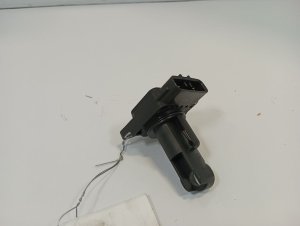
Used OEM Parts in Stock
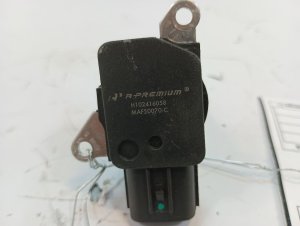
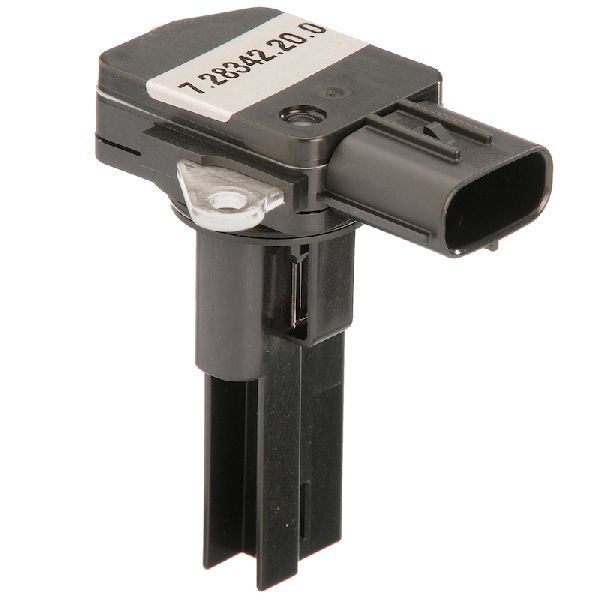
New Aftermarket Parts Available


The information in this article is provided for general reference and educational purposes only. Vehicle specifications, procedures, and part compatibility can vary by production date, trim level, and region. Always consult your vehicle's factory service manual and verify part numbers before purchasing or performing repairs. Safety-critical components such as airbags, seat belts, and braking systems should be installed by a qualified professional.
- Subaru Forester:
- 🧭 Diagnostic Flowchart
- 🎬 Helpful Videos
- 🛍️ Shop This Part
- What's Unique About the 2008-2013 Subaru Forester
- Symptoms You May Notice
- Most Likely Causes
- Rare But Worth Checking
- Diagnosis Steps
- Parts You'll Likely Need
- Technical Service Bulletins (TSBs) & Recalls
- Platform-Specific Known Issues
- Mechanic-Grade Diagnostic Values
- Scan Tool Commands That Help
- Wiring & Ground Locations
- Real Owner Repair Stories
- OEM Part Supersession History
- Model Year Variations Within This Range
- Other Known Issues on This Vehicle
- Used vs. New Parts: Buying Guide for This Vehicle
- Real Owner Stories
- 2008-2013 Subaru Forester EE20 Diesel
- Subaru Forester EE20 Turbo Diesel
- Related OBD-II Codes
- Frequently Asked Questions
- 🎟️ Get 5% Off