

P0106 on 2010-2014 Subaru Outback 2.5L: MAP Sensor Causes and Fixes
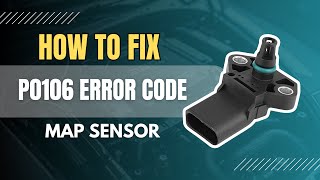
On a 2010-2014 Subaru Outback, code P0106 is most often caused by a faulty Manifold Absolute Pressure (MAP) sensor, a vacuum leak, or a dirty throttle body. Before replacing the sensor, inspect all vacuum hoses and clean the throttle body, as this is a common, low-cost fix, especially if the code appeared after the battery was disconnected.
- Before buying any parts for a P0106 code, first inspect all vacuum hoses for leaks.
- The most cost-effective first step is to clean the throttle body and perform an idle relearn procedure, as this is a very common fix for this specific vehicle.
- If cleaning the throttle body doesn't work, the MAP sensor itself is the next most likely culprit.
- The OEM part number for the MAP sensor is likely 22627-AA350.
What's Unique About the 2010-2014 Subaru Outback
For this generation of Subaru Outback, a P0106 code doesn't always mean the MAP sensor has failed. Owners and technicians frequently report that a dirty throttle body can cause identical symptoms. This often occurs after the battery has been disconnected, as the computer loses its learned idle position and becomes more sensitive to airflow disruptions from carbon buildup. Therefore, cleaning the throttle body and performing an idle relearn procedure 🎬 See this step-by-step guide for the Subaru idle relearn process should be one of the first diagnostic steps.
Symptoms You May Notice
- Check Engine Light is on
- Rough or unstable idle
- Engine hesitates or stumbles during acceleration
- Reduced fuel economy
- Engine may stall when coming to a stop
- Black smoke from the exhaust in some cases
- Difficulty starting the engine
- Immediately replacing the MAP sensor without first checking for vacuum leaks or cleaning the throttle body. A dirty throttle body is a very common and inexpensive fix for this code on these vehicles, especially after a battery change.
Most Likely Causes
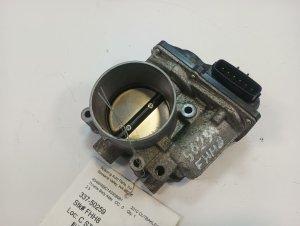
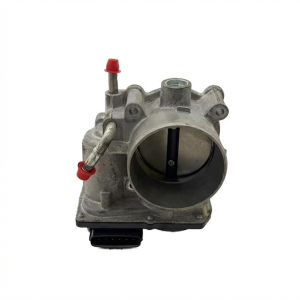
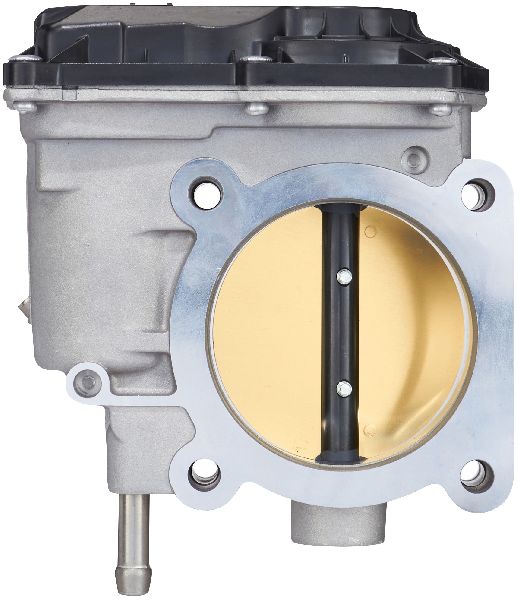
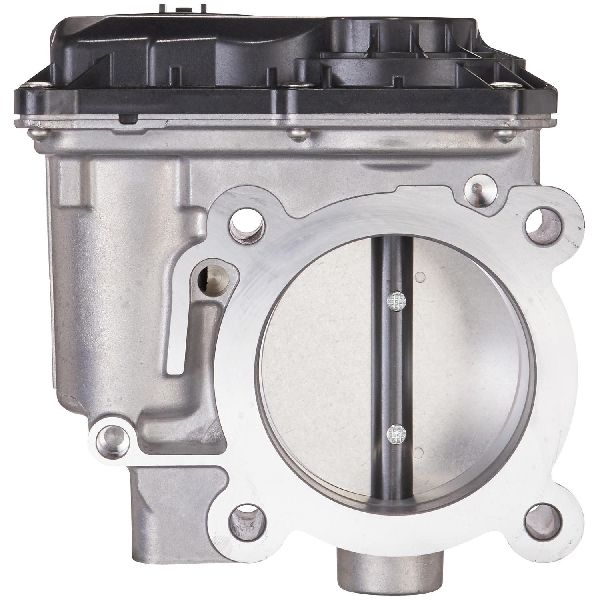
- Dirty Throttle Body 🔴 High Probability → Shop Fuel Injection Throttle Body Carbon and oil vapor from the PCV system can build up on the throttle plate, disrupting airflow at idle. This is a widely reported issue for this platform that can trigger a P0106 code, especially after the battery has been disconnected or replaced.
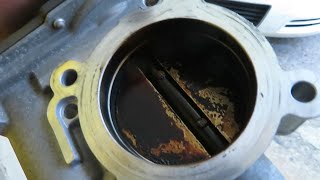
How to confirm: Visually inspect the inside of the throttle body for a layer of black carbon buildup. The engine may idle roughly or stall, particularly after coming to a stop.
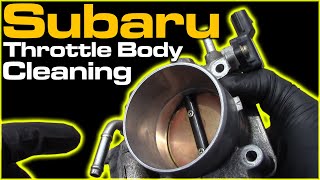
Typical fix: Remove the air intake duct, carefully clean the throttle plate and bore with throttle body cleaner 🎬 Watch: How to remove and clean your Subaru throttle body and a soft cloth, and perform an idle relearn procedure.
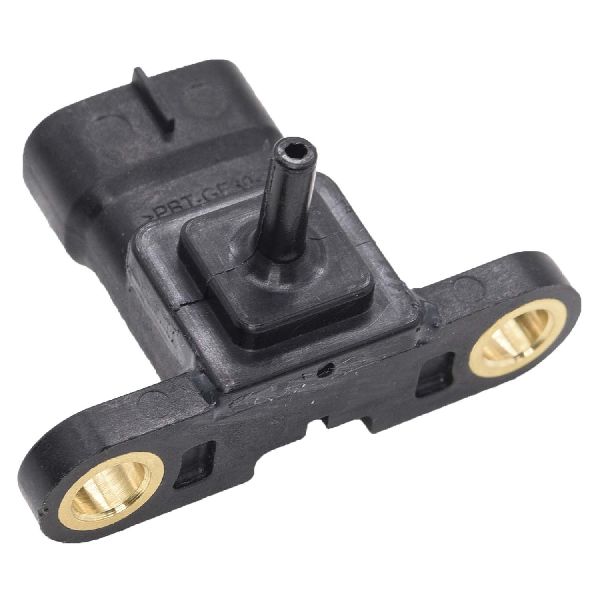
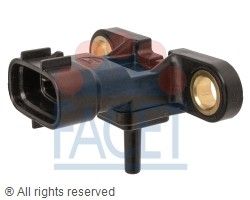
Est. part cost: $5-$15 - Faulty Manifold Absolute Pressure (MAP) Sensor 🟡 Medium Probability → Shop Manifold Absolute Pressure Sensor The sensor is a sensitive electronic component that can fail with age and heat cycles, or become contaminated by oil residue, sending incorrect voltage readings to the ECM.
How to confirm: After ruling out vacuum leaks and a dirty throttle body, test the sensor's voltage output with a multimeter or use a scan tool to observe its readings. With the key on and engine off, it should read atmospheric pressure. The voltage should change smoothly with engine vacuum. The sensor is located on top of the intake manifold and is easy to access.
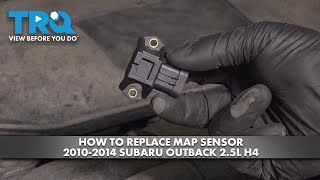
Typical fix: First, try removing and cleaning the sensor with brake or electronics cleaner. If the code persists, replace the MAP sensor. It is located on the top of the intake manifold and secured by one 8mm or 10mm bolt. 🎬 Watch: How to replace the MAP sensor on your Outback
Est. part cost: $40-$120 - Vacuum Leak 🟡 Medium Probability The rubber and plastic vacuum hoses on and around the intake manifold can become brittle and crack over time, allowing unmetered air to enter the engine and corrupting the MAP sensor's reading. The brake booster vacuum hose is a known potential leak point.
How to confirm: Visually inspect all vacuum hoses for cracks, loose fittings, or disconnection. A smoke test is the most effective way to find small, hard-to-see leaks. Alternatively, you can carefully spray starting fluid or propane around suspected leak areas with the engine running; a change in engine RPM indicates a leak has been found.
Typical fix: Replace the cracked or leaking vacuum hose(s).
Est. part cost: $5-$30 - Damaged Wiring or Connector ⚪ Low Probability
How to confirm: Visually inspect the MAP sensor's electrical connector and wiring for any signs of corrosion, damage, or loose pins. Wiggle the connector with the engine running to see if it affects the idle.
Typical fix: Repair the damaged section of wire or clean/replace the connector.
Est. part cost: $10-$50
Rare But Worth Checking
- Clogged Catalytic Converter: A severely restricted exhaust can increase pressure in the intake manifold, causing the MAP sensor reading to be out of range. This will usually be accompanied by other codes and a significant loss of engine power.
- Faulty Engine Control Module (ECM): This is extremely rare, but the ECM can fail internally. All other possibilities should be exhausted before considering ECM replacement.
Diagnosis Steps
- Scan for any other stored trouble codes to get more context.
- Visually inspect all vacuum hoses connected to the intake manifold. Pay close attention to the brake booster hose and other small hoses for any cracks, brittleness, or loose connections.
- Inspect the electrical connector on the MAP sensor for corrosion, damage, or loose pins.
- Remove the air intake hose from the throttle body. Inspect the throttle plate and bore for black carbon buildup. This is a very common cause.
- If dirty, clean the throttle body thoroughly with a dedicated cleaner and a soft rag. Do not spray excessive amounts directly into the intake.
- After cleaning, perform an idle relearn procedure. A common method is: disconnect the negative battery terminal for 30 minutes. Reconnect it. Turn the key to 'ON' (don't start) for 15 seconds. Start the engine and let it idle without touching the throttle or turning on any accessories (A/C, lights) for 10-20 minutes, or until the radiator fan cycles on and then off. Turn the engine off for at least 20 seconds before restarting for a test drive.
- If the code returns, test the MAP sensor. It is located on top of the intake manifold. Using a scan tool, check the live data to see if the MAP reading changes with engine RPM. Alternatively, use a multimeter to back-probe the signal wire and verify the voltage changes with vacuum.
- If the sensor tests bad or all other causes have been ruled out, replace the MAP sensor.
- Clear the code and perform a test drive to confirm the fix.
Parts You'll Likely Need
- Manifold Absolute Pressure (MAP) Sensor
(OEM #22627-AA350)— This sensor is the most common part to fail that triggers this code, after checking for vacuum leaks and a dirty throttle body.
Trusted brands: Denso, NTK, Subaru (OEM)
OEM price range: $90-$150
Aftermarket price range: $40-$80 - Throttle Body Cleaner — A dirty throttle body is a frequent cause of P0106 on this vehicle, and cleaning it is a cheap and effective first step.
Trusted brands: CRC, WD-40, Gumout
Aftermarket price range: $5-$15
Related Codes That Often Appear With This One
- P0107 — This code means 'MAP Circuit Low Input'. If you see P0106 and P0107 together, it more strongly points to a failed MAP sensor or a wiring issue.
- P030x (e.g., P0300, P0301) — These are cylinder misfire codes. An incorrect MAP sensor reading can cause the wrong air-fuel mixture, leading to misfires.
Platform-Specific Known Issues
- While no specific TSB for this Subaru model was found for P0106, other manufacturers have issued them for the same code caused by overly sensitive ECM software. For example, Volkswagen TSB V011423 for 2011-2014 models explicitly states not to replace parts for a P0106 before performing a software update. This highlights that the code can sometimes be a 'false positive' and reinforces the importance of checking simple mechanical issues like a dirty throttle body before replacing expensive sensors.
Mechanic-Grade Diagnostic Values
- MAP Sensor Signal Voltage (Key On, Engine Off) — expected: ~4.5-5.0 Volts (should match BARO reading). Failure: Voltage significantly lower than 5V, or not matching the BARO sensor reading on a scan tool.
- MAP Sensor Signal Voltage (Engine at Idle) — expected: 1.0 - 1.5 Volts. Failure: Voltage is erratic, stuck high (near 4.5V), or stuck low (near 0.5V).
- MAP Sensor Reference Voltage (at connector, KOEO) — expected: 5.0 Volts. Failure: Voltage is significantly below 5.0V or absent, indicating a wiring or ECM issue.
- MAP Sensor Live Data (Scan Tool, at Idle) — expected: 30-32 kPa. Failure: Reading is significantly higher or lower, or does not change when the throttle is snapped.
Scan Tool Commands That Help
- Subaru Select Monitor (or equivalent professional scanner): Current Data Display / Data Stream — To monitor live data from the 'Intake Manifold Absolute Pressure' sensor. This allows you to compare the MAP sensor reading to other sensors (like Throttle Position, RPM) in real-time to check for implausible signals.
- Subaru Select Monitor (or equivalent professional scanner): Throttle Learning / Idle Relearn — After cleaning or replacing the throttle body, a relearn procedure is critical. While it can often be done manually by disconnecting the battery, a scan tool can force the procedure, ensuring the ECM correctly learns the new idle airflow characteristics. This is especially important for resolving a P0106 that appeared after a battery disconnect.
Wiring & Ground Locations
- Engine Harness Grounds — On top of the engine, underneath the intake manifold, there are ground lugs for the main engine wiring harness, often secured by 12mm bolts.. A poor ground connection at these points can cause erratic signals from various engine sensors, including the MAP sensor, leading to a P0106 code. Cleaning these grounds is a crucial step if wiring issues are suspected.
- MAP Sensor Connector (E21) — The 3-pin female connector that plugs directly into the MAP sensor on top of the intake manifold.. This is the primary point for testing voltage (5V reference, ground, and signal). Corrosion or damage to the pins or wires at this connector is a common cause of MAP sensor codes.
Real Owner Repair Stories
- Reddit user in /r/MechanicAdvice (Vehicle make/model not specified, but behavior is identical to the Subaru issue.) — P0106 code appeared immediately after the car battery died and was replaced. The engine was idling very hard and stalling.
❌ Tried (didn't work) Replacing the MAP sensor., Clearing the DTC code (it kept returning).
✅ What actually fixed it The issue was resolved by thoroughly cleaning the throttle body with throttle body cleaner and then performing a manual idle relearn procedure (disconnecting the battery, then letting the car idle for 10 minutes without touching the accelerator).
OEM Part Supersession History
22627-AA350→22627-AA470— Part revision/update by Subaru.
Heads up: The new part number (22627AA470) is the correct replacement for the original (22627AA350) for the specified vehicle range.
Model Year Variations Within This Range
- 2010-2012: These model years are equipped with the EJ253 2.5L engine, which features a timing belt that requires replacement as a major service item (typically around 105,000 miles).
- 2013-2014: These model years transitioned to the FB25 2.5L engine. This engine uses a timing chain instead of a belt, eliminating that specific service interval. However, early FB engines (especially 2013) were known for potential oil consumption issues due to piston ring design. While the cause of P0106 is the same, the surrounding engine context is different.
Diagnostic Flowchart
Other Known Issues on This Vehicle
Issues unrelated to this code that are worth knowing about as an owner of this generation:
- Head Gasket Failure 🔴 High — Common after 100,000 miles. The 2010+ models with Multi-Layer Steel (MLS) gaskets are more reliable than prior generations, but failures (often external oil leaks) still occur.
- CVT Transmission Problems 🔴 High — Issues like shuddering, hesitation, and stalling were common enough for Subaru to issue a warranty extension (TSB 16-102-16R) to 10 years/100,000 miles for some model years. (Ref: TSB 16-102-16R (Warranty Extension))
- Excessive Oil Consumption 🟠 Medium — More prevalent on the 2013-2014 models equipped with the newer FB25 engine, but the EJ25 can also consume oil. Owners report needing to add a quart between oil changes. (Ref: Subaru TSB 02-157-14R addresses oil consumption on the FB engine.)
- Takata Airbag Inflator Recall 🔴 High — Affects all 2010-2014 models. A critical safety recall where the passenger-side airbag inflator can rupture upon deployment. (Ref: NHTSA Recall #15V323000 and others)
- Premature Headlight Bulb Failure 🟡 Low — A very common annoyance where low-beam headlight bulbs burn out frequently, sometimes within a year.
Used vs. New Parts: Buying Guide for This Vehicle
When a used part is the smart pick: For this repair, using a used part is generally not recommended for the MAP sensor itself due to its electronic nature and sensitivity. However, a used throttle body assembly from a low-mileage donor vehicle could be a cost-effective option if the original is damaged beyond cleaning.
Donor-vehicle mileage cap: roughly under 80000 miles for the part to have meaningful remaining life.
What to inspect on the donor part:
- For a throttle body, inspect the bore for deep scratches or scoring.
- Ensure the throttle plate moves smoothly without binding.
- Check that all electrical connectors are intact with no broken clips or corrosion.
OEM-only on this vehicle (don't cheap out):
- While not strictly 'OEM-only', using a reputable OEM supplier like Denso for the MAP sensor is highly recommended over generic, unbranded parts to ensure accurate readings and longevity.
Aftermarket brands forum-validated for this vehicle:
- Denso (often the OEM supplier)
- NTK
Brands owners have reported issues with on this vehicle:
- Unbranded, low-cost sensors from online marketplaces, as they are frequently cited in forums as being dead-on-arrival or failing quickly.
Real Owner Stories
Aggregated from forums and TSBs cited above. Mileages and costs reflect what owners reported in those sources.
2010-2014 Subaru Outback 2.5L
Symptoms: The car keeps kicking out a P0106 code even after the MAP sensor was replaced and the DTC was cleared.
What fixed it: Cleaning the throttle body and performing a specific idle relearn procedure (disconnecting battery, cycling the key to 'ON' for 15 seconds, and idling for 10-20 minutes).
Source hint: reddit.com/r/MechanicAdvice thread: 'Car keeps kicking out P0106 code - even after replacing the MAP sensor and clearing the DTC.'
2010-2012 Subaru Legacy 2.5i (EJ253)
Symptoms: Engine stalling when coming to a stop and reduced fuel economy.
What fixed it: Cleaning the electronic throttle body and addressing carbon buildup on the throttle plate.
Source hint: legacygt.com thread: 'throwing code p0106. help?'
2010-2014 Subaru Outback 2.5L — ~100000 miles
Symptoms: Check engine light with P0106 following a battery replacement.
What fixed it: Cleaning the throttle body and performing an idle relearn.
Source hint: subaruoutback.org forum discussions
Related OBD-II Codes
Frequently Asked Questions
Why did my 2010-2014 Outback throw a P0106 code immediately after I replaced the battery?
Is there a TSB for the CVT stalling or shuddering issues on my 2010-2014 Outback?
My 2013 Outback is using a lot of oil; is there a specific TSB for this?
Where is the MAP sensor located on the 2.5L EJ253 engine if I need to clean it?
Is there a safety recall I should be aware of for the 2010-2014 Outback models?
Can I use any cleaner to fix the P0106 code on my Subaru?
Helpful Videos
Used OEM Parts in Stock
New Aftermarket Parts Available


The information in this article is provided for general reference and educational purposes only. Vehicle specifications, procedures, and part compatibility can vary by production date, trim level, and region. Always consult your vehicle's factory service manual and verify part numbers before purchasing or performing repairs. Safety-critical components such as airbags, seat belts, and braking systems should be installed by a qualified professional.
- Subaru Outback:
- 🧭 Diagnostic Flowchart
- 🎬 Helpful Videos
- 🛍️ Shop This Part
- What's Unique About the 2010-2014 Subaru Outback
- Symptoms You May Notice
- Most Likely Causes
- Rare But Worth Checking
- Diagnosis Steps
- Parts You'll Likely Need
- Related Codes That Often Appear With This One
- Platform-Specific Known Issues
- Mechanic-Grade Diagnostic Values
- Scan Tool Commands That Help
- Wiring & Ground Locations
- Real Owner Repair Stories
- OEM Part Supersession History
- Model Year Variations Within This Range
- Other Known Issues on This Vehicle
- Used vs. New Parts: Buying Guide for This Vehicle
- Real Owner Stories
- 2010-2014 Subaru Outback 2.5L
- 2010-2012 Subaru Legacy 2.5i (EJ253)
- 2010-2014 Subaru Outback 2.5L — ~100000 miles
- Related OBD-II Codes
- Frequently Asked Questions
- 🎟️ Get 5% Off