

P0106 on 2009-2013 Toyota Corolla: MAP Sensor Range/Performance Causes and Fixes
This code usually points to a faulty Manifold Absolute Pressure (MAP) sensor or a vacuum leak on your Corolla. Before buying parts, check all vacuum hoses connected to the intake manifold for cracks or loose fittings. If no leaks are found, the MAP sensor is the next likely culprit, costing around $40-$80 for an aftermarket part. In some cases, a dirty throttle body can trigger this code after a battery disconnect, requiring a cleaning and idle relearn procedure.
- P0106 on a 2009-2013 Corolla means the MAP sensor signal is out of range.
- Do NOT confuse the MAP sensor on the intake manifold with the MAF sensor on the airbox.
- The most common causes are a bad MAP sensor or a cracked vacuum hose.
- If the code appeared after a battery change, try cleaning the throttle body and performing an idle relearn first.
- The OEM part number for the MAP sensor is 89421-20200.
What's Unique About the 2009-2013 Toyota Corolla
On the 1.8L 2ZR-FE engine, a common point of confusion for DIYers is mistaking the Mass Airflow (MAF) sensor for the MAP sensor. The MAF is on the air filter box, while the MAP sensor is mounted directly on the intake manifold. Many owners mistakenly clean or replace the MAF sensor for this code, which will not resolve the issue. The problem is almost always related to the MAP sensor itself, its wiring, or a vacuum leak from a cracked hose or bad intake gasket. A less common but notable cause on this platform is the code appearing after the battery has been disconnected or replaced, which can sometimes be resolved by cleaning the throttle body and performing an idle relearn procedure.
Symptoms You May Notice
- Check Engine Light is on
- Rough or unstable idle
- Hesitation or stumbling during acceleration
- Reduced fuel economy
- Black smoke from the exhaust in some cases
- Difficulty starting the engine
- Engine stalling at stops
- Replacing the Mass Airflow (MAF) sensor. The MAF sensor is located on the air intake tube, not the intake manifold. While it also measures air, it is a different system. Many DIY videos and forums confuse the two sensors.
Most Likely Causes
- Faulty Manifold Absolute Pressure (MAP) Sensor 🔴 High Probability → Shop Manifold Absolute Pressure Sensor Sensors can fail over time due to heat cycles and internal wear, leading to incorrect voltage signals. Contamination from oil vapor can also degrade the sensor's accuracy.
How to confirm: With the engine off, use a scan tool to check if the MAP reading is close to the BARO (barometric pressure) reading; they should be nearly identical. At idle, the reading should be a steady, low pressure (high vacuum). If the readings are erratic or do not change with engine RPM, the sensor is likely faulty. A handheld vacuum pump can also be used to apply vacuum to the sensor and watch for a corresponding, smooth voltage drop on a multimeter. 🎬 Watch: How to diagnose a MAP sensor using a multimeter.
Typical fix: Replace the MAP sensor. It is typically held in by one or two bolts on the intake manifold and is easily accessible.
Est. part cost: $40-$120 - Vacuum Leak 🟡 Medium Probability Rubber vacuum hoses, particularly the PCV hose, can become brittle and crack with age and exposure to engine heat, creating an unmetered air leak that confuses the MAP sensor. Intake manifold gaskets can also fail.
How to confirm: Visually inspect all vacuum lines connected to the intake manifold for cracks or disconnections. A smoke test is the most effective way to find small leaks in the intake system, including the manifold gasket itself. Spraying brake cleaner or starter fluid around suspected leak areas and listening for a change in engine idle can also pinpoint a leak.
Typical fix: Replace the cracked vacuum hose or faulty gasket.
Est. part cost: $5-$50 - Damaged Wiring or Connector ⚪ Low Probability The wiring harness or connector for the MAP sensor can become corroded or damaged, leading to a poor connection. Vibration and heat can cause wires to fray or break internally over time.
How to confirm: Inspect the MAP sensor connector for corrosion, moisture, or pushed-out pins. Check the wiring for continuity (5V reference, ground, and signal) using a multimeter. Wiggle the harness while monitoring the live data on a scan tool to see if the reading fluctuates.
Typical fix: Repair the damaged wire or replace the connector pigtail.
Est. part cost: $10-$30
Rare But Worth Checking
- Clogged Catalytic Converter: A severely restricted exhaust can create backpressure that affects intake manifold pressure, potentially triggering a P0106 code. You would likely have other codes, like P0420, and a severe lack of engine power.
- Faulty Engine Control Module (ECM): This is very rare. The ECM itself can fail, but all other possibilities should be exhausted before considering ECM replacement.
- Dirty or Faulty Throttle Body: → Shop Fuel Injection Throttle Body A heavily carboned throttle body can affect airflow characteristics at idle. Some owners report that a P0106 code appeared after disconnecting the battery, which clears the ECM's learned idle values. Cleaning the throttle body and performing an idle relearn procedure can resolve this specific scenario.
Diagnosis Steps
- Read the codes: Use an OBD-II scanner to confirm P0106 is present and check for any other codes.
- Visual Inspection: Check the air filter to ensure it's not excessively dirty. Inspect the area around the intake manifold for obvious signs of damage, cracked hoses, or loose connections.
- Check for Vacuum Leaks: Carefully inspect all vacuum hoses connected to the intake manifold for cracks, breaks, or loose connections. Pay close attention to the PCV hose and brake booster line. A smoke test is the most reliable method for finding hidden leaks.
- Inspect the MAP Sensor and Connector: Locate the MAP sensor on the intake manifold. Disconnect the electrical connector and inspect for corrosion, moisture, or damage. Ensure the wiring is secure.
- Test the MAP Sensor with a Scan Tool: Monitor the live data from the MAP sensor. With the Key On, Engine Off (KOEO), the MAP reading should be close to the Barometric Pressure (BARO) reading. At idle, it should show a low pressure (high vacuum). Revving the engine should cause the pressure reading to change instantly.
- Test the Wiring: If the sensor readings are suspect, use a multimeter to check for proper voltage and ground at the sensor's connector. You should find a 5-volt reference, a ground, and a signal wire that varies with pressure.
- Consider a Throttle Body Service: If the code appeared after a battery replacement or disconnect, consider cleaning the throttle body and performing an idle relearn. Disconnect the battery, clean the throttle plate and bore, reconnect, and let the car idle for 10 minutes without touching the accelerator. 🎬 Watch this walkthrough of the Toyota idle relearn procedure.
- Replace the MAP Sensor: If vacuum leaks and wiring issues have been ruled out, the MAP sensor itself is the most likely culprit. Replace it, clear the code, and perform a test drive.
Parts You'll Likely Need
- Manifold Absolute Pressure (MAP) Sensor
(OEM #89421-20200)— This sensor is the most common part to fail, causing the P0106 code when its internal components wear out and send incorrect voltage signals.
Trusted brands: Denso (OEM Manufacturer), Standard Motor Products, Delphi
OEM price range: $150-$240
Aftermarket price range: $40-$120 - Vacuum Hose — Rubber hoses crack over time, causing vacuum leaks that throw off the MAP sensor's readings. The PCV hose is a common failure point.
Trusted brands: Continental, Gates
OEM price range: $15-$40
Aftermarket price range: $5-$20
Related Codes That Often Appear With This One
- P0171 — If a vacuum leak is the cause of P0106, the engine will run lean as unmetered air enters the intake, which can trigger a P0171 (System Too Lean) code.
- P0107 — This code indicates MAP sensor voltage is too low, which can occur alongside P0106 if the sensor has an internal short or wiring issue.
- P0108 — This code indicates MAP sensor voltage is too high, which can occur with P0106 if the sensor has failed or there is an open in the ground or signal circuit.
Technical Service Bulletins (TSBs) & Recalls
- T-SB-0087-09: While not directly for P0106, this TSB addresses a common 2ZR-FE engine issue where a faulty VVT gear causes a rattling noise on cold starts. It's a key platform-specific problem owners should be aware of.
Platform-Specific Known Issues
- Idle Relearn After Battery Disconnect: A number of owners have reported the P0106 code appearing immediately after replacing or disconnecting the vehicle's battery. This can happen because the ECM loses its learned idle position. A thorough cleaning of the throttle body followed by an idle relearn procedure (letting the car idle uninterrupted for 10 minutes) often resolves the code without needing to replace the MAP sensor.
Mechanic-Grade Diagnostic Values
- MAP Sensor Signal Voltage (Key On, Engine Off) — expected: Approx. 4.5 - 4.9 Volts, should be nearly equal to the BARO sensor reading on a scan tool.. Failure: Voltage is significantly lower or does not match the BARO reading, indicating a sensor or wiring issue.
- MAP Sensor Signal Voltage (Engine at Idle) — expected: Approx. 1.0 - 1.5 Volts.. Failure: Voltage is significantly higher or erratic, suggesting a vacuum leak or a faulty sensor.
- MAP Sensor Signal Voltage (Sharp Acceleration / Wide Open Throttle) — expected: Should jump quickly to approx. 4.5 Volts.. Failure: Voltage does not respond, responds slowly, or shows erratic spikes/dips, indicating a failing sensor.
- MAP Sensor 5V Reference Wire Voltage — expected: Approx. 4.8 - 5.2 Volts DC with key on, engine off.. Failure: Voltage is below 4.8V or absent, indicating a problem with the ECM or the wiring harness.
- MAP Sensor Ground Wire Voltage — expected: Less than 0.1 Volts (100 millivolts).. Failure: Voltage is higher than 0.1V, indicating a poor ground connection which can skew sensor readings.
- Bench Test with Handheld Vacuum Pump — expected: Starting near 4.5V at 0 inHg, voltage should drop smoothly as vacuum is applied (e.g., ~1.3V at 20 inHg).. Failure: Voltage does not change or drops erratically as vacuum is applied, confirming a faulty sensor.
Scan Tool Commands That Help
- Toyota Techstream: Live Data / Data List Monitoring — Use this to monitor the 'MAP' parameter in real-time. With the engine off, compare it to the 'BARO' reading. While running, watch for smooth transitions as you apply and release the throttle. Graphing the data can help spot intermittent glitches that a simple number display might miss.
Wiring & Ground Locations
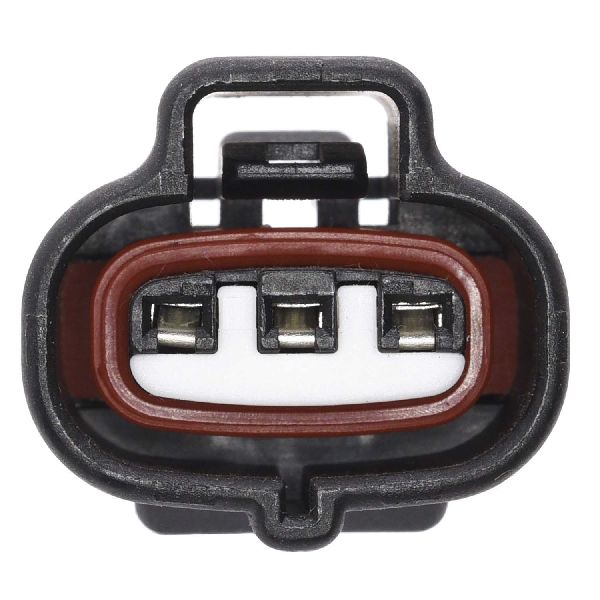
- MAP Sensor Connector (3-wire) — Mounted directly on the intake manifold, near the throttle body.. This is the primary connection point for all sensor tests. Corrosion or damage here is a common cause of P0106. The typical Toyota pinout is: Pin 1 for Signal, Pin 2 for 5V Reference, and Pin 3 for Ground.
- ECM Ground — The main engine control module grounds are typically located on the engine block or cylinder head, secured by a bolt. A wiring diagram is needed to confirm the exact point for the 2ZR-FE.. A poor ECM ground can cause a variety of sensor codes, including P0106, by creating voltage offsets that corrupt the sensor's signal.
Real Owner Repair Stories
- Ross-Tech Forums user (Volkswagen (similar MAP sensor logic)) — Persistent P0106 code.
❌ Tried (didn't work) Replacing the PCV diaphragm.
✅ What actually fixed it The final fix was replacing a faulty charcoal canister purge valve (N80 valve) and cleaning oil fouling from the MAP sensor and throttle body. This indicates that issues in the EVAP system can sometimes manifest as a MAP sensor code. - Reddit r/G37 user (Infiniti G37 (similar MAP sensor logic)) — Service Engine Soon light with P0106 code.
❌ Tried (didn't work) Initial diagnosis pointed towards sensor failure.
✅ What actually fixed it The issue was resolved by first tightening loose intake piping clamps to rule out vacuum leaks, then removing and cleaning the MAP sensor with dedicated MAF/MAP sensor cleaner. After letting it dry and reinstalling, the code did not return.
OEM Part Supersession History
89421-20200→89421-71020— Part consolidation and potential minor internal revisions. The part is used across a wide range of Toyota, Lexus, and Scion vehicles.
Heads up: While many aftermarket sensors cross-reference these numbers, quality can be very poor. Some owners report cheap aftermarket sensors being dead-on-arrival or failing quickly. Sticking with the OEM manufacturer (Denso) is highly recommended.
Model Year Variations Within This Range
- 2010-2013: Vehicle Stability Control (VSC) became standard on all U.S. models from 2010 onwards. While not directly related to the MAP sensor, the integration of more complex electronic systems means that post-2010 models have more potential for complex electrical diagnostic paths if wiring is suspect.
Diagnostic Flowchart
Other Known Issues on This Vehicle
Issues unrelated to this code that are worth knowing about as an owner of this generation:
- Excessive Oil Consumption 🔴 High — Most prominent in early production 2009-2010 models. Caused by low-tension piston rings that allow oil to bypass into the combustion chamber. Owners may need to add a quart of oil every 1,000-2,000 miles. (Ref: Toyota addressed this with warranty extensions and, in some cases, an ECU firmware update for early models.)
- VVT Cam Gear Rattle on Cold Start 🟠 Medium — Common issue where a brief, loud metallic rattle occurs for 1-3 seconds on a cold start. It's caused by a faulty VVT gear lock pin. While alarming, it does not typically lead to immediate engine failure but can cause premature wear. (Ref: Toyota issued T-SB-0087-09 for the 2009 Corolla/Matrix, identifying the faulty camshaft timing gear assembly as the cause.)
- Water Pump Failure 🟠 Medium — The water pump is a known failure point, sometimes failing as early as 30,000 miles, though it can happen at any mileage. Symptoms include coolant leaks (pink residue) under the engine or a whining/buzzing noise. (Ref: No specific recall, but it's a widely acknowledged repair. Toyota has covered some replacements under warranty.)
- Failing Starter Motor 🟡 Low — At higher mileage, the starter motor can fail, resulting in a single click sound when trying to start the engine, even with a good battery.
Used vs. New Parts: Buying Guide for This Vehicle
When a used part is the smart pick: For this repair, a used OEM MAP sensor from a low-mileage donor vehicle is a reasonable choice. Given the high cost of a new OEM sensor and the questionable reliability of many aftermarket alternatives, a tested, used Denso sensor from a reputable salvage yard can be a cost-effective and reliable solution.
Donor-vehicle mileage cap: roughly under 80000 miles for the part to have meaningful remaining life.
What to inspect on the donor part:
- Check the donor vehicle's VIN for accident history; avoid parts from front-end collisions.
- Inspect the sensor's plastic housing for any cracks or signs of heat stress.
- Ensure the electrical connector pins are clean, straight, and free of corrosion.
- Ask the salvage yard if they test sensors or offer a warranty (e.g., 30-day exchange).
Aftermarket brands forum-validated for this vehicle:
- Denso (OEM manufacturer, best choice)
- Standard Motor Products (SMP)
- Delphi
Brands owners have reported issues with on this vehicle:
- Unbranded, no-name sensors from online marketplaces like AliExpress or eBay are frequently reported as faulty out of the box or failing within a short period.
Real Owner Stories
Aggregated from forums and TSBs cited above. Mileages and costs reflect what owners reported in those sources.
2009-2013 Toyota Corolla 1.8L 2ZR-FE
Symptoms: The car keeps kicking out a P0106 code even after attempts to clear it. The issue started specifically after the vehicle's battery died.
What fixed it: Cleaning the throttle body and performing an idle relearn procedure to allow the ECM to recalibrate.
Source hint: Reddit r/MechanicAdvice: P0106 after battery died
Related OBD-II Codes
Frequently Asked Questions
Why did my 2009 Corolla trigger a P0106 code immediately after I replaced the battery?
Does T-SB-0087-09 explain why my 2ZR-FE engine has a P0106 code?
Is there a specific vacuum hose on the 1.8L 2ZR-FE prone to causing this code?
Can oil consumption issues on my 2010 Corolla affect the MAP sensor?
My Pontiac Vibe has a P0106; is the fix the same as the Toyota Corolla?
Helpful Videos
![How to Fix P0106 Engine Code in 2 Minutes [1 DIY Method / Only $11.78]](https://img.youtube.com/vi/p7cjbS5B6OI/mqdefault.jpg)
We Have This Part in Stock


The information in this article is provided for general reference and educational purposes only. Vehicle specifications, procedures, and part compatibility can vary by production date, trim level, and region. Always consult your vehicle's factory service manual and verify part numbers before purchasing or performing repairs. Safety-critical components such as airbags, seat belts, and braking systems should be installed by a qualified professional.
- Toyota Corolla:
- 🧭 Diagnostic Flowchart
- 🎬 Helpful Videos
- 🛍️ Shop This Part
- What's Unique About the 2009-2013 Toyota Corolla
- Symptoms You May Notice
- Most Likely Causes
- Rare But Worth Checking
- Diagnosis Steps
- Parts You'll Likely Need
- Related Codes That Often Appear With This One
- Technical Service Bulletins (TSBs) & Recalls
- Platform-Specific Known Issues
- Mechanic-Grade Diagnostic Values
- Scan Tool Commands That Help
- Wiring & Ground Locations
- Real Owner Repair Stories
- OEM Part Supersession History
- Model Year Variations Within This Range
- Other Known Issues on This Vehicle
- Used vs. New Parts: Buying Guide for This Vehicle
- Real Owner Stories
- 2009-2013 Toyota Corolla 1.8L 2ZR-FE
- Related OBD-II Codes
- Frequently Asked Questions
- 🎟️ Get 5% Off