

P0106 on 2005-2015 Toyota Tacoma 4.0L V6: MAP/BARO Sensor Causes and Fixes
On the Tacoma 4.0L V6, code P0106 is misleading. This engine has no separate MAP sensor; the code points to a problem with the Barometric Pressure Sensor (BPS) located inside the Mass Airflow (MAF) sensor. The most common fix is cleaning the MAF sensor with a dedicated cleaner or replacing the entire MAF sensor assembly, which is the original equipment supplier. A vacuum leak is the second most likely cause.
- P0106 on a 4.0L Tacoma does NOT mean you have a bad MAP sensor; the engine doesn't have one. The problem is with the Barometric Pressure Sensor inside your Mass Airflow (MAF) sensor.
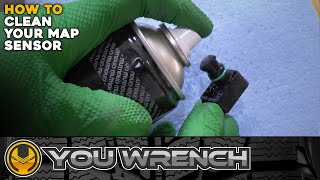
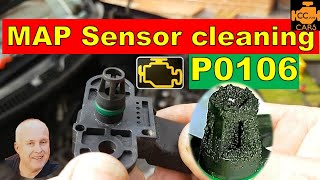
- The first and most cost-effective step is to try cleaning the MAF sensor with a dedicated MAF cleaner spray.
- If cleaning doesn't fix it, the next step is to replace the entire MAF sensor assembly, preferably with an OEM Denso unit.
- Before replacing any parts, perform a thorough visual inspection of all vacuum lines for cracks, damage, or loose connections, as this is a common and inexpensive fix.
What's Unique About the 2005-2015 Toyota Tacoma
A critical point for the 1GR-FE 4.0L V6 engine is that it does not use a traditional, separate Manifold Absolute Pressure (MAP) sensor. Instead, it uses a Mass Airflow (MAF) sensor that has an integrated Barometric Pressure (BPS) sensor. Therefore, when a P0106 code appears, it is not pointing to a standalone MAP sensor on the intake manifold, but rather to a performance issue with the BPS portion of the MAF sensor assembly. This often causes confusion, as mechanics and owners may search for a part that doesn't exist on this engine.
Symptoms You May Notice
- Check Engine Light is on
- Rough or unstable idle
- Engine stalling, especially when coming to a stop
- Hesitation or lack of power during acceleration
- Reduced fuel economy
- Difficulty starting the engine
- Black smoke from the exhaust in some cases, indicating a rich fuel mixture.
- Engine backfiring or running erratically.
- Searching for and attempting to replace a standalone MAP sensor, which does not exist on the 1GR-FE engine. The issue lies with the MAF/BPS sensor assembly.
- Replacing the MAF sensor without first checking for vacuum leaks, which are a common and cheaper-to-fix underlying cause.
Most Likely Causes
- Dirty or Faulty Mass Airflow (MAF) / Barometric Pressure (BPS) Sensor 🔴 High Probability The BPS is integrated into the MAF sensor, which is located in the main air intake path. Over time, it can become contaminated with dirt, oil, and other debris, causing erratic readings. The delicate sensing elements are sensitive to contamination.
How to confirm: Remove the MAF sensor from the air intake tube and visually inspect the small sensor wires. If they appear dirty or coated in grime, cleaning is necessary. A more advanced check involves using a scan tool with the key on and engine off; the MAP reading should be very close to the BARO reading. If they differ significantly, the sensor is likely faulty.
Typical fix: First, attempt to clean the sensor using a dedicated MAF sensor cleaner spray. Do not use brake cleaner or touch the delicate wires. Spray the internal elements 8-10 times and allow it to air dry completely for at least 15-20 minutes before reinstalling. If cleaning fails, replace the entire MAF sensor assembly. Using an OEM Denso sensor is highly recommended.
Est. part cost: $15-$25 (cleaner), $100-$200 (new Denso sensor) - Vacuum Leak 🟡 Medium Probability Rubber vacuum hoses, intake gaskets, and the PCV hose can crack, perish, or become loose over time due to age and heat cycles, allowing unmetered air to enter the engine and disrupt the pressure readings.
How to confirm: Visually inspect all vacuum hoses connected to the intake manifold for cracks or disconnections. Listen for a hissing sound at idle. A common culprit can be the U-shaped hose running to the brake booster, which can rub against other components and develop a hole. A professional can perform a smoke test to pinpoint the exact location of a hard-to-find leak.
Typical fix: Replace the cracked or leaking vacuum hose or gasket. Secure any loose connections.
Est. part cost: $5-$50 - Dirty Throttle Body ⚪ Low Probability → Shop Fuel Injection Throttle Body
How to confirm: Remove the intake boot from the throttle body and inspect the throttle plate and bore for significant carbon buildup. This can cause the throttle plate to not close properly, leading to incorrect pressure readings at idle.
Typical fix: Clean the throttle body and throttle plate with a dedicated throttle body cleaner and a soft cloth or brush.
Est. part cost: $10-$20 (cleaner) - Damaged Wiring or Connector to MAF Sensor ⚪ Low Probability
How to confirm: Inspect the electrical connector and wiring harness leading to the MAF sensor for any signs of corrosion, damage, loose pins, or water intrusion. A multimeter can be used to check for the correct 5V reference signal and ground integrity at the connector.
Typical fix: Repair the damaged wiring or clean/replace the connector.
Est. part cost: $10-$100
Rare But Worth Checking
- Clogged Engine Air Filter: A severely clogged air filter can restrict airflow enough to cause an implausible pressure reading. Always check the filter as a basic first step.
- Clogged Catalytic Converter: A clogged catalytic converter can create excessive backpressure in the exhaust, which can affect intake manifold pressure and potentially trigger a P0106 code. This is usually accompanied by other codes and a more severe loss of power.
- Faulty Engine Control Module (ECM): This is very rare, but the ECM can fail and misinterpret sensor data. This should only be considered after all other possibilities have been thoroughly ruled out by a professional.
Diagnosis Steps
- Read the trouble codes with an OBD-II scanner and confirm P0106 is present. Note any other codes, especially misfire (P030x) or lean (P017x) codes.
- Acknowledge that the 1GR-FE V6 uses a MAF sensor with an integrated BPS, not a separate MAP sensor.
- With the Key On, Engine Off (KOEO), use a scan tool to compare the MAP sensor reading to the BARO sensor reading. They should be nearly identical. If not, the sensor is likely faulty.
- Inspect the engine air filter and replace it if it is dirty or clogged.
- Visually inspect all vacuum hoses connected to the intake manifold and air intake system for obvious cracks, breaks, or loose connections. Pay close attention to the PCV hose and the brake booster line.
- Locate the MAF sensor on the air intake tube after the air filter box. Inspect its electrical connector for corrosion or damage.
- Carefully remove the MAF sensor (typically held by two Phillips head screws). Visually inspect the internal wires for dirt or oil contamination.
- Using a dedicated MAF sensor cleaner, spray the sensor elements. DO NOT use brake cleaner or touch the wires. Allow it to air dry completely for at least 15-20 minutes.
- While the sensor is out, inspect and clean the throttle body if significant carbon buildup is present.
- Reinstall the clean, dry MAF sensor and clear the trouble codes with the scanner.
- Test drive the vehicle. If the code returns, the MAF sensor assembly is likely faulty and requires replacement. Choose a quality OEM Denso part.
- If the code still persists after replacing the sensor, a smoke test should be performed by a professional to find a hard-to-see vacuum leak.
Parts You'll Likely Need
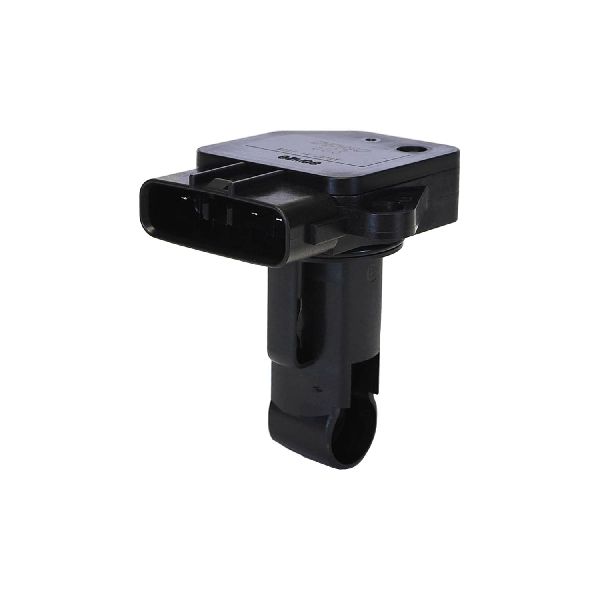
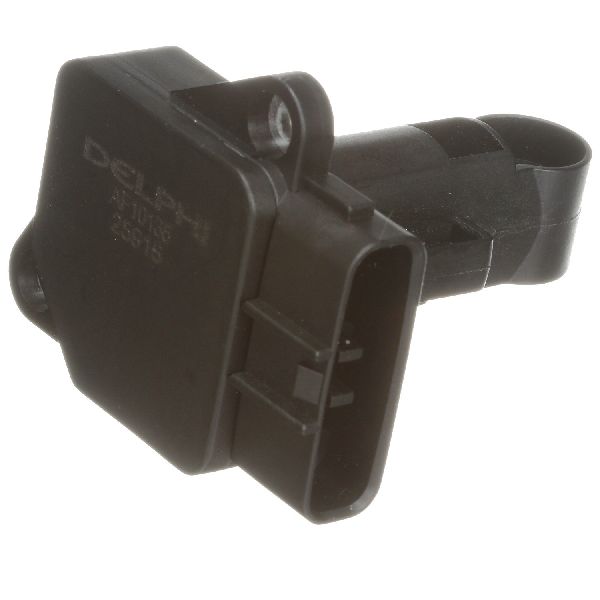
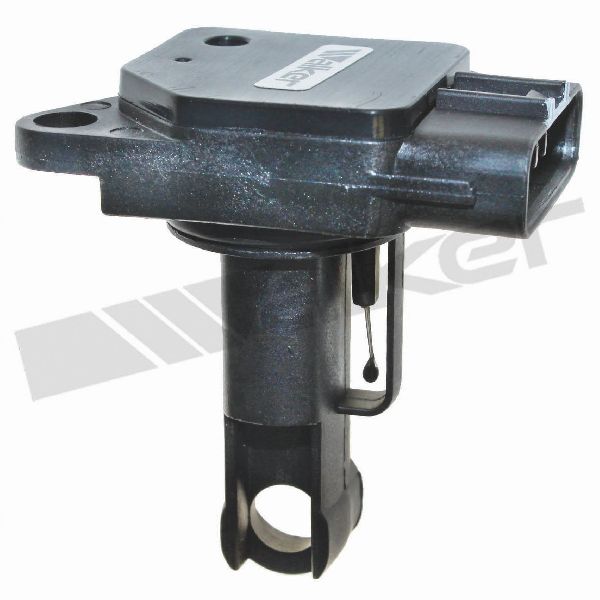
- Mass Airflow (MAF) Sensor
(OEM #22204-22010 (supersedes 22204-0C020, 22204-0D030). Also check 22204-31020 for some applications.)— This assembly contains the integrated Barometric Pressure Sensor that triggers the P0106 code on this engine. When cleaning doesn't work, replacement is the definitive fix.
Trusted brands: Denso (OEM Supplier), Hitachi
OEM price range: $150-$250
Aftermarket price range: $70-$150 - MAF Sensor Cleaner — Often, the sensor is just dirty and cleaning it is a cheap and effective first step before replacing parts.
Trusted brands: CRC, Liqui Moly
Aftermarket price range: $15-$25
Related Codes That Often Appear With This One
- P0606 — A forum user reported seeing P0606 (ECM/PCM Processor Error) alongside P0106. While not a guaranteed pairing, a severely erratic sensor signal could potentially trigger internal processor faults in the ECM.
- P0300-P0306 — Misfire codes can occur because the incorrect pressure reading from the faulty sensor leads to an improper air-fuel mixture, causing the engine to misfire.
- P0171 / P0174 — System Too Lean codes can be triggered if a vacuum leak is the root cause of the P0106, as unmetered air is entering the engine.
Platform-Specific Known Issues
- Owner Experience: Vacuum Leak from Brake Booster Hose: → Shop Power Brake Booster A user on the DF Kit Car Forum with a GM engine, but a universally applicable problem, reported chasing a P0106 code. The issue was a hole rubbed into the U-shaped vacuum hose for the brake booster by another component. This highlights the importance of thoroughly inspecting all vacuum lines for physical damage, not just age-related cracks.
- Owner Experience: Cleaning vs. Replacing: On an Infiniti G37 forum, a user provided a detailed guide for fixing P0106. The first step was tightening all intake clamps to rule out leaks. The second was removing and cleaning the sensor with dedicated cleaner, letting it evaporate for 20 minutes. This resolved the issue without needing a new sensor, confirming it as a valid and effective first step.
Mechanic-Grade Diagnostic Values
- MAF Sensor Live Data (g/s) at Idle — expected: Approximately 4.0 g/s (should roughly match engine displacement in liters). A range of 2-7 g/s is generally acceptable depending on conditions.. Failure: A reading significantly higher or lower than the engine's displacement (4.0L) at a stable, warm idle.
- MAF Sensor Live Data (g/s) at 2500 RPM — expected: 15 to 25 g/s.. Failure: Reading does not rise smoothly and linearly with RPM, or falls outside the expected range.
- MAF Sensor Signal Voltage (KOEO - Key On, Engine Off) — expected: Near 0V. The sensor should not be reading airflow when the engine is off.. Failure: Voltage is significantly above 0V, indicating a sensor or wiring fault.
- MAF Sensor Signal Voltage at Idle — expected: Approximately 1.0V to 1.5V.. Failure: Voltage is significantly outside this range at a stable idle.
- MAF Sensor Signal Voltage at Wide Open Throttle (WOT) — expected: Rises to approximately 4.5V.. Failure: Voltage does not approach 4.5V under full load, indicating a limited sensor range.
- ECM Fault-Triggering Voltage (for related MAF codes P0102/P0103) — expected: Normal operating voltage is between 0.4V and 2.2V under many conditions.. Failure: If voltage remains less than 0.2V or more than 4.9V for over 3 seconds, the ECM will set a fault code like P0102 (Low) or P0103 (High).
Scan Tool Commands That Help
- Toyota Techstream: Data List > Primary > MAF — This is the primary function to view live data from the MAF sensor in grams/second (g/s). It's used to verify if the sensor's readings are logical at idle, under load, and compared to specifications.
- Toyota Techstream: Data List > All Data > MAP & BARO — Used with the Key On, Engine Off (KOEO) to directly compare the Manifold Absolute Pressure (MAP) reading against the Barometric (BARO) pressure reading. They should be nearly identical. A significant deviation points to a faulty sensor.
Wiring & Ground Locations
- MAF Sensor Connector (G2) — On the MAF sensor itself, located in the air intake tube between the air filter box and the throttle body.. This is the primary connection point for the sensor. Corrosion, loose pins, or damage here will directly cause erratic signals and trigger P0106 or related codes.
- Ground Point EB — On the engine, near the throttle body.. This is a critical engine ground point. A loose or corroded connection at this location can affect the ground reference for multiple sensors, including the MAF/BPS, causing incorrect readings.
- Ground Point EA — On the front left fender.. This is a major chassis ground point for the engine room main wiring harness. A fault here could cause widespread electrical issues, including sensor data problems.
Real Owner Repair Stories
- Tacoma World forum user (Toyota Tacoma with 1GR-FE, year not specified but within 2nd Gen.) — Check Engine Light with code P0101 (MAF Circuit Range/Performance).
❌ Tried (didn't work) Cleaning the MAF sensor., Replacing the MAF sensor with a new Denso unit.
✅ What actually fixed it The user had installed an aftermarket Cold Air Intake (CAI). The MAF sensor's calibration in the ECU needed to be rescaled via a custom tune (like OTT) to match the different airflow characteristics of the new intake. The code was not caused by a faulty part, but by the stock ECU tune being incompatible with the hardware modification.
Model Year Variations Within This Range
- 2005-2015: The 1GR-FE V6 used in the 2nd generation Tacoma was consistently a single VVT-i engine. This is a key distinction from the later dual VVT-i versions found in the 4Runner and FJ Cruiser from 2010 onwards. When sourcing a replacement engine, it is critical to get one from a Tacoma of the same generation to avoid sensor and ECU incompatibilities, even though the short blocks are interchangeable.
- 2012-2015: Later models (post-2011 facelift) may have different exhaust manifolds to accommodate a secondary air injection system. While the core engine and MAF sensor function for P0106 remain the same, swapping engines between early and late 2nd gen trucks requires using the original manifolds or installing block-off plates for the air injection ports.
Diagnostic Flowchart
Other Known Issues on This Vehicle
Issues unrelated to this code that are worth knowing about as an owner of this generation:
- Frame Rust Perforation 🔴 High — Very common, especially in cold climates with road salt. Can manifest as visible holes in the frame. (Ref: Subject of multiple warranty enhancement programs (e.g., ZH6, ZKA) and Limited Service Campaigns (e.g., K0D) extending coverage for frame inspection and replacement for up to 12-15 years from date of first use.)
- Rear Leaf Spring Fracture 🔴 High — Common enough to trigger a major safety recall. Springs can corrode and snap. (Ref: Safety Recall NHTSA 14V-604 (Toyota E02) for 2005-2011 models. A fractured leaf could puncture the fuel tank or sever a brake line.)
- Secondary Air Injection System Failure 🟠 Medium — Very common on 2012-2015 models. The internal foam filter in the air pump disintegrates, destroying the pump and/or valves, causing a Check Engine Light and limp mode. (Ref: No recall, but a widely known issue. Owners often perform a 'Uni filter mod' to prevent the failure. Repair costs at a dealer can be $2000+.)
- Head Gasket Failure (Early Models) 🔴 High — Primarily affects early 2005-2006 models with 1GR-FE engines manufactured before approximately November 2005. Gaskets were weaker and prone to failure, often between 150k-200k miles.
- Drivetrain Vibration / Shimmy 🟡 Low — A common owner complaint of vibrations during acceleration, sometimes attributed to driveshaft angles or carrier bearing issues.
Used vs. New Parts: Buying Guide for This Vehicle
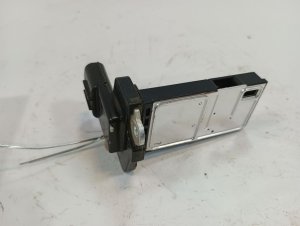
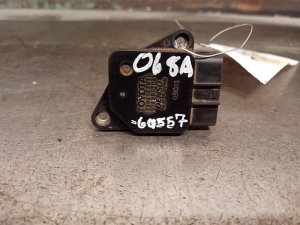
When a used part is the smart pick: A used OEM Denso MAF sensor from a low-mileage donor vehicle can be a cost-effective option. Given the high price of a new OEM part, a tested, guaranteed part from a reputable auto recycler is a reasonable choice, especially if the failure on the original vehicle was due to contamination rather than electronic failure.
Donor-vehicle mileage cap: roughly under 80000 miles for the part to have meaningful remaining life.
What to inspect on the donor part:
- Check the connector pins for any signs of corrosion or damage.
- Visually inspect the internal sensor wires through the mesh; they should be clean and free of oil or debris.
- Ask for the donor vehicle's VIN to confirm it's from a compatible 2005-2015 Tacoma 4.0L.
- Ensure the seller offers a warranty or at least a guarantee that the part is functional.
OEM-only on this vehicle (don't cheap out):
- Mass Airflow (MAF) Sensor
Aftermarket brands forum-validated for this vehicle:
- Denso (OEM)
Brands owners have reported issues with on this vehicle:
- Unnamed, low-cost 'white box' brands from online marketplaces are frequently reported by forum users to be poorly calibrated, fail quickly, or be dead-on-arrival. It is strongly advised to avoid these for a critical sensor like the MAF.
Real Owner Stories
Aggregated from forums and TSBs cited above. Mileages and costs reflect what owners reported in those sources.
2005-2015 Toyota Tacoma 1GR-FE 4.0L V6
Symptoms: The owner experienced a P0106 code and confirmed through community discussion that the 1GR-FE does not have a standalone MAP sensor.
What fixed it: Replacing the assembly with a new Denso MAF sensor resolved the code.
Source hint: TacomaWorld.com: Multiple threads corroborated that the 1GR-FE 4.0L V6 does not have a separate MAP sensor
2005-2015 Toyota Tacoma 1GR-FE 4.0L V6 (Universal Application)
Symptoms: Chasing a P0106 code caused by a physical vacuum leak.
What fixed it: Found a hole rubbed into the U-shaped vacuum hose for the brake booster by another component and replaced the hose.
Source hint: DFKitCar.com Forum - 'P0106 Check Engine Code - found issue'
2008 Infiniti G37 (Platform Mate Logic)
Symptoms: Service Engine Soon light with P0106 code.
What fixed it: Tightened all intake clamps to rule out leaks, then removed and cleaned the sensor with dedicated MAF cleaner, allowing 20 minutes for evaporation.
Source hint: Reddit r/G37 - 'How to Fix the P0106 (MAP Sensor) Service Engine Soon Fault'
Related OBD-II Codes
Frequently Asked Questions
Where is the MAP sensor located on my 2005-2015 Tacoma 4.0L V6?
Can I use brake cleaner to fix the P0106 code on my Tacoma?
Is there a specific brand of sensor recommended for the 1GR-FE engine?
Could a frame issue be related to my Check Engine Light?
Are there any recalls for the 2005-2011 Tacoma that I should check while fixing this?
What should the sensor readings look like on my scan tool for a healthy Tacoma?
Helpful Videos
Used OEM Parts in Stock
New Aftermarket Parts Available


The information in this article is provided for general reference and educational purposes only. Vehicle specifications, procedures, and part compatibility can vary by production date, trim level, and region. Always consult your vehicle's factory service manual and verify part numbers before purchasing or performing repairs. Safety-critical components such as airbags, seat belts, and braking systems should be installed by a qualified professional.
- Toyota Tacoma:
- 🧭 Diagnostic Flowchart
- 🎬 Helpful Videos
- 🛍️ Shop This Part
- What's Unique About the 2005-2015 Toyota Tacoma
- Symptoms You May Notice
- Most Likely Causes
- Rare But Worth Checking
- Diagnosis Steps
- Parts You'll Likely Need
- Related Codes That Often Appear With This One
- Platform-Specific Known Issues
- Mechanic-Grade Diagnostic Values
- Scan Tool Commands That Help
- Wiring & Ground Locations
- Real Owner Repair Stories
- Model Year Variations Within This Range
- Other Known Issues on This Vehicle
- Used vs. New Parts: Buying Guide for This Vehicle
- Real Owner Stories
- 2005-2015 Toyota Tacoma 1GR-FE 4.0L V6
- 2005-2015 Toyota Tacoma 1GR-FE 4.0L V6 (Universal Application)
- 2008 Infiniti G37 (Platform Mate Logic)
- Related OBD-II Codes
- Frequently Asked Questions
- 🎟️ Get 5% Off