

P0106 on 2004-2012 Volvo S40 2.4L: MAP Sensor and Vacuum Leak Guide
On the Volvo S40 2.4L, code P0106 is most often caused by a faulty Manifold Absolute Pressure (MAP) sensor or a vacuum leak. A failing PCV system is a key vehicle-specific cause that can lead to oil fouling the sensor. Replacing the MAP sensor is a common fix, costing around $60-$100 for an OEM-quality part (Bosch 0261230236), and is a simple DIY job.
- P0106 on this Volvo S40 is most often a faulty MAP sensor or a vacuum leak.
- A failing PCV system is a very common root cause, leading to a vacuum leak (whistling noise) and oil contamination of the MAP sensor.
- Check for the PCV 'whistle' and perform the 'glove test' before replacing parts.
- The correct replacement MAP sensor is a Bosch 0261230236 (Volvo P/N 31272733).
- The repair is straightforward for a DIYer and does not require expensive tools.
What's Unique About the 2004-2012 Volvo S40
The second-generation Volvo S40 with the naturally-aspirated 2.4L 5-cylinder engine is a relatively straightforward platform. Unlike its turbocharged (T5) sibling, you don't have to worry about complex boost-related pressure leaks. For the 2.4i, a P0106 code almost always points to a simple failure of the MAP sensor itself—a common Bosch part—or a classic vacuum leak from aging rubber hoses. A crucial vehicle-specific factor is the PCV system; if it clogs, it can create excess crankcase pressure and force oil vapors into the intake, contaminating and fouling the MAP sensor. Diagnosis is typically less complex than on forced-induction engines.
Symptoms You May Notice
- Check Engine Light illuminated
- Rough or unstable engine idle
- Hesitation or stumbling during acceleration
- Engine stalling, especially at idle or when coming to a stop
- Reduced fuel economy
- Black smoke from the exhaust in some cases
- Difficulty starting the engine
- Engine backfiring
- Replacing the Mass Air Flow (MAF) sensor. While MAF issues can cause similar symptoms, P0106 specifically points to a problem in the MAP sensor circuit. Address the MAP sensor and vacuum leaks first.
- Replacing the throttle body without diagnosing the MAP sensor or vacuum leaks.
Most Likely Causes
- Faulty Manifold Absolute Pressure (MAP) Sensor 🔴 High Probability → Shop Manifold Absolute Pressure Sensor The MAP sensor is a critical electronic component that operates in a harsh environment of heat and vibration. On this Volvo, it is also highly susceptible to oil contamination from a failing PCV system, which is a very common issue. The oil vapor coats the sensor, causing it to malfunction.
How to confirm: After checking wiring, use a scan tool to monitor MAP sensor data with the Key On, Engine Off (KOEO). The reading should be close to the barometric pressure reading (approx. 100 kPa at sea level). At idle, it should show a strong vacuum (low kPa value, e.g., 25-40 kPa). If the value is stuck, irrational, or doesn't change with RPM, the sensor is likely faulty. Visually inspect the sensor for oil contamination.
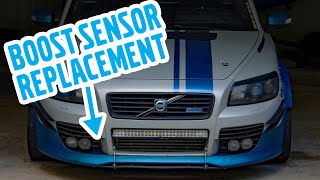
Typical fix: Replace the MAP sensor. It is located on the intake manifold and secured with a single Torx screw. 🎬 Watch this quick guide on replacing the MAP sensor. Cleaning is not recommended as it rarely works long-term.
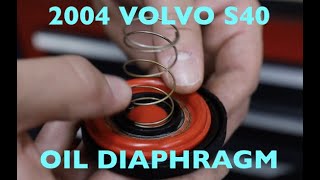
Est. part cost: $60-$120 - Clogged PCV System / Failed Oil Trap Diaphragm 🔴 High Probability The PCV system, specifically the diaphragm in the oil filter housing, is a known weak point on the 2.4L engine. When it tears, it creates a massive vacuum leak (causing a whistling/howling noise) and loses its ability to separate oil from crankcase gases. This leads to high crankcase vacuum and can force oil into the intake, fouling the MAP sensor and spark plugs.
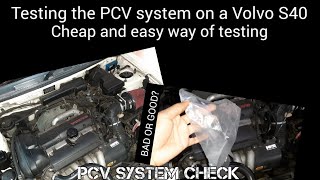
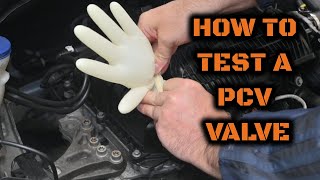
How to confirm: Listen for a loud whistling or howling sound from the engine at idle. Remove the oil filler cap; if the noise stops and you hear a suction sound, the diaphragm is torn. Another test is to place a rubber glove over the oil filler opening with the engine running. If the glove gets sucked in, 🎬 See how to perform the glove test on a Volvo. the crankcase vacuum is too high, indicating a PCV system fault.
Typical fix: Replace the PCV oil trap diaphragm (available as a separate part) or the entire oil filter housing assembly. 🎬 Follow this walkthrough to replace the full PCV housing. It is recommended to also clean the intake manifold and replace the MAP sensor if it is heavily contaminated with oil.
Est. part cost: $20 (diaphragm kit) - $250 (full housing) - Vacuum Leak 🔴 High Probability Over time, rubber vacuum hoses and plastic intake components can crack, split, or become brittle, creating unmetered air leaks into the intake manifold. This is a common issue on any aging vehicle.
How to confirm: Listen for a hissing sound around the intake manifold at idle. You can also carefully spray brake cleaner or use a dedicated smoke tester around vacuum lines and gasket surfaces; a change in engine idle when spraying a specific area indicates a leak.
Typical fix: Replace the cracked vacuum hose, intake manifold gasket, or other leaking component.
Est. part cost: $5-$100 - Damaged Wiring or Poor Connection 🟡 Medium Probability
How to confirm: Visually inspect the MAP sensor's electrical connector and wiring for any signs of damage, corrosion, or loose pins. Use a multimeter to check for 5V reference, a good ground, and a fluctuating signal voltage at the connector. The sensor on this model is often a 4-wire T-MAP (Temperature and Manifold Absolute Pressure) sensor.
Typical fix: Repair the damaged wiring or clean/replace the connector pigtail.
Est. part cost: $10-$50
Rare But Worth Checking
- Clogged Engine Air Filter: A severely restricted air filter can starve the engine of air, altering manifold pressure enough to trigger the code. Check this first as it's part of regular maintenance.
- Clogged Catalytic Converter: A blocked exhaust creates backpressure that can affect intake manifold pressure readings. This is usually accompanied by a significant loss of power, especially at higher RPMs, and may throw a P0420 code.
- Faulty Pump Electronic Module (PEM): On 2004.5-2006 models, a safety recall (Recall 190) was issued for a corroding PEM that causes low fuel pressure, stalling, and CEL illumination. While it doesn't directly cause P0106, the resulting performance issues like stalling could be related or lead to misdiagnosis.
Diagnosis Steps
- Read all fault codes with an OBD-II scanner. Note any other codes that are present, especially P0171 (lean) which points to a vacuum leak.
- Start the engine and listen for a loud whistling or howling noise. If present, perform the 'glove test' on the oil filler neck to confirm a failed PCV diaphragm.
- If no PCV noise is present, listen for other hissing sounds around the intake manifold that would indicate a vacuum leak.
- With the engine off, turn the key to the 'On' position. Use the scanner to observe the MAP sensor reading. It should be close to the atmospheric (barometric) pressure, around 100 kPa at sea level.
- Start the engine. Observe the MAP reading at idle. It should drop to a low value (e.g., 25-40 kPa), indicating engine vacuum.
- If scanner values are stuck or irrational, locate the MAP sensor on the intake manifold. Visually inspect it and its connector for oil contamination, corrosion, or damage.
- If no obvious cause is found, perform a smoke test on the intake system to find hard-to-locate vacuum leaks.
- If no vacuum leaks are found, test the wiring. You should find a 5-volt reference, a good ground, and a signal wire that changes voltage as you apply vacuum to the sensor.
- If the PCV system, vacuum system, and wiring all check out, the MAP sensor itself is the most likely culprit. Replace it.
Parts You'll Likely Need
- Manifold Absolute Pressure (MAP) Sensor
(OEM #31272733)— This sensor is the most common point of failure for code P0106. It provides a critical reading for engine management, and its failure directly causes this code. Often fails due to oil contamination from the PCV system.
Trusted brands: Bosch (OEM), Denso
OEM price range: $90-$150
Aftermarket price range: $40-$80 - PCV Oil Trap Diaphragm Repair Kit — The diaphragm inside the oil filter housing is a very common failure point that leads to vacuum leaks and oil contamination of the MAP sensor. Replacing just the diaphragm is a cost-effective fix.
Trusted brands: CRP Industries, URO Parts
OEM price range: $20-$30
Aftermarket price range: $15-$25
Related Codes That Often Appear With This One
- P0171 — System Too Lean. This code is very common alongside P0106 if the root cause is a vacuum leak, which allows unmetered air to enter the engine, creating a lean air/fuel mixture.
- P0107 / P0108 — MAP Sensor Circuit Low / High. These codes point more specifically to an electrical fault (short to ground or power) or a completely dead sensor, whereas P0106 indicates a performance or rationality problem.
- P0192 — Fuel Rail Pressure Sensor Circuit Low. While a separate system, failure of the fuel pressure sensor is extremely common on these cars and causes similar stalling and hesitation symptoms, leading to potential diagnostic confusion.
Platform-Specific Known Issues
- Recall 190 for the Pump Electronic Module (PEM) on 2004.5-2006 models can cause stalling and CELs due to fuel pressure loss, which could potentially be confused with MAP sensor issues.
- A failed PCV system is a primary driver for P0106 on this engine. The torn diaphragm in the oil filter housi
Mechanic-Grade Diagnostic Values
- MAP Sensor vs. Barometric Pressure (Key On, Engine Off) — expected: Both readings should be nearly identical, e.g., Barometric Pressure at 970 hPa and MAP sensor at 968 hPa.. Failure: A significant deviation between the two readings (e.g., more than 15-20 hPa) points to a faulty sensor. For example, a reading of 986 hPa when atmospheric is 970 hPa is suspect.
- MAP Sensor Live Data at Idle — expected: A steady low pressure reading indicating vacuum, typically between 25-40 kPa.. Failure: A reading that is stuck high (near atmospheric pressure, e.g., 100+ kPa) or does not change when the engine RPM is increased indicates a faulty sensor or a massive vacuum leak.
- MAP Sensor Signal Voltage — expected: Approximately 4.5-5.0V with Key On Engine Off (atmospheric pressure) and dropping to 1.0-1.5V at warm idle (high vacuum). The voltage should increase smoothly as the throttle is opened.. Failure: Voltage that is stuck, does not change with engine load, or is outside the 1-4.5V operating range.
Hidden / Shadow Codes Worth Checking
- ECM-P006900: MAP - Barometric pressure correlation. This is the Volvo-specific equivalent of the generic P0106 code, often found using dealer-level software like VIDA. (see via Volvo's VIDA diagnostic software or a high-end professional scanner with manufacturer-specific capabilities.)
- ECM-P222700: Barometric pressure circuit range/performance. This code often appears alongside ECM-P006900 and points towards a sensor rationality issue rather than a hard electrical fault. (see via Volvo's VIDA diagnostic software or a high-end professional scanner.)
Wiring & Ground Locations
- 31/115 — Located on the driver's side (left) A-pillar.. This is a primary chassis ground connection point. A corroded or loose ground here can cause erratic voltage and signal issues for multiple components, including engine sensors, potentially triggering a P0106.
- Engine Bay Strut Tower Grounds — Multiple ground points are located on both the driver and passenger side strut towers in the engine bay.. These are critical grounding points for the engine wiring harness. The main engine-to-chassis ground strap connects here. Poor contact can cause fluctuating sensor readings and intermittent faults like P0106.
- MAP Sensor Connector — On the MAP sensor itself, located on the intake manifold.. The 4-pin connector provides the sensor with a 5V reference, ground, and sends the signal back to the ECM. Pinouts are typically: Pin 1 (5V), Pin 2 (Ground), Pin 3 (Signal). Corrosion or damage to these specific pins will directly cause MAP sensor codes.
Real Owner Repair Stories
- Reddit user in r/Justrolledintotheshop (Unknown vehicle, but demonstrates a universal principle for P0106.) — Vehicle runs poorly, has P0106 code.
❌ Tried (didn't work) Replacing the MAP sensor
✅ What actually fixed it The root cause was a mechanical engine problem: an intake valve was stuck open. This destroyed the normal manifold vacuum, causing the MAP sensor to send illogical readings to the ECU, which correctly set the P0106 code. This highlights that P0106 can indicate a mechanical issue, not just a sensor or vacuum leak.
OEM Part Supersession History
31251446→31272733— Standard part number update by Volvo. The replacement part is functionally identical.
Heads up: The part is often sold as a 'Fuel Pressure Sensor' because it is used on the fuel rail of turbocharged models, but it functions as the MAP sensor on the 2.4i intake manifold. This can cause confusion during purchase.
Model Year Variations Within This Range
- 2007-2012: A facelift was introduced in 2007, which included cosmetic updates. While the core 2.4L engine and its management system remained largely the same, there could be minor variations in wiring harness routing or connector styles. The engine lineup was also simplified in later years.
- 2004.5-2006: These earlier models are specifically affected by Recall 190 for the Pump Electronic Module (PEM), which can cause stalling and fuel delivery issues that might be misdiagnosed as a MAP sensor problem.
Diagnostic Flowchart
Other Known Issues on This Vehicle
Issues unrelated to this code that are worth knowing about as an owner of this generation:
- Clogged PCV / Oil Separator System 🔴 High — Common after 80,000-100,000 miles. A torn diaphragm in the oil filter housing causes a distinct whistling or howling noise at idle.
- Clogged Sunroof Drains 🔴 High — Extremely common. The drain tubes shrink, disconnect, or clog, causing water to leak into the front footwells, potentially damaging the Central Electronic Module (CEM).
- Central Electronic Module (CEM) Failure 🔴 High — Often a consequence of water damage from sunroof drains. Causes a wide array of bizarre, intermittent electrical problems, from non-starting to random warning lights.
- Worn Lower Control Arm Bushings 🟠 Medium — Bushings wear out, typically after 100,000 miles, leading to clunking noises, steering wobble during acceleration, and alignment issues.
- Failing Upper Engine and Transmission Mounts 🟠 Medium — The hydraulic and rubber mounts degrade over time, causing excessive engine vibration felt in the cabin, especially at idle or in reverse.
- Fuel Rail Pressure Sensor Failure 🔴 High — Very common on 2004.5-2007 models, causing stalling, hard starts, and hesitation. Often throws codes like P0192.
Used vs. New Parts: Buying Guide for This Vehicle
When a used part is the smart pick: A used OEM MAP sensor from a low-mileage donor car can be a reliable and cost-effective option, as they are electronic and not typically a high-wear item unless contaminated. Structural components like the intake manifold or oil filter housing are also good candidates for used parts.
Donor-vehicle mileage cap: roughly under 80000 miles for the part to have meaningful remaining life.
What to inspect on the donor part:
- For a MAP sensor, ensure the connector pins are clean and straight, with no signs of corrosion or oil saturation.
- For a PCV housing, check for cracks, especially around hose connections. Ensure the diaphragm cap is intact.
- Verify the donor vehicle was not in a front-end collision, which could have damaged engine-mounted components.
OEM-only on this vehicle (don't cheap out):
- PCV System Components: Forum users strongly recommend using OEM or OE-supplier parts for the PCV system, including the diaphragm. Aftermarket versions, particularly from brands like URO, are reported to have high failure rates, sometimes within weeks.
Aftermarket brands forum-validated for this vehicle:
- Bosch (This is the Original Equipment Manufacturer for the MAP sensor).
Brands owners have reported issues with on this vehicle:
- URO Parts (for rubber and critical components like the PCV diaphragm/hoses, users report poor fitment and very short lifespan).
Real Owner Stories
Aggregated from forums and TSBs cited above. Mileages and costs reflect what owners reported in those sources.
2005 Volvo S40 2.4i
Symptoms: A whine/howl at idle that disappears when the dipstick is pulled.
What fixed it: Replacing the PCV oil trap diaphragm.
Source hint: Reddit r/Volvo - 'PCV system might be failing, requesting some guidance'
Volvo S40 2.4i
Symptoms: P0106 along with P0101 and P0172 codes.
What fixed it: Replacing the MAP sensor, which was found to be contaminated with oil due to a PCV-to-MAP-failure pathway.
Source hint: Swedespeed Forum - 'P0106, P0101, P0172'
Related OBD-II Codes
Frequently Asked Questions
My 2005 Volvo S40 is making a loud whistling noise at idle and has a P0106 code. What is the most likely cause?
Is there a recall for stalling issues on my 2004.5-2006 S40 that might be related to P0106?
Where is the MAP sensor located on the 2.4L 5-cylinder engine?
Can I just clean the MAP sensor on my S40 to fix the P0106 code?
How can I test if my PCV system is causing the P0106 code without special tools?
Does the P0106 issue affect the Volvo V50 and C30 as well?
Helpful Videos



The information in this article is provided for general reference and educational purposes only. Vehicle specifications, procedures, and part compatibility can vary by production date, trim level, and region. Always consult your vehicle's factory service manual and verify part numbers before purchasing or performing repairs. Safety-critical components such as airbags, seat belts, and braking systems should be installed by a qualified professional.
- Volvo S40:
- 🧭 Diagnostic Flowchart
- 🎬 Helpful Videos
- What's Unique About the 2004-2012 Volvo S40
- Symptoms You May Notice
- Most Likely Causes
- Rare But Worth Checking
- Diagnosis Steps
- Parts You'll Likely Need
- Related Codes That Often Appear With This One
- Platform-Specific Known Issues
- Mechanic-Grade Diagnostic Values
- Hidden / Shadow Codes Worth Checking
- Wiring & Ground Locations
- Real Owner Repair Stories
- OEM Part Supersession History
- Model Year Variations Within This Range
- Other Known Issues on This Vehicle
- Used vs. New Parts: Buying Guide for This Vehicle
- Real Owner Stories
- 2005 Volvo S40 2.4i
- Volvo S40 2.4i
- Related OBD-II Codes
- Frequently Asked Questions
- 🎟️ Get 5% Off