

P0107 on 1997-2004 Chevrolet Corvette: MAP Sensor Circuit Low Causes and Fixes
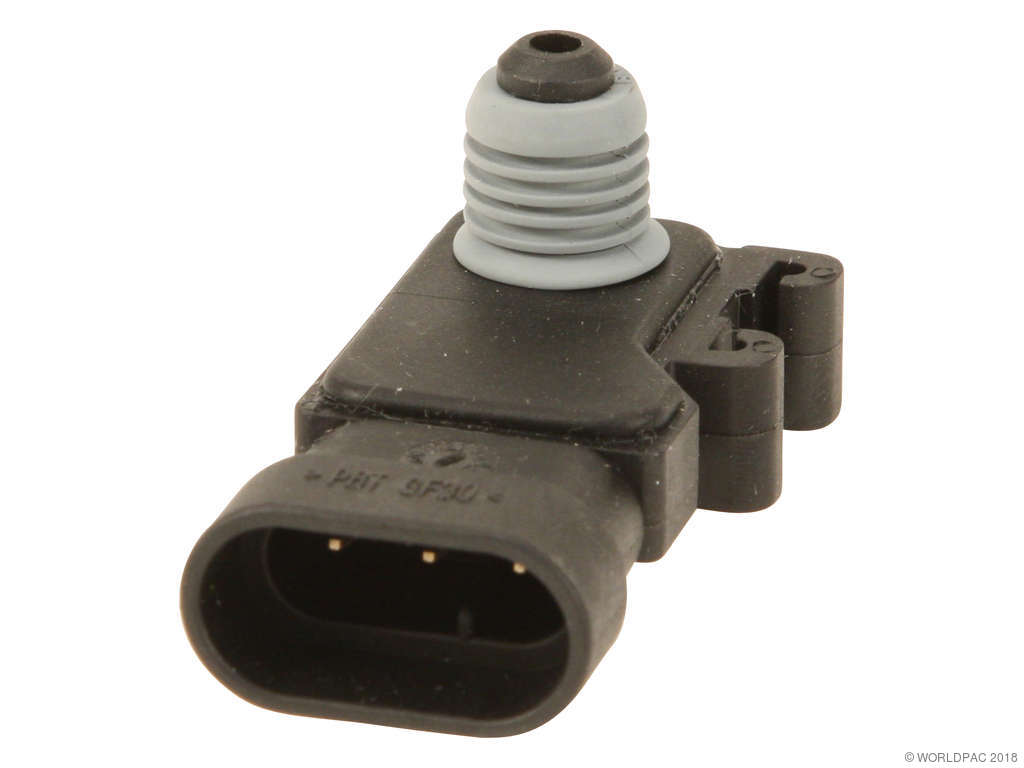
P0107 on a C5 Corvette most often means the Manifold Absolute Pressure (MAP) sensor has failed or its wiring is compromised. It's located at the back of the intake manifold, making access extremely difficult. A very common cause is the connector simply not being plugged in securely after other maintenance. Before replacing parts, check the connector. Expect to pay $40-$80 for a new sensor; the main cost is labor if you don't do it yourself.
- P0107 on a C5 Corvette means the MAP sensor circuit has low voltage.
- The most likely causes are a failed MAP sensor or a bad connection/wiring.
- The sensor is located on the back of the intake manifold against the firewall, making it very difficult to replace.
- Before attempting a replacement, carefully check the electrical connector to ensure it's secure, as this can be a simple fix, especially after recent engine work.
- Due to the high labor involved, DIY replacement can save significant money but requires removing the intake manifold.
What's Unique About the 1997-2004 Chevrolet Corvette
On the LS1 and LS6 engines in the C5 Corvette, the MAP sensor is notoriously difficult to access. It is mounted directly to the rear of the intake manifold, flush against the firewall. While the sensor itself is a simple component, replacing it often requires the entire intake manifold to be removed, significantly increasing the labor time and complexity compared to engines where the sensor is on top or front of the manifold. Many owners trigger this code accidentally after performing other maintenance in that area, such as replacing the oil pressure sensor, by forgetting to plug the MAP sensor back in or not seating the connector fully.
Symptoms You May Notice
- Check Engine Light is on
- Rough or unstable idle
- Engine hesitation or stumbling during acceleration
- Noticeable loss of engine power
- Poor fuel economy
- Black smoke from the exhaust, indicating a rich fuel mixture
- Difficulty starting the engine
- Engine surging at low throttle openings
- Replacing the Mass Airflow (MAF) sensor. The P0107 code specifically points to the MAP sensor circuit, not the MAF sensor.
- Assuming the new MAP sensor is faulty when the problem is actually a poor connection at the harness connector.
Most Likely Causes
- Faulty Manifold Absolute Pressure (MAP) Sensor 🔴 High Probability → Shop Manifold Absolute Pressure Sensor The sensor is subjected to constant heat cycles at the back of the engine, which can lead to electronic failure over time. The original sensors can also become brittle and break during other maintenance.
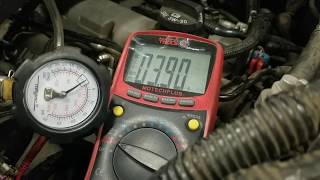
How to confirm: With a scan tool, observe the MAP sensor voltage with the Key On, Engine Off. It should be high (around 4.5V-4.8V). At idle, it should drop to 1-2V. If the voltage is stuck below 0.5V and the wiring tests good, the sensor has failed.
Typical fix: Replace the MAP sensor. 🎬 Watch: This walkthrough shows how to test and replace the sensor. This often requires removing the intake manifold for access. Some owners choose to extend the wiring to relocate the sensor to the front of the intake for easier future service.
Est. part cost: $40-$80 - Wiring Harness or Connector Issue 🟡 Medium Probability The wiring harness is in a tight, hot location. The connector can become loose or brittle, and wires can be damaged or shorted to ground. Several owners have fixed the code by simply re-securing a loose connector, especially after intake manifold work. In some cases, the female pins inside the connector lose tension and no longer make good contact with the male pins on the sensor. Manufacturer service bulletins for other Chevrolet models, such as TSB Bulletin #PIP5344, note that a P0107 can be accompanied by a "reduced power" message due to circuit issues.
How to confirm: Visually inspect the MAP sensor connector for damage or corrosion. Use a multimeter to check for 5V on the gray reference wire, a good ground (low mV reading) on the orange/black wire, and continuity on the light green signal wire back to the PCM.
Typical fix: Repair the damaged section of the wiring harness or replace the connector pigtail. Ensure the connector is fully seated. If pins are loose, they may need to be carefully re-tensioned or the connector replaced.
Est. part cost: $10-$30 - Vacuum Leak at the Sensor ⚪ Low Probability The sensor seals to the intake manifold with a small grommet. This grommet can become hard and brittle, causing a leak. This is less common for a 'circuit low' code but is a known issue on LS engines, often happening after the sensor has been disturbed. A vacuum leak is more likely to cause a P0106 (range/performance) code.
How to confirm: Listen for a hissing sound at the rear of the intake manifold. A smoke test is the most effective way to confirm a leak at the sensor's mounting point. A leak can also be caused by a cracked intake manifold near the sensor port.
Typical fix: Replace the MAP sensor grommet/seal when replacing the sensor. Ensure the sensor is fully seated in the manifold.
Est. part cost: $5-$15
Rare But Worth Checking
- Faulty Powertrain Control Module (PCM): → Shop Engine Control Module (ECM) This is extremely rare. The PCM should only be considered after the sensor, wiring, and connections have been exhaustively tested and proven to be good. It's worth noting that on C5 Corvettes, the PCM is located under the battery, and leaking battery acid is a known issue that can damage the PCM and its wiring harnesses. Manufacturer Bulletin #PIT5713A indicates that P0107 can sometimes appear in combination with various communication codes like U0073 and U0100, which may point toward broader electrical or module concerns.
Diagnosis Steps
- Connect an OBD-II scanner and verify that P0107 is the primary code. Note any other codes present, especially P0106, P0108, or P1635.
- With the scanner, view live data. With the Key On, Engine Off (KOEO), the MAP sensor reading should correspond to barometric pressure and the voltage should be high (approx. 4.5V - 4.8V).
- Start the engine. At idle, the voltage should drop significantly (to approx. 1.0-2.0V). If the voltage remains stuck below 0.5V, proceed with circuit testing. 🎬 See this video for a detailed guide on testing MAP sensors.
- Turn the engine off. Locate the MAP sensor on the rear of the intake manifold. This will be difficult and may require a mirror and flashlight.
- Inspect the electrical connector. Ensure it is fully seated and free of corrosion or damage. A loose connector is a very common culprit, especially after other engine work.
- Disconnect the sensor. With the key on, use a multimeter to test the connector terminals. You should find: ~5 volts on the Gray wire (5V reference), near 0 volts on the Orange/Black wire (low reference/ground), and the Light Green wire is the signal.
- If the 5V reference or ground is missing, you have a wiring issue or a PCM fault. Check for damage to the harness where it might rub against the engine or firewall. Remember the 5V reference is shared, so another sensor could be causing the issue. Manufacturer Bulletin #PIT5677E notes that P0107 can appear alongside other sensor codes like P0340 or P0521 when there are shared circuit faults.
- If power and ground are good, the issue is either the sensor itself or the signal wire to the PCM. A common test is to jump the 5V reference (Gray wire) to the signal (Light Green wire) with a paperclip; the scan tool should now read ~5V. If it does, the signal wire is good and the sensor is bad.
- If a new sensor does not resolve the code, re-inspect the connector pins for proper tension. They can spread apart and fail to make a solid connection with the sensor.
- As a last resort, check the signal wire for a short to ground between the sensor and the PCM.
Parts You'll Likely Need
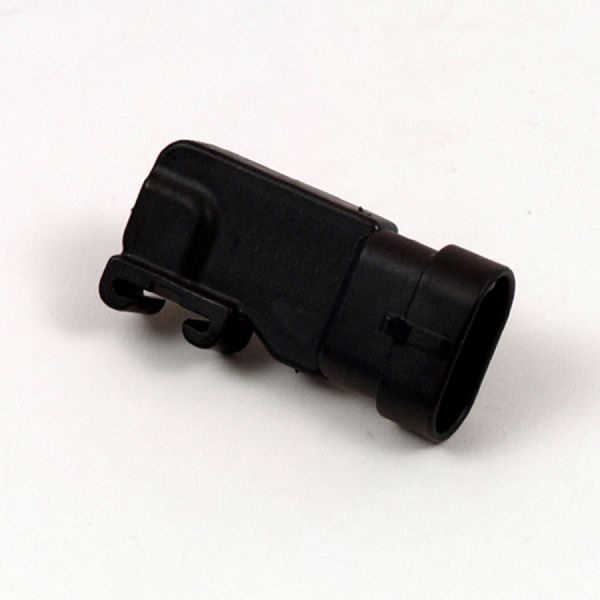
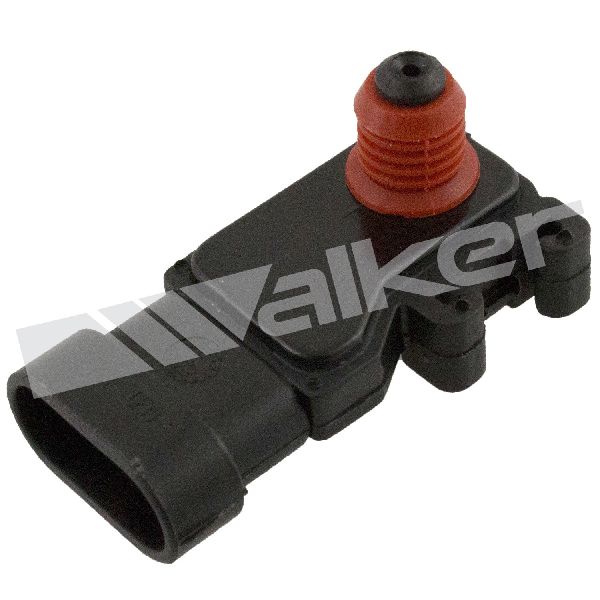
- Manifold Absolute Pressure (MAP) Sensor
(OEM #16249939)— This is the most common component to fail, causing a persistent low voltage signal. The original part number was 16249939, which has been superseded by newer numbers like 19418808. ACDelco service part number is often 213-4658 or 213-796.
Trusted brands: ACDelco, Standard Motor Products, Delphi
OEM price range: $60-$80
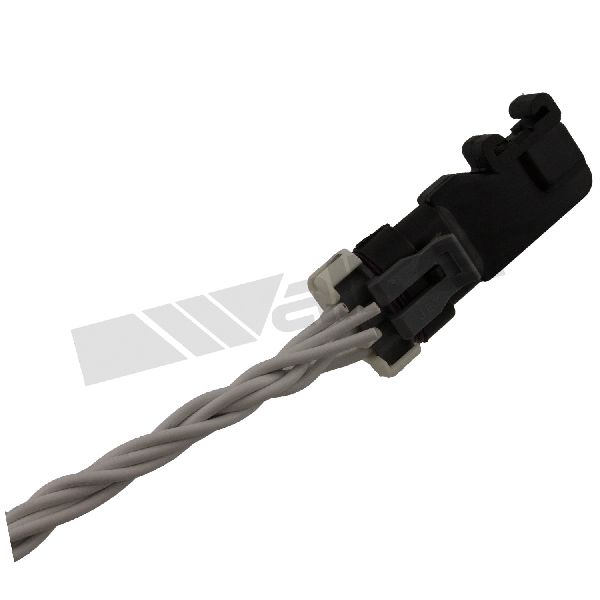
Aftermarket price range: $25-$60 - MAP Sensor Connector Pigtail — The original connector can become brittle from heat and break, or the terminals can lose tension, causing a poor connection.
Trusted brands: Dorman, ACDelco
OEM price range: $20-$35
Aftermarket price range: $10-$20
Related Codes That Often Appear With This One
- P0106 — P0106 indicates a 'Range/Performance' problem with the MAP sensor. It can appear with P0107 if the sensor's signal is erratic or if there is a vacuum leak affecting its reading before it fails completely low.
- P0108 — P0108 indicates 'Circuit High Input'. Seeing P0107 and P0108 together often points to an intermittent electrical problem in the wiring or sensor, causing the voltage to swing between extremes.
- P0452 — As noted in NHTSA ODI #10787380, P0107 can sometimes appear alongside EVAP system pressure codes like P0452, potentially indicating shared circuit or vacuum-related issues.
- P1635 — If the 5-volt reference circuit shared by the MAP sensor is shorted, DTC P1635 (5 Volt Reference 1 Circuit) may be set. This issue should be diagnosed first as it will affect multiple sensors.
Platform-Specific Known Issues
- The location of the MAP sensor at the rear of the intake manifold makes replacement very difficult. Accessing it often requires removing the fuel rail and the entire intake manifold.
- It is extremely common to forget to reconnect the MAP sensor after removing the intake manifold for other service, such as replacing the oil pressure sending unit, leading to an immediate P0107 code upon startup.
- A detailed account on CorvetteForum describes a frustrating chase for a P0107 that was ultimately caused by all three female pins in the connector not making proper contact with the sensor pins, which was only found after extensive testing.
Mechanic-Grade Diagnostic Values
- MAP Sensor Signal Voltage (Key On, Engine Off) — expected: ~4.5V - 4.8V. Failure: Voltage stuck below 0.5V
- MAP Sensor Signal Voltage (Engine Idling) — expected: ~1.0V - 2.0V. Failure: Voltage remains below 0.5V or does not change from KOEO reading
- 5V Reference Wire Voltage (at connector, KOEO) — expected: ~5.0V. Failure: Significantly lower than 5V, or 0V
- Ground/Low Reference Wire Voltage (at connector, KOEO) — expected: Less than 100mV (0.1V). Failure: Voltage significantly higher than 0.1V indicates a poor ground.
Scan Tool Commands That Help
- Tech 2 / GDS2: MAP Sensor Data Display — This is the primary function used to view live voltage and pressure (kPa) readings from the MAP sensor to confirm if the signal is stuck low, as indicated by the P0107 code.
- Tech 2 / GDS2: Clear DTC Information — Used after the repair is complete to clear the P0107 code and turn off the Check Engine Light. The code will not clear on its own until after two consecutive drive cycles without the fault present.
Wiring & Ground Locations
- MAP Sensor Signal — Pin 36 on the RED PCM Connector (C2) for 1999-2004 models. The wire is Light Green.. This is the signal wire that carries the variable voltage from the MAP sensor to the PCM. A short to ground on this wire will cause a P0107.
- MAP Sensor Ground — Pin 54 on the BLUE PCM Connector (C1) for 1999-2004 models. The wire is Black.. This is the low reference (ground) provided by the PCM. A break in this wire will cause an open circuit, but a poor connection can cause erratic readings.
- 5V Reference — Pin 45 on the BLUE PCM Connector (C1) for 1999-2004 models. The wire is Gray.. This is the 5-volt supply from the PCM. A loss of this voltage will cause the sensor to stop working and set a P0107. This circuit is shared with other sensors, so a short elsewhere can cause this code.
- G104 / G108 — On the frame rail next to the battery.. These are major chassis ground points. While the MAP sensor is grounded through the PCM, poor chassis grounds can cause a host of electrical issues, including erratic sensor behavior and problems with the PCM itself.
- G105 / G107 — G105 is on the left lower engine block; G107 is on the left rear of the cylinder head.. These are the primary engine block and cylinder head grounds. A loose or corroded connection here can affect the grounding of the entire engine sensor network, potentially impacting the PCM's reference points and causing sensor codes.
Real Owner Repair Stories
- CorvetteForum (C6 Corvette (similar LS engine wiring)) — P0107 code, engine surging at idle and very low throttle openings.
❌ Tried (didn't work) Replacing the MAP sensor., Continuity testing the wires through the plug (which tested good)., Testing the old and new MAP sensors off the vehicle (they both tested good).
✅ What actually fixed it The female pins inside the connector had lost tension and were not making contact with the male pins on the MAP sensor. The fix involved extracting the pins from the connector housing and carefully re-tensioning them to ensure a tight fit. - LS1Tech Forum (LS1-powered vehicle) — P0107 code after replacing knock sensors, which requires intake manifold removal.
❌ Tried (didn't work) Replacing the MAP sensor with a new GM part., Resetting the PCM., Disconnecting and reconnecting the plug to ensure it was seated.
✅ What actually fixed it The user suspected a wire had pulled loose inside the connector housing during the previous repair work, or that the new sensor was defective from the factory. The thread resolution pointed towards a wiring issue within the connector itself. - CorvetteForum (1999 Corvette) — P0107 code after installing an aftermarket intake manifold (MSD Atomic).
❌ Tried (didn't work) Replacing the MAP sensor with a new AC Delco part., Extending the MAP sensor wiring to relocate it to the front.
✅ What actually fixed it The user discovered the 5V reference (Gray wire) and low reference/ground (Orange/Black wire) were providing incorrect voltages. The Orange/Black wire had 5V instead of ground, indicating a wiring problem, likely a short or mis-pinned connector from the harness extension work. The fix required correcting the wiring to provide proper 5V, ground, and signal continuity. - NHTSA ODI #11427385 — An owner reported a P0107 code along with an alternator that began smoking and StabiliTrak dashboard lights coming on, causing the engine to lose power.
- NHTSA ODI #10787380 — A driver experienced a "hard buck" at 35 MPH followed by a "lighter buck" at 20 MPH during acceleration, with codes P0107 and P0452 appearing.
OEM Part Supersession History
16249939→19418808— Standard part lifecycle replacement.
Heads up: No known incompatibility for stock replacement. This is a standard 1-Bar sensor.16187556→16249939— Standard part lifecycle replacement.
Heads up: This is an older part number that also cross-references to the same sensor.ACDelco 213-796→ACDelco 213-4658— Service part number update.
Heads up: Both are service numbers for the same 1-Bar MAP sensor and are interchangeable for this application.
Model Year Variations Within This Range
- 1997-1998: The 1997-1998 Corvettes used a slightly different PCM and pinout compared to the 1999-2004 models. While the MAP sensor function and wiring colors are generally the same, the exact pin locations on the PCM connectors may differ. Diagnosis should always be done with the correct year-specific wiring diagram.
- 1999-2004: These models use the more common '411' PCM. The pinouts provided in the 'Wiring and Ground Locations' section are specific to these years.
Diagnostic Flowchart
Other Known Issues on This Vehicle
Issues unrelated to this code that are worth knowing about as an owner of this generation:
- Electronic Steering Column Lock Failure 🔴 High — Very common across all years, especially early models. Can prevent the car from starting or, in rare cases, cause a loss of steering while moving. (Ref: Multiple recalls and TSBs issued, including GM recall #04006.)
- Leaking Battery Damaging PCM/Wiring 🔴 High — A well-documented and frequent problem. Standard lead-acid batteries are prone to leaking acid directly onto the PCM and main wiring harness located below the battery tray, causing severe corrosion and electrical failures.
- EBCM (Electronic Brake Control Module) Failure 🟠 Medium — Common failure, particularly on 1997-2000 models, causing ABS and Traction Control lights. Internal solder joints or relays fail. Repair services exist, as new parts are discontinued and expensive. (Ref: TSB exists for ABS/TCS lights related to faulty brake lines, but the primary EBCM failure is a component issue.)
- Excessive Oil Consumption 🟠 Medium — Common on early LS1 engines (pre-2002) due to piston ring design and PCV system issues. Can lead to oil being sucked into the intake. (Ref: A GM TSB was issued to address the issue with an updated PCV system design for some model years.)
- Pop-up Headlight Motor Gear Failure 🟡 Low — Extremely common. The plastic gears inside the headlight motors wear out or break, causing the headlights to get stuck or make a grinding noise.
Used vs. New Parts: Buying Guide for This Vehicle
When a used part is the smart pick: For this repair, a used MAP sensor is generally not recommended. The part is relatively inexpensive new, and its location makes replacement labor-intensive. The risk of a used sensor failing shortly after installation outweighs the small cost savings. A used connector pigtail from a junkyard harness is a viable option if the original is broken, as it is just wires and plastic.
Donor-vehicle mileage cap: roughly under 100000 miles for the part to have meaningful remaining life.
What to inspect on the donor part:
- If buying a used engine, try to hear it run first.
- Check for obvious signs of damage to the engine or harness.
- If possible, perform a compression or leakdown test on the donor engine.
- For a pigtail, ensure the connector body is not brittle or cracked and that the wires have sufficient length for splicing.
OEM-only on this vehicle (don't cheap out):
- Manifold Absolute Pressure (MAP) Sensor
Aftermarket brands forum-validated for this vehicle:
- ACDelco (OEM)
- Delphi (Often the OEM manufacturer)
- Standard Motor Products (SMP)
Brands owners have reported issues with on this vehicle:
- Unbranded, 'no-name' sensors from online marketplaces. Forum users have reported issues with cheap aftermarket sensors being dead-on-arrival or failing quickly, especially for critical sensors like this.
Real Owner Stories
Aggregated from forums and TSBs cited above. Mileages and costs reflect what owners reported in those sources.
2003 Chevrolet Corvette LS1
Symptoms: Check Engine Light (CEL) appeared immediately after the owner finished painting their intake manifold cover.
What fixed it: The owner discovered the MAP sensor connector was simply not plugged back in after the cosmetic work.
Source hint: CorvetteForum - Thread 'CEL Code P0107' (2023)
1997-2004 Chevrolet Corvette LS1/LS6
Symptoms: Persistent P0107 code that remained even after testing and potential sensor replacement; the owner went on a 'frustrating chase' to find the root cause.
What fixed it: Extensive testing revealed that all three female pins inside the wiring connector had lost tension and were not making proper contact with the sensor pins.
Source hint: CorvetteForum account described in vehicle_specific_issues
Related OBD-II Codes
Frequently Asked Questions
I just replaced my oil pressure sending unit and now I have a P0107 code. Is this a coincidence?
Why is the MAP sensor so difficult to reach on my LS1 Corvette?
Can I move the MAP sensor to make it easier to fix next time?
Is there a specific TSB for the electrical issues causing my P0107?
Could my leaking battery be causing this MAP sensor code?
What should the MAP sensor voltage look like on my scan tool?
Helpful Videos

We Have This Part in Stock


The information in this article is provided for general reference and educational purposes only. Vehicle specifications, procedures, and part compatibility can vary by production date, trim level, and region. Always consult your vehicle's factory service manual and verify part numbers before purchasing or performing repairs. Safety-critical components such as airbags, seat belts, and braking systems should be installed by a qualified professional.
- Chevrolet Corvette:
- 🧭 Diagnostic Flowchart
- 🎬 Helpful Videos
- 🛍️ Shop This Part
- What's Unique About the 1997-2004 Chevrolet Corvette
- Symptoms You May Notice
- Most Likely Causes
- Rare But Worth Checking
- Diagnosis Steps
- Parts You'll Likely Need
- Related Codes That Often Appear With This One
- Platform-Specific Known Issues
- Mechanic-Grade Diagnostic Values
- Scan Tool Commands That Help
- Wiring & Ground Locations
- Real Owner Repair Stories
- OEM Part Supersession History
- Model Year Variations Within This Range
- Other Known Issues on This Vehicle
- Used vs. New Parts: Buying Guide for This Vehicle
- Real Owner Stories
- 2003 Chevrolet Corvette LS1
- 1997-2004 Chevrolet Corvette LS1/LS6
- Related OBD-II Codes
- Frequently Asked Questions
- 🎟️ Get 5% Off