

P0107 on 2011-2016 Chevrolet Cruze: MAP Sensor Circuit Low Causes & Fixes
P0107 on a Chevy Cruze usually means the Manifold Absolute Pressure (MAP) sensor has failed. It's a simple, 15-minute DIY fix with a part costing $30-$60. However, on the 1.4L Turbo engine, first rule out the extremely common PCV system failures that can cause similar symptoms and a host of other engine codes.
- P0107 means the MAP sensor circuit voltage is too low, most often caused by a failed sensor.
- Replacement of the MAP sensor is a beginner-friendly DIY job, typically taking less than 30 minutes.
- For the 1.4L Turbo engine, ALWAYS check for signs of PCV system failure (hissing, suction at oil cap) before buying a new MAP sensor, as this is a very common issue that can cause similar symptoms.
- A faulty MAP sensor will cause poor engine performance and reduced fuel economy; it should be addressed promptly to avoid potential damage to other components like the catalytic converter.
What's Unique About the 2011-2016 Chevrolet Cruze
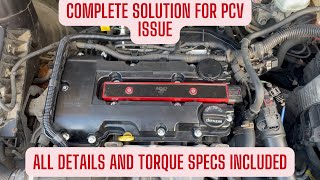
For the 1.4L Turbo engine in the Cruze, P0107 is often linked to the platform's notoriously problematic Positive Crankcase Ventilation (PCV) system. A failed check valve inside the intake manifold or a torn diaphragm in the valve cover can create massive vacuum leaks. While these issues more commonly set lean codes like P0171 or performance codes like P0106 and P1101, the resulting chaos in manifold pressure can sometimes lead to erratic sensor readings that trigger P0107. Owners should always investigate the PCV system for hissing sounds or strong suction at the oil cap 🎬 See this video for an easy PCV fault diagnosis and install. before replacing the MAP sensor on a 1.4L model. A high-pitched chirp from the serpentine belt area that disappears when the oil dipstick is removed can also indicate a failed crankcase seal due to excessive PCV pressure.
Generation note: The 2011-2016 model years cover the first generation of the Chevrolet Cruze. A new generation was introduced in 2016, but the first-generation model was also sold in 2016 as the "Cruze Limited." This guide applies to all first-generation models, as the P0107 issue is common to both the 1.4L and 1.8L engines.
Symptoms You May Notice
- Check Engine Light is on
- Rough or unstable idle
- Hesitation or lack of power during acceleration
- Decreased fuel economy
- Engine stalling, especially at stops
- Hard starting
- Black smoke from the exhaust in some cases
- Engine surging
- Hard bucking at low speeds (approx. 10-20 MPH) followed by lighter bucking during acceleration
- Reduced power messages or "Stability Trak" dashboard warnings
- Replacing the Mass Airflow (MAF) sensor. The MAF and MAP sensors are different components with different functions.
- Replacing other ignition or fuel components like spark plugs or fuel injectors without first diagnosing the MAP sensor circuit.
- Replacing the MAP sensor when the root cause is a PCV system vacuum leak on the 1.4L engine.
Most Likely Causes
- Failed Manifold Absolute Pressure (MAP) Sensor 🔴 High Probability → Shop Manifold Absolute Pressure Sensor The sensor is a common failure item due to age, heat cycles, and potential oil contamination from the PCV system. Many owners and mechanics on forums recommend using an OEM ACDelco sensor, as the Cruze can be sensitive to aftermarket parts.
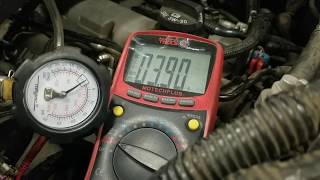
How to confirm: With a scan tool, observe the MAP sensor reading 🎬 Watch: A step-by-step guide on how to test a MAP sensor. with the Key On, Engine Off (KOEO). It should read near atmospheric pressure. At idle, it should show a strong vacuum (e.g., 1.0-1.5 volts). If the reading is stuck at a very low value (e.g., 0 kPa or <0.5V) and doesn't change, the sensor is likely bad. You can also test the signal wire for voltage; it should typically be between 1-5 volts with the engine running, not stuck below 0.5V.
Typical fix: Replace the MAP sensor. It is located on the intake manifold and held by a single T25 or T30 Torx bolt.
Est. part cost: $30-$80 - Wiring or Connector Issue 🟡 Medium Probability The engine bay environment is harsh, leading to brittle wires and corroded connector pins over time. The harness section that drapes over the valve cover is a known chafe point from engine vibration, where wires can break inside the insulation, making visual diagnosis difficult. Manufacturer service bulletins for other GM models, such as TSB Bulletin #PIP5344, note that P0107 can be found alongside 5V reference circuit codes like P0697, suggesting broader electrical circuit faults.
How to confirm: Visually inspect the MAP sensor connector and its wiring harness for any signs of damage, corrosion, or loose pins. With a multimeter, check for 5V reference and a good ground (<100mV) at the connector with the key on. Perform a 'wiggle test' by shaking the harness and connector with the engine running to see if the idle stumbles or the sensor reading changes, indicating an intermittent connection.
Typical fix: Repair the damaged section of wiring or replace the connector pigtail using non-insulated butt connectors and heat shrink with adhesive lining for a durable, weather-proof seal.
Est. part cost: $15-$40 - PCV System Failure (1.4L Turbo Engine) ⚪ Low Probability This is a very common failure on the 1.4L engine, but it typically sets other codes like P0171 or P0106. However, it can cause erratic pressure readings that may contribute to a P0107.
How to confirm: With the engine running, listen for a distinct hissing or whistling sound from the valve cover. Try removing the oil filler cap; if there is very strong suction holding it down, the PCV diaphragm in the valve cover has failed. Also inspect the intake manifold for a missing orange check valve; its absence creates a permanent vacuum leak.
Typical fix: If the valve cover diaphragm is torn, the entire valve cover must be replaced. If the intake manifold check valve is missing, the intake manifold must be replaced or a third-party external check valve kit can be installed.
Est. part cost: $40-$250
Rare But Worth Checking
- Failed Powertrain Control Module (PCM): → Shop Engine Control Module (ECM) This is extremely rare. The PCM should only be considered after all other possibilities, including the sensor, wiring, and major vacuum leaks, have been definitively ruled out. TSB Bulletin #PIT5713A notes that P0107 can sometimes appear in a complex cluster of communication codes (like U0100 or U0073), which may indicate module or data bus issues.
- Charge Air Cooler Icing (1.4L Turbo): In extremely cold weather (below 0°F / -18°C), moisture can freeze in the charge air cooler (intercooler), causing a blockage that leads to hesitation, loss of power, and potentially MAP sensor codes. GM issued a TSB (12-06-01-003) for this condition.
Diagnosis Steps
- Connect an OBD-II scanner and confirm P0107 is the primary code. Note any other codes present, especially P0106, P0171, or P1101, as they point towards different diagnostic paths. TSB Bulletin #PIT5677E indicates that P0107 can appear in combination with a wide variety of engine performance codes.
- Using the scanner's live data, monitor the MAP sensor reading (usually in kPa or Volts). With the Key On, Engine Off (KOEO), it should be close to the BARO (barometric pressure) reading, around 100 kPa or 4.5V at sea level.
- At idle, the reading should drop significantly to show vacuum (e.g., 30-40 kPa or 1.0-1.5V).
- If the reading is stuck low (near zero or <0.5V) and does not change with RPM, the sensor or its circuit is at fault.
- Visually inspect the MAP sensor connector and wiring for any obvious damage, corrosion, or loose connections. Pay special attention to the harness where it lays across the valve cover. Perform a 'wiggle test' on the harness.
- Disconnect the sensor and test the connector. With the key on, you should have a 5-volt reference wire (Gray), a ground wire (Orange/Black, check for <0.1V), and a signal wire (Light Green).
- If 5V and ground are present, jump the 5V reference pin to the signal pin on the connector. The scanner's live data for the MAP sensor should jump to 5V. If it does, the wiring to the PCM is good, and the sensor is bad.
- On 1.4L models, perform a quick check of the PCV system by listening for hissing noises or checking for heavy suction at the oil cap while the engine is running.
- If the sensor and wiring test good, and no vacuum leaks are found, replace the MAP sensor. Using an OEM ACDelco part is strongly recommended.
- After replacement, clear the codes and perform a test drive to ensure the fix was successful.
Parts You'll Likely Need
- Manifold Absolute Pressure (MAP) Sensor
(OEM #55573248)— This is the most common failure point for a P0107 code, indicating an internal electrical fault in the sensor.
Trusted brands: ACDelco (GM Genuine Parts), Bosch, Delphi
OEM price range: $50-$80
Aftermarket price range: $30-$60 - Engine Valve Cover (1.4L Turbo Only)
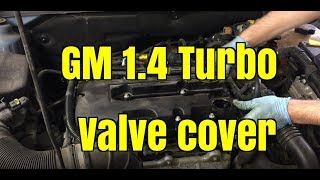
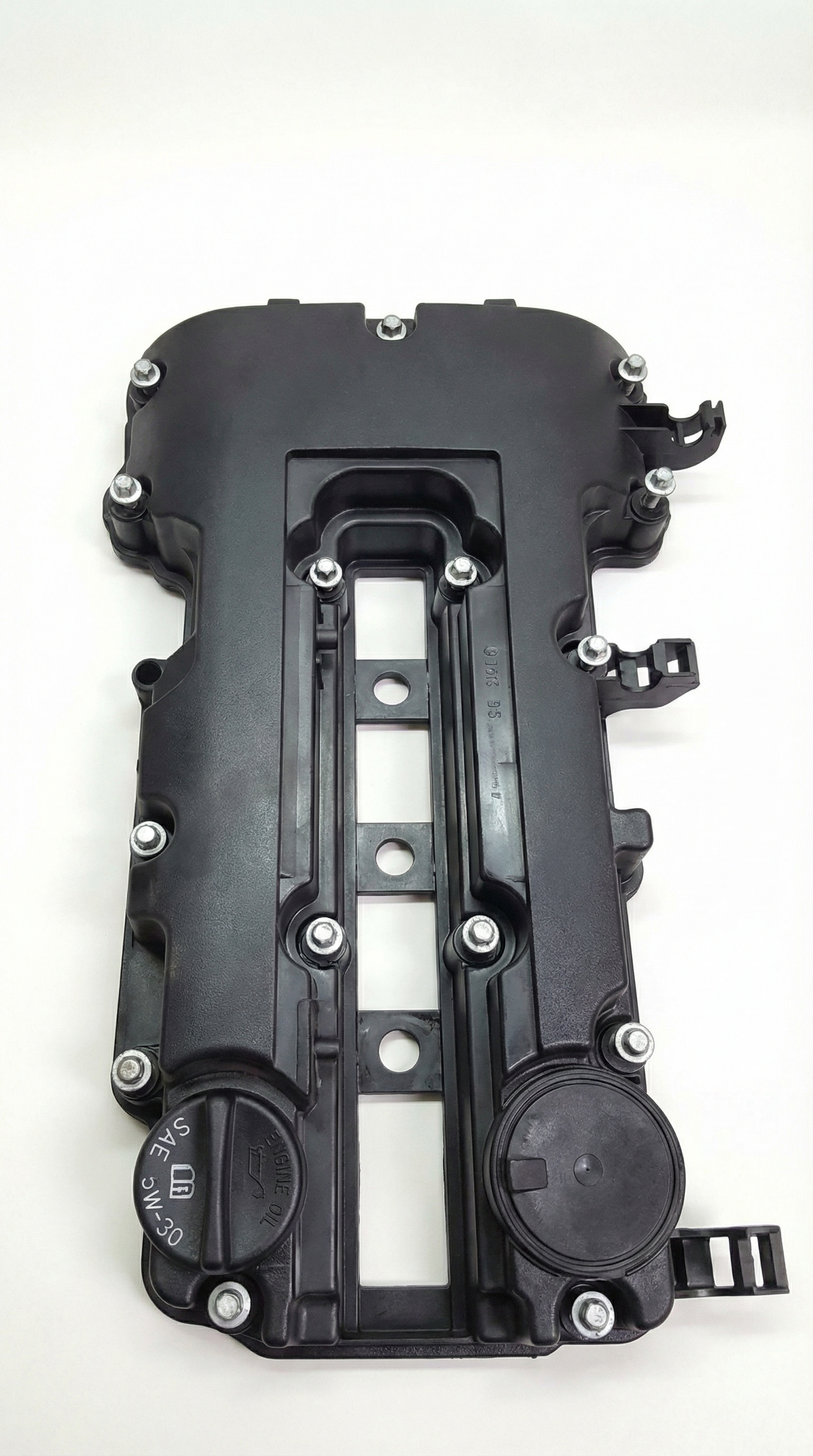
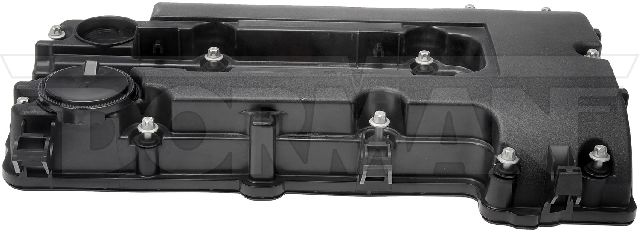
(OEM #25198874)— If P0107 is accompanied by P0171 and hissing noises, it's likely due to a torn PCV diaphragm inside the valve cover, which is a very common issue on this engine. The diaphragm is not serviced separately by GM, requiring full cover replacement. 🎬 Watch: How to replace the valve cover on your Chevy Cruze.
Trusted brands: ACDelco (GM Genuine Parts), Dorman
OEM price range: $120-$180
Aftermarket price range: $60-$120
Related Codes That Often Appear With This One
- P0106 — P0106 indicates a MAP sensor performance/range issue, while P0107 indicates a circuit low fault. Seeing them together can point to an intermittent wiring problem, a failing sensor that is starting to short out, or a significant vacuum leak confusing the sensor's logic.
- P0171 — On the 1.4L Turbo, a P0171 (System Too Lean) code is the most common indicator of a PCV system failure. If you see P0171 with P0107, suspect a massive vacuum leak from the PCV system is confusing the MAP sensor.
- P1101 — P1101 (Intake Air Flow System Performance) is another code frequently triggered by the 1.4L's PCV issues. It often appears in a group with P0171 and P0106, pointing strongly toward a vacuum leak rather than a primary sensor failure.
Technical Service Bulletins (TSBs) & Recalls
- GM TSB 12-06-01-003: Addresses driveability concerns in extreme cold weather (below 0°F / -18°C) due to charge air cooler icing, which can cause MAP sensor codes.
- GM Warranty Extension N142310590 (Expired): Covered replacement of the valve cover (for PCV diaphragm failure) and intake manifold (for PCV check valve failure) for up to 120,000 miles on certain 1.4L vehicles. While expired, its existence highlights the prevalence of the issue.
- TSB Bulletin #PIP5344: Notes that technicians may find P0107 along with P0106 and various pedal position or reference circuit codes (P0697, P2122) in certain GM electrical systems.
- TSB Bulletin #PIT5713A: Documents that P0107 can be found in combination with multiple communication DTCs (U-codes) and instrument panel warning messages.
- TSB Bulletin #PIT5677E: Lists P0107 as a potential code found in combination with various engine and timing-related DTCs during diagnostic checks.
Platform-Specific Known Issues
- On the 1.4L LUJ/LUV Turbo engine, the PCV system is a frequent point of failure. A check valve inside the intake manifold can get dislodged and ingested by the engine, and a rubber diaphragm in the valve cover can tear. Both failures create a significant vacuum leak that can cause a variety of codes, including P0107, P0106, and P1101. Always check for hissing sounds or excessive vacuum at the oil cap before replacing parts.
Mechanic-Grade Diagnostic Values
- MAP Sensor 5V Reference — expected: 5.0 Volts (KOEO or running). Failure: Voltage significantly lower than 5.0V indicates a wiring issue or faulty PCM.
- MAP Sensor Ground Circuit — expected: Less than 0.1V (100 millivolts). Failure: Voltage higher than 0.1V indicates a poor ground connection, which can skew sensor readings.
- MAP Sensor Signal Voltage (KOEO) — expected: ~4.5 Volts at sea level. Failure: Voltage stuck low (below 0.5V) points to a sensor or circuit fault.
- MAP Sensor Signal Voltage (at idle) — expected: 1.0 - 1.5 Volts. Failure: Voltage does not drop from the KOEO reading, or is stuck below 0.5V.
- Wiring Harness Continuity — expected: Less than 0.5 Ohms. Failure: A reading of O.L. (Over Limit) indicates an open wire; a reading higher than 0.5 Ohms indicates high resistance.
Scan Tool Commands That Help
- GDS2 (GM Global Diagnostic System 2): Diagnostic Data Display — Use this to monitor live MAP sensor voltage and pressure (kPa) data. It helps differentiate between a hard failure (stuck value) and an intermittent fault (value drops out during a wiggle test).
- GDS2 (GM Global Diagnostic System 2): Output Control Functions — While there is no direct command for the MAP sensor, a technician can command other components like the throttle body or EGR valve to change engine conditions and observe if the MAP sensor data responds correctly, confirming its functionality.
Wiring & Ground Locations
- MAP Sensor Connector — On the intake manifold, typically near the throttle body.. This is the primary point of failure for wiring issues. The 3 pins are 5V Reference (Gray), Low Reference/Ground (Orange/Black), and Signal (Light Green). A fault on any of these wires will cause P0107.
- Engine Harness Chafe Point — The section of the main engine wiring harness that rests on top of the front (exhaust side) of the valve cover.. Engine vibration can cause the wires inside this harness to rub through their insulation and short or break, even when the outer protective loom appears undamaged. This is a hidden cause of an open or short on the 5V reference or signal wire.
- Engine Block Ground — A bolt securing a ground wire or strap from the harness directly to the engine block or cylinder head, often near the ignition coil pack.. The MAP sensor's ground reference runs through the harness and eventually to an engine block ground. A loose or corroded connection here can create a floating ground, causing incorrect voltage readings and triggering P0107.
Real Owner Repair Stories
- Grand Prix Forums user 'mdkoh' (GM Vehicle (Grand Prix) with similar wiring (Gray 5V ref wire)) — P0107 code appeared. Replacing the sensor did not fix it. Multimeter test showed no voltage at the sensor connector.
❌ Tried (didn't work) Replacing the MAP sensor, Reseating PCM connectors
✅ What actually fixed it Found that the gray 5V reference wire was severed inside the wiring harness where it straddled the valve cover. The outer wrap looked undamaged, hiding the break. Repairing the wire resolved the code. - Reddit r/cruze user (2011-2016 Chevy Cruze 1.4L) — Multiple codes including P0107, P0106, P0171, P1101. Car made a 'slam noise', shook, and died, but restarted later.
❌ Tried (didn't work) Replaced MAP sensor, Replaced MAF sensor, Replaced valve cover assembly, Replaced upper intake manifold, Replaced O2 sensor
✅ What actually fixed it The user's problem was unresolved in the thread, but the story is a critical example of how replacing all common parts often fails to fix the issue, strongly pointing towards a complex wiring fault or a missed diagnosis like the intake manifold check valve. - NHTSA ODI #10787380 — An owner of a similar GM platform reported that P0107 was accompanied by hard bucking at 10 MPH and lighter bucking at 20 MPH, which continued through acceleration.
- NHTSA ODI #11427385 — A report describes P0107 appearing alongside an alternator that began smoking and "Stability Trak" dashboard lights, resulting in a loss of engine power.
"I Checked Everything" — The Actual Cause
- In many documented cases on the 1.4L Cruze, owners replace the valve cover (to fix the torn PCV diaphragm) and the MAP sensor, yet codes like P0107, P0171, and P1101 persist. The root cause is often not another vacuum leak a smoke test would find, but the second, less obvious PCV failure: the orange check valve inside the intake manifold having been dislodged or destroyed. Technicians and owners miss this because they assume the valve cover is the only PCV failure point.
When the Usual Fixes Don't Work
- A common trap for P0107 on the 1.4L Cruze is to immediately replace the MAP sensor. While the sensor can fail, many owners find the code returns. The next step is often replacing the valve cover due to the known PCV diaphragm issue. When the code *still* returns, it is frequently because the actual root cause was a broken wire inside the harness loom or the missing check valve inside the intake manifold—two issues that are not fixed by replacing the two most common parts.
Model Year Variations Within This Range
- 2011-2016 (1.4L Turbo): The 1.4L engine was updated from the LUJ to the LUV design around 2013. While the fundamental design and common P0107 failure points (PCV system, MAP sensor) are the same, some specific part numbers for related components and wiring harness routing may have minor differences. However, the diagnostic approach for P0107 remains identical for both engine codes.
Diagnostic Flowchart
Real Owner Stories
Aggregated from forums and TSBs cited above. Mileages and costs reflect what owners reported in those sources.
Chevrolet Cruze 1.4L Turbo
Symptoms: Chased a combination of P0106, P0107, P1101, and P0171 codes, experiencing confusion between a bad sensor and underlying vacuum issues.
What fixed it: Replaced the MAP sensor, MAF sensor, valve cover, and O2 sensor. The root cause was ultimately identified as the common PCV check valve and diaphragm failure.
Source hint: Reddit r/Cruze - Thread 'p0106 p0107 p1101 p0171 codes**update 03/18/24'
Chevrolet Cruze 1.4L Turbo
Symptoms: Struggled with an initial combination of P0106, P0107, P1101, and P0171 codes.
What fixed it: Diagnosed the issue as part of a larger, more complex problem on the 1.4L engine involving the PCV system rather than just a standalone MAP sensor failure.
Source hint: Reddit r/Cruze - Thread 'p0106 p0107 p1101 p0171 codes'
Related OBD-II Codes
Frequently Asked Questions
Does GM Warranty Extension N142310590 cover the P0107 code on my 1.4L Cruze?
Why did my Cruze throw a P0107 code during extreme cold weather?
Should I buy an aftermarket MAP sensor to fix the P0107 code?
Where should I check the MAP sensor wiring on my Cruze?
How can I tell if the PCV system is causing my P0107 code on the 1.4L Turbo?
Helpful Videos
Used OEM Parts in Stock
New Aftermarket Parts Available


The information in this article is provided for general reference and educational purposes only. Vehicle specifications, procedures, and part compatibility can vary by production date, trim level, and region. Always consult your vehicle's factory service manual and verify part numbers before purchasing or performing repairs. Safety-critical components such as airbags, seat belts, and braking systems should be installed by a qualified professional.
- Chevrolet Cruze:
- 🧭 Diagnostic Flowchart
- 🎬 Helpful Videos
- 🛍️ Shop This Part
- What's Unique About the 2011-2016 Chevrolet Cruze
- Symptoms You May Notice
- Most Likely Causes
- Rare But Worth Checking
- Diagnosis Steps
- Parts You'll Likely Need
- Related Codes That Often Appear With This One
- Technical Service Bulletins (TSBs) & Recalls
- Platform-Specific Known Issues
- Mechanic-Grade Diagnostic Values
- Scan Tool Commands That Help
- Wiring & Ground Locations
- Real Owner Repair Stories
- "I Checked Everything" — The Actual Cause
- When the Usual Fixes Don't Work
- Model Year Variations Within This Range
- Real Owner Stories
- Chevrolet Cruze 1.4L Turbo
- Chevrolet Cruze 1.4L Turbo
- Related OBD-II Codes
- Frequently Asked Questions
- 🎟️ Get 5% Off