

P0107 on 2014-2018 Chevrolet Silverado 1500: MAP Sensor Circuit Low Causes and Fixes
P0107 on a 2014-2018 Silverado usually means the Manifold Absolute Pressure (MAP) sensor has failed. It's a common, easy-to-fix issue. Expect to pay around $45 for a genuine ACDelco replacement part (P/N 12644228), and it's a 15-minute DIY job located on the front of the intake manifold.
- P0107 on a 2014-2018 Silverado almost always points to a failed MAP sensor, an easy and inexpensive DIY fix.
- The correct OEM part is ACDelco 12644228, which is widely available.
- Unlike newer Silverados, a wiring harness issue is not the most likely cause for this generation.
- Symptoms include rough idle, poor power, and bad gas mileage; driving is possible but not recommended.
- Always verify the 5-volt reference and ground at the connector before condemning the sensor to rule out a simple wiring issue.
What's Unique About the 2014-2018 Chevrolet Silverado 1500
For the 2014-2018 Silverado (K2XX generation), the MAP sensor is conveniently located on the front of the intake manifold, making it very easy to access and replace. Unlike the newer 2019+ models which are plagued by wiring harness chafing issues documented in TSB 21-NA-149, the P0107 code on this specific generation is most often a straightforward sensor failure. The sensor itself, ACDelco P/N 12644228, is a common part used across a vast range of GM vehicles, making it widely available and affordable.
Symptoms You May Notice
- Check Engine Light is on
- Rough or unstable idle
- Engine hesitation or stumbling on acceleration
- Reduced engine power or entering 'limp mode'
- Poor fuel economy
- Engine may stall, especially when coming to a stop
- Black smoke from the exhaust due to a rich fuel mixture
- Hard starting or long crank times
- Replacing the Mass Airflow (MAF) sensor. The MAF and MAP sensors have similar names and functions, but are different parts. The P0107 code specifically points to the MAP sensor circuit.
Most Likely Causes
- Faulty MAP Sensor 🔴 High Probability → Shop Manifold Absolute Pressure Sensor Like any electronic sensor, the MAP sensor is exposed to constant heat cycles and vibration in the engine bay, which can lead to internal failure over time. Contamination from oil vapor can also degrade the sensor's sensing element.
How to confirm: With a scan tool, check the MAP sensor reading with the Key On, Engine Off (KOEO). It should read close to atmospheric pressure (voltage near 4.5-5.0V at sea level). If it reads very low (e.g., below 0.5V), the sensor is likely bad. You can also test by jumping the 5V reference wire to the signal wire at the connector; the scan tool reading should jump to 5.0V. If it does, the wiring is good and the sensor is confirmed bad.
Typical fix: Replace the MAP sensor. It is held in by a single 10mm bolt and is easily accessible on the front of the intake manifold.
Est. part cost: $35-$55 - Damaged Wiring or Connector 🟡 Medium Probability While less common than on the 2019+ models, wiring can still be damaged by engine heat, abrasion, or improper repairs. The connector itself can become brittle and crack, or pins can corrode.
How to confirm: Visually inspect the wiring harness and connector going to the MAP sensor. Look for any signs of chafing, melting, corrosion, or loose pins. With the key on, check for 5V reference voltage and a good ground at the connector using a multimeter. A 'wiggle test' on the harness while the engine is running can sometimes reveal an intermittent connection issue.
Typical fix: Repair the damaged section of wire or replace the connector pigtail (e.g., ACDelco PT2980).
Est. part cost: $10-$30 - Significant Vacuum Leak ⚪ Low Probability Intake manifold gaskets and PCV hoses can become brittle and crack over time, creating vacuum leaks. However, this is less likely to cause a 'circuit low' code than an electrical fault.
How to confirm: A large vacuum leak could theoretically cause pressure readings to be off, but it would typically set other codes as well (like lean codes P0171/P0174 or misfire codes). Listen for hissing sounds around the intake manifold at idle. A smoke test is the most effective way to find a vacuum leak.
Typical fix: Repair the source of the vacuum leak, such as a cracked hose or bad intake manifold gasket.
Est. part cost: $10-$300
Rare But Worth Checking
- Faulty Engine Control Module (ECM): → Shop Engine Control Module (ECM) This is extremely rare. The ECM should only be considered after all other possibilities, including the sensor, wiring, and connections, have been thoroughly tested and ruled out.
- Clogged Catalytic Converter: A severely restricted exhaust can cause abnormal pressure readings in the intake manifold. This would almost always be accompanied by other codes (like P0420/P0430) and a severe, progressive loss of power.
Diagnosis Steps
- Connect an OBD-II scanner to verify the P0107 code and check for any other stored codes.
- With the scanner's live data function, view the MAP sensor voltage with the Key On, Engine Off (KOEO). It should be around 4.5-5.0 volts (depending on altitude). If it's below 1.0 volt, and especially below 0.5V, the sensor or circuit is faulty.
- Start the engine and observe the MAP sensor reading at idle. It should drop to around 1.0-2.0 volts. If it remains stuck low, this further points to a sensor or circuit issue.
- Visually inspect the MAP sensor, located on the front of the intake manifold to the driver's side of the throttle body, for any physical damage.
- Inspect the electrical connector and wiring harness for damage, corrosion, or loose connections.
- If the visual inspection checks out, disconnect the sensor. With the key on, use a multimeter to test the connector. You should find one wire with ~5 volts (reference), one with ~0 volts (ground), and the third is the signal wire.
- If the 5V reference and ground are correct, the problem is almost certainly the MAP sensor itself.
- If reference voltage or ground is missing, the wiring between the sensor and the ECM is faulty and needs to be traced and repaired.
- After replacing the part, clear the code with the scanner and take a test drive to ensure the problem is resolved.
Parts You'll Likely Need
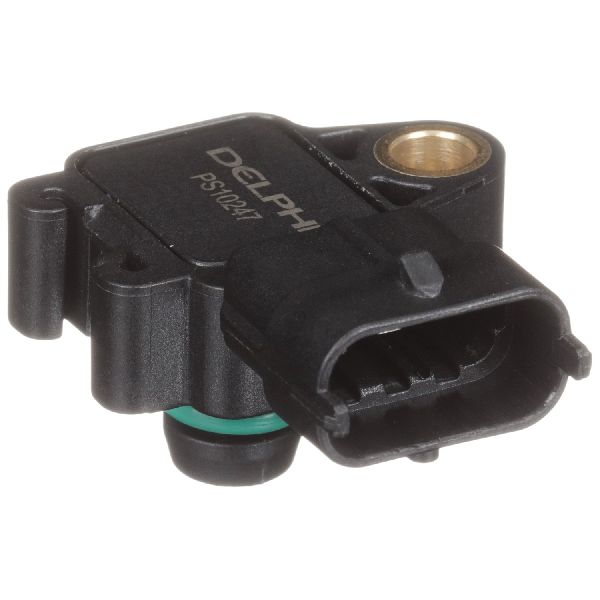
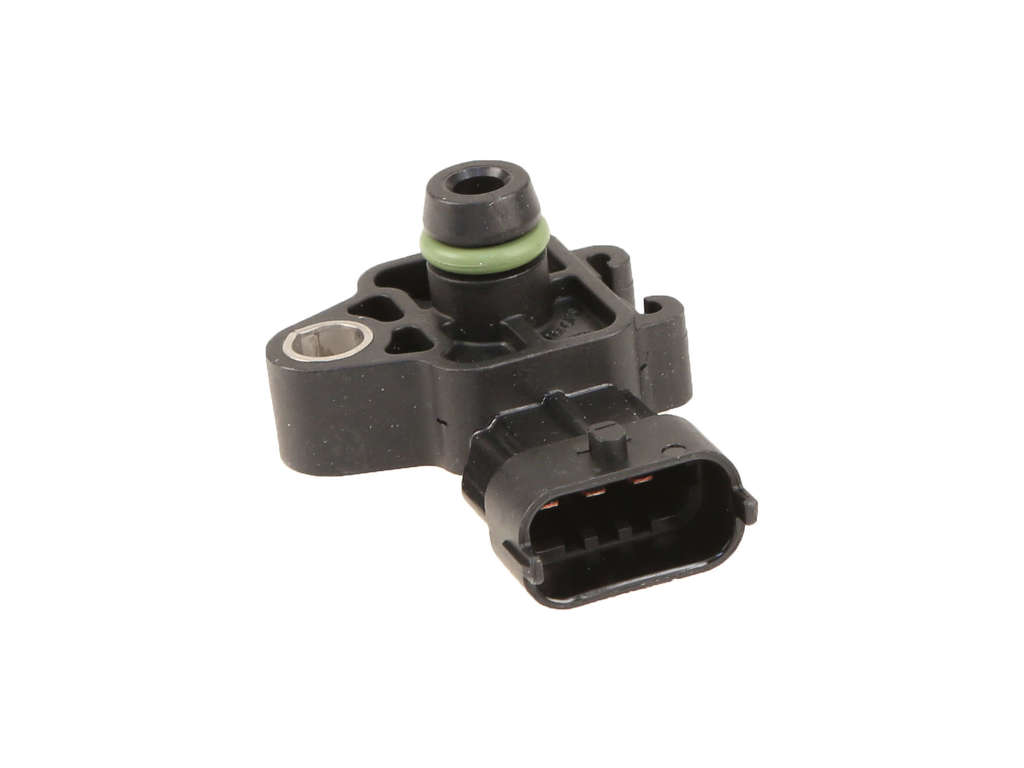
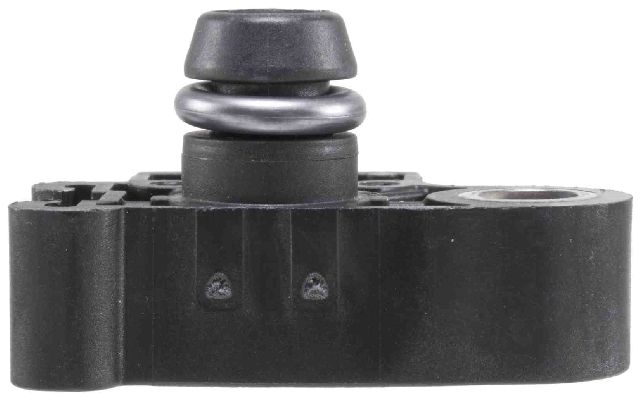
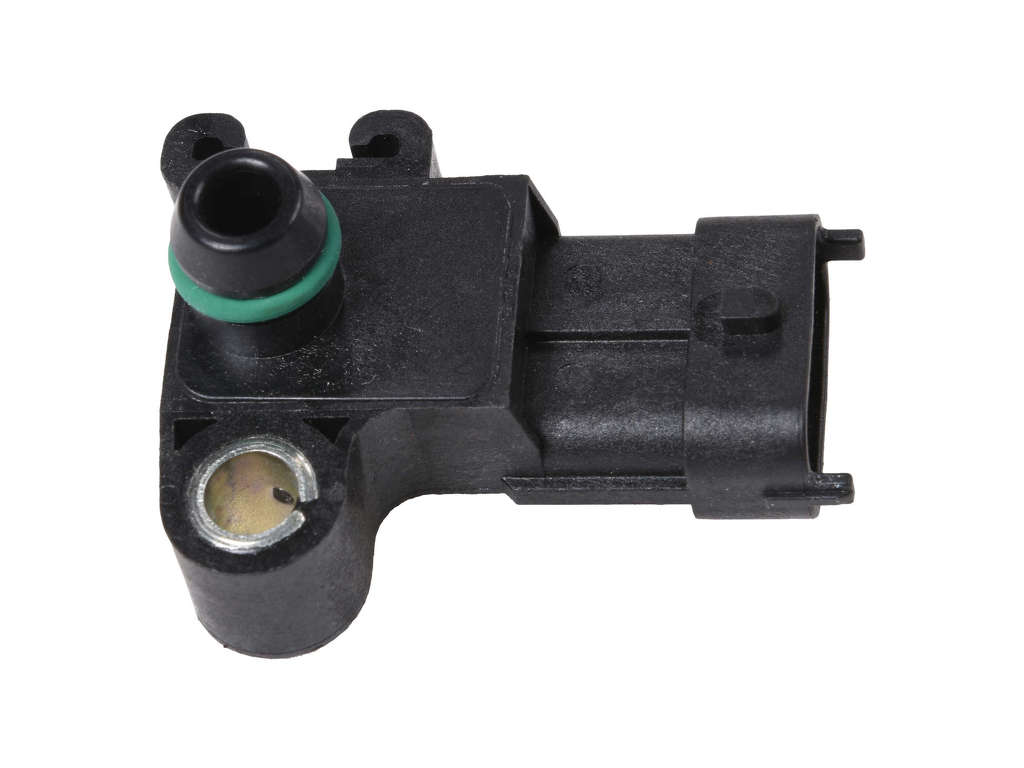
- Manifold Absolute Pressure (MAP) Sensor
(OEM #12644228)— This is the most common cause of a P0107 code on this vehicle. The sensor fails internally, sending a low voltage signal to the ECM.
Trusted brands: ACDelco (Genuine GM), Bosch, Delphi, Standard Motor Products (SMP)
OEM price range: $45-$55
Aftermarket price range: $25-$45
Related Codes That Often Appear With This One
- P0106 — This code indicates a MAP sensor performance/range issue. It often appears alongside P0107 as the sensor begins to fail intermittently.
- P0108 — This code for MAP sensor circuit high voltage can appear if the sensor is failing intermittently, causing voltage to swing from one extreme to the other.
- P0300-P0308 — Misfire codes can be triggered because the incorrect MAP sensor reading leads to an improper air-fuel mixture, causing incomplete combustion in one or more cylinders.
- P0172/P0175 — These "System Too Rich" codes can occur because the low voltage from the MAP sensor tricks the ECM into thinking the engine is under high load, causing it to inject excess fuel.
Mechanic-Grade Diagnostic Values
- MAP Sensor 5-Volt Reference — expected: 4.8 - 5.2 Volts DC (at sensor connector with key on, engine off). Failure: Voltage outside this range indicates a wiring issue or a fault in the ECM's 5V reference circuit.
- MAP Sensor Signal Voltage (KOEO) — expected: ~4.5 - 5.0 Volts DC at sea level, decreasing with altitude. Should match BARO reading on scan tool.. Failure: A reading below 1.0V, especially under 0.5V, indicates a faulty sensor or circuit low condition.
- MAP Sensor Signal Voltage (Engine Idling) — expected: 1.0 - 2.0 Volts DC (at normal operating temp, high vacuum). Failure: Voltage remains stuck low (near KOEO failure reading) or does not respond to throttle changes.
- MAP Sensor Low Reference (Ground) Circuit Resistance — expected: Less than 5.0 Ohms between the ground pin on the connector and a known good chassis/engine ground.. Failure: Resistance over 5.0 Ohms indicates an open or high resistance in the ground circuit, which can cause incorrect readings.
- DTC Trigger Threshold — expected: Signal voltage should remain above 0.5V during normal operation.. Failure: The ECM will set code P0107 if it detects a signal voltage of less than 0.1V to 0.5V for more than 4-5 seconds.
Scan Tool Commands That Help
- GDS2 / Tech2 / Professional Scan Tool: MAP/BARO Comparison — With Key On, Engine Off (KOEO), compare the MAP sensor reading and the Barometric Pressure (BARO) sensor reading. They should be nearly identical. A significant difference points directly to a faulty or skewed MAP sensor.
Wiring & Ground Locations
- MAP Sensor Connector — On the MAP sensor itself, located on the front of the intake manifold, driver's side of the throttle body.. This 3-pin connector provides power, ground, and signal return for the sensor. The typical pinout is Pin C (or 1) = 5V Reference (Orange wire), Pin A (or 2) = Low Reference/Ground (Black/White wire), and Pin B (or 3) = Signal (Yellow or other color wire). Verifying power and ground here is the primary electrical test.
- G103 / G104 — Primary engine block grounds, typically bolted to the front or side of the cylinder heads.. The MAP sensor's Low Reference (ground) circuit ultimately connects to one of these main engine grounds. A loose, corroded, or broken ground at these points can cause a floating ground, leading to erratic sensor readings and codes like P0107.
Real Owner Repair Stories
- Common forum reports and mechanic experience (2014-2018 Chevrolet Silverado 1500 w/ 5.3L or 6.2L) — Check engine light with P0107, rough idle, hesitation on acceleration, poor fuel economy.
❌ Tried (didn't work) Clearing the code (it returns immediately), Performing a smoke test (no vacuum leaks found)
✅ What actually fixed it Replacing the MAP sensor (ACDelco P/N 12644228) and cleaning the sensor port on the intake manifold. The original sensor had failed internally, causing its signal voltage to be stuck below 0.5V. This is the most common resolution for this code on this platform. - General Motors/Chrysler diagnostic patterns (Any vehicle with a shared 5V reference circuit, including some GM models.) — P0107 is present, but MAP sensor tests good when tested in isolation. Other seemingly unrelated codes may be present.
❌ Tried (didn't work) Replacing the MAP sensor, Checking the MAP sensor wiring for continuity
✅ What actually fixed it Another sensor on the same 5V reference circuit (e.g., crank position sensor, A/C pressure sensor) was internally shorted, pulling the entire circuit's voltage down. The fix was to unplug sensors sharing the 5V reference one by one until the 5V signal returned to the MAP sensor connector, identifying the shorted component.
"I Checked Everything" — The Actual Cause
- A common scenario for P0107 is that a smoke test reveals no vacuum leaks. The technician then performs electrical checks and finds the MAP sensor signal is stuck low despite having a good 5V reference and ground, confirming an internal sensor failure. This rules out a vacuum leak and correctly points to an electrical fault within the sensor itself.
OEM Part Supersession History
12644228→12711681— Standard part lifecycle update by the manufacturer.
Heads up: The new part number is a direct replacement for the old one. No incompatibility issues are known.
Diagnostic Flowchart
Other Known Issues on This Vehicle
Issues unrelated to this code that are worth knowing about as an owner of this generation:
- AFM/DFM Lifter Failure 🔴 High — Common, especially on 5.3L and 6.2L V8s, often appearing after 60,000-80,000 miles. Can lead to camshaft damage and costly engine repairs.
- Transmission Torque Converter Shudder (6L80/8L90) 🟠 Medium — Widespread issue, particularly on 8-speed models, causing a vibration/shudder between 40-70 mph. Often requires a special fluid flush or torque converter replacement. (Ref: TSB 18-NA-355 (recommends fluid flush with Mobil 1 Blue Label ATF))
- "Chevy Shake" - Highway Speed Vibration 🟠 Medium — A mysterious, hard-to-diagnose vibration felt at highway speeds (typically 65-80 mph). Causes are debated but linked to driveshafts, tires/wheels, and frame harmonics. (Ref: PI1354C (Vibration Information Bulletin))
- A/C Condenser Failure 🟡 Low — Common for condensers to develop cracks and leak refrigerant, particularly on earlier models of this generation (2014-2016).
- Excessive Oil Consumption 🟠 Medium — Some 5.3L V8 engines are known to consume oil, often linked to the AFM system and piston ring design. (Ref: Subject of class-action lawsuits (e.g., Speerly v. GM))
Used vs. New Parts: Buying Guide for This Vehicle
When a used part is the smart pick: Almost never. A MAP sensor is a low-cost, critical electronic component. The risk of a used part failing soon after installation outweighs the small cost savings. A used part is only viable as a temporary, emergency fix to get the vehicle to a repair shop.
Donor-vehicle mileage cap: roughly under 50000 miles for the part to have meaningful remaining life.
What to inspect on the donor part:
- Ensure the connector housing is not cracked or brittle.
- Check that the locking tab is intact.
- Inspect the sensor tip for physical damage or heavy oil/carbon buildup.
- Verify it comes from a vehicle that was not in a front-end collision.
OEM-only on this vehicle (don't cheap out):
- While not strictly 'OEM-only', using a genuine ACDelco or a reputable OEM supplier like Bosch or Delphi is very strongly recommended.
Aftermarket brands forum-validated for this vehicle:
- ACDelco (GM Original Equipment)
- Bosch
- Delphi
Brands owners have reported issues with on this vehicle:
- Generic, unbranded 'white-box' parts from online marketplaces are frequently cited in forums as being inaccurate out of the box or failing prematurely.
Technical Service Bulletins (TSBs) & Recalls
Manufacturer service bulletins indicate that P0107 can be part of broader electrical system faults. Bulletin #PIT5677 and #PIT5677E note that P0107 may be found in combination with various other DTCs when the engine runs rough or experiences reduced power. Additionally, Bulletin #PIT5713A describes scenarios where P0107 appears alongside IPC warning messages and communication codes like U0100 and U0121.
Real Owner Stories
Aggregated from forums and TSBs cited above. Mileages and costs reflect what owners reported in those sources.
2014-2018 Chevrolet Silverado
Symptoms: A wide range of electrical issues, including engine codes P0106, P0107, P2122, P2123, P2127, P2128, P2138, and various communication DTCs. May also cause 'No Fob Detect', 'Service Tire Pressure System', no audio, and blank screens.
What fixed it: Inspected the main wiring harness where it passes the large, black metal instrument panel mounting bracket under the driver's side dash. Loosened the bracket, freed the harness, and repaired pinched wires.
Source hint: TSB #PIT5288G / PIT5288H - Pinched Dash Wiring Harness
2014-2018 Chevrolet Silverado
Symptoms: The truck doesn't want to run. It just starts and dies. Throws code p0107 (map sensor circuit low).
What fixed it: Changed the MAP sensor (tried two different sensors).
Source hint: GM-Trucks.com forum thread
Related OBD-II Codes
Frequently Asked Questions
Could a pinched dash harness cause P0107 on my 2014-2018 Silverado?
What is the specific MAP sensor part number for my 2014-2018 Silverado 1500?
Is there a specific pigtail connector recommended for MAP sensor wiring repairs on this truck?
My truck is vibrating at highway speeds and has a P0107; are they related?
Can the AFM system on my 5.3L V8 cause issues related to the MAP sensor?
Does the 8-speed transmission shudder issue (TSB 18-NA-355) trigger a P0107 code?
Helpful Videos


We Have This Part in Stock


The information in this article is provided for general reference and educational purposes only. Vehicle specifications, procedures, and part compatibility can vary by production date, trim level, and region. Always consult your vehicle's factory service manual and verify part numbers before purchasing or performing repairs. Safety-critical components such as airbags, seat belts, and braking systems should be installed by a qualified professional.
- Chevrolet Silverado 1500:
- 🧭 Diagnostic Flowchart
- 🎬 Helpful Videos
- 🛍️ Shop This Part
- What's Unique About the 2014-2018 Chevrolet Silverado 1500
- Symptoms You May Notice
- Most Likely Causes
- Rare But Worth Checking
- Diagnosis Steps
- Parts You'll Likely Need
- Related Codes That Often Appear With This One
- Mechanic-Grade Diagnostic Values
- Scan Tool Commands That Help
- Wiring & Ground Locations
- Real Owner Repair Stories
- "I Checked Everything" — The Actual Cause
- OEM Part Supersession History
- Other Known Issues on This Vehicle
- Used vs. New Parts: Buying Guide for This Vehicle
- Technical Service Bulletins (TSBs) & Recalls
- Real Owner Stories
- 2014-2018 Chevrolet Silverado
- 2014-2018 Chevrolet Silverado
- Related OBD-II Codes
- Frequently Asked Questions
- 🎟️ Get 5% Off