

P0107 on 2017-2021 Chrysler Pacifica: MAP Sensor Circuit Low Causes and Fixes
For a 2017-2021 Pacifica, code P0107 most often means the Manifold Absolute Pressure (MAP) sensor has failed or its wiring is damaged. It's an easy and affordable DIY fix, with the sensor located right on top of the intake manifold. Expect to pay $20-$65 for a new sensor. Before replacing, check the wiring for 5V power and be aware that a short in another sensor (like the oil pressure sensor) can also trigger this code.
- P0107 on your Pacifica is almost always caused by a bad MAP sensor.
- The repair is extremely DIY-friendly, requires minimal tools, and takes less than 30 minutes.
- Before buying a new sensor, use a multimeter to confirm you have a 5-volt reference and good ground at the sensor's connector to rule out a simple wiring issue.
- Do not ignore this code; continued driving can lead to poor fuel economy, stalling, and potential damage to your catalytic converter.
What's Unique About the 2017-2021 Chrysler Pacifica
The 3.6L Pentastar V6 in the Pacifica is a widely used engine across the Chrysler, Dodge, and Jeep lineup. For this platform, a P0107 code is very commonly traced back to a faulty MAP sensor that is simple to replace. The sensor is located conveniently on the upper intake manifold, making it a 15-minute DIY job for most owners. A key diagnostic point for Chrysler vehicles is that the MAP sensor may share its 5-volt reference power with other sensors; a short in an unrelated sensor can sometimes trigger a P0107 code, even if the MAP sensor itself is good. Furthermore, the Pentastar's PCV system is known to sometimes vent oil vapor into the intake, which can foul the MAP sensor and cause repeat failures.
Symptoms You May Notice
- Check Engine Light illuminated
- Rough or unstable idle
- Engine stalling, especially when stopped
- Hesitation or stumbling during acceleration
- Noticeable loss of engine power
- Decreased fuel economy
- Difficulty starting the engine
- Black smoke from the exhaust
- Replacing the MAP sensor without first testing the wiring for a 5-volt reference and ground. If the power supply to the sensor is faulty, a new sensor will not fix the issue.
- Repeatedly replacing the MAP sensor without investigating a potential short on the shared 5V reference circuit from another sensor, like the oil pressure sensor.
- Not considering oil contamination from the PCV system as the root cause for repeat MAP sensor failures.
Most Likely Causes
- Faulty Manifold Absolute Pressure (MAP) Sensor 🔴 High Probability → Shop Manifold Absolute Pressure Sensor The sensor is exposed to constant heat and vibration. A known issue on the 3.6L Pentastar is oil contamination from the PCV system, which can foul the sensor's element, leading to failure.
How to confirm: After confirming the wiring is intact and has proper voltage/ground, the sensor is the remaining point of failure. Inspect the old sensor for oil residue upon removal. Replacing it with a known-good part will resolve the code.
Typical fix: Replace the MAP sensor. It is a twist-in sensor located on the intake manifold.
Est. part cost: $20-$65 - Wiring or Connector Issue 🟡 Medium Probability The wiring harness in the engine bay is susceptible to heat damage, and the connector pins can corrode or become loose. On some platform mates, the harness has been known to chafe on nearby A/C lines, causing a short-to-ground.
How to confirm: Visually inspect the harness for damage. With the key on, disconnect the sensor and use a multimeter to check for a 5-volt reference and a good ground at the connector. Perform a 'wiggle test' on the harness while monitoring sensor data to see if the voltage fluctuates.
Typical fix: Repair the damaged section of wire or replace the connector pigtail.
Est. part cost: $10-$30 - Vacuum Leak ⚪ Low Probability While possible, a vacuum leak is more likely to cause a P0106 (performance) code. However, a very large leak from a disconnected hose could potentially contribute to out-of-range readings.
How to confirm: Inspect all vacuum hoses connected to the intake manifold for cracks or disconnection. Listen for a hissing sound at idle. A smoke test is the most definitive way to find a leak.
Typical fix: Replace the cracked or broken vacuum hose or intake gasket.
Est. part cost: $5-$50
Rare But Worth Checking
- Failed Powertrain Control Module (PCM): → Shop Engine Control Module (ECM) This is very rare. The PCM should only be considered after the sensor, wiring, and 5V reference circuit have been thoroughly tested and proven to be good.
- Shorted 5-Volt Reference Circuit: On Chrysler vehicles, other sensors can share the same 5V power supply as the MAP sensor. A short circuit in another sensor (e.g., oil pressure sensor, A/C pressure sensor) can pull the entire circuit's voltage down, falsely implicating the MAP sensor. There are documented cases on this powertrain of a failed oil pressure sensor causing a P0107 code. If the 5V reference is missing at the MAP connector, unplugging other sensors one by one may reveal the true culprit.
Diagnosis Steps
- Connect an OBD-II scanner to confirm the P0107 code and check for any other codes.
- Remove the plastic engine cover (often just pulls off) to access the MAP sensor on the top rear of the intake manifold.
- Visually inspect the MAP sensor, its electrical connector, and the surrounding wires for any obvious signs of damage, melting, chafing, or corrosion.
- Disconnect the MAP sensor. Turn the ignition to the 'ON' position (engine off).
- Use a multimeter to test the electrical connector. Verify you have a 5-volt reference on one pin and a good ground on another. The third pin is the signal wire.
- If the 5-volt reference is missing, suspect a wiring problem or a shorted sensor on the shared circuit. Begin unplugging other sensors (like the oil pressure sensor) one at a time to see if the 5V returns.
- If power and ground are good, check for a short. Set the multimeter to Ohms and check for continuity between the signal wire pin and a good chassis ground. The reading should be infinite (open circuit). Any continuity indicates a short to ground in the signal wire.
- If the wiring checks out perfectly, the MAP sensor itself is almost certainly the cause of the fault.
- To replace, slide the red locking tab on the connector back, unplug it, then twist the old sensor 90 degrees counter-clockwise and pull it out. Inspect the sensor port for oil residue.
- Install the new sensor by pushing it in and twisting 90 degrees clockwise to lock it. Reconnect the electrical connector and slide the red tab to lock it.
- Clear the code with the scanner, start the engine, and perform a test drive to ensure the code does not return.
Parts You'll Likely Need
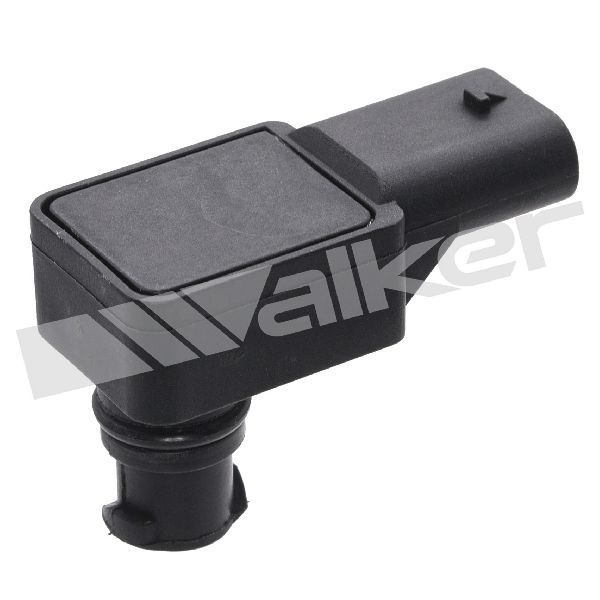
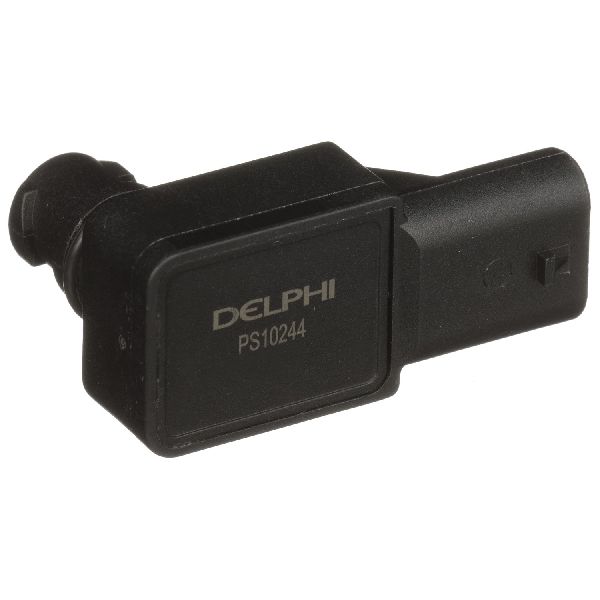
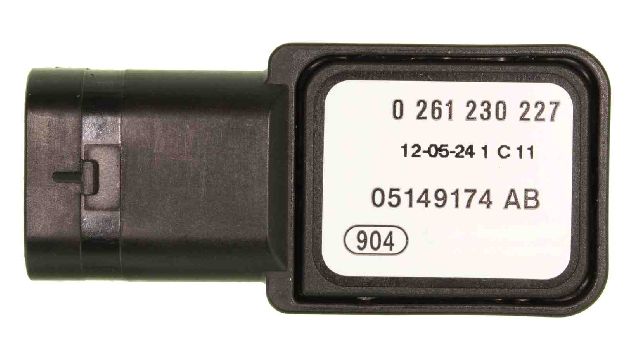
- Manifold Absolute Pressure (MAP) Sensor
(OEM #05149174AB (may be superseded by 68371847AB))— This sensor is the most common failure point for a P0107 code on the 3.6L Pentastar engine.
Trusted brands: Mopar, Delphi, NGK/NTK, Standard Motor Products
OEM price range: $55-$70
Aftermarket price range: $20-$45
Related Codes That Often Appear With This One
- P0106 — Indicates a MAP sensor performance issue. Seeing P0106 and P0107 together often points towards an intermittent wiring problem or a failing, oil-fouled sensor.
- P0108 — This is the opposite code, 'Circuit High Input'. Seeing both P0107 and P0108 can indicate a short between wires in the harness or an intermittent sensor failure.
- P0172 — Indicates 'System Too Rich'. The PCM may default to a rich fuel mixture as a protective measure when it receives an invalid (too low) signal from the MAP sensor.
Technical Service Bulletins (TSBs) & Recalls
- NHTSA Recall 19V348: Addresses potential engine stalling on 2017-2019 Pacificas due to an improperly installed wiring harness, which could cause symptoms similar to a MAP sensor failure.
- NHTSA Recall U01: Pertains to 2017 Pacifica models and involves a PCM software update to prevent an engine stall that could result from the software losing sync with the crankshaft position sensor.
Platform-Specific Known Issues
- A known issue on the 3.6L Pentastar is oil fouling of the MAP sensor due to the PCV system design. If you are replacing the sensor for a second time, consider inspecting the PCV valve and potentially installing an oil catch can.
- Always check the 5V reference circuit. A shorted oil pressure sensor has been documented on platform-mate vehicles to cause a P0107 code, leading to a misdiagnosis of a bad MAP sensor.
Mechanic-Grade Diagnostic Values
- MAP Sensor Signal Voltage (Key On, Engine Off) — expected: ~4.5V - 5.0V DC. Failure: Voltage is significantly lower. A reading below 0.5V for more than a few seconds triggers P0107.
- MAP Sensor Signal Voltage (Engine at Idle) — expected: ~1.0V - 1.8V DC. Failure: Voltage remains high (near KOEO reading) or is stuck below 0.5V.
- MAP Sensor 5V Reference Wire (at connector, unplugged) — expected: 4.8V - 5.2V DC. Failure: Voltage is below 4.5V or is 0V, indicating a problem with the PCM, the supply wire, or a short on the shared reference circuit.
- MAP Sensor Ground Circuit (at connector, unplugged) — expected: < 1.0 Ohm resistance to chassis ground. Failure: Resistance is higher than 1.0 Ohm, indicating a poor ground connection.
- Voltage Drop Test (Sensor Ground Circuit K900) — expected: < 0.5V. Failure: A voltage reading above 0.5V indicates excessive resistance in the ground circuit between the sensor and the PCM.
Scan Tool Commands That Help
- Professional Scan Tool (e.g., wiTECH, Autel): Jumper 5V Reference to Signal Circuit — After confirming good 5V power and ground at the MAP connector, unplug the sensor and use a jumper wire between the 5V reference and signal wire terminals. The scan tool's live data for MAP voltage should jump to 5V. If it does, the wiring to the PCM is good and the sensor is faulty. If it does not, there is an open or short in the signal wire.
- Professional Scan Tool (e.g., wiTECH, Autel): Live Data Graphing & Wiggle Test — To diagnose an intermittent fault, graph the MAP sensor voltage while physically wiggling the sensor connector and its wiring harness. Any sharp drops or spikes in the voltage graph during the wiggle test indicate a wiring or connector issue that needs repair.
Wiring & Ground Locations
- MAP Sensor Connector (3-wire) — On the MAP sensor itself, located on the top, rear of the intake manifold.. This is the primary connection point to test for 5V reference, ground, and the signal wire. The pins are: (K856) 5 Volt Supply, (K900) Sensor Ground, and (K1) MAP Signal.
- (K856) 5 Volt Supply — Wire running from the PCM to the MAP sensor connector.. An open or short on this wire will starve the sensor of power, causing a P0107. This circuit may be shared with other sensors; a short elsewhere can pull this voltage down.
- (K1) MAP Signal — Wire running from the MAP sensor connector to the PCM.. This wire carries the variable voltage signal back to the computer. A short to ground on this wire is a direct cause of a P0107 code.
- (K900) Sensor Ground — Wire running from the MAP sensor connector to the PCM, providing a ground reference.. High resistance or an open on this wire can cause incorrect voltage readings, though it more commonly leads to a P0108 (Circuit High) code.
Real Owner Repair Stories
- Backroads DIY / YouTube (2021 Chrysler Pacifica) — Rough idle, 'Service Electronic Throttle Control' and 'Service Electronic Stability Control' messages on the dash, and a P0108 (Circuit High) code.
❌ Tried (didn't work) Cleaning the Intake Air Temperature (IAT) sensor., Cleaning the Manifold Absolute Pressure (MAP) sensor.
✅ What actually fixed it Replacing the Manifold Absolute Pressure (MAP) sensor resolved the symptoms and codes. This demonstrates that even on a newer model, sensor failure is common and cleaning is not always an effective fix.
OEM Part Supersession History
05149174AB→68371847AB— Standard part number update/revision by the manufacturer.
Model Year Variations Within This Range
- 2021: The 2021 model year received a significant facelift and the option for All-Wheel-Drive (AWD). However, the 3.6L Pentastar V6 engine remained the standard powertrain, and the location and replacement procedure for the MAP sensor are identical to earlier years in the range.
Diagnostic Flowchart
Other Known Issues on This Vehicle
Issues unrelated to this code that are worth knowing about as an owner of this generation:
- Cracked Oil Filter / Cooler Housing 🔴 High — Very common, typically occurs after 60,000 miles. The plastic housing becomes brittle from heat cycles and can lead to a sudden, major loss of engine oil or coolant.
- Engine Stalling 🔴 High — Subject to multiple recalls. Can be caused by faulty software or wiring issues, leading to unexpected engine shutdown while driving. (Ref: NHTSA Recalls: 19V348 (wiring harness) and U01 (PCM software update for 2017 models).)
- Harsh Shifting / Clunking (9-Speed Auto) 🟠 Medium — Common complaint of rough or delayed shifts, particularly at low speeds. Often feels like a major mechanical failure but is frequently software-related. (Ref: TSB 21-006-21 involves a Transmission Control Module (TCM) software flash to correct the shifting logic.)
- ESS / Auto Start-Stop System Failure 🟡 Low — Extremely common. Presents as a 'Stop/Start Unavailable' message on the dash. Almost always caused by the failure of the small auxiliary battery, which has a shorter lifespan than the main battery.
Used vs. New Parts: Buying Guide for This Vehicle
When a used part is the smart pick: For this specific repair, buying a used MAP sensor is generally not recommended. The part is electronic and relatively inexpensive to buy new from aftermarket sources ($20-$45). The risk of a used part failing shortly after installation outweighs the small cost savings.
Donor-vehicle mileage cap: roughly under 80000 miles for the part to have meaningful remaining life.
What to inspect on the donor part:
- Ensure the plastic housing has no cracks or signs of heat damage.
- Inspect the electrical connector pins to ensure they are straight and free of corrosion.
- Look into the sensor port; avoid any sensor that is heavily coated in oil residue, as it may be near failure.
OEM-only on this vehicle (don't cheap out):
- For this P0107 repair, no parts are considered 'OEM-only'. Quality aftermarket sensors are widely available and perform well.
Aftermarket brands forum-validated for this vehicle:
- Delphi
- NGK/NTK
- Standard Motor Products (SMP)
Real Owner Stories
Aggregated from forums and TSBs cited above. Mileages and costs reflect what owners reported in those sources.
2017-2019 Chrysler Pacifica 3.6L V6
Symptoms: Engine stalling, especially when stopped; symptoms similar to a MAP sensor failure.
What fixed it: Repair of an improperly installed wiring harness as per NHTSA Recall 19V348.
Source hint: NHTSA Recall 19V348
2011-2023 Dodge Challenger 3.6L V6
Symptoms: P0107 code present, but the fault was actually a short in a shared circuit.
What fixed it: Replacing a shorted oil pressure sensor that was pulling down the shared 5-volt reference circuit.
Source hint: ChallengerTalk Forum
2017-2019 Chrysler Pacifica 3.6L V6
Symptoms: Check engine light with P0107; rough idle and hesitation during acceleration.
What fixed it: Replacement of the twist-in MAP sensor on the intake manifold (OEM part replacement).
Source hint: Paul's Travel Pictures / YouTube
Related OBD-II Codes
Frequently Asked Questions
My 2017 Pacifica keeps stalling at stops; could this be related to a recall instead of just a bad MAP sensor?
I've replaced my MAP sensor twice on my Pentastar 3.6L. Why does it keep failing?
Could a problem with my oil pressure sensor cause a P0107 code on my Chrysler 300?
Where is the MAP sensor located on the 2017-2021 Pacifica 3.6L?
Is there a specific way to remove the MAP sensor on this engine without breaking it?
My Pacifica is shifting harshly and showing a 'Stop/Start Unavailable' message; is this caused by the P0107 code?
Helpful Videos

We Have This Part in Stock


The information in this article is provided for general reference and educational purposes only. Vehicle specifications, procedures, and part compatibility can vary by production date, trim level, and region. Always consult your vehicle's factory service manual and verify part numbers before purchasing or performing repairs. Safety-critical components such as airbags, seat belts, and braking systems should be installed by a qualified professional.
- Chrysler Pacifica:
- 🧭 Diagnostic Flowchart
- 🎬 Helpful Videos
- 🛍️ Shop This Part
- What's Unique About the 2017-2021 Chrysler Pacifica
- Symptoms You May Notice
- Most Likely Causes
- Rare But Worth Checking
- Diagnosis Steps
- Parts You'll Likely Need
- Related Codes That Often Appear With This One
- Technical Service Bulletins (TSBs) & Recalls
- Platform-Specific Known Issues
- Mechanic-Grade Diagnostic Values
- Scan Tool Commands That Help
- Wiring & Ground Locations
- Real Owner Repair Stories
- OEM Part Supersession History
- Model Year Variations Within This Range
- Other Known Issues on This Vehicle
- Used vs. New Parts: Buying Guide for This Vehicle
- Real Owner Stories
- 2017-2019 Chrysler Pacifica 3.6L V6
- 2011-2023 Dodge Challenger 3.6L V6
- 2017-2019 Chrysler Pacifica 3.6L V6
- Related OBD-II Codes
- Frequently Asked Questions
- 🎟️ Get 5% Off