

P0107 on 2008-2012 Honda Accord: MAP Sensor Circuit Low Causes and Fixes
For a 2008-2012 Honda Accord, code P0107 almost always indicates a failed Manifold Absolute Pressure (MAP) sensor. This is a common, easy-to-fix issue causing rough idle, poor acceleration, and stalling. A replacement sensor is the most likely solution, and using an OEM-supplier brand like Denso is highly recommended.
- P0107 on a 2008-2012 Accord means the MAP sensor circuit has low voltage.
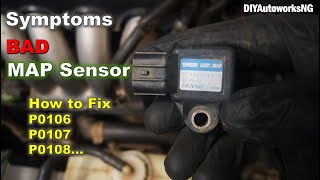
- The most common symptoms are a rough idle, poor acceleration, and the Check Engine Light.
- The most likely cause is a failed MAP sensor, which is a simple and inexpensive part to replace for a DIYer. Using an OEM or Denso brand part is highly recommended.
- Before replacing the sensor, always perform a quick visual inspection of the wiring and connector for damage and test for 5V power and good ground at the connector.
- A faulty PCM is a very rare cause and should only be considered after all other possibilities are exhausted.
What's Unique About the 2008-2012 Honda Accord
On the 8th generation Honda Accord, whether equipped with the 2.4L 4-cylinder (K24Z) or the 3.5L V6 (J35Z), the P0107 code is a straightforward and common issue. The MAP sensor is a known failure point, but thankfully it is externally mounted on the intake manifold (for the V6) or throttle body (for the 4-cyl), making it very accessible for diagnosis and replacement. Unlike some codes that can have a wide array of vehicle-specific causes, P0107 on this platform almost always points directly to the sensor itself or its immediate wiring.
Symptoms You May Notice
- Check Engine Light is on
- Rough or unstable idle
- Engine hesitation or stumbling during acceleration
- Reduced engine power and sluggish performance
- Poor fuel economy
- Engine stalling, especially at low speeds or when stopping
- Black smoke from the exhaust (due to a rich fuel mixture)
- Hard starting or long cranking times before the engine starts
- Engine backfiring during acceleration (less common)
- Replacing spark plugs or fuel injectors when the issue is the MAP sensor.
- Replacing the throttle body when only the MAP sensor mounted on it has failed.
- Assuming a vacuum leak is the primary cause without first testing the sensor and its circuit.
Most Likely Causes
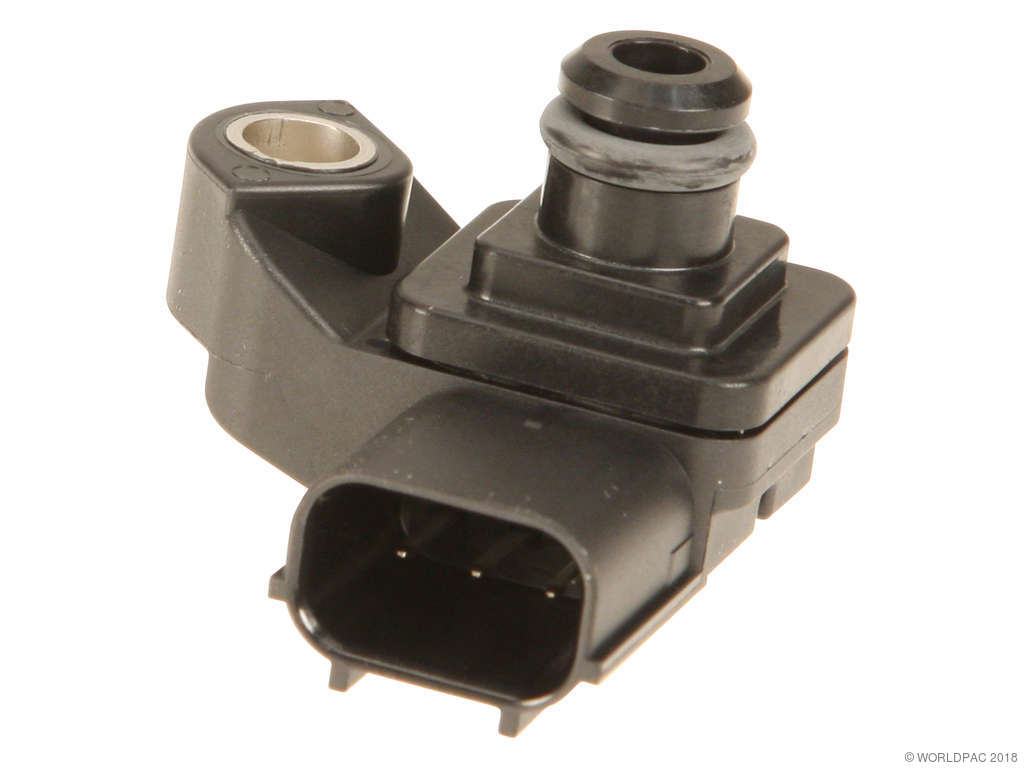
- Faulty MAP Sensor 🔴 High Probability → Shop Manifold Absolute Pressure Sensor The MAP sensor is a very common failure point on this generation of Accord due to age, heat cycles, and vibration. It is by far the most frequent cause of P0107.
How to confirm: With the key on and engine off, use a scan tool to check the MAP sensor reading. It should be close to atmospheric pressure (approx. 101 kPa or 2.9V). If it reads a fixed low value (e.g., under 0.25V), the sensor is bad. You can also back-probe the signal wire with a multimeter; it should read around 1.0V - 1.8V at idle and increase smoothly with throttle, up to ~4.5V. A reading stuck below 0.5V confirms the fault.
Typical fix: Replace the MAP sensor. It is held on by one or two Phillips head screws and is easily accessible on the throttle body (4-cyl) or intake manifold (V6). Always replace the small o-ring that seals the sensor to prevent vacuum leaks.
Est. part cost: $30-$75 - Wiring or Connector Issue 🟡 Medium Probability Engine bay heat and vibration can cause wires to become brittle, chafed, or corroded over time. The connector itself can also develop loose pins or corrosion, interrupting the signal.
How to confirm: Visually inspect the wiring harness leading to the MAP sensor for any signs of damage, chafing, or melting. Unplug the connector and check for corrosion or bent/loose pins. Use a multimeter to test for 5V reference and good ground at the connector with the key on. A poor ground at the main engine ground point (G101, on the thermostat housing) can also cause this issue.
Typical fix: Repair the damaged section of the wiring harness, clean the connector terminals with electrical contact cleaner, or replace the connector pigtail.
Est. part cost: $10-$30
Rare But Worth Checking
- Faulty Powertrain Control Module (PCM): → Shop Engine Control Module (ECM) This is extremely rare. The PCM should only be considered after the sensor and all wiring have been thoroughly tested and proven to be good. A failure inside the PCM's input circuit can mimic a sensor failure.
- Major Vacuum Leak: While a vacuum leak typically causes a P0171 (System Too Lean) code, a very large and specific leak near the sensor could potentially affect its reading, though it's less likely to cause a 'circuit low' code compared to an electrical fault.
- Clogged PCV Valve: In some documented cases, a PCV (Positive Crankcase Ventilation) valve stuck open can create an internal vacuum leak significant enough to affect the MAP sensor reading and trigger P0107 and/or P0108 codes.
Diagnosis Steps
- Connect an OBD-II scanner and confirm P0107 is the primary code. Note any other codes present, such as P0108 or P1129.
- View live data on the scanner. With the ignition ON and engine OFF (KOEO), the MAP sensor should read a pressure close to the current atmospheric pressure (e.g., ~101 kPa or ~2.9V).
- Start the engine. At idle, the MAP sensor reading should drop to a low pressure/high vacuum reading (e.g., 1.0V - 1.8V). If the reading is stuck near zero or doesn't change, the sensor or its circuit is faulty.
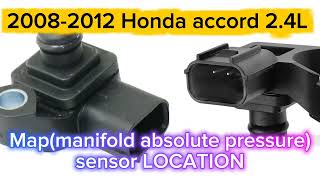
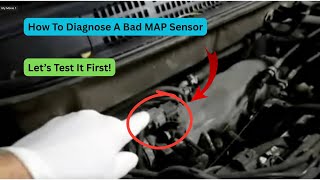
- Turn the engine off. Visually inspect the MAP sensor, its connector, and the surrounding wiring for any obvious damage, corrosion, or loose connections. On the 4-cylinder, it's on top of the throttle body; 🎬 Watch: See the exact MAP sensor location on the 2.4L engine. on the V6, it's on the intake manifold.
- Disconnect the MAP sensor. Turn the ignition ON (engine off). Use a multimeter to check the connector's terminals. You should find a 5-volt reference wire, a ground wire (check for continuity to battery negative), and a signal wire.
- If the 5V reference or ground is missing, there is a wiring issue between the PCM and the sensor that needs to be traced and repaired. Check the main engine ground (G101) at the thermostat housing.
- If power and ground are present, the MAP sensor itself is the most likely culprit. A common owner experience is that cheap aftermarket sensors can be faulty out of the box; using a Denso or genuine Honda part is recommended.
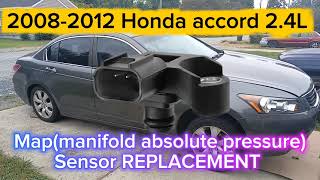
- Replace the MAP sensor and its O-ring. 🎬 See this walkthrough for replacing the sensor on your Accord. Clear the code with the scanner and perform a test drive, monitoring live data to ensure the new sensor is responding correctly to throttle changes.
Parts You'll Likely Need
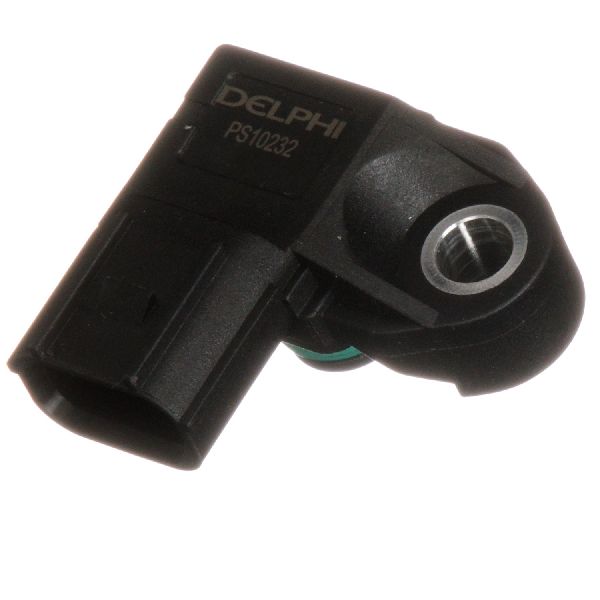
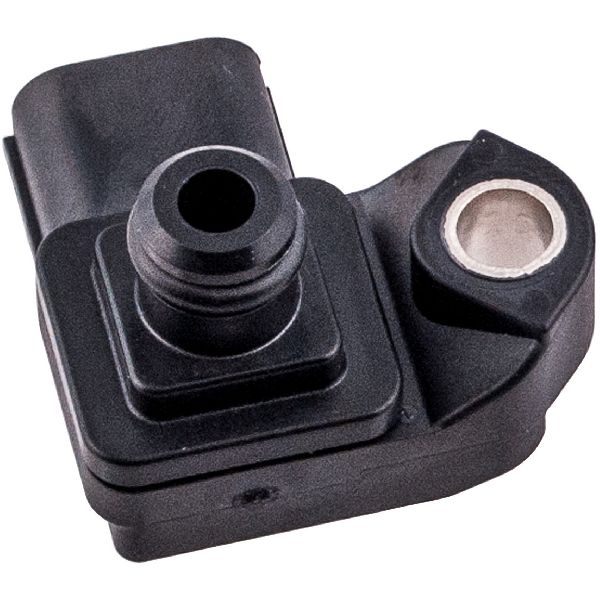
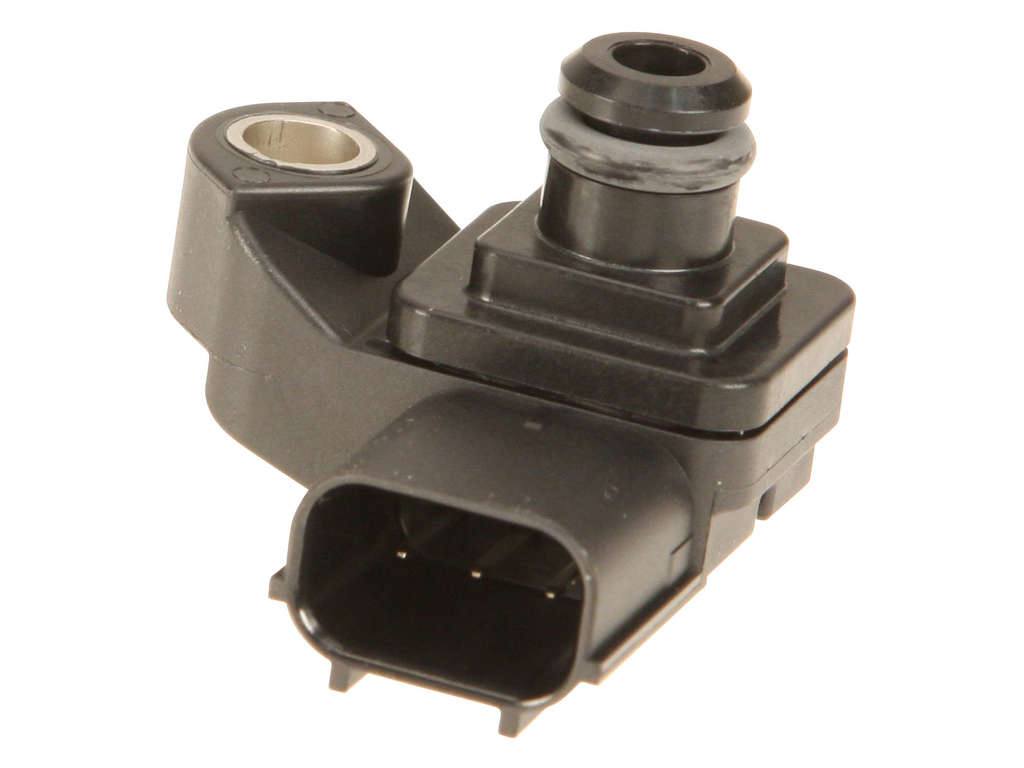
- Manifold Absolute Pressure (MAP) Sensor
(OEM #37830-RZA-003 (for 2.4L K24Z3) or 37830-PNC-003 (interchange). Note: Part numbers can vary, always verify with VIN.)— This is the most common cause of a P0107 code on the 2008-2012 Accord. The sensor fails internally from age and heat cycles.
Trusted brands: Denso (OEM Supplier), NGK/NTK, Delphi, Honda (Genuine)
OEM price range: $70-$135
Aftermarket price range: $30-$75
Related Codes That Often Appear With This One
- P0108 — P0108 is 'MAP Sensor Circuit High Input'. Seeing both P0107 and P0108 intermittently can indicate a very erratic sensor, a loose connector, or a short in the wiring.
- P1129 — P1129 is a Honda-specific code for 'MAP Sensor Signal Higher Than Expected'. While different from P0107, it points to the same system and can appear in conjunction with general MAP sensor circuit problems.
Mechanic-Grade Diagnostic Values
- MAP Sensor Signal Voltage (KOEO) — expected: ~2.9 V at sea level, corresponding to atmospheric pressure (~101 kPa).. Failure: A reading of 0.23V - 0.25V or less indicates a 'circuit low' condition.
- MAP Sensor Signal Voltage at Idle — expected: 1.0V to 1.8V (warm engine, stable idle).. Failure: Voltage stuck low (near 0V) or not responding to throttle changes.
- MAP Sensor Connector Reference Voltage — expected: Approximately 5V between terminal 1 (VCC) and terminal 3 (Ground) with key on, sensor disconnected.. Failure: Missing or low voltage indicates a problem with the PCM or wiring.
- MAP Sensor Ground Circuit Resistance — expected: Less than 10 Ω between the sensor's ground wire and the chassis ground.. Failure: Values above 10 Ω suggest a poor or corroded ground connection.
Hidden / Shadow Codes Worth Checking
- P0107 (3-1): The '(3-1)' is a Honda-specific identifier that may be displayed on a dealer-level scan tool like the Honda HDS. It refers to the specific fault logic for MAP Sensor Circuit Low Voltage. (see via Honda Diagnostic System (HDS) or an advanced professional scan tool with Honda-specific software.)
Scan Tool Commands That Help
- Honda Diagnostic System (HDS): Data List > MAP Sensor — This is the primary function used to diagnose P0107. It allows a technician to view the live voltage and pressure readings from the MAP sensor to determine if they are logical during KOEO and engine running conditions.
Wiring & Ground Locations
- G101 — The main ECU/engine harness ground is located on the thermostat housing, specifically on the water pipe side of the housing.. This is the primary ground termination point for the ECU and its sensors, including the MAP sensor. A poor connection here can cause erratic sensor readings, including a P0107, even if the sensor itself is good.
- MAP Sensor Connector — On top of the throttle body (2.4L 4-cyl) or on the intake manifold (3.5L V6).. This is where all circuit tests (5V reference, ground, signal) begin. The 3-pin connector provides power, ground, and signal return for the sensor.
- PCM Connector Pins — At the Powertrain Control Module (PCM).. For advanced diagnosis, specific pins must be tested. Pin A21 (VCC1 - 5V Power), Pin A11 (SG1 - Sensor Ground), and Pin A19 (MAP Signal) are the relevant terminals for testing continuity and shorts directly at the computer.
Real Owner Repair Stories
- Reddit user wickedfapper (Unknown year, likely 2008-2012 based on context) — P0107 code that would come back immediately after clearing.
✅ What actually fixed it Replaced the MAP sensor. The user noted that when they removed the old sensor, it 'literally fell apart.' The new sensor resolved the code instantly. - Honda-Tech forum user (Unknown year Honda) — Randomly dying and not restarting, especially in cold weather.
❌ Tried (didn't work) Checking the G101 ground connection at the thermostat housing, which appeared to be good.
✅ What actually fixed it The G101 ground wire was frayed and broken inside the wiring loom, causing an intermittent connection. The final fix was to run a new, separate ground wire from the ECU pin directly to the chassis.
OEM Part Supersession History
37830-RZA-003→N/A— This is a primary part number for the 2.4L engine.37830-PNC-003→N/A— This part number is listed as a compatible interchange for many Honda models from 2004-2011, including the Accord, and is widely available.
Heads up: While it fits a wide range, always verify the specific part number required for your vehicle's VIN to ensure correct calibration.
Diagnostic Flowchart
Other Known Issues on This Vehicle
Issues unrelated to this code that are worth knowing about as an owner of this generation:
- Excessive Oil Consumption (V6 with VCM) 🔴 High — Common on J35Z V6 engines. Caused by the Variable Cylinder Management (VCM) system leading to oil burning past piston rings, fouling spark plugs. Can start as early as 60,000 miles. (Ref: Honda issued TSB 13-078 and a warranty extension related to this issue, which could involve a PCM software update or piston ring replacement.)
- Excessive Oil Consumption (4-Cylinder) 🟠 Medium — Common on K24Z engines due to piston rings sticking. Honda's official stance is that 1 quart per 1,000 miles is acceptable, but owners report issues starting around 30,000 miles. (Ref: TSB 12-087 addresses sticking rings; the fix involves replacing pistons and rings. A warranty extension was also offered (8 years/125,000 miles).)
- Premature Rear Brake Wear 🟠 Medium — Extremely common, with rear pads wearing out in as little as 15,000-25,000 miles. This is attributed to the electronic brake proportioning system design and potentially sticky caliper pins. (Ref: No recall was issued, but Honda released updated rear brake pads. The improved part number is #43022-TA0-A40.)
- VTC Actuator Rattle on Cold Start (4-Cylinder) 🟡 Low — A loud rattling or grinding noise for a few seconds upon cold startup is a well-known issue with the K24Z engine's Variable Timing Control (VTC) actuator. (Ref: Honda addressed this with TSB 09-010, which recommends replacing the faulty VTC actuator with an updated part.)
- Starter Motor Failure 🟡 Low — Failures are not uncommon on higher-mileage (100,000+) examples, leading to a no-start condition where the engine only cranks.
Used vs. New Parts: Buying Guide for This Vehicle
When a used part is the smart pick: For this specific repair, a used part is not recommended. The MAP sensor is a common failure item due to age and heat cycles, and a used part from a salvage yard carries a high risk of having limited remaining life or being faulty already.
What to inspect on the donor part:
- Not applicable as new purchase is strongly advised.
OEM-only on this vehicle (don't cheap out):
- The MAP sensor is NOT an OEM-only part for this vehicle. High-quality aftermarket alternatives are widely available and perform reliably.
Aftermarket brands forum-validated for this vehicle:
- Denso (OEM supplier for Honda)
- NGK / NTK
- Delphi
Brands owners have reported issues with on this vehicle:
- Unbranded, low-cost sensors from online marketplaces. While not citing specific brand names, forum and mechanic consensus advises against 'cheapest available' options as they are often faulty out of the box or fail prematurely.
Real Owner Stories
Aggregated from forums and TSBs cited above. Mileages and costs reflect what owners reported in those sources.
2010 Honda Accord V6 — ~60000 miles
Symptoms: Engine using oil and fouling spark plugs; issues can be misdiagnosed when a MAP sensor code is also present.
What fixed it: Addressed via TSB 13-078 which may involve a PCM software update or piston ring replacement.
Source hint: BobIsTheOilGuy.com: Thread: '2010 Honda Accord V-6 VCM Engine using Oil'
2007 Honda Accord
Symptoms: Limp mode and U0107 code (Lost Communication With Throttle Actuator Control Module).
What fixed it: Replacing a faulty relay that was affected by moisture from a clogged AC drain.
Source hint: Honda-Tech.com: Thread: '2007 Accord Limp Mode U0107'
Related OBD-II Codes
Frequently Asked Questions
Where is the MAP sensor located on my 2008-2012 Honda Accord?
Should I use an aftermarket MAP sensor to fix the P0107 code?
Is there a specific ground point I should check for P0107 issues on this Accord?
Could my Accord's oil consumption issues be related to the MAP sensor code?
What are the specific voltage readings I should see for a healthy MAP sensor on this car?
My Accord is rattling on cold starts; is this related to the P0107 code?
Helpful Videos

We Have This Part in Stock


The information in this article is provided for general reference and educational purposes only. Vehicle specifications, procedures, and part compatibility can vary by production date, trim level, and region. Always consult your vehicle's factory service manual and verify part numbers before purchasing or performing repairs. Safety-critical components such as airbags, seat belts, and braking systems should be installed by a qualified professional.
- Honda Accord:
- 🧭 Diagnostic Flowchart
- 🎬 Helpful Videos
- 🛍️ Shop This Part
- What's Unique About the 2008-2012 Honda Accord
- Symptoms You May Notice
- Most Likely Causes
- Rare But Worth Checking
- Diagnosis Steps
- Parts You'll Likely Need
- Related Codes That Often Appear With This One
- Mechanic-Grade Diagnostic Values
- Hidden / Shadow Codes Worth Checking
- Scan Tool Commands That Help
- Wiring & Ground Locations
- Real Owner Repair Stories
- OEM Part Supersession History
- Other Known Issues on This Vehicle
- Used vs. New Parts: Buying Guide for This Vehicle
- Real Owner Stories
- 2010 Honda Accord V6 — ~60000 miles
- 2007 Honda Accord
- Related OBD-II Codes
- Frequently Asked Questions
- 🎟️ Get 5% Off