

P0107 on 2001-2005 Honda Civic (D17 Engine): MAP Sensor Circuit Low Input Causes and Fixes
On a 2001-2005 Honda Civic with the 1.7L D17 engine, code P0107 is almost always caused by a failed Manifold Absolute Pressure (MAP) sensor. It's a very easy, 15-minute DIY fix requiring only a Phillips head screwdriver. The part costs between $20 for an aftermarket and $70 for an OEM Denso sensor.
- P0107 on a 2001-2005 Civic points directly to a problem with the MAP sensor circuit, and in over 90% of cases, it is the sensor itself that has failed.
- Symptoms include rough idle, poor acceleration, stalling, and bad gas mileage.
- The fix is typically replacing the MAP sensor, which is a very easy and cheap DIY job located on top of the throttle body, requiring only a Phillips screwdriver.
- Always check the connector and wiring for damage before buying parts, but on this car, the sensor is the most li
What's Unique About the 2001-2005 Honda Civic
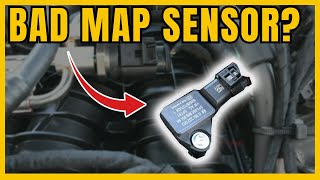
For the 7th generation Honda Civic (2001-2005), the P0107 code is a very common and straightforward issue. The MAP sensor is conveniently located directly on top of the throttle body, secured by two easily accessible Phillips head screws. 🎬 Watch: How to find and replace your Civic's MAP sensor. This makes it exceptionally easy to access and replace, even for a novice DIYer, often in under 15 minutes. Unlike some vehicles where the sensor is buried, on the Civic's D17 engine it's one of the simplest sensor replacements you can perform.
Symptoms You May Notice
- Check Engine Light is on
- Rough or surging idle
- Engine hesitation or stumbling during acceleration
- Poor fuel economy
- Engine stalling, especially at stops or when returning to idle
- Difficulty starting the engine, long crank times
- Black smoke from the exhaust (due to a rich fuel mixture)
- Engine may enter 'limp mode' with significantly reduced power 🎬 See a breakdown of common bad MAP sensor symptoms.
- Replacing spark plugs, ignition coils, or O2 sensors when the issue is directly related to the incorrect fuel calculation from the bad MAP sensor reading.
- Assuming a vacuum leak is the cause, when the 'circuit low' definition points specifically to an electrical fault.
Most Likely Causes
- Faulty Manifold Absolute Pressure (MAP) Sensor 🔴 High Probability → Shop Manifold Absolute Pressure Sensor The sensor is a very common failure item due to age and heat cycles on the D17 engine, typically failing after 100,000 miles. Forum consensus is that this is the cause over 90% of the time.
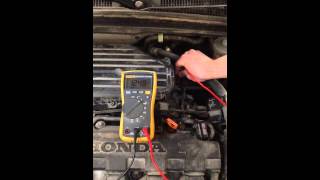
How to confirm: With the key on, engine off, use a scan tool to read MAP sensor data. A reading below 0.5V or stuck at a low value confirms the issue. Alternatively, back-probe the sensor's signal wire (typically the middle wire, GRN/RED) with a multimeter. A reading below ~0.5V points to a bad sensor. 🎬 Watch: A professional guide to testing MAP sensor voltage. Given the high failure rate and low cost, simply replacing the sensor is the most common and effective diagnostic step.
Typical fix: Replace the MAP sensor. It is held on by two Phillips head screws on top of the throttle body.
Est. part cost: $20-$70 - Wiring or Connector Issue ⚪ Low Probability Wiring can become brittle with age, but it's far less common than sensor failure for this specific code.
How to confirm: Visually inspect the MAP sensor's three-wire connector for corrosion, damage, or loose pins. With the key on, use a multimeter to check for 5V reference voltage on the YEL/RED wire and a good ground (near 0V) on the GRN/WHT wire. If either is missing, the problem is in the wiring, not the sensor. Wiggling the harness while monitoring voltage can reveal intermittent breaks.
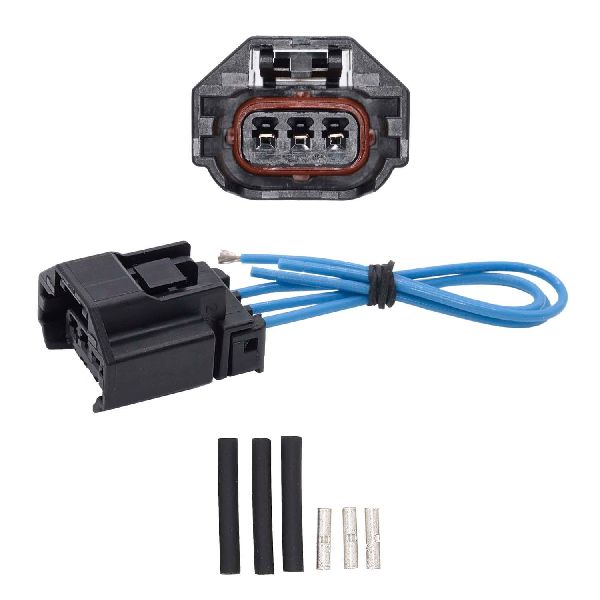
Typical fix: Repair the damaged section of the wiring harness or clean/replace the connector pigtail.
Est. part cost: $5-$25 - Vacuum Leak Very Low Probability While possible, a vacuum leak large enough to cause a P0107 would typically present with other, more severe drivability issues and likely different codes. A vacuum leak typically causes higher than normal MAP voltage at idle, not lower.
How to confirm: Listen for hissing sounds around the intake manifold with the engine running. A more reliable method is to use a smoke machine to introduce smoke into the intake system and watch for leaks. A vacuum leak is an unlikely cause for a 'circuit low' code, which points more directly to an electrical fault.
Typical fix: Replace the cracked or disconnected vacuum hose.
Est. part cost: $5-$20
Rare But Worth Checking
- Faulty Powertrain Control Module (PCM): → Shop Engine Control Module (ECM) This is extremely rare. The PCM should only be considered after the sensor, its connector, and the wiring harness have all been definitively ruled out. There are very few, if any, documented cases online of a PCM being the root cause for this specific code on this vehicle.
Diagnosis Steps
- Read the code with an OBD-II scanner to confirm P0107 is present.
- Visually inspect the MAP sensor, which is located on top of the throttle body, held by two Phillips screws. Check its 3-pin electrical connector for any signs of damage, corrosion, or looseness.
- Inspect the wiring harness leading to the sensor for any visible damage, fraying, or breaks.
- Easiest path for DIY: Given the extremely high probability of sensor failure, the most time-effective step is often to replace the sensor. It is inexpensive and takes minutes.
- To confirm electrically: With the key in the 'ON' position (engine off), unplug the connector. Use a multimeter to test the harness-side connector terminals. You should find one with ~5 volts (reference power from the YEL/RED wire), one with ~0 volts (ground from the GRN/WHT wire), and the third is the signal return (GRN/RED wire).
- If power and ground are good, the MAP sensor is faulty. Replace it.
- If power or ground is missing, you have a wiring problem or, very rarely, a PCM issue. Trace the faulty wire back from the connector to find the break or short. The MAP sensor signal wire (GRN/RED) goes to pin A19 on the ECU.
- After repair or replacement, clear the code with the scanner and perform a test drive to ensure the fix is complete.
Parts You'll Likely Need
- Manifold Absolute Pressure (MAP) Sensor
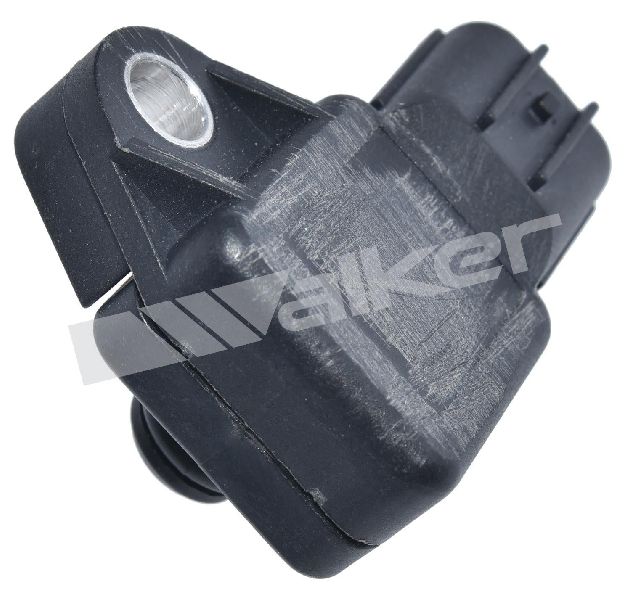
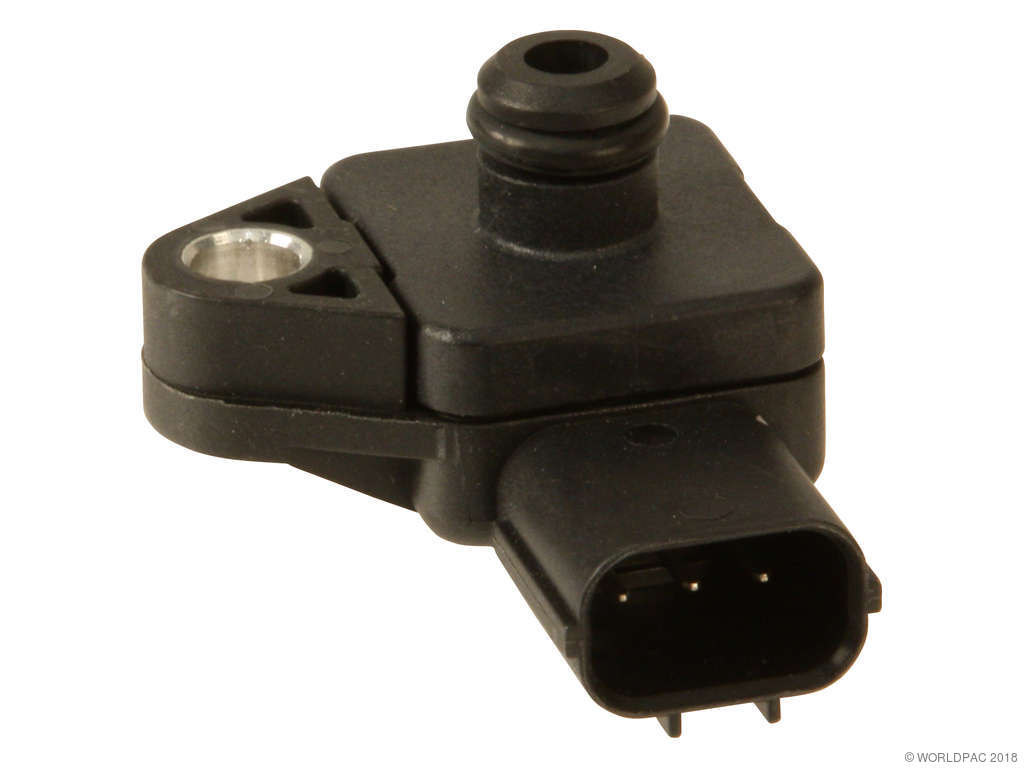
(OEM #37830-PGK-A01)— This is the most common failure point for the P0107 code on this vehicle. The OEM manufacturer is Denso, and their part number is 079800-5410, which cross-references to the Honda part number.
Trusted brands: Denso (OEM Manufacturer), NGK/NTK, Standard Motor Products (SMP), Delphi
OEM price range: $60-$80
Aftermarket price range: $20-$50
Related Codes That Often Appear With This One
- P0108 — P0108 is 'MAP Sensor Circuit High Input'. Seeing it intermittently with P0107 can indicate a failing sensor with erratic output or a loose connection/damaged wire that is shorting and opening.
Technical Service Bulletins (TSBs) & Recalls
- While no TSB exists specifically for P0107 on the 2001-2005 Civic, Honda TSB 04-073 for the S2000 addressed engine hesitation from MAP sensor connection issues, indicating a known sensitivity in Honda MAP sensor systems of that era.
Platform-Specific Known Issues
- Real-World Repair Story: A user on Reddit with a 2004 Civic experiencing both P0107 and P0108 codes after replacing the sensor twice was advised to check wiring. The advice was: 'Backprobing the wire is essential. Check grounds. Probe the sensor wire ground at the connector and put the other meter lead on the battery negative. You should have .1V or less of a voltage drop. If you have more, you have a ground wire problem.' This highlights that while rare, wiring issues can mimic a sensor failure.
Mechanic-Grade Diagnostic Values
- MAP Sensor 5V Reference Voltage — expected: ~4.5V to 5.0V DC. Failure: Voltage significantly below 4.5V or 0V indicates a wiring or PCM issue.
- MAP Sensor Ground Circuit Test (Voltage Drop) — expected: Less than 0.1V (100mV). Failure: Voltage higher than 0.1V indicates high resistance or a poor ground connection.
- MAP Sensor Signal Voltage (Key On, Engine Off) — expected: ~2.9V to 4.5V depending on atmospheric pressure.. Failure: Voltage below 0.5V triggers P0107.
- MAP Sensor Signal Voltage (Engine Idling) — expected: ~0.7V to 1.5V at normal operating temperature.. Failure: Voltage stuck low (near 0V) or high (near 5V) indicates a faulty sensor or vacuum issue.
- MAP Sensor Ground Wire Resistance to Chassis — expected: Near 0 Ohms (no resistance). Failure: Any significant resistance (e.g., above 10 Ohms) indicates a problem with the ground circuit.
Scan Tool Commands That Help
- Honda Diagnostic System (HDS): MAP Data List — To view the live voltage and pressure reading from the MAP sensor to see if it's stuck low, not changing with engine RPM, or reading erratically. This is the primary software-based diagnostic step.
- Honda Diagnostic System (HDS): Circuit Check for MAP PB Line — This is a guided diagnostic step within the HDS for troubleshooting P0107. It instructs the technician to check for continuity to ground, which helps identify a short circuit in the signal wire.
Wiring & Ground Locations
- MAP Sensor Connector (3-Pin) — On top of the throttle body.. This is the primary connection point. Pin 1 (YEL/RED) is 5V reference, Pin 2 (GRN/RED) is the signal, and Pin 3 (GRN/WHT) is the sensor ground.
- ECU Connector A, Pin A19 — At the Powertrain Control Module (PCM/ECU), typically located behind the glove box or in the passenger-side footwell.. This is the termination point for the MAP sensor signal wire (GRN/RED). Checking for continuity between the sensor connector and this pin can rule out a broken wire.
- ECU Connector A, Pin A21 — At the PCM/ECU.. This is the termination point for the 5V reference wire (YEL/RED) that powers the MAP sensor.
- ECU Connector A, Pin A11 — At the PCM/ECU.. This is the termination point for the MAP sensor ground wire (GRN/WHT).
- G101 — On the thermostat housing.. This is a primary engine ground point that provides the ground path for many sensors, including the MAP sensor circuit via the ECU. A corroded or loose G101 can cause various sensor codes, including P0107.
Real Owner Repair Stories
- Honda-Tech forum user (B16 engine swapped into a CRX, converted to OBD1 (similar MAP sensor principles)) — Code 3 (OBD1 equivalent of P0107/P0108), running very rich.
❌ Tried (didn't work) Replaced MAP sensor 3 different times, Swapped ECU, Hardwired all 3 wires from ECU to sensor
✅ What actually fixed it The user grounded the MAP sensor's ground wire directly to the chassis, which resolved the issue, indicating a fault in the ECU's internal ground for that circuit or a break in the original ground wire.
Model Year Variations Within This Range
- 2004-2005: The 2004-2005 models switched from a narrowband primary O2 sensor to a wideband Air/Fuel ratio sensor. While this does not directly affect the MAP sensor, it's a key difference in the engine management system of the D17A1/A2 engines within this generation. An issue with the A/F sensor could potentially cause confusing diagnostic symptoms alongside a MAP sensor code.
- 2001-2005: The D17A1 (LX/DX models, non-VTEC) and D17A2 (EX models, VTEC) engines were used. The MAP sensor and the P0107 fault are identical between them, but the D17A2 has additional VTEC-related components (solenoid, pressure switch) that are not present on the D17A1.
Diagnostic Flowchart
Real Owner Stories
Aggregated from forums and TSBs cited above. Mileages and costs reflect what owners reported in those sources.
2002 Honda Civic EX 1.7L D17A2
Symptoms: P0107 code 'MAP Sensor Low Input.' The old sensor had visible carbon buildup and a slightly cracked rubber gasket. MAP sensor readings were erratic, fluctuating between 0.8V at idle and dropping below 0.3V under load.
What fixed it: Replaced the MAP sensor with an aftermarket unit (079800-3000).
Source hint: AliExpress review/forum post titled '2002 Honda Civic MAP Sensor: The Complete Guide to Replacement, Compatibility, and Real-World Performance'
2002 Honda Civic
Symptoms: Rough idling, stalling at stoplights, poor fuel economy, or persistent check engine lights with codes P0107, P0108, or P0106.
What fixed it: Replacing the MAP sensor after ruling out vacuum leaks, throttle body issues, dirty MAF sensor, and a failing fuel pump.
Source hint: AliExpress review/forum post titled '2002 Honda Civic MAP Sensor: The Complete Guide to Replacement, Compatibility, and Real-World Performa'
2004 Honda Civic
Symptoms: Experiencing both P0107 and P0108 codes. Replaced the MAP sensor twice but the issue was still present.
What fixed it: Diagnosed a wiring/ground issue by backprobing the sensor wire ground at the connector to check for a voltage drop greater than 0.1V.
Source hint: Reddit r/Honda thread: 'Im getting a P0108 and P0107 codes on a 2004/'
2001-2005 Honda Civic
Symptoms: Stalling and rough idle.
What fixed it: Replaced the MAP sensor with a Denso or NGK part.
Source hint: 7thgenhonda.com forum discussions
Related OBD-II Codes
Frequently Asked Questions
Is there a specific TSB for the P0107 code on my 2001-2005 Honda Civic?
What is the most likely cause of a P0107 on my Civic's D17 engine?
I replaced the MAP sensor on my 2004 Civic but the P0107 code came back. What should I check next?
Which wires do I test on the Civic's MAP sensor connector to rule out wiring issues?
Can a vacuum leak cause the P0107 code on my 1.7L Civic?
What brand of MAP sensor should I use as a replacement for my 7th Gen Civic?
Does this P0107 issue affect the Acura 1.7 EL as well?
Helpful Videos

We Have This Part in Stock


The information in this article is provided for general reference and educational purposes only. Vehicle specifications, procedures, and part compatibility can vary by production date, trim level, and region. Always consult your vehicle's factory service manual and verify part numbers before purchasing or performing repairs. Safety-critical components such as airbags, seat belts, and braking systems should be installed by a qualified professional.
- Honda Civic:
- 🧭 Diagnostic Flowchart
- 🎬 Helpful Videos
- 🛍️ Shop This Part
- What's Unique About the 2001-2005 Honda Civic
- Symptoms You May Notice
- Most Likely Causes
- Rare But Worth Checking
- Diagnosis Steps
- Parts You'll Likely Need
- Related Codes That Often Appear With This One
- Technical Service Bulletins (TSBs) & Recalls
- Platform-Specific Known Issues
- Mechanic-Grade Diagnostic Values
- Scan Tool Commands That Help
- Wiring & Ground Locations
- Real Owner Repair Stories
- Model Year Variations Within This Range
- Real Owner Stories
- 2002 Honda Civic EX 1.7L D17A2
- 2002 Honda Civic
- 2004 Honda Civic
- 2001-2005 Honda Civic
- Related OBD-II Codes
- Frequently Asked Questions
- 🎟️ Get 5% Off