

P0107 on 2012-2015 Honda Civic: MAP Sensor Circuit Low Voltage Causes and Fixes
For a 2012-2015 Honda Civic, code P0107 most often points to a faulty Manifold Absolute Pressure (MAP) sensor. Replacing the sensor is a common, DIY-friendly fix, with parts costing between $20 for an aftermarket sensor and $70 for an OEM part. The sensor is easily accessible on top of the intake manifold.
- P0107 on a 2012-2015 Civic means the MAP sensor's voltage signal is too low.
- The most likely cause is a failed MAP sensor, which is an inexpensive and easy part to replace yourself.
- Before replacing the sensor, always check its connector and wiring for any visible damage, as this can cause the same code.
- Symptoms typically include a rough idle, poor acceleration, and decreased gas mileage.
- Driving with this code is possible but not recommended due to potential stalling and poor engine performance.
What's Unique About the 2012-2015 Honda Civic
On the 9th generation Honda Civic (2012-2015) with the 1.8L R18Z1 engine, the MAP sensor is a single, easily accessible component mounted directly on the intake manifold, making diagnosis and replacement very straightforward compared to some other vehicles. While the code itself is a standard SAE definition, the most frequent cause on this platform is simply a failed sensor due to age or heat exposure. Unlike some platforms, there are no widespread Technical Service Bulletins (TSBs) or recalls for this specific issue on these Civics, indicating it's typically a case of routine component failure rather than a design flaw.
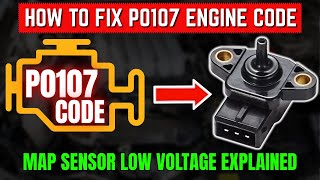
🎬 Watch: A detailed breakdown of the P0107 code on this Civic.Symptoms You May Notice
- Check Engine Light is on
- Rough or unstable idle
- Hesitation or lack of power during acceleration
- Poor fuel economy
- Stalling, especially at low RPMs
- Black smoke from the exhaust, indicating a rich fuel mixture
- Difficulty starting the engine
- Replacing the Mass Air Flow (MAF) sensor. This vehicle's 1.8L engine uses a MAP sensor for engine load calculation, not a MAF sensor.
- Replacing spark plugs or ignition coils without diagnosing the root cause. While a misfire can be a symptom, it's often a result of the incorrect fuel mixture caused by the P0107 code, not the cause itself.
Most Likely Causes
- Faulty MAP Sensor 🔴 High Probability → Shop Manifold Absolute Pressure Sensor The sensor is a common failure point due to age and constant exposure to engine heat and pressure changes. The internal electronics fail, causing the output voltage to drop below the specified range.
How to confirm: After confirming wiring is intact, test the sensor's output voltage. With the key on and engine off (KOEO), the signal wire should read a voltage corresponding to atmospheric pressure (typically 4.5-5.0V). At idle, it should drop to around 1.0-1.5V. A reading consistently below 0.5V, and specifically below 0.23V on this platform, indicates a failed sensor.
Typical fix: Replace the MAP sensor. It is held in by a single bolt (often 8mm or 10mm). Disconnect the electrical connector, remove the bolt, and gently pull the sensor out. Ensure the new sensor's O-ring is properly seated.
Est. part cost: $20-$70 - Wiring or Connector Issue 🟡 Medium Probability Engine vibrations and heat can cause wires to fray or the connector pins to lose contact over time. The harness runs across the top of the engine bay where it is exposed.
How to confirm: Visually inspect the wiring harness leading to the MAP sensor for any signs of damage, chafing, or corrosion. Disconnect the connector and check for bent or corroded pins. Use a multimeter to check for 5V reference (Pink wire) and a good ground at the connector with the key on. A short to ground on the signal wire will also cause this code.
Typical fix: Repair the damaged section of wire or clean/replace the connector pigtail. Ensure a secure connection.
Est. part cost: $5-$25 - Vacuum Leak ⚪ Low Probability While less common for causing a *low voltage* code (leaks usually cause high voltage/P0108), a significant leak from a cracked hose or failed intake gasket near the sensor could potentially affect readings.
How to confirm: With the engine running, listen for hissing sounds around the intake manifold. You can also carefully spray brake cleaner or a propane torch (unlit) around gasket surfaces and vacuum hoses; a change in engine idle indicates a leak. A smoke test is the most definitive way to find a vacuum leak.
Typical fix: Replace the leaking vacuum hose or intake manifold gasket.
Est. part cost: $10-$100
Rare But Worth Checking
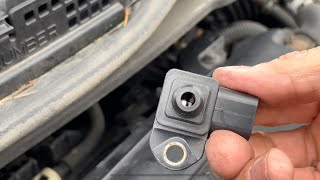
- Clogged or Dirty MAP Sensor Port: → Shop Manifold Absolute Pressure Sensor Carbon buildup can block the small port on the intake manifold where the sensor reads pressure. Before replacing the sensor, it's worth cleaning the sensor tip and the port it sits in with a dedicated electronics or MAF sensor cleaner. 🎬 Watch: How to properly clean the MAP sensor and port.
- Faulty Powertrain Control Module (PCM): → Shop Engine Control Module (ECM) This is extremely rare. The PCM should only be considered as the cause after all other possibilities (sensor, wiring, leaks) have been exhaustively ruled out. A diagnostic step would be to check for continuity between the MAP sensor connector (Pin 3, Pink wire) and the ECM connector (C49P, Pin 23).
Diagnosis Steps
- Retrieve the P0107 code using an OBD-II scanner and check for any other stored codes.
- Visually inspect the MAP sensor, its electrical connector, and the wiring harness for any obvious damage, looseness, or corrosion.
- With the key in the 'ON' position (engine off), use a multimeter to check for a 5-volt reference signal (Pink wire) and a good ground at the MAP sensor connector.
- If power and ground are good, check the signal wire voltage (Green wire). It should be around 4.5-5.0 volts with the key on/engine off. If the voltage is below 0.5V (specifically <0.23V for this car), the sensor is likely faulty or the signal wire is shorted to ground.
- If possible, use a scanner to view live data from the MAP sensor. The reading should change in response to engine vacuum (e.g., when revving the engine). If it's stuck at a very low value, this points to a bad sensor.
- Check for vacuum leaks using a smoke machine or by carefully spraying carb cleaner around the intake manifold and vacuum lines while listening for a change in engine idle.
- If the sensor and wiring test good, consider cleaning the MAP sensor and its port on the intake manifold with a dedicated sensor cleaner.
- If all other steps fail, check for continuity issues between the MAP sensor connector and the PCM connectors before considering a faulty PCM.
Parts You'll Likely Need
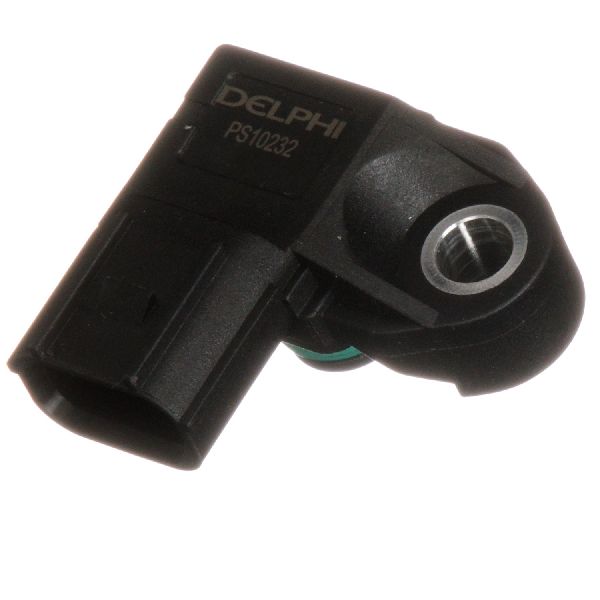
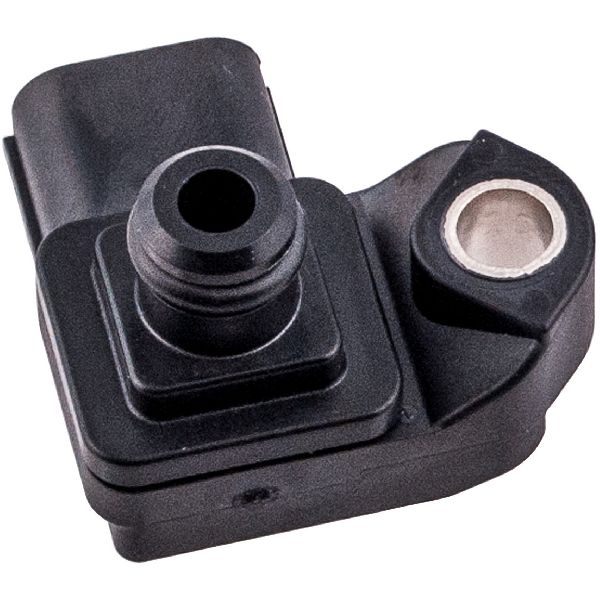
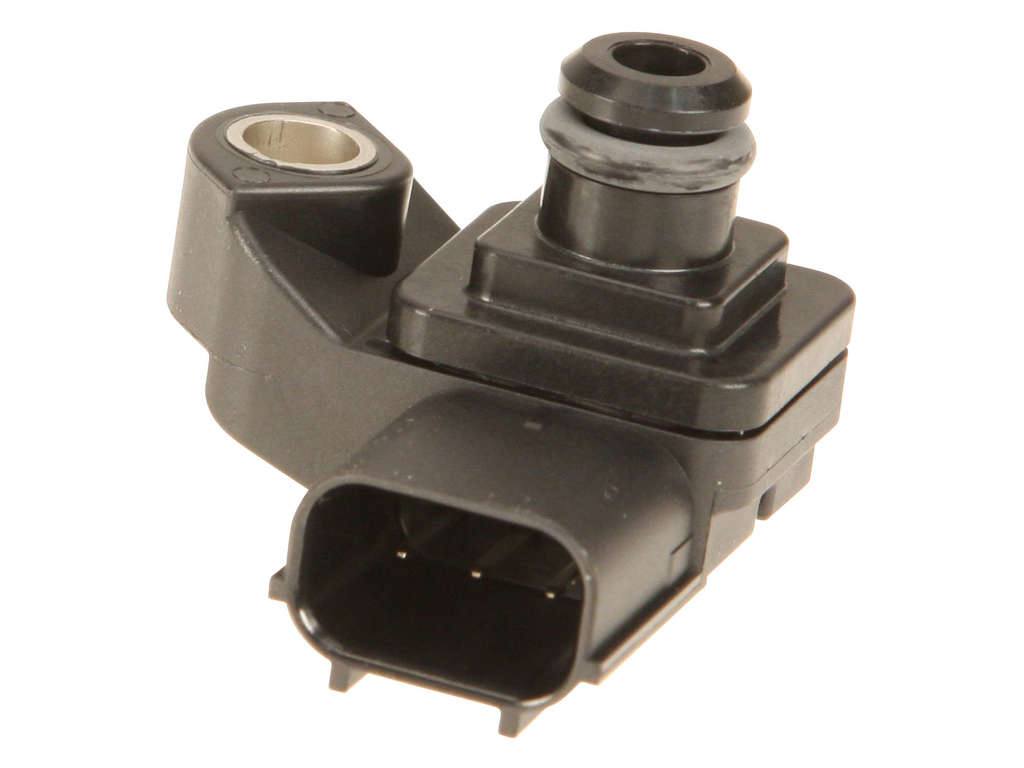
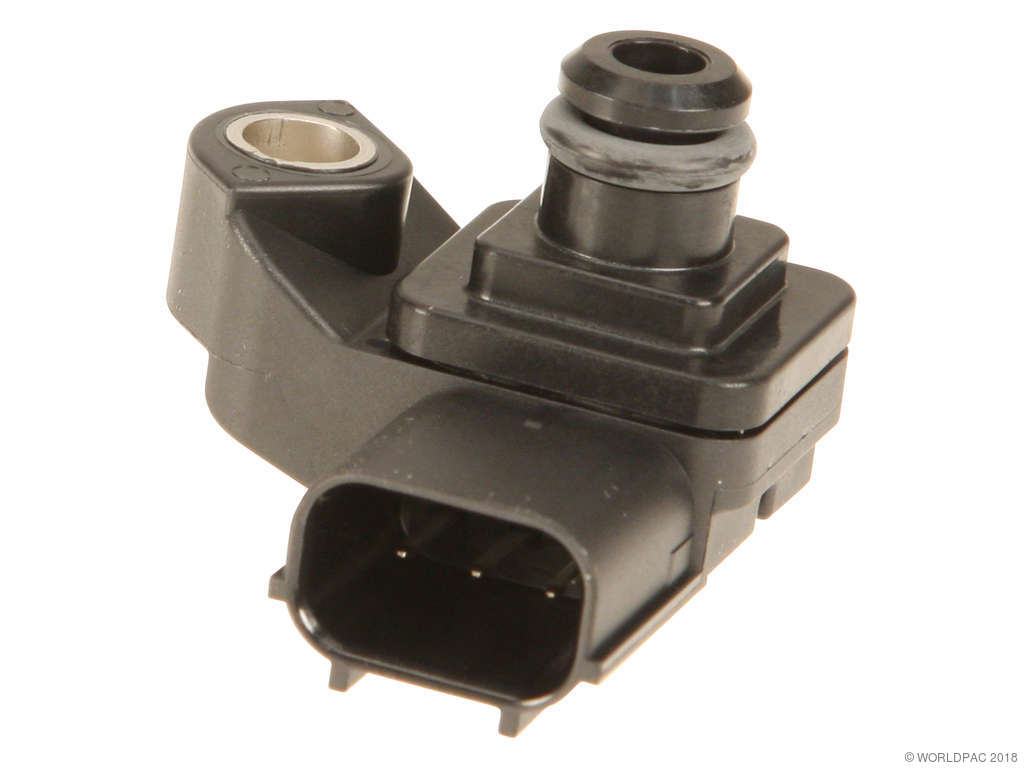
- Manifold Absolute Pressure (MAP) Sensor
(OEM #37830-RNA-A01)— This is the most common component to fail and trigger a P0107 code. The internal electronics fail over time, causing the output voltage to drop below the specified range. This part is widely used across many Honda and Acura models from 2006-2025.
Trusted brands: Honda (OEM), Denso (OEM supplier), Bosch, NTK
OEM price range: $60-$80
Aftermarket price range: $20-$45
Related Codes That Often Appear With This One
- P0106 — This code indicates a MAP Sensor Range/Performance issue. It can appear alongside P0107 if the sensor's signal is erratic before failing completely low.
- P0108 — This code for MAP Sensor Circuit High Voltage is the opposite of P0107. Seeing them together could indicate a severe wiring short or an intermittent sensor failure.
Platform-Specific Known Issues
- O-Ring Seal is Critical: When replacing the MAP sensor, it is highly recommended to use a new O-ring, even if reusing the old sensor after cleaning. An old, hardened, or torn O-ring can create a vacuum leak, which could lead to other performance issues or codes even after the P0107 is resolved.
Mechanic-Grade Diagnostic Values
- MAP Sensor Ground Path Resistance — expected: < 10 Ω. Failure: A resistance value above 10 Ω between the sensor's ground wire and the chassis ground suggests a poor ground path, which can cause a low voltage reading.
- MAP Sensor Voltage at Idle — expected: Below 1.0V. Failure: A voltage significantly higher than 1.0-1.5V at idle could indicate a vacuum leak, while a voltage stuck below 0.23V indicates a failed sensor or circuit fault.
Hidden / Shadow Codes Worth Checking
- P1128 / P1129: These manufacturer-specific codes for 'MAP Sensor Input Too Low' or 'Too High' can sometimes appear alongside the more generic P0107/P0108 codes, providing a more specific pointer towards the MAP sensor circuit. (see via Standard OBD-II scanner)
Scan Tool Commands That Help
- Honda Diagnostic System (HDS): MAP Sensor Data Display — To differentiate between a bad sensor and a wiring fault. With the ignition ON and the MAP sensor connector unplugged, if the HDS still shows a low voltage (e.g., ~0.23V), the problem is likely in the wiring harness (short to ground) or the PCM, not the sensor itself.
Wiring & Ground Locations
- G101 — Typically located on the thermostat housing on the cylinder head.. This is a primary ground termination point for the ECU. A corroded or loose connection at G101 can cause erratic sensor readings, stalling, and other electrical issues that mimic a failed MAP sensor.
- Battery Ground Cable — Connects the negative battery terminal to the chassis and transmission.. A compromised main ground cable (OEM P/N 32600-TR0-000 for 1.8L) can create system-wide low voltage issues and unstable sensor grounds, potentially triggering a P0107 code.
Real Owner Repair Stories
- Reddit user wickedfapper in r/Cartalk (2001 Buick LeSabre (Note: Different vehicle, but identical code and component failure mode)) — P0107 code that would return immediately after clearing, very poor gas mileage (15-17 MPG), and occasional stuttering on startup.
❌ Tried (didn't work) Initially just clearing the code.
✅ What actually fixed it Replacing the MAP sensor. The user noted that when they pulled the old sensor off, it literally fell apart in their hands, indicating complete physical failure. The new sensor resolved the code immediately.
OEM Part Supersession History
37830-RNA-A01→N/A— This part number remains the standard OEM designation for this vehicle range.
Heads up: Be aware that other part numbers like 37860RNAA01 and 37830-RWC-A01 may be listed as equivalents or re-stamped versions of the same component. Always verify fitment with your vehicle's VIN, but 37830-RNA-A01 is the most recognized fit for the R18Z1 engine.
Diagnostic Flowchart
Real Owner Stories
Aggregated from forums and TSBs cited above. Mileages and costs reflect what owners reported in those sources.
2012 Honda Civic
Symptoms: Rough idle and a P0107 code.
What fixed it: Verified 5V reference at the connector, then replaced the original sensor with a new Denso unit. The 10-minute repair immediately resolved the rough idle and the code did not return.
Source hint: 9thgencivic.com - Thread Title: 'P0107 Code, Rough Idle, Stalling.'
2012-2015 Honda Civic
Symptoms: Check engine light on, code P0107.
What fixed it: Removed and cleaned the Manifold Absolute Pressure (MAP) sensor and its port on the intake manifold.
Source hint: YouTube - 'Clean Manifold Absolute Pressure sensor (MAP) on 9th generation Honda Civic (2012 - 2015)'
Related OBD-II Codes
Frequently Asked Questions
What voltage should the MAP sensor signal wire read on my 2012-2015 Civic?
Which wires do I test on the Civic's MAP sensor connector?
Can I just clean the MAP sensor on my 9th Gen Civic instead of replacing it?
I'm replacing the MAP sensor on my 2014 Civic. Do I need any special parts?
Does the Acura ILX share this P0107 issue with the Civic?
Where is the MAP sensor located on the 2012-2015 Civic?
Helpful Videos

We Have This Part in Stock


The information in this article is provided for general reference and educational purposes only. Vehicle specifications, procedures, and part compatibility can vary by production date, trim level, and region. Always consult your vehicle's factory service manual and verify part numbers before purchasing or performing repairs. Safety-critical components such as airbags, seat belts, and braking systems should be installed by a qualified professional.
- Honda Civic:
- 🧭 Diagnostic Flowchart
- 🎬 Helpful Videos
- 🛍️ Shop This Part
- What's Unique About the 2012-2015 Honda Civic
- Symptoms You May Notice
- Most Likely Causes
- Rare But Worth Checking
- Diagnosis Steps
- Parts You'll Likely Need
- Related Codes That Often Appear With This One
- Platform-Specific Known Issues
- Mechanic-Grade Diagnostic Values
- Hidden / Shadow Codes Worth Checking
- Scan Tool Commands That Help
- Wiring & Ground Locations
- Real Owner Repair Stories
- OEM Part Supersession History
- Real Owner Stories
- 2012 Honda Civic
- 2012-2015 Honda Civic
- Related OBD-II Codes
- Frequently Asked Questions
- 🎟️ Get 5% Off