

P0107 on 2016-2021 Honda Civic: MAP Sensor Circuit Low Causes and Fixes
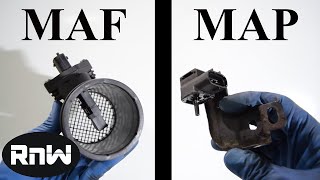
For a 2016-2021 Honda Civic, code P0107 is almost always caused by a faulty Manifold Absolute Pressure (MAP) sensor. The 1.5L Turbo engine has two of these sensors, which are identical. Replacement is a simple DIY task, with a genuine OEM sensor costing around $40-$60. Before replacing, verify the correct sensor is being addressed.
- P0107 on a 2016-2021 Civic most likely means you need a new MAP sensor.
- The 1.5L Turbo engine has two MAP sensors; diagnosis is key to replacing the correct one.
- The repair is very DIY-friendly and can be completed in under 30 minutes with basic tools.
- Always check the wiring for a 5V reference and good ground before replacing the sensor.
What's Unique About the 2016-2021 Honda Civic
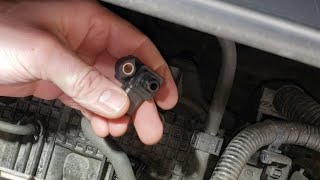
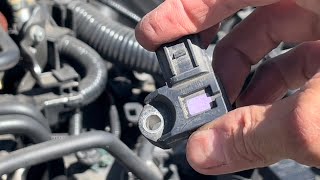
The 10th generation Civic (2016-2021) uses two common engines: the naturally aspirated 2.0L (K20C2) and the turbocharged 1.5L (L15B7). The 1.5L Turbo engine is unique in that it uses two MAP sensors: one on the intake manifold (easily visible on top of the engine) and another on the charge pipe near the front of the engine bay. These sensors are often referred to as MAP and Boost Pressure sensors, respectively, but frequently share the same part number. When a P0107 code appears on a 1.5T model, it's important to diagnose which of the two sensors or its related circuit is causing the fault.
Symptoms You May Notice
- Check Engine Light is on
- Rough or unstable idle
- Engine stalling, especially at stops
- Hesitation or sluggish acceleration
- Reduced engine power or entering 'limp mode'
- Poor fuel economy
- Black smoke from the exhaust
- Difficulty starting the engine
- Engine stutters on startup
- Replacing the wrong MAP sensor on 1.5L Turbo models without proper diagnosis.
- Replacing the throttle body when the issue is a simple sensor or wiring fault.
- Assuming the sensor is bad when the actual fault is a poor ground connection or damaged wire in the harness.
Most Likely Causes
- Faulty Manifold Absolute Pressure (MAP) Sensor 🔴 High Probability → Shop Manifold Absolute Pressure Sensor The MAP sensor is a very common failure point across many Honda models and generations due to constant exposure to heat and pressure changes. On the 1.5T engine, oil blow-by from the PCV system can also contaminate the sensor, leading to failure.
How to confirm: After confirming the wiring is good (5V reference and ground), the sensor is the most likely cause. You can test the sensor's output voltage with a multimeter; it should change in response to engine vacuum. If 🎬 Watch: How to test a MAP sensor with a multimeter the voltage is stuck low (under 0.5V) with the key on, engine off, the sensor has failed. A healthy sensor should read around 0.9V - 1.3V at idle.
Typical fix: Replace the faulty MAP sensor. On the 1.5T engine, be sure to identify which of the two sensors has failed before replacing. The sensors are typically held by a single 8mm bolt and are easy to access. Some owners 🎬 Watch: Step-by-step MAP sensor replacement for your Civic choose to replace both simultaneously as a preventative measure.
Est. part cost: $30-$70 - Wiring or Connector Issue 🟡 Medium Probability Engine vibrations and heat can cause wires to fray or insulation to crack over time. The connector pins can also become corroded or loose, leading to a poor connection. This is a common issue to check after major work, like a head gasket replacement, where the harness is moved.
How to confirm: Visually inspect the wiring harness leading to the MAP sensor(s) for any signs of damage. Disconnect the sensor and, with the key on, use a multimeter to check for a 5-volt reference on one pin and a solid ground on another. Wiggle the harness while testing to check for intermittent opens or shorts. A reading of 0V on the reference wire or high resistance on the ground wire (over 1 ohm) indicates a circuit problem.
Typical fix: Repair the damaged section of the wiring harness or clean the connector terminals with electrical contact cleaner. If the connector itself is damaged, it may need to be replaced with a new pigtail harness.
Est. part cost: $5-$50 - Vacuum Leak ⚪ Low Probability While less common for a P0107 (low voltage) code, a significant vacuum leak from a cracked hose or a bad intake manifold gasket near the sensor could theoretically affect the pressure reading enough to trigger the code.
How to confirm: Listen for a hissing sound around the intake area with the engine running. A more definitive method is to use a smoke machine to feed smoke into the intake system and watch for where it escapes. Another trick is to spray brake cleaner near suspected leak areas; if the engine idle changes, a leak is present.
Typical fix: Replace the cracked vacuum hose or the leaking gasket.
Est. part cost: $10-$100
Rare But Worth Checking
- Faulty Powertrain Control Module (PCM): → Shop Engine Control Module (ECM) This is very rare. Before condemning the PCM, all other possibilities (sensor, wiring, vacuum leaks) must be exhaustively ruled out. The sensor circuit can be tested for continuity at the PCM connector to confirm if the PCM's input circuit has failed.
Diagnosis Steps
- Scan for any other DTCs to see if other codes are present that could provide more context.
- Visually inspect the MAP sensor(s) and the corresponding electrical connectors and wiring for any obvious signs of damage, corrosion, or loose connections.
- On 1.5T models, identify both MAP sensors—one on the intake manifold and one on the charge pipe. The intake manifold sensor is the most common culprit.
- Disconnect the suspect MAP sensor. With the ignition on (engine off), use a multimeter to verify the connector has a 5V reference power supply and a proper ground (less than 1.0 ohm to chassis ground).
- If power and ground are good, reconnect the sensor and back-probe the signal wire. The voltage should be around 0.9V-1.3V at idle and change as you apply throttle. A reading below 0.5V indicates a problem with the sensor or a major vacuum leak.
- If the wiring checks out and the voltage is stuck low, the MAP sensor is the most likely culprit and should be replaced.
- If a wiring fault is suspected, check for continuity and shorts to ground on the signal, power, and ground wires between the sensor connector and the PCM.
- As a final, less likely check, inspect the intake system for major vacuum leaks using a smoke machine.
Parts You'll Likely Need
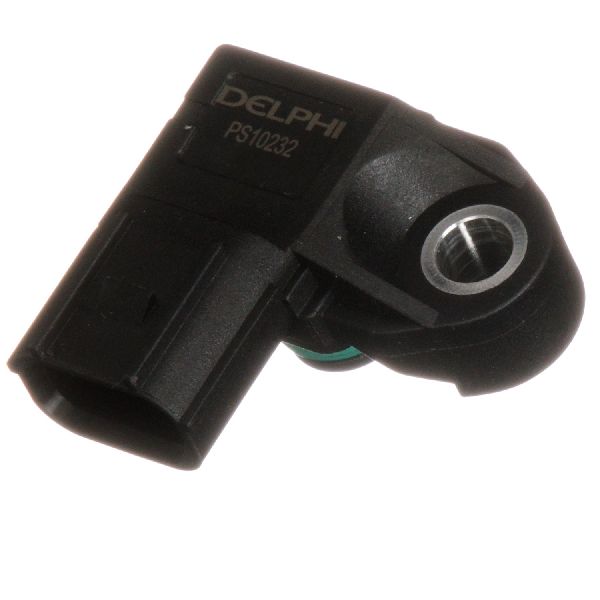
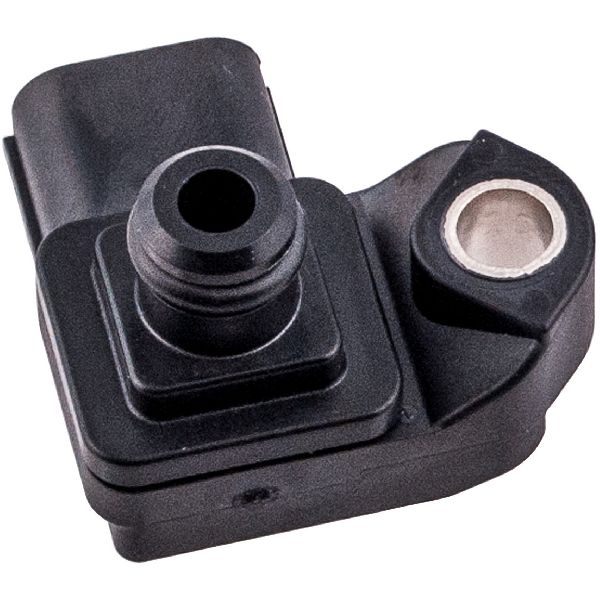
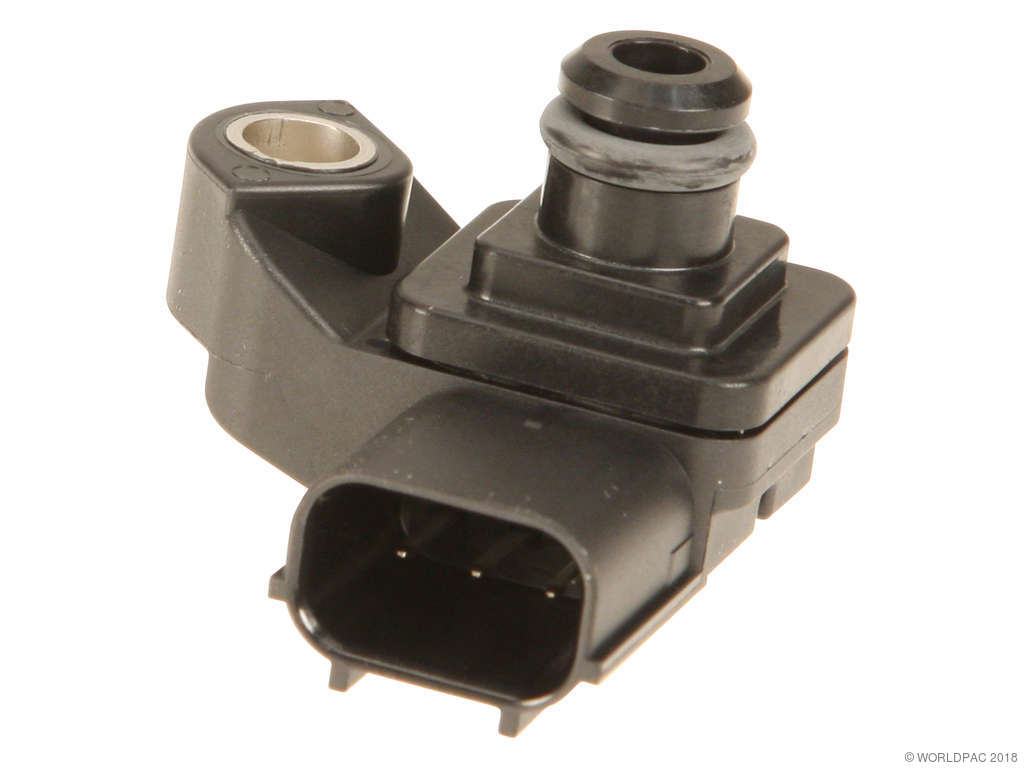
- Manifold Absolute Pressure (MAP) Sensor
(OEM #37830-5AA-A02)— This is the most common cause of P0107. The sensor fails internally from heat and age. The part number 37830-5AA-A02 is the updated version for many 10th gen Civics, replacing 37830-5AA-A01. Both MAP sensors on the 1.5T engine use this same part number.
Trusted brands: Honda (Genuine OEM), Denso (Often the OEM supplier)
OEM price range: $40-$60
Aftermarket price range: $25-$50
Related Codes That Often Appear With This One
- P0108 — This code for 'MAP Sensor Circuit High Input' is the direct opposite of P0107. Seeing both codes intermittently can point to a faulty sensor sending erratic signals or a wiring short.
- P0172 — This code for 'System Too Rich' can occur because a low MAP sensor reading may cause the PCM to incorrectly calculate engine load and inject too much fuel.
- P0300-P0304 — Random or specific cylinder misfire codes can be triggered by the incorrect air-fuel mixture that results from a bad MAP sensor signal.
Platform-Specific Known Issues
- The 1.5L Turbo engine uses two MAP sensors. One functions as a traditional MAP sensor on the intake manifold, while the other (often called a boost pressure sensor) is on the charge pipe. Both typically share the same part number. A failure of either sensor or its circuit can set a P0107 code, so it is crucial to diagnose which one is at fault before ordering parts.
Mechanic-Grade Diagnostic Values
- MAP Sensor Signal Voltage (Key On, Engine Off) — expected: Should correspond to barometric pressure, typically 2.5V - 4.5V depending on altitude.. Failure: A reading below 0.5V indicates a fault triggering P0107.
- MAP Sensor Signal Voltage (Engine at Idle) — expected: 0.9V - 1.3V (high vacuum).. Failure: Voltage stuck low (below 0.5V) or not responding to throttle changes.
- MAP Sensor Connector 5V Reference — expected: Approximately 5.0V with ignition ON.. Failure: Significantly lower or no voltage points to a wiring issue or a fault in the PCM's 5V supply circuit.
- MAP Sensor Connector Ground Wire Resistance — expected: Less than 1.0 ohm when tested between the ground pin and a clean chassis ground.. Failure: A reading higher than 5 ohms indicates a poor ground connection that must be located and repaired.
Scan Tool Commands That Help
- Honda HDS (or compatible advanced scanner): ECM/PCM Reset — After replacing the MAP sensor or disconnecting the battery, this function is used to clear all learned fuel trims and adaptive memory. It should be followed by the ECM/PCM Idle Learn Procedure to allow the computer to relearn baseline values with the new sensor.
Wiring & Ground Locations
- G101 — Typically located on the vehicle chassis near the battery tray or on the transmission housing.. This is a primary engine and chassis ground point. A corroded or loose G101 ground can cause a variety of sensor circuit codes, including P0107, by creating a floating ground and incorrect voltage readings.
- MAP Sensor Connector (Intake Manifold) — A 3-pin connector on the MAP sensor, located on top of the intake manifold.. This is the primary connection to test for 5V reference, ground, and signal voltage. Corrosion, bent pins, or a damaged connector housing are common failure points.
- PCM Connector C (49P) - Pin 24 — One of the main connectors at the Powertrain Control Module (PCM), often located in the engine bay.. Based on similar Honda models, this pin (with a Gray wire) is often the dedicated ground circuit (SG1) for the MAP sensor. Testing for continuity from this pin to the sensor connector can confirm if the ground wire in the harness is intact.
Real Owner Repair Stories
- Unofficial Honda FIT Forums user 'De36' (Honda Fit GE8 (similar architecture)) — Intermittent P0107 code, vehicle enters fail-safe mode, unable to rev over 3,000 RPMs.
❌ Tried (didn't work) Replacing the MAP sensor with a new part ($60).
✅ What actually fixed it The connector pigtail was faulty. The user confirmed this by applying dielectric grease, which worsened the connection issue. The final fix was ordering and installing a new $15 pigtail harness for the MAP sensor.
OEM Part Supersession History
37830-5AA-A01→37830-5AA-A02— Standard part revision by the manufacturer, likely for improved reliability or minor design change.
Heads up: None. The new part number 37830-5AA-A02 is a direct, backward-compatible replacement for the original.
Diagnostic Flowchart
Other Known Issues on This Vehicle
Issues unrelated to this code that are worth knowing about as an owner of this generation:
- A/C Condenser Failure 🔴 High — Extremely common across 2016-2021 models. Fails due to pinhole leaks developing in the condenser walls. (Ref: Honda Service Bulletin 19-091; Warranty extended to 10 years/unlimited mileage for this specific part.)
- Oil Dilution (1.5L Turbo Engine) 🟠 Medium — Common, especially on vehicles in cold climates with frequent short trips. Fuel mixes with engine oil, raising the oil level and reducing lubrication. (Ref: Honda TSB 18-089 and subsequent software updates were issued to adjust engine parameters and mitigate the issue.)
- Sticky Steering 🟠 Medium — Primarily affects 2016-2018 models. Owners report a 'notchy' or stiff feeling in the steering rack, especially when making small corrections at highway speeds. (Ref: No specific recall, but a known issue discussed widely in owner forums. Some repairs have been covered under warranty.)
- Infotainment System Glitches 🟡 Low — More common on earlier 2016-2018 models. Issues include screen flickering, freezing, or unresponsiveness. Often resolved with a software update.
Used vs. New Parts: Buying Guide for This Vehicle
When a used part is the smart pick: A used OEM MAP sensor from a reputable salvage yard can be a cost-effective option, as this is not a typical wear-and-tear part. The failure is electronic, so a used part from a low-mileage donor vehicle is a reasonable gamble.
Donor-vehicle mileage cap: roughly under 60000 miles for the part to have meaningful remaining life.
What to inspect on the donor part:
- Check for a donor vehicle with no front-end damage.
- Inspect the sensor's plastic housing for any cracks or signs of heat stress.
- Ensure connector pins are straight, clean, and free of corrosion.
- Verify the O-ring is present and not brittle, although replacing it with a new one is always recommended.
Aftermarket brands forum-validated for this vehicle:
- Denso (often the original equipment manufacturer for Honda)
- Standard Motor Products (SMP)
Brands owners have reported issues with on this vehicle:
- Unbranded, low-cost sensors from online marketplaces like eBay or Amazon are frequently reported on forums to be defective out of the box or fail prematurely.
Real Owner Stories
Aggregated from forums and TSBs cited above. Mileages and costs reflect what owners reported in those sources.
2004 Honda Civic
Symptoms: Experiencing both P0107 and P0108 codes even after replacing the sensor twice.
What fixed it: The owner was advised to stop replacing parts and check the wiring harness for a 5V reference and a good ground to identify a circuit fault.
Source hint: reddit.com/r/mechanicadvice/ thread titled 'im_getting_a_p0108_and_p0107_codes_on_a_2004/'
2016-2021 Honda Civic 1.5T
Symptoms: P0107 and P0108 codes appearing; engine performance issues.
What fixed it: Replacement of one of the MAP sensors. Owners report this is a simple 15-minute job.
Source hint: civicx.com forum threads discussing P0107 and P0108 codes
2016-2021 Honda Civic
Symptoms: P0107 MAP sensor circuit low voltage.
What fixed it: Testing the sensor circuit with a multimeter, wiggling wires to find loose connections, and probing the signal wire to confirm voltage changes.
Source hint: reddit.com/r/Cartalk/ thread titled 'p0107_map_sensor_circuit_low/'
Related OBD-II Codes
Frequently Asked Questions
My 2017 Civic 1.5T has two sensors that look identical; which one is causing the P0107 code?
Could the oil dilution issue on my 1.5L Turbo Civic be related to the MAP sensor failure?
I just did a head gasket repair on my Civic and now I have a P0107 code. Did the sensor just die?
What should the voltage reading be for a healthy MAP sensor on a 2016-2021 Civic at idle?
Is there a TSB for the MAP sensor on the 10th Gen Civic?
Helpful Videos
We Have This Part in Stock


The information in this article is provided for general reference and educational purposes only. Vehicle specifications, procedures, and part compatibility can vary by production date, trim level, and region. Always consult your vehicle's factory service manual and verify part numbers before purchasing or performing repairs. Safety-critical components such as airbags, seat belts, and braking systems should be installed by a qualified professional.
- Honda Civic:
- 🧭 Diagnostic Flowchart
- 🎬 Helpful Videos
- 🛍️ Shop This Part
- What's Unique About the 2016-2021 Honda Civic
- Symptoms You May Notice
- Most Likely Causes
- Rare But Worth Checking
- Diagnosis Steps
- Parts You'll Likely Need
- Related Codes That Often Appear With This One
- Platform-Specific Known Issues
- Mechanic-Grade Diagnostic Values
- Scan Tool Commands That Help
- Wiring & Ground Locations
- Real Owner Repair Stories
- OEM Part Supersession History
- Other Known Issues on This Vehicle
- Used vs. New Parts: Buying Guide for This Vehicle
- Real Owner Stories
- 2004 Honda Civic
- 2016-2021 Honda Civic 1.5T
- 2016-2021 Honda Civic
- Related OBD-II Codes
- Frequently Asked Questions
- 🎟️ Get 5% Off