

P0107 on 2011-2016 Honda CR-V: MAP Sensor Circuit Low Causes and Fixes
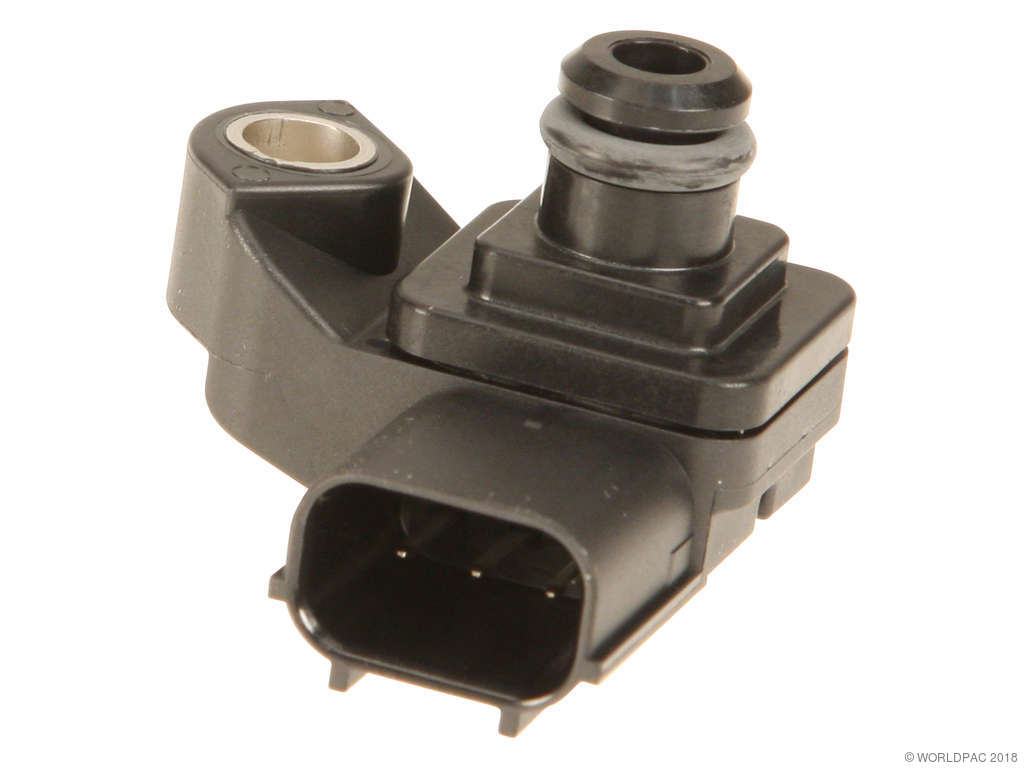
For a 2011-2016 Honda CR-V, code P0107 almost always points to a failed Manifold Absolute Pressure (MAP) sensor. It's an inexpensive part and a very easy 15-minute DIY replacement, typically costing $30-$70 for a quality aftermarket part. The correct OEM part number is 37830-RNA-A01.
- P0107 on a 2011-2016 CR-V means the MAP sensor's voltage signal is too low.
- The most likely cause is a failed MAP sensor (OEM Part #37830-RNA-A01), which is an easy and affordable DIY replacement.
- Before replacing the sensor, always perform a quick visual check of the sensor's wiring connector and nearby vacuum hoses for obvious damage.
- Do not ignore this code, as it can lead to severe drivability problems, poor fuel economy, and potential long-term damage to the catalytic converter.
What's Unique About the 2011-2016 Honda CR-V
On this generation of Honda CR-V, the MAP sensor is a primary input for fuel calculations. While the sensor itself is generally reliable, it is a common failure point over the life of the vehicle. The good news is that for the K-series engines used in the CR-V (K24Z6 in 2011, K24Z7 in 2012-14, and K24W9 in 2015-16), the sensor is extremely accessible, located right on top of the intake manifold, making it one of the easier sensor replacements for a DIYer. All of these engines use the same MAP sensor (part number 37830-RNA-A01), so the diagnosis is consistent across the generation range.
Generation note: The 2011 model year is the final year of the third-generation CR-V. The 2012-2016 model years belong to the fourth generation. The fourth generation also had a major update for 2015, introducing a new direct-injected 'Earth Dreams' engine (K24W9). However, the cause, diagnosis, and fix for code P0107 are consistent across these years as they all rely on a similar MAP sensor system and use the same OEM part number.
Symptoms You May Notice
- Check Engine Light is on
- Rough idle or stalling, especially at stops
- Poor acceleration and engine hesitation
- Reduced fuel economy
- Black smoke from the exhaust
- Difficulty starting the engine
- Extremely difficult to start, requiring long cranking times
- Replacing the oxygen (O2) sensors when a rich or lean condition is present without first checking the MAP sensor circuit.
- Replacing the throttle body when the issue is a simple vacuum leak or bad MAP sensor.
Most Likely Causes
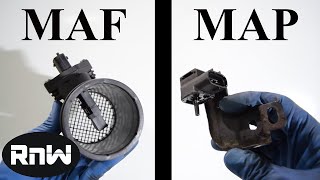
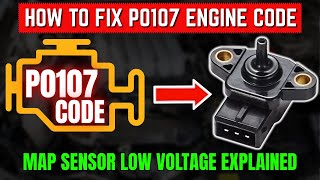
- Faulty MAP Sensor 🔴 High Probability → Shop Manifold Absolute Pressure Sensor This is a common failure item due to age, heat cycles, and internal electronics failing over time. The internal diaphragm can leak or the electronics can short, causing the output voltage to drop below the 0.5V threshold. 🎬 Watch this video to understand the P0107 low voltage code.
How to confirm: After confirming the wiring is intact, replacing the sensor is the most direct way to fix the issue. A scan tool showing MAP voltage stuck below 0.5V with the key on and engine off points strongly to a bad sensor.
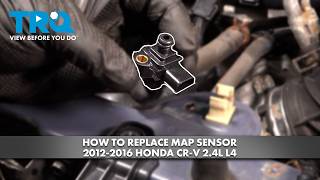
Typical fix: Replace the MAP sensor. It is held onto the intake manifold by a single 8mm bolt. 🎬 Watch: Step-by-step guide to replacing the MAP sensor.
Est. part cost: $30-$150 - Wiring or Connector Issue 🟡 Medium Probability The engine bay environment involves heat and vibration, which can cause wires to fray or connector pins to corrode or become loose over time, creating an open or short in the circuit.
How to confirm: Visually inspect the wiring harness and connector for damage. Use a multimeter to check for 5V reference and good ground at the connector. Wiggling the connector while observing live data on a scan tool can also reveal a poor connection.
Typical fix: Repair the damaged section of wire or clean/replace the connector pins.
Est. part cost: $5-$50 - Vacuum Leak ⚪ Low Probability Rubber vacuum hoses can crack and plastic intake components can develop leaks with age. While a vacuum leak can cause drivability issues, it's less likely to cause the specific P0107 'circuit low' code unless it's a massive leak right at the sensor's port.
How to confirm: A visual inspection may reveal a cracked or disconnected vacuum hose. A smoke test is the most effective way to find hard-to-see leaks in the intake system.
Typical fix: Replace the cracked vacuum hose or faulty intake manifold gasket.
Est. part cost: $10-$100
Rare But Worth Checking
- Faulty Powertrain Control Module (PCM): → Shop Engine Control Module (ECM) This is very rare. The PCM should only be considered after the sensor, wiring, and vacuum systems have been thoroughly tested and proven to be good. A failed input circuit inside the PCM can mimic a sensor or wiring fault.
Diagnosis Steps
- Connect an OBD-II scanner and confirm P0107 is the active code. Check the freeze frame data to see the engine conditions when the code was set.
- With the Key On, Engine Off (KOEO), use the scanner's live data function to view the MAP sensor voltage. 🎬 See how to test a MAP sensor using an OBD scanner. A reading below 0.5V (or 0.23V on some systems) indicates a hard fault.
- Perform a thorough visual inspection. Locate the MAP sensor on the intake manifold. Check its electrical connector for a secure fit and look for any corroded pins. Inspect all vacuum hoses connected to the intake manifold for cracks, kinks, or loose fittings.
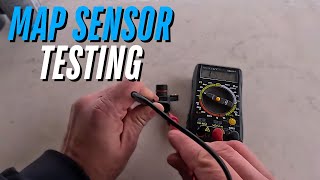
- Disconnect the MAP sensor connector. Use a multimeter to test the terminals. You should find a 5-volt reference wire, a good ground wire (close to 0 ohms resistance to the battery negative), and the signal wire.
- If the 5V reference or ground is missing, you have a wiring issue or a potential PCM problem. Trace the wiring back to the PCM.
- If reference and ground are good, the issue is likely the sensor itself. Replacing the MAP sensor is the next logical step.
- If the code persists after replacing the sensor, check the signal wire for a short to ground.
- If no wiring shorts are found, perform a vacuum test or smoke test to rule out any significant, hidden vacuum leaks.
- If all other possibilities are exhausted, the issue may be an internal fault in the PCM, though this is rare.
Parts You'll Likely Need
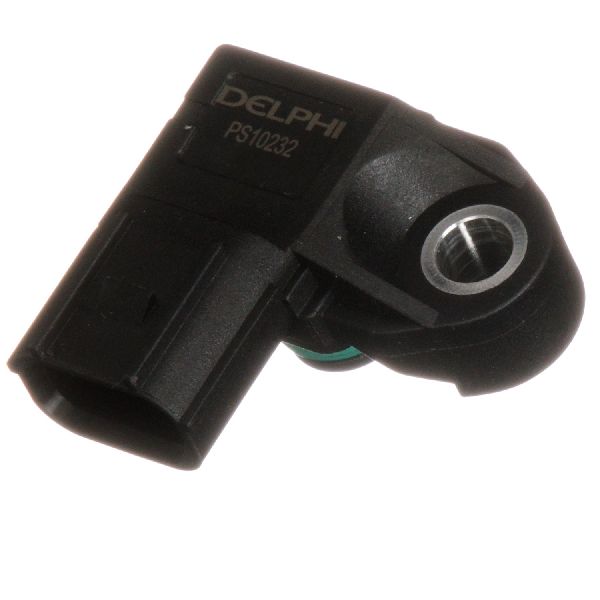
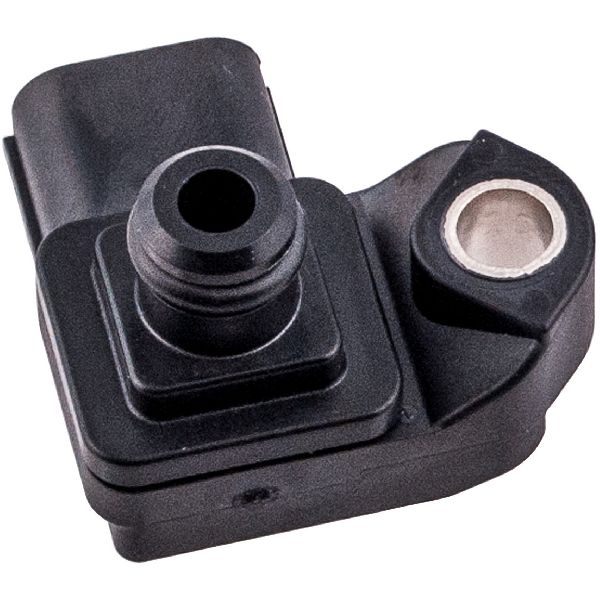
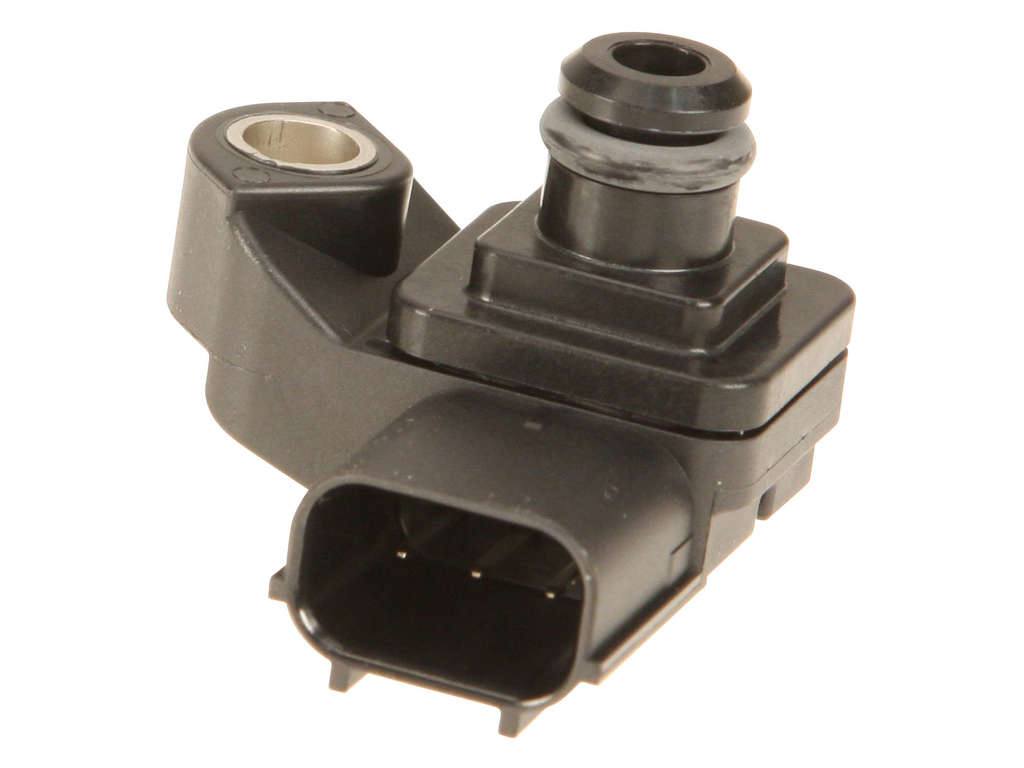
- Manifold Absolute Pressure (MAP) Sensor
(OEM #37830-RNA-A01)— This is the most common component to fail and trigger a P0107 code on this vehicle.
Trusted brands: Honda (Genuine OEM), Denso, Hitachi, Standard Motor Products, Delphi
OEM price range: $70-$100
Aftermarket price range: $30-$80
Related Codes That Often Appear With This One
- P0108 — P0108 is 'MAP Sensor Circuit High Input'. Seeing both P0107 and P0108 intermittently can indicate a wiring short or a sensor that is failing erratically.
- P0171 — P0171 is 'System Too Lean'. A large vacuum leak can cause both an incorrect (low) MAP sensor reading and a lean fuel condition, triggering both codes simultaneously.
Technical Service Bulletins (TSBs) & Recalls
- Honda TSB 09-010: Addresses engine rattle at cold start-up due to a defective VTC actuator, a common issue on these vehicles.
- Honda TSB 16-012: A later revision of the VTC actuator bulletin, providing updated information and procedures.
- Honda Warranty Extension for Oil Consumption: Honda extended the warranty to 8 years/unlimited miles for certain vehicles experiencing high oil consumption due to sticking piston rings.
Mechanic-Grade Diagnostic Values
- MAP Sensor Reference Voltage — expected: ~5.0 Volts. Failure: Voltage significantly lower than 5.0V indicates a wiring or PCM issue.
- MAP Sensor Signal Voltage (KOEO - Key On, Engine Off) — expected: ~2.9V to 4.5V at sea level (atmospheric pressure). Failure: Voltage below 0.5V, or in some cases below 0.23V, indicates a hard fault.
- MAP Sensor Signal Voltage (Engine Idling) — expected: 1.0V to 1.5V (high vacuum). Failure: Voltage does not drop from KOEO reading, or is stuck low (<0.5V).
- MAP Sensor Ground Circuit Resistance — expected: Less than 10 Ω to chassis ground. Failure: Resistance above 10 Ω indicates a poor ground connection.
Scan Tool Commands That Help
- Honda HDS (or compatible): ECM/PCM Reset — After replacing the MAP sensor or repairing wiring, this function is used to clear learned values from the computer before performing the mandatory idle learn procedure.
- Honda HDS (or compatible): PCM Idle Learn Procedure — Must be performed after replacing the MAP sensor, disconnecting the battery, or clearing the PCM. This allows the computer to relearn the engine's idle characteristics with the new/repaired components.
Wiring & Ground Locations
- MAP Sensor Connector — On top of the black plastic intake manifold, easily visible after removing the engine cover.. This is the primary connection point for the sensor. Corrosion, damage, or a loose fit here is a common cause of P0107. The three pins are for 5V reference, signal, and ground.
- G101 — On the left rear of the engine, near the top. It's a primary engine ground point.. The PCM and multiple sensors use this ground reference. A loose or corroded G101 can create a floating ground, causing erratic voltage readings for sensors like the MAP, leading to codes like P0107.
- MAP Sensor Pinout (at sensor connector) — On the 3-pin connector for the MAP sensor.. Pin 1 (Gray wire) is the 5V reference from the PCM. Pin 2 (Green wire) is the signal wire to the PCM. Pin 3 (Pink wire) is the ground. Knowing the pinout is essential for accurate multimeter testing.
Real Owner Repair Stories
- Reddit user on r/crv (2012 Honda CR-V) — Vehicle would not start.
✅ What actually fixed it The user discovered that critters had chewed through the G101 ground wire coming from the fuel injection harness. Repairing this chewed wire resolved the no-start condition, which was likely causing sensor circuit codes like P0107 due to the lack of a proper ground reference.
Diagnostic Flowchart
Other Known Issues on This Vehicle
Issues unrelated to this code that are worth knowing about as an owner of this generation:
- VTC Actuator Rattle on Cold Start 🟠 Medium — Very common on 2012-2014 models with the K24Z7 engine. A brief, loud metallic rattle for 1-2 seconds upon cold startup. (Ref: Honda TSB 09-010, 16-012.)
- Premature Starter Motor Failure 🟠 Medium — Commonly reported on 2012-2014 models, often requiring replacement. Symptoms include a click or no sound when trying to start.
- Excessive Oil Consumption 🟠 Medium — Affects some 2010-2011 models due to piston ring design. Also noted in later 'Earth Dreams' engines, sometimes addressed by replacing the PCV valve. (Ref: Honda Service Bulletin 12-089, Warranty Extension.)
- Vibration at Idle/Low Speeds (2015-2016 models) 🟡 Low — Affects the 2015-2016 models with the CVT. Owners report a noticeable vibration or shudder at idle in gear or during light acceleration. (Ref: Honda issued software updates and in some cases, replaced torque mounts to address the issue.)
Used vs. New Parts: Buying Guide for This Vehicle
When a used part is the smart pick: For a simple electronic sensor like the MAP sensor, a used OEM part from a low-mileage donor vehicle is a reasonable choice. It is often more reliable than a cheap, new aftermarket part. Given the high failure rate, it's a common part to find in salvage yards.
Donor-vehicle mileage cap: roughly under 80000 miles for the part to have meaningful remaining life.
What to inspect on the donor part:
- Check for physical damage to the sensor body or connector.
- Ensure the O-ring is present and not brittle or cracked.
- Avoid sensors from engines that show signs of heavy oil leaks or sludge, as oil can contaminate the sensor port.
Aftermarket brands forum-validated for this vehicle:
- Denso (often the original OEM supplier)
- Hitachi
- Standard Motor Products (SMP)
- Delphi
Brands owners have reported issues with on this vehicle:
- Unbranded, no-name parts from online marketplaces should be avoided, as their internal electronics may not be calibrated correctly, leading to persistent codes or poor performance.
Real Owner Stories
Aggregated from forums and TSBs cited above. Mileages and costs reflect what owners reported in those sources.
2012 Honda CR-V 2.4L
Symptoms: The vehicle experienced a rough idle and stalling. The P0107 code was present.
What fixed it: Replacing the MAP sensor (part #37830-RNA-A01) completely fixed the issue.
Source hint: CRV Owners Club thread titled 'CRV P0107 - MAP Sensor?'
2011-2016 Honda CR-V (General)
Symptoms: The vehicle jerked so hard the driver hit their face on the steering wheel as the car rapidly decelerated from 55mph to 35mph.
What fixed it: The issue was diagnosed as a P0107 code related to the engine/transmission performance.
Source hint: Car Talk Community thread titled 'Possible transmission or engine problem engine code P0107'
Related OBD-II Codes
Frequently Asked Questions
My 2012 CR-V is stalling at stops and has a P0107 code; what is the most likely fix?
Is there a specific TSB for the engine rattle I hear on cold starts alongside my P0107 code?
Could my 2011 CR-V's high oil consumption be related to the MAP sensor circuit low code?
What brands of MAP sensors are recommended for the 2011-2016 Honda CR-V?
I have a 2015 CR-V with a vibration at idle; is this caused by the P0107 code?
How can I confirm if the MAP sensor itself is bad on my CR-V?
Helpful Videos

We Have This Part in Stock


The information in this article is provided for general reference and educational purposes only. Vehicle specifications, procedures, and part compatibility can vary by production date, trim level, and region. Always consult your vehicle's factory service manual and verify part numbers before purchasing or performing repairs. Safety-critical components such as airbags, seat belts, and braking systems should be installed by a qualified professional.
- Honda CR-V:
- 🧭 Diagnostic Flowchart
- 🎬 Helpful Videos
- 🛍️ Shop This Part
- What's Unique About the 2011-2016 Honda CR-V
- Symptoms You May Notice
- Most Likely Causes
- Rare But Worth Checking
- Diagnosis Steps
- Parts You'll Likely Need
- Related Codes That Often Appear With This One
- Technical Service Bulletins (TSBs) & Recalls
- Mechanic-Grade Diagnostic Values
- Scan Tool Commands That Help
- Wiring & Ground Locations
- Real Owner Repair Stories
- Other Known Issues on This Vehicle
- Used vs. New Parts: Buying Guide for This Vehicle
- Real Owner Stories
- 2012 Honda CR-V 2.4L
- 2011-2016 Honda CR-V (General)
- Related OBD-II Codes
- Frequently Asked Questions
- 🎟️ Get 5% Off