

P0107 on 2017-2020 Hyundai Elantra: MAP Sensor Circuit Low Causes and Fixes
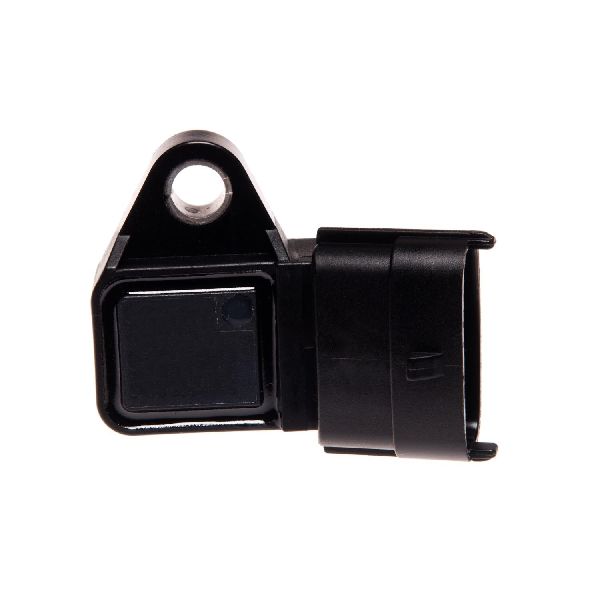
This code almost always points to a faulty Manifold Absolute Pressure (MAP) sensor. On a 2017-2020 Elantra, expect to pay around $70-$140 for a new sensor. It's a DIY-friendly fix, typically taking less than 30 minutes.
- P0107 on a 2017-2020 Elantra means the MAP sensor's voltage signal is too low.
- The most likely cause is a failed MAP sensor, which is a relatively inexpensive and easy part to replace.
- Before replacing the sensor, check the wiring and connector for any obvious damage, as this is the second most likely cause.
- Symptoms will include a rough idle, poor acceleration, and bad gas mileage.
- The MAP sensor is located on the intake manifold, secured by a single 10mm bolt, making it a good DIY candidate.
What's Unique About the 2017-2020 Hyundai Elantra
For the 2017-2020 (AD generation) Elantra with the 2.0L Nu engine, the P0107 code is straightforward and rarely caused by complex, platform-specific issues. The MAP sensor is a common point of failure across many Hyundai and Kia models sharing this powertrain, but it's generally a simple component replacement. Unlike some turbocharged vehicles where the MAP sensor (sometimes called a MAPT or boost sensor) has a higher failure rate due to heat and pressure, the naturally aspirated Elantra's issues are more typically related to standard electronic component failure over time or potential wiring problems.
Symptoms You May Notice
- Check Engine Light is on
- Rough or unstable idle
- Engine hesitation or sluggish acceleration
- Poor fuel economy
- Difficulty starting the engine
- Black smoke from the exhaust
- Engine stalling
- Replacing the throttle body. While a dirty throttle body can cause idle issues, it will not directly cause a P0107 circuit low code.
- Replacing the Mass Airflow (MAF) sensor. The Elantra uses a MAP sensor for load calculation, not a MAF sensor. The two are different components.
Most Likely Causes
- Faulty Manifold Absolute Pressure (MAP) Sensor 🔴 High Probability → Shop Manifold Absolute Pressure Sensor This is the most common failure point for this code across most vehicles, including the Elantra. The sensor's internal piezo electric element or hybrid IC can fail, causing it to send a voltage signal below the minimum threshold.
How to confirm: With a scan tool, check the MAP sensor voltage with the key on, engine off (KOEO). It should read around 4.5-5.0V (reflecting atmospheric pressure). With the engine idling, it should drop to 1.0-2.0V. If the reading is stuck low (e.g., below 0.5V) regardless of engine state, the sensor is likely bad.
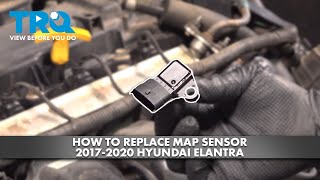
Typical fix: Replace the MAP sensor. It is located on the intake manifold and secured by a single 10mm bolt. 🎬 Watch this step-by-step guide to replacing the Elantra MAP sensor.
Est. part cost: $70-$140 - Wiring Harness or Connector Issue 🟡 Medium Probability The wiring harness in the engine bay is exposed to heat and vibration, which can cause wires to break or insulation to fray. The connector itself can also become corroded, loose, or difficult to disconnect, leading to damaged pins.
How to confirm: Visually inspect the wiring and connector leading to the MAP sensor for any signs of damage, corrosion, or loose pins. While the engine is running, gently wiggle the connector and harness to see if it affects the engine idle or the MAP sensor reading on a scan tool (a 'wiggle test'). Owners report the connector tab can be very stiff; pushing the connector in firmly before pressing the tab can help release it.
Typical fix: Repair the damaged section of wiring or clean/replace the connector pigtail.
Est. part cost: $10-$30 - Vacuum Leak ⚪ Low Probability While a vacuum leak can cause MAP sensor codes, P0107 (circuit low) is less common than a P0106 (range/performance) code for this issue. A massive leak from a cracked hose or bad intake gasket could theoretically cause unusual sensor readings, but it's not the primary suspect for a 'circuit low' fault.
How to confirm: Inspect all vacuum hoses connected to the intake manifold for cracks, breaks, or loose connections. A smoke test is the most effective way to find a leak by introducing smoke into the intake system and watching for where it escapes.
Typical fix: Replace the leaking vacuum hose or gasket.
Est. part cost: $5-$50
Rare But Worth Checking
- Faulty Powertrain Control Module (PCM): → Shop Engine Control Module (ECM) This is extremely rare. The PCM should only be considered after all other possibilities (sensor, wiring, vacuum leaks) have been exhaustively ruled out by confirming the sensor and wiring are good, but the PCM is not correctly processing the signal.
Diagnosis Steps
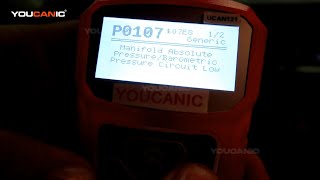
- Connect an OBD-II scanner and confirm P0107 is the primary code. Note any other codes present, especially P0112/P0113, which points to an integrated sensor failure.
- Using the scanner's live data function, monitor the MAP sensor voltage with the Key On, Engine Off (KOEO). The reading should be high, around 4.5-5.0 volts, reflecting atmospheric pressure.
- Start the engine. At idle, the MAP sensor voltage should drop to a low value, typically between 1.0 and 2.0 volts.
- If the voltage is stuck below 0.5V in both KOEO and idle states, the sensor is likely faulty or there is a short in the signal wire.
- Turn the engine off. Locate the MAP sensor on the intake manifold. Access can be tight.
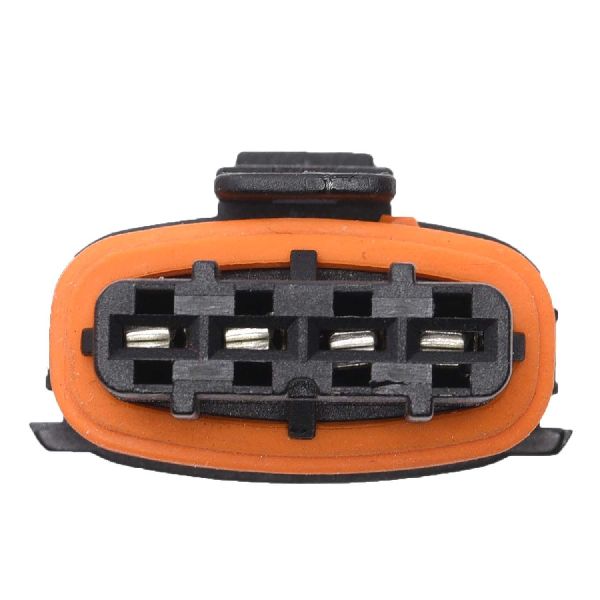
- Inspect the sensor's electrical connector and wiring for any visible damage, corrosion, or loose pins. The connector tab can be stiff; some technicians use a pick tool to help release it.
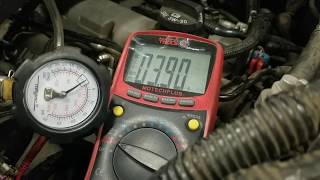
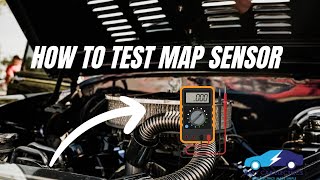
- If the wiring looks good, disconnect the connector. With the key on, use a multimeter to test the connector terminals. 🎬 See how to test any MAP sensor using a multimeter. You should find a 5V reference wire, a ground wire (check for continuity to chassis ground), and a signal wire. If the 5V reference or ground is missing, there is a wiring issue between the PCM and the sensor.
- If the 5V reference and ground are present, the most likely cause is a failed MAP sensor.
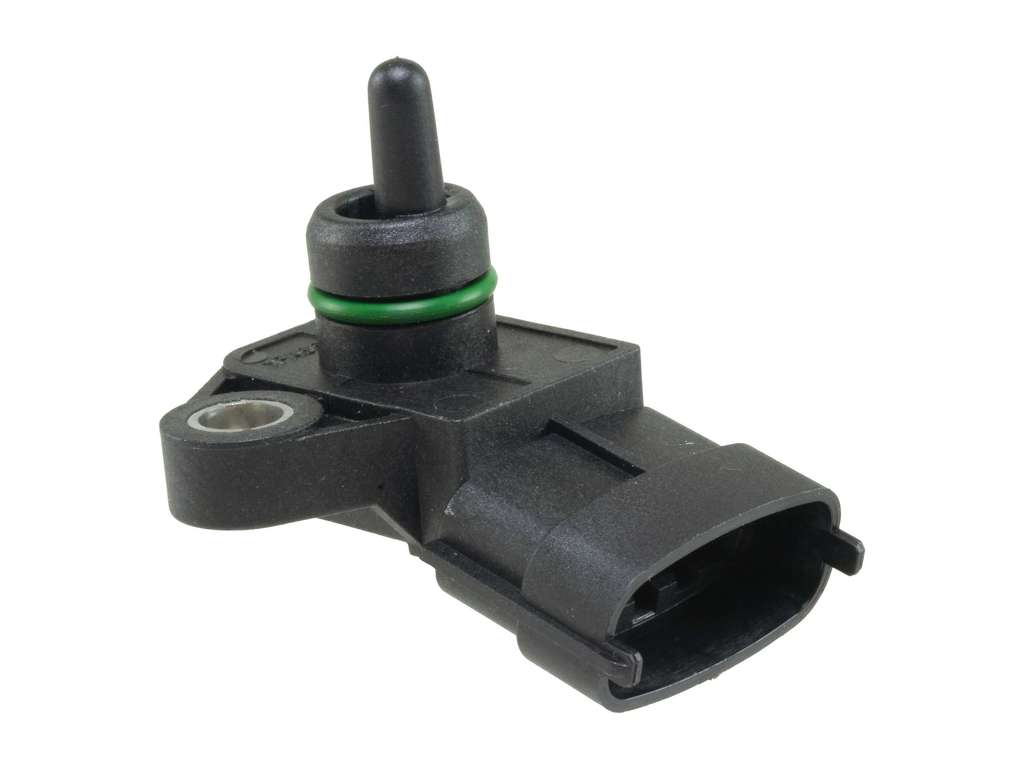
- Replace the MAP sensor. It may be helpful to apply a small amount of oil to the new sensor's O-ring for easier installation.
- Clear the code with the scanner and perform a test drive to ensure the code does not return.
Parts You'll Likely Need
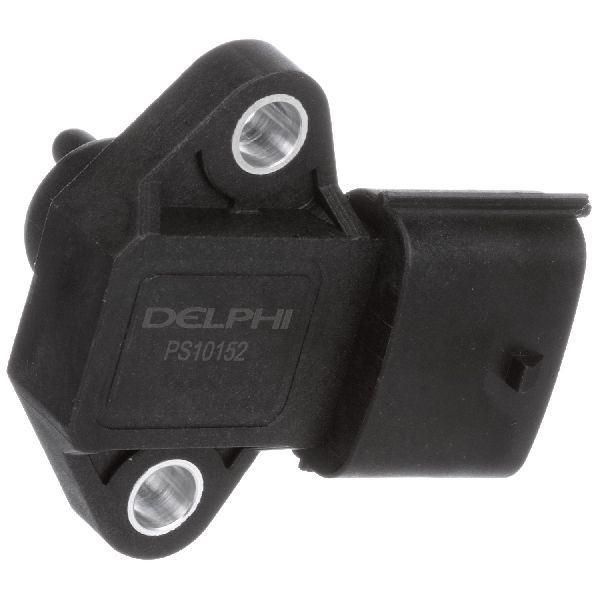
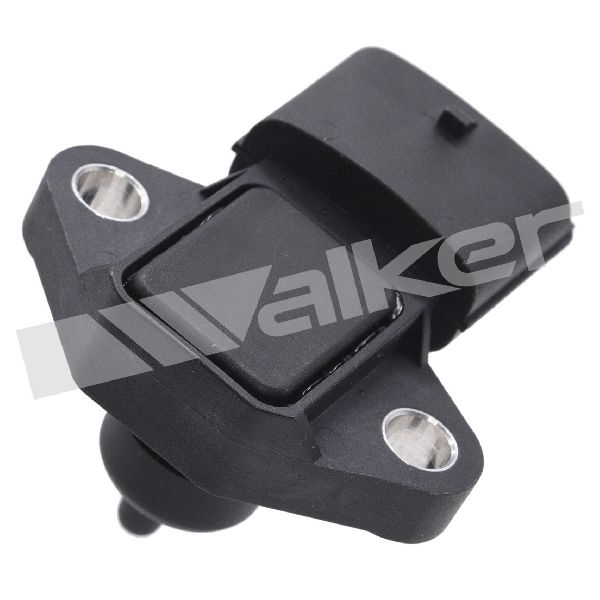
- Manifold Absolute Pressure (MAP) Sensor
(OEM #39300-2B100 or 39300-2E600)— This is the most common cause for a P0107 code, as the sensor itself fails internally. 39300-2B100 is widely cited, while 39300-2E600 is also listed for 2.0L models. Always verify with VIN.
Trusted brands: Hyundai (OEM), NTK, Delphi, Walker
OEM price range: $130-$190
Aftermarket price range: $70-$100
Related Codes That Often Appear With This One
- P0108 — P0108 is 'MAP Circuit High Input'. Seeing P0107 and P0108 intermittently can point towards a wiring issue, like a loose connector or frayed wire, causing the signal to fluctuate between open and shorted conditions.
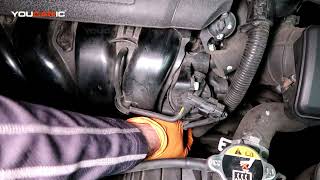
- P0112 / P0113 — On many Hyundai models, including the Elantra and its platform-mate Kia Forte, the Intake Air Temperature (IAT) sensor is integrated into the MAP sensor assembly. A failure of the entire component will often trigger both a MAP code (P0107) and an IAT code (P0113 - Circuit High is common). 🎬 Watch a mechanic fix P0107 on this same engine platform.
Platform-Specific Known Issues
- The MAP sensor is located on the front of the intake manifold, but access can be tight, tucked under the upper radiator hose. A ratchet with an extension is needed for the 10mm bolt.
- The electrical connector can be very difficult to release due to a stiff locking tab. Owners and technicians report needing to use a small pick or screwdriver to depress the tab, or firmly pushing the connector *in* before pulling to unseat it.
Mechanic-Grade Diagnostic Values
- MAP Sensor Signal Voltage (Key On, Engine Off) — expected: ~4.5V - 5.0V (at sea level). Failure: Voltage is stuck low, below 0.5V.
- MAP Sensor Signal Voltage (Engine at Idle) — expected: 1.0V - 2.0V. Failure: Voltage remains high or is stuck below 0.5V.
- MAP Sensor 5V Reference Wire (at connector, KOEO) — expected: ~5.0V. Failure: No voltage or significantly low voltage indicates a wiring issue from the PCM.
- MAP Sensor Ground Wire Resistance — expected: < 10 Ω (measured between sensor ground wire and chassis ground). Failure: Resistance above 10 Ω suggests a poor ground path.
- DTC P0107 Trigger Threshold — expected: Signal voltage > 0.25V. Failure: ECM sets P0107 if the signal voltage is less than 0.25V for 2.5-5 seconds.
Scan Tool Commands That Help
- Hyundai GDS (Global Diagnostic System): Resetting adaptive values — After replacing the MAP sensor or repairing a wiring issue, this function in the 'Vehicle S/W Management' or special functions menu forces the ECU to clear learned fuel trim and other parameters and relearn them with the new, correct sensor data.
Wiring & Ground Locations
- PCM Connector CGGA-K, Pin 10 — At the Powertrain Control Module (PCM).. This is the MAP sensor signal input pin. A technician can back-probe this pin to verify if the low voltage signal is reaching the PCM, which helps differentiate a wiring problem from a PCM problem.
- PCM Connector CGGA-K, Pin 8 — At the Powertrain Control Module (PCM).. This is the dedicated sensor ground pin for the MAP sensor. Testing for continuity from this pin to the sensor connector verifies the integrity of the ground circuit, which is a common failure point.
OEM Part Supersession History
39300-2B100→N/A— N/A
Heads up: This part is widely used across many Hyundai/Kia 1.6L, 1.8L, and 2.0L engines.39300-2E600→N/A— N/A
Heads up: This part is also listed for the 2.0L Elantra and some hybrid models. It is not a direct supersession for 39300-2B100. They are distinct parts; always confirm the correct part number with the vehicle's VIN before purchasing to avoid incompatibility.
Model Year Variations Within This Range
- 2017-2020: The Elantra received a major cosmetic facelift for the 2019 model year, changing the exterior and some interior components. However, the standard 2.0L Nu engine and its control systems, including the MAP sensor, remained unchanged. Therefore, the diagnosis and repair for a P0107 code are identical across the entire 2017-2020 range for vehicles with the 2.0L engine.
Diagnostic Flowchart
Real Owner Stories
Aggregated from forums and TSBs cited above. Mileages and costs reflect what owners reported in those sources.
Hyundai (Model Unspecified)
Symptoms: The vehicle threw a P0107 code. The owner replaced the MAP sensor, but the code returned immediately.
What fixed it: The immediate return of the code after parts replacement points to a wiring harness or connector issue rather than the sensor itself.
Source hint: Reddit r/AskAMechanic - P0107 code Hyundai
2017 Hyundai Elantra
Symptoms: The owner was attempting a MAP sensor replacement but struggled specifically with disconnecting the MAP sensor's electrical harness, citing it as their only major hurdle during the repair.
What fixed it: Using specific techniques (like pushing in before pulling or using a pick tool) to bypass the unusually stiff connector tab.
Source hint: Reddit r/Hyundai - MAP Sensor Replacement
Documented NHTSA Reports
Hyundai Sonata Hybrid (Cross-Model Reference)
Symptoms: An owner reported that warning lights came on while driving, and a scan revealed codes P0105 and P0107 (NHTSA ODI #11143359).
What fixed it: The dealer inspection found that the EGR pipe separated from the flange, which caused an unmetered air leak.
Source: NHTSA ODI #11143359
Related OBD-II Codes
Frequently Asked Questions
Where is the MAP sensor located on my 2017-2020 Hyundai Elantra?
Why is the MAP sensor electrical connector so hard to remove on my Elantra?
I replaced the MAP sensor on my Hyundai but the P0107 code came right back. What else could it be?
Can a vacuum leak cause the P0107 code on my 2.0L Nu engine?
What voltage should I see when testing the Elantra's MAP sensor with a scan tool?
Are there other Hyundai or Kia models that share this exact P0107 issue?
Helpful Videos

We Have This Part in Stock


The information in this article is provided for general reference and educational purposes only. Vehicle specifications, procedures, and part compatibility can vary by production date, trim level, and region. Always consult your vehicle's factory service manual and verify part numbers before purchasing or performing repairs. Safety-critical components such as airbags, seat belts, and braking systems should be installed by a qualified professional.
- Hyundai Elantra:
- 🧭 Diagnostic Flowchart
- 🎬 Helpful Videos
- 🛍️ Shop This Part
- What's Unique About the 2017-2020 Hyundai Elantra
- Symptoms You May Notice
- Most Likely Causes
- Rare But Worth Checking
- Diagnosis Steps
- Parts You'll Likely Need
- Related Codes That Often Appear With This One
- Platform-Specific Known Issues
- Mechanic-Grade Diagnostic Values
- Scan Tool Commands That Help
- Wiring & Ground Locations
- OEM Part Supersession History
- Model Year Variations Within This Range
- Real Owner Stories
- Hyundai (Model Unspecified)
- 2017 Hyundai Elantra
- Documented NHTSA Reports
- Hyundai Sonata Hybrid (Cross-Model Reference)
- Related OBD-II Codes
- Frequently Asked Questions
- 🎟️ Get 5% Off