

P0107 on 2016-2020 Kia Optima: Manifold Absolute Pressure Sensor Causes and Fixes
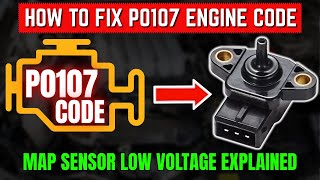
For a 2016-2020 Kia Optima, code P0107 is almost always caused by a failed Manifold Absolute Pressure (MAP) sensor. It's an easy 15-minute DIY fix, with an aftermarket sensor costing around $30-$80. Before replacing, check the connector for oil contamination and ensure the wiring harness clip hasn't broken, allowing it to contact the radiator fan.
- P0107 on a 2016-2020 Optima almost always means you need a new MAP sensor.
- This is a great DIY repair for beginners. It requires basic tools, takes about 15 minutes, and the sensor is easy to access on top of the engine.
- Before buying a new sensor, perform a quick visual check of the wiring and connector for any obvious damage, especially dangling wires near the radiator fan.
- Driving with this code will cause poor performance and fuel economy, and could lead to more expensive catalytic converter damage over time.
What's Unique About the 2016-2020 Kia Optima
On the 2016-2020 Kia Optima (JF generation), the P0107 code is a very common and straightforward issue. The MAP sensor is conveniently located on top of the intake manifold on all available engines (2.4L, 1.6T, 2.0T), making it exceptionally easy to access and replace. While there are no specific TSBs for P0107 on this model, Kia has issued software updates for related MAP sensor performance codes (like P0106) on similar platforms, indicating a known sensitivity in the ECU logic that can be triggered by a failing sensor.
Symptoms You May Notice
- Check Engine Light is on
- Rough or unstable idle
- Engine hesitation or sluggish acceleration
- Decreased fuel economy
- Engine stalling, especially at idle or stop lights
- Black smoke from the exhaust in some cases
- Replacing spark plugs or ignition coils to fix a rough idle without checking the trouble codes first.
- Replacing the throttle body when the issue is with the MAP sensor circuit.
- Replacing the MAP sensor without first checking for a dirty air filter or inspecting the wiring.
Most Likely Causes
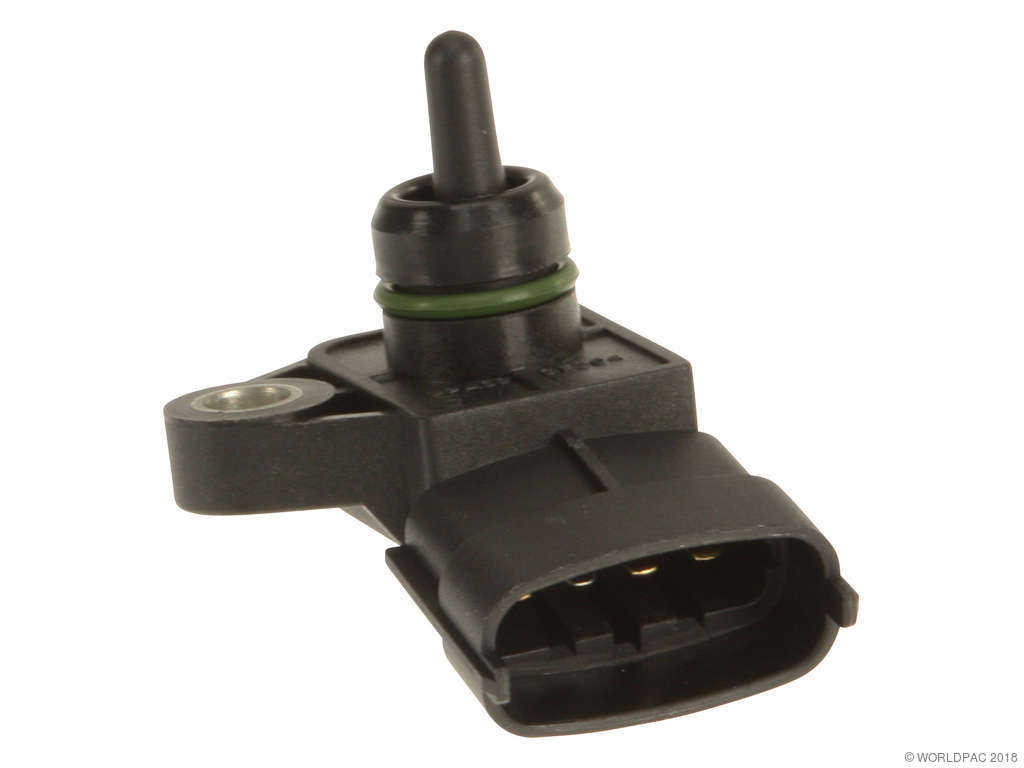
- Faulty Manifold Absolute Pressure (MAP) Sensor 🔴 High Probability → Shop Manifold Absolute Pressure Sensor The MAP sensor is a common failure point on many modern vehicles, including these Kia models. Internal electronics can fail over time due to heat cycles and vibration, causing the output voltage to drop below specification. Sometimes oil from the PCV system can contaminate the sensor, leading to failure.
How to confirm: After confirming the sensor's wiring has proper power (5V reference) and ground with a multimeter, the sensor itself is the culprit. With the engine off, the signal wire should read close to 4.5-5.0V; at idle, it should be between 1.0-1.5V. A reading below 0.5V confirms a fault. Visually, the old sensor might have a light coating of oil on it when removed.
Typical fix: Replace the MAP sensor. It is held onto the intake manifold by a single 10mm bolt. Ensure the old O-ring is removed with the old sensor.
Est. part cost: $30-$100 - Damaged Wiring or Loose Connector 🟡 Medium Probability The wiring harness in the engine bay is exposed to heat and vibration. A common issue on related Hyundai/Kia platforms is the plastic clip holding the harness breaking, allowing the wires to fall and get damaged by the radiator fan or other moving parts.
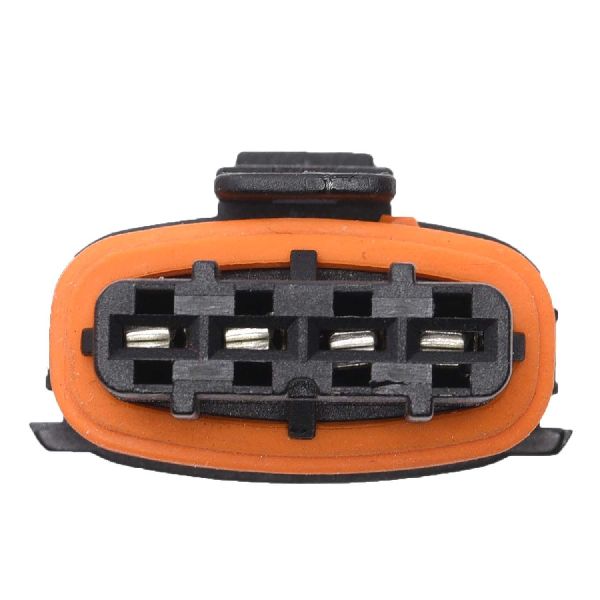
How to confirm: Visually inspect the MAP sensor's electrical connector and the surrounding wires for any signs of damage, corrosion, or looseness. Check that the harness is securely fastened and not dangling. Use a multimeter to test for a 5-volt reference and a good ground at the connector harness.
Typical fix: Repair the damaged section of wiring or clean the connector terminals. If the connector itself is broken, it will need to be replaced. Secure the harness with a zip tie if the original clip is broken.
Est. part cost: $5-$50 - Clogged Engine Air Filter ⚪ Low Probability While less common for a circuit code, a severely clogged air filter can restrict airflow so much that it creates an abnormally high vacuum in the intake manifold, potentially causing an out-of-range low reading. This is more likely to set a performance code (P0106) but can sometimes trigger P0107.
How to confirm: Visually inspect the engine air filter. If it is visibly dirty, black, or clogged with debris, it needs replacement.
Typical fix: Replace the engine air filter.
Est. part cost: $15-$35
Rare But Worth Checking
- Faulty Powertrain Control Module (PCM): → Shop Engine Control Module (ECM) This is extremely rare. Before condemning the PCM, all other possibilities, including the sensor and its entire circuit, must be exhaustively tested and ruled out.
- Major Vacuum Leak: A large vacuum leak (e.g., a disconnected hose or bad gasket) is more likely to cause a P0106 performance code. However, in some instances, the resulting unstable readings could be interpreted by the ECU as a low circuit fault. This is worth checking if a new sensor doesn't fix the issue.
Diagnosis Steps
- Connect an OBD-II scanner and confirm that P0107 is the active code. Note any other codes present, especially P0106 or P0113.
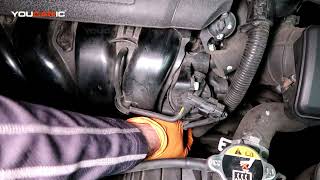
- Visually inspect the MAP sensor, which is located on the top of the intake manifold. Check for physical damage.
- Inspect the electrical connector and wiring going to the MAP sensor. Look for loose connections, corrosion on the pins, or any frayed/broken wires. Pay close attention to the harness routing to ensure it's not near the radiator fan.
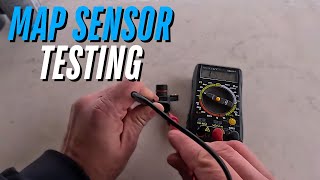
- With the key on and engine off, use a multimeter to test the wiring harness connector. Verify there is a 5-volt reference wire and a proper ground wire.
- If power and ground are present, test the signal wire. A reading below 0.5 volts points to a faulty sensor or a short in the signal wire.
- If the wiring and connector are confirmed to be good, the MAP sensor is faulty and should be replaced. The job requires only a 10mm socket.
- After replacing the sensor, clear the codes with the scanner and take the vehicle for a test drive to ensure the code does not return.
Parts You'll Likely Need
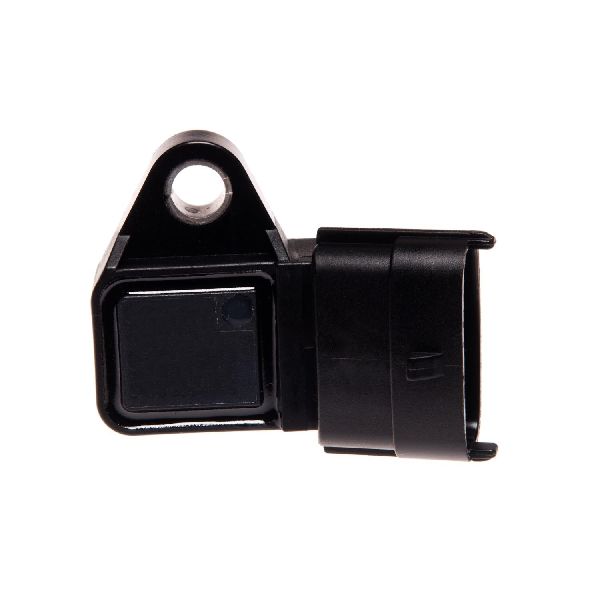
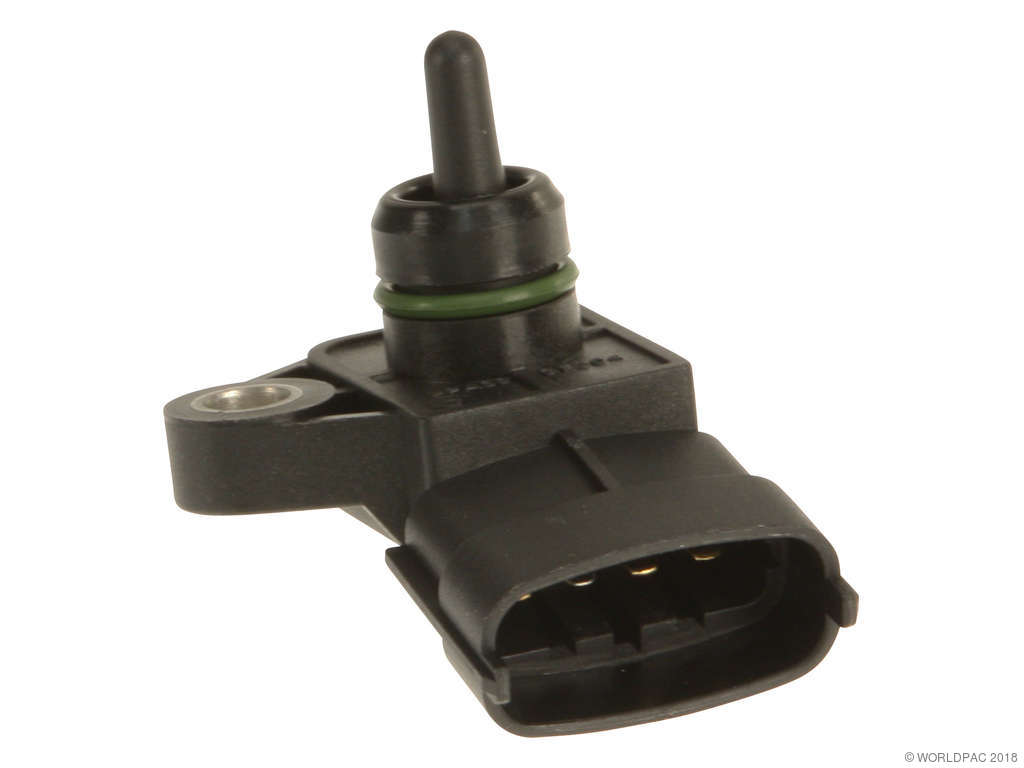
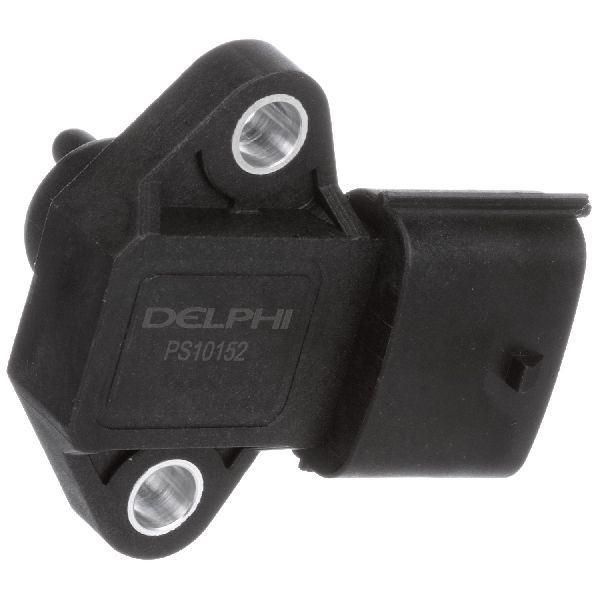
- Manifold Absolute Pressure (MAP) Sensor
(OEM #39300-2G000 (often replaced by 39300-84400 for 2.0T/2.4L) or 39300-2B000 (for 1.6T))— This is the most common failure point for code P0107. The sensor's internal electronics fail, causing it to send a voltage signal below the minimum required specification. Part number 39300-2G000 is frequently superseded by 39300-84400. The 1.6T engine may use 39300-2B000.
Trusted brands: Kia (Genuine), Delphi, NGK/NTK, Standard Motor Products (SMP)
OEM price range: $70-$120
Aftermarket price range: $30-$80
Related Codes That Often Appear With This One
- P0106 — This code indicates a MAP sensor 'Range/Performance' issue. A failing sensor can send signals that are both irrational (P0106) and too low (P0107), sometimes triggering both codes.
- P0113 — Stands for 'Intake Air Temperature (IAT) Sensor 1 Circuit High'. On some Kia/Hyundai models, the MAP and IAT sensors are integrated into a single unit (a T-MAP sensor). A failure in the unit can cause codes for both functions to appear simultaneously.
Technical Service Bulletins (TSBs) & Recalls
- TSB ENG222 (Rev 3): While not for P0107, this TSB addresses excessive oil consumption on Theta, Gamma, and Nu engines. This is relevant as oil blow-by from the PCV system can contaminate and damage the MAP sensor over time.
Platform-Specific Known Issues
- A user on a Kia forum reported their P0107 code was resolved by replacing the MAP sensor. They noted the job was extremely simple, taking less than 10 minutes with a single bolt holding the sensor in place.
- A YouTube video by 'Auto Repair Guys' demonstrates the repair on a related 2.4L GDI engine, highlighting the importance of checking that the wiring harness clip has not broken, which could cause the wires to fall into the radiator fan.
Mechanic-Grade Diagnostic Values
- MAP Sensor Signal Voltage (Key On, Engine Off) — expected: 4.5V - 5.0V. Failure: A reading below 4.5V suggests a sensor or circuit issue.
- MAP Sensor Signal Voltage (Engine at Idle) — expected: 1.0V - 1.8V. Failure: A reading below 0.5V will trigger P0107. A reading above 1.8V at idle could indicate a vacuum leak.
- MAP Sensor 5V Reference Wire — expected: ~5.0V. Failure: No voltage or low voltage indicates a wiring or PCM issue.
- MAP Sensor Ground Wire — expected: Less than 0.1V (100mV). Failure: Higher voltage indicates a poor ground connection.
- MAP Sensor Pressure Reading (Scan Tool, KOEO) — expected: Should match the Barometric Pressure (BARO) reading.. Failure: A significant difference between MAP and BARO readings points to a faulty sensor.
Scan Tool Commands That Help
- Kia GDS / KDS: Live Data Graphing — Used to monitor the MAP sensor voltage in real-time while revving the engine to check for smooth response. A glitchy or flat-lined graph indicates a bad sensor.
- Advanced Aftermarket Scanners (e.g., XTOOL, Launch): Active Test / Bidirectional Control — While the MAP sensor itself is passive, bidirectional controls can be used to test related components (like purge solenoids) that could cause vacuum fluctuations affecting MAP readings.
Wiring & Ground Locations
- MAP Sensor Connector (2.4L Engine) — On the intake manifold, typically to the right of the throttle body.. This is a 4-pin connector. Knowing the pinout (Power, Ground, Signal, IAT) is crucial for accurate voltage testing to determine if the fault is the sensor or the wiring.
- Engine Ground Strap — Typically a braided strap from the engine block to the chassis frame rail or firewall.. A corroded or loose main engine ground can cause floating voltages and sensor reading errors across the engine, including the MAP sensor circuit. A visual inspection for corrosion is a wise step in diagnosing any electrical fault.
Real Owner Repair Stories
- iCarsoft US Repair Database (2018 Hyundai Elantra (platform mate with same 2.0L engine)) — Check Engine Light with code P0107.
❌ Tried (didn't work) Initial diagnosis was not immediately obvious.
✅ What actually fixed it The MAP sensor was obstructed by oil residue pushed into the intake manifold by a failing PCV valve. Cleaning the sensor port and replacing the faulty PCV valve resolved the P0107 code.
OEM Part Supersession History
39300-2G000→39300-84400— This is a common supersession for the MAP sensor used on the 2.0L and 2.4L engines.
Heads up: The new part number (39300-84400) is a direct replacement for the old one.
Diagnostic Flowchart
Other Known Issues on This Vehicle
Issues unrelated to this code that are worth knowing about as an owner of this generation:
- Theta II Engine Failure (Rod Bearing Failure) 🔴 High — Widespread across 2.0L Turbo and 2.4L GDI engines. Can occur at any mileage, often preceded by knocking noises. Subject of multiple class-action lawsuits and recalls. (Ref: Lifetime warranty extension offered under a class-action settlement for vehicles that received the Knock Sensor Detection System (KSDS) update.)
- Excessive Oil Consumption 🔴 High — Common on 2.4L GDI and 2.0L Turbo engines. Many owners report consuming over a quart of oil every 1,000 miles. This can lead to spark plug fouling and eventual engine damage if not monitored closely. (Ref: TSB ENG222 (Rev 3) outlines the procedure for diagnosing and addressing excessive oil consumption, which may involve combustion chamber cleaning or engine replacement under warranty.)
- Peeling Exterior Paint (Especially 'Snow White Pearl') 🟡 Low — Very common, particularly on white vehicles. The paint delaminates and peels in large sheets, often starting on the roof and A-pillars after a few years. While not a mechanical issue, it significantly affects aesthetics and resale value. (Ref: No official recall from Kia, but Hyundai (their parent company) has issued recalls and extended warranties for the same issue on similar models.)
- Transmission Shifting Issues 🟠 Medium — Some owners report hard shifts, hesitation, or shuddering, particularly at lower speeds or when cold. Can be caused by failing sensors or internal transmission wear.
- Electrical System Faults 🟠 Medium — Complaints include infotainment system glitches, random warning lights, and failing power window regulators.
Used vs. New Parts: Buying Guide for This Vehicle
When a used part is the smart pick: Never. The MAP sensor is an inexpensive electronic part that is a common failure item. The cost savings of a used part from a junkyard are minimal and not worth the risk of getting a part that is already near the end of its service life.
What to inspect on the donor part:
- Not applicable as buying used is not recommended.
Aftermarket brands forum-validated for this vehicle:
- Delphi
- NGK/NTK
- Standard Motor Products (SMP)
Brands owners have reported issues with on this vehicle:
- No-name, unbranded sensors from online marketplaces should be avoided due to a high likelihood of premature failure or inaccurate readings out of the box.
Real Owner Stories
Aggregated from forums and TSBs cited above. Mileages and costs reflect what owners reported in those sources.
2016-2020 Kia Optima
Symptoms: P0107 code present.
What fixed it: Replacing the MAP sensor. The owner noted the job was extremely simple, taking less than 10 minutes with a single bolt holding the sensor in place.
Source hint: vehicle_specific_issues - Kia forum report
Kia Optima with 2.4L GDI engine
Symptoms: P0107 code and potential wiring damage.
What fixed it: Checking and securing the wiring harness. The report highlights that if the harness clip breaks, wires can fall into the radiator fan.
Source hint: vehicle_specific_issues - YouTube video by 'Auto Repair Guys'
Kia Optima (General)
Symptoms: MAP sensor voltage too low.
What fixed it: Checking the connector and vacuum lines as a first step.
Source hint: forum_citations - https://www.spyderlovers.com/forums/showthread.php?105553-P0107-Code
Related OBD-II Codes
Frequently Asked Questions
Can the excessive oil consumption mentioned in TSB ENG222 (Rev 3) cause my P0107 code?
Is there a specific wiring issue on the Kia Optima that triggers P0107?
What should the voltage readings be for a healthy MAP sensor on my Optima?
Does the P0107 code relate to the Theta II engine failure settlement?
How difficult is it to replace the MAP sensor on a 2016-2020 Optima?
Could a dirty air filter be the cause of my P0107 code?
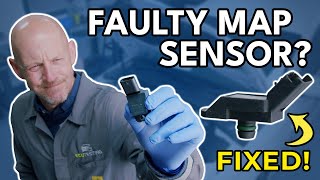
Helpful Videos


We Have This Part in Stock


The information in this article is provided for general reference and educational purposes only. Vehicle specifications, procedures, and part compatibility can vary by production date, trim level, and region. Always consult your vehicle's factory service manual and verify part numbers before purchasing or performing repairs. Safety-critical components such as airbags, seat belts, and braking systems should be installed by a qualified professional.
- Kia Optima:
- 🧭 Diagnostic Flowchart
- 🎬 Helpful Videos
- 🛍️ Shop This Part
- What's Unique About the 2016-2020 Kia Optima
- Symptoms You May Notice
- Most Likely Causes
- Rare But Worth Checking
- Diagnosis Steps
- Parts You'll Likely Need
- Related Codes That Often Appear With This One
- Technical Service Bulletins (TSBs) & Recalls
- Platform-Specific Known Issues
- Mechanic-Grade Diagnostic Values
- Scan Tool Commands That Help
- Wiring & Ground Locations
- Real Owner Repair Stories
- OEM Part Supersession History
- Other Known Issues on This Vehicle
- Used vs. New Parts: Buying Guide for This Vehicle
- Real Owner Stories
- 2016-2020 Kia Optima
- Kia Optima with 2.4L GDI engine
- Kia Optima (General)
- Related OBD-II Codes
- Frequently Asked Questions
- 🎟️ Get 5% Off