

P0107 on 2011-2018 Porsche Cayenne V8: MAP Sensor Circuit Low Causes and Fixes
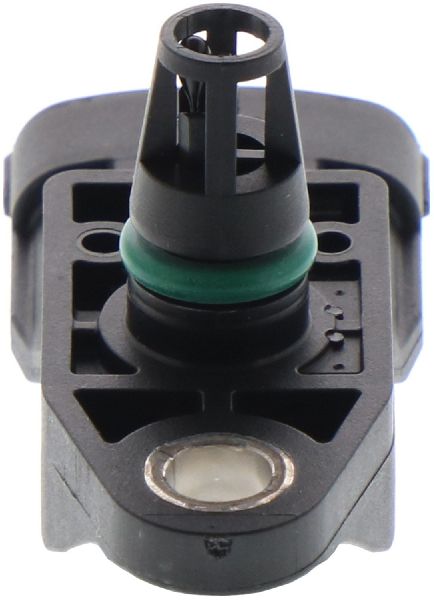
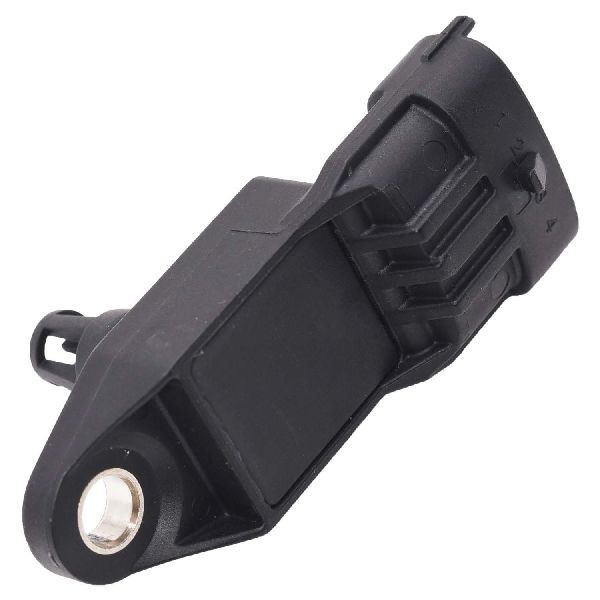
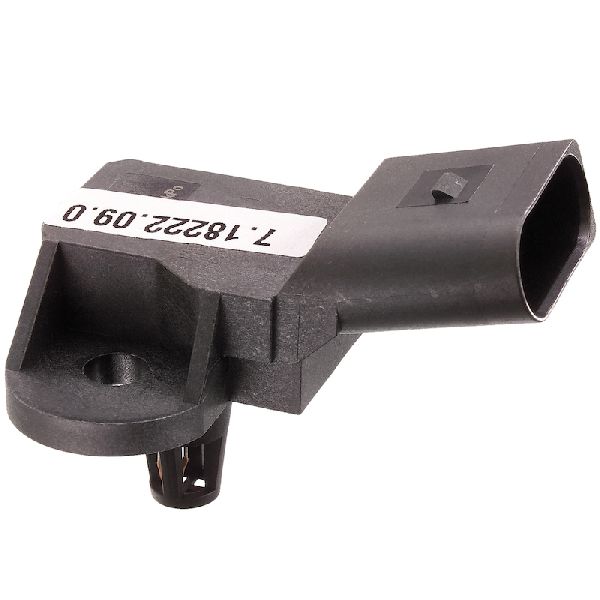
This code almost always points to a faulty Manifold Absolute Pressure (MAP) sensor on the V8 engine. Expect to pay between $25 for an aftermarket sensor and around $100 for an OEM Bosch part. Replacement is a straightforward DIY task for most owners, requiring only a T20 Torx driver and about 15-30 minutes.
- P0107 on your Cayenne V8 almost certainly means you need a new MAP sensor, specifically Porsche part #94860618000.
- This is a very DIY-friendly repair, requiring only basic tools (a T20 Torx driver) and about 15-30 minutes.
- Ensure you are replacing the correct sensor; this code refers to the one on the intake manifold, not the one on the pre-throttle body intake pipe.
- You can save significant money by purchasing the OEM-branded Bosch sensor (part #0261230247) instead of the Porsche-packaged part.
- Before replacing the sensor, always inspect the connector and wiring for damage, as a simple broken wire can cause the same code and is a much cheaper fix.
What's Unique About the 2011-2018 Porsche Cayenne
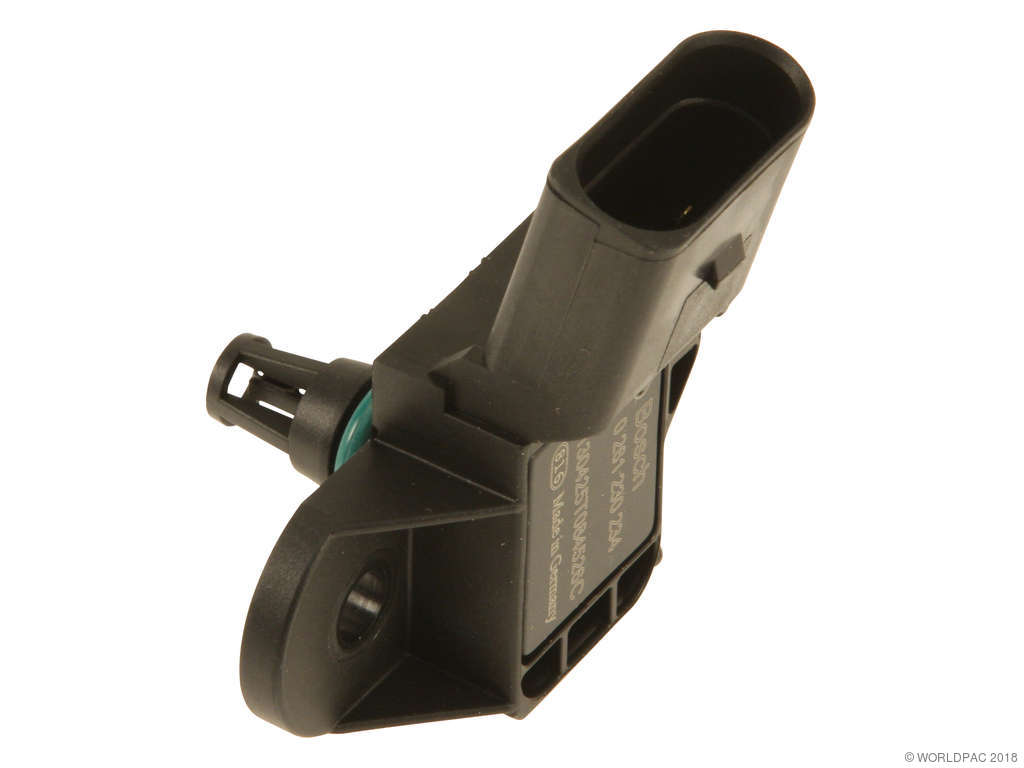
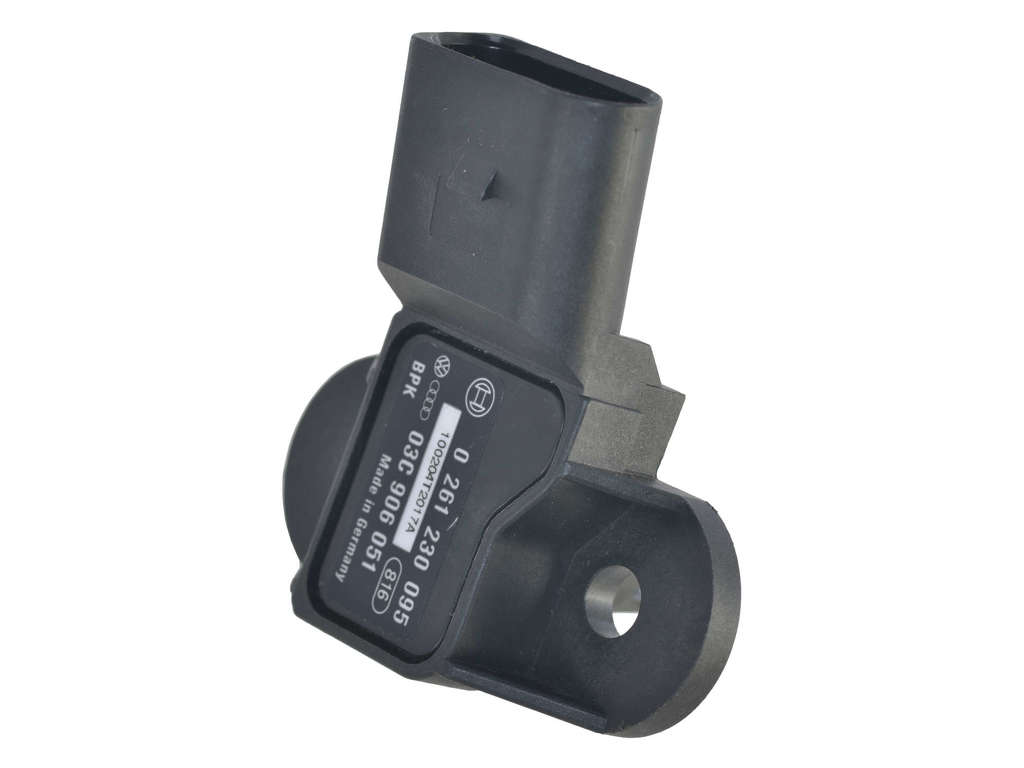
On the 2011-2018 Porsche Cayenne V8 (generation 958), there are actually two pressure sensors that owners and even parts catalogs sometimes call MAP sensors. One is located on the intake manifold itself (requiring a T20 Torx), and another is on the air intake Y-pipe before the throttle body (requiring a T30 Torx). The P0107 code specifically refers to the sensor measuring manifold pressure, which is Porsche Part No. 94860618000. The most common cause of this code on the Cayenne V8 is a simple failure of the sensor itself, which is a Bosch part (No. 0261230247) used across many different car brands.
Symptoms You May Notice
- Check Engine Light is on
- Rough or unstable idle, sometimes fluttering by 50-75 RPM
- Poor acceleration and sluggish performance
- Engine hesitation or stalling, especially at stops
- Increased fuel consumption
- Black smoke from the exhaust under certain conditions
- Replacing the Mass Air Flow (MAF) sensor. The Cayenne V8 (958.1) does not have a MAF sensor; it uses a speed-density system that calculates airflow based on MAP, IAT, and RPM. Some scanners may incorrectly report MAF-related codes.
- Replacing the wrong pressure sensor. The Cayenne V8 has a second pressure sensor on the intake Y-pipe before the throttle body. P0107 typically relates to the sensor on the intake manifold itself, which uses a T20 Torx screw for removal.
Most Likely Causes
- Faulty Manifold Absolute Pressure (MAP) Sensor 🔴 High Probability → Shop Manifold Absolute Pressure Sensor The MAP sensor is a common failure point due to constant exposure to heat and pressure changes within the engine bay. The OEM sensor is made by Bosch 🎬 Watch: A simple breakdown of diagnosing P0106 and P0107 codes. and is known to fail over time across multiple Porsche models.
How to confirm: Use a scan tool to monitor live MAP sensor data. With the Key On, Engine Off (KOEO), the reading should be close to your local barometric pressure. At idle, it should show a strong vacuum (low voltage/pressure, e.g., 1.4-1.8V). If the reading is stuck low (e.g., below 0.5V) and doesn't change with engine RPM, the sensor is likely bad.
Typical fix: Replace the MAP sensor located on the intake manifold. The Porsche part is 94860618000, and the identical OEM Bosch part is 0261230247.
Est. part cost: $25-$125 - Wiring or Connector Issue 🟡 Medium Probability Engine bay heat can make wiring insulation brittle and connectors fragile over time. Technicians pulling on wires instead of the connector body during other service can also damage the connection. Corrosion can also form on the connector pins.
How to confirm: Visually inspect the MAP sensor's wiring harness and connector for any signs of damage, chafing, or corrosion. With the key on, use a multimeter to verify a 5V reference signal and a good ground at the connector. A real-world owner experience found a wire had pulled out of the connector, which was fixed by re-seating and soldering it. Wiggle the connector and harness while watching live data to see if the reading changes, indicating a loose connection.
Typical fix: Repair the damaged section of wiring or clean/replace the connector pigtail. Use dielectric grease on the connector to prevent future corrosion.
Est. part cost: $10-$50 - Major Vacuum Leak ⚪ Low Probability While less common for causing a 'low input' code (which often points to an electrical fault), a very large vacuum leak from a cracked hose or failed intake manifold gasket could theoretically affect pressure readings. This is more likely to throw a P0068 or other air-fuel mixture codes alongside P0107.
How to confirm: Perform a smoke test on the intake system. This involves pumping smoke into the intake and looking for any that escapes, which would indicate a leak.
Typical fix: Replace the leaking vacuum hose, gasket, or component identified by the smoke test.
Est. part cost: $20-$300
Rare But Worth Checking
- Faulty DME (Engine Computer): This is extremely rare. Before condemning the expensive DME, all other possibilities (sensor, wiring, leaks) must be exhaustively ruled out by a qualified technician. A failure of the 5V reference circuit within the DME could cause this code.
- Clogged Catalytic Converter or Restricted Exhaust: A severely blocked exhaust can alter intake manifold pressure and potentially trigger a P0107 code, though it is more likely to be accompanied by other codes related to exhaust flow or catalyst efficiency.
Diagnosis Steps
- Read the code: Use an OBD-II scanner to confirm P0107 is present and check for any other codes. Note that some generic scanners may incorrectly reference a MAF sensor.
- Visual Inspection: Remove the plastic engine cover. Locate the MAP sensor on the intake manifold (driver's side on LHD models). Inspect its electrical connector and nearby wiring for any obvious damage, corrosion, or loose connections.
- Check Live Data: Connect a scan tool and view the live data for the MAP sensor. With the Key On, Engine Off (KOEO), the voltage should be high (e.g., ~4.5V) and the pressure reading should match the local atmospheric pressure. At a warm idle, the voltage should be low (e.g., ~1.4-1.8V) indicating high vacuum. A reading stuck below 0.5V points to the issue.
- Test the Circuit: If the live data is stuck low, disconnect the sensor. With the key on, use a multimeter to test the connector terminals. You should find a 5V reference wire, a ground wire (near 0 ohms to chassis ground), and the signal wire. A generic pinout for a 3-wire sensor is often Pin A: Ground, Pin B: Signal, Pin C: 5V Supply, but consulting a vehicle-specific diagram is best. 🎬 See this video for a step-by-step MAP sensor testing guide.
- Confirm Sensor Failure: If the 5V reference and ground are present at the connector, the sensor itself is the most likely culprit. Replacing the sensor is the next logical step. An owner on a forum suggests unplugging the sensor to see if the engine runs differently on a default map, which can help isolate the sensor as the problem.
- Check for Vacuum Leaks: If sensor and wiring seem okay, a large vacuum leak could be the cause. A smoke test is the most effective way to find hard-to-see leaks in hoses or gaskets.
- Real-World Repair Story: One owner chased a P0107 code after a major service. After replacing the sensor didn't work, they tested the connector and found wiggling the wires caused the voltage to fluctuate. A single wire had pulled loose inside the connector; soldering it back into place provided a permanent fix, avoiding a quoted $6,500 wiring harness replacement.
Parts You'll Likely Need
- Manifold Absolute Pressure (MAP) Sensor
(OEM #94860618000)— This sensor is the most common failure point for a P0107 code. It directly measures the manifold pressure that the code indicates is out of range.
Trusted brands: Bosch (OEM), Vemo, Autopart Premium
OEM price range: $80-$125
Aftermarket price range: $25-$60
Related Codes That Often Appear With This One
- P0106 — MAP/Barometric Pressure Circuit Range/Performance Problem. This code can appear alongside P0107 if the sensor's readings are erratic or illogical, not just stuck low. Repair manuals for the platform list P0107 as a related code to check for when diagnosing P0106.
- P0108 — MAP/Barometric Pressure Circuit High Input. Seeing both high and low codes could point to an intermittent wiring short or a failing sensor that is fluctuating wildly.
- P0068 — MAP/MAF - Throttle Position Correlation. This code can be triggered if the DME sees a disagreement between how much the throttle is open and the resulting pressure reading from the MAP sensor, which can happen if the MAP sensor is faulty.
Platform-Specific Known Issues
- Confusion Between Two Pressure Sensors: The 958 V8 has two sensors that can be confused: one on the intake manifold (for P0107, T20 Torx) and one on the pre-throttle body Y-pipe (T30 Torx). Ensure you are diagnosing and replacing the correct one. The manifold sensor is part #94860618000. 🎬 Watch: Step-by-step guide to replacing the Cayenne manifold pressure sensor.
Mechanic-Grade Diagnostic Values
- MAP Sensor Signal Voltage (Live Data) — expected: Approx. 1.4V - 1.8V at warm idle. Approx. 4.5V at Key On, Engine Off (KOEO), matching local barometric pressure.. Failure: Voltage is stuck below 0.5V and does not change with engine RPM or load.
- MAP Sensor Connector - 5V Reference — expected: Approx. 5.0V with the sensor disconnected and key on, engine off.. Failure: No voltage or significantly low voltage indicates a wiring issue or a problem with the DME's 5V supply circuit.
- MAP Sensor Connector - Ground Circuit Resistance — expected: Near 0 Ω resistance between the ground pin on the connector and a clean chassis ground point.. Failure: High resistance (e.g., >10 Ω) indicates a poor ground connection, which can cause a low voltage signal fault.
Wiring & Ground Locations
- Main Chassis Ground — A major ground point is located in front of the driver's seat under a small carpet access door.. While not the direct ground for the sensor, ensuring the main body ground is clean and tight is a crucial first step in diagnosing any electrical issue, as all sensor grounds ultimately rely on it.
- Engine/Firewall Grounds — Multiple ground points exist on the engine block and along the firewall. On German vehicles, ground wires are typically brown.. The MAP sensor's ground circuit likely terminates at one of the engine or firewall ground studs. A corroded or loose ground at these locations can cause a P0107 code. A specific wiring diagram is needed to identify the exact point.
OEM Part Supersession History
94860618000 (Porsche)→N/A - Current Part— This is the primary part number for the specified vehicle range.
Heads up: The OEM equivalent is Bosch 0261230247. Some parts catalogs incorrectly state that this part replaces 4-pin sensors (like Bosch 0261230248). This is likely an error, as the Cayenne V8 uses a 3-pin sensor. A 4-pin sensor typically includes an integrated Intake Air Temperature (IAT) sensor and is not compatible.
Model Year Variations Within This Range
- 2011-2014 (958.1) vs. 2015-2018 (958.2): For the Cayenne S and GTS trims, the engine changed significantly. The 958.1 (2011-2014) models used the 4.8L V8 this article pertains to. However, for the 958.2 facelift (2015-2018), the S and GTS trims switched to a 3.6L twin-turbo V6. For 958.2 models, this guide's V8 information only applies to the Turbo and Turbo S trims.
Diagnostic Flowchart
Real Owner Stories
Aggregated from forums and TSBs cited above. Mileages and costs reflect what owners reported in those sources.
2011 Porsche Cayenne Turbo — 91000 miles
Symptoms: Cranks but won't start. Prior to dying, the engine sputtered and hesitated, feeling like it missed a gear or ran out of gas. Passive/sporadic code P0107 was present along with P0521 and P2100.
What fixed it: The dealership first replaced a camshaft sensor, which did not fix the issue. They then found the DME had been 'tampered' with and replaced it. The car started after the new DME was programmed, but then stalled during a test drive. The final resolution was not clearly stated.
Source hint: Rennlist - Need Help! Another 2011 Cayenne Turbo that Cranks But Won't Start
2011-2018 Porsche Cayenne V8
Symptoms: Chased a P0107 code after a major service. Replacing the MAP sensor did not resolve the issue. Testing the connector revealed that wiggling the wires caused the voltage to fluctuate.
What fixed it: Found a single wire had pulled loose inside the connector. Soldering it back into place provided a permanent fix, avoiding a quoted $6,500 wiring harness replacement.
Source hint: Diagnosis Steps - Real-World Repair Story
2013 Porsche Cayenne GTS
Symptoms: Experienced a P0107 and P2100 code along with a Check Engine Light immediately after removing and reinstalling the intake manifold.
What fixed it: Suspected a damaged sensor or wiring connection that occurred during the reassembly process.
Source hint: RennTech.org - 'P0107 and P2100... after removing / reinstalling intake manifold'
Related OBD-II Codes
Frequently Asked Questions
Does the 2011-2018 Porsche Cayenne V8 have a MAF sensor that could cause the P0107 code?
Where is the MAP sensor located on my Cayenne V8, and what is the correct part number?
I see two pressure sensors on my engine. Which one is for the P0107 code?
Can I test the MAP sensor on my Cayenne before replacing it?
Could a vacuum leak cause the P0107 code on my Cayenne?
I just had my intake manifold removed for service and now I have a P0107 code. What happened?
Helpful Videos


We Have This Part in Stock


The information in this article is provided for general reference and educational purposes only. Vehicle specifications, procedures, and part compatibility can vary by production date, trim level, and region. Always consult your vehicle's factory service manual and verify part numbers before purchasing or performing repairs. Safety-critical components such as airbags, seat belts, and braking systems should be installed by a qualified professional.
- Porsche Cayenne:
- 🧭 Diagnostic Flowchart
- 🎬 Helpful Videos
- 🛍️ Shop This Part
- What's Unique About the 2011-2018 Porsche Cayenne
- Symptoms You May Notice
- Most Likely Causes
- Rare But Worth Checking
- Diagnosis Steps
- Parts You'll Likely Need
- Related Codes That Often Appear With This One
- Platform-Specific Known Issues
- Mechanic-Grade Diagnostic Values
- Wiring & Ground Locations
- OEM Part Supersession History
- Model Year Variations Within This Range
- Real Owner Stories
- 2011 Porsche Cayenne Turbo — 91000 miles
- 2011-2018 Porsche Cayenne V8
- 2013 Porsche Cayenne GTS
- Related OBD-II Codes
- Frequently Asked Questions
- 🎟️ Get 5% Off