

P0107 on 2014-2018 Subaru Forester: MAP Sensor Circuit Low Causes and Fixes
P0107 on a 2014-2018 Subaru Forester almost always points to a failed Manifold Absolute Pressure (MAP) sensor. It's located on top of the intake manifold and is an easy DIY replacement, typically costing $150-$250 for an OEM part. Before replacing, check the wiring and consider cleaning the sensor tip, though replacement is the most reliable fix.
- P0107 on a 2014-2018 Forester is a straightforward code, most often caused by a bad MAP sensor.
- The MAP sensor is located directly on top of the intake manifold and is extremely easy to replace with just an 8mm socket, making it a great DIY task.
- Before replacing the sensor, perform a quick voltage check on the circuit to rule out wiring issues.
- On the 2.0L XT turbo model, oil contamination from the PCV system can be a contributing factor to sensor failure.
- Expect the Check Engine Light, flashing cruise control, and disabled traction control lights to all illuminate simultaneously with this code.
What's Unique About the 2014-2018 Subaru Forester
On the 4th generation (SJ) Forester, the MAP sensor is exceptionally easy to access on both the 2.5L and 2.0L turbo engines, sitting right on top of the intake manifold near the throttle body. While some engines are known for issues like soot or oil contamination causing this code, on the FA20F (XT) turbo engine, oil vapor from the PCV system is known to coat the sensor, which can contribute to failure. When this code appears, Subarus famously illuminate the Check Engine Light, disable cruise control (causing the light to flash), and turn off the vehicle's stability control system as a safety precaution.
Symptoms You May Notice
- Check Engine Light is on
- Cruise control light is flashing (cruise is disabled)
- Vehicle Dynamics Control (VDC)/Traction Control light is on (system is disabled)
- Rough or unstable idle
- Engine stalling, especially when coming to a stop
- Hesitation or stumbling during acceleration
- Reduced engine power
- Decreased fuel economy
- Hard starting
- Black smoke from exhaust during acceleration 🎬 Watch: A breakdown of common bad MAP sensor symptoms
- Replacing the Mass Airflow (MAF) sensor. The MAF and MAP sensors are different parts. The MAP sensor is on the intake manifold, while the MAF sensor is located on the air intake tube after the air filter.
Most Likely Causes
- Failed Manifold Absolute Pressure (MAP) Sensor 🔴 High Probability → Shop Manifold Absolute Pressure Sensor The sensor is a common failure point due to age and heat cycles. On the FA20F turbo engine, oil contamination from the PCV system can also coat the sensor and lead to premature failure. Many owners report this failure occurring between 80,000 and 120,000 miles.
How to confirm: After confirming the wiring is intact, test the sensor's output. With the key on, engine off, backprobe the signal wire at the connector. A voltage reading below 0.6V points to a failed sensor. Alternatively, replace it with a known-good sensor. 🎬 See this explanation of the P0107 low voltage code Cleaning with MAF sensor cleaner may provide a temporary fix but often the code returns, indicating the sensor needs replacement.
Typical fix: Replace the MAP sensor. It is held onto the intake manifold by a single 8mm bolt.
Est. part cost: $150-$275 - Wiring Harness or Connector Issue 🟡 Medium Probability The wiring in the engine bay is exposed to heat and vibration, which can lead to chafed wires or corrosion in the connector pins over time. A poor connection at the 3-pin connector can directly cause a P0107. Manufacturer records, such as TSB Bulletin #07-96-15, indicate that certain engine harness ground junction points can be affected by engine movement, potentially setting codes like P0107 in error.
How to confirm: Visually inspect the wiring harness leading to the MAP sensor for any signs of damage, chafing, or melting. Unplug the connector and check for corrosion or bent pins. Use a multimeter to check for 5V reference voltage and a good ground at the connector with the key on. Wiggle the harness while observing live data to see if the reading changes.
Typical fix: Repair the damaged section of wire or clean the connector terminals with electrical contact cleaner. If the connector itself is damaged, it may need to be replaced with a new pigtail.
Est. part cost: $10-$50 - Major Vacuum Leak ⚪ Low Probability While possible, a vacuum leak large enough to cause a P0107 is uncommon on this platform and would typically present with other noticeable symptoms like a loud hissing sound and likely other diagnostic codes.
How to confirm: With the engine running, listen for hissing sounds around the intake manifold. You can also carefully spray brake cleaner or a propane torch (unlit) around vacuum lines and intake gaskets; a change in engine RPM indicates a leak.
Typical fix: Identify and replace the cracked or disconnected vacuum hose or faulty intake gasket.
Est. part cost: $5-$100
Rare But Worth Checking
- Faulty Powertrain Control Module (PCM): → Shop Engine Control Module (ECM) This is extremely rare. The PCM should only be considered after the sensor, wiring, and all other potential causes have been definitively ruled out.
Diagnosis Steps
- Read the Code: Use an OBD-II scanner to confirm P0107 is the active code. Note any other codes that are present, like P0108 or P2227.
- Check Live Data: With the scanner, view the live data for the MAP sensor. With the key on and engine off, the reading should correspond to atmospheric pressure. At idle, it should show a strong vacuum (low pressure, around 30-35 kPa). A reading stuck below 0.6V or ~13.3 kPa confirms the fault condition.
- Visual Inspection: Open the hood and locate the MAP sensor on top of the intake manifold. Inspect the electrical connector for looseness, damage, or corrosion. Check the visible wiring for any signs of chafing, melting, or breaks.
- Test the Circuit: Disconnect the sensor. With the ignition on, use a multimeter to test the connector terminals. You should find a 5-volt reference wire, a ground wire (check for continuity to the battery negative terminal), and the signal wire.
- Test the Sensor: If the wiring checks out, reconnect the sensor. Backprobe the signal wire with a multimeter. With the key on, engine off, the voltage should be high (around 4.5V). With the engine running at idle, the voltage should be low (around 1.4-1.8V). If the voltage is stuck below 0.6V regardless of engine state, the sensor has failed.
- Replace the MAP Sensor: If the sensor is confirmed to be faulty, replace it. It is secured by a single 8mm bolt. 🎬 Watch: How to test and replace your Subaru MAP sensor Disconnect the electrical connector, remove the bolt, and gently twist and pull the old sensor out. Install the new sensor, reconnect the connector, and clear the codes.
- Test Drive: Take the vehicle for a test drive to ensure the code does not return and that all symptoms have been resolved.
Parts You'll Likely Need
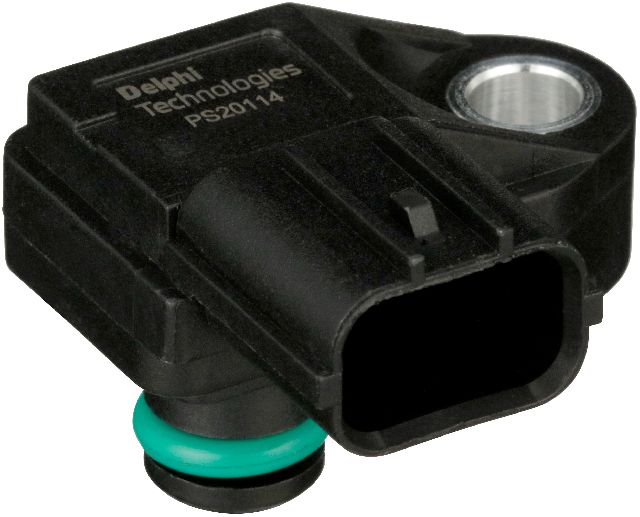
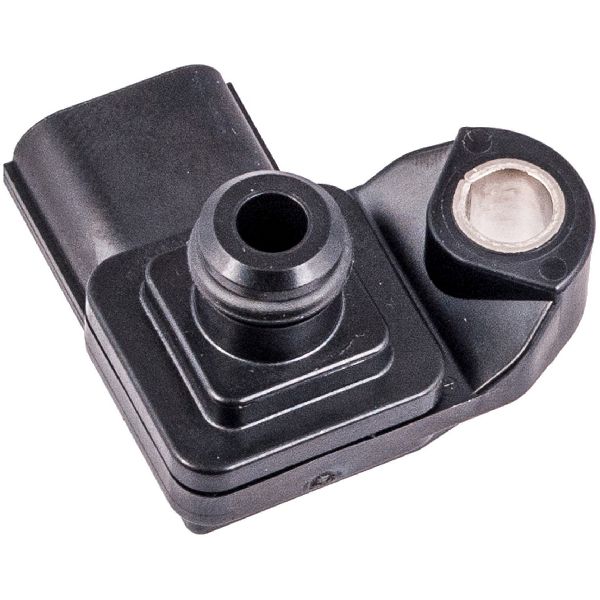
- Manifold Absolute Pressure (MAP) Sensor
(OEM #22627AA510)— This is the most common failure part for a P0107 code. The sensor's internal electronics fail over time, causing the low voltage signal. Denso is the original equipment manufacturer (OEM) for Subaru.
Trusted brands: Subaru (Genuine), Denso (OEM), Delphi, NGK
OEM price range: $150-$275
Aftermarket price range: $75-$150
Related Codes That Often Appear With This One
- P0108 — P0108 is 'MAP Circuit High Input'. Seeing it intermittently with P0107 could indicate a failing sensor or a loose connection causing erratic voltage readings.
- P0106 — P0106 is 'MAP Circuit Range/Performance'. This code can appear if the sensor's readings are illogical or don't correlate correctly with throttle position, even if they don't hit the hard low/high limits of P0107/P0108.
- P2227 — P2227 is 'Barometric Pressure Sensor 'A' Circuit Range/Performance'. Since the MAP sensor also provides barometric pressure data, a fault in the sensor can trigger this code alongside P0107, as seen in owner reports on the related WRX platform.
Technical Service Bulletins (TSBs) & Recalls
- TSB 02-163-16R: While not directly for P0107, this bulletin addresses inspection and repair for various AVCS-related DTCs on FA and FB engines, showing a known sensitivity in the engine's sensor and control systems.
- TSB Bulletin #07-96-15: This bulletin notes that a change in the sensor and actuator wiring ground junction point was implemented to move it to a location unaffected by engine movement, as the previous configuration could set codes including P0107 and P0108 in error.
Platform-Specific Known Issues
- Temporary Fix by Cleaning: On a Reddit thread for the related Subaru WRX, a user with P0107 and P2227 reported that cleaning the MAP sensor and checking the connection caused the codes to go away, but they returned immediately. This highlights that while cleaning is a valid first step, replacement is often the ultimate solution.
- Moisture-Related Failures: In some cases, particularly in damp weather, a P0107 code can point to a wiring harness or connector sealing issue that allows moisture to interfere with the electrical circuit.
Mechanic-Grade Diagnostic Values
- MAP Sensor Signal Voltage (Key On, Engine Off) — expected: ~4.5 Volts (at sea level, should match barometric pressure). Failure: Voltage stuck low (e.g., < 0.6V) indicates a short to ground or failed sensor.
- MAP Sensor Signal Voltage (Engine at Idle) — expected: 1.4 - 1.8 Volts. Failure: Voltage stuck low (< 0.6V) or not responding to throttle changes.
- P0107 Trigger Threshold — expected: Signal voltage is greater than 0.6V. Failure: Voltage is less than or equal to 0.6V.
- MAP Sensor Connector - Ground Pin — expected: Less than 100 millivolts (0.1V) or good continuity to chassis ground.. Failure: Higher voltage or no continuity indicates a bad ground, which can cause a P0107.
- MAP Sensor Connector - Reference Pin — expected: ~5.0 Volts from the ECM.. Failure: Significantly lower or no voltage indicates a wiring or ECM issue.
Scan Tool Commands That Help
- Subaru Select Monitor (SSMIII / SSM4): Current Data Display & Save — This is the primary function used for diagnosing P0107. It allows a technician to view live MAP sensor data (voltage and pressure in kPa) to confirm if the sensor is stuck low, and to monitor its response to throttle input in real-time.
Wiring & Ground Locations
- MAP Sensor Connector — On the top of the intake manifold, plugged into the MAP sensor.. This 3-pin connector provides the sensor with power, ground, and a path for the signal to return to the ECM. The pins are typically: Pin 1 - 5V Reference, Pin 2 - Ground, Pin 3 - Signal. A fault in any of these wires or the connector itself will cause a code. A bad ground is a known failure point.
- Engine Harness Ground — There are multiple engine grounds. Key locations are typically from the engine block to the chassis near the battery/strut tower and from the transmission to the firewall. A specific diagram for the SJ Forester was not found, but these are common locations.. The MAP sensor's ground circuit is part of the main engine harness. A corroded or loose main ground can cause floating voltages and intermittent sensor issues, including P0107.
Real Owner Repair Stories
- Reddit user on r/Subaru_Outback (2015 Subaru Outback (with related FB25 engine)) — P0107, P0102, P0113 codes, poor acceleration, lunging, and stalling at stop lights.
❌ Tried (didn't work) Cleaning the MAF sensor, Replacing the MAP sensor (only worked for a short time)
✅ What actually fixed it The user diagnosed a wiring or grounding issue as the root cause. Using a multimeter on the MAP sensor connector, they found two of the three pins were showing 5 volts. A healthy connector should only have one 5V reference pin, one ground pin (near 0V), and one signal pin. Finding two 5V pins strongly indicates the ground wire is open, causing the signal wire to float up to the reference voltage.
OEM Part Supersession History
22627AA510→22627AA510 (current)— No supersession found. This part number appears to be consistent for the entire 2011-2020+ model range it applies to.
Diagnostic Flowchart
Other Known Issues on This Vehicle
Issues unrelated to this code that are worth knowing about as an owner of this generation:
- Excessive Oil Consumption (FB25 Engine) 🔴 High — Common in early-generation FB25 engines (especially 2011-2014 models). Subaru acknowledged the issue and faced a class-action lawsuit. The cause is often attributed to the design of the oil control piston rings. (Ref: Subaru issued TSB 02-163-16R for related AVCS DTCs and another internal TSB for the oil consumption test itself, which could lead to a piston ring replacement or short block replacement under warranty for some owners.)
- Lineartronic CVT Transmission Problems 🔴 High — Widespread complaints for 2014-2018 models, particularly shuddering, hesitation, and noise. Failures of the valve body or torque converter are common, often occurring between 60,000 and 120,000 miles. (Ref: Subaru extended the CVT warranty for certain models to 10 years/100,000 miles due to the high number of issues. TSB 16-103-15R specifically addresses low-speed shudder.)
- Front Lower Control Arm Bushing Failure 🟠 Medium — The rear bushing of the front lower control arm is a very common failure point, often occurring between 40,000 and 80,000 miles. Symptoms include a shimmy or vibration at highway speeds, clunking noises, and uneven tire wear. (Ref: No recall, but it is a widely documented problem. The common fix is to replace the entire control arm, as pressing in a new bushing is labor-intensive.)
- Rear Coil Spring Failure 🟠 Medium — Particularly noted on the 2014 model year, the rear coil springs can break. (Ref: Subaru issued a recall for some Foresters manufactured between March 2013 and October 2018 for faulty rear suspension springs.)
Used vs. New Parts: Buying Guide for This Vehicle
When a used part is the smart pick: For an electronic sensor like a MAP sensor, buying used is generally not recommended. The failure is often due to internal electronic degradation from heat and age, and a used part carries a high risk of premature failure. Given the low cost of reliable aftermarket options, a new part is a much safer investment.
Donor-vehicle mileage cap: roughly under 20000 miles for the part to have meaningful remaining life.
What to inspect on the donor part:
- Inspect the connector pins for any signs of corrosion (green or white powder).
- Ensure the plastic housing is not cracked or showing signs of heat damage.
- Verify the O-ring is present, pliable, and not flattened or cracked.
OEM-only on this vehicle (don't cheap out):
- For this repair, OEM-only is not strictly necessary, but using the OEM supplier (Denso) is highly recommended for reliability.
Aftermarket brands forum-validated for this vehicle:
- Denso (OEM supplier)
- NGK/NTK
- Delphi
Brands owners have reported issues with on this vehicle:
- Unnamed, ultra-low-cost brands from online marketplaces should be avoided as their quality control and sensor accuracy can be highly suspect.
Real Owner Stories
Aggregated from forums and TSBs cited above. Mileages and costs reflect what owners reported in those sources.
2015-2021 Subaru WRX (2.0L FA20F) — ~100000 miles
Symptoms: The user experienced codes P0107 and P2227 simultaneously. They attempted to clean the MAP sensor and check the connections.
What fixed it: Cleaning provided only a momentary fix; the codes returned immediately, indicating the sensor required replacement.
Source hint: Reddit r/WRX - 'Anyone ever run into codes P0107 and P2227?'
2014-2018 Subaru Forester
Symptoms: Bad gas mileage and occasional stuttering on startup.
What fixed it: Diagnosis of the MAP sensor circuit low condition.
Source hint: Reddit r/Cartalk - 'P0107 Map sensor circuit low'
Related OBD-II Codes
Frequently Asked Questions
Why are my cruise control and traction control (VDC) lights flashing along with the Check Engine Light?
Can I just clean the MAP sensor on my Forester to fix the P0107 code?
Does TSB 02-163-16R apply to my P0107 issue?
Is the MAP sensor failure related to the oil consumption issues on the FB25 engine?
How much does it typically cost to replace the MAP sensor on a 2014-2018 Forester?
Helpful Videos


We Have This Part in Stock


The information in this article is provided for general reference and educational purposes only. Vehicle specifications, procedures, and part compatibility can vary by production date, trim level, and region. Always consult your vehicle's factory service manual and verify part numbers before purchasing or performing repairs. Safety-critical components such as airbags, seat belts, and braking systems should be installed by a qualified professional.
- Subaru Forester:
- 🧭 Diagnostic Flowchart
- 🎬 Helpful Videos
- 🛍️ Shop This Part
- What's Unique About the 2014-2018 Subaru Forester
- Symptoms You May Notice
- Most Likely Causes
- Rare But Worth Checking
- Diagnosis Steps
- Parts You'll Likely Need
- Related Codes That Often Appear With This One
- Technical Service Bulletins (TSBs) & Recalls
- Platform-Specific Known Issues
- Mechanic-Grade Diagnostic Values
- Scan Tool Commands That Help
- Wiring & Ground Locations
- Real Owner Repair Stories
- OEM Part Supersession History
- Other Known Issues on This Vehicle
- Used vs. New Parts: Buying Guide for This Vehicle
- Real Owner Stories
- 2015-2021 Subaru WRX (2.0L FA20F) — ~100000 miles
- 2014-2018 Subaru Forester
- Related OBD-II Codes
- Frequently Asked Questions
- 🎟️ Get 5% Off