

P0107 on 2005-2009 Subaru Outback: MAP Sensor Circuit Low Causes and Fixes
For a 2005-2009 Subaru Outback, code P0107 almost always means the Manifold Absolute Pressure (MAP) sensor has failed. This is a common issue causing a check engine light, flashing cruise control, rough idle, and stalling. Replacing the sensor is a simple DIY job, with parts costing between $40 for an aftermarket unit and around $200 for an OEM part.
- P0107 on a 2005-2009 Outback points directly to a problem in the MAP sensor circuit, with the sensor itself being the most likely failure point.
- Symptoms are distinct and often include a check engine light paired with a flashing cruise control light, rough idle, and stalling.
- Before replacing the sensor, it's wise to perform basic electrical checks on the connector for 5V reference and good ground, as wiring issues can mimic a sensor failure.
- The repair is very DIY-friendly, requiring only basic hand tools to access the sensor on the intake manifold.
- When replacing, using a Denso (OEM) sensor is recommended, though quality aftermarket options are available at a lower cost.
What's Unique About the 2005-2009 Subaru Outback
The 2005-2009 (third-generation) Outback uses a MAP sensor across all its engine options (2.5L non-turbo, 2.5L turbo, and 3.0L H6). Unlike some vehicles that only use a Mass Airflow (MAF) sensor, these Subarus use both, with the MAP sensor providing critical data for engine load calculations. The P0107 code is very common on this platform and is frequently caused by the original DENSO MAP sensor simply failing with age. The sensor is located directly on the throttle body. Owners often report the classic Subaru symptom combo: a solid check engine light accompanied by a flashing cruise control light.
Symptoms You May Notice
- Solid Check Engine Light
- Flashing 'CRUISE' light on the dashboard
- Rough or unstable idle
- Engine stalling, especially when coming to a stop
- Poor acceleration and engine hesitation
- Decreased fuel economy
- Black smoke from the exhaust
- Difficulty starting the engine
- Replacing the Mass Airflow (MAF) sensor. The 2005-2009 Outback uses both a MAF and a MAP sensor. P0107 is specific to the MAP sensor circuit.
- Replacing the Throttle Position Sensor (TPS). While a bad TPS can cause similar drivability issues, it will typically set its own specific trouble codes.
Most Likely Causes
- Faulty Manifold Absolute Pressure (MAP) Sensor 🔴 High Probability → Shop Manifold Absolute Pressure Sensor The original equipment Denso sensors are known to fail over time, making this the most common cause for this specific code on this vehicle. Forum discussions are filled with owners confirming a sensor replacement fixed the issue.
How to confirm: With the key on and engine off, a scan tool should show a pressure reading near atmospheric pressure (around 100 kPa at sea level). With the engine idling, the reading should be low (e.g., 30-32 kPa). A sensor that is stuck reading below ~13.3 kPa will trigger the code. Alternatively, you can test the signal wire with a multimeter; a reading below 0.5V with the key on points to a bad sensor or wiring issue.
Typical fix: Replace the MAP sensor. It is located on the intake manifold, near the throttle body, and is typically held in by one or two Phillips head screws. Applying a small amount of silicone paste to the new O-ring can help with installation and sealing.
Est. part cost: $40-$280 - Wiring or Connector Issue 🟡 Medium Probability The wiring harness in the engine bay is exposed to heat and vibration, which can cause wires to break or insulation to crack over time. The connector itself can also become corroded, loose, or contaminated with oil from nearby leaks (e.g., power steering pump). A manufacturer service bulletin for similar Subaru models, TSB Bulletin #07-96-15, notes that a repositioning of the sensor and actuator wiring ground junction point was implemented to move it to a location unaffected by engine movement, as the original harness configuration could set codes like P0107.
How to confirm: Visually inspect the MAP sensor's wiring harness for any signs of damage, fraying, or melting. Check that the connector is securely plugged in—you should hear a click—and free of corrosion or oil. Use a multimeter to check for 5V reference voltage and a good ground at the connector with the key on. A 'wiggle test' on the harness while watching live data can reveal intermittent connections.
Typical fix: Repair the damaged section of wire using a quality butt connector with heat shrink, preferably the marine-grade type with adhesive lining. Clean the connector terminals with electrical contact cleaner. If the connector is broken, replace it with a new pigtail connector.
Est. part cost: $10-$40 - Vacuum Leak ⚪ Low Probability
How to confirm: While a vacuum leak usually causes a lean condition or a different code (like P0108), a severe leak or a blocked hose directly to the MAP sensor could theoretically cause an issue. Listen for hissing sounds around the intake manifold. You can also use a smoke machine to find the source of the leak.
Typical fix: Replace the cracked or broken vacuum hose.
Est. part cost: $5-$20
Rare But Worth Checking
- Faulty Powertrain Control Module (PCM): → Shop Engine Control Module (ECM) This is extremely rare. The PCM should only be considered as a cause after all other possibilities, including the sensor and all related wiring, have been thoroughly tested and ruled out.
Diagnosis Steps
- Check for other stored trouble codes. Address them first if they are present.
- Using a scan tool, observe the live data for the MAP sensor. With the Key On, Engine Off (KOEO), the reading should be close to your local atmospheric pressure (approx. 100 kPa). With the engine running at idle, the reading should drop significantly (e.g., 30-32 kPa). A reading stuck below 13.3 kPa indicates a fault.
- If the reading is stuck low, perform a thorough visual inspection. Check the MAP sensor connector for looseness, corrosion, or oil contamination. Inspect the wiring harness for any obvious signs of wear, heat damage, or breaks, especially where it might rub against other components.
- Inspect the vacuum hose connected to the MAP sensor (if applicable) for cracks, blockages, or disconnection.
- If wiring appears okay, test the circuit. Disconnect the sensor and turn the ignition to 'ON'. Use a multimeter to confirm you have a 5-volt reference signal on one wire and a good ground on another.
- If the 5V reference or ground is missing, you have a wiring issue or a problem with the ECM. If both are present, the sensor itself is the most likely culprit.
- As a final confirmation before buying a part, you can jump the 5V reference wire to the signal wire at the connector. The scan tool reading should jump to 5V. If it does, the wiring to the ECM is good, and the sensor is bad.
- If all tests are inconclusive, replacing the MAP sensor is the most probable fix.
Parts You'll Likely Need
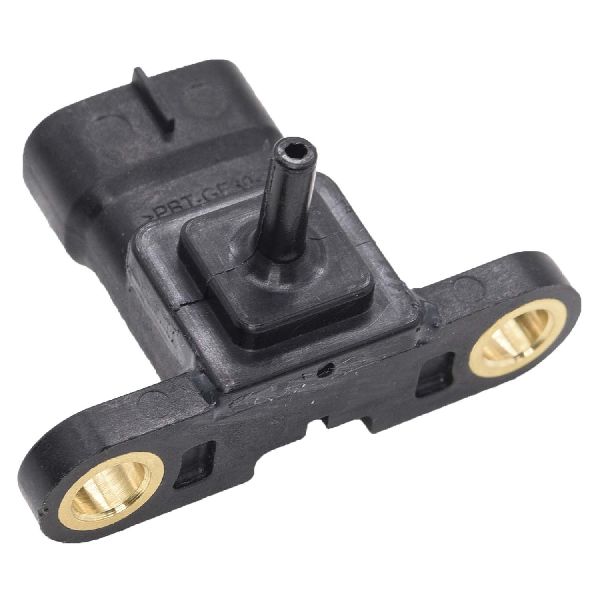
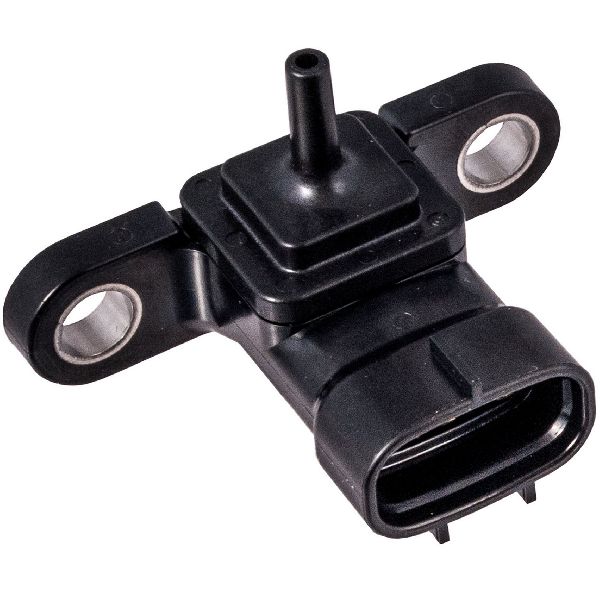
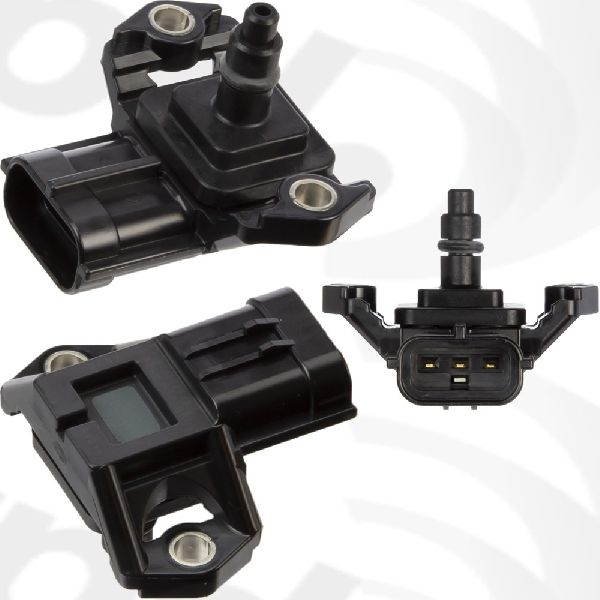
- Manifold Absolute Pressure (MAP) Sensor
(OEM #22627AA210 (For 2.5L Non-Turbo and 3.0L H6, verify with VIN). Note: This part may be discontinued and superseded.)— This sensor is the most common point of failure for a P0107 code on this generation of Outback.
Trusted brands: Denso (OEM), Hitachi, Bosch, Standard Motor Products (SMP)
OEM price range: $150-$280
Aftermarket price range: $40-$120
Related Codes That Often Appear With This One
- P0108 — This code means "MAP/Barometric Pressure Circuit High Input." Seeing P0107 and P0108 together or intermittently suggests the sensor is failing erratically or there is a significant wiring problem. One owner reported getting P0107, replacing the sensor, and then getting P0108, indicating the new sensor might also be faulty or a persistent wiring issue exists.
Platform-Specific Known Issues
- Oil Contamination from Leaky Power Steering Pump: A user on LegacyGT.com reported a P0107 code immediately after servicing a leaky power steering pump. It's possible for leaking fluid to contaminate the nearby MAP sensor connector, causing a poor connection and triggering the code.
Mechanic-Grade Diagnostic Values
- MAP Sensor Live Data (Scan Tool, KOEO) — expected: Approx. 100 kPa at sea level (should match barometric pressure).. Failure: Reading is fixed below 13.3 kPa (3.94 inHg).
- MAP Sensor Live Data (Scan Tool, Idle) — expected: 30-32 kPa.. Failure: Reading remains stuck low, near the KOEO failure value.
- MAP Sensor Signal Wire Voltage (Multimeter, back-probing) — expected: Approx. 1.0V - 1.8V at idle.. Failure: Voltage is stuck below 0.5V.
- MAP Sensor Connector - 5V Reference (Multimeter) — expected: Approx. 5.0V with Key On, Engine Off.. Failure: No voltage or significantly lower voltage indicates an open/short in the reference circuit from the ECM.
- MAP Sensor Connector - Ground Wire (Multimeter) — expected: Near 0 Ohms resistance to a known good chassis/engine ground.. Failure: High resistance (e.g., >10 Ohms) indicates a poor ground connection.
Scan Tool Commands That Help
- Subaru Select Monitor (SSM) or equivalent: Live Data Stream / Current Data Display — This is the primary function used to diagnose P0107. The technician selects the 'Intake Manifold Absolute Pressure' PID to monitor its readings in kPa or Volts during KOEO and idle conditions to see if they are within the expected range or stuck low.
Wiring & Ground Locations
- MAP Sensor Connector (2.5L Non-Turbo) — On the MAP sensor, which is located on the throttle body.. This 3-pin connector is the primary interface for the sensor. Damage or corrosion here is a common cause of P0107. The signal wire for the 2.5L Non-Turbo is White.
- MAP Sensor Connector (2.5L Turbo) — On the MAP sensor, which is located on the throttle body.. This 3-pin connector is the primary interface for the sensor. The signal wire for the 2.5L Turbo is White.
- Engine Ground Straps — Key grounds are typically located from the engine block to the chassis frame rail, often near the battery or strut towers.. A corroded or loose main engine ground can cause floating or incorrect readings for multiple sensors, including the MAP sensor, leading to P0107 or other codes.
Real Owner Repair Stories
- YouTube channel 'carsntoys' (Subaru (model year not specified, but within generation)) — Check Engine Light, flashing Cruise Control light, and a stored P0107 code.
❌ Tried (didn't work) The video focuses on correct diagnosis before replacement, noting that simply replacing the sensor without testing the circuit can lead to the problem not being fixed if it's a wiring issue.
✅ What actually fixed it The video demonstrates the full diagnostic process: checking live data with a scan tool to confirm the low reading (<13 kPa), then using a multimeter to verify 5V reference and ground at the connector, confirming the sensor itself is the point of failure before replacement.
OEM Part Supersession History
22627AA210→22627AA340— Part was discontinued and replaced by a newer revision.
Heads up: The new part number (22627AA340) is the correct service replacement for the original. Ensure any replacement part cross-references to these OEM numbers.
Diagnostic Flowchart
Other Known Issues on This Vehicle
Issues unrelated to this code that are worth knowing about as an owner of this generation:
- Head Gasket Failure (2.5L Non-Turbo EJ253) 🔴 High — Very common, typically between 100,000-150,000 miles. Usually presents as an external oil or coolant leak rather than internal failure.
- Catalytic Converter Failure (P0420) 🟠 Medium — Common at higher mileage. Often caused by the engine running rich or consuming oil, which contaminates the catalyst.
- AVCS Banjo Bolt Filter Clogging (Turbo Models) 🔴 High — Common on turbo (XT) models. The small mesh filters in the oil feed lines to the turbo and AVCS solenoids can clog, starving components of oil. Many owners and shops preemptively remove them. (Ref: Subaru issued multiple TSBs regarding cleaning or removing these filters.)
- Wheel Bearing Failure 🟠 Medium — Front and rear wheel bearings are a common wear item, often failing prematurely and causing a humming or grinding noise that changes with speed. (Ref: Subaru has released updated parts and TSBs for various models over the years to address this. (e.g., TSB 03-96-25 for later models))
- CV Axle Boot Tearing 🟡 Low — The rubber boots on the front CV axles are prone to tearing, which allows grease to escape and dirt to enter, leading to joint failure if not addressed.
Used vs. New Parts: Buying Guide for This Vehicle
When a used part is the smart pick: For this repair, a used OEM Denso sensor from a low-mileage donor vehicle can be a cost-effective choice, as the OEM part is generally reliable until it fails with age. However, given the electronic nature and high failure rate of this specific part, the risk of getting a bad or near-failure part is moderate.
Donor-vehicle mileage cap: roughly under 80000 miles for the part to have meaningful remaining life.
What to inspect on the donor part:
- Check the vehicle's mileage if possible; lower is better.
- Inspect the connector pins for any signs of corrosion or damage.
- Ensure the plastic housing of the sensor is free from cracks or physical damage.
- Ask the seller if the part has been tested or if there is a return policy.
Aftermarket brands forum-validated for this vehicle:
- Denso (OEM supplier)
- Hitachi
- Bosch
- Standard Motor Products (SMP)
Brands owners have reported issues with on this vehicle:
- No-name, unbranded sensors from online marketplaces are a gamble and may fail prematurely or have incorrect voltage scaling, causing persistent issues.
Real Owner Stories
Aggregated from forums and TSBs cited above. Mileages and costs reflect what owners reported in those sources.
2007 Subaru Outback
Symptoms: Solid Check Engine Light and flashing CRUISE light.
What fixed it: Replacing the MAP sensor.
Source hint: r/subaru
2005-2009 Subaru Legacy GT
Symptoms: P0107 CEL appeared immediately after servicing a leaky power steering pump.
What fixed it: Cleaning or addressing the MAP sensor connector which may have been contaminated by leaking fluid or disturbed during the pump service.
Source hint: LegacyGT.com thread 'P0107 CEL after servicing leaky power steering pump'
Related OBD-II Codes
Frequently Asked Questions
Where is the MAP sensor located on my 2005-2009 Outback?
Could my leaky power steering pump be causing the P0107 code?
What should the MAP sensor voltage read on my Subaru with the key on but engine off?
Are there any TSBs for the turbo (XT) models that I should be aware of while diagnosing engine codes?
Is it common for the 'CRUISE' light to flash alongside the Check Engine Light for P0107?
Should I use any special products when installing a new MAP sensor?
Are there any manufacturer bulletins regarding wiring grounds and P0107?
Helpful Videos

We Have This Part in Stock


The information in this article is provided for general reference and educational purposes only. Vehicle specifications, procedures, and part compatibility can vary by production date, trim level, and region. Always consult your vehicle's factory service manual and verify part numbers before purchasing or performing repairs. Safety-critical components such as airbags, seat belts, and braking systems should be installed by a qualified professional.
- Subaru Outback:
- 🧭 Diagnostic Flowchart
- 🎬 Helpful Videos
- 🛍️ Shop This Part
- What's Unique About the 2005-2009 Subaru Outback
- Symptoms You May Notice
- Most Likely Causes
- Rare But Worth Checking
- Diagnosis Steps
- Parts You'll Likely Need
- Related Codes That Often Appear With This One
- Platform-Specific Known Issues
- Mechanic-Grade Diagnostic Values
- Scan Tool Commands That Help
- Wiring & Ground Locations
- Real Owner Repair Stories
- OEM Part Supersession History
- Other Known Issues on This Vehicle
- Used vs. New Parts: Buying Guide for This Vehicle
- Real Owner Stories
- 2007 Subaru Outback
- 2005-2009 Subaru Legacy GT
- Related OBD-II Codes
- Frequently Asked Questions
- 🎟️ Get 5% Off