

P0107 on 2010-2014 Subaru Outback: MAP Sensor Circuit Low Causes and Fixes
P0107 on a 2010-2014 Subaru Outback most commonly indicates a failed Manifold Absolute Pressure (MAP) sensor. This will cause a check engine light, flashing cruise control, rough idle, and poor performance. Replacing the sensor is a straightforward DIY job, with parts costing between $40 for aftermarket and $250 for OEM. Before replacing, always check the wiring and connector, as a bad connection is also a frequent cause.
- P0107 on a 2010-2014 Outback is most likely caused by a failed MAP sensor.
- Symptoms include a solid Check Engine Light, a flashing cruise control light, rough idle, and poor acceleration.
- The 2.5L engine changed in 2013; be sure to verify if you have the earlier EJ253 engine (2010-2012) or the later FB25 engine (2013-2014) to buy the correct part.
- Before replacing the sensor, always check its electrical connector and wiring for damage, as this can be a cheaper fix.
- This is a DIY-friendly repair that typically requires only basic hand tools and can be completed in under 30 minutes.
What's Unique About the 2010-2014 Subaru Outback
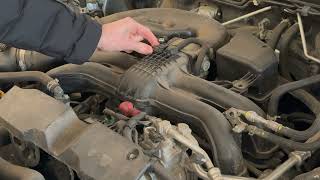
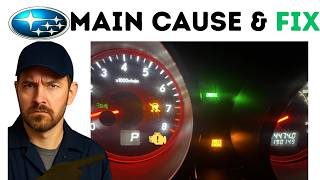
On any Subaru, a key symptom that accompanies almost any check engine light, including P0107, is a flashing cruise control light on the dashboard; the cruise control system is disabled as a safety precaution. 🎬 Watch: Why your cruise control light is flashing The 2010-2014 Outback generation also spans a significant engine change for the 2.5L model, from the timing-belt driven EJ253 (2010-2012) to the timing-chain driven FB25 (2013-2014), which use different MAP sensors and have different service points. It's crucial to identify the correct engine to get the right part.
Symptoms You May Notice
- Check Engine Light is on
- Flashing cruise control light
- Rough or unstable idle
- Engine stalling, especially when coming to a stop
- Hesitation or sluggish acceleration
- Reduced engine power
- Decreased fuel economy
- Hard starting
- Black smoke from exhaust
- Engine surging
- Replacing the Mass Air Flow (MAF) sensor. The MAF and MAP sensors have similar names but different functions and locations. The P0107 code specifically points to the MAP sensor circuit. A Reddit user reported getting multiple codes including P0107 after a coil pack change, highlighting how other maintenance can sometimes lead to confusion.
Most Likely Causes
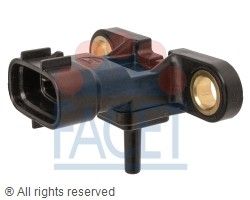
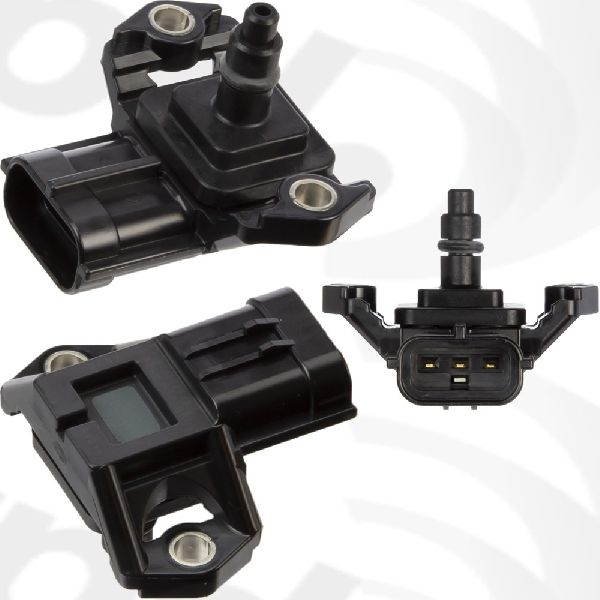
- Faulty Manifold Absolute Pressure (MAP) Sensor 🔴 High Probability → Shop Manifold Absolute Pressure Sensor The MAP sensor is an electronic component that operates in a high-heat engine bay environment and can fail over time due to internal electronics shorting out or the sensing element failing. Oil vapor from the PCV system can also contaminate the sensor, leading to failure.
How to confirm: After confirming wiring is okay, test the sensor. With a scan tool, the pressure reading will be abnormally low (e.g., below 13.3 kPa) with the key on. If the sensor is proven to be the fault, replacement is the only reliable fix. Cleaning is rarely a permanent solution.
Typical fix: Replace the MAP sensor. It is typically mounted directly to the intake manifold with one or two bolts.
Est. part cost: $40-$280 - Wiring Harness or Connector Issue 🟡 Medium Probability Engine vibration and heat can cause wires to fray or break over time. The connector's locking tab can become brittle and break, leading to a poor connection. Owners on forums frequently report finding corroded pins or a loose connection as the root cause. A manufacturer service bulletin, TSB Bulletin #07-96-15, notes that a sensor and actuator wiring ground junction point could be affected by engine movement, potentially setting codes like P0107 and P0108 in error.
How to confirm: Visually inspect the wiring harness leading to the MAP sensor for any signs of damage, chafing, or melting. Unplug the connector and check for corrosion or bent pins. Use a multimeter to test for a 5-volt reference signal and a good ground at the connector with the key on. Wiggle the harness while watching live data to see if the reading fluctuates.
Typical fix: Repair the damaged section of wire or replace the pigtail connector if it is damaged.
Est. part cost: $10-$40 - Large Vacuum Leak ⚪ Low Probability While a vacuum leak typically causes a high MAP voltage (P0108) or lean codes, a very large, specific leak near the sensor could potentially cause erratic readings. More commonly, a cracked vacuum hose or intake boot can throw off sensor correlations and trigger multiple codes along with P0107.
How to confirm: Visually inspect all vacuum hoses connected to the intake manifold for cracks, splits, or disconnections. A smoke test is the most effective way to find hidden vacuum leaks.
Typical fix: Replace the cracked or broken vacuum hose.
Est. part cost: $5-$30
Rare But Worth Checking
- Faulty Powertrain Control Module (PCM): → Shop Engine Control Module (ECM) This is very rare. The PCM should only be considered after the sensor, wiring, and all other potential causes have been definitively ruled out. A failed sensor input circuit inside the PCM can mimic a bad sensor.
Diagnosis Steps
- Read the code: Use an OBD-II scanner to confirm P0107 is the active code. Note any other codes present, as they can provide crucial clues (e.g., P0108, P0102).
- Check Live Data: Using the scanner, view the live data for the MAP sensor. With the key on and engine off (KOEO), the reading should be close to barometric pressure (approx. 100 kPa at sea level). With the engine idling, it should show a strong vacuum (low kPa value, e.g., 30-35 kPa). A P0107 will likely show an extremely low, fixed value (e.g., less than 1.0 V or under 13.3 kPa).
- Visual Inspection: Inspect the MAP sensor (located on the intake manifold, often near the throttle body), its connector, and the surrounding wiring for any obvious damage, corrosion, or loose connections. Check for oil contamination inside the connector.
- Test the Circuit: Disconnect the MAP sensor. Turn the ignition to the 'ON' position. Use a multimeter to probe the connector terminals. You should find one pin with ~5 volts (reference), one with near-zero ohms to ground (ground), and a third which is the signal wire.
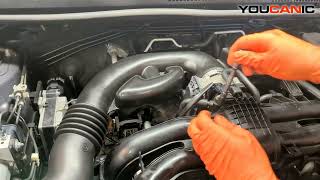
- Test the Signal: If power and ground are good, reconnect the sensor. Use a T-pin to carefully back-probe the signal wire. At idle, you should see a low voltage (typically around 1.0-1.5V). If the voltage is stuck below 0.5V, 🎬 See how to test and replace the MAP sensor the sensor has likely failed.
- Check for Vacuum Leaks: If sensor and wiring tests are inconclusive, perform a smoke test on the intake system to check for hidden vacuum leaks, paying close attention to the PCV hoses and intake manifold gaskets.
- Replace the Sensor: If the sensor is confirmed to be faulty, replace it with a new one. A YouTube repair on a 2014 Outback showed a successful fix using a Duralast SU15326 aftermarket sensor. 🎬 Watch this quick walkthrough of a MAP sensor swap
Parts You'll Likely Need
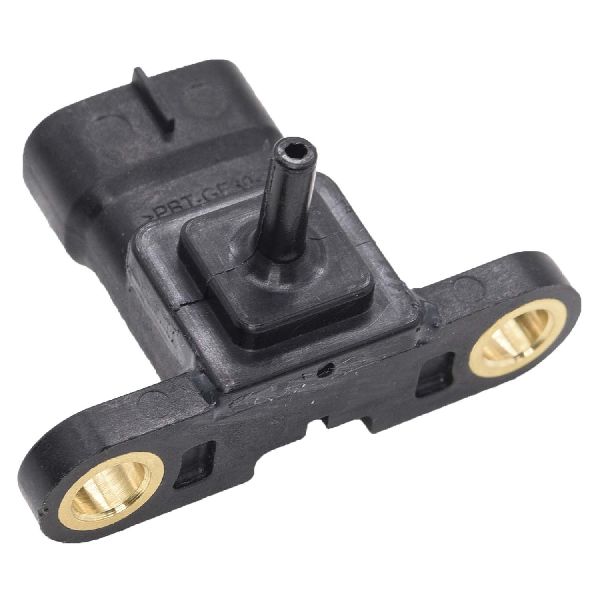
- Manifold Absolute Pressure (MAP) Sensor (2010-2012 2.5L)
(OEM #22627AA350 (superseded by 22627AA470))— This is the correct sensor for the EJ253 engine used in the first half of this Outback generation. Part number 22627AA470 is the updated replacement.
Trusted brands: Subaru (OEM), Denso, Standard Motor Products (AS456)
OEM price range: $200-$260
Aftermarket price range: $40-$120 - Manifold Absolute Pressure (MAP) Sensor (2013-2014 2.5L)
(OEM #22627AA510)— This is the correct sensor for the FB25 engine used in the second half of this Outback generation.
Trusted brands: Subaru (OEM), Denso, Standard Motor Products (AS468), Duralast (SU15326)
OEM price range: $150-$240
Aftermarket price range: $40-$100 - Manifold Absolute Pressure (MAP) Sensor (2010-2014 3.6L)
(OEM #22012AA230)— This is the correct sensor for the 3.6-liter 6-cylinder EZ36D engine.
Trusted brands: Subaru (OEM), Denso (079800-9180), Standard Motor Products (AS351)
OEM price range: $220-$315
Aftermarket price range: $50-$130
Related Codes That Often Appear With This One
- P0108 — Manifold Absolute Pressure Circuit High Input. Seeing P0107 and P0108 together or intermittently often points to a failing sensor with erratic output or a severe wiring issue like a loose connector. A user on Reddit reported this exact scenario after replacing the MAP sensor, suggesting a wiring or ground issue.
- P0068 — MAP/MAF - Throttle Position Correlation. The ECM cross-checks sensors for plausible data. A faulty MAP sensor sending an extremely low reading can conflict with data from the MAF and throttle position sensors, triggering this correlation code.
- P0102 — Mass Air Flow (MAF) Circuit Low Input. Seeing MAF and MAP codes together can indicate a common wiring or ground problem affecting multiple sensors, or a significant air leak post-MAF but pre-MAP.
Technical Service Bulletins (TSBs) & Recalls
- TSB 16-107-17R: Details the CVT warranty extension to 10 years/100,000 miles for 2010-2015 Outbacks, acknowledging widespread issues.
- TSB 02-157-14R: Revises the repair procedure for excessive oil consumption on FB25 engines, changing the fix from piston ring replacement to a complete short block replacement.
- TSB Bulletin #07-96-15: Notes that a change in the sensor and actuator wiring ground junction point was implemented to prevent certain DTCs, including P0107 and P0108, from being set in error due to engine movement.
Platform-Specific Known Issues
- Owner Experience: Intermittent P0107 and P0108: A user on Reddit with an '07 Outback (similar EJ25 engine) reported getting a P0107 code, and after replacing the MAP sensor, the code changed to P0108 (Circuit High). This experience strongly suggests the problem was not the sensor itself but rather a wiring issue, such as a bad ground or a short in the harness, which can cause the signal voltage to be either pulled to ground (Low) or float to 5V (High).
- Owner Experience: Multiple Codes After Other Repairs: On a Subaru forum, an owner of a 2014 Legacy reported getting P0107, P0108, and MAF sensor codes (P0102, P0113) immediately after replacing a damaged ignition coil pack. This indicates that either the repair process inadvertently damaged a shared wiring harness or ground, or the electrical noise from the failing coil damaged sensitive electronics.
Mechanic-Grade Diagnostic Values
- MAP Sensor Live Data (Scan Tool) — expected: 30-32 kPa at idle.. Failure: Reading is fixed below 13.3 kPa.
- MAP Sensor Signal Voltage (Multimeter, back-probing) — expected: ~1.4V - 1.8V at idle.. Failure: Voltage is stuck below 0.5V.
- MAP Sensor Connector - Reference Voltage (Key On, Engine Off) — expected: ~5.0V on the reference wire.. Failure: No voltage or significantly lower voltage indicates a wiring or PCM issue.
- MAP Sensor Connector - Ground Continuity (Key On, Engine Off) — expected: Near 0 ohms between the ground pin and a known good chassis/engine ground.. Failure: High resistance (OL) indicates an open ground wire.
Scan Tool Commands That Help
- Subaru Select Monitor (SSM) or equivalent: Live Data Stream / Current Data Display — This is the primary function used to diagnose P0107. The technician selects the 'Intake Manifold Absolute Pressure' PID to monitor its readings in kPa or Volts during KOEO and idle conditions to see if they are within spec or stuck low. No specific bidirectional commands are typically required.
Wiring & Ground Locations
- Engine Grounds (GE) — Commonly found on the top of the engine block, secured to the intake manifold bolts. On the 3.6L, a main ground cable runs from the battery negative terminal down to the engine block.. The MAP sensor, like many others, relies on a solid engine ground. A corroded or loose engine ground can cause floating or incorrect readings, leading to P0107 or other sensor codes. According to Subaru service literature, ground points on wiring diagrams are labeled with prefixes like 'GE' for Engine Ground.
- Body Grounds (GB) — Located on the chassis/frame rails in the engine bay, often near the battery or strut towers.. While the sensor grounds directly to the engine harness, that harness must have a good connection to the main body ground and battery. A corroded body ground can create system-wide electrical issues that can manifest as sensor codes.
- MAP Sensor Connector Pinout — The 3-pin connector plugging directly into the MAP sensor.. Testing at the pins is critical. Using a multimeter, you can verify the 5V reference from the ECU, check for a solid ground, and measure the signal voltage. A typical 3-pin layout is Pin A: Ground, Pin B: Signal, Pin C: +5V, though wire colors vary. A technician can identify each pin by testing for voltage and continuity.
Real Owner Repair Stories
- iATN (International Automotive Technicians Network) (2009 Dodge Caliber 2.0L (similar MAP circuit logic)) — P0107 and P0108 codes active.
❌ Tried (didn't work) Replaced the MAP sensor.
✅ What actually fixed it The technician was still diagnosing but found confusing voltages that pointed away from the sensor itself: 5V reference was present, ground was good, but the signal wire read 0.0V with the key on. This indicates the problem is in the wiring (short to ground on the signal wire) or the ECU's internal circuit, a common next step for a master tech when a part swap fails. - Reddit user on r/Miata (Mazda Miata (Not a Subaru, but illustrates a universal issue with MAP sensors)) — P0107 code, normal running.
❌ Tried (didn't work) Replacing the MAP sensor with a new (likely aftermarket) part.
✅ What actually fixed it The new MAP sensor made the car run terribly (barely starting, high idle, no throttle response, smell of unburned fuel). Putting the original, faulty MAP sensor back in made the car run normally again, though the P0107 code returned. The conclusion was that the new replacement sensor was defective or incorrect out of the box, a common pitfall with cheap electronic parts.
When the Usual Fixes Don't Work
- While replacing the MAP sensor is the most common fix, it is not a guarantee. A real-world case on a forum showed a vehicle owner who replaced their MAP sensor for a P0107 code, only to find the new part caused the engine to run significantly worse than the original faulty part. This highlights the risk of using low-quality aftermarket electronic sensors, which can be defective out of the box. If new symptoms appear after replacing the sensor, it is critical to test the new part or reinstall the old one to verify if the replacement part is the problem.
OEM Part Supersession History
22627AA350→22627AA470— Standard part update/revision by Subaru.
Heads up: The new part number (22627AA470) is the correct service replacement for the original on 2010-2012 2.5L EJ253 engines.
Model Year Variations Within This Range
- 2013-2014: Models with the 2.5L FB25 engine use a different MAP sensor (P/N 22627AA510) located at the top center of the engine, making it slightly more accessible than on the earlier EJ253 engine.
Diagnostic Flowchart
Other Known Issues on This Vehicle
Issues unrelated to this code that are worth knowing about as an owner of this generation:
- CVT Failure / Hesitation 🔴 High — Common enough that Subaru extended the CVT warranty for 2010-2015 models to 10 years/100,000 miles. Issues like shuddering, hesitation, or complete failure can occur. (Ref: TSB 16-107-17R)
- Excessive Oil Consumption (FB25 Engine) 🔴 High — Primarily affects 2013-2014 models with the FB25 engine. Caused by issues with piston rings. Subaru considers consumption up to 1 quart per 1,200 miles as potentially normal, but many owners experience higher rates. (Ref: TSB 02-157-14R (updated procedure to replace short block instead of just piston rings))
- Steering Wheel Vibration / Shudder 🟠 Medium — Reported by many owners of 2010-2012 models at highway speeds. Can be caused by a number of issues, including lower control arm bushings or steering rack problems. (Ref: TSB 05-48-10 (extensive modification) & TSB 04-17-17R (steering rack rattle))
- Frequently Burnt-Out Headlight Bulbs 🟡 Low — A very common complaint for 2010-2012 models. The low-beam bulbs fail frequently and are difficult to access for replacement (via the wheel well). (Ref: Subaru extended the warranty on low-beam bulbs to 10 years/unlimited miles for some 2010-2012 models.)
- Faulty Airbag Inflators 🔴 High — Part of the massive Takata airbag recall. Affects 2010-2014 models. The front passenger airbag inflator could rupture upon deployment. (Ref: NHTSA Recall 19V-008 (Subaru recall WUV-02))
Used vs. New Parts: Buying Guide for This Vehicle
When a used part is the smart pick: For a critical electronic sensor like the MAP, a used part is generally not recommended unless it is a verified OEM part from a very low-mileage donor vehicle. The risk of getting a part that is near the end of its life or already faulty is high.
Donor-vehicle mileage cap: roughly under 50000 miles for the part to have meaningful remaining life.
What to inspect on the donor part:
- Ensure the part is a genuine OEM part (e.g., has Subaru or Denso markings).
- Inspect the connector pins for any signs of corrosion or damage.
- Check the plastic housing for any cracks or signs of extreme heat stress.
- Ask for the donor vehicle's VIN to verify engine compatibility.
OEM-only on this vehicle (don't cheap out):
- While not strictly 'OEM-only', it is highly recommended to use the OEM Subaru part or the OEM supplier (Denso) for electronic sensors like the MAP sensor to ensure correct voltage readings and longevity.
Aftermarket brands forum-validated for this vehicle:
- Denso (Widely reported to be the original equipment manufacturer for Subaru)
Brands owners have reported issues with on this vehicle:
- Unbranded, 'white-box' sensors from online marketplaces like eBay or Amazon should be avoided. Forum users frequently report issues with cheap sensors failing quickly or being non-functional upon arrival.
Real Owner Stories
Aggregated from forums and TSBs cited above. Mileages and costs reflect what owners reported in those sources.
2007 Subaru Outback EJ25
Symptoms: The vehicle triggered a P0107 code. After the owner replaced the MAP sensor, the code immediately changed to P0108 (Circuit High).
What fixed it: The issue was identified as a wiring fault, such as a bad ground or a short in the harness, rather than a faulty sensor.
Source hint: Reddit r/subaru: '07 Outback MAP sensor (kind of)
2014 Subaru Legacy
Symptoms: The owner reported getting P0107, P0108, and MAF sensor codes (P0102, P0113) immediately after replacing a damaged ignition coil pack.
What fixed it: The repair process for the ignition coil inadvertently damaged a shared wiring harness or ground, or electrical noise from the failing coil damaged the electronics.
Source hint: Owner Experience: Multiple Codes After Other Repairs
2015 Subaru Outback 2.5L Premium
Symptoms: The vehicle displayed P0107 along with MAF codes. Testing revealed incorrect voltage on the MAP sensor connector pins.
What fixed it: Diagnosis of a wiring/ground issue after finding the reference voltage or ground was not within specifications at the connector.
Source hint: Reddit r/Subaru_Outback: MAP Sensor Wiring Problem (2015 2.5L Premium)
Related OBD-II Codes
Frequently Asked Questions
Does TSB 16-107-17R regarding CVT issues apply to my 2010-2014 Subaru Outback?
I have a 2014 Outback with the FB25 engine; is there a TSB for oil consumption that might affect my sensors?
Can I just clean the MAP sensor on my Outback to fix the P0107 code?
Where is the MAP sensor located on the 2010-2014 Outback?
Is there a specific aftermarket part number used for a successful P0107 repair on a 2014 Outback?
Why is my cruise control light flashing along with the Check Engine Light for P0107?
Helpful Videos

We Have This Part in Stock


The information in this article is provided for general reference and educational purposes only. Vehicle specifications, procedures, and part compatibility can vary by production date, trim level, and region. Always consult your vehicle's factory service manual and verify part numbers before purchasing or performing repairs. Safety-critical components such as airbags, seat belts, and braking systems should be installed by a qualified professional.
- Subaru Outback:
- 🧭 Diagnostic Flowchart
- 🎬 Helpful Videos
- 🛍️ Shop This Part
- What's Unique About the 2010-2014 Subaru Outback
- Symptoms You May Notice
- Most Likely Causes
- Rare But Worth Checking
- Diagnosis Steps
- Parts You'll Likely Need
- Related Codes That Often Appear With This One
- Technical Service Bulletins (TSBs) & Recalls
- Platform-Specific Known Issues
- Mechanic-Grade Diagnostic Values
- Scan Tool Commands That Help
- Wiring & Ground Locations
- Real Owner Repair Stories
- When the Usual Fixes Don't Work
- OEM Part Supersession History
- Model Year Variations Within This Range
- Other Known Issues on This Vehicle
- Used vs. New Parts: Buying Guide for This Vehicle
- Real Owner Stories
- 2007 Subaru Outback EJ25
- 2014 Subaru Legacy
- 2015 Subaru Outback 2.5L Premium
- Related OBD-II Codes
- Frequently Asked Questions
- 🎟️ Get 5% Off