

P0107 on 2010-2014 Subaru Outback 3.6L: Causes and Fixes for MAP Sensor Low Input
This code almost always points to a failed Manifold Absolute Pressure (MAP) sensor or a wiring issue. A new OEM sensor is costly, so testing the circuit first is crucial. Expect to pay $250-$380 for an OEM sensor, with aftermarket options being cheaper. DIY difficulty is 2/5.
- P0107 on your Outback 3.6L means the MAP sensor circuit has low voltage.
- The most common fix is replacing the MAP sensor, but always test the wiring first to avoid wasting money on an expensive part.
- Symptoms include a rough idle, stalling, and poor acceleration, accompanied by a Check Engine Light and flashing cruise control light.
- Diagnosis is straightforward with a multimeter and a scan tool capable of reading live data.
What's Unique About the 2010-2014 Subaru Outback
For the 3.6L H6 engine in the fourth-generation Outback, the P0107 code follows a standard diagnostic path without major platform-specific quirks. Unlike some diesel or direct-injection engines that suffer from carbon-clogged sensor ports, the issue on the EZ36 is most often a straightforward electrical failure of the sensor itself or its wiring. The high cost of the genuine Subaru MAP sensor (Part No. 22627AA470) makes a proper diagnosis, rather than just replacing the part, particularly important for this vehicle.
Symptoms You May Notice
- Check Engine Light is on
- Cruise control light flashing (a common Subaru trait when a CEL is present)
- Vehicle Stability Control (VSC) light may be on
- Rough or unstable idle, sometimes wavering between 600-900 RPM.
- Engine may stall when coming to a stop or at idle
- Hesitation or stumbling during acceleration.
- Noticeable loss of engine power, especially when climbing hills.
- Decreased fuel economy
- Engine surging.
- Spark knock or backfiring from the exhaust.
- Replacing the Mass Airflow (MAF) sensor. The MAF and MAP sensors have similar-sounding names but different functions and locations. P0107 specifically points to the MAP sensor circuit.
- Replacing the MAP sensor without testing the wiring. A broken wire or bad ground can mimic the symptoms of a failed sensor, leading to unnecessary expense.
Most Likely Causes
- Failed Manifold Absolute Pressure (MAP) Sensor 🔴 High Probability → Shop Manifold Absolute Pressure Sensor The sensor is an electronic component that operates in a high-heat engine bay environment and can fail over time due to internal electronics shorting out or the internal diaphragm leaking.
How to confirm: After confirming the wiring is good (5V reference and ground are present), test the sensor's signal wire with a multimeter. If the voltage is stuck below 0.5V even when the engine is revved, the sensor is bad. Alternatively, check live data on a scan tool; if the pressure reading is abnormally low (e.g., under 13.3 kPa) and doesn't change with engine RPM, the sensor has failed. A healthy sensor should read close to barometric pressure with the key on/engine off, and drop to 30-35 kPa at idle.
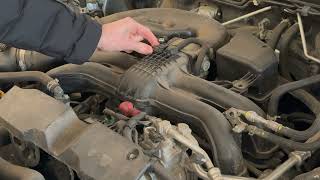
Typical fix: Replace the MAP sensor. It is typically located 🎬 See this quick walkthrough of a Subaru Outback sensor swap. on the intake manifold near the throttle body.
Est. part cost: $80-$380 - Wiring Harness or Connector Issue 🟡 Medium Probability Engine vibration and heat can cause wires to chafe, break, or corrode over time. The connector pins can also become loose or corroded, and the plastic locking tab can become brittle and fail to hold a secure connection.
How to confirm: Visually inspect the wiring harness leading to the MAP sensor for any signs of damage, such as chafing or previous, improper repairs. Unplug the connector and check for corrosion or bent pins. Use a multimeter to test for a 5-volt reference signal and a good ground (less than 0.1V) at the connector with the key on, engine off. Perform a wiggle test on the harness while monitoring the sensor's live data to see if it fluctuates.
Typical fix: Repair the damaged section of wire using crimped butt connectors with heat shrink, as soldering is not recommended for engine harness repairs. Clean terminals with electrical contact cleaner or replace the pigtail connector if it is damaged.
Est. part cost: $10-$40 - Large Vacuum Leak ⚪ Low Probability Rubber vacuum hoses can crack and split with age. An improperly seated MAP sensor O-ring can also cause a leak at the sensor itself.
How to confirm: A significant vacuum leak would typically cause other symptoms like a loud hissing sound and possibly lean-related trouble codes. While it can affect MAP readings, it's less likely to cause a persistent 'circuit low' fault compared to an electrical issue. A smoke test is the most effective way to find hidden leaks.
Typical fix: Inspect all vacuum lines connected to the intake manifold and replace any that are cracked or broken. Ensure the MAP sensor is properly seated with a good O-ring.
Est. part cost: $5-$30
Rare But Worth Checking
- Faulty Engine Control Module (ECM): → Shop Engine Control Module (ECM) This is very rare. The ECM should only be considered after the sensor and its entire circuit have been thoroughly tested and proven to be good. An ECM failure can sometimes be caused by shorts in other components.
Diagnosis Steps
- Connect an OBD-II scanner to confirm the P0107 code is present and check for any other codes.
- On the scanner, view the live data for the MAP sensor. With the Key On, Engine Off (KOEO), the reading should be close to your local barometric pressure (approx. 100 kPa at sea level). At idle, it should show a strong vacuum (around 30-35 kPa). A reading stuck below 13.3 kPa indicates a problem.
- Turn the vehicle off. Locate the MAP sensor on the intake manifold.
- Visually inspect the sensor's electrical connector and wiring harness for any obvious damage, corrosion, or loose connections. Perform a 'wiggle test' on the harness while watching live data.
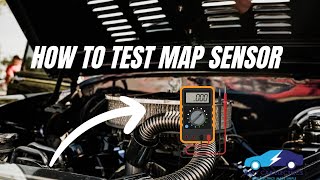
- Disconnect the sensor. With the key on, use a multimeter to test the connector terminals. You should find a 5-volt reference wire, a ground wire (less than 0.1 volts), and a signal wire.
- If the 5V reference or ground is missing, you have a wiring problem that needs to be traced back to the ECM. A common failure point is a broken wire within the harness loom.
- If power and ground are good, reconnect the sensor. Use a T-pin or back-probe to measure the voltage on the signal wire with the engine running. At idle, it should be around 1-1.8 volts. When you snap the throttle open, it should quickly rise toward 4.5-5 volts.
- If the signal voltage is stuck below 0.5 volts and does not respond to throttle changes, and you have confirmed the wiring is good, the MAP sensor is faulty and needs to be replaced.
Parts You'll Likely Need
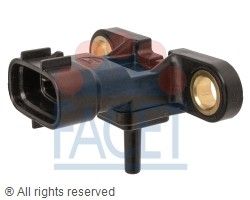
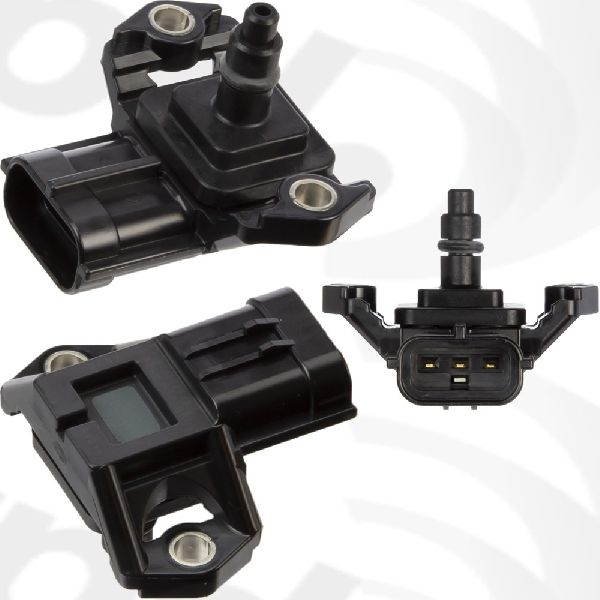
- Manifold Absolute Pressure (MAP) Sensor
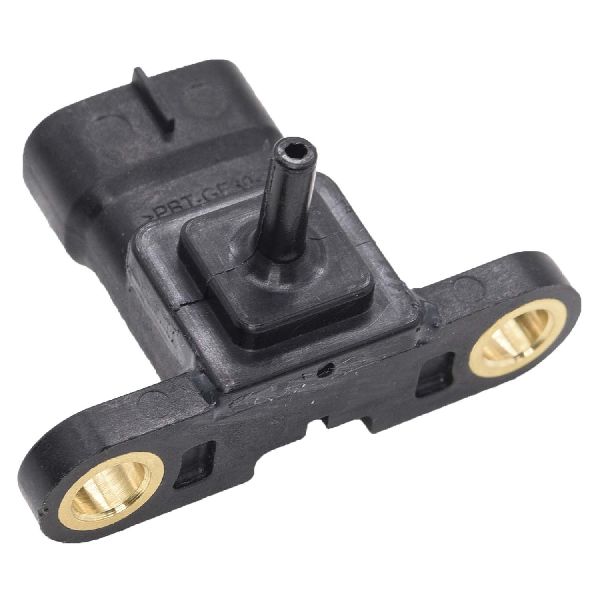
(OEM #22627AA470)— This sensor is the most common failure point for a P0107 code after wiring issues have been ruled out.
Trusted brands: Subaru (Genuine), Denso (OEM supplier, part #079800-7620), Standard Motor Products
OEM price range: $250-$380
Aftermarket price range: $80-$150
Related Codes That Often Appear With This One
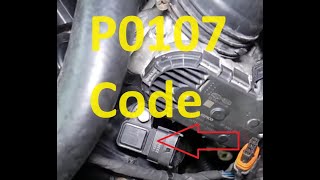
- P0108 — If there is an intermittent short or connection issue in the MAP sensor circuit, the voltage could fluctuate from too low (P0107) to too high (P0108). 🎬 Watch: How to test and replace sensors for P0107 and P0108 codes.
- P0106 — This code indicates a MAP sensor range/performance issue, which can occur alongside a circuit low fault if the sensor's readings are erratic but not consistently below the minimum threshold.
Technical Service Bulletins (TSBs) & Recalls
- TSB Bulletin #07-96-15: While originally issued for the Forester, this bulletin notes that a harness change was implemented to reposition the sensor and actuator wiring ground junction point to a location unaffected by engine movement. This change was designed to prevent several codes, including P0107, from being set in error due to grounding issues.
Platform-Specific Known Issues
- Real-world repair story: A user on a Subaru forum with a 2015 model experiencing P0107 and other codes replaced the MAP sensor, but the issue returned. Upon testing the connector with a multimeter, they found 5V on two pins, indicating a grounding issue in the wiring harness, highlighting the importance of testing the circuit before replacing parts.
Mechanic-Grade Diagnostic Values
- MAP Sensor Connector - 5V Reference Circuit — expected: 5V ± 0.5V (with key on, engine off, sensor disconnected). Failure: Voltage outside this range indicates a wiring or ECM issue.
- MAP Sensor Connector - Ground Circuit — expected: < 0.1V or < 100mV (with key on, engine off, sensor disconnected). Failure: Higher voltage indicates a poor ground connection.
- MAP Sensor Connector - Ground to Chassis Resistance — expected: < 5 ohms (with battery disconnected). Failure: Resistance > 5 ohms indicates an open in the ground wire.
- MAP Sensor Signal Wire - Key On, Engine Off (KOEO) — expected: ~4.5V (at sea level). Failure: Voltage significantly lower than 4.5V (e.g., <0.5V for P0107) indicates a sensor or circuit fault.
- MAP Sensor Signal Wire - Engine Idling — expected: ~1.0V to 1.8V (at sea level, high vacuum). Failure: Voltage stuck low (<0.5V) or not responding to throttle changes points to a bad sensor or circuit.
Scan Tool Commands That Help
- Subaru Select Monitor (SSM): Current Data Display/Save — This is the OEM tool function used to view and log live data parameters like 'Intake Manifold Absolute Pressure' to verify the sensor's readings against specifications under various engine load conditions.
Wiring & Ground Locations
- MAP Sensor Connector — On the intake manifold, typically near the throttle body.. This 3-pin connector is the primary interface for the sensor. Corrosion, damage, or a loose connection here is a common cause of the P0107 code. Wiggle testing this connector while monitoring live data can quickly identify a poor connection.
- Engine Ground Straps — Various locations from the engine block/heads to the chassis frame rails. Specific locations for the EZ36 should be verified with a service manual, but key points are typically near the alternator and on the intake manifold.. A faulty main engine ground can cause a floating ground for all sensors, including the MAP sensor, leading to incorrect voltage readings and codes like P0107. The ECM relies on a stable ground reference.
OEM Part Supersession History
22627AA350→22627AA470— Standard part revision or supplier change. No specific reason is publicly documented, but it is a common practice for continuous improvement or to consolidate parts.
Heads up: The parts are interchangeable; 22627AA470 is a direct replacement for 22627AA350.Subaru 22627AA470→Denso 079800-7620— Denso is the original equipment manufacturer (OEM) for Subaru. This is the equivalent Denso part number.
Heads up: Denso part 079800-7620 is the OEM equivalent and fully compatible. A third line of numbers on the sensor is typically a production lot or serial number and does not affect compatibility.
Model Year Variations Within This Range
- 2010-2014: For the EZ36 3.6L H6 engine, there were no significant mechanical or electronic changes within this generation that would affect the diagnosis or repair of a P0107 code. The engine remained largely unchanged until it was discontinued after the 2019 model year.
Diagnostic Flowchart
Other Known Issues on This Vehicle
Issues unrelated to this code that are worth knowing about as an owner of this generation:
- Torque Converter Shudder/Stalling 🔴 High — Common enough for a TSB. Can feel like the engine is about to stall when coming to a stop. (Ref: TSB 16-90-13R. This TSB applies to 2010-2012 models with the 5EAT transmission and involves replacing the torque converter with an updated part.)
- Power Steering Whine 🟠 Medium — A very common issue across many Subaru models, including the Outback. Typically occurs as the vehicle ages. (Ref: No TSB, but a widely documented problem. The cause is usually air entering the system via a hardened O-ring on the power steering pump inlet or a brittle suction hose. The fix is inexpensive if caught early.)
- Excessive Oil Consumption 🟠 Medium — Some owners report consuming a quart of oil every 2,000-5,000 miles, particularly at higher mileage. (Ref: No specific TSB for the 3.6L, but it is a known characteristic. A faulty PCV valve can be a contributor.)
- Steering Wheel Vibration/Shimmy 🟡 Low — More prevalent on 2010-2011 models. Can cause a noticeable vibration in the steering wheel at highway speeds. (Ref: TSB 05-48-10 addresses this issue, but the fix can be extensive.)
Used vs. New Parts: Buying Guide for This Vehicle
When a used part is the smart pick: A used part is generally NOT recommended for the MAP sensor itself, as it is a sensitive electronic component with a finite lifespan. However, sourcing a used connector pigtail from a junkyard harness is a very smart and cost-effective choice if only the connector is damaged.
Donor-vehicle mileage cap: roughly under 80000 miles for the part to have meaningful remaining life.
What to inspect on the donor part:
- For a connector pigtail, ensure the plastic is not brittle or cracked.
- Check that the locking tab is intact and functional.
- Inspect the pins inside the connector for any signs of corrosion (green or white powder) or being bent.
- Ensure you get at least 6 inches of wire to make splicing easy.
OEM-only on this vehicle (don't cheap out):
- While not strictly 'OEM-only', using a Genuine Subaru or the OEM supplier (Denso) MAP sensor is highly recommended. Cheaper aftermarket sensors have a higher reported failure rate, potentially causing you to do the job twice.
Aftermarket brands forum-validated for this vehicle:
- Denso (OEM Supplier)
- Standard Motor Products (SMP)
Brands owners have reported issues with on this vehicle:
- Unbranded, no-name sensors from online marketplaces should be avoided due to inconsistent quality and high failure rates.
Real Owner Stories
Aggregated from forums and TSBs cited above. Mileages and costs reflect what owners reported in those sources.
2015 Subaru Outback 2.5L
Symptoms: P0107 and other codes; issue returned even after the MAP sensor was replaced.
What fixed it: The owner found 5V on two pins during a multimeter test, identifying a grounding issue in the wiring harness rather than a sensor failure.
Source hint: Reddit r/Subaru_Outback
Subaru Legacy (Platform Mate)
Symptoms: P0107 code present.
What fixed it: Inspection of the intake system for cracks or loose connections, specifically checking intercooler hoses.
Source hint: Club Subaru España
Related OBD-II Codes
Frequently Asked Questions
Why is my cruise control light flashing along with the Check Engine Light on my Outback?
My 2010 Outback stalls when I come to a stop; could this be related to P0107 or something else?
Where is the MAP sensor located on the EZ36 3.6L H6 engine?
Can I use solder to repair the MAP sensor wiring harness on my Subaru?
What should the MAP sensor voltage read at idle on my 3.6L engine?
Is a vacuum leak a common cause for P0107 on the Outback?
Helpful Videos

We Have This Part in Stock


The information in this article is provided for general reference and educational purposes only. Vehicle specifications, procedures, and part compatibility can vary by production date, trim level, and region. Always consult your vehicle's factory service manual and verify part numbers before purchasing or performing repairs. Safety-critical components such as airbags, seat belts, and braking systems should be installed by a qualified professional.
- Subaru Outback:
- 🧭 Diagnostic Flowchart
- 🎬 Helpful Videos
- 🛍️ Shop This Part
- What's Unique About the 2010-2014 Subaru Outback
- Symptoms You May Notice
- Most Likely Causes
- Rare But Worth Checking
- Diagnosis Steps
- Parts You'll Likely Need
- Related Codes That Often Appear With This One
- Technical Service Bulletins (TSBs) & Recalls
- Platform-Specific Known Issues
- Mechanic-Grade Diagnostic Values
- Scan Tool Commands That Help
- Wiring & Ground Locations
- OEM Part Supersession History
- Model Year Variations Within This Range
- Other Known Issues on This Vehicle
- Used vs. New Parts: Buying Guide for This Vehicle
- Real Owner Stories
- 2015 Subaru Outback 2.5L
- Subaru Legacy (Platform Mate)
- Related OBD-II Codes
- Frequently Asked Questions
- 🎟️ Get 5% Off