

P0108 on 2009-2016 Audi A4 2.0T: Manifold Pressure Sensor High Causes and Fixes
P0108 on a 2.0T Audi A4 most often means the Manifold Absolute Pressure (MAP) sensor has failed. A faulty PCV valve is another very common cause, often leading to oil contamination of the MAP sensor. Replacing the MAP sensor is a simple DIY job costing between $30-$100 for the part, but the underlying PCV issue should also be addressed.
- P0108 on your Audi A4 points to a high voltage signal from the MAP sensor, most often caused by a failed sensor itself.
- Before replacing the MAP sensor, always check for the common PCV valve failure on the 2.0T engine by listening for a whistle and checking for strong suction at the oil cap.
- Replacing the MAP sensor is a simple DIY task that requires minimal tools (usually a Torx driver) and can be done in under 30 minutes.
- If a new MAP sensor doesn't fix the code, check the wiring for a short to power or perform a smoke test to find a vacuum leak.
What's Unique About the 2009-2016 Audi A4
On the 2.0L TFSI (CAEB) engine, while the MAP sensor itself is a frequent failure point, this code can also be a secondary symptom of a much more common Audi issue: PCV valve failure. The Positive Crankcase Ventilation (PCV) valve on this engine is known to fail, creating excessive vacuum in the crankcase and allowing oil to be drawn into the intake manifold. This oil can contaminate and foul the MAP sensor, causing it to send erroneous high voltage signals. Owners should be aware of this connection, as simply replacing the MAP sensor might not fix the root cause if the PCV system is the real culprit.
Generation note: The 2009-2016 model years cover the Audi A4 B8 generation, which includes the B8 (2009-2012) and the facelifted B8.5 (2013-2016). The 2.0L TFSI CAEB engine was used throughout this period, and the causes and fixes for P0108 are consistent across these years. This engine and its related issues are also found in other Audi and VW models of the same era.
Symptoms You May Notice
- Check Engine Light is on
- Rough or unstable idle
- Hesitation or poor acceleration
- Reduced fuel economy
- Engine stalling, especially when coming to a stop
- Black smoke from the exhaust if the engine runs too rich
- Hard starting or failure to start
- Replacing the Mass Airflow (MAF) sensor. This engine uses both a MAF and a MAP sensor. P0108 is specific to the MAP sensor circuit, not the MAF. Some forum users report confusion, but the CAEB engine does have a MAP sensor.
- Replacing oxygen sensors. While a bad MAP sensor can cause a rich or lean condition that affects O2 sensor readings, the O2 sensors are usually not the root cause of P0108.
Most Likely Causes
- Failed Manifold Absolute Pressure (MAP) Sensor 🔴 High Probability → Shop Manifold Absolute Pressure Sensor The MAP sensor is a sensitive electronic component that can fail internally over time or become contaminated by oil from a faulty PCV system, sending a constant high-voltage signal regardless of actual manifold pressure.
How to confirm: With a scan tool, monitor live data. Key On, Engine Off (KOEO), the MAP sensor reading should be nearly identical to the Barometric Pressure (BARO) reading. At idle, voltage should be low (~1.0-1.5V). If the voltage is stuck high (near 5V) at all times, the sensor is bad.
Typical fix: Replace the MAP sensor. It is located on the intake manifold and secured with two T20 Torx screws. 🎬 Watch: Step-by-step MAP sensor replacement for your Audi A4. Ensure the o-ring is seated correctly and the old one is not left behind.
Est. part cost: $30-$100 - Failed PCV Valve / Oil Separator 🔴 High Probability The diaphragm inside the PCV valve on the 2.0T TFSI engine is a well-known failure point. It can tear, causing a large internal vacuum leak that disrupts manifold pressure and can force oil into the intake, fouling the MAP sensor.
How to confirm: With the engine running at idle, listen for a loud whistling or squealing noise from the PCV valve area on top of the engine. Another test is to try removing the oil filler cap; if very strong suction holds it down, the PCV diaphragm has failed. 🎬 See how to diagnose and change a failing PCV valve.
Typical fix: Replace the entire PCV valve assembly (oil separator). It is recommended to use the latest revised OEM part to prevent premature failure.
Est. part cost: $50-$160 - Wiring or Connector Issue ⚪ Low Probability Engine bay heat and vibrations can cause wiring to become brittle or connectors to corrode over time, leading to a short to power on the signal wire.
How to confirm: Visually inspect the MAP sensor's wiring harness and connector for any signs of damage, corrosion, or loose pins. Use a multimeter to check for a 5V reference signal, a good ground, and continuity on the signal wire back to the ECM. Check for a short to voltage on the signal wire.
Typical fix: Repair the damaged section of the wiring harness or clean/replace the connector.
Est. part cost: $5-$50 - Vacuum Leak ⚪ Low Probability While less common than PCV failure, other vacuum hoses and gaskets can become brittle and crack with age, leading to un-metered air entering the intake system.
How to confirm: Perform a smoke test on the intake system to identify any leaks from hoses, the intake manifold gasket, or other components. A leak can alter the pressure within the manifold, causing the MAP sensor to report values that are out of the expected range.
Typical fix: Replace the leaking hose or gasket.
Est. part cost: $10-$75
Rare But Worth Checking
- Clogged Catalytic Converter: A severe exhaust restriction can cause pressure to back up into the intake manifold, leading to a high MAP reading. This is usually accompanied by a severe loss of power, a glowing red hot converter, and potentially other exhaust-related codes like P0420.
- Faulty Engine Control Module (ECM): → Shop Engine Control Module (ECM) This is extremely rare. The internal circuit in the ECM that processes the MAP sensor signal can fail. This should only be considered after all other possibilities (sensor, wiring, vacuum leaks) have been definitively ruled out.
Diagnosis Steps
- Read all fault codes using an OBD-II scanner. Note any other codes that are present, as they can provide valuable clues.
- With the scanner, view live data for the MAP sensor. With the Key On, Engine Off (KOEO), the MAP reading should be close to the Barometric Pressure (BARO) reading. A difference of more than 0.5 volts suggests a sensor or circuit fault.
- Start the engine. At idle, the MAP sensor voltage should drop to around 1.0-1.5V. If the reading is stuck high (near 5 volts) or does not change with engine RPM, this points strongly to a sensor or wiring issue.
- Perform a visual inspection of the MAP sensor, its connector, and the wiring harness. Look for any obvious damage, corrosion, oil contamination, or loose connections.
- Check for a failed PCV valve. With the engine idling, listen for a high-pitched whistle from the top of the engine and check for strong suction at the oil filler cap. If either is present, the PCV valve has failed.
- If the PCV seems okay, test the MAP sensor wiring. Use a multimeter to confirm you have a 5-volt reference, a good ground, and check the signal wire for shorts to power.
- If the sensor and wiring test good, perform a smoke test to check the intake system for any vacuum leaks not related to the PCV.
- If all other tests pass, the MAP sensor itself is the most likely culprit and should be replaced.
Parts You'll Likely Need
- Manifold Absolute Pressure (MAP) Sensor
(OEM #038906051C (or 038906051E))— This is the most common part to fail and directly cause a P0108 code. It's a sensitive electronic component that can fail internally or get fouled by oil from the PCV system.
Trusted brands: Bosch, Genuine VW/Audi
OEM price range: $70-$120
Aftermarket price range: $30-$80 - PCV Valve / Oil Separator
(OEM #06H103495AK (supercedes 06H103495J, 06H103495AE, 06H103495AC, etc.))— A very common failure on the 2.0T engine that causes incorrect intake manifold pressure and triggers a P0108 code, often as the root cause. Always replace with the latest revision.
Trusted brands: Genuine Audi, Hengst (OEM), Vaico
OEM price range: $120-$160
Aftermarket price range: $50-$90
Related Codes That Often Appear With This One
- P0171 — System Too Lean. A vacuum leak or faulty PCV valve can cause both un-metered air (leading to a lean condition) and an incorrect MAP sensor reading.
- P0507 — Idle Air Control System RPM Higher Than Expected. A vacuum leak or bad PCV valve can cause the engine to idle high, triggering this code alongside P0108.
- P030x — Cylinder Misfire. An incorrect air-fuel mixture caused by a bad MAP sensor or PCV valve can lead to misfires in one or more cylinders.
- P0299 — Turbocharger Underboost. A significant vacuum leak from a failed PCV can sometimes be interpreted by the system as a boost leak, triggering an underboost code.
Platform-Specific Known Issues
- The PCV valve on the 2.0T TFSI engine is a known weak point. The internal rubber diaphragm is prone to tearing, which leads to a massive vacuum leak, often accompanied by a loud whistling noise and various engine codes, including P0108.
- Failure of the PCV valve often forces oil vapor into the intake manifold, which can directly contaminate and ruin the MAP sensor, making it necessary to replace both components.
- Several revisions of the PCV valve have been released by Audi/VW. It is critical to install the latest available part number (e.g., 06H103495AK or newer) to ensure a lasting repair.
Mechanic-Grade Diagnostic Values
- MAP Sensor (G71) Signal Voltage, KOEO (Key On, Engine Off) — expected: ~4.8V (at sea level, should match Barometric pressure sensor). Failure: A reading below 4.5V or one that doesn't correspond to the BARO reading suggests a fault.
- MAP Sensor (G71) Signal Voltage, Engine Idling — expected: ~1.0 - 1.5 V. Failure: A voltage stuck high (near 5V) indicates a failed sensor or a short to power in the signal wire.
- ECM Fault Trigger Threshold for P0108 — expected: N/A. Failure: The ECM logs P0108 when it sees a signal voltage > 4.80 V.
- Ground Path Voltage Drop — expected: < 0.2 Volts. Failure: A reading above 0.4 volts between the alternator case and negative battery post indicates excessive resistance in a ground circuit, which can cause sensor signal issues.
Scan Tool Commands That Help
- VCDS (VAG-COM): Measuring Value Blocks (MVB) - Group 003 or 115 — Use this to view and log live data for Specified vs. Actual manifold pressure. With the engine off, the MAP sensor reading should match the atmospheric pressure sensor reading. At idle, it should show a strong vacuum. This is the primary way to confirm if the sensor is reporting illogical data.
- VCDS (VAG-COM): Throttle Body Adaptation - Basic Settings Group 060 — After cleaning or replacing the throttle body (a less common cause), this procedure must be run. A faulty or un-adapted throttle body can cause incorrect airflow at idle, potentially affecting manifold pressure and contributing to a P0108 code in rare cases.
Wiring & Ground Locations
- MAP Sensor (G71) Connector — On the intake manifold, near the throttle body. It is a 4-pin connector.. This is the primary connection for the sensor. Check for oil contamination from a failed PCV, corrosion, or damaged pins. A bad connection here will directly cause a P0108.
- G12 / 378 — Ground connection in the center of the firewall, located in the plenum chamber under the plastic cowl cover.. This is a primary ground point for the Engine Control Module (ECM). A corroded or loose connection here can cause erratic sensor readings and various engine management faults, including P0108, as the sensor's signal integrity relies on a stable ground reference for the ECM.
- G106 / G107 — Main engine bay ground points, located on the left and right side chassis rails in the engine bay.. General engine harness grounds. Degradation or corrosion at these points can introduce electrical noise and resistance, potentially affecting the 5V reference and ground supplied to various sensors, including the MAP sensor.
Real Owner Repair Stories
- Audizine Forums (2011 Audi A4 2.0T (CAEB)) — P0108 code, rough idle, EPC light, car going into limp mode.
❌ Tried (didn't work) Replaced MAP sensor (twice), Replaced PCV valve, Smoke tested for vacuum leaks (none found)
✅ What actually fixed it The throttle body was faulty. Even though it wasn't throwing its own specific codes, it was causing erratic manifold pressure readings. Replacing the throttle body and performing a throttle body adaptation with VCDS resolved the P0108 code and all symptoms. - AudiWorld Forums (2009 Audi A4 2.0T) — P0108 and P0171 (System Lean) codes, high idle.
❌ Tried (didn't work) Replacing the MAP sensor
✅ What actually fixed it The PCV valve diaphragm was completely torn. The owner confirmed this by feeling extreme suction at the oil cap. Replacing the PCV valve with the latest revision part fixed both codes and the high idle.
"I Checked Everything" — The Actual Cause
- In one documented case, a P0108 persisted after replacing the MAP and PCV, and a smoke test showed no leaks. The root cause was a faulty throttle body that was not sealing correctly at idle, creating an internal pressure issue that a smoke test couldn't reveal. The fix required replacing the throttle body and performing an adaptation.
OEM Part Supersession History
06H103495A, E, J, AC, AE, AH→06H103495AK (and potentially newer revisions)— The original PCV valve designs used a diaphragm that was highly prone to tearing, causing major vacuum leaks. Subsequent revisions used improved materials and design to increase durability and better manage crankcase pressure, which was also related to oil consumption issues.
Heads up: While most revisions are physically interchangeable, it is critical to use the latest available part number for the CAEB engine. Using old stock or an incorrect revision can lead to premature failure. Some early B8 models with the original black-top PCV may have required an ECU software update to work with the newest cream-colored 'AK' version due to changes in pressure regulation.
Model Year Variations Within This Range
- 2009-2012 (B8) vs. 2013-2016 (B8.5): The B8.5 facelift models switched from hydraulic power steering to electromagnetic steering. This changed the accessory drive bracket on the engine. While the core CAEB engine block and head are similar, sourcing a replacement engine requires ensuring the accessory bracket matches the vehicle's generation (B8 or B8.5).
- 2009-2011.5 vs 2012+: Earlier CAEB engines are more notorious for high oil consumption and timing chain tensioner failures. While P0108 is not directly caused by these, a failing PCV system (a common cause of P0108) was part of Audi's multi-stage attempt to fix oil consumption, making it a critical part to check on these earlier models.
Diagnostic Flowchart
Other Known Issues on This Vehicle
Issues unrelated to this code that are worth knowing about as an owner of this generation:
- Excessive Oil Consumption 🔴 High — Very common, especially on 2009-2011 CAEB engines. Often requires 1 quart of oil every 1,000-1,500 miles. Caused by faulty piston rings. (Ref: Subject of a class-action lawsuit. Audi addressed this with a multi-stage repair, starting with a new PCV valve and software update, and escalating to piston/ring replacement if consumption persisted.)
- Timing Chain Tensioner Failure 🔴 High — Common on engines built before ~2013, typically between 60,000 and 100,000 miles. The original tensioner design can fail, allowing the timing chain to jump, causing catastrophic engine damage. (Ref: Audi released updated tensioner parts. A TSB was issued addressing rattling noises on startup, which is an early symptom.)
- Water Pump Failure 🟠 Medium — The plastic housing of the water pump assembly is prone to cracking and leaking coolant, often between 50,000 and 90,000 miles. (Ref: No recall, but it's a widely acknowledged failure. Many owners preemptively replace it or upgrade to an aftermarket version with a metal housing.)
- Carbon Buildup on Intake Valves 🟠 Medium — As a direct-injection engine, carbon deposits accumulate on the back of the intake valves over time, typically requiring cleaning every 60,000-80,000 miles to restore performance and prevent misfires.
Used vs. New Parts: Buying Guide for This Vehicle
When a used part is the smart pick: For this repair, using used parts is generally not recommended. The key failure components, the MAP sensor and PCV valve, are wear-and-tear items with high failure rates. A used part from a donor vehicle is likely to have a limited remaining lifespan or could be faulty already.
Donor-vehicle mileage cap: roughly under 40000 miles for the part to have meaningful remaining life.
What to inspect on the donor part:
- For a PCV valve, only consider a used part if it is confirmed to be the latest OEM revision (e.g., part number ending in AK or later) and comes from a very low-mileage vehicle.
- For a MAP sensor, there are no reliable visual cues for quality. It's an electronic part that fails internally.
- Avoid parts from engines that show heavy oil sludge or contamination, as this suggests poor maintenance and higher likelihood of component failure.
OEM-only on this vehicle (don't cheap out):
- PCV Valve / Oil Separator: Due to the extremely high failure rate of aftermarket and early-revision OEM parts, it is critical to use a Genuine Audi/VW part with the latest revision number (e.g., 06H103495AK).
- Manifold Absolute Pressure (MAP) Sensor: While some high-quality aftermarket options exist, many cheap sensors are poorly calibrated and can cause persistent issues. Using an OEM sensor (Bosch is the original manufacturer) is the safest bet.
Aftermarket brands forum-validated for this vehicle:
- Bosch (for MAP sensor - they are the OEM supplier)
- Hengst (for PCV Valve - they are an OEM supplier)
Brands owners have reported issues with on this vehicle:
- Unbranded, no-name electronic sensors from online marketplaces. These are frequently the cause of new, different codes and are a common misstep in DIY repair, often having incorrect voltage scaling that the ECU cannot interpret.
Real Owner Stories
Aggregated from forums and TSBs cited above. Mileages and costs reflect what owners reported in those sources.
2011 Audi A4 2.0T TFSI (CAEB) — ~80000 miles
Symptoms: Loud whistling noise from the top of the engine and a Check Engine Light for P0108.
What fixed it: Replacement of the PCV valve assembly (oil separator) with the latest revised part.
Source hint: Audizine.com / Audiworld.com forums regarding B8 A4 2.0T PCV failure
2010 Audi A4 2.0T TFSI (CAEB) — ~100000 miles
Symptoms: Engine stalling when coming to a stop, rough idle, and oil consumption issues.
What fixed it: The repair involved a multi-stage process starting with a new PCV valve and software update as part of Audi's address of the oil consumption class-action lawsuit.
Source hint: AudiWorld Forums: Thread 'Reviving an old favourite 2.0T engine issues'
2012 Audi A4 2.0T TFSI (CAEB) — ~75000 miles
Symptoms: Check Engine Light on with a MAP sensor code; live data showed the sensor stuck at 5V even at idle.
What fixed it: Replaced the MAP sensor located on the intake manifold (secured by two T20 Torx screws) and ensured the o-ring was seated correctly.
Source hint: Reddit r/AudiA4 thread 'Common 2.0t a4 b8 problems'
Related OBD-II Codes
Frequently Asked Questions
My 2010 Audi A4 is whistling and has a P0108 code; could this be the PCV valve?
Which specific PCV part number should I use for my B8 A4 to avoid future P0108 codes?
Can the oil consumption issue on my 2011 CAEB engine cause the MAP sensor to fail?
How can I tell if my MAP sensor is bad versus just a wiring issue on my A4?
Is there a TSB for the rattling noise I hear on startup along with my engine codes?
My oil filler cap is very hard to remove while the engine is idling. Is this related to P0108?
Helpful Videos


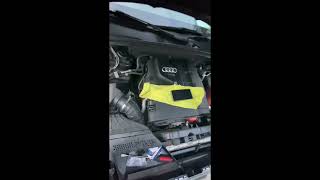

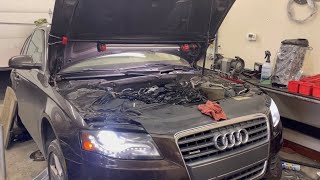
We Have This Part in Stock
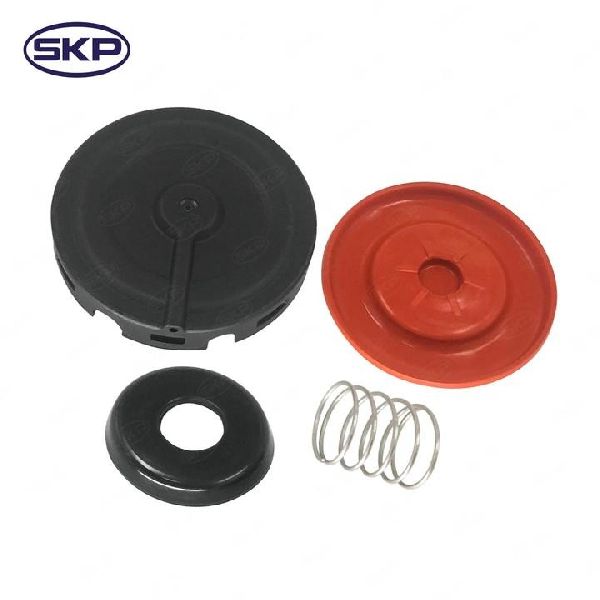
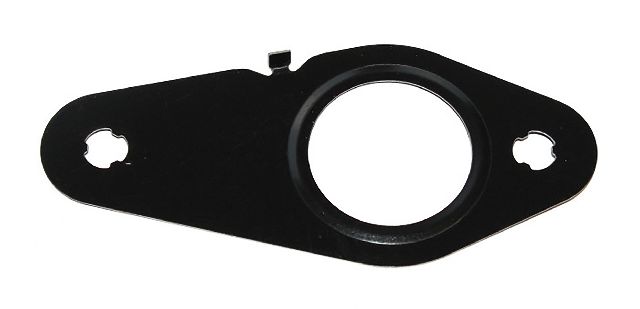

The information in this article is provided for general reference and educational purposes only. Vehicle specifications, procedures, and part compatibility can vary by production date, trim level, and region. Always consult your vehicle's factory service manual and verify part numbers before purchasing or performing repairs. Safety-critical components such as airbags, seat belts, and braking systems should be installed by a qualified professional.
- Audi A4:
- 🧭 Diagnostic Flowchart
- 🎬 Helpful Videos
- 🛍️ Shop This Part
- What's Unique About the 2009-2016 Audi A4
- Symptoms You May Notice
- Most Likely Causes
- Rare But Worth Checking
- Diagnosis Steps
- Parts You'll Likely Need
- Related Codes That Often Appear With This One
- Platform-Specific Known Issues
- Mechanic-Grade Diagnostic Values
- Scan Tool Commands That Help
- Wiring & Ground Locations
- Real Owner Repair Stories
- "I Checked Everything" — The Actual Cause
- OEM Part Supersession History
- Model Year Variations Within This Range
- Other Known Issues on This Vehicle
- Used vs. New Parts: Buying Guide for This Vehicle
- Real Owner Stories
- 2011 Audi A4 2.0T TFSI (CAEB) — ~80000 miles
- 2010 Audi A4 2.0T TFSI (CAEB) — ~100000 miles
- 2012 Audi A4 2.0T TFSI (CAEB) — ~75000 miles
- Related OBD-II Codes
- Frequently Asked Questions
- 🎟️ Get 5% Off