

P0108 on 2002-2005 Chevrolet Cavalier 2.2L Ecotec: MAP Sensor Circuit High Causes and Fixes
P0108 on a Cavalier with the 2.2L Ecotec engine most often means the Manifold Absolute Pressure (MAP) sensor has failed. A replacement sensor is typically needed, costing around $25-$60 for an aftermarket part and is a simple DIY fix. Also, inspect the wiring connector pigtail, as it is a known failure point.
- P0108 on your Cavalier Ecotec means the MAP sensor circuit has a high voltage fault.
- The most likely cause is a failed MAP sensor, which is an inexpensive and easy part to replace.
- Before replacing the sensor, always inspect and test the wiring connector, as it is a known weak point on this engine.
- This guide applies specifically to 2002.5-2005 Cavaliers with the 2.2L Ecotec engine, not earlier models.
What's Unique About the 2002-2005 Chevrolet Cavalier
On the 2.2L Ecotec engine, the MAP sensor itself is a very common failure item. Additionally, the wiring connector (pigtail) leading to the sensor is known to become brittle from engine heat cycles. This can cause the internal wires to break or short, leading to intermittent or constant high voltage signals that can be misdiagnosed as a bad sensor when it's actually a wiring problem. It's a known pattern on this and similar GM Ecotec platforms like the Saturn Ion and Chevy Cobalt.
Generation note: The specified year range (1995-2005) covers two Cavalier generations. However, the 2.2L Ecotec I4 engine was only available in the third-generation models from mid-2002 through 2005. This guide is specific to those 2002.5-2005 models. Earlier 1995-2002 models used a different 2.2L OHV engine with potentially different part numbers and sensor locations.
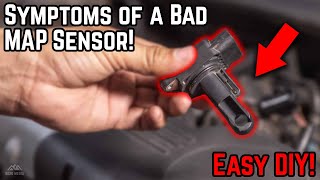
Symptoms You May Notice
- Check Engine Light illuminated
- Rough or surging idle
- Hesitation or stumbling during acceleration
- Reduced fuel economy
- Black smoke coming from the exhaust
- Engine may be hard to start or stall at stops
- Poor engine performance and power loss
- Replacing the MAP sensor when the actual fault is a broken wire in the connector pigtail. It is crucial to wiggle-test the wiring before buying a new sensor.
- Assuming the repair is complete immediately after replacing the sensor. The code must be cleared with a scan tool, and the vehicle may need to complete a drive cycle before all monitors show 'Ready' for an emissions test.
Most Likely Causes
- Failed Manifold Absolute Pressure (MAP) Sensor 🔴 High Probability → Shop Manifold Absolute Pressure Sensor The sensor is a common failure point on this platform due to age and heat exposure. Forum users often recommend using higher-quality ACDelco or Delphi replacements over store brands, as some have experienced premature failure with aftermarket parts.
How to confirm: With a scan tool, observe the MAP sensor voltage with the engine running at idle. If the voltage is stuck high (e.g., over 4.5 volts) and does not respond to changes in engine vacuum (by snapping the throttle), the sensor is likely bad.
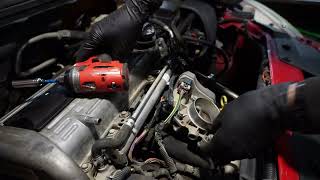
Typical fix: Replace the MAP sensor. It is typically mounted directly to the intake manifold and held by a single bolt.
Est. part cost: $25-$80 - Damaged MAP Sensor Wiring or Connector 🟡 Medium Probability → Shop Manifold Absolute Pressure Sensor The wiring pigtail can become brittle and crack from engine heat, causing an internal short or open circuit. The connector pins can also corrode, leading to a poor connection.
How to confirm: Visually inspect the wiring harness and connector for cracks, corrosion, or loose pins. Wiggle the connector while monitoring the MAP sensor data on a scan tool; if the reading fluctuates wildly or corrects itself, the pigtail is faulty.
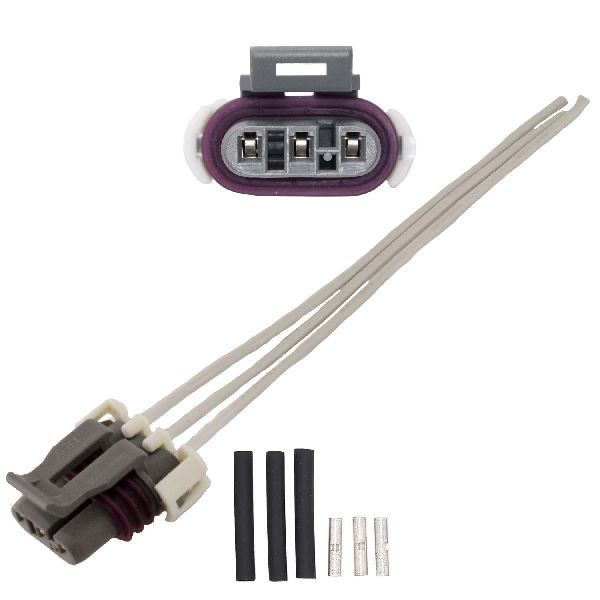
Typical fix: Repair the damaged section of wire or replace the entire connector pigtail by splicing in a new one.
Est. part cost: $15-$40 - Blocked Vacuum Port to MAP Sensor ⚪ Low Probability → Shop Manifold Absolute Pressure Sensor Carbon buildup in the intake manifold can clog the small port that the MAP sensor uses to read vacuum, though this is less common than sensor or wiring failure.
How to confirm: Remove the MAP sensor and inspect its port on the intake manifold. If it is blocked with carbon, it cannot read engine vacuum accurately, causing it to read atmospheric pressure (high voltage).
Typical fix: Carefully clean the carbon out of the port using a small pick or pipe cleaner, being careful not to drop debris into the intake manifold.
Est. part cost: $0
Rare But Worth Checking
- Clogged Catalytic Converter: A severely restricted exhaust creates backpressure that reduces engine vacuum, which can affect intake manifold pressure and potentially trigger a P0108. This is usually accompanied by other symptoms like a significant loss of power, especially at higher RPMs, and a 'rotten egg' smell.
- Faulty Powertrain Control Module (PCM): → Shop Engine Control Module (ECM) This is extremely rare. The PCM's internal circuit for the MAP sensor could fail. This should only be considered after all other possibilities (sensor, wiring, vacuum) have been definitively ruled out.
Diagnosis Steps
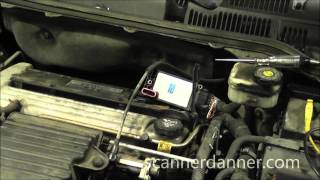
- Connect an OBD-II scanner and confirm P0108 is the active code. Note any other codes present.
- With the Key On, Engine Off (KOEO), view the live data for the MAP sensor. The reading should be close to the Barometric Pressure (BARO) reading, typically 4.5-5.0 volts at sea level.
- Start the engine. At idle, the MAP sensor voltage should drop to around 1.0-1.5 volts, indicating engine vacuum.
- If the voltage remains high (above 4.0V) at idle, the sensor is not reading vacuum. This points to a bad sensor, a wiring issue, or a blocked vacuum port.
- Turn the engine off. Visually inspect the MAP sensor connector and wiring for any signs of damage, corrosion, or brittleness. Wiggle the connector and harness while observing the scan tool data (KOEO) to check for intermittent connections.
- Disconnect the MAP sensor. Check the three wires on the harness side: one should have 5 volts (reference), one should have a good ground, and the third is the signal wire.
- If the 5V reference and ground are present, the wiring from the PCM is likely okay. If the sensor signal is stuck high but the wiring is good, the MAP sensor has failed.
- Before installing a new sensor, inspect the port on the intake manifold for any carbon blockage and clean if necessary.
- After repair, clear the codes with the scan tool and perform a test drive to ensure the code does not return.
Parts You'll Likely Need
- Manifold Absolute Pressure (MAP) Sensor
(OEM #ACDelco 213-796 (GM 12614973))— This is the most common component to fail and cause a P0108 code on this engine.
Trusted brands: ACDelco, Delphi, NTK
OEM price range: $60-$90
Aftermarket price range: $25-$60 - MAP Sensor Connector Pigtail
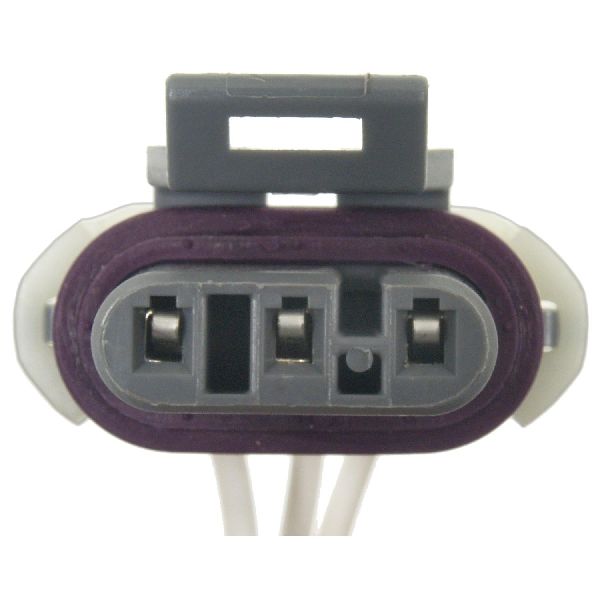
(OEM #ACDelco PT1799 (example, verify connector keying))— The factory connector often becomes brittle and fails due to engine heat, causing an electrical fault that mimics a bad sensor.
Trusted brands: Dorman, ACDelco
OEM price range: $25-$40
Aftermarket price range: $15-$30
Related Codes That Often Appear With This One
- P0106 — P0106 indicates a MAP sensor performance/range issue. It can appear alongside P0108 if the sensor's signal is erratic before failing completely high.
- P0172 — P0172 means 'System Too Rich'. A false high MAP signal (indicating high engine load) causes the ECM to inject too much fuel, leading to a rich condition.
- P0107 — P0107 indicates 'MAP Circuit Low Input'. It's the opposite fault but relates to the same sensor and circuit. Seeing both intermittently could point strongly to a wiring or connector issue causing the signal to short to ground and power at different times.
Technical Service Bulletins (TSBs) & Recalls
- GM Preliminary Information Bulletin PIP5769B: While for newer models, it shows a pattern of P0108 being caused by a faulty MAP sensor, recommending replacement as the primary correction.
- GM TSB 03-06-04-030F: This bulletin addresses various driveability symptoms (hard start, rough idle, misfires) caused by clogged fuel injectors on a wide range of GM vehicles, including those with the 2.2L Ecotec. While not a direct cause for P0108, it's a related platform issue that can cause similar symptoms and may be diagnosed alongside fuel system codes like P0172.
- Bulletin #N212330660: A manufacturer service bulletin for other GM models notes that customers may notice the service engine soon (SES) lamp illuminate or turn off while DTCs P0106 and P0108 are present as active or stored in history, requiring a MAP sensor replacement.
- Bulletin #PIP5787A: This bulletin describes scenarios where the SES lamp is illuminated or was illuminated and turned off, and technicians may find DTCs P0106, P0108, and/or P00C7 during inspection.
Platform-Specific Known Issues
- An owner on a GM forum reported replacing the MAP sensor, which turned the check engine light off, but the P0108 code remained stored as a permanent/history code, causing a smog check failure. This emphasizes the need to properly clear codes with a scanner after the repair is complete.
Mechanic-Grade Diagnostic Values
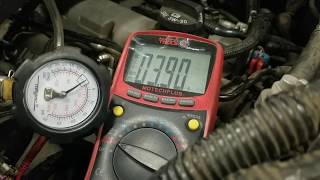
- MAP Sensor 5V Reference Wire (KOEO) — expected: 4.5 to 5.0 Volts DC. Failure: Voltage significantly lower than 4.5V or 0V indicates a wiring or PCM issue.
- MAP Sensor Ground Wire (KOEO) — expected: Near 0 Volts (when testing against battery negative) or ~12V (when testing against battery positive). Should be less than 100mV (0.1V) drop.. Failure: Voltage significantly above 0.1V indicates a poor ground connection.
- MAP Sensor Signal Wire (KOEO) — expected: ~4.5 Volts (should match BARO reading). Failure: Voltage that is not close to the BARO reading indicates a faulty sensor.
- MAP Sensor Signal Wire (Engine Idling) — expected: 1.0 to 1.5 Volts. Failure: Voltage remaining high (above 4.0V) at idle confirms the fault condition.
- Engine Vacuum at Idle — expected: 18-21 in. Hg. Failure: A reading of less than 15 in. Hg suggests a mechanical engine issue or significant vacuum leak that could contribute to the code.
Wiring & Ground Locations
- MAP Sensor Connector — On the top rear of the intake manifold, just behind the throttle body.. This is the primary connection point for the sensor. The three pins are: Pin A - Sensor Ground (Black/White wire), Pin B - MAP Signal (Yellow or Light Green wire), Pin C - 5V Reference (Gray or Orange wire).
- G105 — Left front of the engine compartment, often on a stud behind the cooling fan relays.. This is a critical ground point for the ECM, MAF/IAT sensor, and Ignition Control Module on some Ecotec platforms. A poor connection here can cause various sensor errors, including P0108.
- G110 / G112 — On the left side of the engine/transaxle assembly.. These are primary engine and transaxle grounds. A loose or corroded ground strap at these locations can cause a host of electrical issues, including incorrect sensor readings as the system seeks a path to ground.
- G103 — On the cowl in the left rear of the engine compartment, above the brake booster.. This ground serves the BCM and Data Link Connector (DLC). While not a direct cause, a poor ground here can interfere with scanner communication during diagnosis.
Real Owner Repair Stories
- YouTube user comment on 'How to Locate a Ground Short Easy Way' (Truck with engine swap (similar GM electrical architecture)) — Alternator overcharging, erratic electrical behavior.
❌ Tried (didn't work) Not specified, but diagnosis focused on finding the root electrical cause.
✅ What actually fixed it The main engine-to-chassis ground strap was installed incorrectly after an engine replacement, leading to a poor ground connection. The strap was attached to the starter instead of its designated stud on the bell housing. Relocating the ground strap to the correct position and securing it resolved the electrical problems.
OEM Part Supersession History
16187556, 16249939→12614973— Part consolidation and design update by GM.
Heads up: The current part number 12614973 has been superseded by 19418808, but both are generally compatible with the specified vehicle range. Always verify fitment with the vehicle's VIN.
Model Year Variations Within This Range
- 2002.5-2005: The 2.2L Ecotec (L61) engine was introduced mid-2002 in the Cavalier LS Sport models before becoming more widely available. Earlier 1995-2002 Cavaliers used the 2.2L OHV (LN2) or 2.4L Twin Cam (LD9) engines, which use different MAP sensors and have different locations and diagnostic procedures. This guide is only for the Ecotec L61 engine.
Diagnostic Flowchart
Other Known Issues on This Vehicle
Issues unrelated to this code that are worth knowing about as an owner of this generation:
- Timing Chain Tensioner and Guide Failure 🔴 High — Very common on pre-2005 2.2L Ecotec engines. A faulty tensioner design can fail to provide adequate oiling and tension, leading to chain rattle on startup, stretching, and potential catastrophic engine failure if the chain jumps timing. (Ref: No official recall, but GM updated the tensioner design in later model years. Owners often replace the tensioner as a preventative measure.)
- Instrument Cluster Malfunction 🟠 Medium — Widespread on 2003-2005 models. Symptoms include dead or erratic gauges (speedometer, tachometer, fuel, temp), and flickering or dead backlighting. The cause is typically failing stepper motors or bad solder joints on the cluster's circuit board. (Ref: No recall, but numerous third-party repair services exist specifically for this common GM issue.)
- Leaking Intake Manifold Gaskets 🟡 Low — The four individual rubber gaskets for the intake runners are known to degrade and shrink over time, causing vacuum leaks. This leads to rough idle, hesitation, and lean trouble codes (e.g., P0171).
- Clogged Fuel Injectors 🟠 Medium — Can cause a wide range of driveability problems including hard starts, rough idle, and misfires (P0300). This issue is common enough that GM released a TSB about it. (Ref: TSB 03-06-04-030F)
Used vs. New Parts: Buying Guide for This Vehicle
When a used part is the smart pick: A used MAP sensor is generally not recommended due to the high failure rate and low cost of new aftermarket parts. However, a used wiring pigtail from a junkyard can be a cost-effective solution if the connector is in good condition (not brittle or cracked).
Donor-vehicle mileage cap: roughly under 80000 miles for the part to have meaningful remaining life.
What to inspect on the donor part:
- For a pigtail: Check for flexibility; avoid any that are stiff or brittle.
- Inspect the connector for cracked plastic or corroded pins.
- Ensure the locking tab is intact and functional.
- Get at least 6 inches of wire to make splicing easier.
Aftermarket brands forum-validated for this vehicle:
- Delphi (often the OEM supplier)
- Bosch
- NTK (NGK's sensor brand)
- Standard Motor Products (SMP)
Brands owners have reported issues with on this vehicle:
- Unnamed, 'white box' brands have a higher reported rate of premature failure or inaccurate readings on forums.
Real Owner Stories
Aggregated from forums and TSBs cited above. Mileages and costs reflect what owners reported in those sources.
2002-2005 Chevrolet Cavalier 2.2L Ecotec
Symptoms: The check engine light was on, but after replacing the MAP sensor, the light went out while the P0108 code remained stored in the history.
What fixed it: Properly clearing the codes with a scan tool after the sensor replacement.
Source hint: GM Forum - 'Replaced MAP Sensor, Light went out but still getting P0108 code?'
1995-2005 Chevrolet Cavalier 2.2L Ecotec
Symptoms: The P0108 code returned shortly after the MAP sensor was replaced with an aftermarket part.
What fixed it: Replacing the sensor with a higher-quality Delphi or ACDelco unit and checking for vacuum leaks.
Source hint: Chevy Talk Forum - 'P0108 Map Sensor Baro Pressure High Input'
Related OBD-II Codes
Frequently Asked Questions
Which brand of MAP sensor should I buy for my 2.2L Ecotec Cavalier to avoid repeat failures?
I replaced the MAP sensor on my Cavalier and the light went off, but I still failed my smog check. Why?
Does GM TSB 03-06-04-030F explain my P0108 code?
Can I fix a P0108 on this vehicle without buying any parts?
Is the P0108 code related to the common instrument cluster failures on 2003-2005 Cavaliers?
Why is the MAP sensor wiring a common issue on the Cavalier?
Helpful Videos
We Have This Part in Stock


The information in this article is provided for general reference and educational purposes only. Vehicle specifications, procedures, and part compatibility can vary by production date, trim level, and region. Always consult your vehicle's factory service manual and verify part numbers before purchasing or performing repairs. Safety-critical components such as airbags, seat belts, and braking systems should be installed by a qualified professional.
- Chevrolet Cavalier:
- 🧭 Diagnostic Flowchart
- 🎬 Helpful Videos
- 🛍️ Shop This Part
- What's Unique About the 2002-2005 Chevrolet Cavalier
- Symptoms You May Notice
- Most Likely Causes
- Rare But Worth Checking
- Diagnosis Steps
- Parts You'll Likely Need
- Related Codes That Often Appear With This One
- Technical Service Bulletins (TSBs) & Recalls
- Platform-Specific Known Issues
- Mechanic-Grade Diagnostic Values
- Wiring & Ground Locations
- Real Owner Repair Stories
- OEM Part Supersession History
- Model Year Variations Within This Range
- Other Known Issues on This Vehicle
- Used vs. New Parts: Buying Guide for This Vehicle
- Real Owner Stories
- 2002-2005 Chevrolet Cavalier 2.2L Ecotec
- 1995-2005 Chevrolet Cavalier 2.2L Ecotec
- Related OBD-II Codes
- Frequently Asked Questions
- 🎟️ Get 5% Off