

P0108 on 2015-2022 Chevrolet Colorado 2.8L Duramax: MAP Sensor Causes and Fixes
On the 2.8L Duramax, P0108 is most often caused by a MAP sensor clogged with soot. Cleaning the sensor and intake port is the first step. If that fails, a new ACDelco sensor (part #12644228) costs about $40-$70 and is an easy DIY replacement.
- P0108 on your Colorado Duramax is almost certainly due to a soot-clogged MAP sensor.
- Before buying parts, remove and inspect the sensor; cleaning it and the port is often a complete fix.
- The issue is inherent to the engine's emissions design and affects all vehicles using the 2.8L LWN/VM Motori engine, including the GMC Canyon and international Holden Colorado.
- Preventative cleaning every 30,000 miles can help avoid this code entirely.
What's Unique About the 2015-2022 Chevrolet Colorado
The 2.8L Duramax diesel engine heavily utilizes its Exhaust Gas Recirculation (EGR) and Positive Crankcase Ventilation (PCV) systems for emissions control. A common consequence of this design is that oil vapor and exhaust soot can build up in the intake manifold over time. This sticky buildup is known to clog the small port for the MAP sensor, insulating it from the actual manifold pressure and causing it to send incorrect high-pressure readings that trigger the P0108 code.
Symptoms You May Notice
- Check Engine Light is on
- Rough or unstable idle
- Noticeable loss of engine power and acceleration
- Hesitation when pressing the gas pedal
- Decreased fuel economy
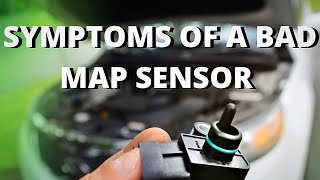
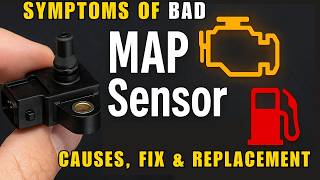
- Black smoke from the exhaust. 🎬 See a breakdown of common bad MAP sensor symptoms and causes.
- Replacing the Mass Airflow (MAF) sensor. While MAF issues can cause similar performance problems, P0108 specifically points to the MAP sensor circuit.
Most Likely Causes
- Clogged MAP Sensor and/or Intake Port 🔴 High Probability → Shop Manifold Absolute Pressure Sensor The EGR and PCV systems on the LWN Duramax engine circulate soot and oil vapor into the intake, which commonly builds up and blocks the sensor's opening. This is a well-documented issue across the global platform, including the Holden Colorado.
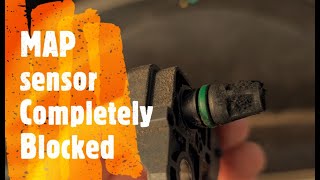
How to confirm: Remove the MAP sensor from the intake manifold. Visually inspect the sensor's tip and the port it sits in for a thick, black, tar-like substance. A completely blocked sensor is a very common finding, as shown in numerous owner videos. 🎬 Watch: See how a completely blocked sensor looks and how to clean it.
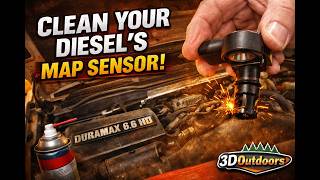
Typical fix: Remove the sensor and carefully clean it and the intake manifold port. Use a dedicated Mass Airflow (MAF) or electronics-safe cleaner. Gently use picks or brushes to break up heavy carbon buildup in the port itself. If cleaning does not resolve the issue, the sensor's internal electronics may have failed, requiring replacement.
Est. part cost: $5-$15 for cleaner spray - Failed MAP Sensor 🟡 Medium Probability → Shop Manifold Absolute Pressure Sensor
How to confirm: If the sensor is clean but the code persists, test the sensor's output. With the key on and engine off, the sensor should read atmospheric pressure (BARO). With the engine idling, the voltage should drop. A scan tool can show live data; if the voltage is stuck high (near 5V) regardless of engine state, the sensor is likely bad.
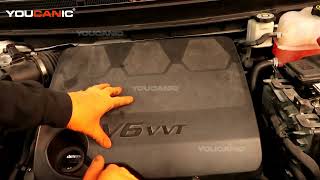
Typical fix: Replace the MAP sensor. It is typically held in by a single Torx or 8mm bolt and is easily accessible on top of the intake manifold. 🎬 Watch this step-by-step guide to replacing your MAP sensor.
Est. part cost: $40-$70 for an OEM part - Wiring Harness Issue ⚪ Low Probability
How to confirm: Inspect the wiring and connector going to the MAP sensor for any signs of damage, corrosion, or loose pins. GM has a known issue with wiring harness chafing on this platform (TSB PIP5416D), which can cause various electrical faults. Using a multimeter, check for a 5-volt reference signal, a good ground, and continuity on the signal wire back to the ECM. A short to power on the signal wire can cause a constant high reading.
Typical fix: Repair the damaged section of the wiring harness or clean/replace the connector. Check common chafe points near the A/C compressor and serpentine belt.
Est. part cost: $10-$50 for wiring repair supplies
Rare But Worth Checking
- Restricted Exhaust: A clogged Diesel Particulate Filter (DPF) or catalytic converter can cause excessive backpressure, which may affect intake manifold pressure readings and contribute to this code. This is usually accompanied by other codes related to the DPF or exhaust system.
- Faulty PCV System: A stuck-open PCV (Positive Crankcase Ventilation) valve can introduce excessive oil vapor into the intake manifold, accelerating the soot buildup that clogs the MAP sensor. While not a direct cause of the high voltage reading, it is a major contributing factor to the underlying problem.
Diagnosis Steps
- Read the code with an OBD-II scanner and confirm P0108 is present. Note any other codes.
- Using the scanner's live data function, observe the MAP sensor reading (usually in kPa or Volts) with the Key On, Engine Off. It should be close to the Barometric Pressure (BARO) reading.
- Start the engine. The MAP sensor reading should drop significantly at idle. If it remains high (near the BARO reading or ~4.5-5V), a problem is confirmed.
- Turn off the engine. Locate the MAP sensor on the top of the intake manifold.
- Disconnect the electrical connector and remove the single bolt (usually T20 Torx or 8mm) holding the sensor.
- Carefully remove the sensor and inspect it and its port for heavy soot and oil buildup.
- If clogged, thoroughly clean the sensor tip with MAF or electronics cleaner. Do not use harsh chemicals like brake cleaner. Carefully clean the port in the intake manifold using picks and rags.
- Reinstall the sensor, clear the codes, and perform a test drive to see if the code returns.
- If the code returns, check the wiring harness for the 5V reference, ground, and signal integrity. Pay close attention to areas where the harness might rub against other components.
- If the wiring is good and the sensor was clean, the sensor has likely failed internally and requires replacement.
Parts You'll Likely Need
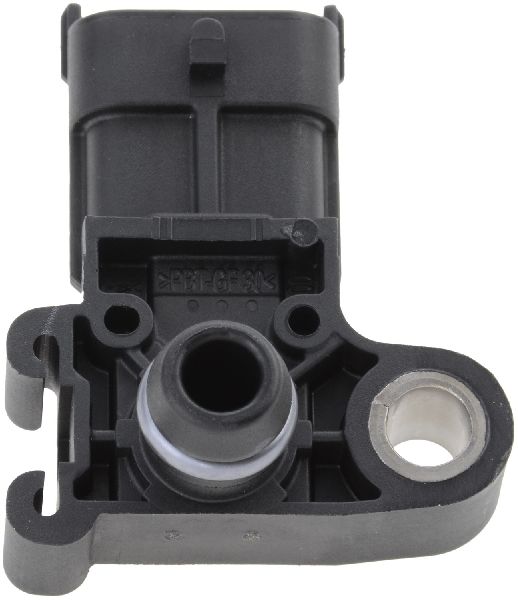
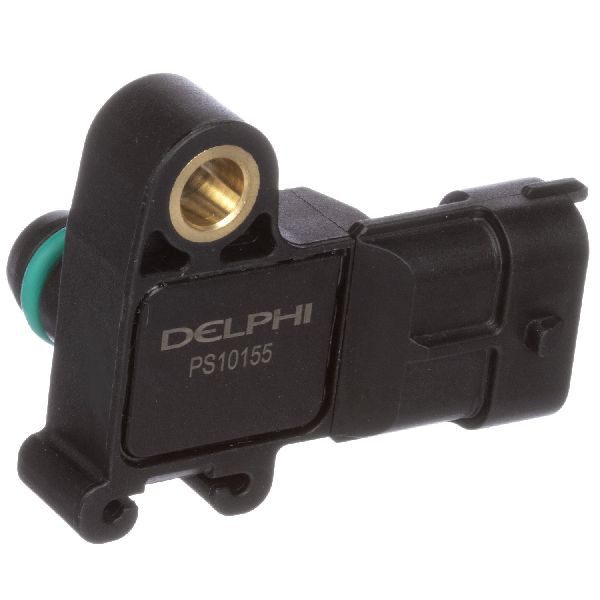
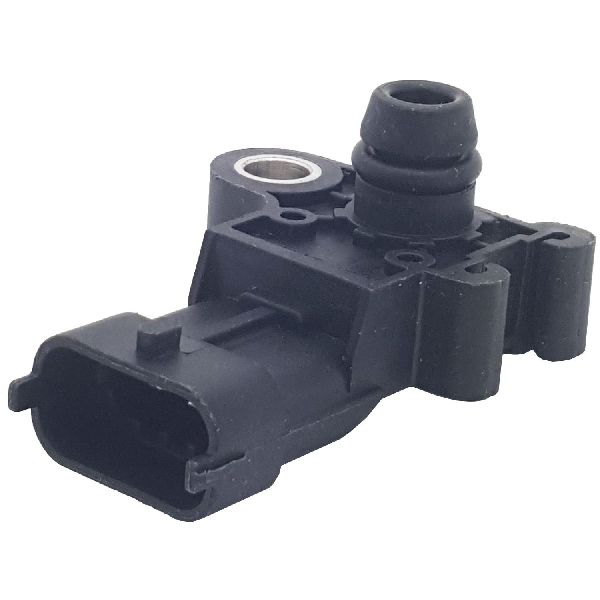
- Manifold Absolute Pressure (MAP) Sensor
(OEM #12644228)— This is the sensor that triggers the code. It either fails electronically or becomes too clogged with soot to be effectively cleaned.
Trusted brands: ACDelco (OEM), Bosch, Delphi
OEM price range: $40-$70
Aftermarket price range: $25-$50
Related Codes That Often Appear With This One
- P0106 — P0106 indicates a MAP sensor performance/range problem. It often appears alongside P0108 as the sensor's readings are both irrational and stuck high.
- P0107 — P0107 (MAP Circuit Low Input) can sometimes appear intermittently if there is a wiring issue causing the signal to short to ground, in addition to the high input condition.
Technical Service Bulletins (TSBs) & Recalls
- TSB 18-NA-355: Addresses torque converter shudder on 8-speed transmissions by recommending a fluid flush with a new type of Mobil 1 fluid.
- TSB PIP5416D: Details common wiring harness chafing points that can cause various intermittent electrical faults, relevant to a 'low probability' cause of P0108.
- Bulletin #N212330660: Notes that customers may notice the service engine soon (SES) lamp illuminate or flicker, with P0108 and P0106 present as active or stored codes, necessitating MAP sensor replacement.
- Bulletin #PIP5787A: Describes scenarios where the SES lamp is illuminated with DTCs P0108, P0106, and/or P00C7 (Intake Air Pressure Measurement System Sensor and Multiple Sensors Correlation).
Platform-Specific Known Issues
- Owners of the 2.8L Duramax commonly recommend preventative cleaning of the MAP sensor every 20,000-30,000 miles to prevent this code and related performance issues from occurring.
- A user on 'The Hull Truth' boating forum with a high-mileage 2016 Colorado 2.8L noted the engine's VM Motori origins and the need for specialized tools for other jobs like the timing belt, highlighting the engaged and technical nature of the owner community.
Mechanic-Grade Diagnostic Values
- MAP Sensor 5V Reference Wire Voltage — expected: 4.8-5.2 Volts. Failure: Voltage below 4.8V or above 5.2V indicates a problem with the ECM or wiring.
- MAP Sensor Ground Circuit Voltage Drop — expected: Less than 100 mV. Failure: Voltage greater than 100 mV indicates excessive resistance in the ground circuit.
- MAP Sensor Signal Voltage (Key On, Engine Off) — expected: 3.8-4.2 Volts (Varies with altitude, should match BARO). Failure: Voltage stuck high (near 5V) or significantly different from the BARO sensor reading. A difference of more than 0.5V suggests a sensor fault.
- MAP Sensor Signal Voltage (Engine at warm idle) — expected: 1.0-2.0 Volts. Failure: Voltage remains high (near KOEO reading) or does not respond to throttle changes, indicating a clogged port or failed sensor.
Scan Tool Commands That Help
- GDS2 (GM Global Diagnostic System 2): MAP Sensor Data Display — Use to compare the MAP sensor reading (in kPa or Volts) directly against the Barometric Pressure (BARO) sensor reading with Key On, Engine Off. The values should be nearly identical. This is the first step in verifying a sensor fault versus a true pressure issue.
- GDS2 (GM Global Diagnostic System 2): Engine Control Module Reprogramming (SPS) — In rare cases, particularly if other diagnostics are inconclusive, an ECM software glitch could be the cause. A service bulletin for the LWN engine (17337) involved reprogramming the ECM for a different sensor issue, indicating that software updates are a relevant diagnostic step for engine control faults.
Wiring & Ground Locations
- MAP Sensor Connector — On top of the intake manifold, easily visible and accessible.. This 3-pin connector is the primary test point. Pin 1: Low Reference (Ground). Pin 2: 5V Reference. Pin 3: Signal. Testing for correct voltages at these pins determines if the fault is the sensor, wiring, or ECM.
- G103 / G107 — Primary engine grounds, typically located on the cylinder head or engine block near the front of the engine.. The ECM and its sensors require a stable ground reference. A loose or corroded ground at G103 or G107 can introduce electrical noise or a voltage offset, causing the ECM to misinterpret the MAP sensor's signal and potentially trigger a P0108 code even if the sensor is functioning correctly.
Real Owner Repair Stories
- GM-Trucks.com forum user (2019+ GM Truck (specific model not mentioned, but same code)) — Check Engine Light with code P0108.
❌ Tried (didn't work) The user noted the light turned off on its own before a dealer appointment.
✅ What actually fixed it The user humorously reported the dealer found it was "low on blinker fluid," implying the issue resolved itself, which can happen with intermittent sensor clogs or connection issues that clear up. The initial cause was suspected to be a leaking vacuum hose connector from an aftermarket air intake kit.
OEM Part Supersession History
12644228→12711681— Standard part lifecycle update by GM.
Heads up: The new part number (12711681) is the direct replacement and is fully compatible with vehicles that originally used 12644228.12594942→12644228— Older part number that was updated.
Heads up: 12644228 is a valid replacement for the older 12594942 part.
Model Year Variations Within This Range
- 2015-2022: The 2.8L LWN Duramax engine and its associated sensors remained largely unchanged throughout its production run in the Colorado. The engine was introduced for the 2016 model year and discontinued after 2022. No significant variations affecting the P0108 diagnosis are documented.
Diagnostic Flowchart
Other Known Issues on This Vehicle
Issues unrelated to this code that are worth knowing about as an owner of this generation:
- Torque Converter Shudder (8-Speed Auto) 🟠 Medium — Very common on 2017-2019 models with the 8L45 transmission. Feels like driving over rumble strips during light acceleration. (Ref: TSB 18-NA-355; recommends a specific transmission fluid exchange procedure with a new type of fluid (Mobil 1 Synthetic LV ATF HP).)
- DEF System Heater Failure 🔴 High — Widespread issue, especially in colder climates. The heater is integrated into the DEF tank assembly and cannot be replaced separately. (Ref: No specific recall, but multiple TSBs address diagnostics (e.g., P20B9, P20BA). Failure leads to 'Service Emission System' warnings and speed limitation countdowns.)
- Timing Belt Replacement 🔴 High — Not a failure, but a critical maintenance item. GM specifies a 150,000-mile interval, but many specialists recommend replacement at 100,000 miles as a precaution.
- Wiring Harness Chafing 🟠 Medium — Harnesses can rub against various components (A/C compressor, serpentine belt, frame) causing a wide range of intermittent electrical issues and DTCs. (Ref: TSB PIP5416D provides a list of common chafe points to inspect if diagnostics for other codes are inconclusive.)
Used vs. New Parts: Buying Guide for This Vehicle
When a used part is the smart pick: A used MAP sensor is generally not recommended. The primary failure mode on the 2.8L Duramax is soot clogging, and a used sensor from a junkyard likely has similar internal contamination or electronic wear. Given the low cost of a new, high-quality aftermarket or OEM part ($40-$70), the risk of installing a faulty used part outweighs the minimal cost savings.
Donor-vehicle mileage cap: roughly under 20000 miles for the part to have meaningful remaining life.
What to inspect on the donor part:
- If buying used is unavoidable, request the mileage of the donor vehicle.
- Visually inspect the sensor's tip for any signs of thick, caked-on soot or oil residue.
- Ensure the plastic housing and connector are free of cracks or damage.
OEM-only on this vehicle (don't cheap out):
- While not strictly 'OEM-only,' using a trusted brand for the MAP sensor is critical. The ECM is sensitive to the voltage signal for calculating fuel and boost. A cheap, low-quality sensor can provide inaccurate readings, leading to persistent performance issues even if it doesn't set a code.
Aftermarket brands forum-validated for this vehicle:
- ACDelco (OEM)
- Bosch
- Delphi
Brands owners have reported issues with on this vehicle:
- Unnamed, no-brand 'white box' parts from online marketplaces should be avoided due to inconsistent quality and a high likelihood of premature failure or inaccurate readings.
Real Owner Stories
Aggregated from forums and TSBs cited above. Mileages and costs reflect what owners reported in those sources.
2016 Chevrolet Colorado 2.8L Duramax — 150000 miles
Symptoms: Owner discussed the engine's maintenance needs and the technical requirements for high-mileage service on the VM Motori-based platform.
What fixed it: The owner community highlights the necessity of specialized maintenance and monitoring of the intake system due to its VM Motori origins.
Source hint: thehulltruth.com: A thread titled 'Timing belt change on 2.8 Duramax. Anyone DIY one?'
2017-2019 Chevrolet Colorado 2.8L Duramax
Symptoms: Driving over rumble strips during light acceleration.
What fixed it: A specific transmission fluid exchange procedure using Mobil 1 Synthetic LV ATF HP.
Source hint: zr2zone.com: A discussion titled 'Transmission shudder: please school me' referencing TSB 18-NA-355
Related OBD-II Codes
Frequently Asked Questions
How often should I clean the MAP sensor on my 2.8L Duramax to prevent P0108?
Could the wiring harness issue mentioned in TSB PIP5416D cause my P0108 code?
I'm also feeling a vibration like rumble strips; is this related to the MAP sensor?
Can I use brake cleaner to clean the soot off my Colorado's MAP sensor?
Is the P0108 issue common on the GMC Canyon diesel as well?
What should the MAP sensor voltage read on my scan tool if it's working correctly?
Helpful Videos
We Have This Part in Stock


The information in this article is provided for general reference and educational purposes only. Vehicle specifications, procedures, and part compatibility can vary by production date, trim level, and region. Always consult your vehicle's factory service manual and verify part numbers before purchasing or performing repairs. Safety-critical components such as airbags, seat belts, and braking systems should be installed by a qualified professional.
- Chevrolet Colorado:
- 🧭 Diagnostic Flowchart
- 🎬 Helpful Videos
- 🛍️ Shop This Part
- What's Unique About the 2015-2022 Chevrolet Colorado
- Symptoms You May Notice
- Most Likely Causes
- Rare But Worth Checking
- Diagnosis Steps
- Parts You'll Likely Need
- Related Codes That Often Appear With This One
- Technical Service Bulletins (TSBs) & Recalls
- Platform-Specific Known Issues
- Mechanic-Grade Diagnostic Values
- Scan Tool Commands That Help
- Wiring & Ground Locations
- Real Owner Repair Stories
- OEM Part Supersession History
- Model Year Variations Within This Range
- Other Known Issues on This Vehicle
- Used vs. New Parts: Buying Guide for This Vehicle
- Real Owner Stories
- 2016 Chevrolet Colorado 2.8L Duramax — 150000 miles
- 2017-2019 Chevrolet Colorado 2.8L Duramax
- Related OBD-II Codes
- Frequently Asked Questions
- 🎟️ Get 5% Off