

P0108 on 2017-2022 Chevrolet Colorado 3.6L V6: Causes and Fixes for MAP Sensor Circuit High Voltage
This code almost always points to a failed Manifold Absolute Pressure (MAP) sensor. The sensor reports a voltage higher than the normal operating range, confusing the engine computer. Replacing the MAP sensor is the most common fix, typically costing $40-$80 for an aftermarket part or slightly more for an OEM ACDelco part (P/N 12650600). The repair is very simple and can be done in minutes with basic tools.
- P0108 on your Colorado means the MAP sensor is sending an abnormally high voltage signal to the engine computer.
- The most likely cause is a failed MAP sensor, which is a relatively inexpensive and easy part to replace for a DIYer.
- Before replacing the sensor, it's wise to quickly check the connector and nearby wiring for any obvious damage.
- Symptoms will be noticeable and include rough idle, poor acceleration, and stalling.
- Do not mistake this code for a vacuum leak; P0108 is an electrical high-voltage fault, whereas leaks typically cause performance or low-voltage codes.
What's Unique About the 2017-2022 Chevrolet Colorado
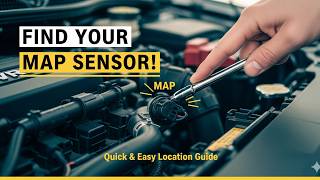
For the second-generation Colorado with the LGZ 3.6L V6, the P0108 code is a straightforward diagnostic issue that almost always leads back to the MAP sensor itself or its immediate wiring. Unlike some platforms with complex vacuum hose routing to the sensor, the MAP sensor on the LGZ V6 plugs directly into the top rear of the intake manifold, reducing the likelihood of a cracked vacuum line being the cause. This location is easily accessible once the engine cover is removed. 🎬 Watch: A quick guide to finding your MAP sensor location While some GM vehicles have TSBs for wiring harness chafing causing various electrical codes, P0108 is not specifically listed among the common results of this issue for the Colorado.
Symptoms You May Notice
- Check Engine Light is on
- Rough or unstable idle
- Hesitation or loss of power during acceleration
- Engine stalling, especially when coming to a stop
- Increased fuel consumption
- Black smoke from the exhaust
- Hard starting
- Replacing the throttle body when the issue is a simple MAP sensor.
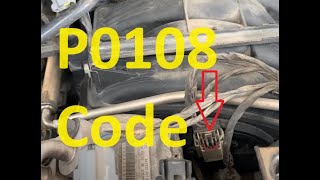
- Assuming a vacuum leak is the cause. 🎬 See this breakdown of common P0108 causes and fixes While vacuum leaks can cause MAP sensor codes, they typically set 'low voltage' or 'performance' codes (like P0106 or P0107), not a 'high voltage' code like P0108.
Most Likely Causes
- Faulty Manifold Absolute Pressure (MAP) Sensor 🔴 High Probability → Shop Manifold Absolute Pressure Sensor This is the most common failure point for this code across most vehicles, including the Colorado. An internal short or failure within the sensor can cause it to send a constant high voltage signal (near 5V) to the PCM. Owner forums are filled with reports where replacing the sensor was the immediate and final fix.
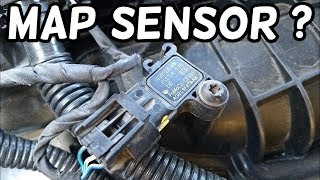
How to confirm: With the key on and engine off, use a scan tool to check the MAP sensor reading. It should correspond to barometric pressure (reading near 100 kPa at sea level, with a voltage around 4.5-5.0V). With the engine running at idle, the pressure reading should drop significantly (e.g., to 30-40 kPa) and the voltage should drop to 1.0-1.5V. If the voltage is stuck high with the engine running, the sensor is faulty. 🎬 Watch: How to test and replace a faulty MAP sensor
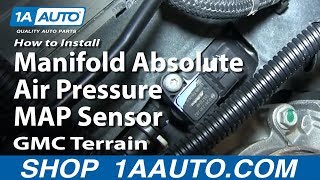
Typical fix: Replace the MAP sensor. It is located on the intake manifold and is typically held in by a single Torx bolt. Lubricate the new sensor's O-ring with a small amount of clean engine oil before installation.
Est. part cost: $40-$80 - Wiring or Connector Issue 🟡 Medium Probability Wires can become damaged from heat, vibration, or improper servicing. A short to voltage on the signal wire will cause a P0108 code. The connector pins can also become corroded or loose.
How to confirm: Visually inspect the wiring harness and connector going to the MAP sensor for any signs of damage, corrosion, or loose pins. Use a multimeter to check for the 5V reference, a good ground, and the signal wire integrity back to the PCM. With the sensor unplugged and key on, you should have 5V, ground, and 0V on the respective pins of the harness-side connector.
Typical fix: Repair the damaged section of the wiring harness or replace the connector pigtail.
Est. part cost: $15-$50 - Clogged Catalytic Converter ⚪ Low Probability A severe exhaust restriction can cause pressure to build in the intake manifold, leading to a higher-than-normal MAP sensor reading. This is less common than a sensor or wiring fault and would likely be accompanied by a severe loss of power at higher RPMs.
How to confirm: Check for a lack of power that gets worse at higher RPMs, sometimes described as the engine 'hitting a wall'. An exhaust backpressure test can confirm a restriction. You may also see other codes related to catalyst efficiency (e.g., P0420).
Typical fix: Replace the clogged catalytic converter.
Est. part cost: $500-$1500
Rare But Worth Checking
- Faulty Powertrain Control Module (PCM): → Shop Engine Control Module (ECM) This is extremely rare. The PCM should only be considered after all other possibilities, including the sensor and wiring, have been exhaustively tested and ruled out.
Diagnosis Steps
- Connect a scan tool and confirm P0108 is the primary code. Note any other codes present.
- View live data from the MAP sensor. With the Key On, Engine Off (KOEO), the voltage should be high (approx. 4.5-5.0V) and the pressure reading should match the local barometric pressure.
- Start the engine. At idle, the voltage should drop to a low value (approx. 1.0-1.5V) and pressure should be low (high vacuum). If the voltage remains high and the pressure reading is stuck near the KOEO value, the problem is almost certainly the sensor or its circuit.
- Turn the engine off. Disconnect the MAP sensor connector and inspect it for corrosion or damage.
- With the connector disconnected and KOEO, use a multimeter to test the terminals on the harness side. You should find a 5-volt reference wire, a ground wire, and a signal wire (which should have 0 volts at this point).
- If the 5V reference or ground is missing, you have a wiring issue that needs to be traced back to the PCM.
- If the wiring checks out, the MAP sensor is the most likely culprit. Replace the MAP sensor. Be sure to apply a light coat of oil to the new O-ring for a proper seal.
- After replacement, clear the codes and perform a test drive to ensure the fix was successful.
Parts You'll Likely Need
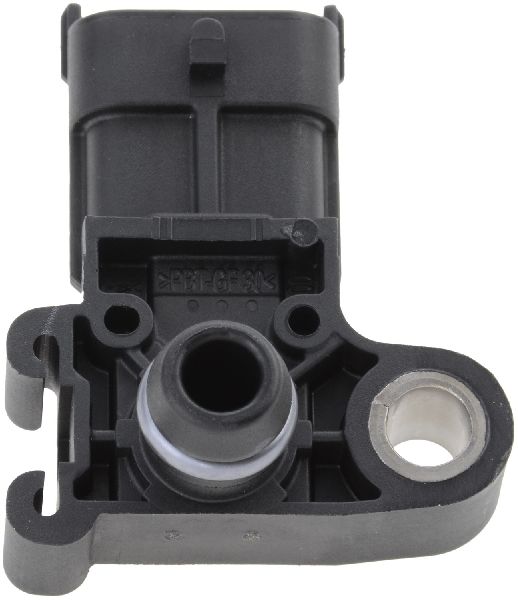
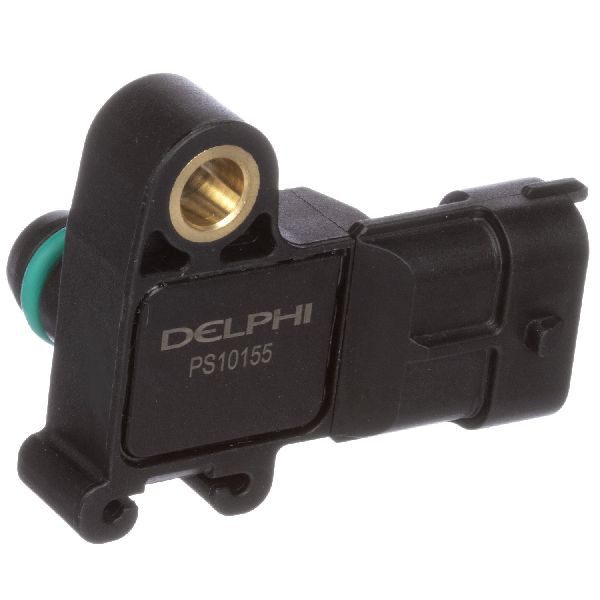
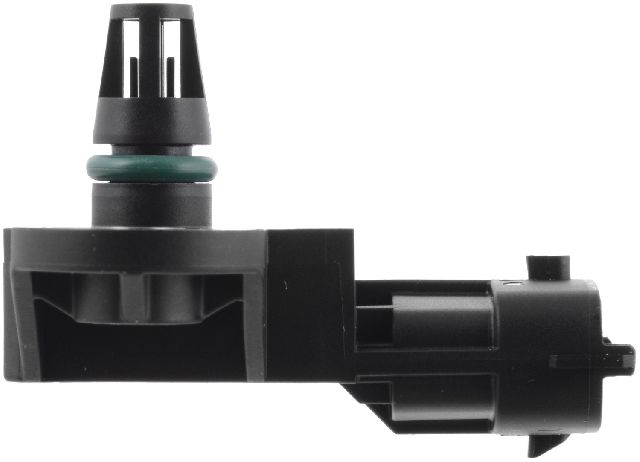
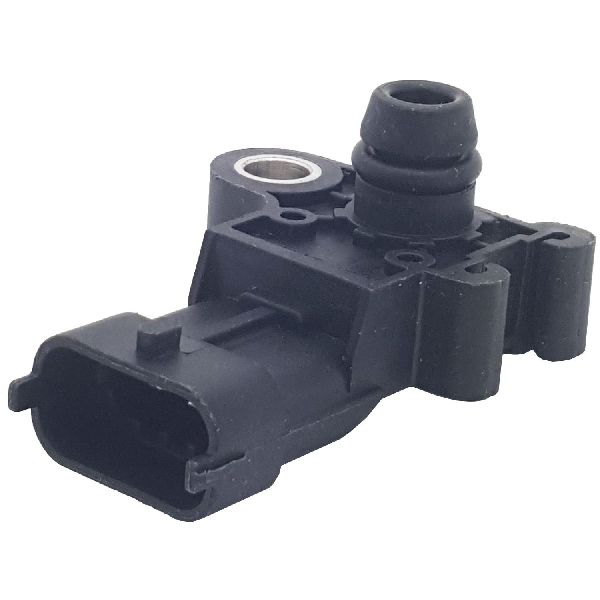
- Manifold Absolute Pressure (MAP) Sensor
(OEM #12650600)— This is the most frequent cause of a P0108 code, as internal sensor failure leads to a constant high voltage output.
Trusted brands: ACDelco, Bosch, Delphi, Standard Motor Products
OEM price range: $60-$100
Aftermarket price range: $40-$80
Platform-Specific Known Issues
- Common Repair Experience: Numerous owner reports on forums like ColoradoFans.com describe a sudden onset of rough idling, stalling at stops, and the P0108 code. In the vast majority of these cases, owners report that replacing the MAP sensor (ACDelco P/N 12650600) immediately solved all symptoms. The repair is consistently described as taking less than 15 minutes.
Technical Service Bulletins (TSBs) & Recalls
- TSB Bulletin #PIP5787A: This manufacturer bulletin notes that technicians may observe P0108 (Manifold Absolute Pressure Sensor Circuit High) along with P0106 or P00C7. It indicates that the service engine soon (SES) lamp may illuminate or cycle on and off during these events.
- TSB Bulletin #N212330660: While issued for a different model in the same manufacturer family, this bulletin confirms that P0108 and P0106 codes are directly linked to the manifold absolute pressure (MAP) sensor and instructs dealers to replace the sensor to resolve the issue.
Mechanic-Grade Diagnostic Values
- MAP Sensor 5V Reference Circuit Voltage — expected: 4.8 - 5.2 Volts. Failure: A reading below 4.8V suggests an open or short to ground; a reading above 5.2V suggests a short to a higher voltage source.
- MAP Sensor Low Reference Circuit Resistance to Ground — expected: Less than 5.0 Ohms. Failure: A reading higher than 5.0 Ohms indicates high resistance or an open in the ground circuit, which can cause a floating voltage and incorrect sensor readings.
- P0108 Fault Trigger Condition — expected: Signal voltage should vary and be below 4.8V under normal operation.. Failure: The ECM detects that the MAP sensor signal voltage is greater than 4.80 volts for more than 5 seconds.
- MAP Sensor Signal Voltage at Idle (Engine Running) — expected: ~1.0 - 1.8 Volts. Failure: A voltage stuck high (near 4.5-5.0V) at idle strongly indicates a failed sensor or a short to voltage on the signal wire.
Scan Tool Commands That Help
- GDS2 (GM Global Diagnostic System 2): Fuel Trim Reset — After replacing the MAP sensor or repairing its circuit, this function should be used to clear the long-term fuel adaptations from the ECM. This forces the computer to relearn fuel strategy with the new, correct sensor data, ensuring optimal performance and preventing other fuel-related codes from appearing.
Wiring & Ground Locations
- MAP Sensor Connector (B37) — On the top rear of the intake manifold, under the plastic engine cover.. This is the primary connection point to test. A standard GM 3-pin layout is used: Pin C (or 1) is the 5V Reference (often Orange), Pin A (or 2) is the Low Reference/Ground (often Black/White), and Pin B (or 3) is the Signal wire (often Yellow or Dk Green).
- G103 — Typically located on the front of the passenger side (Bank 2) cylinder head.. This is a primary engine ground point. The MAP sensor's Low Reference circuit connects to ground via a splice pack that ultimately terminates here. A loose or corroded G103 can introduce electrical noise or a poor ground for multiple sensors, potentially causing erratic voltage readings.
Diagnostic Flowchart
Other Known Issues on This Vehicle
Issues unrelated to this code that are worth knowing about as an owner of this generation:
- 8-Speed 8L45 Transmission Shudder/Shake 🔴 High — Very common on 2017-2019 models. Feels like driving over rumble strips at steady speeds between 25-80 mph. Caused by moisture-contaminated original transmission fluid. (Ref: TSB 18-NA-355: The official fix is a transmission fluid exchange with an updated Mobil 1 Synthetic LV ATF HP fluid. This is often a one-time fix that resolves the issue.)
- Premature Timing Chain Stretch 🔴 High — A well-known issue for the GM High Feature V6 family. The LGZ (2017+) is improved over the earlier LFX, but can still suffer from chain stretch, especially with poor oil change intervals. Onset can be from 60,000 to 120,000 miles. (Ref: Multiple TSBs exist for related codes (e.g., P0017, P0018) but no single recall. TSB 20-NA-085 notes some 2019-2020 models may have a missing chain guide insert.)
- Thermostat and Coolant Temperature Sensor Failure 🟠 Medium — Common failure on the LGZ engine between 40,000-90,000 miles. Often causes codes like P0128 or P0118 and can result in the cooling fans running constantly as a fail-safe.
- Cracked Air Intake Duct 🟡 Low — The flexible rubber air intake duct between the air filter box and the throttle body is known to crack, especially on the underside, causing unmetered air to enter and trigger lean codes (P0171/P0174). (Ref: TSB 22-NA-171)
Used vs. New Parts: Buying Guide for This Vehicle
When a used part is the smart pick: For this specific repair, a used part from a junkyard is NOT recommended. The MAP sensor is a common failure item and is relatively inexpensive to buy new. The risk of purchasing a used sensor that is already failing or has limited life remaining is high, making it poor value.
What to inspect on the donor part:
- Not applicable as used part purchase is not recommended.
OEM-only on this vehicle (don't cheap out):
- Manifold Absolute Pressure (MAP) Sensor
Aftermarket brands forum-validated for this vehicle:
- ACDelco (OEM)
- Bosch
- Delphi
Brands owners have reported issues with on this vehicle:
- Unnamed 'white-box' or generic brands from online marketplaces are often cited as having poor quality control and a high rate of premature failure for critical electronic sensors.
Real Owner Stories
Aggregated from forums and TSBs cited above. Mileages and costs reflect what owners reported in those sources.
2018 Chevrolet Colorado 3.6L V6
Symptoms: The vehicle experienced a sudden onset of rough idling and would stall when coming to a stop. A scan tool confirmed the MAP sensor voltage was stuck high.
What fixed it: Replaced the MAP sensor with ACDelco part 12650600. The user noted it was a 10-minute fix that completely resolved the stalling and idle issues.
Source hint: ColoradoFans.com - 'P0108 MAP Sensor'
2017 Chevrolet Colorado 3.6L V6
Symptoms: The Check Engine Light came on with code P0108. Other owners suggested the MAP sensor was a high-failure item on this specific truck.
What fixed it: Installation of a new MAP sensor resolved the problem.
Source hint: GM-Trucks.com - '2017 Colorado P0108'
Related OBD-II Codes
Frequently Asked Questions
What is the specific ACDelco part number I need for a MAP sensor replacement on my 2017-2022 Colorado 3.6L?
My Colorado is shuddering at steady speeds between 25-80 mph; is this related to the P0108 code?
Is the P0108 code common on other GM vehicles with the same engine?
How long does it typically take to replace the MAP sensor on the LGZ V6 engine?
Could a P0108 code be caused by a mechanical issue like a timing chain stretch?
What should the MAP sensor voltage read on my scan tool if it's working correctly?
Helpful Videos

We Have This Part in Stock


The information in this article is provided for general reference and educational purposes only. Vehicle specifications, procedures, and part compatibility can vary by production date, trim level, and region. Always consult your vehicle's factory service manual and verify part numbers before purchasing or performing repairs. Safety-critical components such as airbags, seat belts, and braking systems should be installed by a qualified professional.
- Chevrolet Colorado:
- 🧭 Diagnostic Flowchart
- 🎬 Helpful Videos
- 🛍️ Shop This Part
- What's Unique About the 2017-2022 Chevrolet Colorado
- Symptoms You May Notice
- Most Likely Causes
- Rare But Worth Checking
- Diagnosis Steps
- Parts You'll Likely Need
- Platform-Specific Known Issues
- Technical Service Bulletins (TSBs) & Recalls
- Mechanic-Grade Diagnostic Values
- Scan Tool Commands That Help
- Wiring & Ground Locations
- Other Known Issues on This Vehicle
- Used vs. New Parts: Buying Guide for This Vehicle
- Real Owner Stories
- 2018 Chevrolet Colorado 3.6L V6
- 2017 Chevrolet Colorado 3.6L V6
- Related OBD-II Codes
- Frequently Asked Questions
- 🎟️ Get 5% Off