

P0108 on 2005-2013 Chevrolet Corvette: MAP Sensor Circuit High Causes and Fixes
P0108 on a C6 Corvette almost always points to a failed Manifold Absolute Pressure (MAP) sensor. It's an easy, 15-minute DIY replacement located on the front of the intake manifold. Expect to pay $25-$50 for a quality aftermarket part or $50-$80 for an OEM ACDelco sensor. For supercharged cars, this code often means the stock sensor is 'maxed out' and needs to be upgraded to a 2-bar or 3-bar sensor with a corresponding tune adjustment.
- P0108 on a C6 Corvette is overwhelmingly caused by a bad MAP sensor.
- Symptoms include a rough idle, poor acceleration, and bad gas mileage.
- Diagnosis is straightforward: check the live data on a scanner with the key on, engine off.
- It's a very easy DIY fix due to the sensor's accessible location on top of the intake manifold.
- If the car is supercharged, the code likely means you need to upgrade to a 2-bar or 3-bar MAP sensor and update the tune.
What's Unique About the 2005-2013 Chevrolet Corvette
On the C6 platform, which includes the LS2, LS3, LS7, and LS9 engines, the MAP sensor is exceptionally easy to access. It is located right on top of the intake manifold at the front on the passenger side. Unlike in some other vehicles where it's buried, this placement makes diagnosis and replacement a very common and simple DIY task for Corvette owners. A special consideration for this platform is forced induction; owners who add a supercharger or turbo will often trigger a P0108 because the stock 1-bar MAP sensor's voltage output exceeds its 5-volt limit when it sees positive pressure (boost). The solution is to install a 2-bar or 3-bar MAP sensor and update the ECM tune.
Symptoms You May Notice
- Check Engine Light is on
- Rough or unstable idle, sometimes surging to 1800-2200 RPM
- Hesitation or sluggish acceleration
- Reduced engine power
- Poor fuel economy
- Black smoke from the exhaust
- Engine may be hard to start or stall at stops
- Replacing spark plugs or ignition coils to fix a rough idle without first checking the MAP sensor data.
- Assuming a vacuum leak is the cause. While vacuum leaks can cause MAP sensor codes, they typically trigger a P0106 (Range/Performance) or P0107 (Low Voltage) code, not a P0108 (High Voltage).
- On supercharged cars, replacing the MAP sensor with another stock sensor without realizing the tune needs to be adjusted for boost and a 2-bar/3-bar sensor is required.
Most Likely Causes
- Failed MAP Sensor 🔴 High Probability → Shop Manifold Absolute Pressure Sensor The MAP sensor is a sensitive electronic component that operates in a high-heat engine bay environment and can fail over time by shorting internally, causing it to constantly send a high voltage signal. This is the most common cause for P0108.
How to confirm: With the key on and engine off, use a scan tool to compare the MAP sensor reading to the Barometric Pressure (BARO) reading. They should be nearly identical. If they differ significantly (e.g., more than 0.5 volts), the sensor is likely bad. You can also test the signal wire with a multimeter; it should not be stuck near 5 volts when the engine is idling.
Typical fix: Replace the MAP sensor. It is held in by a single clip or bolt and sealed with a grommet. The job takes less than 30 minutes.
Est. part cost: $25-$80 - Wiring or Connector Issue 🟡 Medium Probability Engine heat and vibration can cause the wiring harness pigtail to the MAP sensor to become brittle and fail. A short between the 5-volt reference wire and the signal wire will cause a constant high signal. Corrosion in the connector can also cause this short.
How to confirm: Visually inspect the MAP sensor connector and its wiring harness for any signs of damage, corrosion, or loose pins. Unplug the sensor and use a multimeter to check for a stable 4.8-5.2 volt reference and a good ground (less than 5 ohms to chassis ground) at the connector. If the readings are correct, the wiring is likely okay.
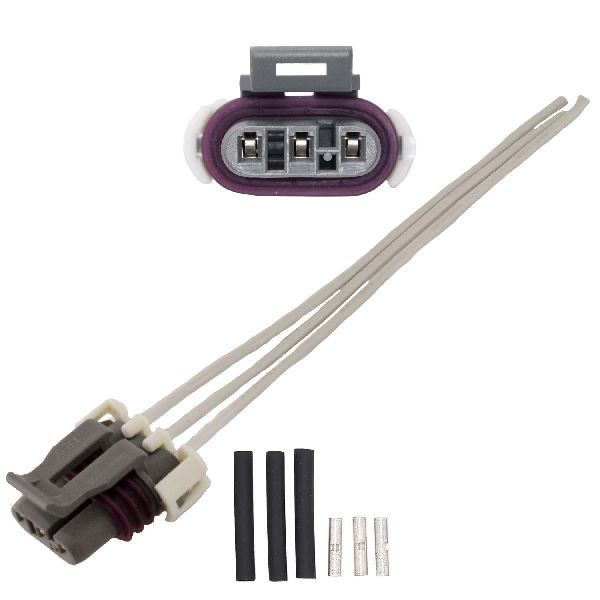
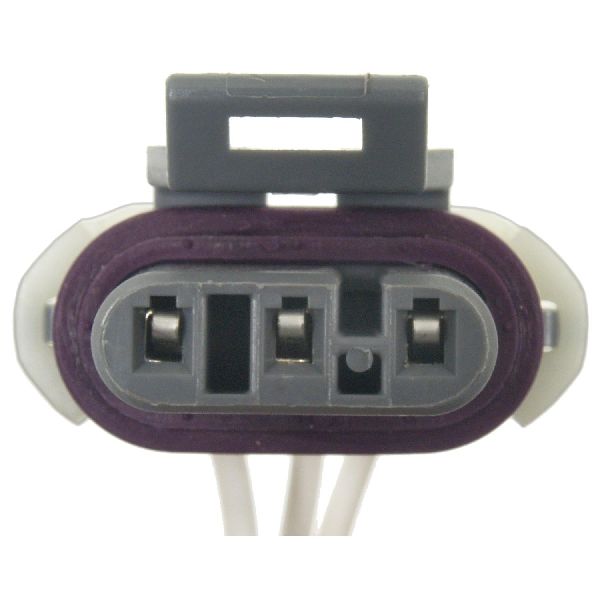
Typical fix: Repair the damaged section of wiring or replace the pigtail connector. The ACDelco pigtail connector is part number PT2649.
Est. part cost: $15-$40 for a pigtail connector - Restricted MAP Sensor Vacuum Port ⚪ Low Probability → Shop Manifold Absolute Pressure Sensor While less common, carbon buildup, debris, or even sand can clog the small port in the intake manifold where the MAP sensor sits, preventing it from reading the correct vacuum. One owner on CorvetteForum reported finding sand in the grommet after getting the code.
How to confirm: When the MAP sensor is removed, inspect the hole it sits in for any blockage. A piece of sand or carbon can be enough to cause a problem.
Typical fix: Carefully clean out the port with a small pick or pipe cleaner, ensuring no debris falls into the intake manifold.
Est. part cost: $0
Rare But Worth Checking
- Clogged Catalytic Converters: A severely clogged exhaust can cause excessive backpressure in the intake manifold at idle, which the MAP sensor will read as low vacuum (high pressure). This is usually accompanied by other codes and a significant loss of high-RPM power.
- Faulty Engine Control Module (ECM): → Shop Engine Control Module (ECM) This is very rare. The ECM's internal circuit for processing the MAP signal can fail. All other possibilities, especially the sensor and wiring, should be exhaustively ruled out before considering the ECM as the cause. Diagnostic procedures often end with 'If all circuits test normal, replace the ECM'.
Diagnosis Steps
- Read the code with an OBD-II scanner and check for any other stored codes. Note the freeze frame data.
- With the Key On, Engine Off (KOEO), view live data on the scanner. Compare the MAP sensor pressure reading to the BARO reading. They should be within a very close margin (e.g., under 0.5V difference). If not, the MAP sensor is likely faulty.
- Start the engine and observe the MAP sensor reading at idle. It should show a low pressure/high vacuum reading (e.g., 15-22 inHg or a low voltage around 1-1.5V). If it remains high (near atmospheric pressure or stuck at 4.8V-5V), this confirms a high circuit fault.
- Turn off the engine and disconnect the MAP sensor. Inspect the electrical connector and wiring for damage, corrosion, or loose pins.
- With the connector unplugged and KOEO, use a multimeter to verify you have a 4.8-5.2 volt reference on one pin and a good ground (<5 ohms) on another. If either is missing, you have a wiring or ECM issue.
- If wiring checks out, remove the MAP sensor (usually one bolt or clip) and inspect its port for any blockage.
- If all other steps pass, the MAP sensor itself is the most probable cause of the failure. A user on CorvetteForum experienced a P0108 after severe wheel hop at a drag strip, suggesting a violent shake can sometimes damage the sensor.
Parts You'll Likely Need
- Manifold Absolute Pressure (MAP) Sensor
(OEM #12644228 (This part number may also be listed as a supercharger pressure sensor))— This sensor is the most common failure point for a P0108 code. It directly sends the voltage signal that the ECM is reporting as too high. The part number 12644228 supersedes older numbers like 12591290.
Trusted brands: ACDelco, Bosch, Delphi
OEM price range: $50-$80
Aftermarket price range: $25-$50 - MAP Sensor Pigtail Connector
(OEM #ACDelco PT2649)— The connector itself can become brittle from engine heat and the locking tab can break, or wires can fray at the connector body, necessitating replacement.
Trusted brands: ACDelco, Dorman
OEM price range: $25-$40
Aftermarket price range: $15-$25
Related Codes That Often Appear With This One
- P0106 — This code for 'MAP Sensor Range/Performance' can sometimes appear with P0108 if the sensor's signal is erratic before it fails completely high. Manufacturer service bulletin #PIP5787A notes that technicians may see P0106 and P0108 together when the Service Engine Soon lamp is illuminated.
- P1635 — On some GM vehicles, this code indicates a problem with the 5-volt reference circuit, which is shared by the MAP sensor and other sensors. If you see this code, the problem is likely in the shared circuit, not just the MAP sensor itself.
- P0068 — This code indicates a disagreement between the MAP, MAF, and Throttle Position sensors. It's often seen alongside P0108 on supercharged applications where the MAP sensor reading is out of the expected range for a given throttle position.
- P00C7 — According to TSB Bulletin #PIP5787A, this intake air pressure measurement system correlation code can appear alongside P0108 during a diagnostic inspection.
Technical Service Bulletins (TSBs) & Recalls
- PIC6423A: While not for this specific model year, a related GM preliminary information document for 2021 vehicles notes that DTC P0108 can be caused by a faulty MAP sensor and directs technicians to replace it.
- TSB Bulletin #N212330660: A manufacturer bulletin for other GM models notes that customers may notice the service engine soon lamp illuminate with active or stored P0108 codes, and dealers are instructed to replace the MAP sensor.
- TSB Bulletin #PIP5787A: This bulletin describes scenarios where the check engine light is illuminated and technicians find P0108 (Manifold Absolute Pressure Sensor Circuit High) present during inspection.
Platform-Specific Known Issues
- Forced Induction (Supercharger/Turbo) Applications: A very common reason for P0108 on a modified C6 is adding a supercharger. The stock 1-bar MAP sensor is only designed to read vacuum and atmospheric pressure. When it sees positive pressure (boost), its voltage output goes above the ~4.9V maximum the ECM expects, triggering the code. The fix is to install a 2-bar or 3-bar MAP sensor and have the vehicle's tune adjusted to scale for the new sensor's readings. A CorvetteForum member with a ProCharger reported this exact issue during a track day.
- Violent Vibration or Wheel Hop: In a specific owner experience documented on CorvetteForum, a P0108 code appeared immediately after a severe wheel hop incident during a drag race. This suggests that a significant jolt or vibration can be enough to damage the internal components of the MAP sensor, causing it to fail.
Mechanic-Grade Diagnostic Values
- MAP Sensor 5-Volt Reference at Connector — expected: 4.8-5.2 Volts DC. Failure: Voltage below 4.8V or above 5.2V indicates a wiring or ECM issue.
- MAP Sensor Low Reference (Ground) Circuit Resistance — expected: Less than 5.0 Ohms to chassis ground. Failure: Resistance greater than 5.0 Ohms indicates an open or high resistance in the ground circuit.
- MAP Sensor Signal Voltage at Idle — expected: 1.0 - 1.5 Volts. Failure: Voltage stuck near 5.0V indicates a shorted sensor or a short to voltage in the signal wire.
- MAP Sensor Signal Voltage at Wide-Open Throttle (Engine Off) — expected: 4.0 - 4.6 Volts. Failure: Voltage outside this range suggests a faulty sensor.
- DTC P0108 Set Condition — expected: MAP sensor voltage is more than 4.9 volts for more than 4 seconds (with throttle angle conditions met).. Failure: This is the specific threshold the ECM uses to trigger the code.
Wiring & Ground Locations
- MAP Sensor Connector — Front of the intake manifold, passenger side.. This connector is the primary interface for the sensor. The pins are: Pin 1 - Low Reference (Ground), Pin 2 - Signal, Pin 3 - 5V Reference. Testing voltages and continuity at these pins is the core of diagnosing P0108.
- G10x (Engine Bay Grounds) — There are several key grounds in the engine bay. One common problem area is the ground point located under the battery tray, which is susceptible to corrosion from battery fumes or leaks.. A poor ground connection on the low reference circuit can cause floating voltages and incorrect sensor readings, potentially leading to a P0108 code. Cleaning these grounds is a crucial preventative and diagnostic step for many electrical issues on the C6.
Real Owner Repair Stories
- CorvetteForum user 'vetteOnTheRun' (C6 Corvette with LS3 and a Heartbeat supercharger.) — Tuning software was calculating boost much higher than it really was. The stock MAP sensor was not reading positive pressure (boost).
❌ Tried (didn't work) Initially believed it was a tuning software calculation issue.
✅ What actually fixed it Replacing the stock LS3 MAP sensor (black label) with the correct LS9 3-bar MAP sensor (red label) resolved the issue, allowing the system to read boost correctly. - CorvetteForum user 'AzzenWazHere' (Unknown year C6 Corvette.) — Car runs like crap, wants to stall at every stop sign and red light. P0108 code present.
❌ Tried (didn't work) Replacing the MAP sensor did not fix the problem; the CEL returned after driving.
✅ What actually fixed it The user was provided with the official GM diagnostic procedure, which points to testing the 5V reference circuit, signal circuit, and ground circuit for shorts or opens. The final fix was not posted, but the story highlights that when a new sensor doesn't fix P0108, the next step is always to test the wiring harness back to the ECM.
OEM Part Supersession History
12591290 (and others)→12644228, 213-4681— Standard part evolution and consolidation by GM/ACDelco.
Heads up: The earlier LS2 (2005-2007) uses a clip-in style MAP sensor. The LS3/LS7/LS9 (2008+) use a bolt-in style sensor with a different physical shape and electrical connector. They are not directly interchangeable without an adapter harness and potential tune adjustments.12592525 (Red 3-Bar Sensor)→55567257 (Blue 3-Bar Sensor)— Part number update by GM. The sensors are functionally identical.
Heads up: These are 3-bar sensors for forced induction (LS9) and are not direct replacements for the standard 1-bar sensor on a naturally aspirated LS3/LS7 without a corresponding ECM tune to rescale the sensor's output.
Model Year Variations Within This Range
- 2005-2007 (LS2 Engine): Uses a 'clip-in' style MAP sensor that pushes into a grommet on the intake manifold. The sensor has an offset nipple.
- 2008-2013 (LS3/LS7/LS9 Engines): Uses a 'bolt-in' style MAP sensor that is secured with a single bolt and sealed with an O-ring. The electrical connector is different from the LS2-style sensor. Swapping intakes between these engine families requires either using the correct sensor for the intake and an adapter harness, or modifying the intake to accept the other sensor type.
Diagnostic Flowchart
Other Known Issues on This Vehicle
Issues unrelated to this code that are worth knowing about as an owner of this generation:
- Harmonic Balancer Wobble / Failure 🔴 High — Common across all C6 years, particularly early LS2 models. The rubber elastomer bonding the inner and outer rings degrades, causing a wobble that can throw the serpentine belt and damage the crank seal or the crank itself if left unchecked. Chirping noises at idle are an early warning sign. (Ref: TSB 05-06-01-001 (for early 2005 models with a loose bolt, but the separation issue affects all years).)
- LS7 (7.0L Z06) Valve Guide Wear 🔴 High — A significant concern for 2006-2013 Z06 owners. Machining errors at a supplier led to out-of-spec valve guides, causing excessive wear that can lead to valve failure and catastrophic engine damage. GM acknowledged the issue in TSB 13-06-01-001A but did not issue a recall. Many owners proactively have the cylinder heads rebuilt with aftermarket components. (Ref: TSB 13-06-01-001A)
- Fuel Level Sender Failure 🟠 Medium — Very common issue where the fuel gauge becomes inaccurate or reads empty, even with a full tank. Sulfur deposits on the sender contacts are often blamed. Sometimes, using a fuel system cleaner with Techron can temporarily fix it, but the permanent solution is replacing the sending units, which is labor-intensive as the fuel tanks must be dropped. The issue is complicated by different sender units used in 2005-2006 vs. 2007+ models. (Ref: TSB 08-06-04-001)
- Removable Roof Panel Delamination 🟠 Medium — Primarily affected 2005-2007 models. The adhesive bonding the outer skin to the roof frame would fail, causing the panel to separate and potentially fly off the vehicle while driving. (Ref: Recall 06018 (April 2006), later superseded by Recall 09223 (October 2009) which involved replacing the entire roof panel.)
- Airbag Light from Under-Seat Connector 🟡 Low — A frequent annoyance where the airbag warning light illuminates due to a loose electrical connector under the driver's or passenger's seat. The fix is often as simple as reconnecting it securely and adding a zip tie to prevent it from wiggling loose again.
Used vs. New Parts: Buying Guide for This Vehicle
When a used part is the smart pick: For a simple electronic sensor like the MAP, buying used is generally not recommended. The cost of a new, quality aftermarket or OEM part is low, and the risk of getting a faulty or near-end-of-life used sensor is high. A used part only makes sense if it's included with a larger assembly purchase, like a complete intake manifold.
Donor-vehicle mileage cap: roughly under 50000 miles for the part to have meaningful remaining life.
What to inspect on the donor part:
- Check for cracks in the plastic housing.
- Ensure the electrical connector pins are straight and free of corrosion.
- For bolt-in types, make sure the mounting tab is intact.
- For push-in types, inspect the nipple for any damage.
OEM-only on this vehicle (don't cheap out):
- For a critical engine management sensor on a performance vehicle, sticking with the OEM ACDelco brand is strongly recommended by many owners and mechanics to ensure accurate readings and longevity.
Aftermarket brands forum-validated for this vehicle:
- ACDelco (OEM)
- Bosch
- Delphi
Brands owners have reported issues with on this vehicle:
- Unnamed, low-cost 'white box' brands from online marketplaces are often cited as having poor quality control and short lifespans.
Real Owner Stories
Aggregated from forums and TSBs cited above. Mileages and costs reflect what owners reported in those sources.
2008-2013 Chevrolet Corvette LS3/LS7/LS9
Symptoms: The code appeared immediately after a severe wheel hop incident during a drag race.
What fixed it: Replacement of the MAP sensor, as the physical shock likely damaged the internal components.
Source hint: CorvetteForum.com - 'Trouble code 0108 MAP / Baro sensor HELP ???'
2006-2013 Chevrolet Corvette Z06 (LS7) with ProCharger
Symptoms: Throwing code P0108 while driving at the track (road course) under boost conditions.
What fixed it: Installing a 2-bar or 3-bar MAP sensor and having the vehicle's tune adjusted to scale for the new sensor's readings.
Source hint: CorvetteForum.com - 'Throwing code P0108 at track (road course)'
2008-2013 Chevrolet Corvette LS3
Symptoms: Rough or unstable idle, sometimes surging to 1800-2200 RPM; found sand in the grommet.
What fixed it: Cleaning out the restricted MAP sensor vacuum port and grommet.
Source hint: CorvetteForum.com - 'P0108 Issue'
2010-2015 Chevrolet Camaro SS (LS3)
Symptoms: P0108 code triggered after installing a Magnuson 2300 supercharger.
What fixed it: The community identified the boost exceeded the stock 1-bar sensor's range, requiring a sensor upgrade.
Source hint: Camaro5.com - 'Maggie 2300 Codes P0068 and P0108'
Related OBD-II Codes
Frequently Asked Questions
Can a supercharger installation on my C6 Corvette cause the P0108 code?
I just experienced severe wheel hop at the drag strip and now have a P0108. Are they related?
Is there a specific replacement pigtail for the MAP sensor wiring on my LS3?
How can I tell if my MAP sensor is actually bad before buying a new one?
Could debris in the intake manifold cause this code on my Corvette?
Does the P0108 code affect other GM vehicles with the LS3 engine?
Helpful Videos
We Have This Part in Stock


The information in this article is provided for general reference and educational purposes only. Vehicle specifications, procedures, and part compatibility can vary by production date, trim level, and region. Always consult your vehicle's factory service manual and verify part numbers before purchasing or performing repairs. Safety-critical components such as airbags, seat belts, and braking systems should be installed by a qualified professional.
- Chevrolet Corvette:
- 🧭 Diagnostic Flowchart
- 🎬 Helpful Videos
- 🛍️ Shop This Part
- What's Unique About the 2005-2013 Chevrolet Corvette
- Symptoms You May Notice
- Most Likely Causes
- Rare But Worth Checking
- Diagnosis Steps
- Parts You'll Likely Need
- Related Codes That Often Appear With This One
- Technical Service Bulletins (TSBs) & Recalls
- Platform-Specific Known Issues
- Mechanic-Grade Diagnostic Values
- Wiring & Ground Locations
- Real Owner Repair Stories
- OEM Part Supersession History
- Model Year Variations Within This Range
- Other Known Issues on This Vehicle
- Used vs. New Parts: Buying Guide for This Vehicle
- Real Owner Stories
- 2008-2013 Chevrolet Corvette LS3/LS7/LS9
- 2006-2013 Chevrolet Corvette Z06 (LS7) with ProCharger
- 2008-2013 Chevrolet Corvette LS3
- 2010-2015 Chevrolet Camaro SS (LS3)
- Related OBD-II Codes
- Frequently Asked Questions
- 🎟️ Get 5% Off