

P0108 on 2014-2019 Chevrolet Silverado 1500: MAP Sensor High Input Causes and Fixes
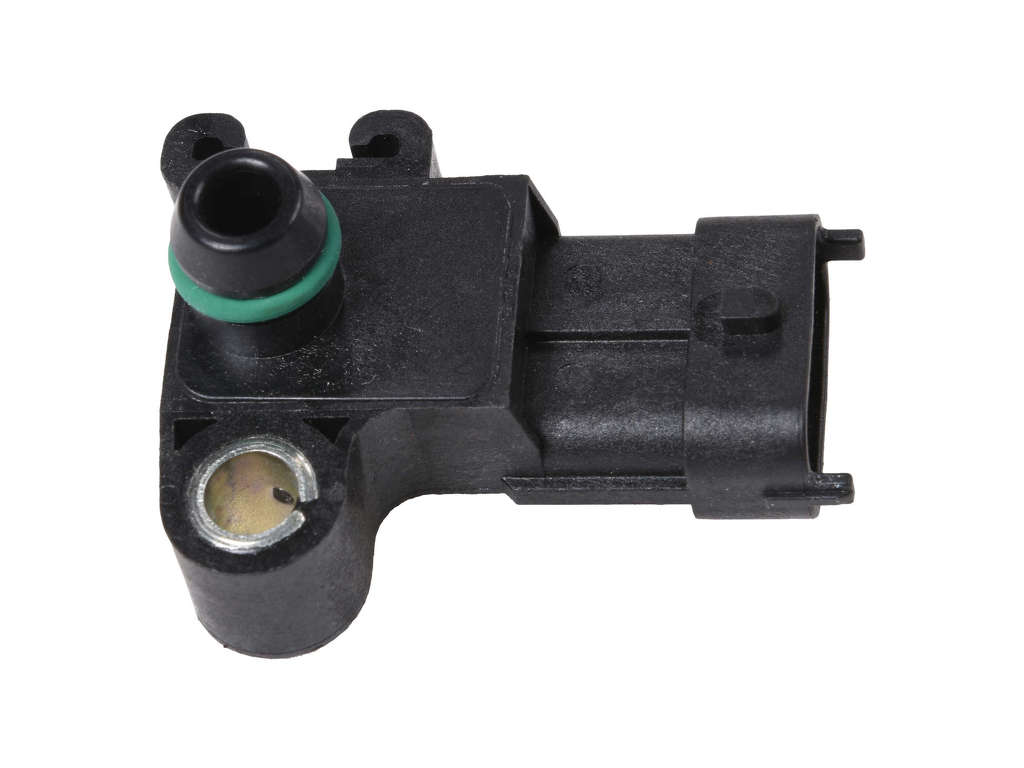
On a 2014-2019 Silverado, code P0108 is most often caused by a failed Manifold Absolute Pressure (MAP) sensor. This can cause a rough idle, poor fuel economy, and black smoke. Replacing the MAP sensor is a simple DIY fix, with the part costing between $25 and $75.
- P0108 on your Silverado almost always means the engine is running too rich because of a bad signal from the MAP sensor.
- The most likely culprit is the MAP sensor itself, which is a cheap and easy part to replace for a DIYer.
- Before replacing the sensor, double-check the wiring connector for damage and ensure all vacuum hoses, especially the PCV hose, are securely attached.
What's Unique About the 2014-2019 Chevrolet Silverado 1500
For the 2014-2019 (K2XX generation) Silverado, the P0108 code is a straightforward issue that almost always points directly to the MAP sensor itself. While vacuum leaks can cause MAP sensor codes, a direct electrical failure of the sensor resulting in a high voltage signal is a very common scenario on these trucks. The sensor is located directly on the intake manifold, making it susceptible to heat and vibration. GM has issued technical documents for similar MAP sensor issues on newer models (e.g., N212332660 for 2021 models), suggesting a pattern of sensor failures across their truck lineup. The fix is typically a direct replacement of the sensor, which is easily accessible on top of the intake manifold.
Generation note: The 2014-2019 year range primarily covers the third generation (K2XX) of the Silverado 1500. However, the 2019 model year was a split. This guide applies to the K2XX platform, which includes the 2019 "Silverado 1500 LD" (Light Duty) carryover model, not the all-new fourth-generation (T1XX) also released in 2019.
Symptoms You May Notice
- Check Engine Light is on
- Rough or unstable idle.
- Hesitation or lack of power during acceleration.
- Black smoke from the exhaust.
- Decreased fuel economy.
- Engine may stall intermittently, especially when coming to a stop.
- Engine may be hard to start or fail to start.
- Replacing the throttle body when it only needs cleaning.
- Replacing oxygen sensors, as a rich condition caused by the P0108 fault can sometimes trigger other fuel-related codes.
- Replacing the wrong sensor, such as the Mass Air Flow (MAF) sensor, without proper diagnosis.
Most Likely Causes
- Faulty Manifold Absolute Pressure (MAP) Sensor 🔴 High Probability → Shop Manifold Absolute Pressure Sensor The MAP sensor can fail internally, causing a short circuit that sends a constant high voltage signal (typically stuck at 5 volts) to the ECM. This is the most common failure mode leading to a P0108 code on these trucks.
How to confirm: With the key on and engine off (KOEO), use a scan tool to check the MAP sensor reading. It should be close to the barometric pressure (BARO) reading. If the reading is stuck high (near 5V) and doesn't drop significantly (to around 1-1.5V) when the engine is started, the sensor is bad. A difference of more than 0.5 volts between MAP and BARO at KOEO is a strong indicator of failure.
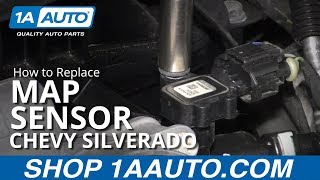
Typical fix: Replace the MAP sensor. It is located on top of the intake manifold, usually near the throttle body, and held in by a single bolt. 🎬 Watch: This quick video shows you how to replace the sensor. Ensure the new O-ring is properly seated to prevent a vacuum leak.
Est. part cost: $25-$75 - Wiring or Connector Issue 🟡 Medium Probability The engine harness is exposed to heat and vibration, which can lead to chafed wires or corrosion in the MAP sensor connector over time. A short in the signal wire to the 5-volt reference wire will also cause a constant high reading.
How to confirm: Visually inspect the wiring harness and the 3-pin connector for the MAP sensor. Look for any signs of damage, corrosion, or loose pins. Use a multimeter to check for a 5-volt reference, a good ground, and a signal wire that isn't shorted to power.
Typical fix: Repair the damaged section of the wiring harness or clean/replace the connector.
Est. part cost: $5-$50 - Vacuum Leak ⚪ Low Probability While more likely to cause a P0106 (range/performance) code, a significant vacuum leak from a source like a disconnected PCV hose can reduce manifold vacuum enough to contribute to a high MAP reading. A user on YouTube reported a P0108 code was resolved by reattaching a loose PCV hose.
How to confirm: With the engine running, listen for hissing sounds around the intake manifold. You can also carefully spray brake cleaner or a propane torch (unlit) around potential leak points like vacuum hoses and intake gaskets; a change in engine idle indicates a leak. Check that the PCV valve and its hoses are securely connected.
Typical fix: Replace the leaking vacuum hose or gasket. Re-secure any disconnected hoses.
Est. part cost: $10-$100
Rare But Worth Checking
- Clogged Catalytic Converter: A severe exhaust restriction can cause pressure to build in the intake manifold, leading to a higher-than-normal MAP sensor reading. This is usually accompanied by other symptoms like a severe lack of power, especially at high RPMs, and potentially a sulfur smell from the exhaust.
- Faulty Engine Control Module (ECM): → Shop Engine Control Module (ECM) This is very rare. The ECM's internal circuit for processing the MAP sensor signal can fail. All other possibilities, especially the sensor and wiring, should be exhaustively ruled out before considering ECM replacement.
Diagnosis Steps
- Connect an OBD-II scanner and confirm P0108 is the primary code. Note any other codes present.
- View live data on the scanner. With the Key On, Engine Off (KOEO), compare the MAP sensor voltage to the Barometric Pressure (BARO) sensor reading. They should be nearly identical (e.g., ~4.5V at sea level).
- Start the engine. The MAP sensor voltage at idle should drop significantly to 1.0-1.5 volts (indicating high vacuum). If it remains high (above 2.5V), the sensor is likely faulty, there's a major vacuum leak, or a wiring short.
- Turn off the engine. Visually inspect the MAP sensor connector and its wiring for any signs of damage, corrosion, or loose connections.
- Inspect all vacuum hoses connected to the intake manifold, especially the PCV hose and brake booster line, for cracks, disconnection, or blockages.
- If wiring and vacuum lines appear intact, the most probable cause is a faulty MAP sensor.
- To confirm a wiring fault, disconnect the sensor. With the key on, use a multimeter to test the connector terminals. You should find: one pin with 5V (reference), one with 0V (ground), and the signal pin should also read 0V. If the signal pin shows voltage, it is shorted to power somewhere in the harness.
- If all other components test normal, consider the possibility of a restricted exhaust or, as a last resort, a faulty ECM.
Parts You'll Likely Need
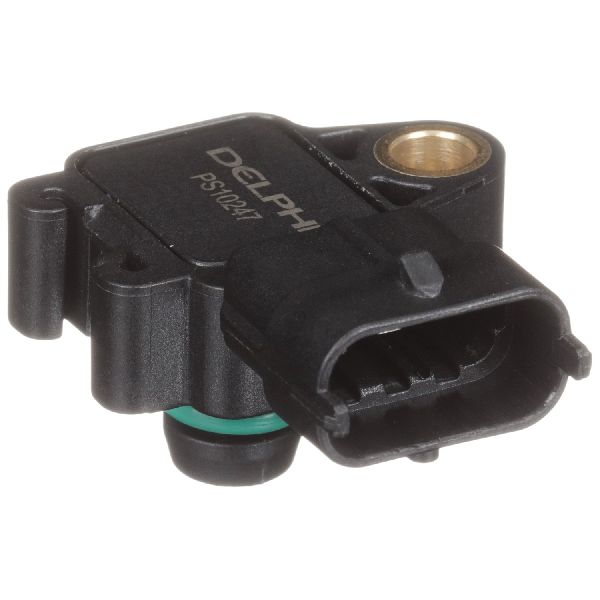
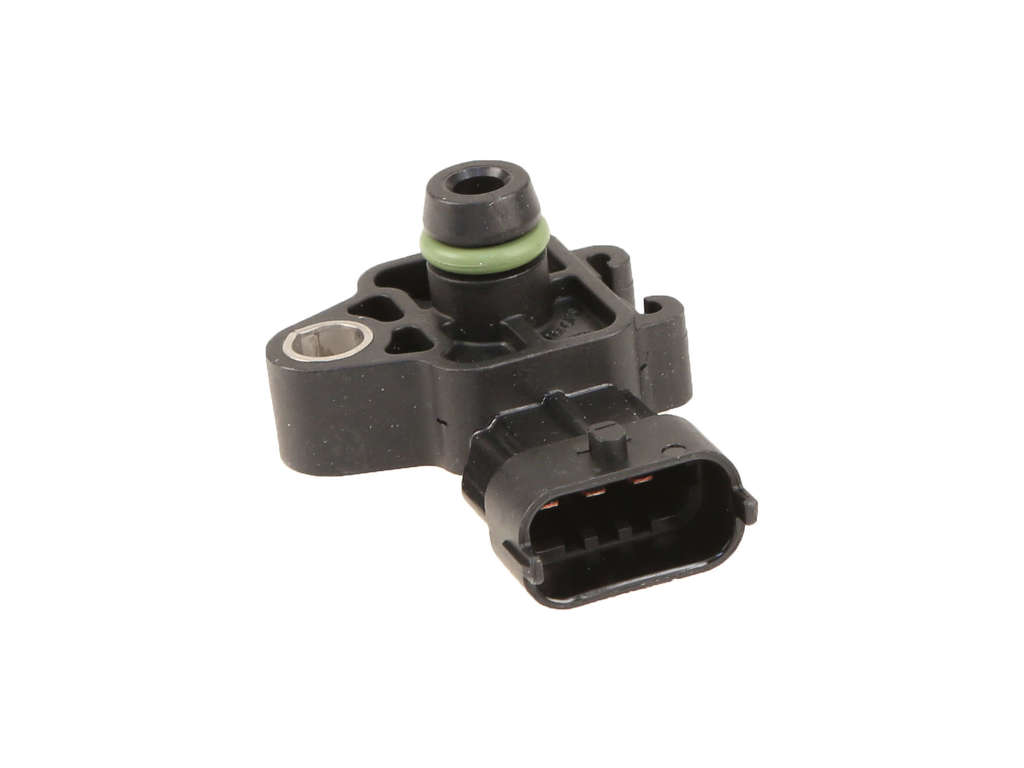
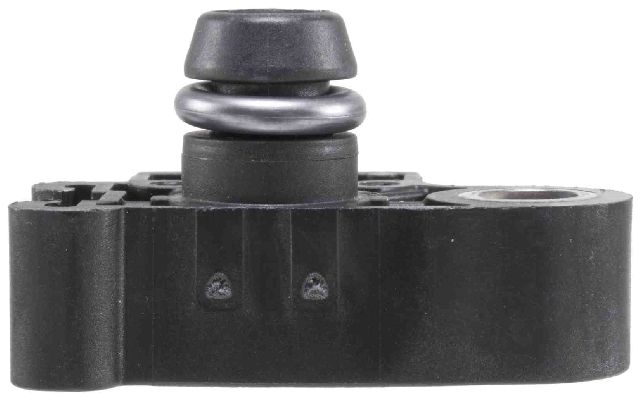
- Manifold Absolute Pressure (MAP) Sensor
(OEM #12644228)— This sensor is the most frequent cause of a P0108 code due to internal electrical failure, causing it to send a constant high-voltage signal.
Trusted brands: ACDelco (GM Original Equipment), Delphi, NTK, Standard Motor Products (SMP), Bosch
OEM price range: $50-$75
Aftermarket price range: $25-$50
Technical Service Bulletins (TSBs) & Recalls
- PIE0622: A technical document for 2021 models that also set P0108, which points to replacing the MAP sensor as the solution, indicating a known failure pattern on GM trucks.
- N212332660: A service update for certain 2021 GM vehicles, including the platform-mate Chevy Tahoe, to replace the MAP sensor due to the potential for an erratic signal, further confirming a pattern of sensor issues.
- TSB Bulletin #N212330660: Notes that customers may notice the service engine soon (SES) lamp illuminate and that DTCs P0106 and P0108 may be present as active or stored in history, requiring a MAP sensor replacement.
- TSB Bulletin #PIP5787A: Describes scenarios where the SES lamp is illuminated and technicians may find DTC P0106, P0108, and/or P00C7 (Intake Air Pressure Measurement System Sensor and Multiple Sensors Correlation) codes.
Platform-Specific Known Issues
- On some GM trucks, a loose PCV hose has been found to be the culprit for a P0108 code, even though it seemed to be seated correctly. A thorough physical check is recommended.
Mechanic-Grade Diagnostic Values
- MAP Sensor Signal Voltage (KOEO) — expected: 4.5V - 4.8V, should be nearly identical to BARO sensor reading.. Failure: A difference of more than 0.5V between MAP and BARO readings, or a voltage reading over 4.9V for more than 4 seconds.
- MAP Sensor Signal Voltage (Engine Idling) — expected: 1.0V - 1.5V. Failure: Voltage remains high (e.g., above 2.5V) at idle, indicating no vacuum is being measured.
- MAP Sensor Connector Pins (KOEO, Connector Unplugged) — expected: Pin A (Gray wire): ~5V reference. Pin C (Orange/Black wire): Good ground (< 5 ohms to chassis ground). Pin B (Light Green/Black wire): 0V (Signal).. Failure: Missing 5V reference, high resistance on ground circuit, or any voltage present on the signal wire indicates a harness short.
- Engine Vacuum at Idle (Scan Tool) — expected: Greater than 15 in. Hg. Failure: A reading of less than 15 in. Hg suggests a significant vacuum leak or a worn engine that cannot produce sufficient vacuum.
Wiring & Ground Locations
- MAP Sensor Connector — On the MAP sensor, which is located on the top of the intake manifold, to the driver's side of the throttle body.. This 3-pin connector provides power, ground, and returns the signal to the ECM. Corrosion or damage here is a common cause of failure. The pins are: Pin A (5V Reference), Pin B (Signal), Pin C (Low Reference/Ground).
- G103 / G104 — Main engine grounds. G103 is often cited on the front of the passenger side cylinder head, and G104 on the rear of the driver's side cylinder head for this engine family. Locations can vary slightly by year and specific engine.. A poor engine-to-chassis ground can cause floating voltages and erratic sensor readings across the engine, including the MAP sensor. Ensuring these grounds are clean and tight is a crucial step for any electrical diagnosis.
Real Owner Repair Stories
- YouTube video by 'Tony's Cool Tools' (Chevrolet Truck (specific year not mentioned, but modern body style)) — Check engine light with code P0108, rough idle, engine wanted to stall.
❌ Tried (didn't work) Initial visual inspection for vacuum leaks., Replaced the MAP sensor with a new part.
✅ What actually fixed it After replacing the sensor didn't work, a more thorough second inspection revealed the PCV hose connected to the valve cover was loose. Although it looked like it was seated correctly, it had come loose enough to create a massive vacuum leak. Pushing the hose firmly back on until it clicked solved the rough idle and cleared the code.
"I Checked Everything" — The Actual Cause
- A common scenario is replacing the MAP sensor to no effect, only to later find the issue was a large vacuum leak from a source that passes a quick visual check. In one documented case, the PCV hose appeared to be fully seated on the valve cover, but was actually disconnected enough to cause the P0108 code. A smoke test might not have revealed this if the smoke wasn't directed precisely at the loose-but-appearing-seated connection. The fix was to physically push and re-secure the hose.
OEM Part Supersession History
12644228→12711681— Standard part lifecycle update by the manufacturer.
Diagnostic Flowchart
Other Known Issues on This Vehicle
Issues unrelated to this code that are worth knowing about as an owner of this generation:
- AFM/DFM Lifter Failure 🔴 High — Widespread issue, can occur at various mileages, sometimes as early as 60,000 miles. More prevalent on 5.3L (L84) and 6.2L (L87) engines. (Ref: Multiple TSBs exist, including N212353840, addressing broken valve lifter lock pin springs.)
- 8-Speed (8L90/8L45) Transmission Shudder 🟠 Medium — Very common on 2015-2019 models equipped with the 8-speed transmission. Often feels like driving over rumble strips between 40-70 mph. (Ref: TSB 18-NA-355 recommends a specific transmission fluid flush with Mobil 1 Synthetic LV ATF HP.)
- 6-Speed (6L80) Torque Converter Failure 🔴 High — Common failure point, often occurring before 120,000 miles, causing harsh shifting and eventual transmission damage.
- A/C Condenser Failure 🟠 Medium — Prone to leaking, leading to loss of air conditioning. A common failure point across the K2XX platform.
- Infotainment System Glitches 🟡 Low — Owners report issues like unresponsive touchscreens, Bluetooth connectivity problems, and random volume changes.
- 'Chevy Shake' Vibrations 🟠 Medium — A persistent vibration felt at highway speeds (starting around 35 mph), distinct from the transmission shudder. Causes are debated but may relate to driveshafts or other driveline components.
Used vs. New Parts: Buying Guide for This Vehicle
When a used part is the smart pick: For this repair, a used part is generally not recommended for the MAP sensor itself due to the low cost of a new, reliable aftermarket part. However, sourcing a used connector pigtail from a junkyard is a very smart and cost-effective choice if you only need to repair damaged wiring.
Donor-vehicle mileage cap: roughly under 60000 miles for the part to have meaningful remaining life.
What to inspect on the donor part:
- For a used sensor: Inspect for cracks in the plastic housing, corrosion on the electrical pins, and ensure the rubber O-ring is not brittle or cracked.
- For a used connector pigtail: Ensure the locking tab is intact and clicks firmly. Check that there is at least 6 inches of wire to work with and that the wire insulation is not cracked or brittle.
Aftermarket brands forum-validated for this vehicle:
- ACDelco (GM Original Equipment)
- Delphi
- NTK
- Standard Motor Products (SMP)
- Bosch
Real Owner Stories
Aggregated from forums and TSBs cited above. Mileages and costs reflect what owners reported in those sources.
2021 Chevrolet Silverado
Symptoms: Check Engine Light (CEL) active with code P0108.
What fixed it: Replacing the MAP sensor as indicated by technical patterns for newer GM trucks.
Source hint: GM-Trucks.com thread titled 'CEL Code P0108'
2014-2019 Chevrolet Silverado 1500
Symptoms: P0108 code triggered; vacuum system suspected.
What fixed it: Reattaching a loose PCV hose that had disconnected.
Source hint: YouTube report cited in vehicle_specific_issues
Related OBD-II Codes
Frequently Asked Questions
I have a 2021 model setting P0108; is there a known issue for this on GM trucks?
Should I use an aftermarket MAP sensor for my Silverado's P0108 code?
Could a loose hose under the hood of my Silverado cause the P0108 code?
How can I tell if my Silverado's MAP sensor is actually bad before buying a new one?
Is the P0108 code related to the 'Chevy Shake' or transmission shudder issues on 2015-2019 models?
Helpful Videos
We Have This Part in Stock


The information in this article is provided for general reference and educational purposes only. Vehicle specifications, procedures, and part compatibility can vary by production date, trim level, and region. Always consult your vehicle's factory service manual and verify part numbers before purchasing or performing repairs. Safety-critical components such as airbags, seat belts, and braking systems should be installed by a qualified professional.
- Chevrolet Silverado 1500:
- 🧭 Diagnostic Flowchart
- 🎬 Helpful Videos
- 🛍️ Shop This Part
- What's Unique About the 2014-2019 Chevrolet Silverado 1500
- Symptoms You May Notice
- Most Likely Causes
- Rare But Worth Checking
- Diagnosis Steps
- Parts You'll Likely Need
- Technical Service Bulletins (TSBs) & Recalls
- Platform-Specific Known Issues
- Mechanic-Grade Diagnostic Values
- Wiring & Ground Locations
- Real Owner Repair Stories
- "I Checked Everything" — The Actual Cause
- OEM Part Supersession History
- Other Known Issues on This Vehicle
- Used vs. New Parts: Buying Guide for This Vehicle
- Real Owner Stories
- 2021 Chevrolet Silverado
- 2014-2019 Chevrolet Silverado 1500
- Related OBD-II Codes
- Frequently Asked Questions
- 🎟️ Get 5% Off