

P0108 on 2011-2018 Dodge Durango 5.7L HEMI: MAP Sensor Circuit High Causes and Fixes
For a 2011-2018 Dodge Durango 5.7L HEMI, code P0108 is most often caused by a failed Manifold Absolute Pressure (MAP) sensor. It's an inexpensive part (around $25-$75) and is very easy to replace in about 15 minutes, making it a great DIY-friendly fix. The sensor is located on the front of the intake manifold.
- P0108 on your 5.7L HEMI Durango almost always points to a bad MAP sensor.
- Symptoms include rough idle, poor gas mileage, and hesitation.
- The MAP sensor is cheap and extremely easy to replace yourself in under 15 minutes with basic tools.
- Before replacing, check the sensor's connector for any obvious damage or corrosion.
- If a new sensor doesn't fix the code, check for wiring issues or vacuum leaks before suspecting the much rarer cause of a faulty PCM.
What's Unique About the 2011-2018 Dodge Durango
On the 5.7L HEMI engine in the third-generation (WK2) Durango, the MAP sensor is conveniently located at the front of the intake manifold, making it exceptionally easy to access and replace compared to many other vehicles where it can be buried at the back of the engine. While the code is common across many manufacturers, the fix on this specific platform is typically a straightforward and high-probability sensor replacement, with fewer instances of complex wiring or vacuum leak issues being the root cause.
Symptoms You May Notice
- Check Engine Light is on
- Poor fuel economy
- Rough or unstable idle
- Hesitation or stumbling during acceleration
- Engine stalling, especially when coming to a stop
- Black smoke from the exhaust
- Backfiring during acceleration
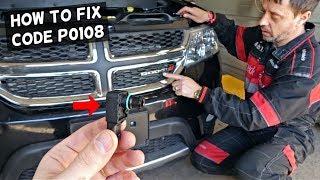
- Replacing the throttle body when the issue is the MAP sensor. Some owners may also see a throttle position-related code appear alongside P0108, but the root cause is often the faulty MAP data. 🎬 Watch this video to understand common causes and fixes for P0108.
- Assuming a new aftermarket sensor is good. In one forum thread, an owner went through two new aftermarket sensors that were faulty out of the box before an OEM sensor fixed the problem.
Most Likely Causes
- Faulty MAP Sensor 🔴 High Probability → Shop Manifold Absolute Pressure Sensor Sensors can fail over time due to heat cycles and internal component degradation. It's the most common failure point for this code on most vehicles.
How to confirm: With the key on and engine off, use a scan tool to check the MAP sensor voltage. It should be close to the Barometric Pressure (BARO) reading, typically around 4.5-5.0V. When the engine is started and idling, the voltage should drop to 1.0-2.0V. If the voltage remains high (stuck near 5V) regardless of engine state, the sensor is bad. Replacement is often the quickest diagnostic step due to the low cost and ease of access.
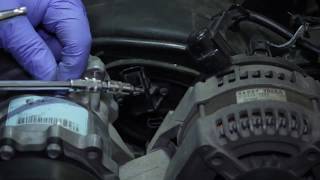
Typical fix: Replace the MAP sensor. It is located on the front of the intake manifold, held in by a twist-lock mechanism or a single bolt. 🎬 Watch: This quick walkthrough shows how to replace the sensor.
Est. part cost: $25-$75 - Wiring or Connector Issue 🟡 Medium Probability The engine harness is exposed to heat and vibration, which can lead to frayed wires or loose connections over time. The connector pins can also become corroded.
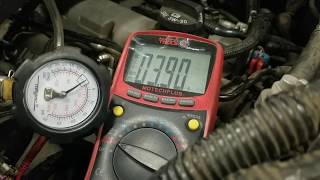
How to confirm: Visually inspect the MAP sensor connector and its wiring for any signs of damage, corrosion, or loose pins. Use a multimeter to perform a back-probe test. Check for a stable 5V reference on the reference wire, less than 100mV on the ground wire, and a signal that changes with engine vacuum on the signal wire. 🎬 See how to test a MAP sensor using a multimeter. A short between the signal wire and the 5V reference wire will cause a constant high reading.
Typical fix: Repair the damaged section of the wiring harness or clean/replace the connector pigtail.
Est. part cost: $5-$50 - Major Vacuum Leak ⚪ Low Probability Gaskets and vacuum hoses can become brittle and crack with age, though this is less common on the 5.7L HEMI as the primary cause for P0108 specifically.
How to confirm: Listen for hissing sounds around the intake manifold with the engine running. A large vacuum leak would cause low manifold vacuum at idle, which could prevent the MAP sensor voltage from dropping as expected. A smoke machine test is the most effective way to find a leak. A vacuum leak large enough to cause P0108 would likely cause very poor engine performance and possibly other codes.
Typical fix: Replace the leaking vacuum hose or intake gasket.
Est. part cost: $10-$100
Rare But Worth Checking
- Faulty Powertrain Control Module (PCM): → Shop Engine Control Module (ECM) A failing PCM can incorrectly interpret sensor data or have an internal short. This is rare and should only be considered after all other possibilities (sensor, wiring, vacuum leaks) have been thoroughly ruled out. Note that Chrysler recall U87 was issued for some 2018 Durangos for a faulty PCM voltage regulator that could cause stalling.
- Clogged Catalytic Converter: A severe exhaust restriction can increase pressure in the intake manifold, potentially confusing the MAP sensor. This would typically be accompanied by a significant loss of power, especially at higher RPMs, and possibly other exhaust-related codes.
Diagnosis Steps
- Read the code: Use an OBD-II scanner to confirm P0108 is the active code. Check for any other related codes.
- Check Live Data: With the scanner, observe the MAP sensor voltage with the Key On, Engine Off (KOEO). It should read near 4.5-5.0V and be close to the Barometric Pressure (BARO) reading. Start the engine. At idle, the voltage should drop significantly (typically to 1.0-2.0V). If the voltage stays high, the sensor or its circuit is faulty.
- Inspect the Sensor and Connector: Turn off the vehicle. Locate the MAP sensor on the front of the intake manifold. Check the connector for corrosion, moisture, or damage. Ensure the wiring isn't frayed, pinched, or melted.
- Test the Circuit (if sensor inspection is inconclusive): Disconnect the sensor. Use a multimeter to check for a 5V reference and a good ground at the connector. If these are present, the wiring is likely okay.
- Replace the MAP Sensor: Given the high probability of sensor failure and its low cost, if the live data shows a stuck-high voltage, the most practical step is to replace the sensor. Using an OEM Mopar part is recommended to avoid issues with faulty aftermarket units.
- Check for Vacuum Leaks: If a new, known-good sensor doesn't fix the issue, perform a vacuum leak test using a smoke machine.
- Consider PCM: If all else fails, the issue may be with the Powertrain Control Module (PCM), which is a rare but possible cause.
Parts You'll Likely Need
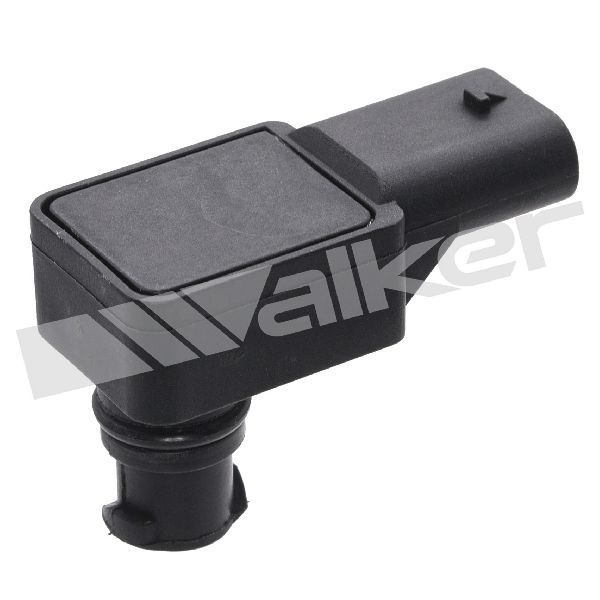
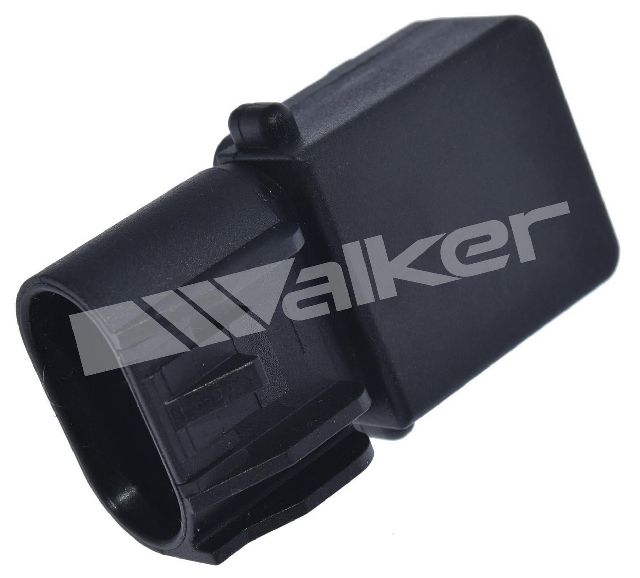
- Manifold Absolute Pressure (MAP) Sensor
(OEM #68199324AB)— This is the most common cause for code P0108. The sensor fails internally and sends a continuous high voltage signal to the PCM. The original part number 5033310AC has been superseded by 68199324AB.
Trusted brands: Mopar (OEM), Delphi, Standard Motor Products (SMP), NTK
OEM price range: $50-$75
Aftermarket price range: $25-$50
Related Codes That Often Appear With This One
- P0106 — This code indicates a MAP sensor performance/range issue. It can appear with P0108 if the sensor's signal is erratic before it fails completely high.
- P0107 — This code is for MAP sensor circuit low input. It's the opposite of P0108, but they both point to a problem within the same sensor system.
Technical Service Bulletins (TSBs) & Recalls
- TSB #18-031-12 REV. A: Applies to 2011-2012 models with the 3.6L V6 engine for a false P0108 code fixed by a PCM software update. While not for the 5.7L HEMI, it highlights a known software issue on the platform for this code.
- TSB Bulletin #18-014-13: Specifically addresses MIL illumination for P0108 on certain models. This bulletin involves selectively erasing and reprogramming the Powertrain Control Module (PCM) to resolve the Manifold Absolute Pressure Sensor Circuit High condition.
- TSB #09-019-23: Applies to 2019-2022 models with the 5.7L engine for a ticking noise from the exhaust manifold area, fixed by replacing the manifolds. This is relevant as a broken manifold bolt can be misdiagnosed as the 'Hemi tick'.
Platform-Specific Known Issues
- For 2011-2012 models, while a TSB for a software update to fix a false P0108 was issued for the 3.6L engine (TSB #18-031-12 REV. A), it indicates that early models in this generation could have software sensitivities. It's worth checking if the vehicle's PCM software is up to date if a new sensor doesn't resolve the issue, although this TSB is not for the 5.7L HEMI.
- A manufacturer service bulletin, TSB Bulletin #18-014-13, notes that a P0108 code can be triggered by software logic within the PCM, requiring a flash update to selectively erase and reprogram the module.
- A recall (U87) was issued for some 2018 Dodge Durango models for a potential failure of the voltage regulator chip in the powertrain control module (PCM), which could cause a stall or no-start condition. While not directly citing P0108, a faulty PCM is a rare cause of this code.
- A recall for the Totally Integrated Power Module (TIPM) on 2011-2013 models can cause stalling or no-start conditions due to a faulty internal fuel pump relay. While not a direct cause of P0108, electrical instability from a failing TIPM can sometimes manifest as unusual sensor codes.
Mechanic-Grade Diagnostic Values
- MAP Sensor Signal Voltage (Key On, Engine Off) — expected: ~4.5 - 5.0 Volts. Failure: Voltage is significantly lower than 4.5V or does not match BARO pressure reading on a scan tool.
- MAP Sensor Signal Voltage (Engine Idling) — expected: 1.0 - 2.0 Volts. Failure: Voltage remains high (near 4.5-5.0V) and does not drop when the engine is started. This indicates the sensor is stuck high or there is a circuit short to power.
- MAP Sensor Connector 5V Reference — expected: ~5.0 Volts. Failure: No voltage or significantly less than 5V indicates a wiring issue or a problem with the PCM's 5V reference circuit.
- MAP Sensor Connector Ground Circuit — expected: < 100 millivolts (0.10V). Failure: Voltage reading higher than 100mV indicates a poor ground connection, which can cause incorrect sensor readings.
Wiring & Ground Locations
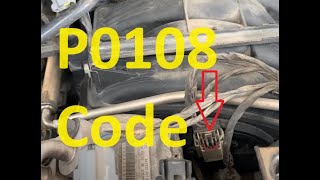
- MAP Sensor Connector — On the front of the intake manifold, connected to the MAP sensor.. This 3-pin connector provides power, ground, and signal path for the sensor. The pins are: 5V Reference, Sensor Ground, and MAP Signal. Testing at these pins is critical for diagnosing a circuit fault vs. a sensor fault.
- G112 / G114 — Various diagrams for older Durango models show primary engine compartment grounds on the right or left front of the engine compartment. For the WK2 generation, specific ground points like G112/G114 serve the front-end components and their integrity is crucial.. The MAP sensor relies on a solid ground reference (via the K900 Sensor Ground circuit shared with other sensors) back to the PCM, which is ultimately grounded to the chassis. A corroded or loose primary ground point like G112 or G114 can introduce electrical noise and voltage offsets, potentially causing a P0108 by making the PCM see a higher-than-actual signal voltage.
Real Owner Repair Stories
- DodgeForum.com user (2001 Dodge Ram 1500 (similar 5.9L engine and diagnostics)) — Rough running, stalling, backfiring, and a persistent P0108 code.
❌ Tried (didn't work) Replacing the MAP sensor with an aftermarket part from AutoZone (fixed it for 25 minutes)., Shop diagnostic confirmed code, checked fuel pressure (good), found no vacuum leaks, and checked harness., Replacing O2 sensors., Replacing with a second new aftermarket MAP sensor., Replacing the PCV valve.
✅ What actually fixed it The user's journey highlights a common pitfall: faulty aftermarket sensors. While the thread ends with the user contemplating a PCM replacement, the initial failure of multiple new aftermarket sensors strongly suggests that the ultimate fix in many such cases is using a high-quality OEM Mopar sensor.
OEM Part Supersession History
5033310AC→68199324AA, and then 68199324AB— Standard part evolution, likely for improved reliability, material changes, or manufacturing process updates.
Heads up: The newest part number, 68199324AB, is the correct service part and is fully compatible with the specified vehicles. Using older stock or superseded numbers is not recommended.
Model Year Variations Within This Range
- 2014-2018: The 2014 model year refresh introduced the ZF-designed 8-speed automatic transmission (8HP70 for the V8) which replaced the previous Mercedes-based 5-speed. While this doesn't directly affect the MAP sensor's function, it represents a significant powertrain change. The engine itself received minor tweaks for fuel economy.
Diagnostic Flowchart
Other Known Issues on This Vehicle
Issues unrelated to this code that are worth knowing about as an owner of this generation:
- HEMI Tick (Lifter/Camshaft Failure) 🔴 High — Common across all 5.7L HEMI engines of this era, especially those with the Multi-Displacement System (MDS). Can occur at various mileages, sometimes even below 100k miles. Failure of a lifter roller bearing can destroy the camshaft, sending metal through the engine.
- Broken Exhaust Manifold Bolts 🟠 Medium — Extremely common. The bolts, especially those at the rear of the manifold, are prone to breaking due to heat cycles, causing an exhaust leak that sounds like a 'tick', often mistaken for the more serious 'HEMI tick'. (Ref: TSB 09-019-23 addresses this for 2019+ models but the issue is prevalent in earlier years as well.)
- Totally Integrated Power Module (TIPM) Failure 🔴 High — Common on 2011-2013 models. A faulty internal fuel pump relay can cause the engine to stall while driving, fail to start, or drain the battery. (Ref: Chrysler Recalls V62, W0X (previously N23))
- Water Pump Failure 🟠 Medium — A frequently reported failure point on 5.7L HEMI engines, often occurring between 60,000 and 120,000 miles. Symptoms include coolant leaks from the front of the engine and overheating.
Used vs. New Parts: Buying Guide for This Vehicle
When a used part is the smart pick: A used OEM MAP sensor from a low-mileage, late-model donor vehicle is a viable option if on a tight budget. Since it's an electronic part with no moving components, its failure is not typically wear-related, but rather due to internal electronics failing. A used OEM part is often more reliable than a new, cheap aftermarket part.
Donor-vehicle mileage cap: roughly under 80000 miles for the part to have meaningful remaining life.
What to inspect on the donor part:
- Check for a clean donor vehicle; avoid parts from engines that are covered in oil or show signs of neglect.
- Inspect the connector pins on the used sensor for any signs of corrosion or damage.
- Ensure the plastic housing is not cracked or showing signs of heat damage.
OEM-only on this vehicle (don't cheap out):
- Powertrain Control Module (PCM)
Aftermarket brands forum-validated for this vehicle:
- NTK
- Delphi
- Standard Motor Products (SMP)
Brands owners have reported issues with on this vehicle:
- No-name, unbranded sensors from online marketplaces. Forum discussions frequently mention issues with these parts being dead-on-arrival or failing shortly after installation.
Real Owner Stories
Aggregated from forums and TSBs cited above. Mileages and costs reflect what owners reported in those sources.
1998 Dodge Durango (5.7L HEMI predecessor context)
Symptoms: Check engine light comes and goes, engine stalls at idle, but the car runs fine after sitting for a short period.
What fixed it: Replacing the MAP sensor.
Source hint: DodgeForum.com - 'Check engine code p0108 High input.. change MAP Sensor?'
2001 Dodge Ram 5.7L HEMI (similar engine setup)
Symptoms: The owner experienced a 'code that keeps on giving,' where the P0108 persisted despite multiple attempts at repair.
What fixed it: The owner suspected the PCM after replacing the MAP sensor multiple times and checking the wiring, highlighting issues with potentially faulty aftermarket parts.
Source hint: DodgeForum.com - 'P0108 - the code that keeps on giving'
Related OBD-II Codes
Frequently Asked Questions
Does TSB #18-031-12 REV. A apply to my 2012 Dodge Durango with the 5.7L HEMI?
Could the 2018 Dodge Durango recall for the PCM cause a P0108 code?
My 2011 Durango is stalling and has a P0108; could the TIPM be the problem?
Is the 'HEMI tick' related to the P0108 MAP sensor code?
What brand of MAP sensor should I use for my 5.7L HEMI?
Helpful Videos
We Have This Part in Stock


The information in this article is provided for general reference and educational purposes only. Vehicle specifications, procedures, and part compatibility can vary by production date, trim level, and region. Always consult your vehicle's factory service manual and verify part numbers before purchasing or performing repairs. Safety-critical components such as airbags, seat belts, and braking systems should be installed by a qualified professional.
- Dodge Durango:
- 🧭 Diagnostic Flowchart
- 🎬 Helpful Videos
- 🛍️ Shop This Part
- What's Unique About the 2011-2018 Dodge Durango
- Symptoms You May Notice
- Most Likely Causes
- Rare But Worth Checking
- Diagnosis Steps
- Parts You'll Likely Need
- Related Codes That Often Appear With This One
- Technical Service Bulletins (TSBs) & Recalls
- Platform-Specific Known Issues
- Mechanic-Grade Diagnostic Values
- Wiring & Ground Locations
- Real Owner Repair Stories
- OEM Part Supersession History
- Model Year Variations Within This Range
- Other Known Issues on This Vehicle
- Used vs. New Parts: Buying Guide for This Vehicle
- Real Owner Stories
- 1998 Dodge Durango (5.7L HEMI predecessor context)
- 2001 Dodge Ram 5.7L HEMI (similar engine setup)
- Related OBD-II Codes
- Frequently Asked Questions
- 🎟️ Get 5% Off